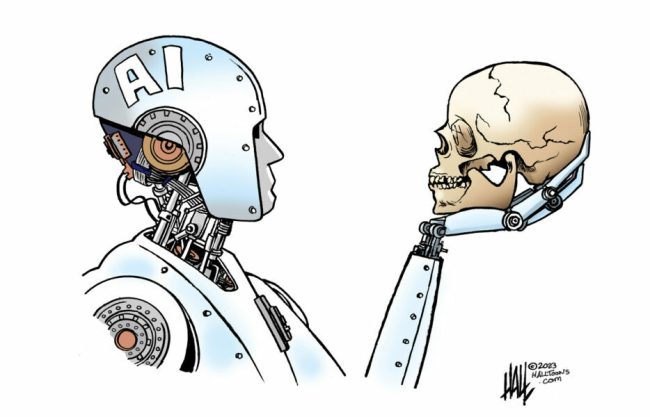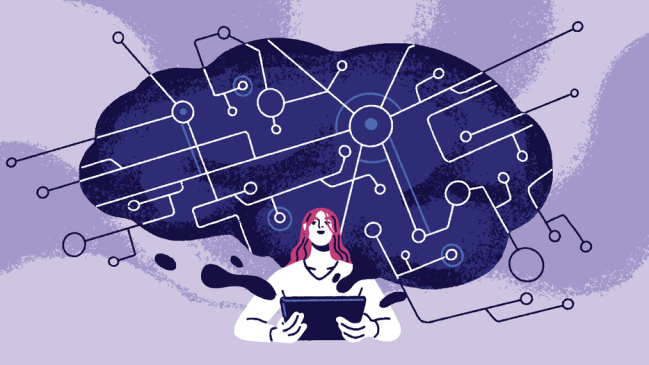
Who decides what AI knows? Whose values shape its reasoning? Which languages, histories, and knowledge systems are marginalised by the data it learns from? Which voices are amplified, and which are effectively erased because they do not belong to profitable markets or dominant cultures? – Sreejith Sreedharan
We have built an entire civilisation on a comforting assumption: that each of us, as individuals, freely determines our own thoughts, values, and choices. That we are the authors of our own minds. That our decisions are wholly and unmistakably ours.
It is a beautiful idea. It is also, in the strictest sense, incomplete.
A person does not begin life as a self-made thinker. A child inherits language, class position, family habits, cultural assumptions, religious background, and ideas about success long before the child has the capacity to question them. School extends that inheritance. Peers reinforce it. Media saturates it. Daily routines harden it. By the time a person begins to call a belief their own, much of the mental architecture has already been installed by forces outside their control.
That does not mean agency is an illusion. People still choose. They still judge. They still resist. But agency operates inside conditions that were not selected by the individual. Human freedom is real, but limited, shaped, and unevenly distributed.
Artificial Intelligence has entered this already conditioned environment and begun to alter it at scale and speed.
The loud concerns around AI diminishing or even replacing human agency are understandable. Yet the argument often misses a deeper point. Human minds have never developed in a vacuum. They have always been formed by institutions, social norms, and inherited systems of belief. The real question is not whether conditioning exists. It always has. The real question is what kind of conditioning AI now produces, and who controls it.
For the first time in history, a technology can do more than distribute information. Writing preserved knowledge. The printing press widened access to it. The internet made vast quantities of it available to nearly everyone. But none of these systems democratised the capacity to reason with information. They expanded access to data, not necessarily access to judgement.
AI changes that status quo radically. Used well, it can act as a reasoning companion. It can explain, translate, compare, summarise, test assumptions, and scaffold thought. A first-generation learner in a small town in Odisha or Oaxaca can now ask questions and receive a level of intellectual engagement that once belonged largely to elite classrooms. That is a real shift in the conditions under which thought develops.
This is why AI carries such promise. It may become the first technology capable of raising the cognitive floor rather than merely expanding the speed of execution. It can help more people reason, write, learn, and participate in knowledge systems that were earlier closed to them by geography, class, language, or institutional access.
Across philosophical and spiritual traditions, many thinkers have argued that a civilisation advances when knowledge and capability become more widely shared. Not equal outcomes, but a more even base of epistemic standing. A society cannot remain intellectually healthy if only a small minority has the tools to think clearly while everyone else is left to consume, repeat, and comply.
AI may be the first technology capable of helping build that base.
But that promise sits beside a more troubling reality. The AI systems shaping public life today are not neutral infrastructure. They are products. They are built within business models, commercial incentives, and institutional assumptions that reflect a narrow set of priorities. Frontier AI remains concentrated in a relatively small number of firms and research ecosystems, even if development is becoming more global. That concentration is a red flag, as it shapes what these systems know, what they optimise for, and what kinds of users they are designed to serve.
The result is not a plural expansion of human possibility. In many cases, it is a worldview encoded at scale. English-language dominance, Western institutional habits, and the logic of engagement and monetisation influence how these systems respond, recommend, and rank. The hidden power here is not simply technical. It is cultural and political.
Algorithmic conditioning works differently from older forms of cultural conditioning. Traditional conditioning was often coercive, but it was visible. People could argue against it, form counter-cultures, or reject it outright. It had friction. That friction gave some room for reflection.
Algorithmic conditioning is more adaptive. It studies what a person already prefers and returns it in refined form. It offers convenience while narrowing the range of encounter. Personalisation can reinforce existing habits, reduce exposure to disagreement, and narrow the range of ideas people encounter. It creates the feeling of discovery while quietly reducing surprise. The recommendation engine does not simply show people more of the world. It often shows them more of themselves.
The deeper concern is not that a feed is mildly curated. It is that repeated curation trains attention, and attention shapes thought. A person who is continually shown familiar positions, familiar styles, and familiar emotional cues begins to treat familiarity as depth. The system does not need to coerce. It only needs to keep rewarding what already works. We already see this pattern in everyday choices, from mundane chores to the people we choose to lead us.
That is why the AI governance question is critical and matters so much. The real influence lies in the algorithms, where design choices quietly become societal outcomes.
Who decides what AI knows? Whose values shape its reasoning? Which languages, histories, and knowledge systems are marginalised by the data it learns from? Which voices are amplified, and which are effectively erased because they do not belong to profitable markets or dominant cultures?
These are civilisational questions, not technical ones. Yet they are being resolved today with limited public oversight and little democratic participation from most of the world.
There is still a meaningful opportunity here. AI can widen access to reasoning support, lower barriers to learning, and help more people participate in intellectual life with greater confidence. It can serve as a tool for epistemic levelling if it is designed and governed with that purpose in mind.
But that outcome is not guaranteed. If the systems that shape thought at scale remain concentrated in a handful of corporate hands (or governments), the result will not be liberation. It will be a more efficient consolidation of intellectual power, dressed in the language of empowerment.
Governing AI for the good of all humanity is not a nicety, but a necessity. Public institutions cannot treat AI as a neutral utility while its incentives shape what large populations see, repeat, and accept. The systems that mediate thought now require scrutiny equal to their influence. Transparency, language inclusion, dataset diversity, and accountability are no longer niche policy concerns. They are core conditions for preserving plural thought.
The debate we need is not whether AI threatens human agency that never fully existed. It is who governs the algorithmic conditioning that now shapes thought, and whether that power serves human development or merely corporate advantage.
That debate is not happening at the scale and with the intention it should. It urgently must. – Firstpost, 22 August 2026
› Sreejith Sreedharan is a technology analyst and author. He works on organisational AI readiness and created the AI Instinct Index®, a psychometric diagnostic designed to assess behavioural readiness for AI adoption and adaptive capacity in constraint-heavy environments.