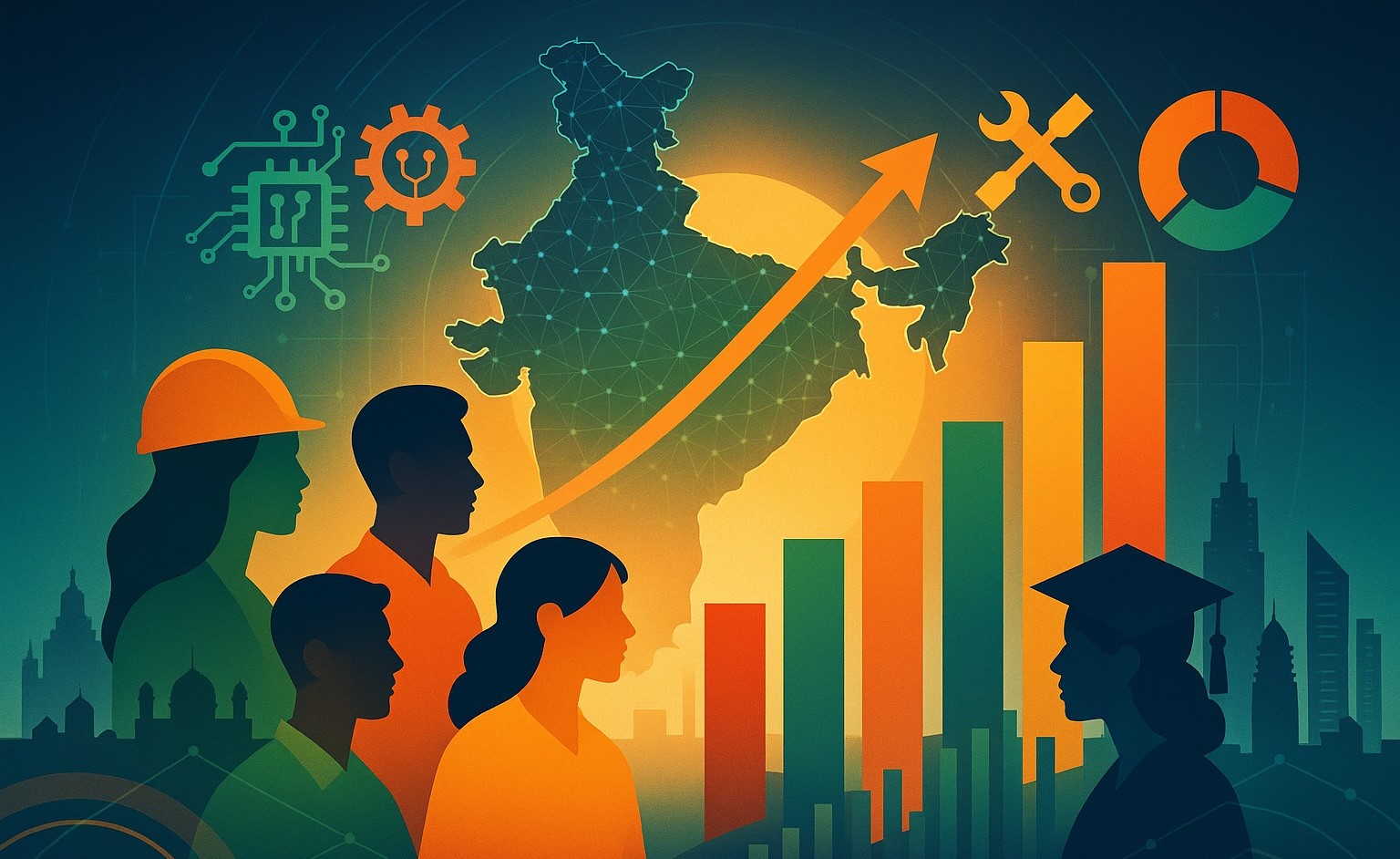
India with its slow and steady rise, two steps forward, one step back, is the quintessential tortoise to the Chinese and American hares. But both China and America know who won the race – Minhaz Merchant
No nation has risen from an impoverished European colony to a major global power. India’s rise has been as unexpected for China and the West as it is unsettling.
Other global powers rose through either colonialism (Britain, France, Spain, Portugal), invasion (America, Canada, Australia) or communism (China, Soviet Union).
India’s rise—chaotic and incomplete but unstoppable—is different: no colonial conquest, no extraterritorial invasion, no communist dictatorship.
If India can become the world’s third largest economy by 2030 (which it will) and the world’s fourth largest military (which it already is), then the means other major powers adopted in their rise stand thoroughly discredited.
That is why India’s rise will be a “resisted” rise. The rise of other great powers was an “assisted” rise. The British Empire, for example, passed the baton willingly to the United States. The Soviet Union helped China rise.
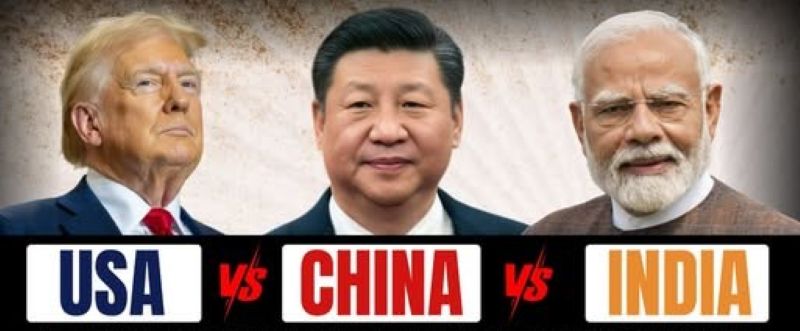
Washington and Beijing have now arrived at a temporary modus vivendi. They will not let their competition lead to confrontation. On Taiwan it might have but US President Donald Trump has signalled it won’t. He paused $14 billion arms sales to Taiwan days after his summit meeting with Chinese President Xi Jinping in Beijing last month. In return Xi has pledged an uninterrupted supply of critical minerals to the US.
That doesn’t mean the world’s two largest economies don’t have friction points. Last week, Beijing expelled Vivian Wang, a New York Times correspondent based in China because the newspaper interviewed the President of Taiwan, even though Wang was not involved in the interview. The US instantly reciprocated by expelling a senior Chinese journalist from Xinhua, China’s state news agency.
Beijing has placed a limit of 100 on the number of US journalists allowed to report from within China. The US has placed a similar limit on Chinese journalists based in the US. Trade between the two countries continues to fall. It has plunged from $690 billion in 2022 to $414 billion in 2025.
At the Shangri-La Dialogue in Singapore on May 30, US defence secretary Pete Hegseth warned: “There is rightful alarm regarding China’s historic military buildup and the expansion of its military activities in the region and beyond. No state, including China, can impose its hegemony and hold the security or prosperity of our nation and our allies in question.”
Hegseth then offered an olive branch to Beijing: “President Trump and this administration seek a stable peace, fair trade, and respectful relations with China.”
Hegseth acknowledged India’s growing military power: “A powerful India, acting in its own self-interest, advances our shared goal of maintaining a balance of power across the region. India is modernizing its military to carry its share of the security burden, particularly in the Indian Ocean. It’s building out the heavy industrial and logistics capacity to sustain high-end military operations. We’ve also committed to pursuing co-production with India to advance capabilities like Javelin anti-tank guided munitions, real tangible steps to improve the collective readiness of our forces.”
Decline and fall
Despite their rhetoric, Trump’s America and Xi’s China are both declining superpowers. The US economy grew by a paltry annualised 1.6 per cent in the January-March 2026 quarter. China’s economy is sputtering. Consumption has plummeted. Oversupply of manufactured goods has forced Chinese companies to slash prices. Many have gone bankrupt, including dozens of electric vehicle (EV) makers.
It takes decades for the decline of major powers to manifest itself. For example, the decline of colonial Britain and France was slow at first. But after their failed joint attempt to seize the Suez Canal from Egypt in 1956, the ability of London and Paris to influence global affairs fell sharply.
Could the Iran war be America’s Suez moment? It is exactly 70 years since Washington prevented Britain and France from seizing the Suez Canal in 1956. US global power has since been unrivalled, with the Soviet Union collapsing in 1991. China’s tiny economy was not yet a threat to Washington’s global hegemony.
As Washington and Beijing evaluate the rise and fall of nations across geographies over the next 25 years, they see a toothless Europe, fragmented Asia-Pacific, economically stressed Latin America, and war-torn Middle East.
India stands out in splendid isolation. Third largest economy soon. Fourth largest military already. Stable democracy with a noisy Opposition, an activist media, a strong judiciary and an economy growing at an average annual rate of 6.5 per cent, despite trade and war disruptions.
And yet. India confounds the West and China. Its bureaucracy is opaque. Regulations are onerous. Rote education stifles innovation. Corruption at state and municipal levels is endemic. Poverty is declining but millions of Indians are still destitute.
Can such a country ever rise to the stature of a major global power? Students of history recall the abject poverty of China in the 1980s and the 1990s and the famines of the 1960s and 1970s that killed millions of Chinese during Mao Zedong’s cultural revolution. They also recall the Great Depression of 1929-39 in the US when the stock market fell by 75 per cent and several American traders committed suicide by jumping off Wall Street’s skyscrapers.
Much can happen in the next 25 years. What is certain is that Europe will continue to atrophy. America will begin a gentle decline. China will age, shrink and grow old before it grows rich.
India with its slow and steady rise, two steps forward, one step back, is the quintessential tortoise to the Chinese and American hares. But both China and America know who won the race. – Firstpost, 3 June 2026
› Minhaz Merchant is an editor, author and publisher.