When Babur established Timurid rule in Hindustan, the country already commanded about 24.4% of the world’s GDP, second only to China. Hindustan was not made rich by the Timurids. It was already rich when they arrived. – Aabhas Maldahiyar
Imagine a civilisation so wealthy that merchants crossed oceans to reach its shores, so advanced that students travelled thousands of miles to study in its universities, and so productive that its goods filled markets from East Africa to Southeast Asia. That civilisation was Bharat.
Long before Oxford came into existence, Nalanda and Vikramashila were attracting scholars from across Asia. Indian merchant guilds connected distant markets through sophisticated trade networks. Indian textiles clothed the world. Indian steel was prized across continents. Indian mathematicians and astronomers laid intellectual foundations that transformed human civilisation. At a time when large parts of Europe and West Asia were bleeding through endless wars fought in the name of God, Bharat stood as a centre of learning, production, and prosperity.
The ingredients for scientific advancement and even industrialisation already existed. We possessed abundant resources, thriving commerce, skilled artisans, and one of the world’s largest reservoirs of human capital. Yet a troubling question remains: how did such a civilisation eventually become one of the poorest regions on earth?
As we mark 500 years since Babur’s invasion, it is worth revisiting the economic legacy of the dynasty commonly and incorrectly called the Mughals, though they identified themselves as the Timurid Grkniyn. We are repeatedly told that India accounted for nearly one-fourth of the world’s GDP under their rule, as though this statistic alone proves prosperity.
But does a large share of global GDP automatically mean that ordinary people were flourishing? More importantly, was India’s GDP share not already extraordinary before the Timurids set foot on its soil?
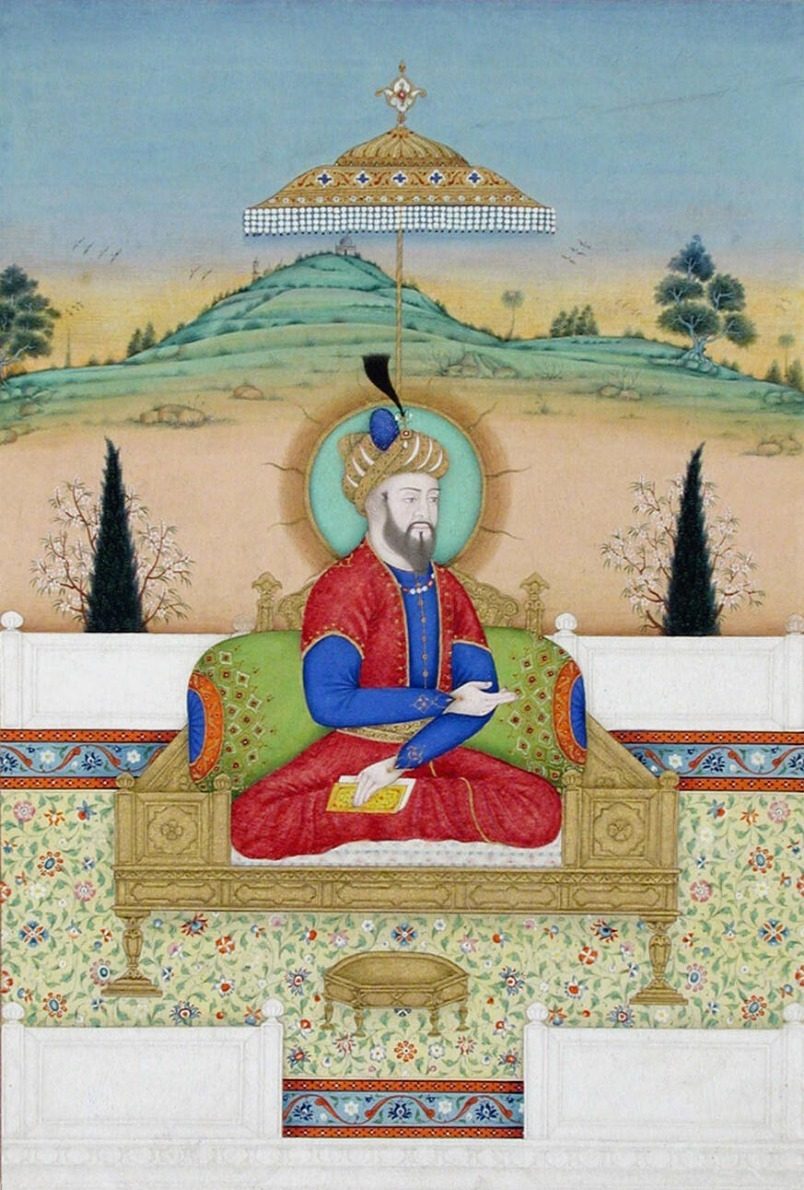
The answer lies in the very source most often cited to glorify the Timurid era: British economist Angus Maddison. Yet Maddison’s own estimates undermine the popular narrative. According to his calculations, India possessed the world’s largest share of GDP until around AD 1000 and, at its peak, accounted for nearly one-third of global output. When Babur established Timurid rule in Hindustan, the country already commanded about 24.4% of the world’s GDP, second only to China. Hindustan was not made rich by the Timurids. It was already rich when they arrived.
What happened thereafter is even more revealing. By AD 1600, during Akbar’s reign, China’s lead had widened significantly. The claim that the Timurids created India’s prosperity struggles against the very evidence invoked to support it.
More crucially, GDP measures the size of an economy, not the wellbeing of its people. Maddison’s data shows that per capita GDP growth between AD 1500 and 1820 was negative. The empire remained wealthy, but its people did not become wealthier. The imperial treasury overflowed while large sections of society saw little improvement in their lives.
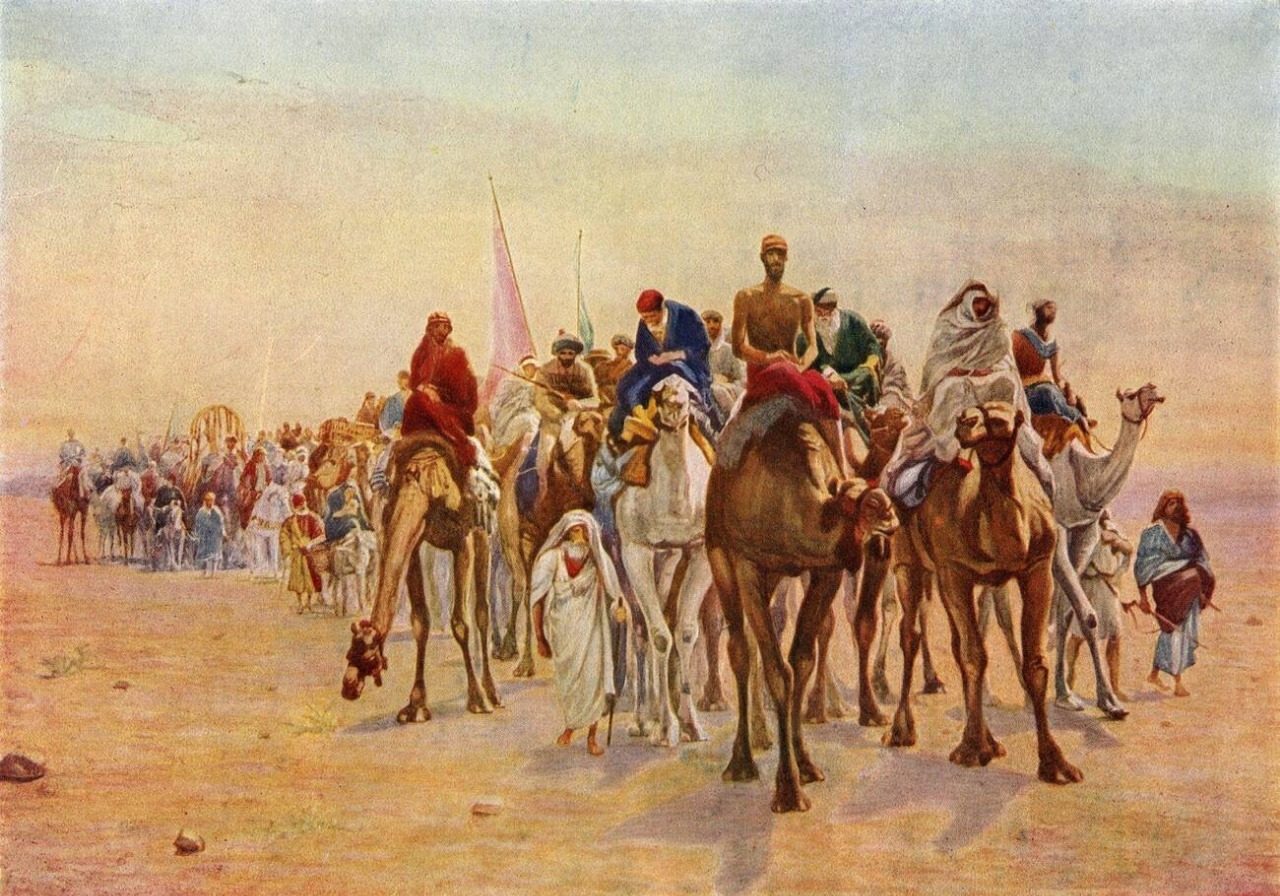
Contemporary travellers and court chronicles reinforce this picture. In the Baburnama, Babur records dispatching immense quantities of wealth after Panipat to Samarkand, Khurasan, Kashghar, Mecca, Medina, and Iraq. His successors continued the practice. After Akbar’s conquest of Gujarat in 1573 gave him access to Surat, enormous sums from Indian revenues were channelled into Hajj pilgrimages, gifts to Mecca and Medina, and projects designed to enhance Timurid prestige across the Islamic world.
This was not merely an expenditure. It was a sustained outward transfer of wealth from one of the richest lands on earth. The celebrated GDP figures tell only part of the story. To understand the reality of Timurid rule, one must ask a far more important question: who created the wealth, where did it go, and who ultimately benefited from it? One imperial proclamation issued during Akbar’s reign declared:
The travelling expenses of anybody who might intend to perform the pilgrimage to the Sacred Places should be paid.
The scale of wealth flowing out of Hindustan under Timurid patronage becomes stark when one examines the Hajj caravans. According to Dutch merchant-commander Wollebrant Geleynssen, in AD 1576 a royal caravan left Agra carrying six lakh rupees for Mecca. To understand this magnitude, a barber in AD 1637 earned roughly half a rupee a day. That single donation was equivalent to nearly 1.2 million days of a barber’s labour.
Nor was this an isolated gesture. The very next year, another caravan carried five lakh rupees, along with an additional one lakh rupees for the Sharif of Mecca. Contemporary accounts record that people from across the Islamic world flocked to Mecca hoping to receive a share of these riches drawn from Indian revenues.
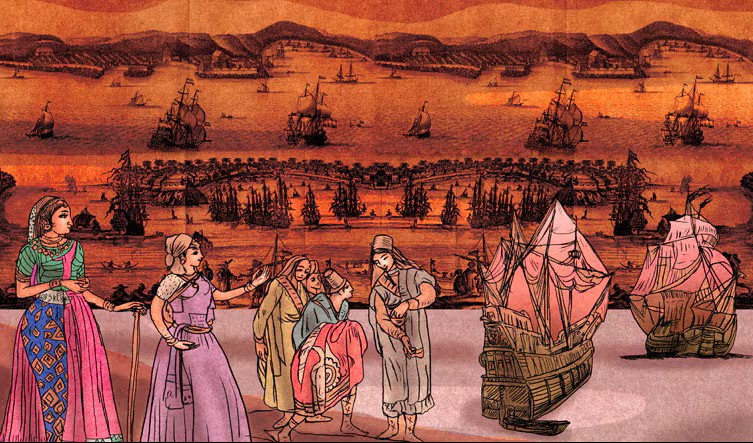
Behind this generosity lay political ambition. Akbar sought more than prestige. He aspired to become the foremost ruler—caliph—of Islam. In 1579, he persuaded the ulema to recognise his supreme religious authority, adopted the title Padshah-i-Islam, and even began leading Friday prayers in imitation of the Abbasid Caliphs. When these ambitions met resistance, he founded Din-i-Ilahi in 1582. The objective remained the same: Indian wealth was increasingly spent acquiring religious legitimacy and influence far beyond India’s borders.
After Akbar, Jahangir carried forward the same tradition. In his Tuzuk-e-Jahangiri, he records allocating two lakh rupees for the sponsorship of the Hajj:
During the reign of my father, the ministers of religion and students of law and literature, to the number of two and three thousand, in the principal cities of the empire, were already allowed pensions from the state; and to these, in conformity with the regulations established by my father, I directed Miran Sadr Jahan one of the noblest among the Seyeds of Herat, to allot a subsistence corresponding with their situation; and this is not only to the subjects of my own realms, but to foreigners—to natives of Persia, Roum, Bokhara, and Azerbaijan, with strict charge that this class of men should not be permitted either want or inconvenience of any type.
Despite his reputation for religious moderation, Jahangir also continued the transfer of Indian wealth to Mecca. He gifted an amber candlestick adorned with gold, gems, and diamonds, valued at an extraordinary Rs 2.5 lakh. In AD 1650, another jewel-encrusted candlestick accompanied a 300-carat diamond to the holy city. Under Aurangzeb, such patronage expanded further. Between AD 1661 and 1667, he lavished gifts upon rulers and dignitaries from Persia, Bukhara, Kashgar, Balkh, Urganj, and Ottoman-controlled Basra, continuing a long tradition of outward wealth transfers. Sir Richard Burn, the editor of Cambridge History of India, states:
His policy was to dazzle the eyes of these princes by lavish gifts of presents to them and to their envoys, and thus induce the outer Muslim world to forget his treatment of his father and brothers. The fame of India as a soft milch cow spread throughout the middle and near East, and the minor embassies were merely begging expeditions.
The scale of this outward flow of wealth was staggering. Timurid records indicate that Aurangzeb spent nearly Rs 30 lakh between AD 1661 and 1667, while also maintaining annual donations to Mecca through his agents. In AD 1668, he gifted Rs 10 lakh to Abdullah Khan, the deposed ruler of Kashgar who had sought refuge in his court. Yet this transfer of wealth was largely a one-way street, with little of substance returning to India.
French physician-traveller Franois Bernier illustrates this vividly:
When the Ethiopian monarch’s embassy arrived in AD 1664 bearing modest gifts; a mule skin, an ox horn, and a few impoverished slaves; Aurangzeb responded with lavish presents of far greater value.
Aurangzeb’s generosity towards foreign Muslim visitors extended far beyond diplomatic courtesy. The Ethiopian ambassadors were maintained entirely at public expense during their stay in Agra. At a subsequent audience, both were honoured again with rich sashes and a gift of 6,000 rupiah. Yet even here, religion influenced imperial favour. The Muslim merchant received 4,000 rupiah, while Murat, the Armenian Christian ambassador, received only 2,000 rupiah.
The merchant then played his cards shrewdly. He promised Aurangzeb that upon returning home, he would persuade the Ethiopian monarch to permit the restoration of a mosque allegedly destroyed by the Portuguese. Tempted by the prospect, Aurangzeb granted an additional 2,000 rupiah, hoping to finance a religious project in a distant land using revenues drawn from India.
Franois Bernier records a similar pattern with an embassy from the Uzbek Tatars, who arrived bearing modest gifts: boxes of lapis lazuli, a few long-haired camels, several horses, and loads of fresh and dried fruits. Bernier himself described them as remarkable for the “filthiness of their persons” and observed that “there are probably no people more narrow-minded, sordid, or unclean than the Uzbek Tatars”.
Yet none of this diminished Aurangzeb’s favour. The envoys were publicly showered with honours, receiving two rich sashes each, 8,000 rupiah in cash, costly brocades, fine linens, silk woven with gold and silver, carpets, and jewelled daggers. While such largesse flowed freely to foreign Muslim embassies, Bernier also records a harsher reality within India, where tax-defaulting subjects could be hanged from trees. His observations help explain how imperial wealth remained immense even as per capita prosperity stagnated or declined. He writes:
Gold and silver are not in greater plenty here than elsewhere; on the contrary, the inhabitants have less the appearance of a moneyed people than those of many other parts of the globe.
Bernier informs us about Aurangzeb’s period by stating as below:
Labourers perish due to bad treatment from Governors. Children of poor are carried away as slaves. Peasantry abandon the country driven by despair. As the land throughout the whole empire is considered the property of the sovereign, there can be no earldoms, marquisates, or duchies. The royal grants consist only of pensions, either in land or money, which the king gives, augments, retrenches or takes away at pleasure. The artisans who manufactured the luxury goods for the Mughal aristocracy were almost always on starvation wages.
The glitter of the Timurid court concealed a far darker reality. The artisans who produced the empire’s celebrated luxuries were rarely allowed to enjoy the fruits of their labour. Prices for their goods were often dictated by powerful buyers, and refusal to comply could invite imprisonment or even death. Franois Bernier tells us that the very weavers who created some of the finest brocades and textiles in the world walked about half-naked. The hands that clothed emperors could barely clothe themselves.
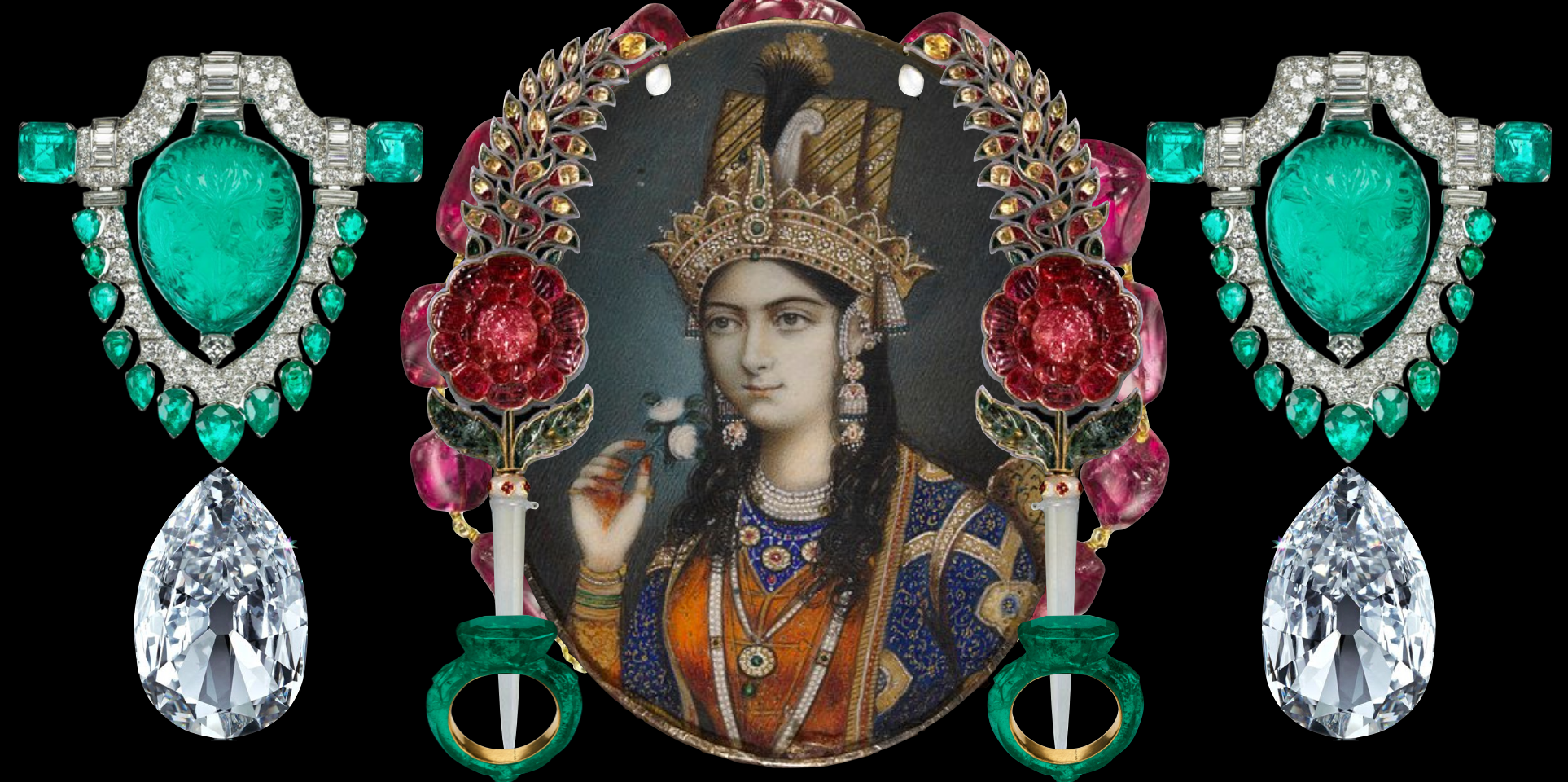
The same contrast struck the English ambassador, Thomas Roe. In Jahangir’s court he saw dazzling displays of diamonds, pearls, rubies, and unimaginable wealth. Yet as he travelled from Surat to Delhi, another India unfolded before his eyes: an India of poverty, deprivation, and ordinary people struggling to survive beneath the shadow of imperial splendour.
Nothing illustrates this contradiction more brutally than the reign of Shah Jahan. As discussed in the introduction of my book Babur: The Chessboard King, his policies contributed to the catastrophic famine of AD 1630-32, a disaster estimated to have claimed around 7.4 million lives. It was during this very period that he commissioned the Taj Mahal at a cost of approximately 41.8 million silver coins.
The priorities of the Timurid state stand exposed in the celebrations of Nauroz in AD 1628. Shah Jahan opened the treasury with astonishing generosity. Mumtaz Mahal received 50 lakh rupiah. Jahan Ara was gifted 20 lakh rupiah and Raushan Ara 5 lakh rupiah. Contemporary records indicate that nearly 1.6 crore rupiah was distributed as rewards and pensions to the imperial elite alone.
Now place this beside the empire’s response to famine.
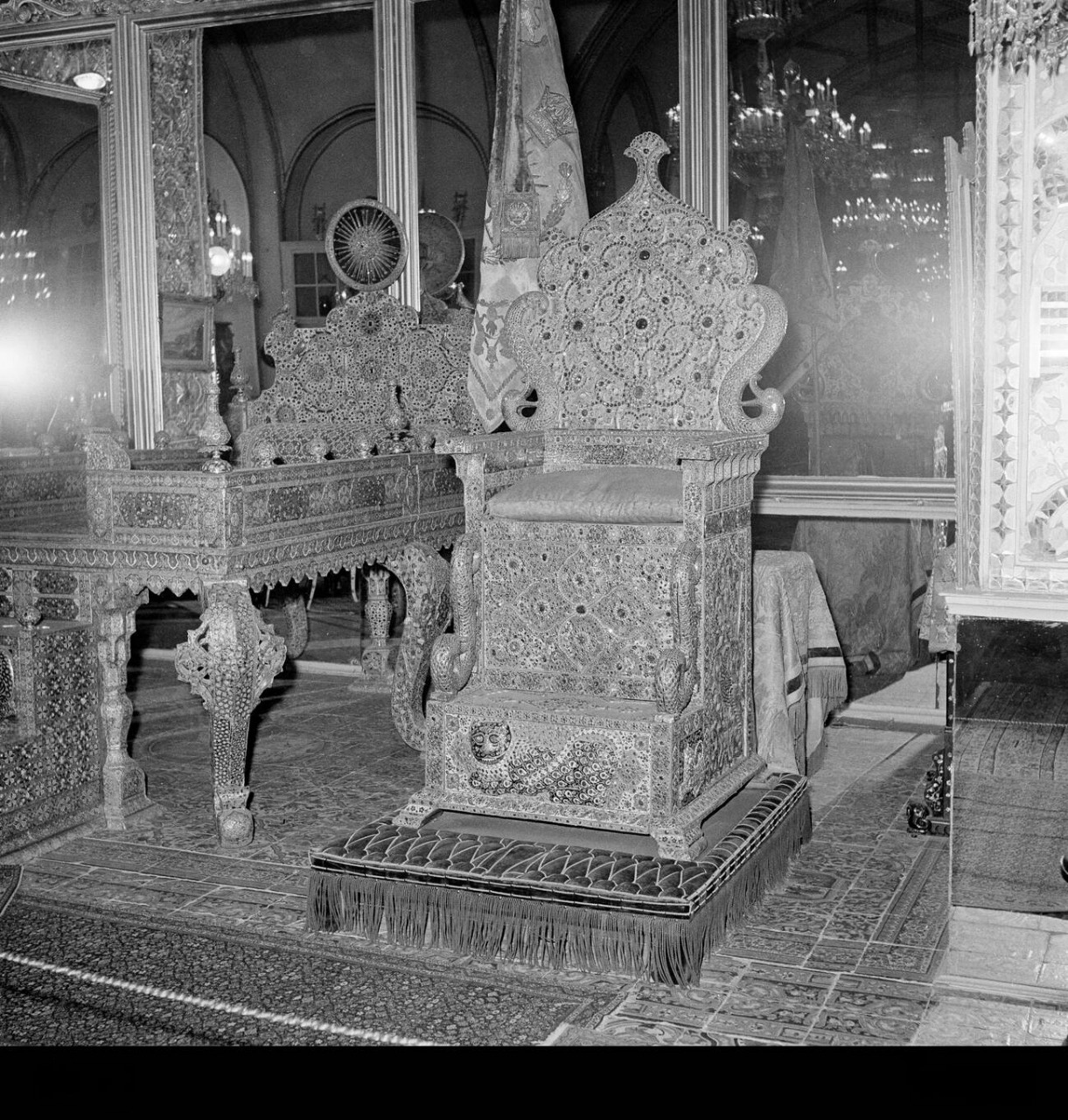
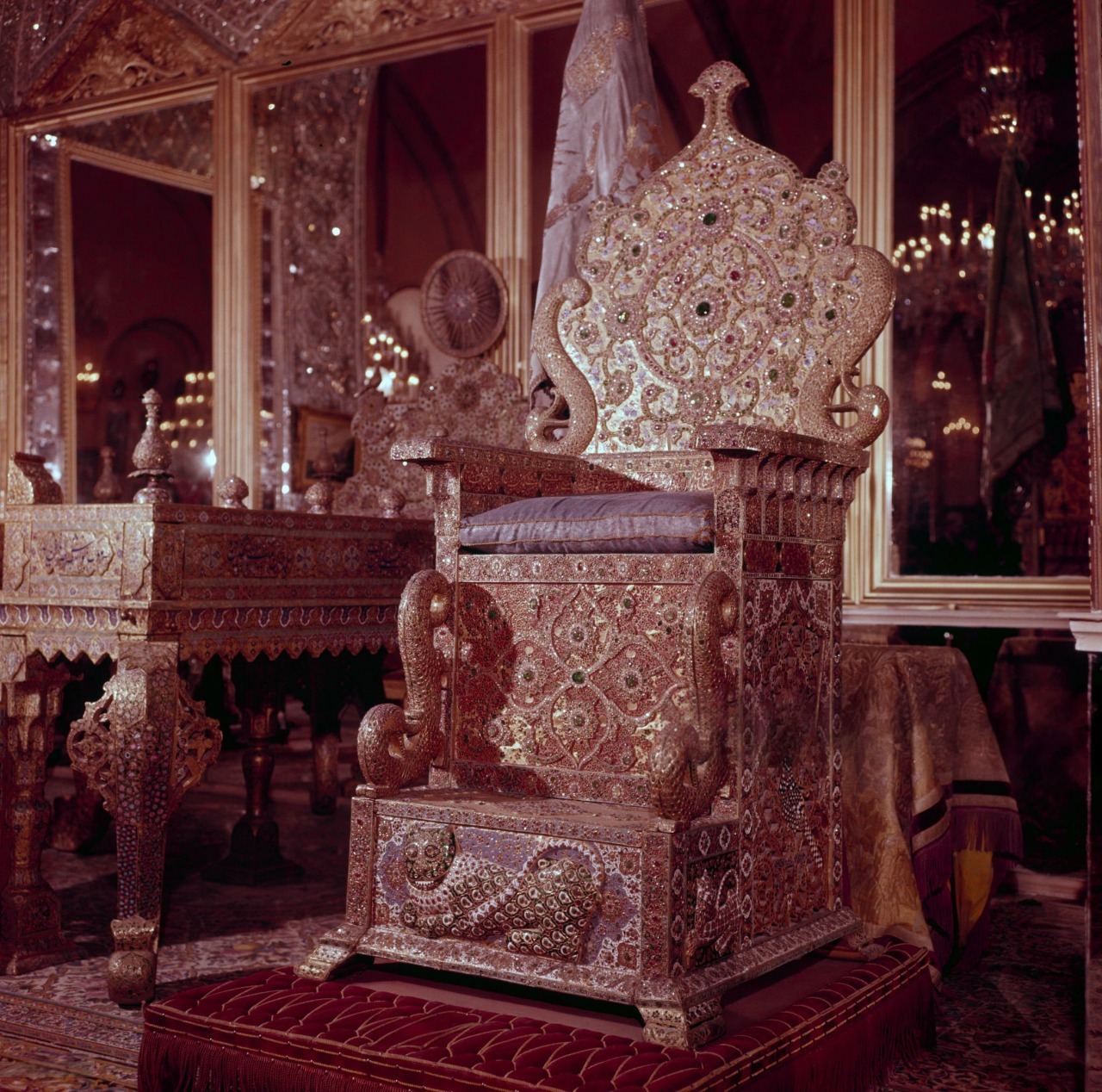
Contemporary accounts describe roads littered with corpses. Millions wandered in desperation for food. Fathers tried to sell their sons into slavery so they might survive. Mothers, unable to watch their children starve, threw themselves into rivers along with their daughters. Yet the relief sanctioned by Shah Jahan amounted to only 1 lakh rupiah, barely 2% of what he gifted Mumtaz Mahal on a single festive occasion. At the same time, Mumtaz’s annual maintenance was 1 crore rupiah, the treasury held 6 crore rupiah in cash, and the Peacock Throne alone was valued at nearly 3 crore rupiah.
This was not simply royal extravagance. Angus Maddison estimates that 15 to 18% of national income was absorbed by the state and its dependants. Nearly 21 million people were sustained by an imperial machine of courtiers, princes, harems, servants, slaves, eunuchs, and armies that consumed enormously while producing little. Maddison’s judgment is devastating: “As far as the economy was concerned, the Moghul state apparatus was parasitic.” He further argued that it resembled a regime of warlord predators where wealth was hoarded in jewels and precious metals rather than invested productively.
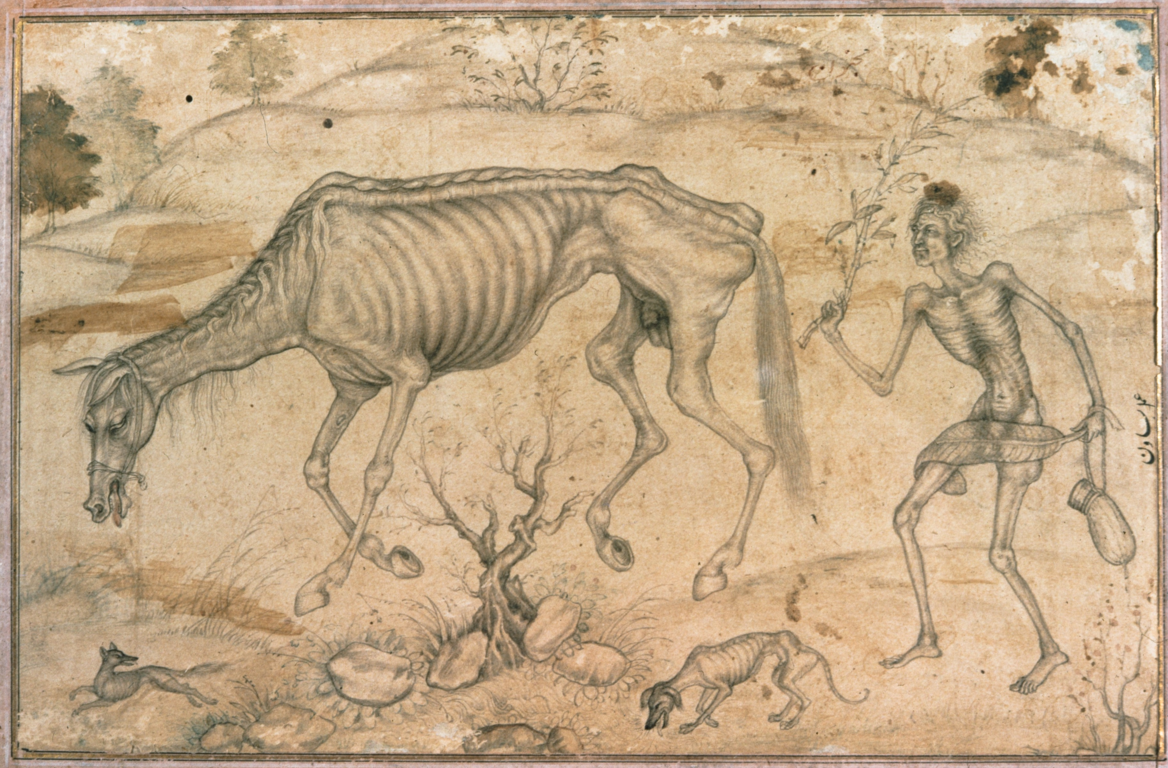
For a civilisation whose strength had long rested upon its farmers, craftsmen, and productive classes, this was a dangerous transformation. The burden of sustaining imperial grandeur fell upon those who tilled the soil and worked the looms, while the rewards accumulated at the top. As American historian J.F. Richards notes in Fiscal States in Mughal and British India:
The Mughal dynasty’s wealth and power was based upon its ability to tap directly into the agrarian productivity of the Indian sub-continent. Trade, manufacture and other taxes were much less important to the imperial revenues than agriculture, most estimates putting them at less than 10% of the total.
Let us again come back to the writings of Bernier:
Of the vast tracts of country constituting the empire of Hindustan, many are little more than sand, or barren mountains, badly cultivated and thinly peopled; and even a considerable portion of the good land remains untilled from want of labourers; many of whom perish in consequence of the bad treatment they experience from the Governors.
These poor people, when incapable of discharging the demands of their rapacious lords, are not only often deprived of the means of subsistence, but are bereft of their children, who are carried away as slaves. Thus, it happens that many of the peasantry, driven to despair by so execrable a tyranny, abandon the country, and seek a more tolerable mode of existence, either in the towns, or camps; as bearers of burdens, carriers of water, or servants to horsemen. Sometimes they fly to the territories of a Raja, because there they find less oppression, and are allowed a greater degree of comfort.
The reality becomes difficult to ignore once one moves beyond courtly glamour and examines the economic record. Across scholarly literature, the Timurid state never emerged as a benevolent engine of prosperity. Rather, in all those literatures, they appear a vast apparatus of extraction. Historian Tapan Raychaudhuri, in State and the Economy: The Mughal Empire, described it in stark terms:
“The Mughal state was an insatiable Leviathan”.
The essays collected in The Cambridge Economic History of India, edited by Raychaudhuri and Irfan Habib, repeatedly underline the same point. The state appropriated an enormous share of the agricultural surplus, leaving little room for capital formation among the peasantry. In the same seminal work, it tells us that the extraction of wealth was not confined to taxation, courtly extravagance, or the export of treasure abroad. Even commerce itself was frequently bent towards serving the private interests of the ruling elite. Historians Habib and Raychaudhuri note that imperial intervention in trade often resembled organised extortion rather than economic governance.
A striking example occurred in 1640-41 when Shah Jahan and his powerful noble Asaf Khan invested 1,00,000 rupiah in cloth at Ahmedabad for export to Mocha. To secure their profits, weavers and dyers were ordered not to work for anyone else until imperial orders had been fulfilled. What should have been a free market was effectively transformed into a monopoly enforced by state power.
Habib and Raychaudhuri further point to the activities of Shaista Khan and Prince Azimushshan in Bengal. Their involvement in trade, they argue, amounted to “virtual extortion organised as commerce”. Merchants were compelled to buy and sell on terms dictated by powerful officials. Shaista Khan extended monopolistic control over commodities such as salt, saltpetre, beeswax, and even fodder. Under such conditions, trade ceased to be a voluntary exchange and became an instrument of extraction.
The consequences extended beyond immediate losses. Productive capital that could have expanded industry, irrigation, infrastructure, or enterprise was increasingly diverted into private hoards. Habib describes treasure accumulation as one of the most wasteful economic practices of the Timurid ruling class. Citing De Laet, he notes that Akbar’s treasury was estimated at an astonishing 522.4 million florins. Shaista Khan alone was believed to have accumulated wealth worth 38 crore rupiah during his tenure in Bengal. Numerous nobles left fortunes ranging between 30 lakh and 1 crore rupiah at their deaths.
The tragedy becomes even sharper when one asks what was done with this wealth. Angus Maddison noted that irrigation under the Timurids remained remarkably limited. In his words, “… But in the context of the economy as a whole, these were unimportant and probably did not cover more than 5% of the cultivated land of India”. For a predominantly agrarian civilisation, this was not a minor administrative lapse. It was a failure with consequences measured in poverty, insecurity, and stagnant productivity.
As I conclude this essay, constrained only by space and not by evidence, one question remains. The issue is not whether the Timurid court glittered. It did. The issue is who paid for that glitter. Every jewel on a throne, every gift to foreign lands, every overflowing treasury was ultimately financed by Indian peasants, artisans, merchants, and farmers. A civilisation does not become poor because it lacks wealth. It becomes poor when wealth is extracted instead of invested. The greatest myth is not that the Timurids made India rich. It is that India’s inherited wealth is mistaken for their achievement. – India Today, 8 June 2026
› Aabhas Maldahiyar is an author, architect and historian. This is the last essay of a three-part series.