When rationalists don’t get Hindu philosophy – David Frawley

Shiva covers himself when Vishnu visits.

There is a great mystery of consciousness behind the visible world that is our real duty as human beings to discover and to realise. This mystery cannot be limited to biological patterns or to intellectual theories. We should not be content with mere outer views of life. – Dr. David Frawley

From Freudian academics to the modern media, the main examinations of Hindu deities, particularly of Lord Shiva and his family, usually give their primary attention to sexual implications. But in the process of focusing on this side—often to the exclusion of the rest of the teachings—the deeper meaning of these spiritual traditions easily gets lost.

We can forget yoga’s profound insights into the mind, consciousness and higher human evolution, as well as the subtle meditation practices taught to reveal these.

Tantric Yoga philosophy describes seven chakras from the base of the spine to the top of the head. The purpose of yoga is to raise our awareness from the root chakra below—where we are spiritually asleep in ego consciousness and physical reality—to the thousand-petal lotus at the top of the head where we can experience cosmic consciousness and self-realisation, the state of the Supreme Shiva.

The chakras indicate vibratory levels with the five lower chakras relating to the earth, water, fire, air and ether elements and the two higher chakras to mind and consciousness. The ascent through the chakras involves moving from denser to subtler vibrations, and developing a greater unity consciousness along the way.

We should not stop short at the first and second chakras, which rule over lower energies, but consider all seven chakras and their implications in examining yogic deities and practices, extending to higher realms far beyond physical reality.

We should not only consider the role of physical union but also the role of union with the divine, and with the unitary awareness behind the universe as a whole.

The symbolism of Hindu deities

It is true that Hindu deities provide a wealth of fascinating symbolisms that stretch the boundaries of our imaginations and are not easy to understand for the rational intellect. They are capable of diverse interpretations as they reflect the whole of life and all of nature in its mind-transcending magic and bewildering paradoxes.

But the primary implications of these yogic powers are relative to cosmological principles and higher states of awareness, which constitute the bulk of their traditional interpretations that are quite detailed and extensive. Modern scientists have noted these cosmic connections, with the entire universe as Lord Shiva’s dance of light.

Hindu deities, particularly Shiva and his wife Parvati, reflect the practice of yoga and the energies of all the chakras in their stories and teachings, starting with Shiva as Yogeshwara, the lord of yoga, ruling over asana, prana, mantra and meditation. Parvati is the ideal yogini and manifests the yoga shakti, the inner power of yoga that takes us from darkness to light, from death to immortality.

There is a great mystery of consciousness behind the visible world that is our real duty as human beings to discover and to realise. This mystery cannot be limited to biological patterns or to intellectual theories. We should not be content with mere outer views of life.

Recognising the primacy of ananda

It is time to move beyond such circumscribed views to recognising the deeper aspects of science, art and philosophy behind the yoga tradition and its extraordinary images and cosmic depictions. This affords us a greater appreciation of the yogis of India and their intricate teachings, not merely about the body and mind, but relative to the universal consciousness in which is infinite and everlasting bliss!

Bliss or ananda is the origin and goal of all as the ancient Upanishads so eloquently state. If we are sensitive to beauty, love or grace anywhere, it is only because of this divine ananda. May we all discover that ananda within and around us! It is much more than any media sensation and takes us far beyond the biases of the mind to a boundless vision and new creative insight at every moment. This is what higher yoga practices can lead us to. – Daily-O, 23 September 2015

› Dr David Frawley (Pandit Vamadeva Sastri) is an American Hindu teacher and author who has written more than thirty books on topics such as the Vedas, Hinduism, Yoga, Ayurveda and Vedic astrology, published both in India by Voice of India and in the United States. 
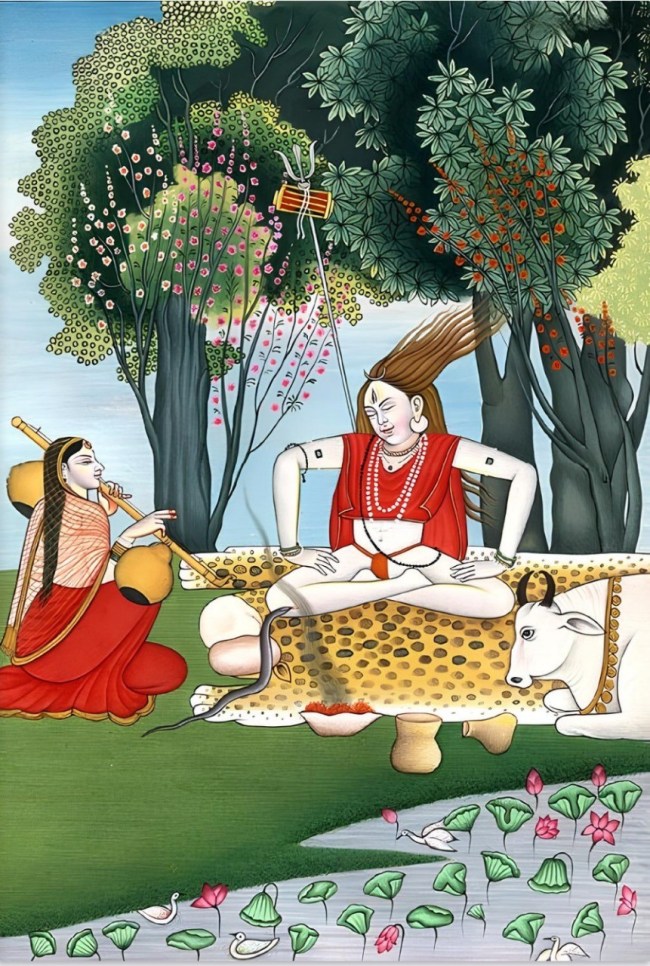
Shiva in bliss.

John Woodroffe: Sanskritist, yoga practitioner and author of books on tantra – Namit Saxena

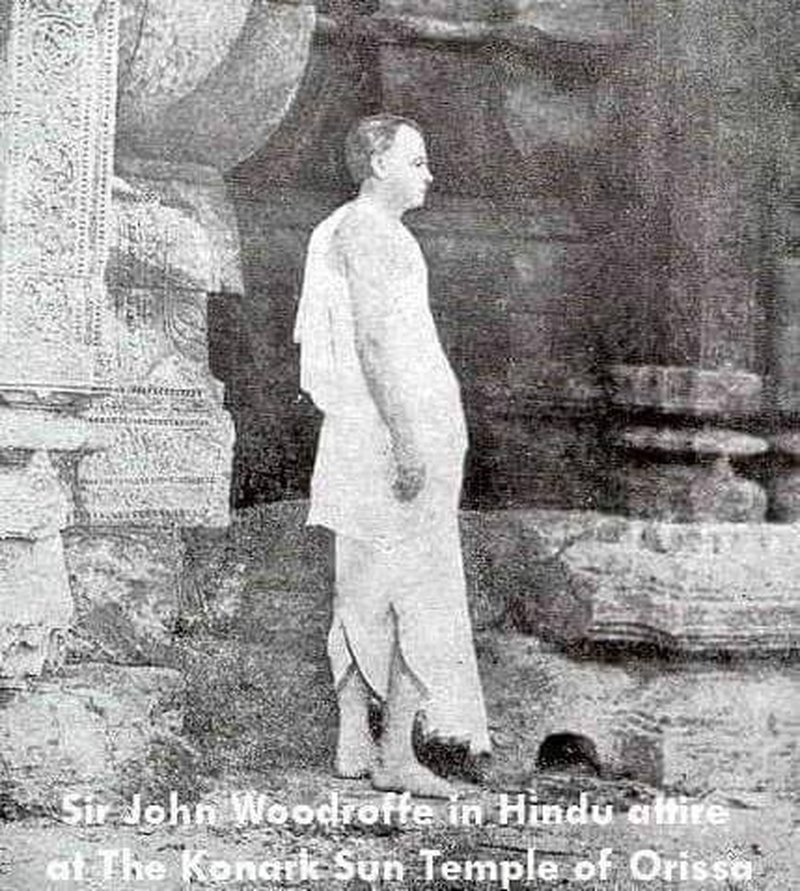
Sir John Woodroffe

Sir John Woodroffe chose the name Arthur Avalon as a pseudonym for his translations of Sanskrit texts and books on tantra. – Namit Saxena

A lot of us seek spiritual transformation, but few take on a journey towards that transformation. Depending upon the journey and the individual, the shastras have given different techniques to march forward on the chosen path. One of the most effective paths for the journey is that of tantra sadhana.

To perfect the techniques of attaining a certain level of spirituality in tantra sadhana, it takes a sadhaka years of practice.

Seldom do we find a foreign national, more so a British sitting judge of a high court, taking on such a journey in India. Sir John George Woodroffe, a former judge of the Calcutta High Court, is one such distinguished sadhaka.

The judge not only learnt Sanskrit, but also practised tantra sadhana, translated Sanskrit texts to English and wrote authoritative voluminous commentaries on various theoretical and practical aspects of kundalini yoga and tantra sadhana.

Born on December 15, 1865, John Woodroffe was educated at Woburn Park School and University College, Oxford, where he graduated in jurisprudence and cleared the Bachelor of Civil Law examinations. In 1890, he moved to India and enrolled as an advocate before the Calcutta High Court. He was soon made a Fellow of the Calcutta University and also appointed a Professor of Law there. He was later appointed Standing Counsel to the Government of India in 1902 and two years later, he was elevated to the High Court Bench at Calcutta.

It is during his stint as a judge of the Calcutta High Court that Woodroffe became interested in tantra sadhana and later delved into translations and writings of multiple texts on the same. How he got initiated into the tantra sadhana is also very interesting. The anecdotal story narrates that one day, Woodroffe was in his court and had to dictate a judgement in a matter which was supposed to be easy to decide with his magisterial calibre. However, when he tried to dictate the judgement, he felt that his mind was very clouded and he was unable to dictate the judgement properly. On enquiry, he found that one of the parties to the litigation had engaged a tantric practitioner who was outside his court, and with his siddhi he had clouded the mind of Woodroffe, making him unable to decide the case. Such a practice falls under the category of abhichaar in the tantra sadhana and is known as stambhan. Woodroffe got the practitioner chased off by his staff, but to no avail. This made Woodroffe curious about abilities of tantra practitioners.

On his engagement with a lot of people into yoga sadhana, Woodroffe got a glimpse of the depth of tantra—more particularly shakta tantra—and kundalini yoga. As he found that most of the texts were written in Sanskrit, he went to great lengths to learn the language so that he himself could read the texts.

Woodroffe chose the name Arthur Avalon as a pseudonym to write books and translations. The book titled Introduction to Tantra Shastra, is to date one of the leading books for beginners on understanding the basics and foundational principles of tantric practice. He further wrote The Serpent Power, The Garland of Letters, Principles of Tantra, Sakti & Sakta, The World as Power and The Great Liberation: Mahanirvana Tantra, amongst other books.

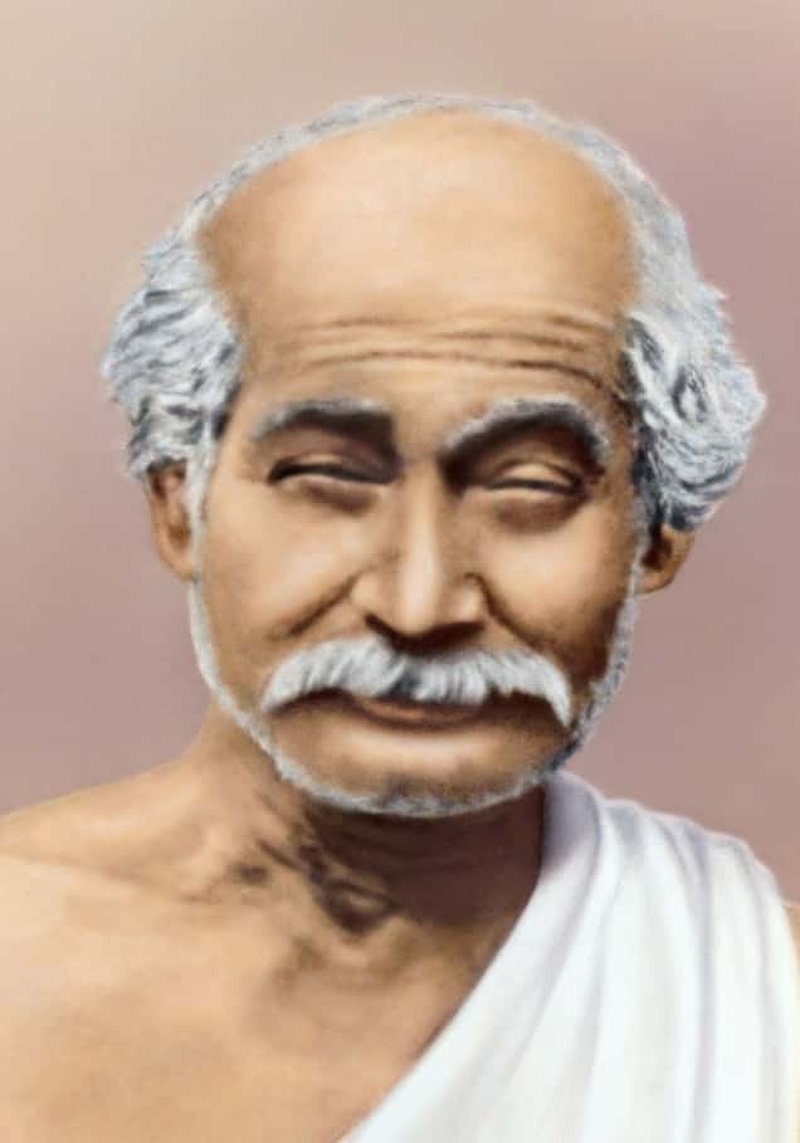
Lahiri Mahasaya

Woodroffe simultaneously also got initiated  into tantric practice and became a notable sadhaka under the aegis of various gurus, including the well known Lahiri Mahashay, who initiated him into the practice of Kriya Yoga.

Tantra sadhana has no discrimination on the basis of sex, gender, caste or creed etc. It rather tells one that male and female is only a matter of percentages, and that anyone can practice tantra sadhana and become a guru. This enabled Woodroffe to enter into the spiritual realm of tantric practise while conducting his duties as a judge of the Calcutta High Court.

Woodroffe’s writings on kundalini yoga and tantra sadhana not only present a simplified version of complex principles, but also introduce an enthusiast to insights on the path she should choose. Till date, the books by Woodroffe under the name Arthur Avalon are the most relied upon texts written in English for tantra sadhana enthusiasts. He remains perhaps the only English judge of a high court to become a leading name in the realm of tantra texts! – Bar and Bench,

› Namit Saxena is an Advocate-on-Record practising at the Supreme Court of India.

Shivacandra Vidyarṇava

See also