Dharma is not set once and preserved in amber; it is re-established in every age. Civilisations endure by shedding what has worn out so that what is eternal may continue. Even the Constitution of India, barely 76 years old, has been amended over a hundred times because the society it serves is alive. Continuity depends on change. – Tejusvi Shukla
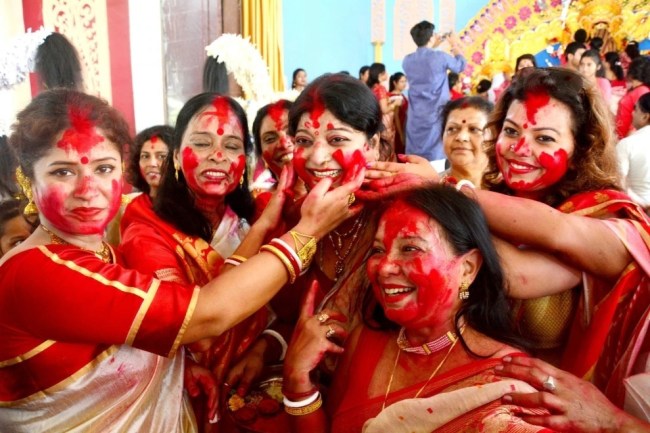
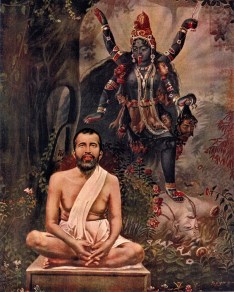
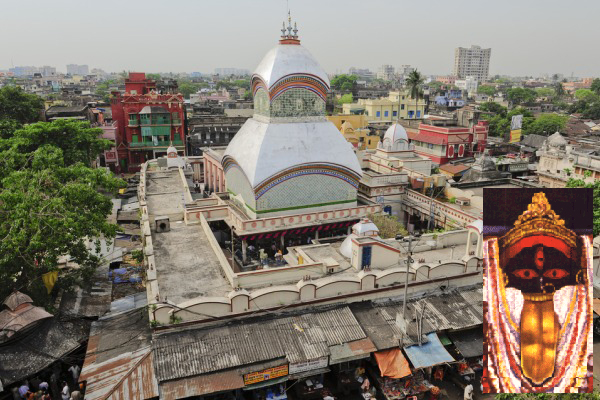
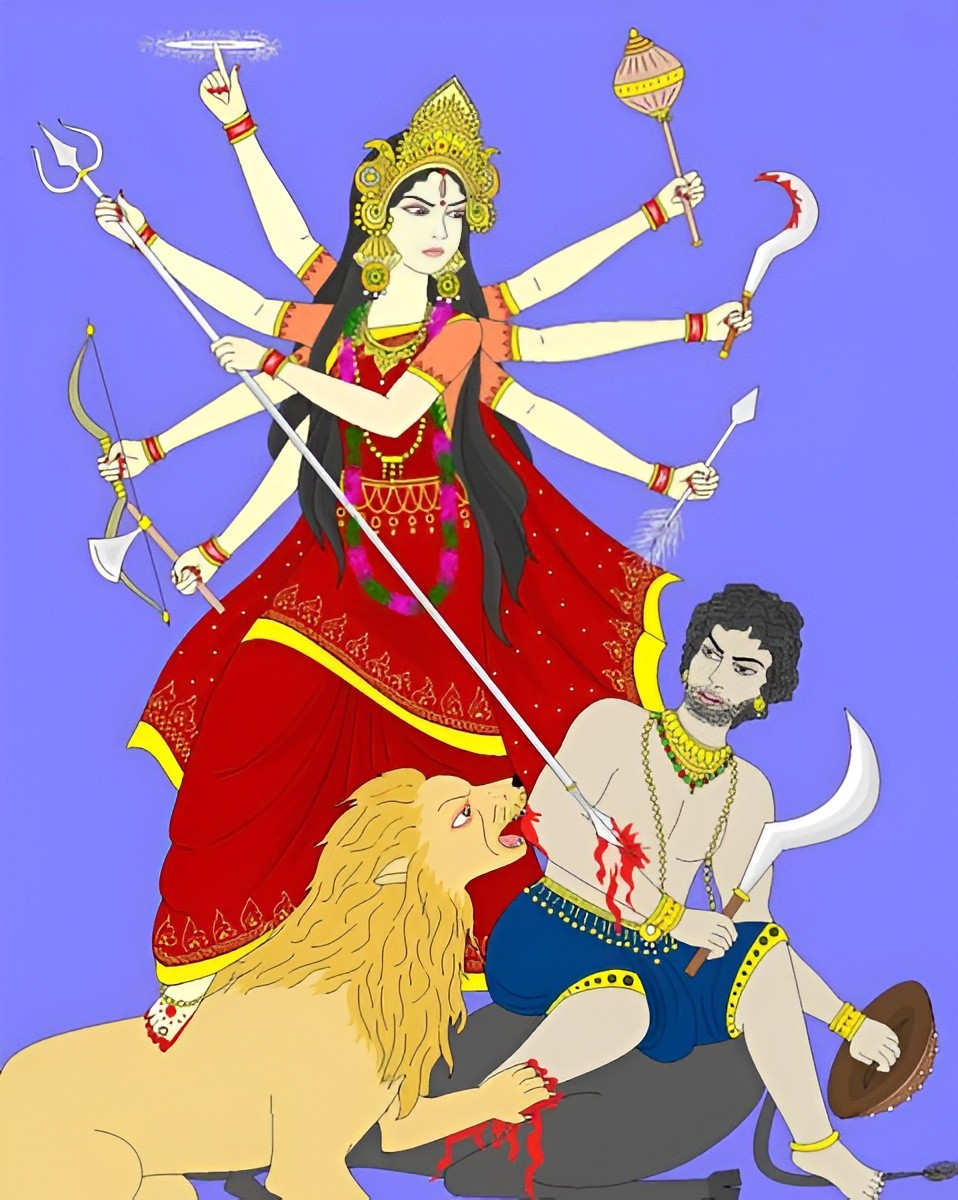
Navratri brings nine nights of a civilisation remembering who it believes holds up the universe. Each night unveils another face of Shakti, and the journey ends on Vijayadashami, or Bijoya, when Durga stands over the slain Mahishasura. She is not the rescued but the rescuer.
There is something extraordinary about a culture whose very word for power, shakti, is feminine. That inheritance is also a mirror. A society that bows before the Devi for nine nights sometimes returns, on the tenth morning, to imagining her daughters as fragile, and calls that culture. Bijoya leaves us one question: what do we keep of her once the pandals come down? The answer is not to worship less but to let worship mean what it says.
The Goddess who speaks for herself
The idea is ancient. In the Devi Suktam (RV 10.125), the rishika Vak Ambhrini does not pray to the Goddess. She speaks as her:
Aham rashtri sangamani vasunam chikitushee prathama yajniyanam.
I am the rashtri, the sovereign of the universe, the knower of Ultimate Reality.
This is not a goddess waiting to be defended. She is sovereignty, knowledge and righteous force, declared in a woman’s own voice. The same tradition gave us Gargi, who questioned Yajnavalkya, and Maitreyi, who chose knowledge over wealth.
What the shastras also said
The Dharmashastras are often held responsible for the distance between the Goddess and the woman, though the record is richer than that. The Manusmriti carries the much-quoted
Na stree swatantryam arhati (9.3). Yet the same text declares: Yatra naryastu pujyante ramante tatra devatah (3.56).
Where women are honoured, the gods rejoice; where they are not, every rite is fruitless.
Kautilya’s Arthashastra, in its chapter on the superintendent of yarn (2.23), fines any officer who looks upon a woman worker’s face or speaks of anything but the work, in a workshop where the lamp is kept only as bright as the yarn requires. The burden of propriety fell on the official, not the woman. The text secured the space; it did not confine her.
How the two voices came to part
If both voices belong to one tradition, how did they come to part? The divergence between the exalted status of the feminine in sacred thought and the lived position of women was neither instantaneous nor uniform. It grew through the interaction of normative texts, customary practice, social institutions and changing material conditions. The authority of Vak Ambhrini, Gargi and Maitreyi coexisted with later juridical formulations that increasingly located women within the structures of the family, and even within the Dharmashastra tradition the record cannot be reduced to a single position.
Every text carries the worldview of the world that wrote it. The hymns belong to an age that made room for women as seers. The legal literature that followed was composed as settled households, inherited property and lineage became society’s central concerns, and its authors, writing as men of their time, spoke of women chiefly in relation to the family. Even the verse on independence is framed as guardianship, with father, husband and son each keeping watch in turn. It reads less as a verdict on a woman’s worth than as the assumption of a household-centred world. Over centuries, custom repeated those assumptions until they felt like scripture.
What changed, then, was not the disappearance of the feminine principle from our religious imagination, but its uneven translation into social practice. Shakti remained divine, sovereign and unconstrained in the sacred sphere, while the autonomy of women in the social sphere became progressively mediated by custom, family structures and patriarchal readings of tradition. Neither the reverence nor the reflex is foreign to us. Both are ours.
A civilisation that is alive
Which one we carry forward is a question the tradition itself prepared us to answer, for it never claimed to be fixed. The very Manusmriti that records the household’s rules also observes that dharma differs from age to age:
Anye kritayuge dharmas tretayam dwapare apare; anye kaliyuge nrinam yuga-hrasanurupatah (1.85).
Sri Krishna gives that understanding its grammar: Dharma-samsthapanarthaya sambhavami yuge yuge (Bhagavad Gita 4.8).
Dharma is not set once and preserved in amber; it is re-established in every age. Civilisations endure by shedding what has worn out so that what is eternal may continue. Even the Constitution of India, barely 76 years old, has been amended over a hundred times because the society it serves is alive. Continuity depends on change.
To read the old texts as living thought is therefore not to defy them but to follow them. Their authors answered the questions of their age; ours is to answer our own. Restricting a daughter’s movement instead of making the street safe for her, or questioning a woman’s clothes rather than an offender’s conduct, is not preservation. It is a quiet disservice to a civilisation whose own statecraft fined an officer for a lamp that burned too bright. The Saraswati we invoke before examinations holds the book and the veena in her own hands; her daughters can hold their ambitions the same way.
The victory we celebrate
The Devi Mahatmya tells how the gods, unable to defeat Mahishasura, pooled their radiance into one feminine form and placed their weapons in her hands. She did not need their protection. She needed only their trust, and she won. Its best-loved hymn salutes her in every being:
Ya Devi Sarvabhuteshu Shakti-rupena Samsthita.
In every being, not only on the altar.
The hymn to the sovereign Devi was voiced by a woman. The rules of the household were written by men of their age. What is written next belongs to us, for every generation of this civilisation is handed the same pen. The Devi has already answered what a woman is. The question that remains is ours: when a daughter stands at the door with a book in one hand and a dream in the other, which of our two voices will she hear?
Shubho Bijoya! – The Pioneer, 20 October 2026
› Tejusvi Shukla is the Assistant Director (Research) at Bharat Ki Soch. Her focus of research is internal security, left-wing extremism, medical diplomacy, and the weaponization of social media.