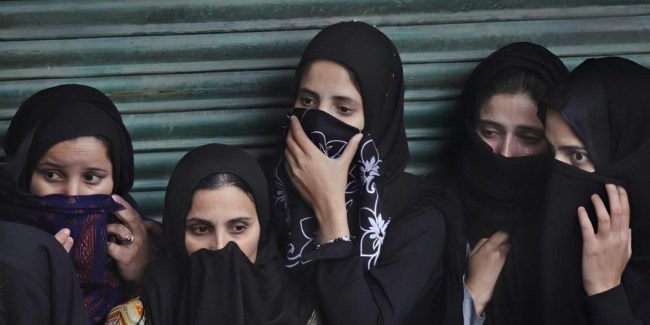
It is nearly impossible for non-Muslims, especially Hindus, to understand the powerful influence that religion exercises on Muslims. In the Indic traditions, religious books are part of an individual’s cultural heritage and exist to guide him in his moral and spiritual quest. In Islam, religious books exist to command and control every aspect of man’s life, spiritual and material, on promise of eternal pleasures in heaven or everlasting pain in hell hereafter. – Virendra Parekh
That Muhammad, founder of Islam, was a progressive reformer for his times and his teachings improved the lot of Arab women is a fashionable belief in many elite circles in non-Muslim countries. Shruti Anerao in a recent book, Muslim Women: Through the Prism of Muslim Scholars, examines its veracity in the light of writings of Muslim scholars, which point to the opposite conclusion: Islam regards women as inherently inferior to men, and taking advantage of its injunctions they are ill-treated, oppressed and exploited in ways beyond the imagination of average non-Muslims. Each of these scholars was born of Muslim parents and brought up in accordance with Islamic tradition in an almost wholly Muslim society. No outside influence shaped their perception until they came of age and began to doubt the justice and humanity of what was going on around them. They write from direct first-hand knowledge of Islam and Muslim society.
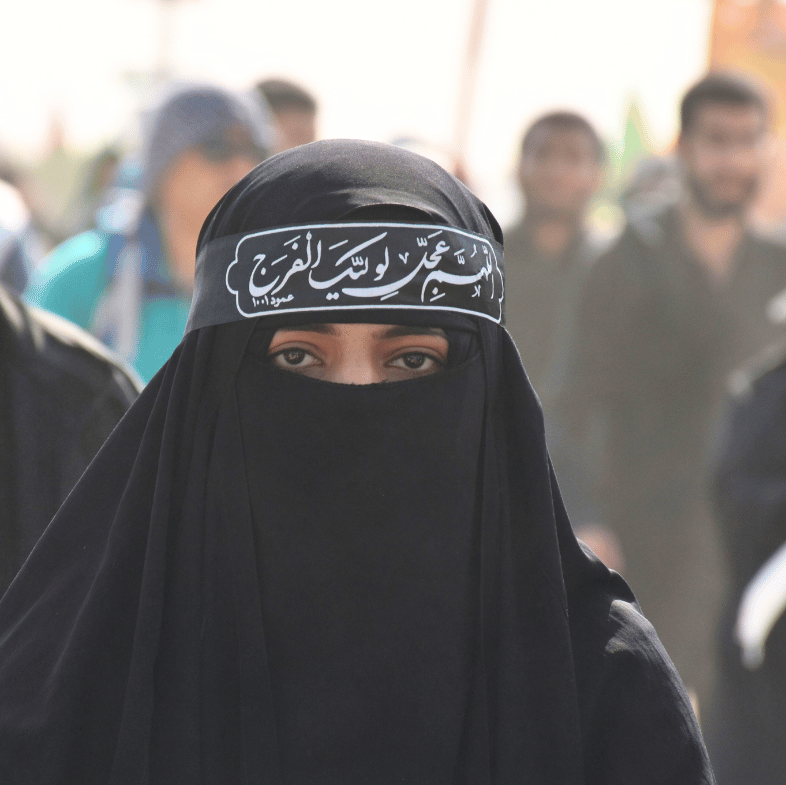
It is nearly impossible for non-Muslims, especially Hindus, to understand the powerful influence that religion exercises on Muslims. In the Indic traditions, religious books are part of an individual’s cultural heritage and exist to guide him in his moral and spiritual quest. In Islam, religious books exist to command and control every aspect of man’s life, spiritual and material, on promise of eternal pleasures of the heaven or everlasting pain of the hell hereafter. The Quran remains for all Muslims, not just traditionalists, the uncreated word of God Himself. It is valid for all times and places for the whole of the mankind; its ideas are absolutely true and beyond criticism. To question it is to question the very word of God and hence blasphemous. A Muslim’s duty is to believe it and obey its commands. This explains the hold of Ulemas on the Muslim society as interpreters of the Quran and custodians of its knowledge and traditions. It also explains the enormity of the task facing reformers: Any question about a dogma, any talk of reform can quickly be portrayed as questioning the word of God, punishable with terrible consequences. Indeed, from the early eighth century to our own times, this has been the fate of many who just raised a question. Shruti Anerao’s book has to be viewed in this light.
From the horse’s mouth
Wafa Sultan, the Syrian lady doctor and author of A God Who Hates, says that Muslims hate their women because their God does. Her grandfather held her grandmother responsible for the disgrace of not having a son. So, he forced the woman who bore him five children to find for him a beautiful girl to marry. After the wedding, the poor lady was reduced to the status of a servant in her own home. As a medical student at Aleppo University, Wafa stayed with the family of her brother’s friend, Ahmed and Huda. She often wondered how Huda, a very beautiful woman with green eyes, pink skin and blond hair selected such a short husband with a pendulous belly and skinny limbs. Huda shared her experience of their first night. “When he came into her room, she began to shudder. The wedding guests were all waiting outside the door for the proof of her virginity. The bridegroom swooped upon her like an animal and emerged from the room a few minutes later with a piece of cloth.”
As a medical student and later as a practitioner, Wafa came in direct contact with women from a large cross section of society. She could sense the fear in their eyes. Once she won their confidence, horrendous stories of their sexual exploitation tumbled out. Many had been raped, most by male members of their family, usually the fathers, brothers or in-laws. Unmarried women who became pregnant as a result of the rape were killed, in most cases by the rapist himself to keep the scandal from spreading. No doctor was required to obtain a death certificate; witnesses were sufficient.
A shocking aspect of this grim reality was that the victims could not expect sympathy from any quarter. A woman came to Wafa’s department with many circular burns the size of a small coin on her thighs and abdomen. Answering the doctor she said her husband used to stub out his cigarettes on her body “to punish her for being stupid.” The male doctor—repeat, doctor—laughed and said, “You must deserve it, he wouldn’t do it if you weren’t stupid!” Fatima, a thirty-year old widow was diagnosed with a three-month pregnancy. She had four children when her husband died five years ago. Her brother-in-law was raping her every day as he fed the family since the death of his brother.
Fatima implored the doctor to end her pregnancy anyhow as “my son would kill me if he knew about it.” The doctor performed the operation without anaesthesia as she did not have enough money to pay. The operation was extremely painful and she nearly died while undergoing it. But the doctor would not forgo even a small part of his fee.
Amal, a doctor, ran to an eye hospital with chemical burns in her eyes and on the face. First she said it was boiling water that caused the burns, but later she confided the bitter truth to her friend. Amal’s brother, fifteen years younger than her, had poured a fuel bucket on her face when she insisted on going out without his permission. Her mother, when told about the incident, chided Amal, “You got what you deserved. I have warned you more than once about going against your brother’s wishes. Now you know.” Even if a woman is educated, mature and capable of taking her own decisions, she is not allowed to do so.
If you thought that this picture is confined to some countries or some sections of the society, think again. Jean Sasson in her trilogy comprising Princess: A True Story, Princess Sultana’s Daugthers and Princess Sultana’s Circle, unveiled how even women of royal family lived a life of isolation, loneliness and humiliation in an authoritarian and patriarchal society. Sultana was a Saudi princess born to uncountable wealth.
Tahmina Durrani, the wife of the powerful Pakistani politician Mustafa Khar, right hand man of Zulfikar Ali Butto, was born in an influential family and lived in high society. In her autobiographical book My Feudal Lord, she describes her childhood. “Apart from my father, brother and a few close relatives, men were alien creatures, and from my earliest moments I was trained to avoid them. My childhood was encumbered by a lengthy list of don’ts, all designed to maintain an inviolable distance between myself and the masculine world: never wear makeup or nail polish. Do not look at boys. Avoid modern girlfriends and avoid any girlfriend who has an elder brother. Never visit a friend without special permission and without your nanny. Never pick up the phone. Never go out alone with the driver. Never stand around the kitchen with male servants.”
Compliance with this code of conduct, however, did not get her a happy married life. Tahmina had left her husband and a daughter to marry Mustafa. The reward: Mustafa scolded her every time she remembered her child and missed it. When her political fortunes were down, Mustafa would take it out on servants and wives. In a month of Ramzan, the servant was five minutes late in bringing the food. Mustafa beat him until he was unconscious. Then came Tahmina’s turn, who was then pregnant. Mustafa questioned her as if she were a criminal and a liar. No answer would satisfy him. “Suddenly, he threw me down on the bed and jumped on me. Sitting astride my belly, he slapped me repeatedly with his open palm, forehand and backhand, … he pulled my hair, thrusting my head from side to side, … suddenly, he leaped off me. One hand clutched my long braided hair and jerked me off the bed and onto the floor, … he threw me against a wall, picked me up and threw me against another again and again. Something burst in my ears, I felt an agonising pain in my eyes. Something split. Something swelled. Then the pain merged into a deep sense of agony….”
We have described this heartrending incident somewhat in detail, because it is not an isolated incident. Merciless beating of women by their husbands and other relatives is a common occurrence because it is rooted in beliefs and attitudes inculcated relentlessly across centuries and geographies.
Even worse is the contempt in which girl children are held, total control exercised on every aspect of a woman’s life by persons other than herself and a complete obedience routinely expected from her in everything. It is meant to snuff out any spark of freethinking, any chance of scepticism and any possibility of rebellion. When Wafa Sultan shouted at a mullah in a TV debate, “Be quiet! It is may turn!” it sent shockwaves across the countries. How can a woman dare shout at a man?
Dr. Majid Rafizadeh, an Iranian American political scientist in his book, A God That Hates Women, tells us that in his family girls were considered “the most difficult of burdens and most worthless things.” In Syria, Iraq and other countries of West Asia, the role of a woman, determined on the basis of religious books, is mostly limited to taking care of home, husband, family and bearing and rearing children. Education beyond elementary level is a waste of time, a dispensable luxury. Dr. Rafizadeh’s mother secured high grades in school, but her mother declared one day that she would not be going to the school from the next day. As she put it, “Why should you keep studying if you are eventually going to stay at home? You are meant to wash asses of your children, to clean, cook and take care of your family. Girls are born to stay at home and please their men.”
Even here, a girl cannot expect to select a suitable match. He would be chosen for her by others, usually elder males in the family. Amira, Majid’s mother, was compelled to marry a 39-year-old man, 24 years older than her. On the night of her marriage, she was forced to follow his wish to consummate the marriage. As Tahmina Durrani puts it, “The common belief is that a woman is an instrument of man’s carnal pleasure; if the woman ever indicated that she felt pleasure (in sexual relations), she is a potential adulteress and not to be trusted; to think independently is a crime that he has a right to punish.” Ayaan Hirsi Ali says in her book, Infidel, that in her childhood she was taught to be an ideal wife, a barri (pure, chaste). Among other things, “If her husband is cruel, if he rapes her and then taunts her about it, if he decides to take another wife, or beats her, she lowers her gaze and hides her tears. And she works hard, faultlessly. … If you long for love and comfort, you pray in silence to Allah to make your husband more bearable.”
What the Book says
Remarkably, every perpetrator of atrocities justified them by invoking commands of Allah in the Quran and precept and practice of the prophet in the Hadith. Like many feminists from this part of the world, Wafa Sultan and Ayaan Hirsi Ali initially attributed this mind-set and conduct to a misinterpretation of Islam and teachings of the Prophet. However, when they managed to learn Islam from the original sources through authentic translations, they were forced to change their opinion.
Ibn Warraq, a Muslim of Pakistani origin and author of a highly scholarly work, Why I am not a Muslim, had no such illusions. He quotes chapter and verse from the Quran and Hadith to show that Islam is deeply anti-feminist. Islam is the fundamental cause of repression of Muslim women and remains the major obstacle to the evolution of their position. Islam has always considered woman as an inferior creature in every way: physically, intellectually and morally. This negative vision is divinely sanctioned by the Quran, corroborated by hadiths (anecdotes of the Prophet) and perpetuated by commentaries of theologians, custodians of Muslim dogma and ignorance.
Islam regards woman essentially as a sex object created by God for the pleasure of man. It looks upon woman physically, even nakedly. The primary meaning of the word aurat is female genital organ and that of nikah is coitus. The Quran says “Your wives are your fields, so go and plough into your fields whichever way you like” (Surah 2.223)
Islam adopted the legend of Adam and Eve from the Old Testament and adapted it in its own fashion. Quran (4.1 and 7.189) says that the Allah created mankind from a single soul and therefrom he created its mate. From these, Muslim theologians have concluded that man was the original creation—womankind was created secondarily and for the repose of man. The rest follows from this. “Men are in charge of women, because Allah hath made the one of them to excel the other, and because they spend their property (for the support of women). So, good are obedient, guarding in secret that which Allah has guarded. As for those from whom ye fear rebellion, admonish them and banish them to beds apart; and scourge (beat) them. Then if they obey you, seek not a way against them.” (Quran 4.34). No wonder, under Shariat, a woman’s testimony is worth half that of a man and a daughter’s share in parent’s legacy is half that of a son. Islam explicitly forbids certain professions to women: head of state, head of the armed forces, imam, and judge.
Equally, in numerous hadiths on which are based Islamic laws, we learn of the woman’s role—to stay at home, to be at the beck and call of man, to obey him (which is a religious duty) and assure man a tranquil existence. “If it had been given me to order someone to prostrate themselves in front of someone other than God, I would surely have ordered women to prostrate themselves in front of their husbands,” says a hadith. Omar, the second caliph, said, “Prevent women from learning to write! Say no to their capricious ways.” Ali, the fourth caliph, said, “The entire woman is evil and what is worse is that it is a necessary evil.”
According to the famous and much revered philosopher Al-Ghalzali (1058-1111), whom professor Montgomery Watt describes as the greatest Muslim after Muhammad, “She should stay at home and get on with spinning, she should not go out often, she must not be well informed, nor must she be communicative with her neighbours and only visit them when absolutely necessary; she should take care of her husband and respect him in his presence and his absence and seek to satisfy him in everything; she must not leave her house without permission.…”
Wafa Sultan points out that in Islam, every relationship is essentially a power equation. The nature of relationship between God and Man in Islam is that between the ruler and his subject, master and slave, husband and wife, father and son. Woman is a property of man, a child is the property of his father, a slave is the property of his master and a labourer is a property of his employer, she says.
These injunctions are enforced with the threat of eternal punishment of burning in hell. In Muslim teaching, hell is intensely real and very close. You could feel the flames at any moment. Ayaan Hirsi Ali’s book, Infidel, describes how young minds are filled with fear of hell to mould them into resolute Muslims. “Quran lists hell’s torments in vivid details: sores, boiling water, unimaginably intense thirst, peeling of skin, burning of flesh, dissolving bowels, the everlasting fire that burns you forever because as flesh chars and your fluids boil you grow a new skin. You will go to hell unless you obey.” Christopher Hitchens, who wrote the foreword to Ayaan’s book says that, “Ayaan told me that she was not completely free of her repressive upbringing until she had lost all terror of hell.”
Contrast it with the condition of women in pre-Islamic Arabia. Khadija, the first wife of Mohammad, was a wealthy and successful merchant in Mecca, rode horse, hired Muhammad for her trade caravans and proposed marriage to him. The tenth-century Arab historian Al-Tabari, gives a vivid picture of the independence of aristocratic women before Islam. Women swore allegiance much as men, took part in negotiations with the new military chief of the city, i.e. Mohammad himself, and were often frankly hostile to the new religion, he says, in his account of Hint bint Otba, the wife of Abu Sufyan, the head of an aristocratic merchant of Mecca.
The cage and the way out
Ayaan Hirsi Ali compares the psychological conditioning in Islamic culture with a cage and calls Muslims as prisoners suffering from the Stockholm syndrome. She exhorts intellectuals and rational Muslims to be like Voltaire and work for their own enlightenment. The power of reason and individual responsibility, she hopes, will free the minds of individual Muslims from the burden of the hereafter, the constant feeling of guilt and temptations of fundamentalism. They should learn to become responsible for their problems and the areas where they lag behind.
History tells us that authoritarian regimes based on fear and violence appear to be very strong from outside, e.g. the Church in the Middle Ages, Mao’s China, Brezhnev’s USSR. But their rigidity proves their undoing. They implode from within. Man’s yearning from freedom and the quest for truth cannot be suppressed for long, however great the fear.
Enlightenment is catching up with Islam also, slowly but surely. Despite efforts of Ulemas, many Muslim countries have made considerable progress in the fields of education and public life. Winds of change are blowing even in citadels of Islamic orthodoxy like Saudi Arabia. Women are certainly not tied down to their homes, husbands and children as much as the orthodox would want them to be. At the other end, thousands of people in most conservative countries are leaving Islam in droves. The process is greatly aided by the revolution in information and communication brought about by technology. Thought control is becoming virtually impossible. (Thought manipulation is a different thing altogether, of course.) Yet the ease with which the theocratic regime in Iran crushed the women’s movement for reforms, the way Taliban imposed Sharia rule in Afghanistan as recently as the last decade highlights the enormity of the task before reformers.
Shruti Anerao’s book is a must read for Hindu women who have long been easy targets of a massive and systematic love jihad. It explains the tragedy that befalls many Hindu women who marry Muslim men in the mistaken belief that “what happened to others will not happen to me. My Abdul is different.” This book will help them understand what to expect from a Muslim husband after the veneer of amiability wears off.
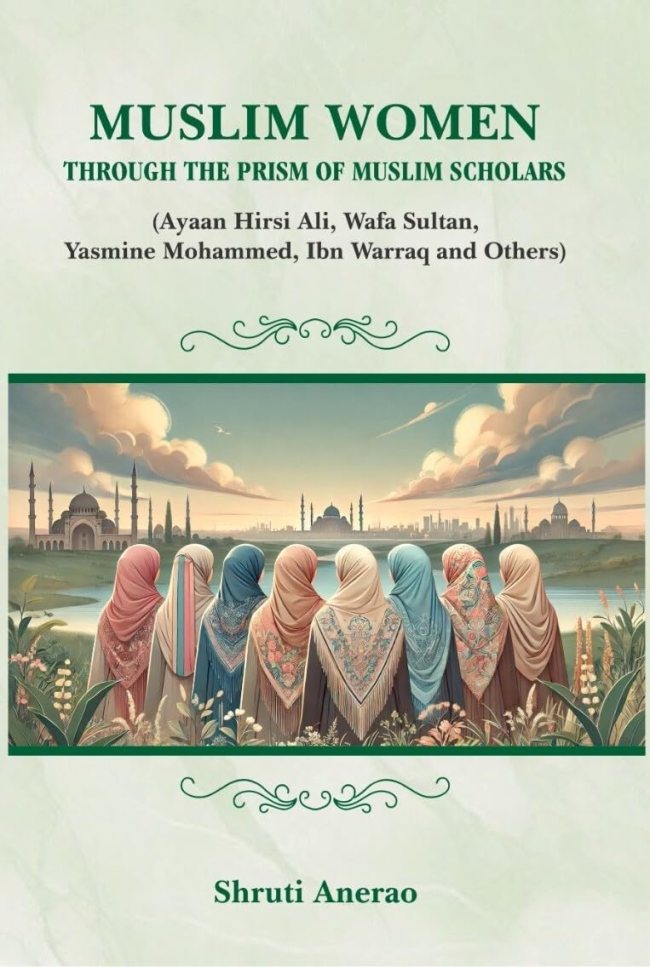
Muslim Women: Through the Prism of Muslim Scholars. Author: Shruti Anerao. Publishers: Akshaya Prakashan, New Delhi. First Edition: 2026. Pages: xxiii+175. Price Rs 395 (Amazon).