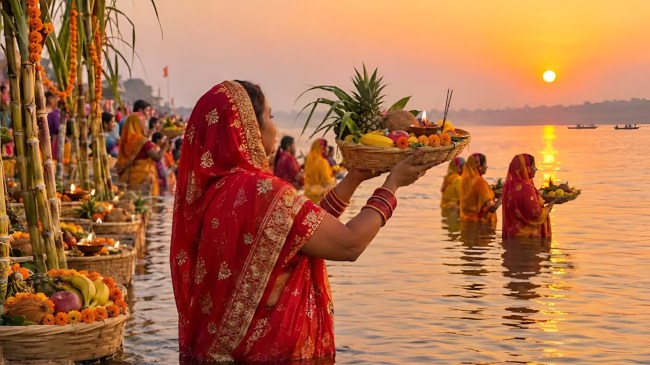
If you find every Hindu festival problematic, perhaps the problem lies in your own understanding of these festivals, which seems to be shaped by a narrow and reductive reading of their cultural significance. And judging by the tenor of much of the online discourse, there is every chance that this understanding is clouded by ideological prejudices and a deeply misguided interpretation of secularism. – Prajesh Panikkar
Hindu festivals, with their exuberance, imperfections and diversity, deserve understanding and engagement, and, where necessary, constructive criticism, not reflexive condemnation
It has now become a trend to bash Hindu festivals and cultural practices, without any understanding or introspection, as though that alone were enough to earn you progressive credentials among liberals in our country.
Every Diwali, every Onam, every Karwa Chauth, and every Holi becomes an occasion for unsolicited lectures from all and sundry, from Bollywood celebrities and the left-liberal academic establishment in universities such as JNU to the self-appointed liberal intelligentsia on Twitter, Facebook, Reddit and YouTube. They are all eager to tell us why the way Hindus celebrate their festivals is primitive, how these festivals supposedly reek of casteism, and in some cases, why they should not be celebrated at all.
Interestingly, the same crowd is far more indulgent towards non-Hindu religious festivals, even when the ritual slaughter of large numbers of animals is an integral part of some of the celebrations. The silence is even more striking when one considers how vocal these same people are in criticising Karwa Chauth, yet how reluctant they are to question religious practices and doctrines that prescribe restrictive codes of conduct for women, dictate how they should dress, or insist that they remain confined to their homes rather than participate in public life. These are hardly obscure or marginal questions. They concern the everyday freedom, dignity and autonomy of women. Yet, those who are quick to lecture Hindus on the regressive elements of their religious traditions often have remarkably little to say about such practices elsewhere. Their response is not always limited to silence, either. At times, they even mock the press for reporting objectionable and deeply regressive statements made by religious figures.
It was Emile Durkheim who wrote about how collective rituals produce what he called “collective effervescence”. Religious festivals are perhaps among the clearest manifestations of this phenomenon. Festivals are, more often than not, occasions when a society reaffirms its collective identity and reminds itself of what binds its members together. Just as communication is impossible when only one person knows a language, a festival derives its meaning from the fact that an entire community understands and participates in its shared symbols, rituals and expressions. Everyone knows the language of the festival, and through its celebration, that shared language is renewed and passed on. When a celebrity treats Diwali as a nuisance to be managed, it reflects a failure to understand what is actually being practised. It is a failure to learn the cultural language of the society in which one lives. If anything, such an attitude is the very opposite of what liberalism and progressive values ought to stand for.
One reason such erroneous views are mistaken for marks of progressiveness is a fundamentally flawed understanding of Indian secularism. It seems that many of these self-proclaimed ‘progressives’ believe that bashing the religion of the majority (or, in many cases, denouncing their own religion) earns them points and makes them more committed secularists.
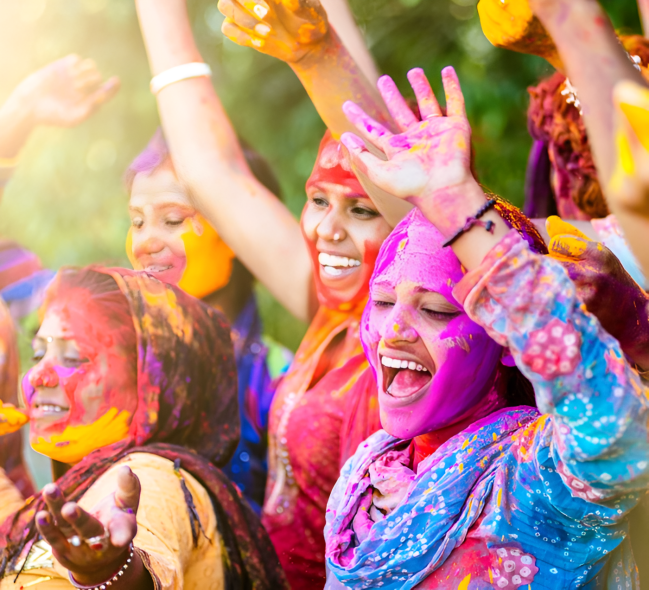
Festivals, particularly Hindu festivals, are often messy, noisy and excessive. Whether it is Holi, Diwali or Onam, this exuberance and lack of restraint are hard to miss. An Indian village on the eve of a Hindu festival looks quite unlike the serene, almost deserted streets of a European city on Christmas Day. On Onam, the streets, village corners and public spaces across Kerala become energetic, chaotic and boisterous, filled with celebration, joy and laughter. The same is true of an ordinary neighbourhood in Uttar Pradesh on the day of Holi. This temporary suspension of everyday order and restraint is, in many ways, what defines the festival.
One Western scholar, writing about Holi, describes this phenomenon as ‘licensed rebellion’. But where does this licence come from? It comes from the society in which the festival is celebrated, from a shared understanding of its cultural language and from the willingness of the community to participate in it. It is a mistake to interpret this apparent disorder as the absence of social order. It is an expression of a different kind of social order, one that the community recognises, understands and, for a brief period, collectively embraces.
Of course, there may be instances of excess that go beyond what is permissible, and celebrations may occasionally cross legitimate boundaries. But such things can happen at any festival or celebration, irrespective of religion or occasion. These excesses do not define any festival. To suggest so is also an attempt to make those who celebrate them feel diminished and guilty. Beneath the polished language of criticism, the underlying message is unmistakable: you should be ashamed of celebrating this festival. No festival, or indeed any collective celebration, should be judged solely by its occasional excesses while its cultural meaning, social function and the genuine joy it brings to people are overlooked.
Unfortunately, this is precisely what it looks like when celebrities publicly bash festivals, often invoking issues such as firecrackers, patriarchy or the mythology underlying the celebrations. Rather than engaging with these practices in their cultural and social context, they seem more interested in using them as an opportunity to score brownie points and project an image of themselves as secular and progressive. In the process, they reduce complex cultural practices to a handful of alleged transgressions and overlook everything else that gives these festivals their meaning.
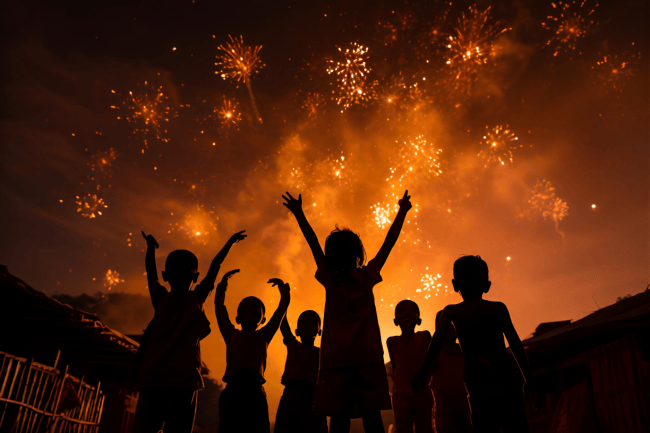
If fireworks and the pollution they cause are the first things that come to your mind when you think of Diwali, if the inconvenience caused by the celebration is what you immediately associate with Holi, and if caste oppression and the subordination of marginalised communities are all that you can interpret from the mythology surrounding Onam, the problem is not with these festivals. As they say, if everywhere you go, you find yourself complaining about the stench, perhaps it is time to look under your own shoes. If you find every Hindu festival problematic, perhaps the problem lies in your own understanding of these festivals, which seems to be shaped by a narrow and reductive reading of their cultural significance. And judging by the tenor of much of the online discourse, there is every chance that this understanding is clouded by ideological prejudices and a deeply misguided interpretation of secularism.
There is nothing wrong with critically examining a religious tradition or festival. One is entitled to question the festivities, point out their excesses and draw attention to aspects of them that one finds objectionable. But to do so without understanding the cultural language of the festival or appreciating the spirit in which it is celebrated is not constructive. Criticism should not become an expression of self-righteousness or contempt.
Unfortunately, much of this so-called ‘criticism’ comes from a moral pedestal, with the critic, most often an activist or a protester, looking down upon those who celebrate the tradition.
Hindu festivals, with all their exuberance, imperfections, symbolism and diversity, deserve understanding and engagement, and, where necessary, constructive criticism, not reflexive condemnation. After all, being progressive should mean learning to understand one’s society better, not finding ever more ingenious ways to express contempt for it. – News18, 6 November 2026
› Prajesh Panikkar is a commentator with a research degree in philosophy from the University of Sheffield, focusing on the intersections of culture, history, and politics.