The Problem of Christianism – Sita Ram Goel

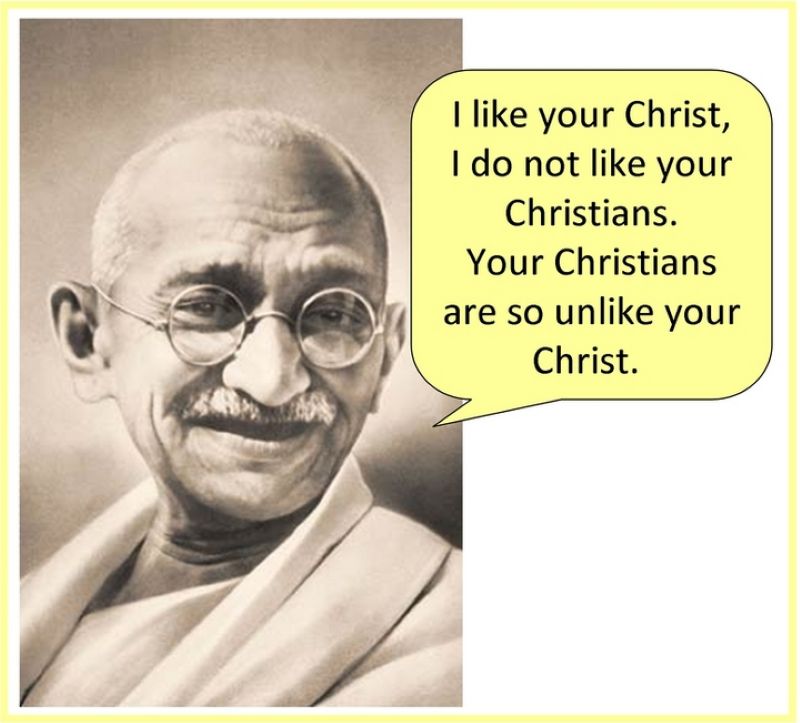
Gandhi Quote

It is impossible for me to reconcile myself to the idea of conversion after the style that goes on in India and elsewhere today. It is an error which is perhaps the greatest impediment to the world’s progress toward peace. Why should a Christian want to convert a Hindu to Christianity? Why should he not be satisfied if the Hindu is a good or godly man? – M.K. Gandhi

The British rule in India crystallised two residues—Christianism and Macaulayism.

Certain strains of Macaulayism developed what is euphemistically described as a “revolutionary temper” in the later stages of the British rule and joined hands with Communism after the Bolshevik victory in Russia. The whole of Communism, which is also hostile to Hindu society and culture, is not Macaulayism. Yet, if Macaulayism had not prepared the ideological ground, Communism could not have made the strides it did in this country.

We shall analyse Christianism first. It was the first to make itself felt forcefully at the onset of the British rule in India.

We, however, wish to make it clear at the very outset that Christianism in India does not refer to the Christians in this country. They are our own people who at a certain stage of our history went over to a foreign faith in an atmosphere created and exploited by Christianism. But although they have renounced their ancestral faith, they have, by and large, not shown any marked hostility towards Hindu society and culture. Nor have they so far served as vehicles of Christianism except in certain areas of the Northeast, notably Meghalaya, Mizoram and Nagaland.  Christianism in India is centered in the numerous Christian missions operating all over the country, particularly in the so-called tribal belts.

The eight fundamentals of Christianism in India may be summarised as follows:

1. That the Hindus have never had a Saviour whose historicity can be ascertained, with the possible exception of the Buddha;

2. That Jesus Christ whose historicity cannot be questioned has superseded all earlier Saviours of Hinduism—if they were Saviours at all and not disciples of Lucifer—and rendered superfluous all subsequent Hindu saints and sages;

3. That St. Thomas, an apostle of Jesus himself, was specially chosen by the Church to win India for his Master’s message;

4. That St. Thomas could not complete his mission in India because he met an untimely martyrdom at the hands of some Hindu, most probably Brahmin, heathens; [1]

5. That the converts made by St. Thomas, the first century Christians of the South, establish beyond doubt that Christianity is an ancient Indian religion and not a Western import as alleged by the Hindus;

6. That it is the sacred task of the Christian Church to complete the mission of St. Thomas and see to it that India becomes a Christian country, once and for all;

7. That if there is any thing good and wholesome in Hindu religion, it is not because Hindu saints and sages ever made any direct or conscious contact with Truth but because they merely stumbled upon some of it in the workings of Universal Nature which was preparing itself over a long time for the advent of Jesus Christ;

8. That no Hindu, even if he follows the Ten Commandments in letter and spirit and lives by the Sermon on the Mount, can ever hope to escape eternal hell-fire unless he has been baptised in a Christian church and administered the Christian sacraments.

These tenets have their source in the Christian religion which also, like Islam, is an extremely exclusive religion. [2] Christianity too claims for itself a monopoly of truth and virtue, swears by the only true God, the only true Saviour or the only Son of the only true God, the only true Revelation, the only true way of worship, and so on. It too has to its discredit a long and unrelieved record of wanton destruction of ancient religions and cultures and a large-scale killing of heathens. The annals of Europe, Asia Minor, North Africa and America, particularly Central and South America, provide harrowing details of this destruction and bloodshed.

We in this country do not associate Christianity with misdeeds similar to those of Islam because the British invaders who finally succeeded in capturing power in India did not allow the Christian crusaders to use state power, directly and in an uninhibited manner. They had perhaps become wiser by a reading of Muslim history in India and did not allow their religion to interfere with the business of building a stable empire. A more tenable explanation of this British refusal to patronise Christianity beyond the point of no return is the Renaissance in Europe which had considerably discredited this creed in its own homeland by the time British arms were triumphant in India.

St. Francis Xavier

But we did have a taste of the intrinsic spirit of Christian aggression in our first encounter with the missionaries who swarmed towards our shores in the wake of Western victories from the 16th century onwards. When the Portuguese seized Goa and adjoining territories the Catholic Church lost no time in setting up an Inquisition for the benefit of native converts who were likely to recant or relax in their faith. Francis Xavier, whom the Catholic Church hails as the Patron Saint of the East, expressed a deep satisfaction at the sight of six thousand dead Muslims whom the Portuguese had slaughtered. He also made forcible conversions, demolished Hindu temples, smashed Hindu idols, and inaugurated that anti-Brahmanism which has by now become the sine qua non of all progressive thought and politics in India.

The triumphal march of British arms in India in the second half of the 18th century convinced the Christian missionaries that British victories were due not to a superiority in the art of warfare but to the superiority of the Christian creed by which the British generals and soldiers swore. They immediately started pouring venom on Hindu religion, culture and society. No lie was vile enough in the service of Christian “truth”. No fraud was foul enough in the service of Christian “virtue”.

An example will serve to illustrate the spiteful spirit of the Christian missionaries at that time. They spread a canard in India and abroad that many Hindus voluntarily rushed under the wheels of the great chariot during the annual rathayatra at Puri, and got themselves crushed to death in order to attain salvation. The great chariot, according to them, was always accompanied by droves of dancing girls who sang lascivious songs and made obscene gestures towards crowds on both sides of the broad street. The “great” William Wilberforce, who ruled the circle of Christian crusaders in Britain and who adamantly advocated the Christianization of India by an unstinted use of state power, demanded immediately that the temple of Jagannath be demolished to stop this “devil-dance” for good. The British Commissioner of Puri at that time saved the situation by writing a long letter to a liberal British MP in which he stated that he along with many other British civilians in the district had been a regular witness of the rathayatra for twenty years but had never witnessed a single victim under the wheels nor found anything immodest in the songs and symbolic gestures of the dancing girls. The English word “Juggernaut”, which according to the Chambers Twentieth Century Dictionary means “any relentless destroying force”, is a living witness to the inventive imagination of the early Christian missionaries.

This campaign of calumny against everything Hindu continued till late in the 19th century. Swami Vivekanada was referring to this crude campaign when he cried with anguish in the Parliament of Religions at Chicago that “if we Hindus dig out all the dirt from the bottom of the Pacific Ocean and throw it in your faces, it will be but a speck compared to what your missionaries have done to our religion and culture”.

Had not the Hindus come out in defence of their religion and culture, this missionary mischief would have multiplied by leaps and bounds. The Brahmo Samaj and the Arya Samaj were the earliest expressions of this Hindu spirit of resistance. A notable contribution was made by the Theosophical Society whose founder, Madame Blavatsky, exposed the spiritual and moral claims of Christianity and whose chief apostle in India, Mrs. Annie Besant, inspired no small pride in the Hindu heritage. The Ramakrishna Mission also came to the rescue at a later stage. Mahatma Gandhi gave no quarter to Christian theology or to Jesus Christ as the only Son of God and Saviour of mankind. He had his own charming method of recommending Sermon on the Mount while showing compassion for the victims of the missionaries whom he described as “rice Christians”. [3]

Perhaps the main reason for the weakening of this malicious and mendacious campaign was the collapse of Christianity in its own homeland, the Western countries. The West had taken a decisive turn towards the scientific spirit. Meanwhile, the message of Hindu spirituality had also spread to the centres of learning in the West. The exponents of Hindu religion and culture like Ramakrishna Paramahansa, Swami Vivekananda, Sri Aurobindo, Raman Maharshi, Rabindranath Tagore, Ananda Coomaraswami and Mahatma Gandhi were demonstrating by their words and deeds the profound promise which Hindu Dharma held for mankind. The missionaries had to change their methods.

The core of Christianism in India, however, remains intact. They now know that the fortress of Hindu society cannot be seized by a frontal assault. They are, therefore, busy in the backyards and have hidden themselves behind the smoke-screens of several theologies. Some of these covert methods can be listed as follows:

1. Training of more and more native missionaries in their far-flung, well-equipped and fabulously financed seminaries so that missionary work looks no more like an undertaking manned mostly by foreigners;

2. Hinduising the outer accoutrements of Christian priests, liturgy and sacraments in order to convince the Hindus that Christianity is not an imported creed, and that Christianism is not out to corrode Hindu culture;

3. Directing their powerful press and publishing houses not to attack Hindu religion and culture openly but to develop a scholarly and comparative critique of Hindu religion, culture and society, always to the ultimate disadvantage of the latter;

4. To establish and extend educational institutions which at least immunise the upper class Hindu children and youth against whatever Hindu ways still survive in their homes, wherever they do not succeed in attracting them towards Christianity;

5. To build and expand hospitals and undertake other social work in order to attract an all-round respect for the Christian spirit of social service, and neutralise as narrow bigotry any questioning of their missionary motives;

6. To open orphanages and homes for the handicapped where proselytization can proceed safely and unnoticed;

7. To concentrate on Hindu tribals who are removed from the main centres of Hindu population, so that there is no untoward publicity;

8. To take out promising candidates for conversion on prolonged tours of Western countries in order to impress upon them the wonders worked by Christian culture and civilization;

9. To encourage well-to-do and willing Christians in the West to adopt boys and girls from poor Indian families, send them to missionary schools and colleges, and provide them with monetary assistance till they are converted;

10. To finance and promote political campaigns for separate states, inside or outside the Union of India, in those areas where the Christian population has attained majority or dominance.

There are plenty of methods which the missionaries employ to harangue and/or hoodwink the unsuspecting Hindus. Some of these methods are pretty crude, especially those employed by the American missionaries who aim a loud and simplistic promise, “you also can be saved” or a sweet scolding, “don’t you want to save yourself?” through big advertisements in daily newspapers, regular radio broadcasts and door to door pedlars of salvation. The other methods are sophisticated and disguised as “Indian theology”. [4]

But what looms large at the back of all these methods is the mammoth finance which flows in freely from the coffers of the Christian churches and communities in Europe and America. An idea of the magnitude of this finance can be got from a recent incident which was widely reported in the daily press. An imaginative and enterprising but poor South Indian palmed off on a Christian missionary a lot of faked literary and archaeological evidence about the adventures of St. Thomas in South India against a cash payment of fifteen lakh rupees—a paltry sum in the total budget of the mission concerned. And there are hundreds of such missions in India.

The Statesman dated 17 August 1981 has published an interesting news item from Aachen in West Germany: The Nobel Peace Prize Winner, Mother Teresa, has asked her supporters to suspend charity donations, reports UNI-DPA. The German Section of the International Association of Friends of Mother Teresa which donated six million marks in 1980 is to be disbanded at the end of this year in response to the plea. Mother Teresa who won the prize in 1979 after years of work aiding the poorest of the poor called for a temporary halt to contributions “until we have used up what we have”. “I will then ask you again,” the founder of the Missionaries of Charity said in a circular. Excessive support of a single charity leading to the needs of thousands of others being forgotten was probably behind the request.”

Six million West German marks amount to approximately two and a half crores of rupees. The amounts contributed by other sections of the International Association of Friends of Mothers Teresa are most likely to total up to many times this sum. Mother Teresa is not in a position to use all the money that has already been given to her. So the torrent has been halted temporarily. It will start pouring again as soon as she gives the signal. And hers is only one of the “thousands of other charities”.  One can well imagine the staggering finance at the disposal of Christianism in India.

The free flow of this Western wealth enables the missionaries to live in and have at their disposal palatial mansions in which their missions and seminaries are housed. Their vow of poverty never comes in the way of their having modern sanitation facilities, kitchens, communications and transport. They can travel not only over the length and breadth of this country but to the ends of the earth to attend conferences, congregations, seminars and symposia. Everywhere they go they can stay in similar sumptuous style. It is but human if the superiority of their style of living gets confused with the superiority of the Christian creed.

Recently some missionaries, particularly in the Catholic missions, have started talking a new language—the language of radicalism and revolution. It is not unoften that this language comes most easily to those who do not have to share the woes and wants of people with whom they commiserate. They make the best of both the worlds. Our Communist leaders are an excellent example of such synthetic radicalism.

The West has lost its fascination for the faith. It is becoming increasingly difficult to find men and women in the West who would take the holy orders and become wedded to vows of chastity, poverty and obedience. But the West does not mind parting with plenty of cash which its prosperity can spare with ease. Christianity is, therefore, making a bold bid to establish a safer haven in the East while the going is good.

India provides a particularly soft target. The Christian missions are welcome to open their purse strings in the Islamic and Communist countries of Asia. But the missions there are barred from winning new converts. Hindu India, drowned in poverty and suffering from cultural self-forgetfulness, is the only country in Asia which provides the quid pro quo. [5] – Extracted from Hindu Society Under Seige, 1996

Footnotes

1 See Ishwar Sharan, Myth of St. Thomas and the Mylapore Shiva Temple, Voice of India, New Delhi, 1991.

2 See Sita Ram Goel, Papacy: Its Doctrine and History, Voice of India, New Delhi, 1986.

3 See Sita Ram Goel, History of Hindu-Christian Encounters, Voice of India, New Delhi, 1989.

4 See Catholic Ashrams: Adopting and Adapting Hindu Dharma, Voice of India, New Delhi, 1988.

5 See Ram Swarup, Cultural Self-Alienation and Some Problems Hinduism Faces, Voice of India, New Delhi, 1987.

St. Thomas

The Sati Strategy – Koenraad Elst

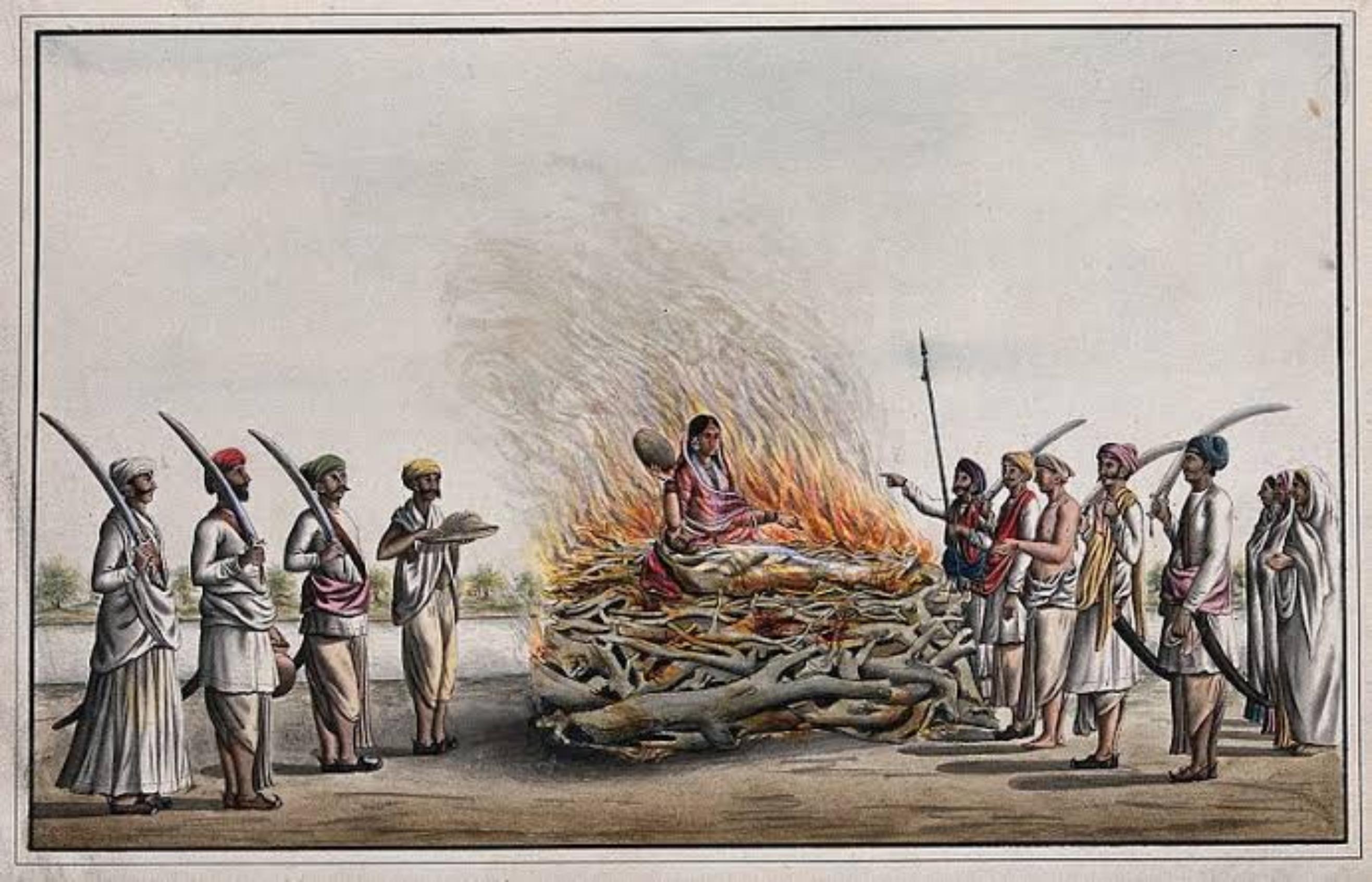
Sati

The missionary assault on Hinduism dramatized the practice of Sati, which had been “an ‘exceptional act’ performed by a minuscule number of Hindu widows over the centuries”, of which the occurrence had been “exaggerated in the nineteenth century by Evangelicals and Baptist missionaries eager to christianize and anglicize India”. – Dr. Koenraad Elst

The missionaries are responsible for associating Hinduism with Sati much more prominently than would be fair. The missionary assault on Hinduism dramatized the practice of Sati, which had been “an ‘exceptional act’ performed by a minuscule number of Hindu widows over the centuries, of which the occurrence had been “exaggerated in the nineteenth century by Evangelicals and Baptist missionaries eager to christianize and anglicize India”. – Dr. Koenraad  Elst

Meenakshi Jain’s book ‘Sati’

After making history with her book on the Ayodhya controversy, Rama and Ayodhya (2013), Prof. Meenakshi Jain adds to her reputation with the present hefty volume Sati: Evangelicals, Baptist Missionaries, and the Changing Colonial Discourse (Aryan Books International, Delhi 2016). In it, as a meticulous professional historian, she quotes all the relevant sources, with descriptions of Sati from the ancient through the medieval to the modern period. She adds the full text of the relevant British and Republican laws and of Lord William Bentinck’s Minute on Sati (1829), that led to the prohibition on Sati. This book makes the whole array of primary sources readily accessible, so from now on, it will be an indispensable reference for all debates on Sati.

But in the design of the book, all this material is instrumental in studying the uses made of Sati in the colonial period. In particular, the missionary campaign to rally support for the project of mass conversion of the Indian heathens to the saving light of Christianity made good use of Sati. This practice had a strong in-your-face shock value and could perfectly illustrate the barbarity of Hinduism.

Indignation

In the preface, Prof. Jain surveys the existing literature and expresses her assent to some recent theories. Thus, Rahul Sapra found that Gayatri Spivak’s observations, e.g. that the 19th-century British tried to remake Indian society in their own image and used Sati as the most vivid proof of the need for this radical remaking, don’t take into account the changing political equation during the centuries of gradual European penetration. In the 17th century, European traders and travellers mostly joined the natives in glorifying the women committing Sati, whereas by the 19th century, they posed as chivalrous saviours of the victimized native women from the cruel native men. This was because they were no longer travellers in an exotic country and at the mercy of the native people, but had become masters of the land and gotten imbued with a sense of superiority.

Indians in large numbers, and especially the many indefatigable but amateurish “history rewriters”, tend to be defective in their sense of history, starting with their seeming ignorance about the otherwise very common phenomenon of change. When I hear these history rewriters fulminate against the West with its supposed evil designs of somehow dominating India again, it seems that in their minds, time has frozen in the Victorian age. Similarly here, there is not one monolithic Western view of Sati but, apart even from individual differences of opinion, there are distinct stages, partly because of the changing power equation and partly because internal changes in the Western outlook have influenced the Western perception of things Indian. So it takes a genuine historian to map out precisely what has changed and what not, and which factors have effected those particular changes.

Then again, It is of course interesting to realize the continuity between the present-day interference in Indian culture by Leftist scholars like Wendy Doniger and Sheldon Pollock and that of the British colonialists: “We know best what is wrong with your traditions and we come to save you from yourselves.”

In this respect, the changes in the Western attitude to Sati run parallel to that regarding caste. Until the early 20th century, caste was seen as a specifically Indian form of a universal phenomenon, viz. social inequality. Nobody was particularly scandalized when in 1622, the Pope gave permission to practise caste discrimination between converts inside the Church. Around the time of the French Revolution, the idea of equality started catching on, but only gradually became the accepted norm. At that point, it became problematic that people’s status was said to be determined by birth. In this case, determination by the inborn circumstance of being a woman, unequal in rights compared to men, and never more radically unequal than in committing Sati. After World War II the norm (henceforth called Human Rights) of absolute equality and increasingly of absolute individual self-determination made the tradition of caste and of Sati too horrible to tolerate. Therefore, the indignation about Sati is far greater today than when Marco Polo visited India. Today, Sati is already a memory, but the commotion around the exceptional Sati of 1987 gave an idea of the indignation it would provoke today.

Evangelization

In this case, an extra factor came into play to effect a change in British attitudes to Sati. In Parliamentary debates about the East India Company Charter in 1793, there was no mention yet of Sati though it had been described many times, including by Company eyewitnesses. But by 1829, Sati was forbidden in all Company domains. This turn-around was the result of a campaign by the missionary lobby.

Ever since the missionaries set out to convert the Pagans of India, they made it their business to contrast the benignity of Christianity with the demeaning atrocities of heathenism. This was an old tradition starting with the Biblical vilification of child sacrifice to the god Moloch by the Canaanites. The practice was also attested by the Romans when they besieged the Canaanite (Phoenician) colony of Carthage. The Bible writers and their missionary acolytes present child sacrifice as a necessary component of polytheism, from which monotheism came to save humanity. And indeed, we read here how Rev. William Carey tried to muster evidence of child sacrifice too—but settled for Sati as convincing enough.

In reality, the abolition of human sacrifice was a universal evolution equally affecting Pagan cultures such as the Romans. In the case of Brahmanism, it is speculated that the Vastu Purusha concept (a human frame deemed to underlie a house) is a memory of a pre-Vedic human sacrifice. Even if true, fact is that in really existing Brahmanism, human sacrifice has not been part of it for thousands of years; if it had, we would be reminded of it every day. In this respect, Brahmanism was definitely ahead of the rest of humanity.

Not to idealize matters, we have to admit that, like the Biblical writers, who used the vilification of the child-sacrificing Canaanites as a justification to seize their land (and even to kill them all), Pagans who had left the practice behind equally used the reference to it to score political points. The Romans had practised human sacrifice within living memory and then abolished it, so they were acutely aware of it and tried to exorcise it from their own historical identity by rooting it out in conquered lands as well. (This is the same psychology as among modern Westerners who remember their grandfathers’ abolition of slavery and therefore feel spurred to support or engineer the “abolition of caste” in India.) Using that mentality, Roman war leaders would emphasize this phenomenon of child sacrifice among the Carthaginians to portray them as barbarians in urgent need of Rome’s civilizing intervention. Later Caesar would also demonize as human-sacrificers the Druids of Gaul, another “barbarian” country the Romans “liberated” from its own traditions after conquering it. Likewise, the Chinese Zhou dynasty justified its coup d’état (11th century BCE) against the Shang dynasty by demonizing the Shang as practising human sacrifice.

This way, Sati came in very handy to justify an offensive in India. Mind you, in a military sense India had partly been conquered already, and British self-confidence at the time was such that the complete subjugation of the subcontinent seemed assured. The offensive in this case was not military, its target was the christianization of the East India Company, to be followed by the conversion of its subject population. Around 1800, the Company was still purely commercial and even banned missionaries: their religious zeal might create riots, and these would be bad for business. So, the Christian lobby had to convince the British parliamentarians that the christianization of India was good and necessary, and therefore worthy of the Company’s active or passive support, namely to free the natives from barbarism. To that end, there was no better eye-catcher than Sati.         

Here I will skip a large part of Prof. Jain’s research, namely into the details of the specific intrigues and events that ultimately led to the success of the missionary effort. While these chapters are important for understanding the Christian presence in India, and while I recommend you read them, I have decided for myself to limit my attention for colonial history as it is presently eating up too much energy, especially of the Hindus. The study of colonial history is instructive and someone should do it, but for the many, it is far more useful to study Dharma itself, to immerse yourself in Hindu civilization as it took shape, rather than in the oppression of and then the resistance by the Hindus. India is free now and could reinvigorate Dharmic civilization, which is a much worthier goal than to re-live the comparatively few centuries of oppression.

Let us only note that the missionaries are responsible for associating Hinduism with Sati much more prominently than would be fair. The missionary assault on Hinduism dramatized the practice of Sati, which had been “an ‘exceptional act’ performed by a minuscule number of Hindu widows over the centuries”, of which the occurrence had been “exaggerated in the nineteenth century by Evangelicals and Baptist missionaries eager to christianize and anglicize India”. 

Krishna’s wives 

Many Hindus believe that Sati is an external contribution, probably triggered by the Muslim conquests. In reality, Sati is as old as scriptural Hinduism. Already the Rg Veda (10:18:7-8, quoted and discussed on p. 4–5) describes a funeral where the widow is lying down beside her husband on the pyre, but is led away from it, back to the world of the living. So it already provides a description of a Sati about to take place, as well as of the Brahmanical rejection of Sati.

Likewise, the Mahabharata, the best guide to living Hinduism, features several cases of Sati. Most prominent is the self-immolation by Pandu’s most beloved wife Madri. Less well-known perhaps is that Krishna’s father Vasudeva is followed on the pyre by four wives, and that Krishna’s death triggers the self-immolation—in his absence—of five of his many wives. But unlike Mohammed, Krishna need not be emulated by his followers. By contrast, Rama’s influence on the women in his life is not such that they commit Sati—on the contrary, his wife Sita comes unscathed out of the flames of her “trial by fire”—and he counts as the perfect man, the model whose behaviour should serve us as exemplary.  

The oldest foreign (viz. Greek) testimony on Indian Sati reports on the death of an Indian general in the Persian army. His two wives fought over the honour of climbing his funeral pyre. Both had a case: one was the eldest, the other was not pregnant—whereas the eldest was, and should not deprive the deceased man of his progeny. So the authorities had to intervene, and they ruled in favour of the younger wife. It should be repeated, for the sake of clarity, that “favour” here really means the honour of committing self-immolation, as emphatically desired by the young widow.

Indeed, a woman wanting to commit Sati needed some will-power, for Hindu society did not take this as a matter of course. A per the many testimonies, she usually had to overcome the dissuasion from her family and from worldly or priestly authorities. (But rather than leading her away in chains for her own good, as modern psychiatrists would do, they give her the decisive last word.) That is why the first British report on the practice spoke of “self-immolation of widows”. Contrary to allegations of “murderous patriarchy” by modern feminists—who hold the same ignorant prejudices about Hindu culture as the average foreign tourist—women themselves chose this spectacular fate.

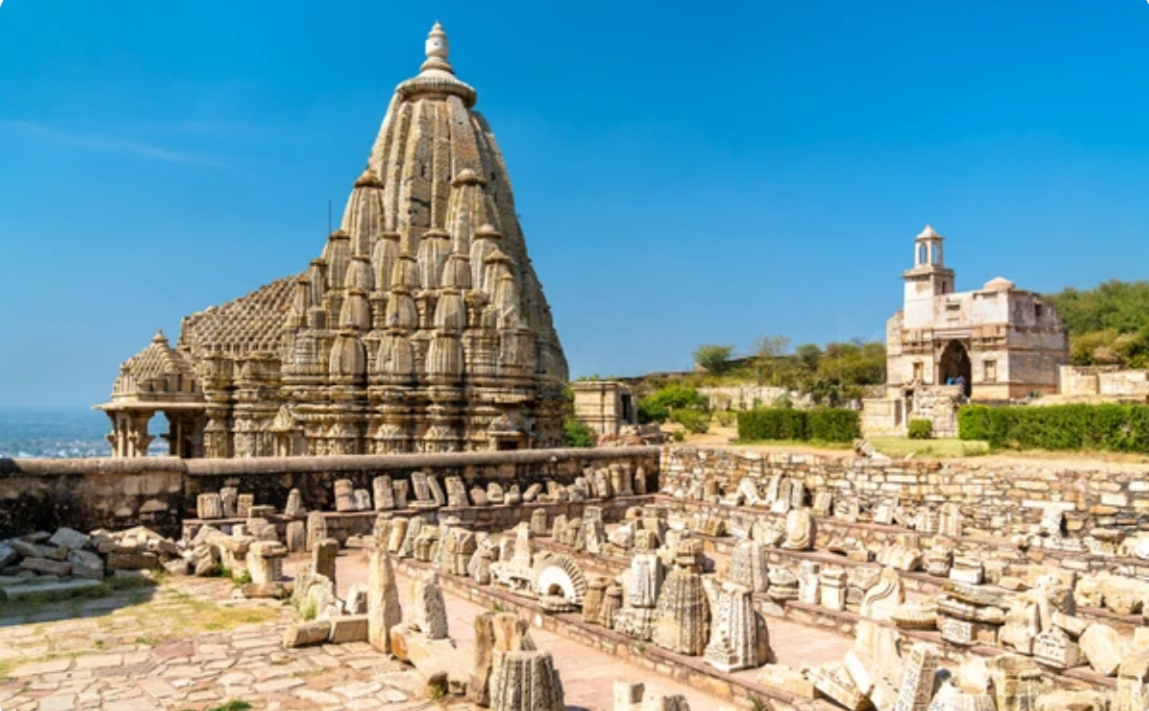
Contrary to a common assumption, the practice was not confined to the Rajputs or to the martial castes in general, where passion and bravery were prized. Prominent Hindu rulers like Shivaji Bhonsle and Ranjit Singh were followed on their pyres by a big handful of wives and concubines. Among the lower castes, like among the Muslims, life usually resumed and a widow soon remarried, not to let any womb go to waste. But nevertheless, a British survey in Bengal found that no less than 51% of Sati women belonged to Shudra families. Among the other upper castes, and among the majority of women even in the martial castes, widows would be confined to a life of service and asceticism. But no matter how rare the actual practice of Sati, it remained a glamorous affair, honoured among the Hindu masses with commerorative stones (sati kal) and temples (sati sthal).

Hindu Sati?

Sati was not confined the Hindu civilization. It existed elsewhere, both in Indo-European and in other cultures. Rulers in ancient China or Egypt are sometimes found buried with a number of wives, concubines and servants. In pre-Christian Europe, the practice was related—directly, not inversely—to the status of women in society: not at all in Greece, where women were very subordinate, but quite frequently among the more autonomous Celtic women. Among the Germanic people, a famous case is that of Brunhilde and her maidservants following Siegfried into death. Yet Indian secularists preferentially depict Sati as one of the unique “evils of Hindu society”.

The only shortcoming is this wonderful book is not a mistake but a hiatus, less than a page long. One important point I would have liked to see discussed more thoroughly, is the question raised by Alaka Hejib and Katherine Young in their paper: “Sati, Widowhood and Yoga”. They see a ”hidden religious dimension: yoga; though neither the widow nor the Sati was conscious of the yogic dimension of her life”. Indeed, “the psychology of yoga was instilled, albeit inadvertently, in the traditional Hindu woman”. Well well, yoga as the most consciousness-oriented discipline in the world is imparted unconsciously: “instilled, albeit inadvertently”. Prof. Jain reports this hypothesis but does not comment on it. So I will.

Naive readers may not have noticed it yet, but here we are dealing with as instance of a widespread phenomenon: the crass manipulation of the term “Hindu”. Every missionary and every secularist does it all the time: calling a thing “Hindu” when it is considered bad, but something—really anything—else as soon as it is deemed good. Many Hindus even lap it up: it is “instilled, albeit inadvertently”.

Thus, whenever Westerners show an interest in yoga, the secularists and their Western allies hurry to assure us: “Yoga has nothing to do with Hinduism.” (It is like with Islam, but inversely, for whenever Muslims make negative-sounding headlines, we are immediately reassured that these crimes “have nothing to do with Islam”.) There may be books on “Jain mathematics”, but never about “Hindu mathematics”, for a good thing cannot be Hindu. If the topic cannot be avoided, you call it, say, “Keralite mathematics” or fashionably opine that it “must have been borrowed from Buddhism”. So, yoga cannot be Hindu when its merits are at issue. However, when it is presented as something funny, with asceticism and other nasty things, then it can be Hindu, and even used as middle term to equate something else—something nasty, of course, like Sati—with Hinduism. So: Sati is Hindu!

In this case, the poor hapless secularists are even right. Sometimes even a deplorable motive, like their single-minded hatred for Hinduism, makes men speak the truth: Sati is Hindu. Sati is not Brahmanical: the Rg Veda enjoins continuing life rather than committing Sati, and the Shastras either don’t mention it or prefer widowhood, for which they lay down demanding rules. Many of the testimonies cited here mention Brahmanical priests trying to dissuade the woman from Sati. Not Brahmanical, then, but nonetheless Hindu, a far broader concept. A Hindu means an “Indian Pagan”, as per the Muslim invaders who first introduced the term in India. And indeed, Sati has existed in many countries but certainly in India, and it is not of Christian or Islamic origin, so it may be called Pagan. And so can the rejection of Sati. See?

This, then, makes for half a page that I would have done differently. The rest of this book, 500-something pages, is designed to stand the test of time. It will survive the flames that tend to engulf its topic: the brave Sati.

› Prof. Meenakshi Jain is a political scientist and historian. She is an associate professor of history at Gargi College, affiliated to the University of Delhi. 

› Dr. Koenraad Elst is an Orientalist from Belgian who frequently visits India to lecture. He is a Voice of India author.

Sati stones at Mahasati in Chittor Fort at Chittorgarh.

Christianity in the Congo: The myth of salvation through religious conversion – Prosenjit Nath

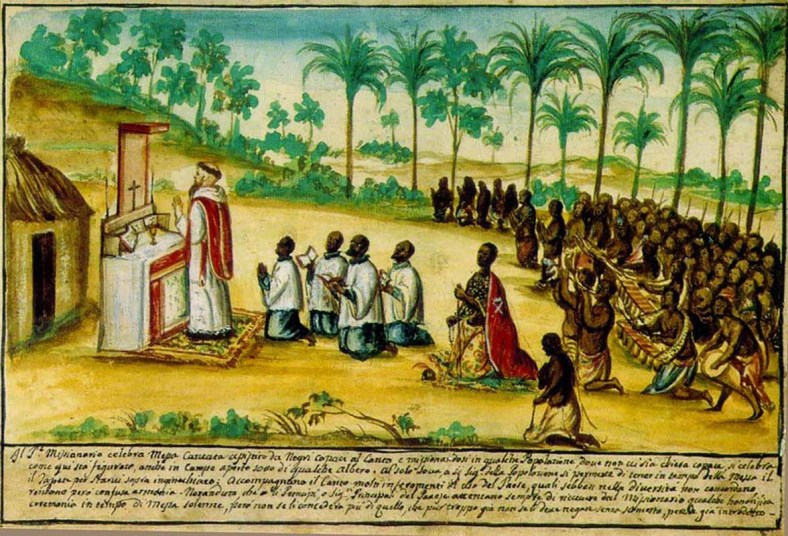
Catholic missionary leads Mass in Sogno, Congo (ca. 1740).

In Congo, missionaries were not peripheral actors. They ran schools, hospitals, food distribution systems, and civil institutions. Access to education, safety, and even medicine was conditional on baptism. Indigenous belief systems were systematically destroyed. Local authority structures were dismantled. Traditional leadership was delegitimised. Submission replaced sovereignty. – Prosenjit Nath

For more than a century, a powerful civilisational myth has been sold to the world’s poorest societies: convert to Christianity, get educated, become modern, and eventually grow rich “like America.” It is a narrative aggressively promoted by missionaries, amplified by Western media, and internalised by post-colonial elites. Africa was told this story repeatedly. The Democratic Republic of the Congo is what happened next.

Today, over 95 per cent of Congolese identify as Christian. This has been the case for nearly a hundred years. Yet in 2026, the country remains among the poorest on earth. Its GDP per capita hovers between $800 and $900. More than 70 per cent of the population lives in extreme poverty. A staggering 97 per cent of children are unable to read and understand a simple text. This outcome is often framed as a “failure” of Christianity, as if the faith promised prosperity and somehow failed to deliver. Others blame “residual paganism” for the stagnation. Both framings are wrong.

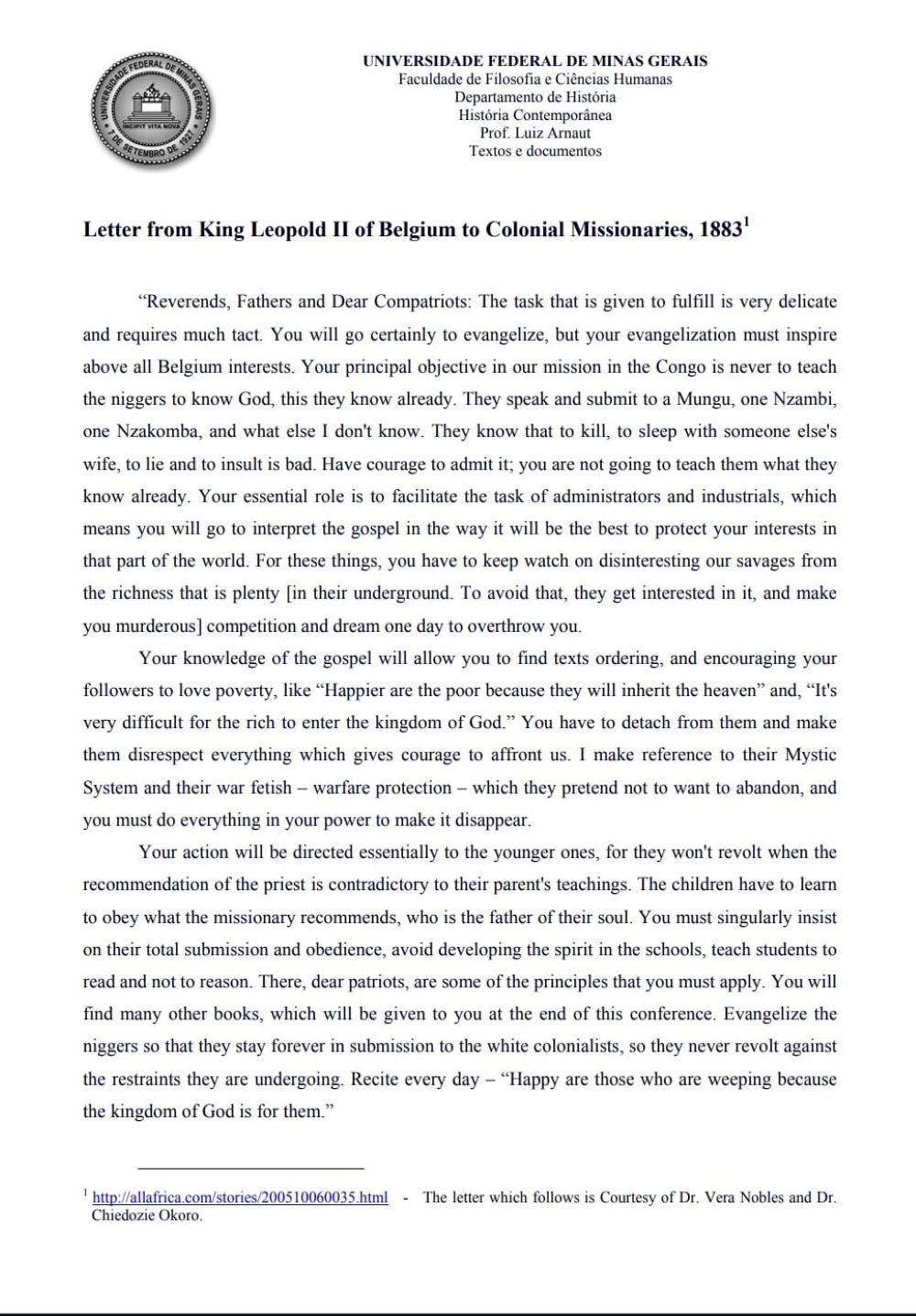
Christian theology never promised wealth, material success, or worldly flourishing. In fact, it does the opposite. It elevates suffering, sanctifies poverty, warns against riches, and places salvation firmly outside this world. “Blessed are the poor,” not the prosperous. “It is easier for a camel to pass through the eye of a needle than for a rich man to enter heaven.” The Christian worldview sees deprivation not as a problem to be solved, but as a spiritual condition to be endured.

So what promised education, dignity, prosperity, and “development”? Not theology. It was missionary propaganda. Congo did not misunderstand Christianity. It was sold a claim Christianity never doctrinally made.

The Christian Experiment Began With A Gun

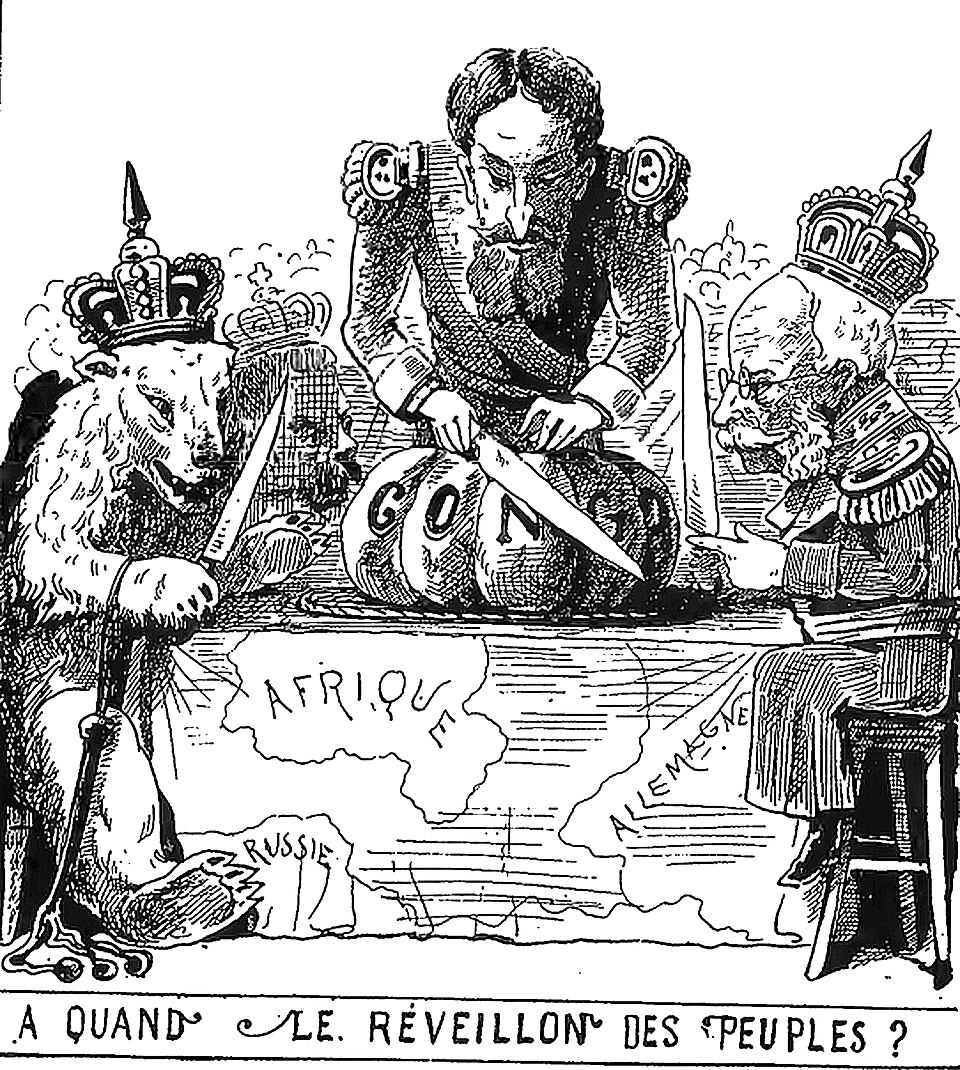
Christianity did not enter Congo peacefully. It arrived tied to the boot of King Leopold II of Belgium, a devout Christian monarch who ruled Congo as his personal colony. Under his regime, rubber quotas were enforced through terror. Failure to meet them meant mutilation. Severed hands were collected as proof of punishment. By conservative estimates, over 10 million Congolese died during this period.

This was not a deviation from Christian rule; it was its colonial expression. Churches were built alongside forced-labour camps. Priests blessed the system. The cross stood next to the whip.

Nsala of Wala in the Nsongo District, Congo.

The most famous photograph from this era shows Nsala, a Congolese man staring at the severed hand and foot of his five-year-old daughter, cut off because his village failed to meet rubber quotas. Was this “Christian charity” at work? Was this civilisation? Or was it extraction disguised as salvation?

Missionaries Didn’t Just Preach, They Governed

In Congo, missionaries were not peripheral actors. They ran schools, hospitals, food distribution systems, and civil institutions. Access to education, safety, and even medicine was conditional on baptism. Indigenous belief systems were systematically destroyed. Local authority structures were dismantled. Traditional leadership was delegitimised. Submission replaced sovereignty.

The message was simple: abandon your gods, abandon your customs, abandon your identity, and you will be uplifted.

But after all that, did “Jesus save” Congo from disease, hunger, and poverty? No. The people complied, converted, and surrendered their civilisational backbone. What they received was dependency.

A society cannot stand upright when its cultural spine is removed. What replaced it was not empowerment but obedience. Not self-rule but subservience.

A Christian Nation Without Power

Congo today is a Christian nation without the ability to exploit others. And we are told that this is “true Christianity.” Europe and America, we are told, are rich not because of Christianity but because they deviated from it. So what happens when a country follows Christianity sincerely? Congo happens.

Despite being one of the most mineral-rich regions on earth, Congo remains desperately poor. It holds vast reserves of cobalt, copper, gold, and coltan—minerals essential for the global green economy. Yet Congolese children mine cobalt with their bare hands so Western electric cars can run clean. Seven million people are displaced. Over twenty-five million face chronic hunger.

Christian Congo did not colonise anyone. It did not enslave other societies. It followed the gospel of submission and patience. And it was stripped bare.

The Real Lesson

The failure is not that Christianity did not make Congo rich. It never promised to. The failure is that Congo was sold a lie that faith would deliver development. That baptism would bring dignity. That abandoning its civilisation would result in prosperity.

The West did not become rich because it was Christian. It became rich by colonising, extracting, and enslaving—often justified using Christian language. Congo followed the moral code, not the power code. And paid the price.

This is the uncomfortable truth: Christianity works very differently for the coloniser and the colonised. For the powerful, it is a tool. For the powerless, it is a chain disguised as comfort.

Congo is not a failure of faith. It is the outcome of believing a civilisational lie—a lie that told a people to kneel when they should have stood. – News18, 12 january 2026

Prosenjit Nath is a technocrat, political analyst, and author. He pens national, geopolitical, and social issues.

King Leopold II of Belgium and Other Imperial Powers at Berlin Conference 1884.

Leopold II Letter to Missionaries in the Congo (1883).