Indian-Americans find themselves in an unenviable predicament. Their extraordinary educational, economic and professional achievements, instead of guaranteeing acceptance, have made them targets of suspicion, jealousy and, increasingly, outright hatred. – Makarand R. Paranjape
Indian-Americans may be facing their worst wave of hostility in the United States in half a century. The irony is that they are under attack not because they have failed to make it in the US, but because they have succeeded so spectacularly.
Caught between an increasingly identitarian, socialist Left and a resentful, revanchist Right, they find themselves in an unenviable predicament. Their extraordinary educational, economic and professional achievements, instead of guaranteeing acceptance, have made them targets of suspicion, jealousy and, increasingly, outright hatred.
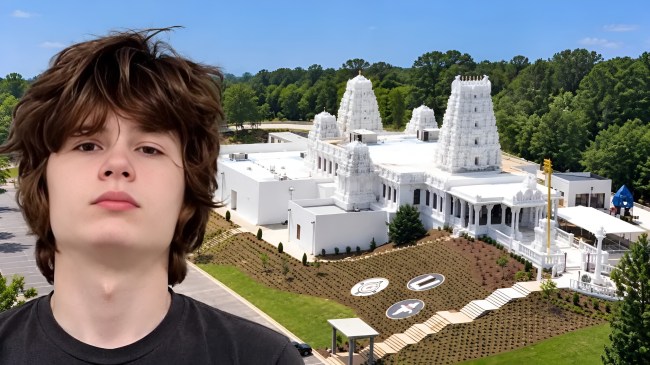
Consider two recent incidents, seemingly unrelated but symptomatic of this disturbing development. Nineteen-year-old Alexandros Paporakis, a self-proclaimed neo-Nazi, attempted to open fire outside a temple. Luckily, his rifle jammed. He subsequently spoke of returning to finish his murderous mission. Fortunately, his co-workers alerted the police, who arrested him.
One wonders at their miraculous escape: what saved hundreds of Hindu worshippers from a possible massacre at the Sri Venkateswara Swami Temple in Aurora, near Chicago, on October 11? Among those worshipping that day were Democratic Congressman Raja Krishnamoorthi and his family. One shudders to imagine what might have happened had the rifle fired.
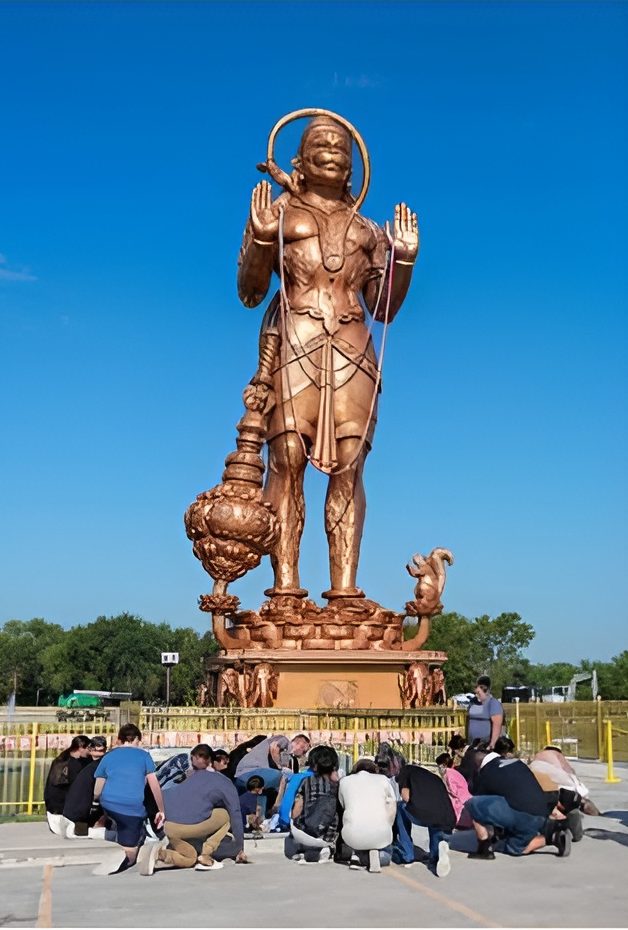
Some devotees might attribute their miraculous escape to Lord Venkateswara’s protection. Some would rule out divine intervention and point simply to a malfunctioning rifle. My question is different: Why should Hindu worshippers in America become targets of murderous racial hatred?
Vivek Ramaswamy, the brilliant, ambitious Indian-origin Republican gubernatorial candidate in Ohio, has landed himself in an entirely avoidable controversy. His campaign released an advertisement featuring the estranged mother of his Democratic opponent, Amy Acton, accusing her daughter of dishonesty. Given Acton’s traumatic childhood and allegations of sexual abuse, the advertisement struck many as gratuitously cruel.
Even Republican Governor Mike DeWine demanded its withdrawal. Could this prove a turning point? A mid-October poll already showed Ramaswamy trailing Acton by seven percentage points.
But apart from a tasteless and offensive ad, might there be another factor? Perhaps voters in this predominantly white Midwestern state may not be comfortable with a Hindu governor of Indian origin. Any excuse, including being vegetarian or walking about barefoot at home, might be enough to tilt voter sentiment against him. The advertisement could give wavering voters an excuse to reject Ramaswamy without interrogating their own prejudices.
Remember Bobby Jindal, the Indian-origin Republican who converted to Catholicism? He successfully governed conservative Louisiana for two terms, but his presidential ambitions came to nothing. Religious assimilation, evidently, is neither a necessary nor sufficient condition for political success.
Let me state my larger proposition bluntly. Indian-Americans may be facing their most uncomfortable political moment in half a century. Why? Because on the Left, large sections of the so-called Progressives have moved beyond traditional liberalism towards an amalgam of radical identity politics, anti-capitalism and accommodation of Islamist political movements. Hindu Americans, notwithstanding their minority status, can be portrayed as privileged white-adjacents, whose legitimate concerns about discrimination and religious freedom deserve little sympathy. Yet religious liberty cannot be selective. Hindus, Muslims, Christians, Jews, Sikhs and others must enjoy equal constitutional protection.
The Right presents a different problem.
Indian-Americans are among America’s most successful immigrant communities. According to Pew Research Center, Indian-headed households had a median annual income exceeding $151,000 in 2023. Their educational and professional achievements are equally impressive.
Instead of celebrating this contribution, parts of Maga increasingly regard Indian professionals as economic competitors, even interlopers stealing the jobs of US-born native Americans. Read that as fellow whites. Yes, let’s face it. Maga anti-Indianism has not only Christian fundamentalist but also racist undertones.
The Trump administration has imposed all kinds of barriers on new H-1Bs, including an extraordinary $100,000 fee on certain new H-1B petitions. Although federal courts have blocked it, Trump has come up with a new $103,265 fee proposed by the Department of Homeland Security (DHS) through a a Notice of Proposed Rulemaking $108,000 fee on new applications. This move is considered legally more resilient than the earlier, $100,000 fee. Vice President J.D. Vance has also attacked abuses of H-1B visas, using some unparliamentary epithets. But reforming immigration is one thing; vilifying immigrants quite another. America cannot maintain technological supremacy by discouraging the very scientists, engineers, physicians and entrepreneurs who help sustain it.
There is also a distinction that fashionable multiculturalism has been reluctant to acknowledge. Not all immigrant communities are identical in their educational backgrounds, cultural practices, religious beliefs or attitudes towards integration. To pretend otherwise is intellectual dishonesty.
Consider Britain’s appalling grooming-gang scandals. In notorious cases, including Rotherham and Rochdale, networks of predominantly Muslim Pakistani-origin men sexually exploited vulnerable underage girls. This was done in a systematic and prolonged manner while the police and judicial authorities, apparently, turned a blind eye.
But an underlying question remains to be addressed: why persist with the indiscriminate and blatantly inaccurate designation ‘Asian’ when nearly all of these rapists were Muslim, not to mention Pakistani? What do Hindus, Sikhs, Bangladeshis, Nepalis or other Asian communities have to do with these criminal networks? Why should they bear the shame?
Ayaan Hirsi Ali, the Somali-born former Dutch parliamentarian who suffered female genital mutilation herself, has spent decades challenging the horribly sexist, even misogynist, practices of Sharia law in Muslim-majority countries around the world. Her books Infidel, Heretic and Prey expose the dangers of refusing to examine cultural and theological assumptions.
Swedish research on rape convictions has also identified disturbing disparities associated with immigrant backgrounds. It is Muslim immigrants whose numbers are disproportionately high among perpetrators of sexual crimes. Such findings demand investigation, not ideological suppression. Although we mustn’t simplistically assume religious causation, religious and cultural differences should be investigated honestly rather than concealed beneath politically convenient labels.
The irony is that Indian-Americans, despite their conspicuous achievements, are themselves increasingly subjected to indiscriminate suspicion. Even though they are among the most law-abiding and non-violent of all immigrant communities. Racial prejudice compounds economic resentment. The evidently white-supremacist motivation behind the Aurora attack cannot be explained away as concern about jobs or immigration.
But another political calculation may be involved. Indian-Americans have traditionally leaned Democratic. Some MAGA strategists may therefore reason: why bother courting a community that won’t vote Republican anyway? Yet Indian-Americans are hardly politically homogeneous. Ramaswamy himself, and the prominence of Usha Vance, demonstrate their growing presence within Republican circles.
What, then, should Indian-Americans do?
My answer is simple: organise, participate, influence. For too long, this remarkably successful community has concentrated on education, professional advancement, entrepreneurship and family prosperity, leaving political activism to others.
That must change.
Indian-Americans need stronger civic associations, effective lobbying, greater political participation and a confident presence in public debates. Hindu Americans, particularly, must defend their religious freedoms through constitutional institutions rather than occasional expressions of outrage.
But integration also demands reciprocity.
Indian-Americans must not retreat into comfortable cultural ghettos. They must learn more about America’s history, traditions and institutions. Participate in neighbourhood organisations, school boards, voluntary associations and public life. Build friendships and alliances beyond ethnic boundaries. Above all, they mustn’t allow their identities to be defined by those who dislike them.
The United States remains one of humanity’s boldest experiments in accommodating differences within a common constitutional framework. Indian-Americans have benefited enormously from that promise and contributed handsomely to its fulfilment.
The question is not whether they can become sufficiently American to satisfy their detractors, but whether America can remain sufficiently faithful to its founding ideals to embrace them as they are. – Firstpost, 28 October 2026
› Makarand R. Paranjape, author and public intellectual, is currently Sri Aurobindo Chair, Vedere University & Director of Education, AHCP LLC.