Ancient Indian wisdom reveals that internal security was never viewed merely in terms of coercion or military strength, but rather as dependent upon informed governance, economic resilience, effective diplomacy and responsiveness to public grievances. – Neha Gupta
Over two millennia ago, long before the digital age of encryption and satellite surveillance, the foundations of sophisticated intelligence systems were laid in ancient India. From Kautilya’s clinical analysis in the Arthashastra to the pragmatic diplomacy of Tiruvalluvar’s Tirukkural, statecraft was viewed as a rigorous science in which information served as a vital instrument of power. These ancient texts discuss espionage, diplomacy, and governance in ways that continue to resonate in the modern era of strategic competition and information warfare.
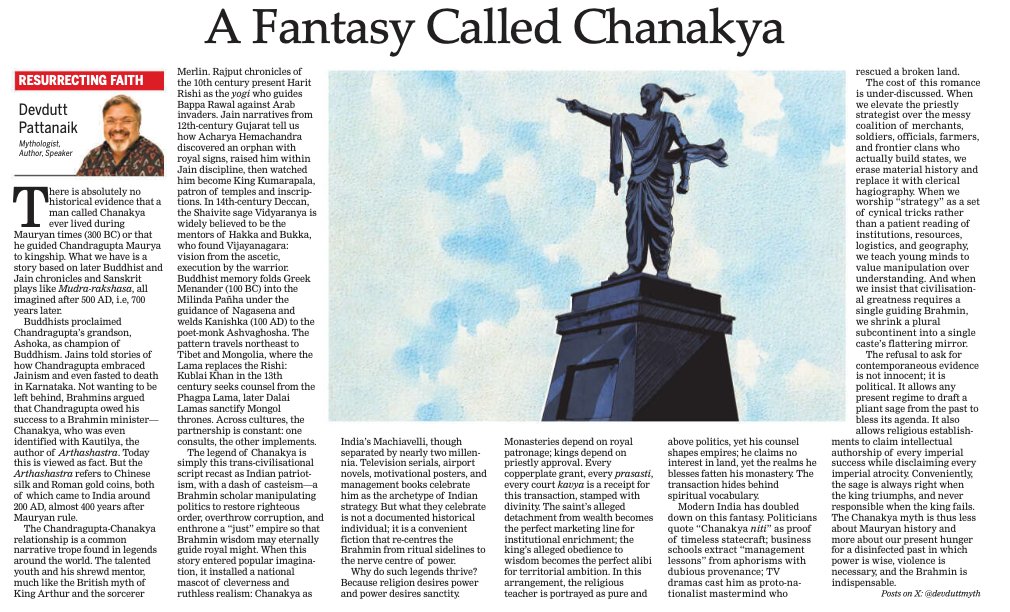
Kautilya, in his Arthashastra, described a sophisticated intelligence system comparable to a modern secret service, a crucial instrument of power. Secret agents (gudha purusa) were broadly divided into stationary and mobile spies. While stationary agents reported to the ruler’s chancellor, the most sensitive intelligence operations were directly supervised by the ruler himself. These stationary agents included civil servants who did routine surveillance, ascetics with religious covers, spies posing as astrologers, bankrupt farmers, artisans and merchants who monitored neighbours and customers, among others. Mobile agents, i.e., intellectually sharp female agents who infiltrated wealthy homes, artists and servants who used poison to kill, assisted elite intelligence officers reporting to the ruler personally. Espionage was directed not only against enemy states but also against ally and neutral states, for example, placing secret informants at their courts.
Hence, detailed categories of people encompassing nearly all social groups operated in various locations as spies to avoid suspicion, including children when necessary. This vast network of secret agents and informants collected information about treasonable activities, corruption, serious crime, popular mood and acted as ‘secret police’. Kautilya advocates techniques such as secret agents infiltrating enemy camps to spread disinformation often as “divine proclamations” to create fragmentation within the enemy’s hierarchy or to declare fictitious triumphs to inspire their own troops, using deception to propagate disunity amongst internal rivals by inducing a ruler’s second or third son to attempt a revolution against their own family, tracing and unmasking of enemy agents, turning exposed enemy agents into double agents rather than discharging them, employing trained killers for covert assassinations and extra-judicial killings disguised as accident, normal crime, or natural death and staging political public relations to influence public opinion.
If the secret service detects legitimate public grievances or growing anger among sections of the population, Kautilya argues that the state must first address their root causes before resorting to repression. Arthashastra looks at the ruler’s duty to secure and expand public welfare as inseparable from the strength of the state. The secret service therefore functions not merely as an instrument of surveillance, but as an “early warning system” that alerts the ruler to social discontent and policy failures, enabling timely corrective action. Kautilya also insists that statecraft must rest on empirical data and scientific knowledge grounded in reality, rejecting magic, astrology, prophecy, or impulse. He further considers a strong economic base essential to internal stability and security. Enhancing agriculture, production, trade and tax revenue was therefore central to state power. He warns that a weak state leads to matsya-nyaya, the “law of the fishes,” where the strong prey upon the weak, both within society and in interstate relations.
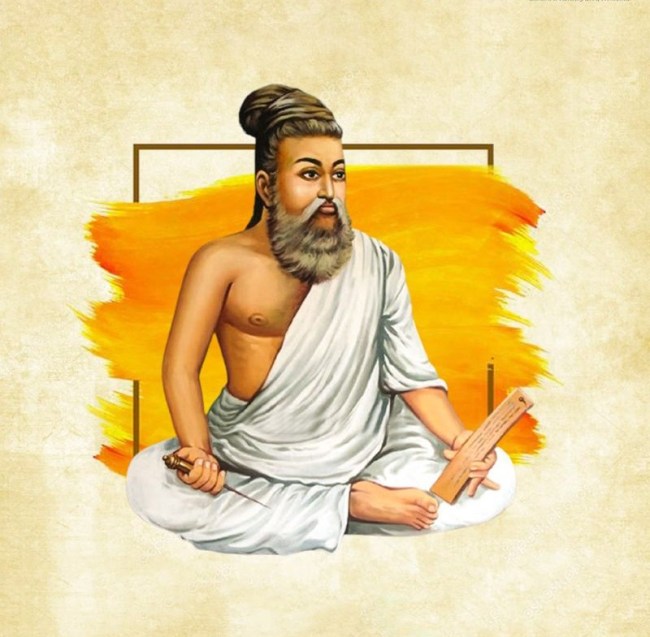
The Arthashastra has discussed four methods of statecraft (upayas) that predate it within the Indian traditional wisdom, in the order: saam (peaceful conciliation), daam (enticement or bribery), dand (force or punishment), bhed (division or sowing discord) for diplomatic relations. The Tirukkural (Kural) by Tiruvalluvar also considers diplomacy essential to maintaining stable inter-state relations. Tiruvalluvar emphasises that ministers and ambassadors must be skilled in statecraft, knowledgeable about world affairs, and capable of making prompt and impartial decisions. He also highlights the importance of persuasive and fearless communication in foreign courts. In matters of diplomacy, the Kural often adopts a pragmatic approach, advising rulers to reconcile with stronger powers while acting firmly against weaker adversaries.
Echoing the Kautilyan principle of dvaidibhav (dual policy), Verse 875 advises that a ruler helpless against two foes should secure one as an ally to help against the other. Verse 679 further suggests to secure alliances with the enemies of one’s enemies than to focus solely on existing friends.
Kautilya’s views on intelligence encompasses not just information collection and analysis, but also counterintelligence, i.e., manipulating the espionage picture of one’s own state for the enemy in one’s favour. He prioritises covert means such as subversion, sabotage and targeted operations over conventional wars that cause great human and material losses. Kautilya may seldom be cited explicitly in India’s strategic discourse, but his influence remains deeply embedded. Mahatma Gandhi’s preference for non-violent resistance can be seen through a Kautilyan lens of realism, choosing methods that weaken a stronger adversary without incurring unsustainable costs like a traditional war.
Kamandaka’s Nitisara (Nitishastra) also advises against frequent warfare due to its destructive consequences. At the same time, he stresses the importance of safeguarding state secrets while systematically probing an adversary’s vulnerabilities, an early articulation of what is today called information asymmetry. His intelligence framework is broad, extending even to monitoring weather, disasters and epidemics that could affect state stability.
The relevance of these ideas has remained unaltered through the ages. Intelligence agencies today continue to strive hard as agents not only of security but of strategic foresight—anticipating and pre-empting threats, preventing mishaps, shaping outcomes and protecting the nation from all kinds of threats—internal and external. Ancient Indian wisdom reveals that internal security was never viewed merely in terms of coercion or military strength, but rather as dependent upon informed governance, economic resilience, effective diplomacy and responsiveness to public grievances. In an age increasingly shaped by covert influence and hybrid threats, the above principles of intelligence continue to hold good for all times to come. – The Pioneer, 4 July 2026
› Neha Gupta is Junior Research Fellow at Bharat Ki Soch.