A History of Caste – Koenraad Elst

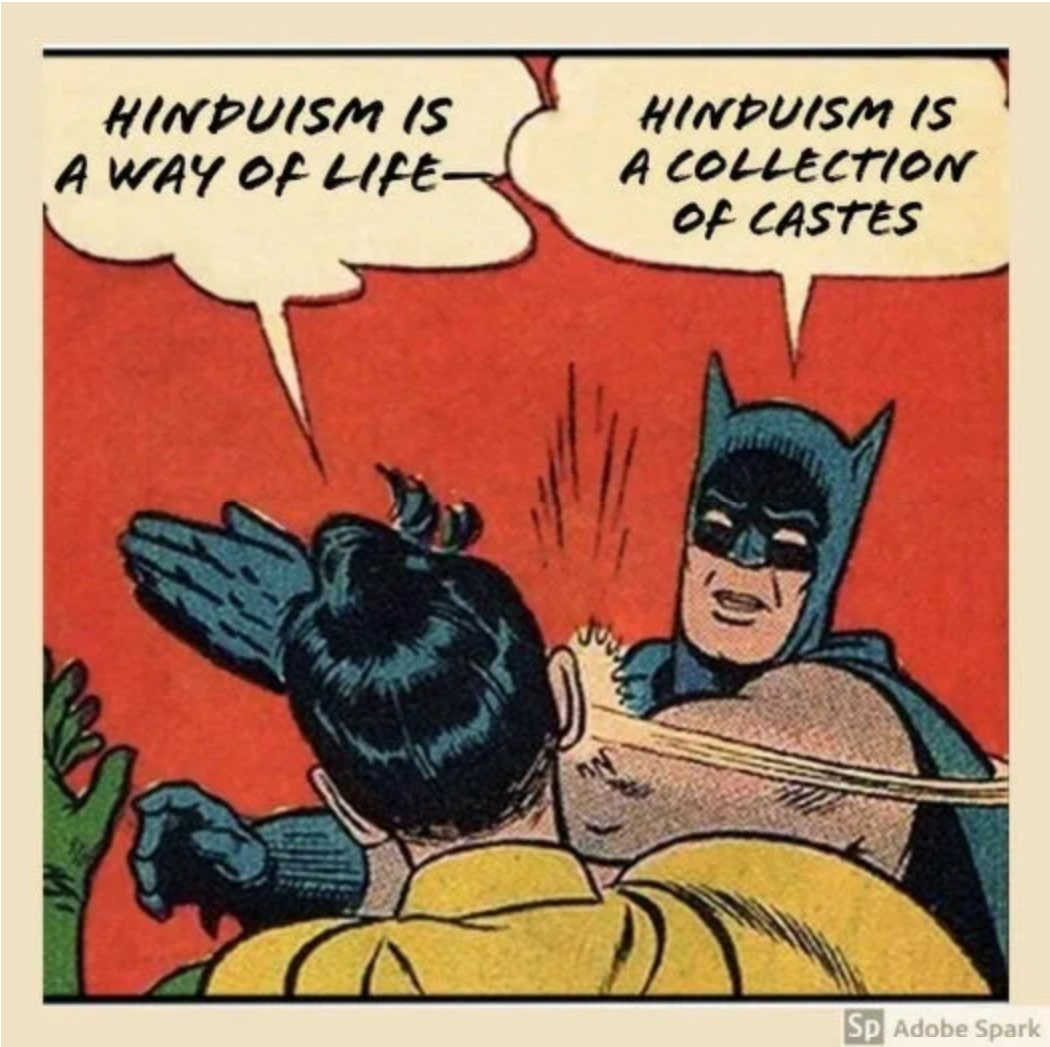
Caste Batman Meme

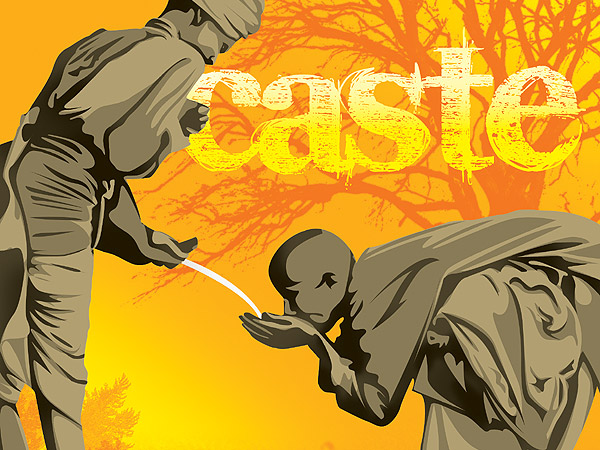
In an inter-faith debate, most Hindus can easily be put on the defensive with a single word—caste. Any anti-Hindu polemist can be counted on to allege that “the typically Hindu caste system is the most cruel apartheid, imposed by the barbaric white Aryan invaders on the gentle dark-skinned natives.” Here’s a more balanced and historical account of this controversial institution. – Dr. Konraad Elst

Merits of the Caste System

The caste system is often portrayed as the ultimate horror. Inborn inequality is indeed unacceptable to us moderns, but this does not preclude that the system has also had its merits.

Caste is perceived as an “exclusion-from,” but first of all it is a form of “belonging-to,” a natural structure of solidarity. For this reason, Christian and Muslim missionaries found it very difficult to lure Hindus away from their communities. Sometimes castes were collectively converted to Islam, and Pope Gregory XV (1621-23) decreed that the missionaries could tolerate caste distinction among Christian converts; but by and large, caste remained an effective hurdle to the destruction of Hinduism through conversion. That is why the missionaries started attacking the institution of caste and in particular the brahmin caste. This propaganda has bloomed into a full-fledged anti-brahminism, the Indian equivalent of anti-Semitism.

Every caste had a large measure of autonomy, with its own judiciary, duties and privileges, and often its own temples. Inter-caste affairs were settled at the village council by consensus; even the lowest caste had veto power. This autonomy of intermediate levels of society is the antithesis of the totalitarian society in which the individual stands helpless before the all-powerful state. This decentralized structure of civil society and of the Hindu religious commonwealth has been crucial to the survival of Hinduism under Muslim rule. Whereas Buddhism was swept away as soon as its monasteries were destroyed, Hinduism retreated into its caste structure and weathered the storm.

Caste also provided a framework for integrating immigrant communities: Jews, Zoroastrians and Syrian Christians. They were not only tolerated, but assisted in efforts to preserve their distinctive traditions.

Typically Hindu?

It is routinely claimed that caste is a uniquely Hindu institution. Yet, counter examples are not hard to come by. In Europe and elsewhere, there was (or still is) a hierarchical distinction between noblemen and commoners, with nobility only marrying nobility. Many tribal societies punished the breach of endogamy rules with death.

Coming to the Indian tribes, we find Christian missionaries claiming that “tribals are not Hindus because they do not observe caste.” In reality, missionary literature itself is rife with testimonies of caste practices among tribals. A spectacular example is what the missions call “the mistake:” the attempt, in 1891, to make tribal converts in Chhotanagpur inter-dine with converts from other tribes. It was a disaster for the mission. Most tribals renounced Christianity because they chose to preserve the taboo on inter-dining. As strongly as the haughtiest brahmin, they refused to mix what God hath separated.

Endogamy and exogamy are observed by tribal societies the world over. The question is therefore not why Hindu society invented this system, but how it could preserve these tribal identities even after outgrowing the tribal stage of civilization. The answer lies largely in the expanding Vedic culture’s intrinsically respectful and conservative spirit, which ensured that each tribe could preserve its customs and traditions, including its defining custom of tribal endogamy.

Description and History

The Portuguese colonizers applied the term caste, “lineage, breed,” to two different Hindu institutions: jati and varna. The effective unit of the caste system is the jati, birth-unit, an endogamous group into which you are born, and within which you marry. In principle, you can only dine with fellow members, but the pressures of modern life have eroded this rule. The several thousands of jatis are subdivided in exogamous clans, gotra. This double division dates back to tribal society.

By contrast, varna is the typical functional division of an advanced society—the Indus/Saraswati civilization, 3rd millennium, BCE. The youngest part of the Rg Veda describes four classes: learned brahmins born from Brahma’s mouth, martial kshatriya born from his arms; vaishya entrepreneurs born from his hips and shudra workers born from his feet. Everyone is a shudra by birth. Boys become dwija, twice-born, or member of one of the three upper varnas upon receiving the sacred thread in the upanayana ceremony.

The varna system expanded from the Saraswati-Yamuna area and got firmly established in the whole of Aryavarta (Kashmir to Vidarbha, Sindh to Bihar). It counted as a sign of superior culture setting the arya, civilized, heartland apart from the surrounding mleccha, barbaric, lands. In Bengal and the South, the system was reduced to a distinction between brahmins and shudras. Varna is a ritual category and does not fully correspond to effective social or economic status. Thus, half of the princely rulers in British India were shudras and a few were brahmins, though it is the kshatriya function par excellence. Many shudras are rich, many brahmins impoverished.

The Mahabharata defines the varna qualities thus: “He in whom you find truthfulness, generosity, absence of hatred, modesty, goodness and self-restraint, is a brahmana. He who fulfills the duties of a knight, studies the scriptures, concentrates on acquisition and distribution of riches, is a kshatriya. He who loves cattle breeding, agriculture and money, is honest and well-versed in scripture, is a vaishya. He who eats anything, practises any profession, ignores purity rules, and takes no interest in scriptures and rules of life, is a shudra.” The higher the varna, the more rules of self-discipline are to be observed. Hence, a jati could collectively improve its status by adopting more demanding rules of conduct, e.g. vegetarianism.

A person’s second name usually indicates his jati or gotra. Further, one can use the following varna titles: Sharma (shelter, or joy) indicates the brahmin, Varma (armour) the kshatriya, Gupta (protected) the vaishya and Das (servant) the shudra. In a single family, one person may call himself Gupta (varna), another Agrawal (jati), yet another Garg (gotra). A monk, upon renouncing the world, sheds his name along with his caste identity.

Untouchability

Below the caste hierarchy are the untouchables, or harijan (literally “God’s people”), dalits (“oppressed”), paraiya (one such caste in South India), or scheduled castes. They make up about 16% of the Indian population, as many as the upper castes combined.

Untouchability originates in the belief that evil spirits surround dead and dying substances. People who work with corpses, body excretions or animal skins had an aura of danger and impurity, so they were kept away from mainstream society and from sacred learning and ritual. This often took grotesque forms: thus, an untouchable had to announce his polluting proximity with a rattle, like a leper.

Untouchability is unknown in the Vedas, and therefore repudiated by neo-Vedic reformers like Dayanand Saraswati, Narayana Guru, Gandhi and Savarkar. In 1967, Dr. Ambedkar, a dalit by birth and fierce critic of social injustice in Hinduism and Islam, led a mass conversion to Buddhism, partly on the (unhistorical) assumption that Buddhism had been an anti-caste movement. The 1950 Constitution outlawed untouchability and sanctioned positive discrimination programs for the Scheduled Castes and Tribes. Lately, the Vishva Hindu Parishad has managed to get even the most traditionalist religious leaders on the anti-untouchability platform, so that they invite harijans to Vedic schools and train them as priests. In the villages, however, pestering of dalits is still a regular phenomenon, occasioned less by ritual purity issues than by land and labor disputes. However, the dalits’ increasing political clout is accelerating the elimination of untouchability.

Caste Conversion

In the Mahabharata, Yuddhishthira affirms that varna is defined by the qualities of head and heart, not by one’s birth. Krishna teaches that varna is defined by one’s activity (karma) and quality (guna). Till today, it is an unfinished debate to what extent one’s “quality” is determined by heredity or by environmental influence. And so, while the hereditary view has been predominant for long, the non-hereditary conception of varna has always been around as well, as is clear from the practice of varna conversion. The most famous example is the 17th century freedom fighter Shivaji, a shudra who was accorded kshatriya status to match his military achievements. The geographical spread of Vedic tradition was achieved through large scale initiation of local elites into the varna order. From 1875 onwards, the Arya Samaj has systematically administered the “purification ritual” (shuddhi) to Muslim and Christian converts and to low caste Hindus, making them dwija. Conversely, the present policy of positive discrimination has made upper-caste people seek acceptance into the favored Scheduled Castes.

Veer Savarkar, the ideologue of Hindu nationalism, advocated intermarriage to unify the Hindu nation even at the biological level. Most contemporary Hindus, though now generally opposed to caste inequality, continue to marry within their respective jati because they see no reason for their dissolution.

Racial Theory of Caste

Nineteenth-century Westerners projected the colonial situation and the newest race theories on the caste system: the upper castes were white invaders lording it over the black natives. This outdated view is still repeated ad-nauseam by anti-Hindu authors: now that “idolatry” has lost its force as a term of abuse, “racism” is a welcome innovation to demonize Hinduism. In reality, India is the region where all skin color types met and mingled, and you will find many brahmins as black as Nelson Mandela. Ancient “Aryan” heroes like Rama, Krishna, Draupadi, Ravana (a brahmin) and a number of Vedic seers were explicitly described as being dark-skinned.

But doesn’t varna mean “skin color?” The effective meaning of varna is “splendor, color,” and hence “distinctive quality” or “one segment in a spectrum.” The four functional classes constitute the “colors” in the spectrum of society. Symbolic colors are allotted to the varna on the basis of the cosmological scheme of “three qualities” (triguna): white is sattva (truthful), the quality typifying the brahmin; red is rajas (energetic), for the kshatriya; black is tamas (inert, solid), for the shudra; yellow is allotted to the vaishya, who is defined by a mixture of qualities.

Finally, caste society has been the most stable society in history. Indian Communists used to sneer that “India has never even had a revolution.” Actually, that is no mean achievement. – Hinduism Today, 1 September 1994

Dr. Elst is a Belgian scholar who has extensively studied the current socio-political situation in India. Keenly interested in Asian philosophies and traditions from his early years, he has studied yoga, aikido and other oriental disciplines.
Caste Reservation

From Dharma to Dogma: The genesis of caste – Acharya Prashant

Indians

India’s tragedy is that somewhere in history, caste and dharma were kneaded together like salt in dough. What began as a division of labour merged with notions of virtue and sin. Acting within one’s caste became dharma; going outside it became sin. – Acharya Prashant

Every few years, incidents remind us that caste persists in different avatars. Our Constitution guarantees equality, yet divisions control how we live, marry, vote, and worship. Knowingly or unknowingly, we judge people by birth. Caste survives despite legal systems, educational programs, and metropolitan anonymity.

We wrongly believe social reform alone can fix what is mostly psychological. Caste is not a census number; it is a paradigm of evaluation. People constitute systems; as long as people don’t inwardly change, systemic change won’t help much.

Caste and the Constitution

The Constitution guarantees liberty, equality, and fraternity. Yet caste persists because exclusivity, superiority, and material benefits are irresistible. Caste has become ingrained in habit, rooted in livelihood, kinship, and identity. Our constitutional principles are like rangoli patterns on the ground; they cannot change the soil underneath.

That soil pervades everyday life. Many trades favour one community over another. Marriage remains mostly endogamous, with nine of ten unions within caste. Lineage maps out towns and villages. And when voting time comes, we rarely cast our vote; we vote our caste.

When Caste Masquerades as Dharma

The persistence of caste cannot be explained by sociology alone. Laws may impact behaviour and reforms may change customs, but neither explains nor eradicates how caste has been sanctified in dharma’s name.

For humans, consciousness is paramount. An insult to self-worth hurts far more than bodily injury. More than our flesh, we protect our ‘feeling’ of being right: our dharma. Dharma is the inner compass for right seeing and living, man’s most sacred possession, guiding all people.

India’s tragedy is that somewhere in history, caste and dharma were kneaded together like salt in dough. What began as a division of labour merged with notions of virtue and sin. Acting within one’s caste became dharma; going outside it became sin.

If caste were only a social structure, reformers would have erased it. If merely legal, the Constitution would suffice. But caste is sustained in religious belief. It persists because it hides behind Dharma’s name.

As long as this false dharma based on birth endures, caste will endure. What is worshipped will not be questioned, and what is not questioned will not change.

The History of Caste: The Distortion of Dharma

To understand why caste became inseparable from Indian life, let’s start from the beginning. The Purusha Sukta in the Rigveda speaks of an all-encompassing Being from whom everything comes. The hymn is metaphorical: the Brahmin came from His mouth, the Kshatriya from His arms, the Vaishya from His thighs, the Shudra from His feet. The symbolism points at how every form of work emerges from the same living whole, without any mention of hierarchy.

The Rigveda differentiates between Arya and Dasa, indicating early social stratification. There is still a dispute about whether varna was originally fluid or hierarchical. The goal is not to prove a perfect history, but to understand that any tradition has both liberating and limiting parts. It is our ethics that decide the thread we will follow next.

The Upanishads are the best argument against caste because they don’t just reject birth-based differences; they also reject body identification. The Vajrasuchika Upanishad, for example, directly emphasises that caste is unreal. The Bhagavad Gita said that varna comes from guna (individual physical tendencies) and karma (individual choices), not birth.

Such scriptures were being composed and had sublime philosophy emphasizing egalitarianism. However, there was a critical lapse: the scriptures were limited to a few meditative thinkers who mostly remained aloof and out of touch with mainstream society. The authors of the scriptures presented their insights in books, but did not get into grounded social activism to turn the spiritual insights into social reality. So, concurrently with the heights of meditative revelations, the social order continued to have strong currents of discrimination. By about 400 BC, the Dharmasutras emerged to become practical social guides. ‘Dharma’ began to mean social order. Spiritual symbolism became social distortion, and these new ‘scriptures’ started to show inequality based on caste. Over time, these grew into Dharmashastras, remembered as law codes such as the Manusmriti. Here lay the tipping point. The Purusha Sukta was reread with harmful additions: claims of Brahmin superiority, prohibitions on hearing the Vedas, and punishments for non-compliance. The spiritual metaphor became a manual of social control.

Later, the Puranas reinforced these distortions. With the Puranas’ dualistic approach came theism, and the social order was declared divinely ordained. Now, rebelling against caste meant rebelling against God, who made the caste system. Story after story contained subtle caste validation. Divine avatars were consistently born into upper castes, while those who challenged varna faced curses or calamity. The logic was circular but effective: if the gods themselves observed caste, it must be cosmic law. In dualistic theology, God becomes the author of worldly hierarchy. What Advaitic philosophy had rejected, mythology now sanctified.

Advaita Vedanta maintained a steadfast intellectual stance: since all distinctions are illusory, how can caste be authentic? But as caste became the dominant social system, even Advaita found itself compromised between transcendental truth (paramarthik) and practical social order (vyavaharik). The peak of truth was accepted as the highest, but was made distant from the ground of lived reality.

Caste’s story, however, is not one of unbroken supremacy. The Buddha did not accept the authority of the Brahmins. Bhakti poets Saints Kabir, Ravidas, and Chokhamela ridiculed caste. Basava’s Veerashaivism and Guru Nanak’s teachings went against the idea of a hierarchy. However, even as Bhakti emphasized that all individuals are equal in the eyes of God, it did not quite revolt against the unequal social hierarchy. A strange co-existence of unequal social order with equality before God was not just accepted, but institutionalized in Bhakti mythology, social order and rituals.

The reform movements show that resistance to caste often does arise within the religious system. But the idea of equality is often reabsorbed by the strong current of social inertia. What started as a misinterpretation of scripture became a social law, then a habit, and finally institutionalized heredity. The lesson is serious: to fight caste, you need both spiritual clarity and institutional change.

The Economics of Discrimination

Endogamy, or marrying within one’s own group, is at the heart of caste. It keeps bloodlines and a sense of belonging, while creating psychological walls. When marriage becomes restricted, so does social intimacy—families stop sharing meals, homes, and lives with those outside their group. Communities that marry within closed circles risk losing genetic diversity and cultural exchange. The biological costs are real, but the cultural impoverishment runs deeper: when people cannot marry across lines, they struggle to see each other as equals.

Yet caste continues not just as a belief but also as a source of profit. The priest’s ritual authority gave him power over knowledge, while the landlord’s caste position made his hold on land and labour even stronger. Endogamy preserved not just bloodlines but property. By ensuring daughters married within the caste, families kept wealth and land concentrated, turning social boundaries into economic moats that protected privilege across generations.

The Path Forward: Returning from Smriti to Shruti

The solution cannot principally come from courts; it must arise from understanding dharma itself. Sanatan Dharma was never meant to be a set of strict rules and inherited beliefs. It was the dharma of Shruti, the direct revelation of Truth. The emphasis was on clarity of consciousness, not on divine commandments. Social order was to be a spontaneous and fluid outcome of individual realization. Over time, however, we began living by Smriti, frozen law, and social convention.

As long as Smriti remained faithful to Shruti, it guided society; when it diverged, it enslaved society. Much of what we call “Hindu practice” belongs to this later distortion, drawn more from the Manusmriti and Puranas than the Upanishads. We talk about Vedic heritage, yet we live by hierarchies that came after the Vedic period.

This appeal to return to Shruti has a crucial objection: what if the texts themselves are complicit? What if hierarchy is inherent rather than incidental?

We need to consider this criticism. If the Upanishads were enough, why did Vedantic philosophy persist alongside millennia of discrimination? Sublime texts alone do not ensure accurate interpretation. The conclusion is stark: for each truthful scripture, we also need an equally truthful interpreter. The interpretation, practically, is as important as the scripture itself. And this interpretation must be made socially widespread, though that task will face resistance from those whose power depends on distortion. So, we need culture and powerful institutions to ensure and defend scriptural wisdom’s rigorous interpretation and dissemination.

And a note of caution to the sage-philosopher: your job doesn’t stop at meditation, revelation and publication. You need to get into the society and ensure that the light seen by you becomes the living light of the common man. The philosopher, the meditator, the thinker can’t afford to hide in his cave, he will have to be, firstly a rebellious social activist, and secondly, a meticulous institution-builder. This will mean getting into the din of public life and sacrificing the serenity he so lovingly cherishes, but that’s the sacrifice life and history demand of him. If he refuses, the consequences of his self-absorption will be socially devastating.

Democratization of Interpretation

We must ask who has the authority to interpret Shruti. In the past, only Brahmins, especially priests, had that right. But we cannot have the same gatekeepers who let the truth get distorted in charge of bringing it back.

It is important to make interpretation more democratic. Shruti should be accessible not as a privilege but as a birthright of consciousness. This means having translations of the Upanishads in the vernacular language, open discourse, and the recognition that spiritual realisation, not lineage, is what qualifies someone to understand the Upanishads.

When religion diverges from philosophy, it transforms into a blind and violent force, serving as a tool of fear rather than liberation. The Upanishadic view starts where hierarchy stops. It sees the sacred not in birth but in realisation.

In Vedanta’s light, every division dissolves. The way forward is cleansing religion, valuing truth over tradition, realisation over recollection. No interpretation of any scripture is valid if it violates the principles inherent in the Mahavakyas “Aham Brahmasmi” and “Tat Tvam Asi”.

The Path in Practice

It begins with modern, scientific education of the ego-self in school and college curricula. Students must be exposed to the process of biological and social conditioning, the matter of false identities, and the question “Who am I?”.

Cultural change valuing the Upanishads over the Manusmriti must be promoted, as well as rigorous interpretation of Smriti texts true to the spirit of Vedanta. Religious institutions must open doors regardless of birth, and spiritual leaders should publicly reject caste-based privilege.

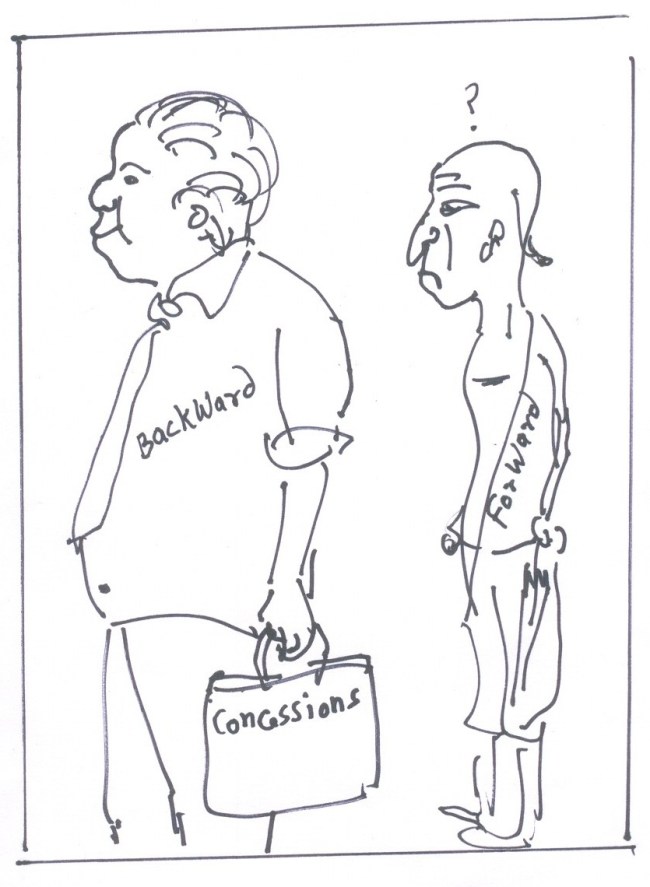
Legal and economic measures too remain vital: affirmative action, anti-discrimination enforcement, and equalisation of opportunity. The soil is renewed not by one hand alone but by many: the teacher, the reformer, the legislator, and the rebel. – The Pioneer, 8 November 2025

Acharya Prashant is a spiritual teacher, philosoper, poet and author of wisdom literature.

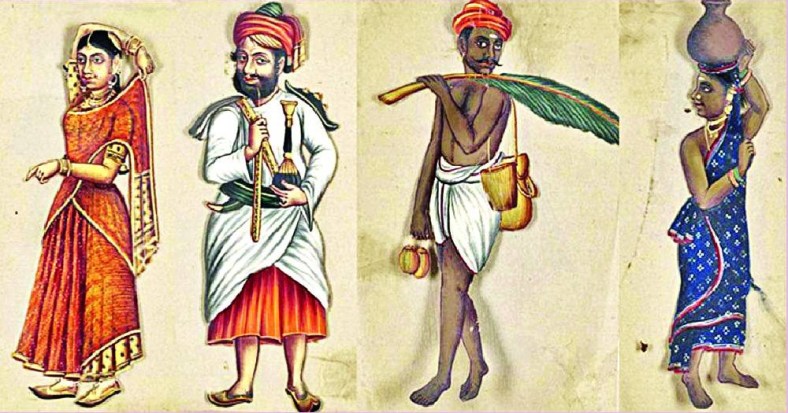
There are Brahmin, Kshatriya, Patel, Jain, Bania, Parsi, Saiyad, Pathan and Christian sanitation workers in Gujarat.

Logic behind the perversion of caste – Ram Swarup

Caste

The self-styled social justice intellectuals and parties do not want an India without castes, they want castes without Dharma. This may be profitable to some in the short run but it is suicidal for all in the long run. – Ram Swarup

Today casteism is rampant. It is a new phenomenon. Old India had castes but no casteism. In its present form, casteism is a construct of colonial period, a product of imperial policies and colonial scholarship. It was strengthened by the breast-beating of our own “reformers”. Today, it has acquired its own momentum and vested interests.

In the old days, the Hindu caste-system was an integrating principle. It provided economic security. One had a vocation as soon as one was born—a dream for those threatened with chronic unemployment. The system combined security with freedom; it provided social space as well as closer identity; here the individual was not atomised and did not become rootless. There was also no dearth of social mobility; whole groups of people rose and fell in the social scale. Rigidity about the old Indian castes is a myth. Ziegenbalg (1682 – 1719) writing on the eve of the British advent saw that at least one-third of the people practised other than their traditional calling and that “official and political functions, such as those of teachers, councillors, governors, priests, poets and even kings were not considered the prerogative of any particular group, but are open to all”.

Nor did India ever have such a plethora of castes as became the order of the day under the British rule. Megasthenes (ca. 300 BCE) gives us seven-fold division of the Hindu society; Hsuan Tsang (ca. 650 CE) the Chinese pilgrim mentions four castes. Alberuni (ca. 973 – 1050 CE) too mentions four main castes and some more groups which did not strictly belong to the caste system.

Even the list of greatly maligned Manu contained no more than 40 mixed castes, all related by blood. Even the Chandals were Brahmins on their father’s side. But under the British, Risley (1851 – 1911) gave us 2,378 main castes, and 43 races! There is no count of sub-castes. Earlier, the 1891 census had already given us 1,150 sub-castes of Chamars alone. To Risley, every caste was also ideally a race and had its own language.

Caste did not strike early European writers as something specially Indian. They knew it in their own countries and saw it that way. J.S. Mill (1806 – 1873) in his Political Economy said that occupational groups in Europe were “almost equivalent to an hereditary distinction of caste”.

To these observers, the word caste did not have the connotation it has today. Gita Dharampal-Frick, an orientalist and linguist [currently at Heidelberg University], tells us that the early European writers on the subject used the older Greek word meri which means “a portion”, “share”, or “contribution”. Sebastian Franck (1499 – ca. 1543) used the German word rott (rotte) meaning a “social group”, or “cluster”. These words suggest that socially and economically speaking they found castes closer to each other than ordo or estates in Europe.

The early writers also saw no Brahmin domination though they found much respect for them. Those like Jurgen Andersen (1669) who described castes in Gujarat found that Vaishyas and not the Brahmins were the most important people there.

They also saw no sanskritisation. One caste was not trying to be another; it was satisfied with being itself. Castes were not trying to imitate the Brahmins to improve social status; they were proud of being what they were. There is a Tamil poem by Kamban (ca. 1180 – 1250) in praise of the plough which says that “even being born a Brahmin does not by far endow one with the same excellence as when one is born into a Vellala family”.

There was sanskritisation though but of a very different kind. People tried to become not Brahmins but brahmavadins. Different castes produced great saints revered by all. Ravidas (ca. 1450) a great saint, says that though of the family of Chamars who still go through Benares removing dead cattle, yet even most revered Brahmins now hold their offspring, namely himself, in great esteem.

With the advent of Islam the Hindu came under great pressure; it faced the problem of survival. When the political power failed castes took over; they became defence shields and provided resistance passive and active. But in the process, the system also acquired undesirable traits like untouchability. Alberuni who came with Mahmud Ghaznavi (971 – 1030) mentions the four castes but no untouchability. He reports that “much, however, as these classes differ from each other, they live together in the same towns and villages, mixed together in the same houses and lodgings”.

Another acquired another’s trait; they became rigid and lost their mobility. All mobility was now downward. H.A. Rose (1867 – 1933), Superintendent of Ethnography, Punjab, from 1901 to 1906, author of A Glossary of Punjab Tribes and Castes, says that during Muslim period, many Rajputs were degraded and they became scheduled castes and scheduled tribes. Many of them still retain Rajput gotra of Parihara and Parimara. Similarly, G. W. Briggs in his The Chamars, tells us that many Chamars still carry names and gotra of Rajput clans like Banaudhiya, Ujjaini, Chandhariya, Sarwariya, Kanaujiya, Chauhan, Chadel, Saksena, Sakarwar; Bhardarauiya, and Bundela, etc. Dr K.S. Lal (1920 – 2002) cites many similar instances in his recent Growth of Scheduled Tribes and Castes in Medieval India.

The same is true of Bhangis. William Crooke (1848 – 1923) of Bengal Civil Service tells us that the “rise of the present Bhangi caste seems, from the names applied to the castes and its subdivisions, to date from the early period of Mohammedan rule”. Old Hindu literature mentions no Bhangis of present function. In traditional Hindu rural society, he was a corn-measurer, a village policeman, a custodian of village boundaries. But scavenging came along with the Muslim and British rule. Their numbers also multiplied. According to 1901 Census, the Bhangis were most numerous in the Punjab and the United Provinces which were the heartland of Muslim domination.

Then came the British who treated all Hindus equally—all as an inferior race—and fuelled their internal differences. They attacked Hinduism but cultivated the caste principle, two sides of the same coin. Hinduism had to be attacked. It gave India the principles of unity and continuity; it was also India’s definition at its deepest. It held together castes as well as the country. Take away Hinduism and the country was easily subdued.

Caste in old India was a cooperative and cultural principle; but it is now being turned into a principle of social conflict. In the old dispensation, castes followed dharma and its restraints; they knew how far they could go. But now a caste is a law unto itself; it knows no self-restraint except the restraint put on it by another class engaged in similar self-aggrandisement. The new self-styled social justice intellectuals and parties do not want an India without castes, they want castes without Dharma. This may be profitable to some in the short run but it is suicidal for all in the long run.

In the old days, castes had leaders who represented the culture of the land, Who were natural leaders of their people and were organic to them. But now a different leadership is coming to the fore: rootless, demagogic and ambitious, which uses caste slogans for self-aggrandisement. – The Indian Express, 13 September 1996

» Ram Swarup (1920–1998) was a Sankhya philosopher, yogi, and colleague of historian Sita Ram Goel. Together they founded the publishing imprint Voice of India in New Delhi, to give Hindu intellectuals a voice when the mainstream media refused to give them any time or space .

Tribes and Castes