Why the liberal world order, built on science and reason, was doomed to fail – Pranav Sharma

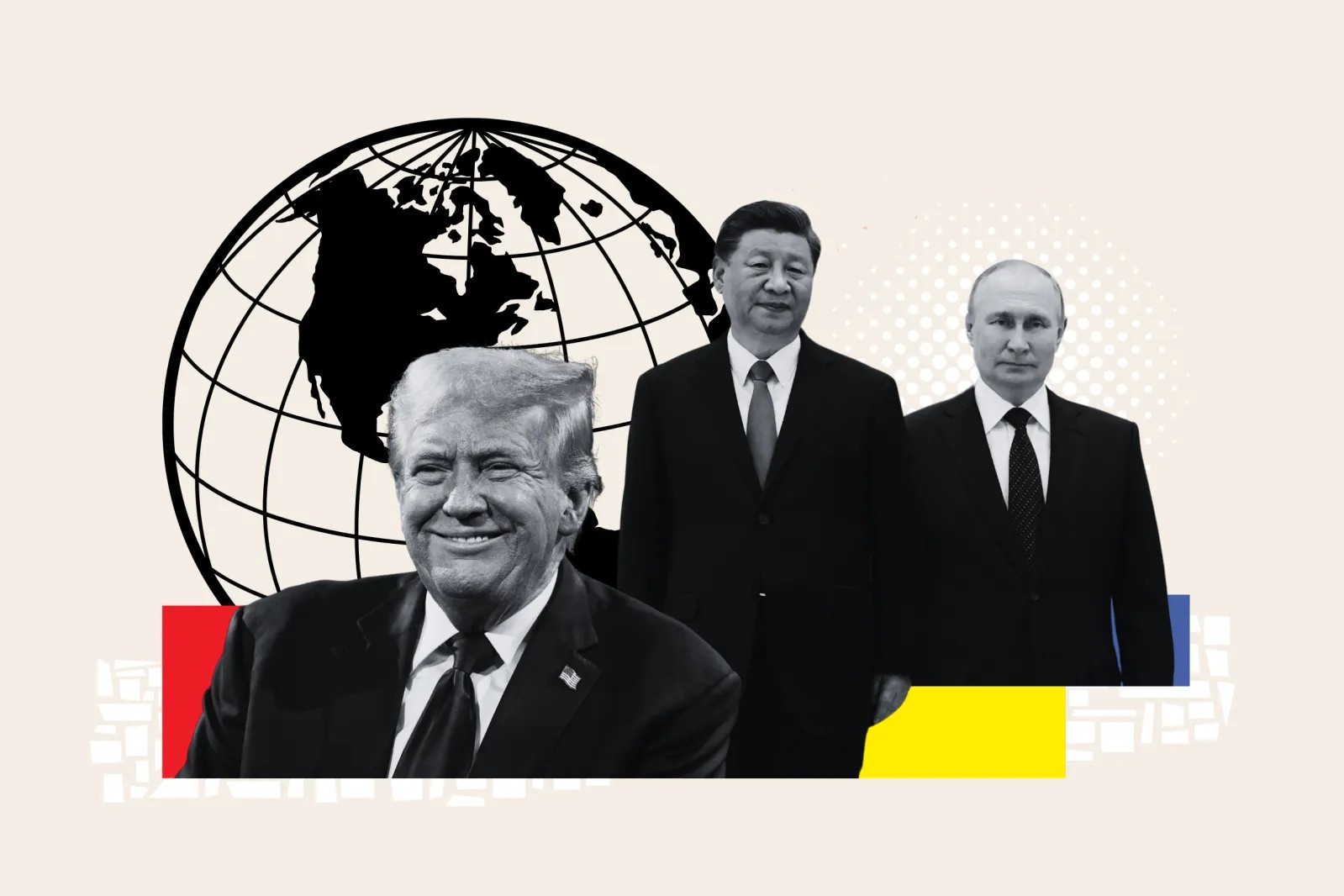
Trump - Xi - Putin

Liberal internationalism, armed with the scientific method, imagined that democracy, free markets, and rational governance could be exported like a validated scientific theory—its value presumed universal, its implementation a technical matter. The spectacular failures of this vision, from the jungles of Vietnam to the deserts of Iraq, are often diagnosed as policy miscalculations or a simple failure to account for the brute realities of nationalism and power politics. – Pranav Sharma

The liberal order did not simply make miscalculations. It rested on a deeper conviction that was flawed from the start: the belief that scientific reason, applied with sufficient rigour to human affairs, would bend history toward peace.

That conviction deserves an autopsy of its own. To understand why the liberal order is unravelling, it helps to understand what its architects thought they were building, and why they trusted science to hold it together.

The myth of the neutral method

There is a general tendency in the story we like to tell ourselves about science. It is set in a pristine, sterile laboratory or a remote observatory somewhere away from human settlements, where a dispassionate mind—devoid of feeble human passions, guided by reason and evidence alone—peels back the layers of illusion to reveal universal truths. We picture the methodical transformation of chaos into coherence, of profound civilisational ignorance into enlightenment. This narrative, as immaculate and compelling as any myth, is perhaps best captured by the iconic photograph from the Apollo 8 mission, Earthrise. Our planet, a delicate swirl of blue and white, hangs in the silent, black expanse. It is an image of sublime objective reality, a portrait of ourselves delivered by the most advanced application of our scientific knowledge.

The Age of Discovery that propelled the scientific revolution, meticulous work of the botanist classifying new species or the cartographer charting an unfamiliar coastline was inseparable from the imperial project it served. The world was mastered not just with guns and ledgers, but with taxonomies and sextants. To imagine science as a dispassionate pursuit of universal truths, observing the political order from a neutral distance, is to indulge a narrative as mythic as any creation story. Science is not outside the ambit of power. It is entangled with the architectures of power, identity, and historical contingency that it purports merely to describe.

Not policy failure, but an epistemic one

Liberal internationalism, armed with the scientific method, imagined that democracy, free markets, and rational governance could be exported like a validated scientific theory—its value presumed universal, its implementation a technical matter. The spectacular failures of this vision, from the jungles of Vietnam to the deserts of Iraq, are often diagnosed as policy miscalculations or a simple failure to account for the brute realities of nationalism and power politics.

However, this critique does not go far enough. The failure was not merely political; it was epistemic. It was a failure born of a worldview that treats complex human societies as if they were variables in a vast geopolitical experiment. The technocratic confidence that a nation’s political and cultural life could be engineered with the same precision as a microchip does not reflect the rigour of science so much as its domestication within the logic of managerialism. In that translation, science stops being a restless mode of inquiry and becomes a fetish, a talisman wielded by a managerial elite to legitimise intervention under the banner of evidence-based policy.

Realism, of course, has always stood as the cynical corrective, reminding us of the tragic chorus of power politics and security dilemmas. The structural realist elegantly models an anarchic world where states, like billiard balls, career across the global baize according to immutable, impersonal laws of power. It is a particularly seductive, clean, and predictive model. Yet it occludes more than it reveals, for states are not inert billiard balls; they are incandescent assemblages of identity, memory, desire, arrogance, and trauma. Their behaviour is shaped not just by rational calculations of interest, but by their ghosts of history and the affective, often irrational, intensities of belonging. A discipline that aspires to the predictive economy of physics keeps discovering that its objects refuse to behave like matter. Here lies the essential tension.

Why nationalism beats the model

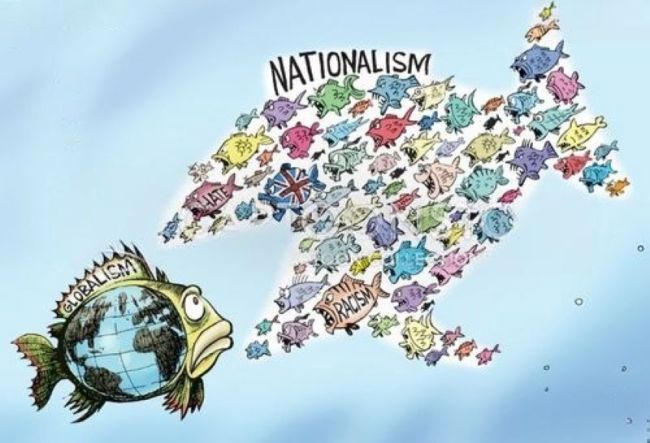
Science, in its ideal form, seeks truths that are universal. Nationalism, by contrast, thrives on the singular, the irreducible, and the mythic. A nation, after all, is an imagined community, a social construction whose power lies not in its empirical validity but in its capacity to weave individuals into a narrative far larger than themselves. It is, in this sense, a kind of anti-science—not because it rejects facts, but because it privileges myth over measurement and memory over data. It reveals a profound and uncomfortable truth: science cannot fix the human condition because the human condition is not a technical problem to be solved. It is a predicament to be narrated, endured, and perpetually contested.

This is why the liberal wager keeps losing. The liberals assumed that as societies grew wealthier, better informed, and more rationally governed, the particularist passions would recede. The opposite has occurred. The nationalist turn in the United States, the populist surge across Europe, the authoritarian consolidation from Moscow to Beijing, none of these are deviations from a modernising trend that better data would have predicted and better policy could have averted. They are evidence that the model itself was wrong about what moves people.

The liberal faith ran deeper still. The belief that scientific advancement would lead inexorably to moral and political enlightenment is a secular eschatology, a story of salvation without gods. History mocks such linear narratives. The 20th century stands as a monument to this paradox. The same scientific rationality that allowed us to map the human genome also gave us the bureaucratic precision to engineer genocide. The space race, a triumphant symbol of ideological and scientific supremacy, was haunted by the shadow of mutually assured destruction. It became the epitome of logical insanity, where survival depended on the promise of total annihilation. The nuclear revolution did not make war obsolete; it reconfigured its calculus from a contest of conquest to one of existential deterrence. Progress and catastrophe are not opposites in this story. They are produced by the same machinery.

The 21st-century stress test

We now find ourselves in a new century, facing a fresh wave of disruptions. Artificial intelligence, biotechnology, and cyber warfare are not merely new tools; they are forces that defy our traditional categories, blurring the lines between civilian and military, public and private, human and machine. The US-China contest over advanced computing is not a conventional arms race that arms-control templates can manage; the technology is dual-use by nature, diffuse in ownership, and faster-moving than any treaty cycle. They reveal, with terrifying clarity, the inadequacy of political frameworks forged in the post-war, post-colonial age to grapple with transnational risks that recognise no borders.

Most humbling of all is the predicament of climate change. Here is the ultimate, planet-sized irony: the most profound existential threat of our time is a direct byproduct of the very industrial rationality that promised to liberate humanity from the fickle tyranny of nature. The Anthropocene is not merely a new geological epoch; it is a testament to the unintended consequences of Enlightenment ambition. The relentless quest to master nature has, in the end, destabilised the planetary systems upon which all human life depends. This is not, to be clear, a failure of the scientific method itself. It is the catastrophic failure of the narrative that framed science as a tool of unambiguous and unending human progress, the same narrative that underwrote the liberal order’s confidence in its own trajectory. The algorithm that optimises a global supply chain can equally be turned to systems of targeted surveillance, reducing individuals to predictable data points in a model of consumption and control.

Living with what science cannot do

What, then, is the proper place of science in the grand drama of nation-state and international relations? It can be neither saviour nor scapegoat. It is a contingent, historically situated practice. Science can explain the world, but it cannot redeem it. Its truths are provisional, its applications ambivalent. To grasp its place in national or global politics is to resist the seduction of both technocratic triumphalism and reactionary scepticism, and to hold instead a critical sensibility that recognises science as at once a form of knowledge and a site of power.

The realist reminders remain true as far as they go: the world is anarchic, power matters, and ideals often shatter against the wall of strategic necessity. But the deeper lesson is that realism, like liberalism, is just another story. It is a framework that imposes a semblance of order on a world that is fundamentally resistant to coherence. Science belongs to the same narrative economy. It offers not only explanations but orientation, a way of locating ourselves in a vast and indifferent universe. That is a real service. It is not the same as a guarantee.

The order now being mourned was built on the opposite assumption: that reason, sufficiently advanced, would deliver a destination. As a lengthening line of former believers concede that the destination was never reached, the temptation will be to locate the policy error that cost us the arrival. There was no such error, because there was no such destination. The question was never whether science could fix the human condition. It was how we live with the knowledge that it cannot. That is the tragic wisdom modernity keeps trying to forget. Our greatest achievements are inseparable from our deepest vulnerabilities. Our task, then, is not to seek salvation in the laboratory, but to bear witness to this paradox—to trace, with unflinching eyes, the fragile and often unsettling threads that bind knowledge to power, hope to despair, and progress to its profound and enduring discontents. – The Print, 14 June 2026

Pranav Sharma is a historian of science who lives and writes from New Delhi, India and Paro, Bhutan.
Nationalism Returns

Sita Ram Goel’s essay added in the US Congressional Record – Sandeep Balakrishna

Sita Ram Goel

Sita Ram Goel’s essay has an enduring value and provides an extraordinary window to understand both that period—the 1940s—and what is unfolding today in India and elsewhere. – Sandeep Balakrishna

Introduction

The deserved fame of Ram Swarup and Sita Ram Goel as the pioneers of sculpting and disseminating original and penetrating critiques of Islam and Christianity has overshadowed their equally original and substantial contributions in dismantling Communism and Marxism at a time when it had a stranglehold on India’s political, economic, societal, educational and institutional life. That calls for an independent study in its own right.

Beginning in the late 1940s, they launched the trailblazing Society for the Defence of Freedom in Asia, an organisation dedicated to blasting Communism in all its forms. Sita Ram Goel also occasionally wrote for other publications both in India and abroad giving recurrent warnings about this genocidal ideology.

In 1956, he submitted a comparative analysis that dealt with capitalism, communism, dialectical materialism and the American political and social system to a conservative U.S. magazine. The magazine rejected it. However, it was picked up by a French scholar working for the NATO, who cited it. That attracted the attention of a West German magazine, which then published it in full. The interesting element was the fact that the magazine was being published by refugees from Stalin’s USSR. Given the fact that the Cold War was at its peak at that time, the antlers of the U.S. immediately stood alert. Goel’s article then promptly found its way to the U.S. Congressional Record.

By all accounts, the essay is not only eye-opening but has an enduring value and provides an extraordinary window to understand both that period and what is unfolding today both in India and elsewhere.

Sita Ram Goel’s analysis is narrated in the form of a conversation that he had with an imaginary friend who recounts his experiences of attending an international seminar. Excerpts of the essay follow.

A Nightmarish Interpretation of Waking Life

It was a nightmarish interpretation of waking life.

A bunch of Indian eggheads had gathered in a highbrow seminar to compile an inventory of US sins. The roll was quite formidable. Monopoly capitalism, dollar imperialism, H-bomb militarism, MacCarthy fascism, negro-lynching racialism, alcoholism, crime fiction, horror comics, juvenile delinquency, jazz music, and coca cola. Dante’s inferno erupted right in our midst.

The young swami in saffron looked bored and unimpressed. His lips twirled in a gesture of contempt as he surveyed the august assembly. Then he stood up, and summarily dismissed the eggheads as denizens of darkness dishing out dirt and disease. The singular sin of the United States, he said, was Dialectical Materialism.

The eggheads stabbed him with hostile stares which soon exploded in angry outbursts. How did this swine of a swami steal into the company of sober scientists? It was suggested that his person be subjected to thorough search. Some crevice of his ridiculous robe was suspected of being loaded with dollar bills. But better counsels prevailed and the seminar dispersed hastily. The holy hoax was not worth an audience.

I accosted the swami on the road outside. He certainly seemed to be a very interesting man. Absolutely convinced. And immovably calm in a world where convictions created convulsions of hatred and righteousness. Very soon, I was sitting before him on a lawn, trying to share his uncanny insight. He smiled indulgently and spoke in simple terms:

“The United States has an idea. Democracy. She has practised it for long, and has prospered on it. There is no doubt that she cherishes the idea with sincere devotion. Her one ambition is to share it with every other country. And she spends billions to spread and safeguard it in all parts of the world.

“What does she do? She proclaims that democracy can be distilled from the standard of living. So let every country improve its agriculture and industry, and develop schools, cinemas, railways, roads. Let there be taller and heavier bodies which last better and longer. Let everyone have fruit juice for breakfast, wear a silk hat, ride a Mercedes, and giggle at Marylin Monroe. And democracy will develop to the detriment of all other ideas.

“The United States protests that democracy must perforce depend upon dictators who can push through plans for industrialization. She seeks out the Nehrus, Nassers, and Sukarnos who have power, prestige and pugnacity. She turns a deaf ear to the denunciations they daily hurl at her. Dip them with another darned good dose of dollars, and in due course they shall deliver democracy. That is the formula.

“The United States cannot bother about blighters who believe in democracy, and who write and fight for it. After all, the miserable scribes have no power to persecute or protect. She cannot waste her august attention on inspired idiots and discredited do-nothings. She cannot afford to provoke people in power for a pack of funny friends, hated and hunted by their own people. No. She is practical. And she is precise.

“Now, all this is exactly what we know as Dialectical Materialism. In the universe presided over by this deity, consciousness oozes out of matter like oil from sunflower seeds, ideas are concomitants of material changes, and the human mind an effeminate evolute of the human body. It is a universe of objective and subjective necessities, in which there is no freedom and, therefore, no place for faith.”

There was a pause. I gave him my reactions. I had suddenly become very optimistic about peaceful coexistence, now that I knew that both the Soviet Union and the United States shared the same creed. The Swami laughed aloud and said:

“Who told you the Soviet Union promotes Dialectical Materialism? That is a damned lie, as big as the other lie that the United States promotes Humanism. The Soviet Union only sells Dialectical Materialism to those she wants to defeat and destroy. As for herself, she stands for what in philosophy we call Idealism, a rigorous and uncompromising type of Idealism.

“The Soviet Union too has an idea. Totalitarianism. She has polished and perfected it over the years. She is passionately dedicated to it. She wants this idea to prevail permanently, for, without it, she sees no hope for humanity. And she also spends billions to spell and secure it in every corner of the world.

“What does she do? She propounds that the standard of living and much more follow from faith in totalitarianism. She elaborates the idea in an unending stream of books, pamphlets, posters, handbills, and films, produced in every language and suited to the lowest intelligence and the meanest pocket. She employs an army of men and women to retail this idea on a mass scale in order to convert or corrode as many people as possible, and to ultimately impose it with force of arms in true crusading fashion.

“The material conditions may differ from Czechoslovakia to Albania to Tibet. But they are all equally ripe for totalitarianism. The triumphal march of an idea does not and should not depend on any material preparation. The idea cannot and should not wait for slow and stupid material changes. What the idea needs is human minds, their craving for it. The minds can be captured and the craving created by means of books and the party apparatus.

“Nor does the Soviet Union seek for any credentials of power or prestige in choosing her friends. All she cares for is their convictions. Let the convinced ones be obscure and unknown. She makes them famous overnight by powerful publicity. Let the convinced ones be poor. She makes them prosperous by placing them in her paid hierarchy. Let the convinced ones be hated by their own people. She makes them loved by discovering in them virtues which no one ever suspected.

“If you can turn a phrase, you can be turned into a world famous author, without your ever bothering to write a line. People everywhere will be informed by the Soviet network that your wonderful works are under translation. Royalties on enormous editions will come pouring into your pocket. And so on, you can be a renowned scientist, or doctor, or lawyer, or musician, or poet, or priest, as it suits your taste, and go about as an honoured guest in every capital of the world. All you have to do is to believe in and seek for totalitarianism, and the rest in added unto you.

“This is not Dialectical Materialism. This is Idealism, according to which consciousness converses with consciousness as one lamp is lighted by another, ideas implement ideas, and one human mind meets another, directly without any material aid. In this universe, the ill-fed and ill-clad underdogs have as much capacity as their more privileged fellow-beings. For, this is the universe of freedom, and of faith.”

There was another pause. I was too flabbergasted to offer any comment. After a while, the swami himself resumed:

“You were talking of peaceful coexistence. I do not know what that phrase really means. What I see before my eyes is a neat division of labour between the United States and the Soviet Union, at least in this part of the world. The United States is trying to take care of our bodies, our hearths, and our homes. The Soviet Union is taking care of our heads, and showing extreme concern for our mental, moral and spiritual needs.

“The United States builds schools and spreads literacy among the peasants. The Soviet Union provides them the newspapers they read. The United States erects factories in which the workers can earn a livelihood. The Soviet Union bands them into trade unions, trains their leaders, and gives them a cause to die for. The United States gives scholarships to promising students for studies abroad. The Soviet Union equips them with political glasses through which they can survey the world. The United States builds hospitals and furnishes them with soft beds and rare medical supplies. The Soviet Union indoctrinates the nurses who attend and attract the patients. The United States spends on library premises. The Soviet Union stocks the shelves within with her own choice of literature. The United States pampers regime after regime with the paraphernalia for pomp. The Soviet Union creates an elite capable of possessing power in every land….”

The swami looked at his watch, and stood up. He was now in a hurry. I accompanied him to the nearest bus stand, and shot my only question at him: “Why do you think Dialectical Materialism is a sin?” He raised his eyebrows, looked grim, and whispered:

“I am a man of God. I have seen Him face to face, even as I see you. I know He is pure, unmixed Consciousness. Self-existing, All-sustaining and Blissful Consciousness.”

And then suddenly pointing his well-shaped finger towards a heap of dirt, he roared: “Dialectical Materialism says that Mahatma Gandhi and Albert Einstein evolved out of that filth. That is blasphemy. And a sin. A cardinal sin.”

I woke up with a start. There was no swami, no bus stand, and no heap of dirt. Instead, I lay in a bed scattered with the writings of the Right Reverend Pandit Jawaharlal Nehru. Perhaps I had been bored to an early doze by his bad paraphrase of Communist scriptures.

Epilogue

That is how Sita Ram Goe’s brilliant essay concludes. More than three decades later, he adds an epilogue of sorts, notable for its Goelesque sucker punch. The punch is also a handy guide for those who wish to follow the path he laid down in order to effectively combat and defeat all these nihilistic, soul-crushing and civilisation-destroying ideologies.

India is the home of Sanatana Dharma, a world-view which is at once eternal and universally valid. All other spiritual world-views have imprisoned themselves within the confines of a particular book, or a particular prophet, or a particular church. Sanatana Dharma alone rises above all sectarian semantics and sophistry, and takes us straight into that sunshine of the Supreme Spirit which has sanctioned the rise and spread of Communism, and which will sanction its death and destruction as well. Let the spirit of Sanatana Dharma re-awaken and spread once more in the land of its first though immemorial dawns. Let us look at Pandit Nehru and his hoodlums from the vantage point of that spirit. Then we shall see immediately as to who is the arch-villain in this dismal drama, and stop wasting our time and energy in weeping and whining against mere minions like Comrade Krishna Menon.

 This attitude, this spirit and this call to be energetic is eminently relevant today more than ever, and will remain so till the aforementioned arch-villains are put in their proper place. – Dharma Dispatch, 5 Februaru 2021

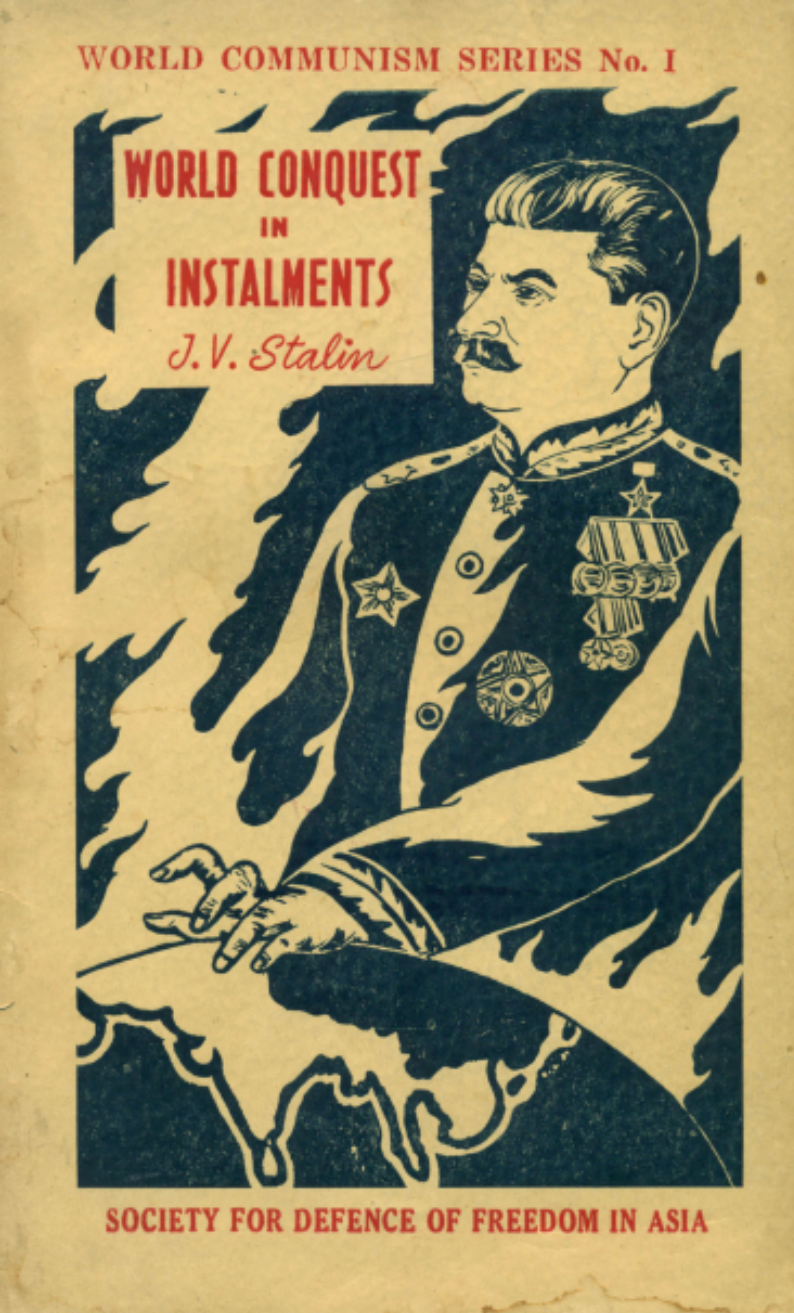
World Conquest in Instalments - J.V. Stalin
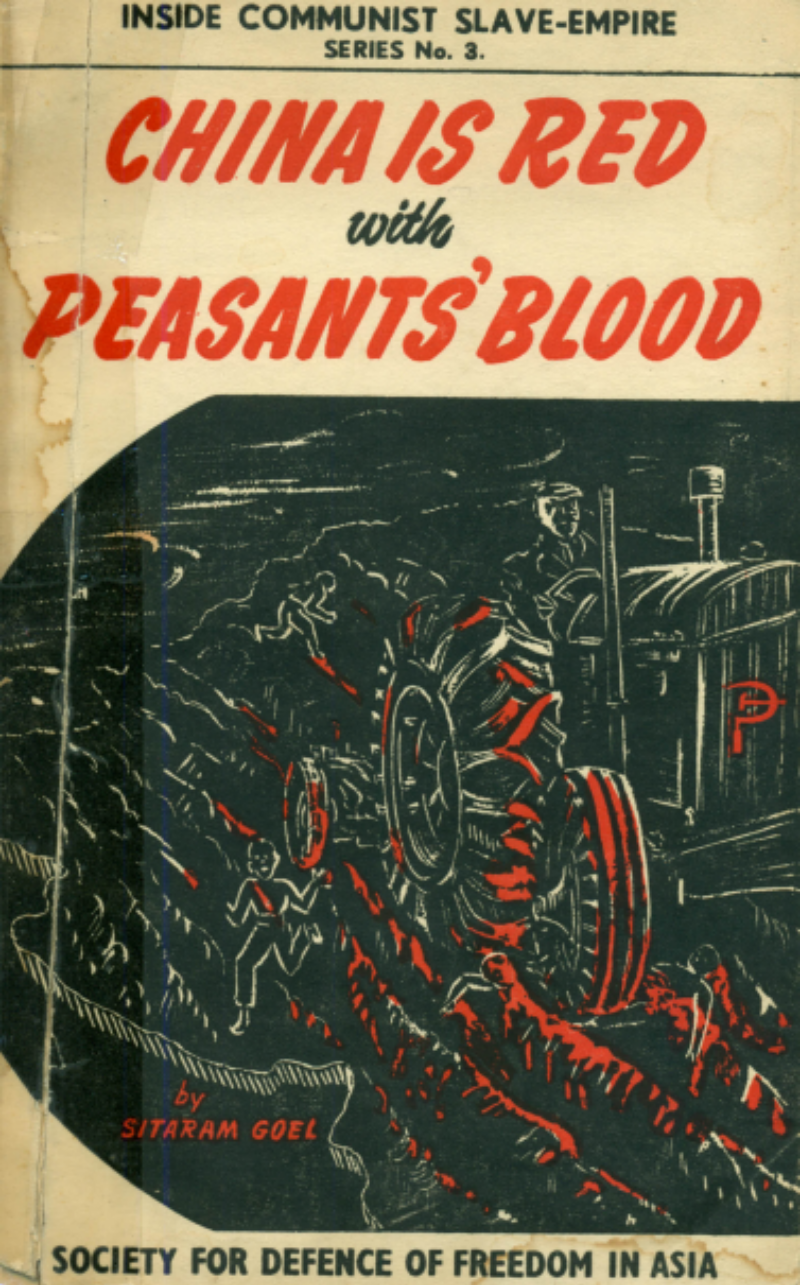
China is Red with Peasans Blood - Sita Ram Goel

Hindutva and other peoples’ nationalism – Koenraad Elst

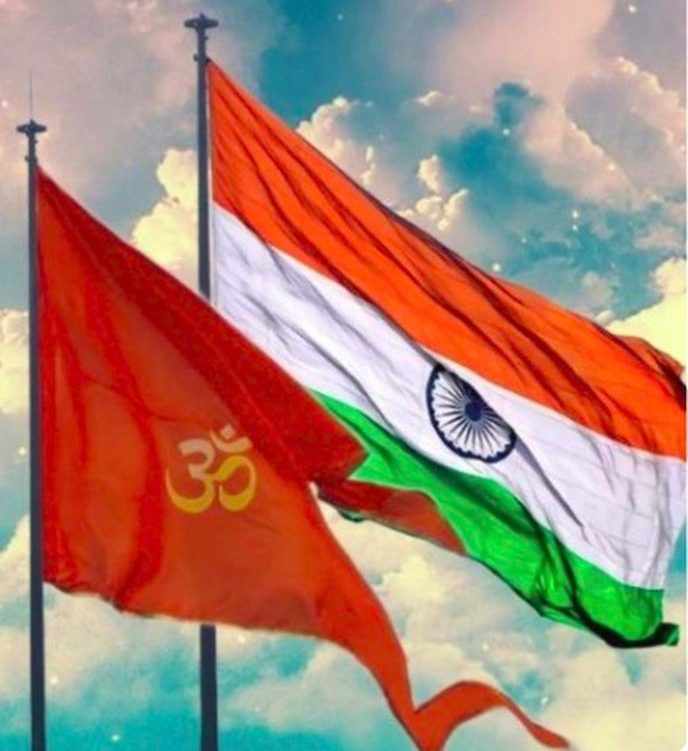
Hindu & India Flags

Along with falling from cultural Hindu nationalism to empty secular-territorial nationalism, the BJP has also fallen from solidarity with other oppressed and colonised nations to a short-sighted ethnocentrism. – Dr. Koenraad Elst

The BJP’s subordination of any and every ideological or religious conflict to questions of “national unity and integrity”, this most mindless form of territorial nationalism, is also a worrying retreat from the historical Hindu conception of Indian nationhood and its implications for the evaluation of foreign problems of national unity. Along with Mahatma Gandhi and other Freedom Fighters, the BJS used to be convinced that India was a self-conscious civilisational unit since several thousands of years, strengthened in its realisation of unity by the Sanskrit language, the Brahmin caste, the pilgrimage cycles which brought pilgrims from every part of India all around the country (“country” rather than the “Subcontinent” or “South Asia”, terms which intrinsically question this unity), and other socio-cultural factors of national integration. The notions that India was an artificial creation of the British and a “nation in the making”, were floated by the British themselves and by Jawaharlal Nehru, respectively, and both are obvious cases of unfounded self-flattery. Gandhi’s and the BJS’s viewpoint that India is an ancient nation conscious of its own unity is historically more accurate.

In foreign policy, one can expect two opposite attitudes to follow from these two conceptions of India, the Gandhian one which derives India’s political unity from a pre-existent cultural unity, and the Nehruvian one which denies this cultural unity and sees political unity as a baseless coincidence, an artificial creation of external historical forces. In its own self-interest, an artificially created state devoid of underlying legitimacy tends to support any and every other state, regardless of whether that state is the political embodiment of a popular will or a cultural coherence. The reason is that any successful separatism at the expense of a fellow artificial state is a threat to the state’s own legitimacy. That is, for instance, why the founding member states of the Organisation of African Unity decided from the outset that the ethnically absurd colonial borders were not to be altered. It is also why countries like Great Britain and France, whose own legitimacy within their present borders is questioned by their Irish, Corsican and other minorities, were reluctant to give diplomatic recognition to Lithuania when it broke away from the Soviet Union.

By contrast, those who believe that states are merely political instruments in the service of existing ethnic or cultural units, accept that state structures and borders are not sacrosanct in themselves and that they may consequently be altered. That is why Aleksandr Solzhenitsyn proposed to allow the non-Slavic republics to leave the Soviet Union, and why as a sterling Russian patriot he pleaded in favour of Chechen independence from the Russian Federation: it is no use trying to keep Turks and Slavs, or Chechens and Russians, under one roof against their will. If Russia is meant to be the political expression of the collective will of the Russian people, it is only harmful to include other nations by force, as the Chechens and Turkic peoples once were.

To be sure, even partisans of this concept of “meaningful” (as opposed to arbitrary) states will concede that there may be limitations to this project of adjusting state structures and state borders to existing ethnic and cultural realities, especially where coherent communities have been ripped apart and relocated, as has happened in Russia. Also, cultural and ethnic identities are not static givens (e.g. the “Muslim” character of India’s principal minority), so we should not oversimplify the question to an idyllic picture of a permanent division of the world in states allotted to God-given national entities. But at least the general principle can be accepted: states should as much as possible be the embodiment of coherent cultural units. That, at any rate, is the Hindu-nationalist understanding of the Indian state: as the political embodiment of Hindu civilisation.

Now, what is the position of the BJS/BJP regarding the right of a state to self-preservation as against the aspirations of ethnic-cultural communities or nations? The BJS originally had no problem supporting separatism in certain specific cases, esp. the liberation of East Turkestan (Sinkiang/Xinjiang), Inner Mongolia and Tibet from Chinese rule. At the time, the BJS still adhered to the Gandhian position: India should be one independent state because it is one culturally, and so should Tibet for the same reason. Meanwhile, however, this plank in its platform has been quietly withdrawn.

As A.B. Vajpayee told the Chinese when he was Janata Party Foreign Minister, and as Brijesh Mishra, head of the BJP’s Foreign Policy Cell, reconfirmed to me (February 1996): India, including the BJP, considers Tibet and other ethnic territories in the People’s Republic as inalienable parts of China.[1] The BJP has decisively shifted towards the Nehruvian position: every state, by virtue of its very existence, must be defended against separatist tendencies, no matter how well-founded the latter may be in cultural, ethnic or historical respects. That is, for example, why the BJP is not supporting Kurdish sovereignty against Iraqi and Turkish imperialism.[2] Along with falling from cultural Hindu nationalism to empty secular-territorial nationalism, the BJP has also fallen from solidarity with other oppressed and colonised nations to a short-sighted ethnocentrism.

When you ask why the BJP has abandoned its support for the Tibetan freedom movement, the standard reply is that this would justify other separatisms, including those in Kashmir and Punjab. Exactly the same position is taken by non-BJP politicians and diplomats. But from a Hindu and from an Indian nationalist viewpoint, this position does injustice to India’s claim on Kashmir and Punjab, which should not be put on a par with all other anti-separatism positions in the world. Firstly, while Tibet was never a part of China, and while Chechnya was only recently (19th century) forcibly annexed to Russia, Kashmir and Punjab have been part of the heartland of Hindu culture since at least 5,000 years. Secondly, in contrast with the annexations of Chechnya and Tibet, the accession of Punjab (including the nominally independent princedoms in it) and the whole of the former princedom of Jammu & Kashmir to the Republic of India were entirely legal, following procedures duly agreed upon by the parties concerned.

Therefore, Indian nationalists are harming their own case by equating Kashmiri separatism with independentism in Tibet, which did not accede to China of its own free will and following due procedure, and which was not historically a part of China. To equate Kashmir with Tibet or Chechnya is to deny the profound historical and cultural Indianness of Kashmir, and to undermine India’s case against Kashmiri separatism. Here again, we see the harmful effect of the BJP’s intellectual sloppiness.

To be fair, we should mention that the party considers its own compromising position on Tibet as very clever and statesmanlike: now that it is preparing itself for Government, it is now already removing any obstacles in the way of its acceptance by China and the USA (who would both be irritated with the “destabilising” impact of a Government in Delhi which is serious about challenging Beijing’s annexation of Tibet). In reality, a clever statesman would reason the other way around: possibly there is no realistic scope for support to Tibetan independence, but then that can be conceded at the negotiation table, in exchange for real Chinese concessions, quid pro quo.[3] If you swallow your own hard positions beforehand, you will have nothing left to bargain with when you want to extract concessions on the other party’s hard positions, i.e., China’s territorial claims on Ladakh, Sikkim and Arunachal Pradesh, and its support to Burmese claims on the Andaman and Nicobar islands. International diplomacy should teach the BJP what it refuses to learn from its Indian experiences, viz. that being eager to please your enemies doesn’t pay. – Pragyata, 13 May 2020 (excerpt taken from BJP vis-a-vis Hindu Resurgence by  Koenraad Elst and published by Aditya Prakashan, New Delhi).

› Belgian scholar Dr Koenraad Elst is an author, linguist, and historian who visits India often to study and lecture. 

References

  1. If earlier BJP manifestos still mentioned Sino-Indian cooperation “with due safeguards for Tibet”, meaningless enough, the 1996 manifesto does not even mention Tibet. Nor does it unambiguously reclaim the China-occupied Indian territories; it vaguely settles for “resolv[ing] the border question in a fair and equitable manner”.(p.32)
  2. In October 1996, a handful of BJP men bravely demonstrated before the American Embassy against the American retaliation to the Iraqi troops’ entry in the Kurdish zone from which it was barred by the UNO. There was every reason to demonstrate: while punishing Iraq, the Americans allow Turkish aggression against Iraqi Kurdistan, the so-called “protected” zone, and fail to support Kurdish independence in deference to Turkey’s objections. But that was not the target of the BJP protest, which merely opposed any and every threat against the “unity and integrity” of Iraq, a totally artificial state with artificial and unjustifiable borders (as Saddam Hussain himself argued during the Gulf War, pointing to the artificial British-imposed border between the Mesopotamian population centre and the Kuwaiti oil fields).
  3. This is not to suggest that demanding freedom for Tibet should only be done to have a bargaining chip, merely to illustrate the principle that concessions, even if unavoidable under the circumstances, should still be made known as such, i.e. in exchange for concessions from the other party, and not made beforehand in exchange for nothing. But Beijing politics may develop in such a way that Tibetan sovereignty becomes a realistic proposition again.

Tibetan Independence