1 – The Samarkand Syndrome: Why Babur and family never became ‘us’ – Aabhas Maldahiyar

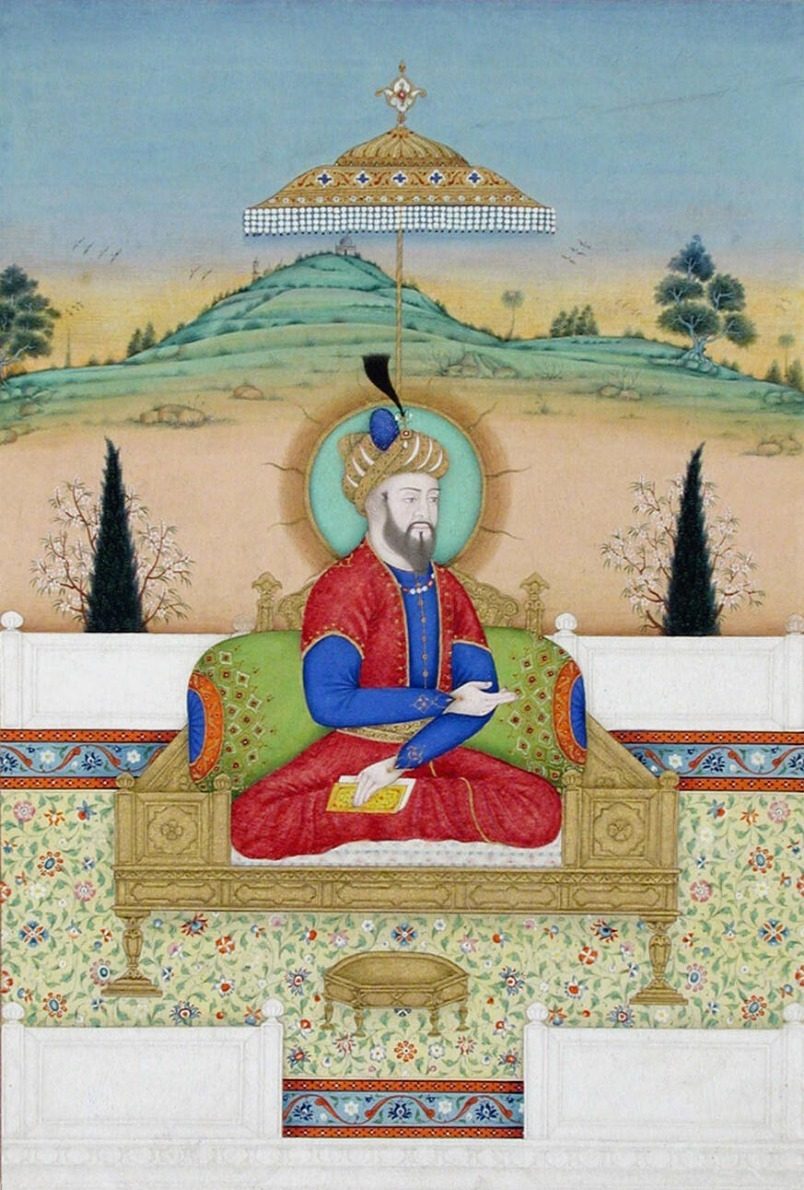
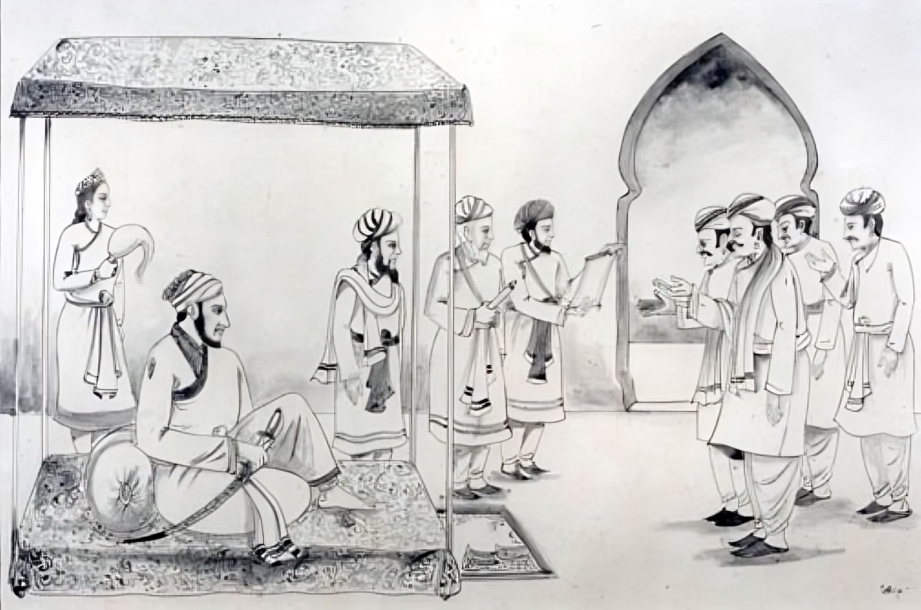
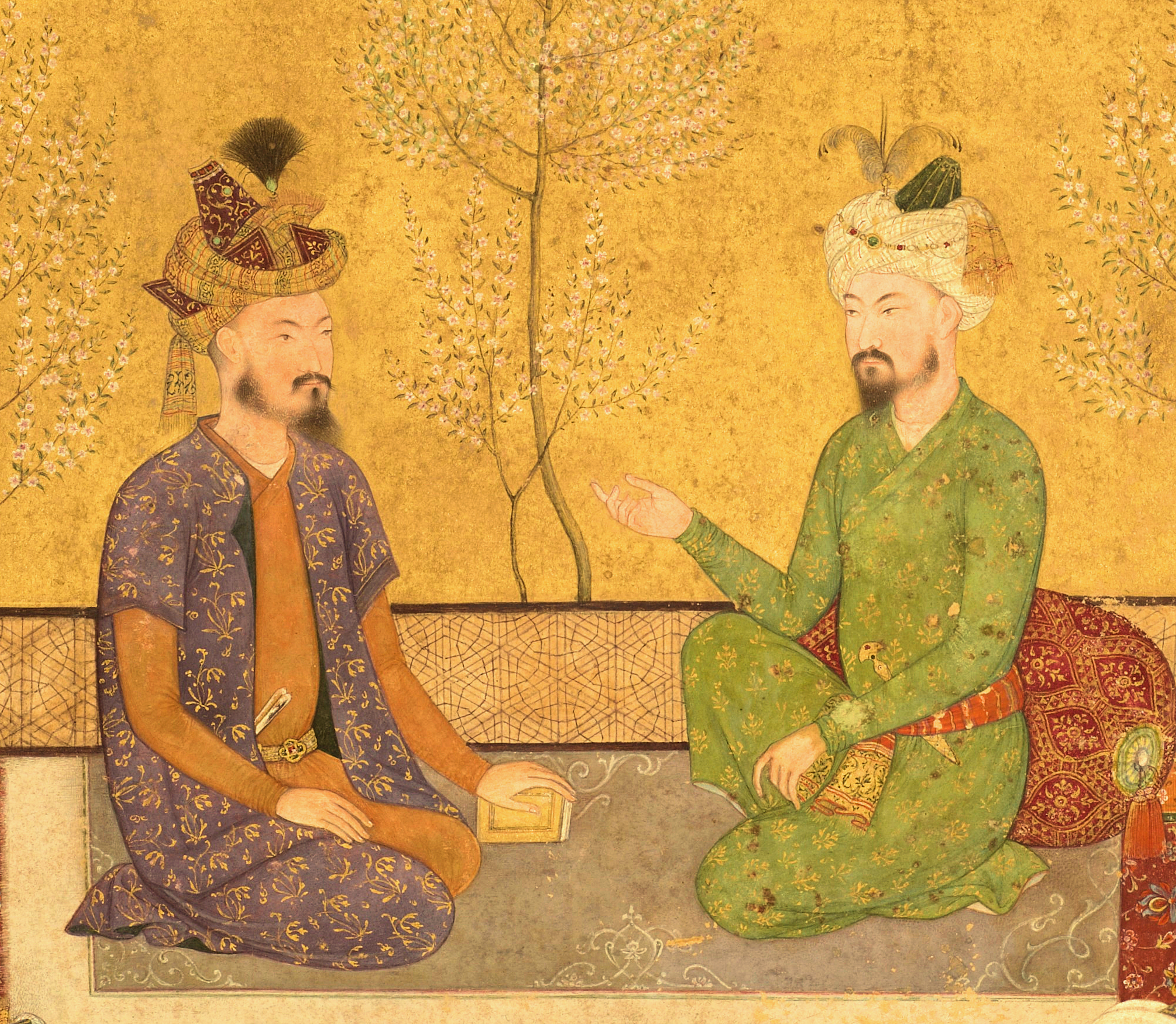
Babur and Humayun

Hindustan gave the Timurids empire, wealth, and power, but Samarkand remained home, lost which they could never get back. India became the stage upon which their grandeur unfolded, while their emotional compass repeatedly pointed beyond the Hindu Kush toward the orchards, graves, and memories of Central Asia. – Aabhas Maldahiyar

Five centuries after the First Battle of Panipat (1526), Bharat finds itself revisiting the establishment of the Timurid Gurkhaniya Empire, though often under the historically imprecise label of “Mughal“. The battle itself has left behind celebrated images of gunpowder, cannons, and a transformed military landscape. Yet some legacies remain less discussed. Among them was Babur’s use of villages around Panipat as protective buffers (human shields) during his campaign, an aspect that rarely enters popular memory. But this is not the subject I intend to pursue here.

What concerns me instead is a larger historical assumption that has gradually hardened into conventional wisdom: that the Timurids eventually became Indians, that the dynasty which arrived from Central Asia dissolved itself completely into the soil of Hindustan and came to see India as its unquestioned homeland. The passage of time has made this notion appear almost self-evident.

This essay seeks to question that narrative. For beneath the marble splendour of Agra and the imperial grandeur of Delhi lay another inheritance, one that continued to look northward beyond the Hindu Kush, toward Samarkand, Balkh, and the ancestral landscapes of Timurid memory. To understand whether the Timurids truly became “us”, it is perhaps best to begin with the words of the dynasty’s founder himself.

So, I begin with Babur’s initial reflection on Hindustan:

Hindustan is a country of few charms. Its people have no good looks; of social intercourse, paying and receiving visits; there is none; none of genius and capacity; none of manners; in handicraft and work, there is no form or symmetry, method or quality; there are no good horses, no good dogs, no grapes, musk-melons or first-rate fruits, no ice or cold water, no good bread or cooked food in the bzrs, no hot-baths, no colleges, no candles, torches or candlesticks.

While he cries folly for India, he goes on to say this for Samarkand:

Samarkand, for nearly 140 years, had been the capital of our dynasty. An alien and of what stamp! An Azbeg foe, had taken possession of it! It had slipped from our hands; God gave it again! Plundered and ravaged, our own returned to us.

Indeed, Hindustan did not appear even as a consolation prize for Samarkand—the land Babur regarded as home. Babur himself lays out the reasons with striking clarity in the Baburnama for why he turned toward Hindustan:

1. To fulfil the ambition associated with his forefather Timur and establish Timurid authority in Hindustan under an Islamic political order.

2. Although Kabul was the first place where he assumed the title of Padshah, it generated limited revenue; Hindustan, in his own description, promised abundant wealth, plentiful labour, and a land rich in gold and silver.

3. He had effectively been pushed out of his Central Asian homeland, with his arch-rival Shaibani Khan steadily closing every path back. Thus, despite his enduring longing for Samarkand, the road home had gradually ceased to exist.

For Babur, Hindustan was not the destination of nostalgia; it was the destination of necessity, ambition, and opportunity. Samarkand remained the horizon of memory, while Hindustan became the terrain of survival and empire.

Carrying the old thread of longing across generations, Akbar’s chronicler Abu’l Fazl hints that a powerful attachment to Central Asia flowed through Timurid veins. In his words, even Timur, after devastating India, is described as having been “impelled by the love of his native land”. This was not merely an emotion confined to one ruler. It became an inherited memory, an ancestral pull that echoed through successive Timurid emperors.

As the dream of Central Asia often appeared brighter than its practical rewards, the corridor between Hindustan and the northwest remained a living artery, a strategic passage that the Timurids sought to preserve under their influence and control. Both Babur and Abu’l Fazl emphasise this reality in their respective writings by representing it as a pathway leading toward memory, legitimacy, and the geography of origin itself.

The argument becomes even more visible when one turns to Timurid writings produced after Babur. Their own words frequently reveal that Central Asia continued to occupy the position of “home” in the Timurid imagination. They use the term wilayat (one’s own province or homeland) repeatedly, tying Balkh and Transoxiana into an enduring sense of belonging. This language creates the impression that Hindustan, despite becoming the seat of imperial power, was often seen as an extension of an older world rather than its replacement.

The Maasir al-Umara by Samsam ud Daula Shah Nawaz Khan, a biographical work on Muslim and Hindu officers serving Timurid rulers in India from 1500 to around 1780, refers to Khwaja Abdullah Ahrari of Samarkand as belonging to the wilayat. This detail deserves attention. Shah Nawaz Khan was a courtier of Qamar ud Din Khan, Asif Jah I, the first Nizam of Hyderabad. Had Hindustan been fully internalised as the unquestioned homeland by the eighteenth century, it is difficult to explain why a courtier writing in the Deccan would continue to describe Samarkand as wilayat. The persistence of such terminology suggests that the older geography of belonging had not entirely faded.

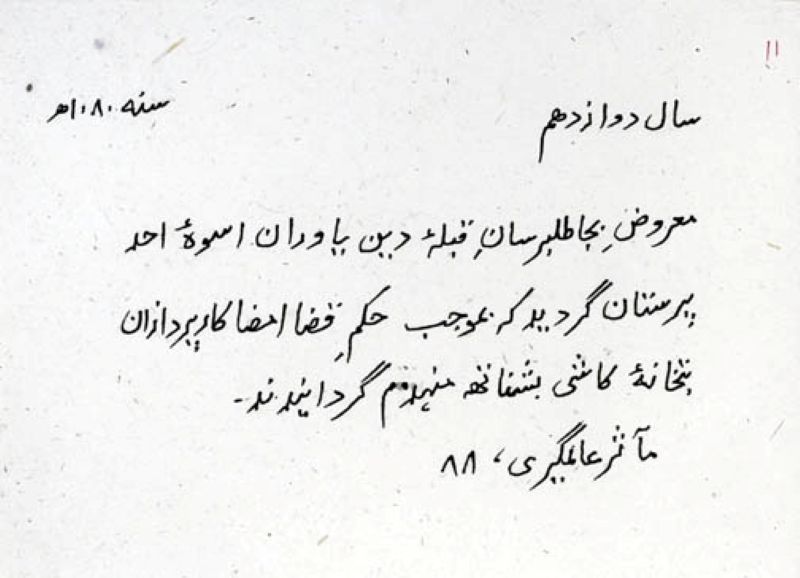
The Maasir-i-Alamgiri provides many more such records. Mir Shihab ud Din Siddiqi, a courtier of Aurangzeb born in Bukhara, is described as someone who came from wilayat. The same text states that Khwaja Baha al-Din, the great-grandson of Subhan Quli of Balkh, had arrived from his homeland (az wilayat rasida). Equally, revealing is the manner in which Subhan Quli himself is described as wali (governor) of Balkh in this text. The importance lies in what such language reveals about political imagination. Even though Subhan Quli functioned in practical terms as ruler of Balkh, the vocabulary employed in Aurangzeb’s court framed him as a governor rather than an independent sovereign. Such terminology appears to preserve an older Timurid conception in which regions like Balkh and Transoxiana remained part of an inherited political and emotional universe:

The sword had lost its reach, but memory had not surrendered its territory.

Jahangir’s Tuzuk refers to Wali Muhammad as wali-yi-Turan, while the Padshahnama similarly describes the Uzbek ruler Imam Quli as wali-yi-Turan or “Governor of Turan”. Such language reflects a deeper political imagination and a carefully preserved imperial myth that Uzbek-held lands still existed, at least symbolically, within the orbit of Timurid grandeur and inherited claims.

When the dust of Panipat had barely settled in 1526, Babur distributed the fruits of his victory not merely within India but across the lands of memory. Gifts travelled northward to relatives in Central Asia, to Iran, and to holy men in Samarkand, Khurasan, and the Hejaz. Russian scholar A.A. Semenov sees in these gestures a heart still tied to its homeland, a ruler reluctant to call India home before reclaiming the lands of his ancestors. In a later letter, Babur instructed Humayun that all his subjects in India should aid the effort of reconquest of the homeland.

Seeing an opportunity in the Safavid seizure of Khurasan from the Uzbeks, Babur directed Humayun toward Balkh, Hisar, Samarkand, or Herat, “whichever side favours fortune”. Hisar was intended as Humayun’s province, Balkh for Kamran, and Samarkand as the restored Timurid capital. In 1528, as Humayun marched with forty thousand men toward Samarkand, Babur asked him to wait, assuring him that they would return to their “hereditary kingdoms” (wilayat-i-mawruthi) once Hindustan had been firmly secured.

Humayun failed to recover Central Asia, and soon lost India itself. One cannot help but wonder whether, had fortune favoured him, his gaze would have turned eastward toward India or northward toward his ancestral lands. Even during exile in Iran, his thoughts repeatedly returned to conquest and restoration. To secure Shah Tahmasp’s support, the Timurids surrendered Qandahar to the Safavids. Yet after reaching Kabul in 1549 with Safavid assistance, Humayun unexpectedly turned toward Balkh rather than India. Perhaps the pull of Central Asia still tugged harder than the possession of Hindustan, though Kamran’s betrayal ended that dream before it could take shape.
Akbar the Great

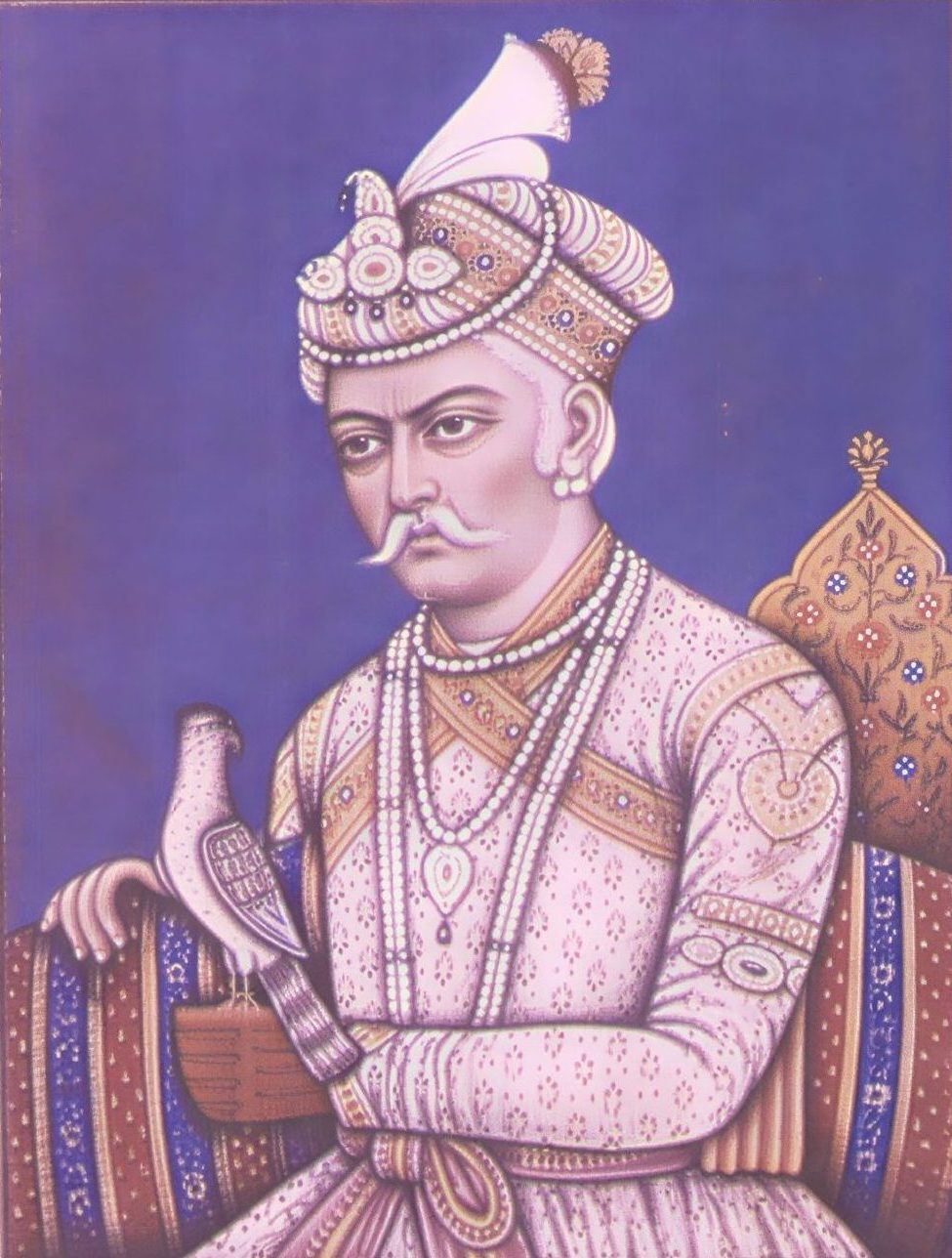
When Akbar ascended the throne in 1556, his early years were consumed by the struggle to secure his hold over India. Surrounded by rebellions and instability, he had little space to openly pursue his dreams of Turan. In time, the possibility narrowed further as the powerful Uzbek ruler Abdullah Khan consolidated Central Asia and placed the ancestral lands of the Timurids beyond easy reach. Yet Abu’l Fazl suggests that Akbar’s ambitions had not disappeared, only fallen into dormancy, remarking that “the time of the appearance of designs was in the future”.

When the Badakhshani Timurids, Sulayman and Ibrahim, ventured toward Balkh, Abu’l Fazl dismissed their efforts as premature, implying that such a harvest belonged to Akbar alone. On another occasion, Akbar even turned away the envoys of Abdullah Khan because he still entertained thoughts of recovering his ancestral territories. Abu’l Fazl portrays this vision as an echo of Babur’s strategy: India was first to be firmly secured, and only then would the Timurid banner advance toward Turan. As he writes, “Should the wide country of India be civilised by means of obedient vassals, (Akbar) would proceed to Turan…”

A point worth noting here, though beyond the immediate scope of this essay, is that Akbar too appears to have framed his role in terms of a civilising mission, much like later European imperial thought. Abu’l Fazl’s language suggests that Hindustan was never a homeland, but rather as a vast realm to be disciplined, ordered, and brought under the mould of Timurid statecraft with headquarters seated somewhere else (Samarkand).

Akbar’s own words also reveal that these ideas had not vanished. In 1577, responding to Uzbek mockery regarding Qandahar’s loss to the Safavid “outsiders” (biganaha), he replied that Timurid lands had hardly fared better under Uzbek control. A decade later, in 1587, Abu’l Fazl wrote to the Timurid ambassador in Bukhara that “His Majesty has turned his attention to the conquest of Turan”, though Akbar remained willing to set aside even broader ambitions if peace with Abdullah Khan could be secured.
Jahangir

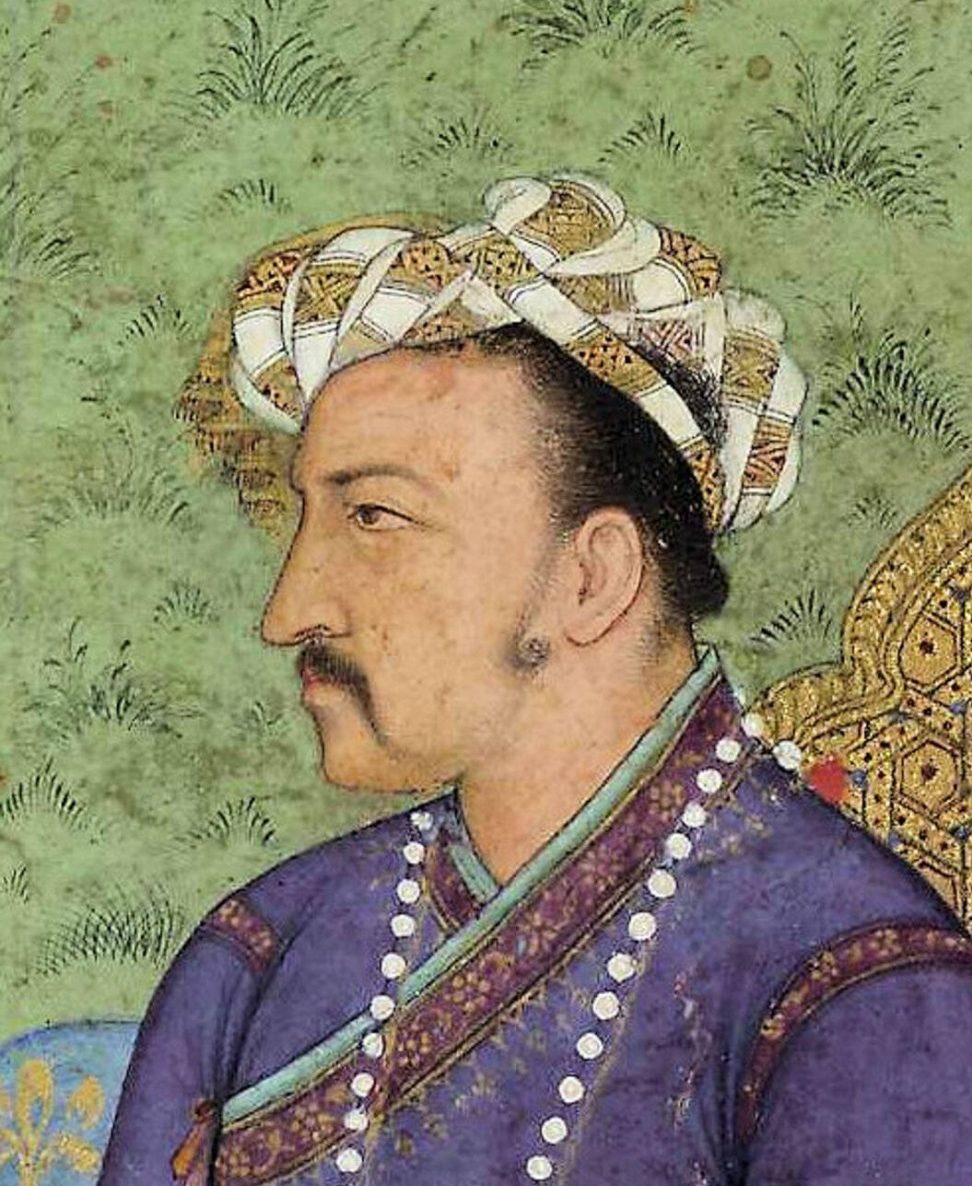
Jahangir, too, bequeaths a testament to this ancestral pull. In his memoirs, he confesses that his father Akbar never let slip the dream of Transoxiana, and that he, Jahangir, nursed two intentions:

One, that inasmuch as the conquest of Transoxiana was always in the pure mind of my revered father, though every time he determined on it, things occurred to prevent it. If this business (of getting Kafir rulers to submit) could be settled, and this danger dismissed from my mind, I would leave Parviz in Hindustan, and in reliance on Allah, myself start for my hereditary territories.

In the lofty cadence of his memoirs, he proclaims with customary grandeur:

As I had made up my exalted mind to the conquest of Transoxiana, which was the hereditary kingdom of my ancestors, I desired to free the face of Hindustan from the rubbish of the factious and rebellious, and leaving one of my sons in that country, to go myself with a valiant army in due array, with elephants of mountainous dignity and of lightning speed, and taking ample treasure with me, to undertake the conquest of my ancestral dominions.

After this brief expression of imperial ambition, Jahangir’s Tuzuk falls strangely silent. The subject of Central Asia scarcely returns. Historian R.C. Verma argues that this diplomatic lull until 1621 reflected Jahangir’s continued desire to reclaim his ancestral lands. His gaze remained fixed on Samarkand even if his throne stood in Lahore. Yet the silence may not have been one-sided, for Imam Quli Khan of Bukhara had earlier suspended relations after a perceived slight.

The estrangement was eventually softened, perhaps through the influence of Nur Jahan. M. Athar Ali suggests that in 1621, Imam Quli’s mother initiated reconciliation with the Timurid court. The growing Safavid threat likely compelled both Bukhara and Hindustan toward cooperation, allowing political necessity to outweigh wounded pride.

Even in the later years of his reign, Jahangir’s interest in Central Asia remained alive. In conversations with Mutribi Samarqandi, he displayed a persistent curiosity about the affairs of the region. This interest was not merely sentimental. At Nur Jahan’s urging, Mir Baraka, a Bukharan in Timurid service, was sent to restore ties with Imam Quli and carry imperial respects to the Juybari shaikhs. Baraka remained in Central Asia until 1627 and returned with Abd al-Rahim Khwaja, whose arrival Jahangir valued enough to delay his journey to Kashmir.

Jahangir died soon afterward, but the thread remained unbroken. Shah Jahan ensured continuity by dispatching Hakim Haziq to Bukhara with gifts for the shaikhs, preserving a connection that was political on the surface but still carried the echoes of an older Timurid attachment to their ancestral world.
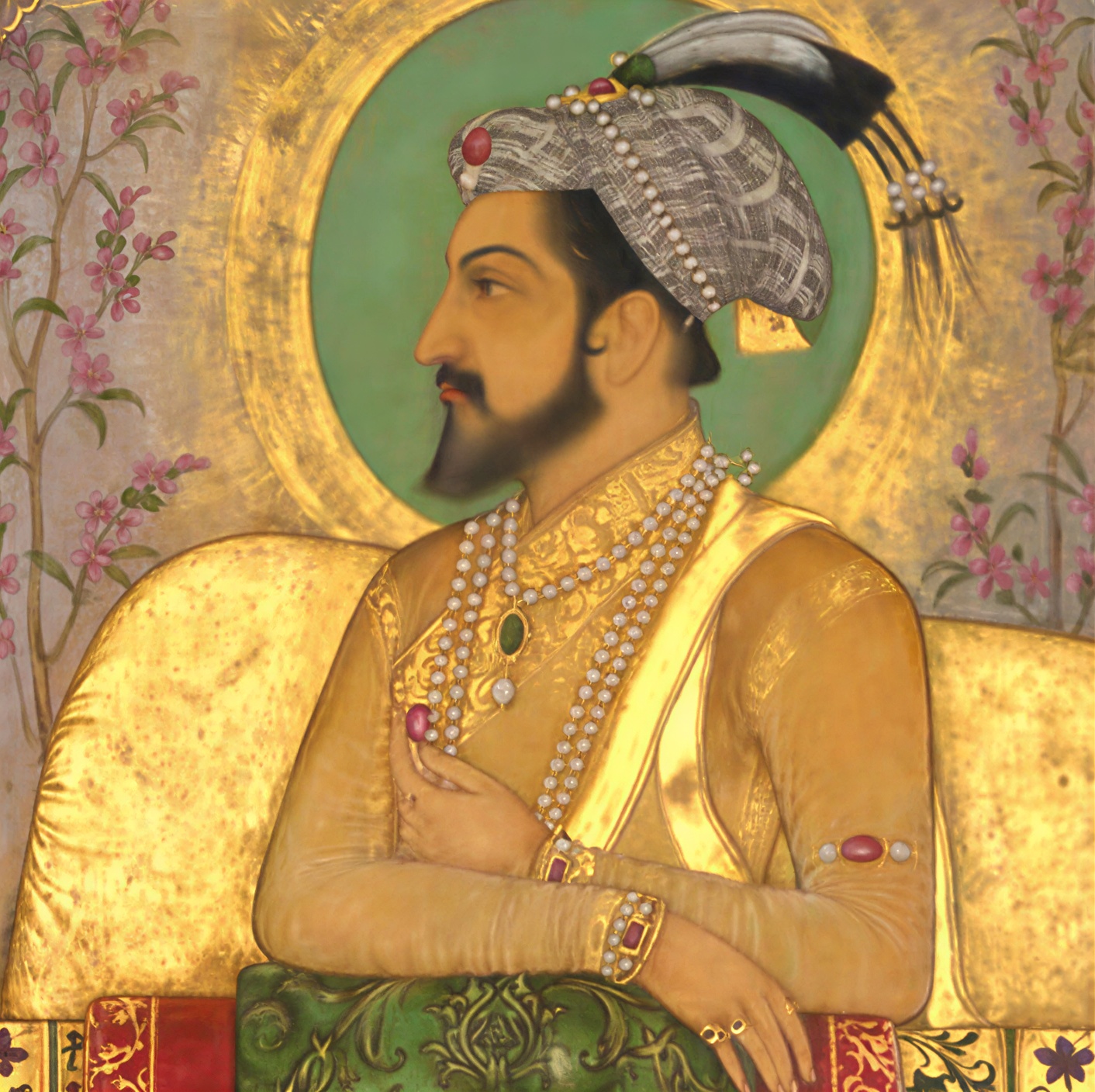
Shah Jahan

Shah Jahan’s longing too for the ancestral world of Turan was a deeply rooted aspiration. The imperial chronicles, clothed in the language of diplomacy, describe cordial relations with the Uzbeks during the first decade of his reign. Beneath this calm surface, however, lingered unresolved resentment. Nazr Muhammad’s (ruler of Balkh and Badhakshan) attempted siege of Kabul during the succession disturbances of 1629 had not been forgotten. Shah Jahan waited patiently for circumstances to shift, while continuing to send generous sums and support to allies in Mawarannahr, quietly nurturing influence beyond the Hindu Kush.

The first clear indication of his intentions appears in a letter written in 1640 by Hasan Khan Shamlu, the Safavid governor of Herat. Responding to a communication from the Timurid court, he referred to subtle hints about recovering the mulk-i-mawruthi, the “hereditary dominions”, and the gurkhana-yi-ajdad-i-izam, the resting place of imperial ancestors. Hasan records that Shah Jahan intended to return that very year to Kabul and would send one of his sons ahead to secure Balkh and Badakhshan.

Hasan sought reassurance that the campaign was directed toward Turan and not Khurasan. For the Safavids, the Uzbeks represented a constant strategic threat, and the possibility of Timurid intervention carried significance beyond diplomacy. In another letter, Hasan urged Asaf Khan to specify the date of the proposed march toward Turkistan so that Safavid and Timurid forces might move together and strike at Uzbek power.

Events, however, unfolded differently. The campaign materialised only five years later, and without Safavid participation.

The imperial records of Shah Jahan’s Balkh campaign leave little ambiguity regarding its purpose. They do not portray it as an ordinary military expedition or a search for territorial gain. Instead, they connect it directly to Shah Jahan’s desire to recover what were repeatedly described as his inherited lands. The roots of this ambition are traced back to the period following Jahangir’s death, when Nazr Muhammad’s actions at Kabul first revived in him a desire for Balkh and Badakhshan, not merely as strategic territories, but as lands bound to memory, ancestry, and dynastic inheritance.

The Timurid chronicle (Shah Jahannama) states:

From the time of the last Emperor Jahangir’s death, when Nazr Muhammad Khan had vainly attempted to seize Kabul, the mighty soul of the world-subduing monarch had been bent upon the countries of Balkh and Badakhshan, which were properly his hereditary dominions.

The chronicles attribute this 15-year delay to “impediments of state”, a phrase that conceals the relentless burdens of empire. Foremost among these was the grinding struggle in the Deccan, where the Shia Sultanates and rising Maratha power steadily consumed imperial resources. What began as a challenge would eventually tighten around the Timurid state and dominate the closing years of Aurangzeb’s reign.

According to A. Ansari, Shah Jahan viewed Qandahar as a political keystone. Recovering it from the Safavids would signal to both the Ottomans and the Uzbeks that Timurid ambitions looked beyond Persia and toward the ancestral lands across the Hindu Kush. Only then could a march toward Balkh acquire strategic credibility. R.C. Verma argues that although internal tensions between Nazr Muhammad and Imam Quli may have tempted Timurid intervention, the larger geopolitical situation, particularly tensions with the Safavids after the struggle over Qandahar, made a major invasion difficult.

Yet Hasan Khan’s correspondence suggests that in 1640 Safavid cooperation was actively offered, which disappeared with his death and Shah Safi’s renewed focus on Qandahar.
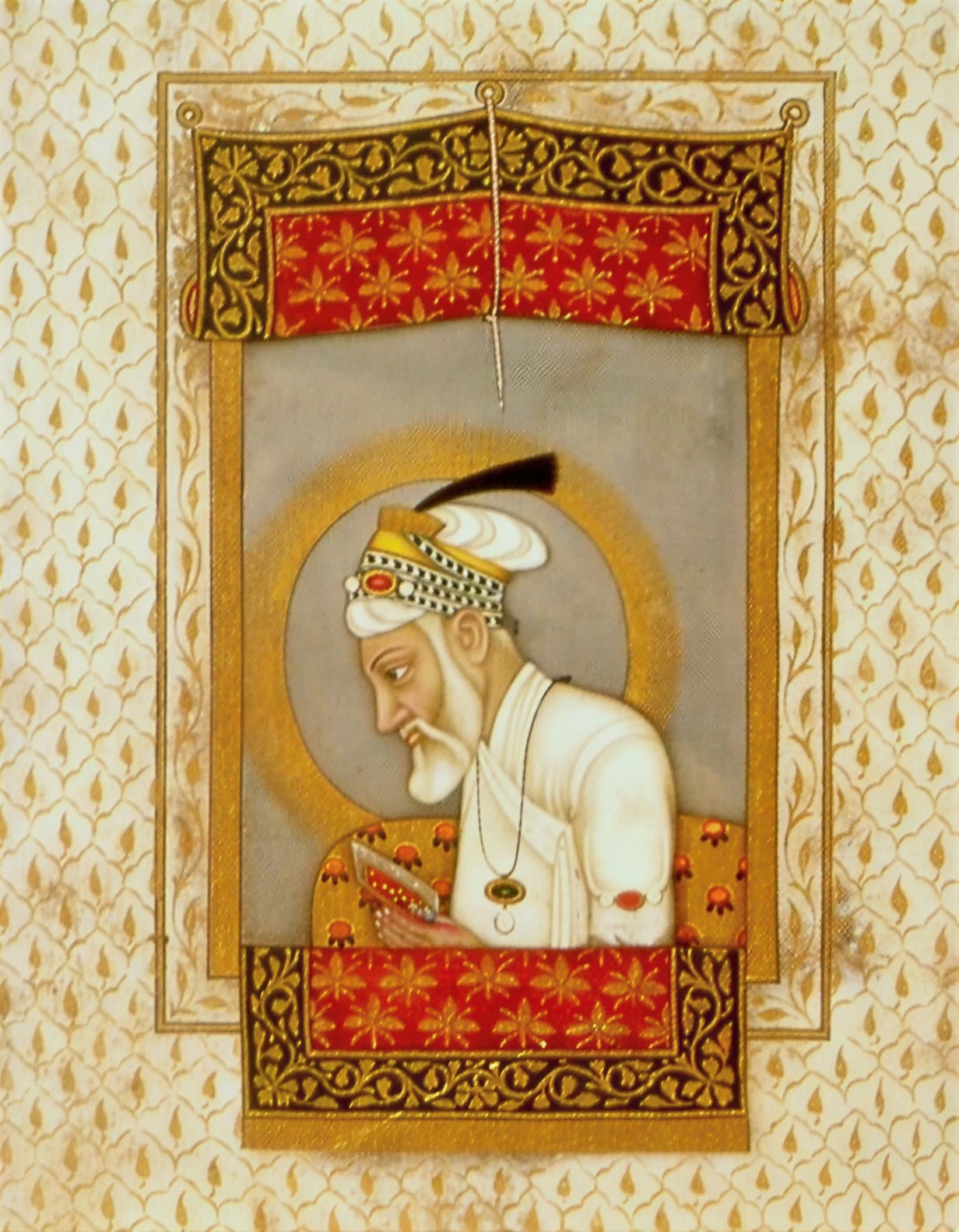
Aurangzeb

What is most striking is that even the humiliation of abandoning Balkh after scarcely two years did not extinguish Timurid aspirations. Aurangzeb himself had commanded imperial forces there and had witnessed the limits of such dreams more clearly than most. Yet even he, austere in temperament and hardened by campaigns, never entirely abandoned the pull of the ancestral horizon. In a letter to his son, the Crown Prince Muazzam, he entrusted that flame to another bearer:

If a father is unable to finish a work, the son must carry it to completion. … This mortal creature harbours a wish unfulfilled. It was the desire of Shah Jahan that I should dispatch one of his grandsons to those lands—with a grand army and the instruments of war.

Even as Aurangzeb’s attention increasingly turned toward the Marathas and the Deccan Sultanates, traces in his words and actions suggest that Turan never entirely faded from the Timurid imagination. The ancestral lands remained a distant echo at the edge of the empire, a memory not fully surrendered. The continuing references to mulk-i-mawruthi (hereditary dominions) and gurkhana-yi-ajdad-i-izam (the resting place of great ancestors) indicate that the symbolic and dynastic pull of Central Asia endured, even when military realities made reconquest increasingly impractical.

Italian traveller and scholar, Manucci observed that Aurangzeb still cherished thoughts of conquest of ancestral lands, and this sentiment appears to find support in subtle diplomatic gestures. One such example was the conferring of sarapa or robes of honour upon the ambassadors of Subhan Quli. Such honours were generally reserved for dependents and subordinate rulers. Though wrapped in the language of courtly etiquette, the act carried an imperial undertone, suggesting a symbolic assertion of superiority and perhaps reflecting an older Timurid conception of authority over the Uzbek world.

Aurangzeb also maintained links with the religious and intellectual networks of Central Asia. He preserved ties with scholars and Sufi figures from Balkh, including Abd al Ghaffar Dihbidi, and displayed interest in the educational institutions of Samarkand. French physician and traveller Bernier’s observations indicate that Central Asia occupied a place in the Timurid imagination beyond simple territorial ambition. It functioned as a source of legitimacy, memory, lineage, and continuity.

Even if the Timurids of Hindustan never regained the lands of their forefathers, their language and actions reveal a recurring nostalgia. Babur’s inheritance was not merely territorial. It was also emotional and ideological. For rulers like Shah Jahan and Aurangzeb, the story of Central Asia remained unfinished. This attachment also found expression in their concern for ancestral memory itself. As descendants of Timur, the emperors of Hindustan assumed responsibility, whether from genuine sentiment or dynastic obligation, for preserving the monuments of their lineage. Foremost among these stood the Gur-i-Amir in Samarkand, Timur’s mausoleum. More than a structure of stone, it was a monument of dynastic memory and a surviving fragment of a world they regarded as ancestral.

One revealing instance appears in the Tuzuk-i-Jahangiri. During the embassy of Mir Baraka to Bukhara in 1621, the mission extended beyond diplomacy with Imam Quli Khan. Jahangir instructed that gold be delivered for the maintenance of the mausoleum. The act carried significance beyond charity. It represented a conscious reaffirmation of lineage and ancestral connection.

Decades later, Aurangzeb continued the same tradition. Though his Balkh campaign had failed, and his focus had shifted to the Deccan, reports from Sayyid Oghlan of Central Asia moved him deeply. Learning that the Gur-i-Amir, Timur’s mausoleum in Samarkand, had fallen into neglect, he ordered a daily grant of twelve rupees for its restoration, declaring it to be made “on behalf of the souls of our ancestors”. The gesture is striking. From a ruler who pursued vigorous campaigns against temples in Hindustan, his concern for preserving the shrine of his ancestral lineage reveals much about the hierarchy of memory and attachment that still shaped Timurid consciousness.

Aurangzeb’s connection with Central Asia also extended into the intellectual sphere. His court remained deeply influenced by the traditions of Bukhara and Samarkand. He elevated Mulla Auz to the office of imperial censor, while the Fatawa-i-Alamgiri drew heavily upon Hanafi scholarship from Transoxiana. In 1675, he even commissioned a copy of Bahr al-Asrar, seeking not merely a chronicle of rulers but another glimpse into the world of his ancestors.

The empire had shifted southward, but memory had not entirely followed. Through stone, scholarship, diplomacy, and remembrance, the Timurids of Hindustan remained tethered to their ancestral winds. However, their vast dominion across India, their imagination continued to drift beyond the Hindu Kush, toward the orchards of Transoxiana and the blue domes of Samarkand.

Hindustan gave the Timurids empire, wealth, and power, but Samarkand remained home, lost which they could never get back. India became the stage upon which their grandeur unfolded, while their emotional compass repeatedly pointed beyond the Hindu Kush toward the orchards, graves, and memories of Central Asia. They extracted wealth from Hindustan, destroyed temples, imposed impossible taxes upon Indians, but their imagination never ceased searching for a road back to their ancestral world. This was not passing nostalgia. It was the Timurid condition itself: Indian crowns upon their heads, Samarkand in their hearts.

In the next essay of this series, I will turn to another narrative often accepted without scrutiny: Ganga Jamuni Tehzeeb and the realities that lie beneath its popular telling. – India Today, 25 May 2026

› Aabhas Maldahiyar is an author, architect and historian.
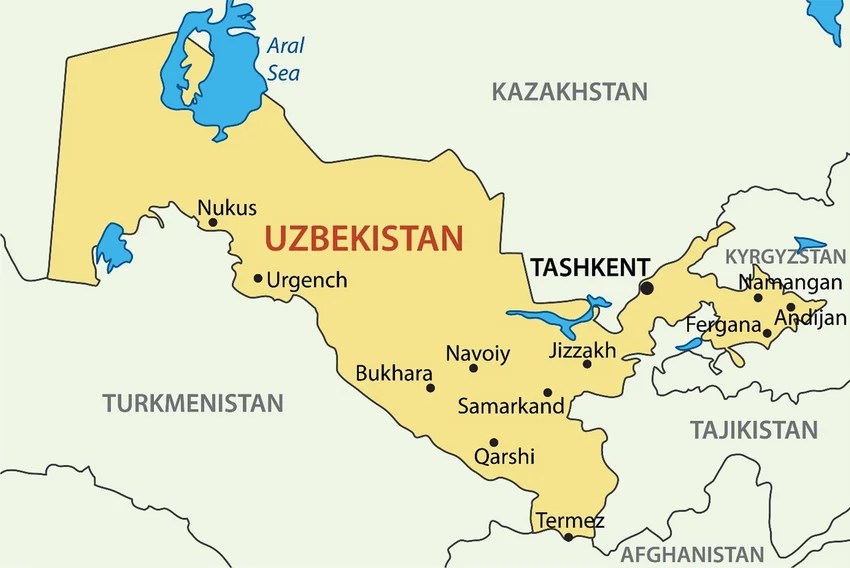
Samarkand Map

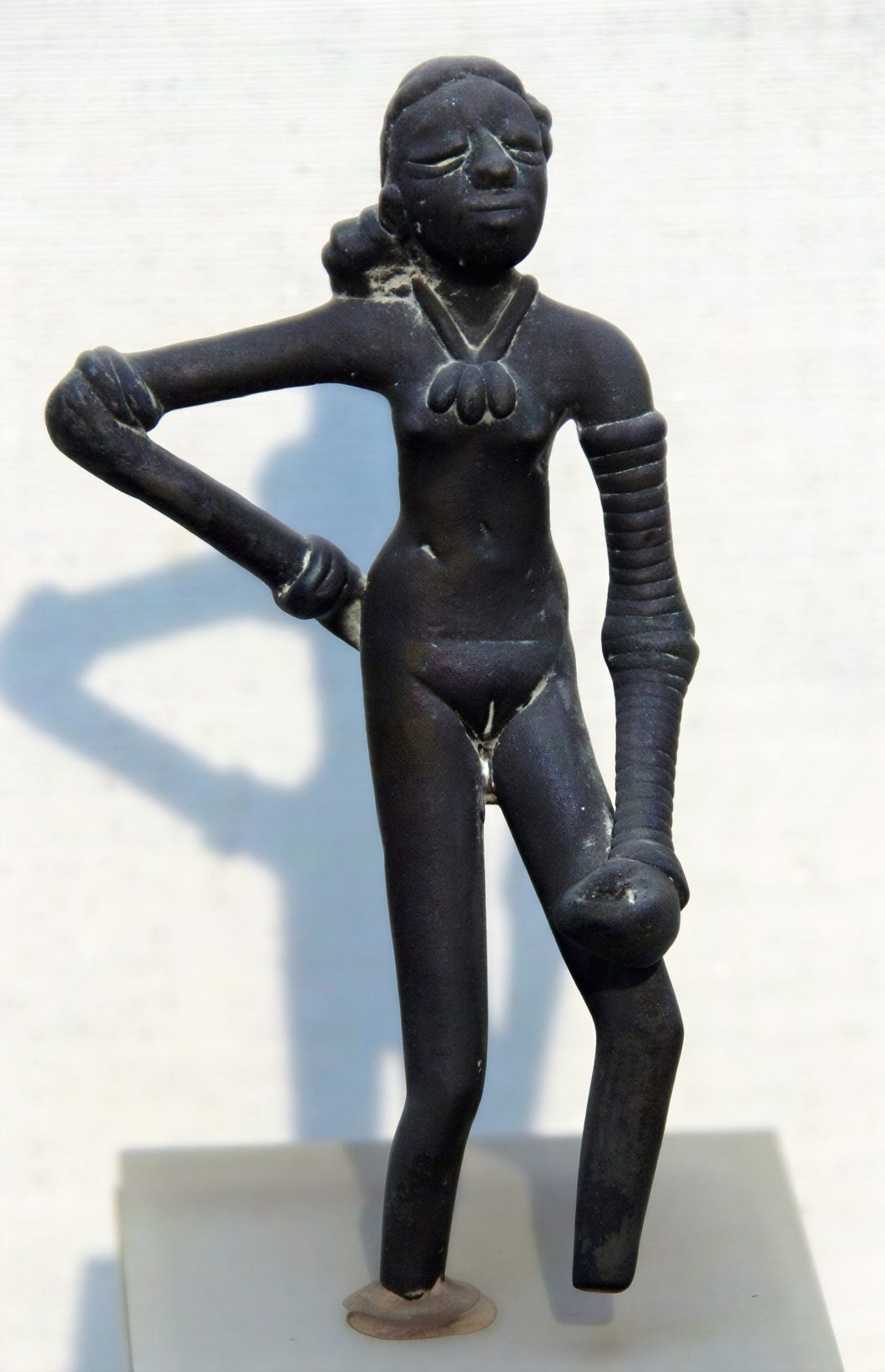
Why are we afraid of an ancient ‘Dancing Girl’ figurine? – Utpal Kumar

Dancing Girl

The Problem of Islamism – Sita Ram Goel

Islamism

What we mean by Islamism is a self-righteous psychology and a closed cultural attitude which make it impossible for Muslim converts to coexist peacefully and with dignity with other people. – Sita Ram Goel

The most malevolent of these residues is Islamism, the residue of the Muslim invasion of India spread over several centuries. Its basic tenets are ultimately derived from the teachings of Islam which has so far succeeded in sealing itself off from every shade of empiricism, rationalism, universalism, humanism and liberalism, the hallmarks of Hindu as well as modern Western culture. But in the context of India where Islam failed in its mission of lasting conquest and total conversion, these tenets have acquired a singularly sinister and subversive character.

Let it be clear that the reference here is not at all to our Muslim brethren who are our own flesh and blood, except for that microscopic minority which takes pride in the purity of its Arab, Persian or Turkish descent.[1] Instead of being the proponents of Islamism, the Muslims of India are its victims whom it is trying to use as vehicles of its poisonous virulence. The vast majority of Indian Muslims were converted to Islam by force or allurements. But the conversion did not help them socially or culturally as their status today in India’s Muslim society should amply prove. The Muslims of India, therefore, have to be freed from rather than accused of Islamism.

What we mean by Islamism is a self-righteous psychology and a closed cultural attitude which make it impossible for its converts to coexist peacefully and with dignity with other people. There are many Hindus who share several tenets of Islamism. On the other hand, there are many Muslims who are frightened by Islamism and who would gladly join the mainstream of Indian nationalism if they are freed from the whiphand which a minority of theologians, politicians and hooligans has come to wield in their community.

Those who want to know Islamism first-hand and in full measure are referred to Shaikh Sir Mohammed Iqbal’s two long poems which he wrote quite early in his career, and which earned for him the title of Allama among the adherents of this cult. These are the Shikwa and the Jawab-i-Shikwah which Mr. Khushwant Singh has recently published in an English translation.

The Shikwa ends by summing up that “naghma hindi hai tau kya, lai tau hijazi hai miri”, that is, “no matter if my idiom is Indian, my spirit is that of Hijaz”. Hijaz is that part of Arabia in which Mecca and Medina are situated.

The Jawab-i-Shikwah ends on a still more strident note. Allah announces to the Allama His supreme message for mankind in the following words: “kî wafã tûne muhammad se tau ham tere hain”, that is, “if you are faithful to Muhammad, I shall be faithful to you.”

Now, there are many Muslims in India who have never heard the name of Iqbal or listened to his muse. And there are many Hindus whose admiration for Iqbal is immeasurable. No, Islamism does not refer to any particular section of Indian society. It refers to that intellectual-or unintellectual-attitude which awards the monopoly of truth and virtue to a particular prophet, and consigns all knowledge to the pages of a particular book.

Taking our cue from Allama Iqbal and his lesser cohorts like Altaf Hussain Hali, we can safely summarise the credo of Islamism in the following five fundamentals:

1. That Indian society before the advent of Islam was living in utter spiritual, moral and cultural darkness (jahiliya) like pre-Islamic Arabia;

2. That Islam brought to India the only true religion, the only authentic moral values, the only humane culture, and the only progressive social order;

3. That this civilizing mission of Islam in India could not be completed, as in many other lands of Asia and Africa, due to the intervention of the wily British who cheated Islam of its empire in India, mostly by means of fraud;

4. That while the creation of Pakistan has been a triumph and consolidation of the power of Islam, west of the Ravi and east of the Hooghly, the conquest of India by Islam remains an unfinished task;

5. That Islam has a right to use all means, including force, to convert this Dãrul-harb of an India into a Dãrul-Islam, so that a Hakûmat-i-Ilãhiyah could liquidate all traces of jãhilîya and impose the law and culture of Islam.

There are many Hindus like the late Pandit Sunderlal who fully accept the first two fundamentals of Islamism. It is a different matter that their logic fails them at this stage and they do not proceed to the next three fundamentals which follow irrevocably. And there have been many Muslims like the late Rafi Ahmed Kidwai and Justice M.C. Chagla who rejects these fundamentals as repugnant.

Having thus outlined its version of past Indian history, and the apocalypse towards which future Indian history should be forced to travel, Islamism has evolved a strategy in which the Muslims of India are envisaged as a base and an arsenal. Some salient features of this strategy can be outlined as follows:

1. The Muslims of India, particularly the Muslim intelligentsia, should be sealed off from every shade of rationalism, universalism, humanism and liberalism, and an army of mullahs and maulvis trained in the tenets of Islam should be let loose to brainwash and keep them along the right track;

2. Every Muslim who does not accept Islamism or dares criticize it or stands for the mainstream of Indian nationalism, away from and above religious differences, should be denounced as a renegade and a legitimate victim for murderous Muslim mobs;

3. The Muslims should be encouraged to air as many grievances as can be invented, and try to pass off as a down-trodden minority, oppressed, exploited and treated as second class citizens by the “brute” Hindu majority;

4. These contrived grievances of the Muslims should be used to convert the Muslim community into a compact vote-bank which can function as a balancing factor in as many electoral constituencies as possible, and which can blackmail all non-Islamist political parties to accommodate Muslim candidates or include the maximum measure of concessions to the Muslim community in their election manifestos;

5. The Muslims should be made to agitate for India’s support to all international Islamic causes, right or wrong, legitimate or illegitimate, so that their attention is kept constantly diverted from demands of their own economic, social and cultural condition;

6. The Muslims should be progressively persuaded and prepared to stage street riots on the slightest pretext, be it a stray pig, or music before a mosque, or Urdu, or the minority character of the Aligarh Muslim University, or a purely personal fracas between toughs belonging to two communities, or the bombing of al-Aqsa mosque in Jerusalem by an Austrian adventurer, or the hanging of Z.A. Bhutto by President Zia of Pakistan, or the capture of the Kaaba by some disgruntled faction in Saudi Arabian politics, or some other similar event in the Islamic world at large;

7. The frequent riots should be used to frighten the Muslims who should then be coaxed to create, consolidate and extend exclusive Muslim enclaves which can be stocked with arms and ammunition, imported or otherwise.

The seven-fold strategy is aimed at the Muslims in India who are to be brainwashed, blackmailed, frightened and forced into the fold of Islamism. Another side of the same strategy has been worked out to neutralise, paralyse and blacken or pamper different sections of Hindu society so that the road is cleared for the forward march of Islamism.  Some salient features of this secondary strategy can be outlined as follows:

1. The concept of Secularism which is enshrined in the Constitution of India and which has become the most sacred slogan for all our political parties should be distorted, misinterpreted and misused to the maximum to block out the least little expression of Hindu culture in the state apparatus and public life of India;

2. The terms “communal” and “communalism” which have become terms of abuse in India’s political parlance, should be carefully cultivated and more and more mystified to malign all those organisations, institutions and parties which do not serve Islamism, directly and/or indirectly;

3. The accusation of being fascists and anti-secularists should be hurled at all those individuals and organisations who question the exclusive claims of Islam and its culture, who know and tell the truth about Islamic scripture and history, and who see through the Muslim game of grievances;

4. All praise and support should be extended to those Hindus who go out of their way to champion Islamic causes, national and international, and who see in Islam and its culture those higher values which Islamism claims for them;

5. All available platforms should be used to defeat and frustrate the emergence of a genuine and positive Indian nationalism by always harping on India’s multi-racial, multi-religious, multi-language, multi-national, and multi-cultural character.

Islamism did make some headway among the Muslims in Independent India mostly because the dominant section of Hindu intelligentsia partronised it for various reasons. The Congress politicians patronised it because they found out very soon that they were in a minority among the Hindus, and that they could survive in power only by combining a solid Muslim vote with whatever Hindu vote they could get. The Socialists went out of their way to patronise it partly because they harbour an anti-Hindu animus and partly in the hope of securing Muslim vote-a hope which has not as yet come anywhere near fulfilment. The Gandhians partronised it because they no more remembered that their great master, Mahatma Gandhi, was a Hindu with a profound faith in Sanãtana Dharma, and because they misunderstood his doctrine of non-violence towards all people, including the Muslims of India, as an endorsement of Islam. The Communists patronised it because they saw in it a powerful ally in their campaign against Hindu society which they viewed as their main enemy. The self-alienated Hindu intellectuals patronised it out of sheer animus towards Hindu society and culture which they were out to damn on any pretext. Extending patronage to Islamism thus became a pastime for all those who wanted to pass off as large-hearted liberals, progressives and secularists.

But in the absence of local resources and international patronage, the progress of Islamism in India was rather slow. Pakistan, which was its only patron abroad, could not provide much help beyond some hysteria in its mass media and propaganda in international political forums. The several wars which India was forced to fight with Pakistan to the disadvantage of the latter, also inhibited Islamism in India from acquiring the requisite degree of self-confidence.

The use of oil as a political weapon by Islamic countries and the influx of petro-dollars in plenty from several Arab countries, particularly Libya and Saudi Arabia, since the early 1970s, has given to Islamism in India a new glow of self-confidence in one sudden sweep. This influx of Arab money is a natural and inevitable phenomenon because, in the last analysis, Islamism is only another name for Arab imperialism which had, at one stage of its history, pillaged and populated with its own progeny many foreign lands and which even today keeps many non-Arab nations spiritually enslaved.

Islamism in India is now busy employing to the maximum advantage the Arab money which is pouring in through many channels and in increasing quantities. Some of these uses are very obvious to the eye. A few salient features of the new scenario can be listed as follows:

1. The rapid rise of a powerful press, mostly in Indian languages, and many publishing houses to propagate Islamism;

2. The generous funding of old and the founding of many new maktabs, madrasas and institutes for teaching Islam and training missionaries who are then employed at high salaries for purifying the faith of the Muslim flock and seeking new pastures for converts to Islam;

3. Buying of land and real estate all around in urban and rural areas by individual Muslims and Islamic institutions and organisations at whatever prices available;

4. Manufacturing and storing of arms in mosques, Muslim homes and localities and training of Muslim toughs;

5. Holding of frequent conferences, national and international, and taking out demonstrations in support of every Islamic cause;

6. Financing Muslim politics and inducing Muslim politicians to infiltrate and ingratiate themselves in every political party, and function from every public platform;

7. Bribing secularist Hindu intellectuals, scribes public workers and politicians, and buying them up for supporting Islamism, denigrating Hindu culture, and character-assassinating those who oppose Islamism;

8. Using the lure of money for winning converts to Islam from the weaker sections of Hindu society, particularly the Harijans.

The strategy is nothing new. The self-same strategy had been used by the Muslim League for the carving out of Pakistan. Only the aid and abetment which the British provided at one time have been replaced by the aid and abetment from Arab countries. And in the matter of a mere decade, Islamism in India has assumed the same menacing proportions as it had on the eve of Partition. The parallel should make us pause. – Extracted from Hindu Society Under Seige, 1996

Footnotes

1. See K.S. Lal, Indian Muslims: Who Are They, Voice of India, New Delhi, 1990.

Shariah

The Problem of Christianism – Sita Ram Goel

Gandhi Quote

It is impossible for me to reconcile myself to the idea of conversion after the style that goes on in India and elsewhere today. It is an error which is perhaps the greatest impediment to the world’s progress toward peace. Why should a Christian want to convert a Hindu to Christianity? Why should he not be satisfied if the Hindu is a good or godly man? – M.K. Gandhi

The British rule in India crystallised two residues—Christianism and Macaulayism.

Certain strains of Macaulayism developed what is euphemistically described as a “revolutionary temper” in the later stages of the British rule and joined hands with Communism after the Bolshevik victory in Russia. The whole of Communism, which is also hostile to Hindu society and culture, is not Macaulayism. Yet, if Macaulayism had not prepared the ideological ground, Communism could not have made the strides it did in this country.

We shall analyse Christianism first. It was the first to make itself felt forcefully at the onset of the British rule in India.

We, however, wish to make it clear at the very outset that Christianism in India does not refer to the Christians in this country. They are our own people who at a certain stage of our history went over to a foreign faith in an atmosphere created and exploited by Christianism. But although they have renounced their ancestral faith, they have, by and large, not shown any marked hostility towards Hindu society and culture. Nor have they so far served as vehicles of Christianism except in certain areas of the Northeast, notably Meghalaya, Mizoram and Nagaland.  Christianism in India is centered in the numerous Christian missions operating all over the country, particularly in the so-called tribal belts.

The eight fundamentals of Christianism in India may be summarised as follows:

1. That the Hindus have never had a Saviour whose historicity can be ascertained, with the possible exception of the Buddha;

2. That Jesus Christ whose historicity cannot be questioned has superseded all earlier Saviours of Hinduism—if they were Saviours at all and not disciples of Lucifer—and rendered superfluous all subsequent Hindu saints and sages;

3. That St. Thomas, an apostle of Jesus himself, was specially chosen by the Church to win India for his Master’s message;

4. That St. Thomas could not complete his mission in India because he met an untimely martyrdom at the hands of some Hindu, most probably Brahmin, heathens; [1]

5. That the converts made by St. Thomas, the first century Christians of the South, establish beyond doubt that Christianity is an ancient Indian religion and not a Western import as alleged by the Hindus;

6. That it is the sacred task of the Christian Church to complete the mission of St. Thomas and see to it that India becomes a Christian country, once and for all;

7. That if there is any thing good and wholesome in Hindu religion, it is not because Hindu saints and sages ever made any direct or conscious contact with Truth but because they merely stumbled upon some of it in the workings of Universal Nature which was preparing itself over a long time for the advent of Jesus Christ;

8. That no Hindu, even if he follows the Ten Commandments in letter and spirit and lives by the Sermon on the Mount, can ever hope to escape eternal hell-fire unless he has been baptised in a Christian church and administered the Christian sacraments.

These tenets have their source in the Christian religion which also, like Islam, is an extremely exclusive religion. [2] Christianity too claims for itself a monopoly of truth and virtue, swears by the only true God, the only true Saviour or the only Son of the only true God, the only true Revelation, the only true way of worship, and so on. It too has to its discredit a long and unrelieved record of wanton destruction of ancient religions and cultures and a large-scale killing of heathens. The annals of Europe, Asia Minor, North Africa and America, particularly Central and South America, provide harrowing details of this destruction and bloodshed.

We in this country do not associate Christianity with misdeeds similar to those of Islam because the British invaders who finally succeeded in capturing power in India did not allow the Christian crusaders to use state power, directly and in an uninhibited manner. They had perhaps become wiser by a reading of Muslim history in India and did not allow their religion to interfere with the business of building a stable empire. A more tenable explanation of this British refusal to patronise Christianity beyond the point of no return is the Renaissance in Europe which had considerably discredited this creed in its own homeland by the time British arms were triumphant in India.

St. Francis Xavier

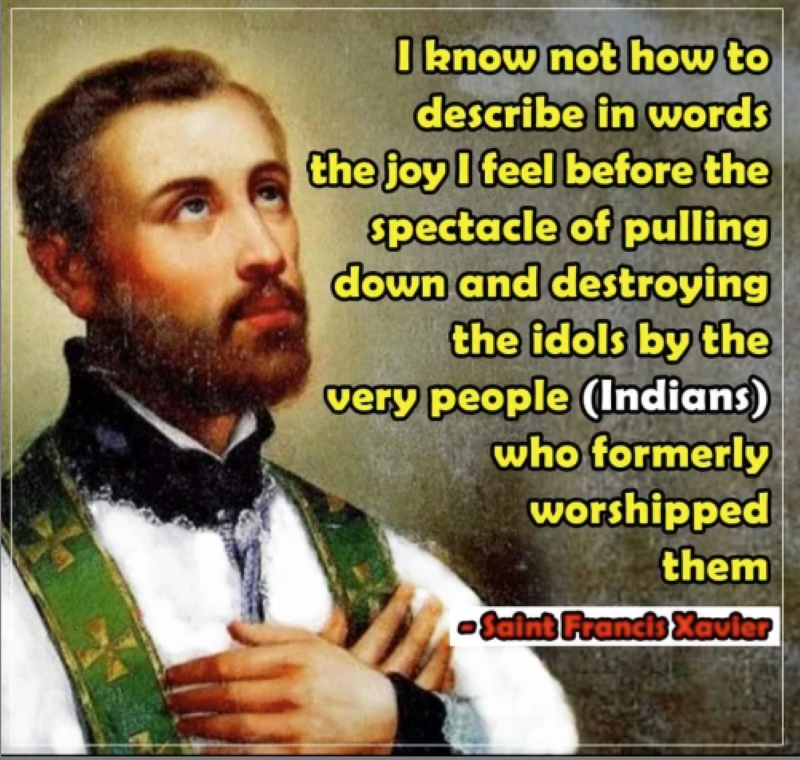
But we did have a taste of the intrinsic spirit of Christian aggression in our first encounter with the missionaries who swarmed towards our shores in the wake of Western victories from the 16th century onwards. When the Portuguese seized Goa and adjoining territories the Catholic Church lost no time in setting up an Inquisition for the benefit of native converts who were likely to recant or relax in their faith. Francis Xavier, whom the Catholic Church hails as the Patron Saint of the East, expressed a deep satisfaction at the sight of six thousand dead Muslims whom the Portuguese had slaughtered. He also made forcible conversions, demolished Hindu temples, smashed Hindu idols, and inaugurated that anti-Brahmanism which has by now become the sine qua non of all progressive thought and politics in India.

The triumphal march of British arms in India in the second half of the 18th century convinced the Christian missionaries that British victories were due not to a superiority in the art of warfare but to the superiority of the Christian creed by which the British generals and soldiers swore. They immediately started pouring venom on Hindu religion, culture and society. No lie was vile enough in the service of Christian “truth”. No fraud was foul enough in the service of Christian “virtue”.

An example will serve to illustrate the spiteful spirit of the Christian missionaries at that time. They spread a canard in India and abroad that many Hindus voluntarily rushed under the wheels of the great chariot during the annual rathayatra at Puri, and got themselves crushed to death in order to attain salvation. The great chariot, according to them, was always accompanied by droves of dancing girls who sang lascivious songs and made obscene gestures towards crowds on both sides of the broad street. The “great” William Wilberforce, who ruled the circle of Christian crusaders in Britain and who adamantly advocated the Christianization of India by an unstinted use of state power, demanded immediately that the temple of Jagannath be demolished to stop this “devil-dance” for good. The British Commissioner of Puri at that time saved the situation by writing a long letter to a liberal British MP in which he stated that he along with many other British civilians in the district had been a regular witness of the rathayatra for twenty years but had never witnessed a single victim under the wheels nor found anything immodest in the songs and symbolic gestures of the dancing girls. The English word “Juggernaut”, which according to the Chambers Twentieth Century Dictionary means “any relentless destroying force”, is a living witness to the inventive imagination of the early Christian missionaries.

This campaign of calumny against everything Hindu continued till late in the 19th century. Swami Vivekanada was referring to this crude campaign when he cried with anguish in the Parliament of Religions at Chicago that “if we Hindus dig out all the dirt from the bottom of the Pacific Ocean and throw it in your faces, it will be but a speck compared to what your missionaries have done to our religion and culture”.

Had not the Hindus come out in defence of their religion and culture, this missionary mischief would have multiplied by leaps and bounds. The Brahmo Samaj and the Arya Samaj were the earliest expressions of this Hindu spirit of resistance. A notable contribution was made by the Theosophical Society whose founder, Madame Blavatsky, exposed the spiritual and moral claims of Christianity and whose chief apostle in India, Mrs. Annie Besant, inspired no small pride in the Hindu heritage. The Ramakrishna Mission also came to the rescue at a later stage. Mahatma Gandhi gave no quarter to Christian theology or to Jesus Christ as the only Son of God and Saviour of mankind. He had his own charming method of recommending Sermon on the Mount while showing compassion for the victims of the missionaries whom he described as “rice Christians”. [3]

Perhaps the main reason for the weakening of this malicious and mendacious campaign was the collapse of Christianity in its own homeland, the Western countries. The West had taken a decisive turn towards the scientific spirit. Meanwhile, the message of Hindu spirituality had also spread to the centres of learning in the West. The exponents of Hindu religion and culture like Ramakrishna Paramahansa, Swami Vivekananda, Sri Aurobindo, Raman Maharshi, Rabindranath Tagore, Ananda Coomaraswami and Mahatma Gandhi were demonstrating by their words and deeds the profound promise which Hindu Dharma held for mankind. The missionaries had to change their methods.

The core of Christianism in India, however, remains intact. They now know that the fortress of Hindu society cannot be seized by a frontal assault. They are, therefore, busy in the backyards and have hidden themselves behind the smoke-screens of several theologies. Some of these covert methods can be listed as follows:

1. Training of more and more native missionaries in their far-flung, well-equipped and fabulously financed seminaries so that missionary work looks no more like an undertaking manned mostly by foreigners;

2. Hinduising the outer accoutrements of Christian priests, liturgy and sacraments in order to convince the Hindus that Christianity is not an imported creed, and that Christianism is not out to corrode Hindu culture;

3. Directing their powerful press and publishing houses not to attack Hindu religion and culture openly but to develop a scholarly and comparative critique of Hindu religion, culture and society, always to the ultimate disadvantage of the latter;

4. To establish and extend educational institutions which at least immunise the upper class Hindu children and youth against whatever Hindu ways still survive in their homes, wherever they do not succeed in attracting them towards Christianity;

5. To build and expand hospitals and undertake other social work in order to attract an all-round respect for the Christian spirit of social service, and neutralise as narrow bigotry any questioning of their missionary motives;

6. To open orphanages and homes for the handicapped where proselytization can proceed safely and unnoticed;

7. To concentrate on Hindu tribals who are removed from the main centres of Hindu population, so that there is no untoward publicity;

8. To take out promising candidates for conversion on prolonged tours of Western countries in order to impress upon them the wonders worked by Christian culture and civilization;

9. To encourage well-to-do and willing Christians in the West to adopt boys and girls from poor Indian families, send them to missionary schools and colleges, and provide them with monetary assistance till they are converted;

10. To finance and promote political campaigns for separate states, inside or outside the Union of India, in those areas where the Christian population has attained majority or dominance.

There are plenty of methods which the missionaries employ to harangue and/or hoodwink the unsuspecting Hindus. Some of these methods are pretty crude, especially those employed by the American missionaries who aim a loud and simplistic promise, “you also can be saved” or a sweet scolding, “don’t you want to save yourself?” through big advertisements in daily newspapers, regular radio broadcasts and door to door pedlars of salvation. The other methods are sophisticated and disguised as “Indian theology”. [4]

But what looms large at the back of all these methods is the mammoth finance which flows in freely from the coffers of the Christian churches and communities in Europe and America. An idea of the magnitude of this finance can be got from a recent incident which was widely reported in the daily press. An imaginative and enterprising but poor South Indian palmed off on a Christian missionary a lot of faked literary and archaeological evidence about the adventures of St. Thomas in South India against a cash payment of fifteen lakh rupees—a paltry sum in the total budget of the mission concerned. And there are hundreds of such missions in India.

The Statesman dated 17 August 1981 has published an interesting news item from Aachen in West Germany: The Nobel Peace Prize Winner, Mother Teresa, has asked her supporters to suspend charity donations, reports UNI-DPA. The German Section of the International Association of Friends of Mother Teresa which donated six million marks in 1980 is to be disbanded at the end of this year in response to the plea. Mother Teresa who won the prize in 1979 after years of work aiding the poorest of the poor called for a temporary halt to contributions “until we have used up what we have”. “I will then ask you again,” the founder of the Missionaries of Charity said in a circular. Excessive support of a single charity leading to the needs of thousands of others being forgotten was probably behind the request.”

Six million West German marks amount to approximately two and a half crores of rupees. The amounts contributed by other sections of the International Association of Friends of Mothers Teresa are most likely to total up to many times this sum. Mother Teresa is not in a position to use all the money that has already been given to her. So the torrent has been halted temporarily. It will start pouring again as soon as she gives the signal. And hers is only one of the “thousands of other charities”.  One can well imagine the staggering finance at the disposal of Christianism in India.

The free flow of this Western wealth enables the missionaries to live in and have at their disposal palatial mansions in which their missions and seminaries are housed. Their vow of poverty never comes in the way of their having modern sanitation facilities, kitchens, communications and transport. They can travel not only over the length and breadth of this country but to the ends of the earth to attend conferences, congregations, seminars and symposia. Everywhere they go they can stay in similar sumptuous style. It is but human if the superiority of their style of living gets confused with the superiority of the Christian creed.

Recently some missionaries, particularly in the Catholic missions, have started talking a new language—the language of radicalism and revolution. It is not unoften that this language comes most easily to those who do not have to share the woes and wants of people with whom they commiserate. They make the best of both the worlds. Our Communist leaders are an excellent example of such synthetic radicalism.

The West has lost its fascination for the faith. It is becoming increasingly difficult to find men and women in the West who would take the holy orders and become wedded to vows of chastity, poverty and obedience. But the West does not mind parting with plenty of cash which its prosperity can spare with ease. Christianity is, therefore, making a bold bid to establish a safer haven in the East while the going is good.

India provides a particularly soft target. The Christian missions are welcome to open their purse strings in the Islamic and Communist countries of Asia. But the missions there are barred from winning new converts. Hindu India, drowned in poverty and suffering from cultural self-forgetfulness, is the only country in Asia which provides the quid pro quo. [5] – Extracted from Hindu Society Under Seige, 1996

Footnotes

1 See Ishwar Sharan, Myth of St. Thomas and the Mylapore Shiva Temple, Voice of India, New Delhi, 1991.

2 See Sita Ram Goel, Papacy: Its Doctrine and History, Voice of India, New Delhi, 1986.

3 See Sita Ram Goel, History of Hindu-Christian Encounters, Voice of India, New Delhi, 1989.

4 See Catholic Ashrams: Adopting and Adapting Hindu Dharma, Voice of India, New Delhi, 1988.

5 See Ram Swarup, Cultural Self-Alienation and Some Problems Hinduism Faces, Voice of India, New Delhi, 1987.

St. Thomas

The Problem of Macaulayism – Sita Ram Goel

Baron Thomas Babington Macaulay (25 October 1800 – 28 December 1859)

It is not easy to define the doctrine of Macaulayism in as authentic terms as we could do in the case of Islamism and Christianism. … Macaulayism [is not] malevolent like Islamism or mischievous like Christianism. It is rather mild and well-meaning, more like an imperceptible breeze which blows in silently, fins up the psychological atmosphere, creates a mental mood, inspires an intellectual attitude, and finally settles down as a cultural climate—pervasive, protean and ubiquitous. – Sita Ram Goel

Now for [that] residue of British rule, Macaulayism. The term derives from Thomas Babington Macaulay, a member of the Governor General’s Council in the 1830s. Earlier, the British Government of India had completed a survey of the indigenous system of education in the Presidencies of Bengal, Bombay and Madras. A debate was going on whether the indigenous system should be retained or a new system introduced. Macaulay was the chief advocate of a new system. This, he expected, will produce a class of Indians brown of skin but English in taste and temperament. The expectation has been more than fulfilled.

There is a widespread impression among “educated” classes in India that this country had no worthwhile system of education before the advent of the British. The great universities like those at Takshashila, Nalanda, Vikramashila and Udantapuri had disappeared during Muslim invasions and rule. What remained, we are told, were some pathashalas in which a rudimentary instruction in arithmetic, and reading and writing was imparted by semi-educated teachers, mostly to the children of the upper castes, particularly the Brahmins. But the impression is not supported by known and verifiable facts.

Speaking before a select audience at Chatham House, London, on October 20, 1931, Mahatma Gandhi had said:

“I say without fear of my figures being successfully challenged that India today is more illiterate than it was before a fifty or hundred years ago, and so is Burma, because the British administrators when they came to India, instead of taking hold of things as they were, began to root them out. They scratched the soil and began to look at the root and left the root like that and the beautiful tree perished.”

What the Mahatma had stated negatively, that is, in terms of illiteracy was documented positively, that is, in terms of literacy by a number of Indian scholars, notably Sri Daulat Ram, in the debate which followed the Mahatma’s statement, with Sir Philip Hartog, an eminent British educationist, on the other side. Now Shri Dharampal who compiled Indian Science and Technology in the Eighteenth Century: Some Contemporary European Accounts in 1971 has completed The  Beautiful Tree, a book on the state of indigenous education in India on the eve of the British conquest.

Shri Dharampal has documented from old British archives, particularly those in Madras, that the indigenous system of education compared more than favourably with the system obtaining in England at about the same time. The Indian system was admittedly in a state of decay when it was surveyed by the British Collectors in Bengal, Bombay and Madras. Yet, as the data brought up by them proved conclusively, the Indian system was better than the English in terms of (1) the number of schools and colleges proportionately to the population, (2) the number of students attending these institutions, (3) the duration of time spent in school by the students, (4) the quality of teachers, (5) the diligence as well as intelligence of the students, (6) the financial support needed to see the students through school and college, (7) the high percentage of lower class (Sudra and other castes) students attending these schools as compared to the upper class (Brahmin, Kshatriya and Vaisya) students, and (8) in terms of subjects taught.

This indigenous system was discarded and left to die out by the British not because its educational capacity was inferior but because it was not thought fit for serving the purpose they had in mind. The purpose was, first, to introduce the same system of administration in India as was obtaining in England at that time. The English system was highly centralised, geared towards maximisation of state revenues, manned by “gentlemen” who despised the “lower classes” and were, therefore, ruthless in suppression of any mass discontent. Secondly, the new system of education aimed at promoting and patronising a new Indian upper class who, in turn, would hail the blessings of British Raj and cooperate in securing its stability in India. The indigenous system of education was capable neither of training such administrators nor of raising such a social elite, not at home anywhere.

The system of education introduced by the British performed more or less as Macaulay had anticipated. Hindus like Bankim Chandra Chatterjee, Swami Vivekananda, Lokmanya Tilak, Mahatma Gandhi, Mahamanã Malaviya, Veer Savarkar, M.S. Golwalker, to name only the most notable amongst those who escaped its magic spell and rediscovered their roots, were great souls, strong enough to survive the heavy dose of a deliberate denationalisation. For the rest, it has eminently succeeded in sweeping an ancient and highly cultured people off its feet. Macaulay does deserve the honour of a whole ‘ism’ of which we have not seen the last yet.

It is not easy to define the doctrine of Macaulayism in as authentic terms as we could do in the case of Islamism and Christianism. Doctrinally, Macaulayism is quite diffused. It does not swear by a historical prophet whom it proclaims as the latest as well as the last and the best. It does not bestow a monopoly of truth and wisdom on a single book. It does not lay down a single code of conduct distilled from the doings of a prophet or the sacerdotal tradition of a church.

Nor is Macaulayism malevolent like Islamism or mischievous like Christianism. It is rather mild and well-meaning, more like an imperceptible breeze which blows in silently, fins up the psychological atmosphere, creates a mental mood, inspires an intellectual attitude, and finally settles down as a cultural climate-pervasive, protean and ubiquitous.

Unlike Islamism and Christianism, Macaulayism does not employ any meticulously matured methods to propagate or proliferate itself. It is not out to use a specified section of Indian society as a vehicle of its virulence. It is not a potent potion like Islamism which destroys the body of a culture in one fell sweep. It is not subtle like Christianism which subverts a society surreptitiously. But at the same time, it is a creeping toxemia which corrodes the soul of a culture and corrupts a social system in slow stages. And its target is every section of Indian society.

Yet, as we survey the spread of its spell over Hindu society, particularly Hindu intelligentsia, we can spot some of its paralysing processes. The most prominent are the following five:

1. A sceptical, if not negative, attitude towards Hindu spirituality, cultural creations and social institutions with solemn airs of scholarship and superior knowledge. Nothing in Hindu India, past or present, is to be approved unless recognised and recommended by an appropriate authority in the West;

2. A positive, if not worshipful, attitude towards everything in Western society and culture, past as well present, in the name of progress, reason and science. Nothing from the West is to be rejected unless it has first been weighed and found wanting by a Western evaluation;

3. An intellectual inclination to compare Hindu ideals and institutions from the past not with their contemporaneous ideals and institutions in the West but with what the West has achieved in its recent history-the 19th and the 20th Centuries;

4. A mental mood to judge the West in terms of the ideals and utopias it proclaims from time to time, while judging the Hindus with an all too supercilious reference to what prevails in Hindu society and culture at the present time when the Hindus have hardly emerged from a long period of struggle against foreign invasions;

5. A psychological propensity to scrutinise, interpret and evaluate Hindu culture, history, society and spirituality with the help of concepts and tools of analysis evolved by Western scholarship. It is never granted that the Hindus too have well-developed concepts and tools of analysis, derived from their own philosophical foundations, that it would be more profitable to use these concepts and tools of analysis for a proper understanding of the Hindu heritage, and that it is less than fair to employ alien and incompatible methods of evaluation while judging this heritage. If the Hindus use their own concepts and tools of analysis to process and weigh the Western heritage, our Macaulayists always throw up their hands and denounce the exercise as unscientific and irrelevant to the universe of discourse.

The intellectual and cultural fashions and fads of our Macaulayists change as freely and frequently as the intellectual and cultural climate in the West. Now it is English Utilitarianism, now German Idealism, now Russian Nihilism, now French Positivism or Existentialism, now American Consumerism—whatever be the dominant trend in the West, it immediately finds its flock among the educated Hindus. But one thing remains constant. The platform must first be prepared in the West before it could or should find an audience in India.

And this process of approving, rejecting, judging and justifying which Macaulayism promotes among its Hindu protagonists does not remain a mere mental mood or an intellectual inclination or a psychological propensity, that is to say, a subjective stance on men and matters. It inevitably and very soon expresses itself in a whole life-style which goes on rejecting and replacing Hindu mores and manners indiscriminately in favour of those which the West recommends as the latest and the best. The land from which the new styles of life are imported may be England as upto the end of the Second World War or the United States of America as ever since. But it must always be ensured that the land is located somewhere in the Western hemisphere. “Phoren” is always fine.

The models which are thus imported from the West in ever-increasing numbers need not have any relevance to the concrete conditions obtaining in India such as her geography, climate, economic resources, technological talent, administrative ability, etc. If the imported model fails to flourish on the Indian soil and in India’s socio-economico-cultural conditions, these must be beaten and forced into as much of a receptive shape as possible, if need be by a ruthless use of state power. But if the receptacle remains imperfect even after all these efforts, let the finished product reflect that imperfection. A model imported from the West and implanted on Indian soil even in half or a quarter is always preferable to any indigenous design evolved in keeping with native needs and adapted to local conditions.

Starting from the secular and socialist state and planned economy, travelling through a casteless society and scientific culture, and arriving at day-to-day consumption in Hindu homes, we witness the same servile scenario unfolding itself in an endless endeavour. Our parliamentary institutions, our public and private enterprises, our infrastructure of power and transport, our medicine, public health and housing, our education and entertainment, our dress, food, furniture, crockery, table manners, even the way we gesticulate, grin and smile have to be carbon copies of what they are currently doing in the West.

Drain-pipes, bell-bottoms, long hair, drooping moustaches; girls dressed up in jeans; parents being addressed as mom and pa and mummy and daddy; demand for convent schooling in matrimonial ads: and natives speaking their mother tongues in affected accents after the English civilian who was helpless to do otherwise—these are perhaps small and insignificant details which would not have mattered if the Hindus had retained pride in the more substantial segments of their cultural heritage. But in the current context of kowtowing before the West, they are painful portents of a whole culture being forced to feel inferior and go down the drain.

The Hindu may sometimes need to feel some pride in his ancestral heritage, particularly when he wants to overcome his sense of inferiority in the presence of visitors from the West. Macaulayism will gladly permit him that privilege, provided Kalidasa is admired as the Shakespeare of India and Samudragupta certified as India’s Napoleon. The Hindu is permitted to take pride in that piece of native literature which some Western critic has lauded. Of course, the Hindu should read it in its English translation. He is also permitted to praise those specimens of Hindu architecture, sculpture, painting, music, dance and drama which some connoisseurs from the West have patronised, preferable in an exhibition or performance before a Western audience. But he is not permitted to do this praising and pride-taking in a native language nor in an English which does not have the accepted accent.

The Hindu who is thus addicted to Macaulayism lives in a world of his own which has hardly any contact with the traditional Hindu society. He looks forward to the day when India will become a society like societies in the West where the rate of growth, the gross national product and the standard of living are the only criteria of progress. He is tolerant towards religion to the extent that it remains a matter of private indulgence and does not interfere with the smooth unfoldment of the socio-political scene. Personally for him, religion is irrelevant, though some of its rituals and festivities can occasionally add some colour to life. For the rest, religion is so much obscurantism, primitive superstition and, in the Indian context at present, a creator of communal riots.

Macaulay Quote

It should not, therefore, be surprising if this self-forgetful, self-alienated Hindu who often suffers from an incurable anti-Hindu animus a la Nirad Chaudhry, turns his back upon Hindu society and culture and becomes indifferent to their fate. He cannot help having not much patience with the traditional Hindu who is still attached to his spiritual tradition, who flocks to hallowed places of pilgrimage, who celebrates his festivals with solemnity, who regulates his daily life with rituals and sacraments, and who honours his forefathers, particularly the old saints, sages and heroes. He also cannot help being indulgent towards those who are hostile to the traditional Hindu and who heap contempt and ridicule on him, no matter to what community or faith they belong, though he may not share their own variety of religious or ideological fanaticism.

The traditional Hindu, on the other hand, wants to live in peace and amity with all his compatriots. He is normally very tolerant towards his Muslim and Christian countrymen, and gladly grants them the right to their own way of worship. He goes further and quite often upholds Muslim and Christian religions as good as his own. He shows all due respect to Muslim and Christian prophets, scriptures and saints. He does not try to prevent anyone from freely discussing, dissecting, even ridiculing his religion and culture. He never mobilises murderous mobs against those Hindus who do not share his convictions about his ancestral heritage. He turns a blind eye to his Gods and Goddesses being turned into cheap models in calendars and commercial advertisements. Nor does he go out converting people of other faiths to his own.

The traditional Hindu, however, does get stirred when the Muslims and Christians cross the limits and threaten the unity and integrity of his country. He does want to retain his majority in his only homeland against Muslim and Christian attempts to reduce him to a minority by fraudulent mass conversions. He does believe that Hindu society and culture have a right to survive and put up some defence in exercise of that right. But the Hindu addict of Macaulayism stubbornly refuses to concede that right to Hindu society and culture. He cannot see the need for defence because he cannot see the danger. And he has many strings to his bow to run down the Hindu who dares defy his diktat. His attitude can by summarised as follows:

1. To start with, he refuses to recognise any danger to Hindu society and culture even when irrefutable facts are placed under his nose. He accuses and denounces as alarmists, communalists, chauvinists and fascists all those who give a call for self-defence to the Hindus. Better, he explains away the aggression from other faiths in terms of the aggression which ‘Hindu communalism’ has committed in the first instance;

2. Next, he paints a pitiful picture of the aggressor as a poor, deprived and down-trodden minority whom the Hindus refuse to recognise as equal citizens, constitutionally entitled to a just share in the national cake;

3. At a later stage, he assumes sanctimonious airs and assigns to the Hindus an inescapable moral responsibility to rescue their less privileged brethren from the plight into which the Hindus have pressed them. In any case, the Hindus stand to lose nothing substantial if they make some generous gestures to their younger brethren even if the latter are slightly in the wrong;

4. In the next round, he harangues the Hindus that any danger to them, if really real and worth worrying about, arises not from an external aggression against them but from the injustice and oppression in their own social system which drives away its less privileged sections towards other social systems based on better premises and promises. Does not Islam promise an equality of social status because of its great ideal of the brotherhood of men? Does not Christianity present an example of dedicated social service a la Mother Teresa?

5. If the Hindus are not convinced by all these arguments and become bent upon organising some sort of a self-defence, he comes out with a fool-proof formula for that eventuality as well. The Hindus are advised to put their own house in order which, in his opinion, is the best defence they can put up. They should immediately abolish the caste system, start inter-dining and inter-marrying between the upper and lower castes, particularly the Harijans, and so on and so forth. It never occurs to him that social reform is a slow process which takes time to mature and that in the meanwhile a society is entitled to self-defence in the interests of its sheer survival;

6. If the Hindus still remain adamant, he tries his last and best ballistics upon them. He suddenly puts on a spiritual mask and lovingly appeals to the Hindus in the name of their long tradition of religious tolerance. How can the followers of Gautama and Gandhi descend to the same level as Islam and Christianity which have never known religious tolerance? The Hindus would cease to be Hindus if they also start behaving like followers of the Semitic faiths which have been conditioned differently due to historical circumstances of their birth. But he never dares put in one single word of advice to the followers of Islamism and Christianism to desist from always having it their own way. He knows it in his bones that such an advice will immediately bring upon his head the same abusive accusations which Islamism and Christianism hurl at the Hindus. This is the outcome which he dreads worse than death. He cannot risk his reputation of being secular and progressive which Islamism and Christianism confer upon him only so long as he defends their tirades against the Hindus.

But the stance which suits Macaulayism best is to sit on the fences and call a plague on both houses. The search for fairness and justice is somehow always too strenuous for a follower of Macaulayism. The one thing he loathes from the bottom of his heart is taking sides in a dispute, even if he is privately convinced as to who is the aggressor and who the victim of aggression. He views the battle as a disinterested outsider and finds it somewhat entertaining. The reports and reviews which some of our eminent journalists have filed in the daily and the periodical press about happenings in Meenakshipuram and other places where Islamism is again on the prowl, leaves an unmistakable impression that these gentlemen are not members of Hindu society but visitors from some outer space on a temporary sojourn to witness a breed of lesser beings fighting about Tweedledum and Tweedledee.

An adherent of Macaulayism can well afford to take this neutral, even hostile stance, away from and above Hindu society, its problems and its struggles, because, in the last analysis, he no more regards Hindu society as his own or as his indispensable benefactor. He has already managed to monopolise most of the political and administrative power in this country and the best jobs in business and the professions. He has secured a stranglehold on the most prestigious publicity media. The political upstarts and the neo-rich look up to him as their paragon and try to mould their sons and daughters in his image.

But what is uppermost in his mind, if not his conscious calculation, is the plenty of patrons, protectors and pay-masters he has in the West, particularly the United States of America. The scholars and social scientists over there in the progressive West approve and applaud whenever he pontificates about India’s socio-economico-cultural malaise and prescribes the proper occidental cures. They invite him to international seminars and on well-paid lecture tours to enlighten Western audiences about the true state of things in this “unfortunate” country and the rest of the “under-developed” world. He can travel extensively in the West with all expenses paid on a lavish scale. Even in this country he alone is entitled to move and establish the right contacts in social circles frequented by the powerful and the prestigious from the West.

And, God forbid, if the worst comes to the worst and the “fanatics like the RSS fascists” or the Muslim fundamentalists or the Communist totalitarians take over this country, he can always find a safe refuge in one Western country or the other. There are plenty of places which can use his talents to mutual profit. The salaries they pay and the expense accounts they allow are quite attractive. The level of living with all those latest gadgets is simply lovable. In any case, he has all those sons and daughters, nephews and nieces, cousins and close relatives ensconsed in all those cushy jobs over there—the UN agencies, the fabulous foundations, the business corporations, the universities and research institutions.

So, Hindu society with all its hullabaloo of religion and culture be damned. This society, and not he, stands to lose if he is not permitted to work out his plans for progress in peace. In any case, this society cannot pay even for his shoes getting polished properly. – Extracted from Hindu Society Under Seige, 1996

Narendra Modi Quote

Consciousness, the key to Indic thought – Michel Danino

Concious Man

The brain is merely one of the many possible channels giving expression to a very limited range of consciousness; it cannot be, in this perspective, a generator of consciousness. – Prof. Michel Danino

It is only if the cosmos is indeed a symbolic place where all has meaning that Swami Vivekananda’s profound thought becomes understandable: “One atom in this universe cannot move without dragging the whole world along with it. … Though an atom is invisible, unthinkable, yet in it are the whole power and potency of the universe.” Or Sri Aurobindo: “The stone lying inert upon the sands which is kicked away in an idle moment, has been producing its effect upon the hemispheres.” These are not some anticipated laws of modern physics, but statements of the interconnectedness of all things, bridging microcosm and macrocosm.

This should sound reassuring: we are not mere insignificant specks of dust in the universe, after all; we are potentially as vast as it is, relate to it, and can comprehend it. But what is the mechanism that accounts for this mysterious connection? In Indic thought, it is surprisingly simple, and embodies the third master idea we trace in our journey: “All creatures, those that move and those that do not move, are impelled by Consciousness,” as the Aitariya Upanishad puts it. In more current language, the distinction between animate or inanimate matter vanishes; both are impelled by consciousness, from the atom to that stone on the beach, from our planet to the swirling galaxies.

Vedic, Hindu, Jain and Buddhist philosophies have had endless discussions on the origin, nature and functioning of consciousness, for which they have used many terms depending on its particular aspect: chetana, chaitanya, chit, samvid, brahman and many more in the Vedic schools (and Jainism for the first two at least), vijñana in Buddhism: it is all that is, it is existence itself, it is what sustains the cosmos and what makes it—and us—tick. It is, in any case, vastly greater and more ancient than the human mind, and much more so than our brain. In fact, the brain is merely one of the many possible channels giving expression to a very limited range of consciousness; it cannot be, in this perspective, a generator of consciousness.

How far does this neat principle take us? As far as we wish, since consciousness is what makes knowledge possible: only the like can know the like. Knowledge by identity is indeed a central method as well as outcome of any advanced yoga or meditation technique, and would be impossible if both knower and known did not share the same substance of consciousness. As a result, if one knows the supreme consciousness, one knows all, as several Upanishads put it (yasmin vijñate sarvamevam vijñatam bhavati).

But there are more mundane consequences. If a repugnance to killing other creatures gained currency early on in Indic belief systems, it is because of the realisation that animals are potentially as conscious or sentient as we are. From Ashoka’s turn to vegetarianism or injunctions of medical treatment of animals to Kautilya’s designated forest areas free from hunting, or the Jains’ extreme care not to harm even the smallest insect, we find in literature and history remarkably advanced ecological concepts and practices.

Are these universal values? In Genesis (9:3), the Judaic god decrees that all creatures are to be at man’s service: “Every creature that lives and moves will be food for you; as I gave the green plants, I have given you everything.” In effect, orthodox Christianity regarded animals and plants as soulless, as testified by the writings of Christian saints such as Augustine or Thomas Aquinas; only later did a few popes appear to depart from this stand. Blacks and Native Americans were seen—again with a few notable exceptions—as being closer to animals than to Whites, a convenient way to legitimise racism and the slave trade. Whatever abuses casteism may have produced, attempts to equate them with racism are misguided, as the concept of race, and therefore superior and inferior races, has been alien to Indian belief and social systems—inequality and discrimination stemmed from other considerations. The respected Indian anthropologist André Béteille once wrote, “The idea of race dies hard in the popular imagination. That is understandable. What is neither understandable nor excusable is the attempt by the United Nations to revive and expand the idea of race, ostensibly to combat the many forms of social and political discrimination prevalent in the world. … By treating caste discrimination as a form of racial discrimination and, by implication, caste as a form of race, the U.N. is turning its back on established scientific opinion.”

In other words, allowing Indian society to be read through the prism of concepts rooted either in the Bible or in racist nineteenth-century European anthropology is a dangerous exercise. Despite everything, saints and spiritual figures from the lowest castes have been accepted just as others, as a glance at India’s immense Bhakti literature (among other sources) will show. At the cultural and spiritual levels, India has more or less lived up to her high principles. One wishes this were true of the social level, but that is another story.

At the religious level, the pantheistic element of Indic religion is rooted in the same concept of interconnectedness: if the whole cosmos is imbued with consciousness, all of it is sacred, potentially at least. Hence a wide array of modes of worship that were dismissed as “pagan,” “heathen,” if not “barbarian,” by a large section of colonial Indology: the worship of planets and stars, of cardinal directions, of Mount Meru as the “axis” of the universe—reflected in Indian classical architecture—of natural phenomena, of plants and animals and all other components of nature. – The New Indian Express, 6 August 2018

› Prof. Michel Danino is a French-born Indian author and scholar of ancient India.

Conciousness Cartoon


From Australia to UK, a global campaign to cancel Hindu identity – Yuvraj Pokharna

Hindus in Hindustan

Hindumisia isn’t just about Hindus; it’s about what happens when ignorance and tribalism win. … Hindu Dharma’s been about coexistence since forever, from sheltering Parsis in the 8th century to inspiring Gandhi’s non-violence. Letting Hindumisia fester betrays that legacy and hands bigots a win. – Yuvraj Pokharna

Yo, let’s talk straight. There was this Dismantling Global Hindutva conference some time ago. It wasn’t some academic tea-spilling session-based conference—it was a straight-up hit job. A masterclass in twisting facts, cherry-picking narratives, and serving piping-hot ignorance to demonize a 5,000-year-old civilization. The objective wasn’t critique; it was a calculated move to paint Hindu Dharma as the villain in a low-budget propaganda flick. Warning: The plot is flawed, and the facts don’t support it. Buckle up as we unpack this mess with real-world cases, names, and a vibe that’s equal parts woke and wise, calling out Hindumisia for what it is—a global campaign to cancel Hindu identity.

Hindumisia vs Hinduphobia: Know the Difference, Fam

First, let’s clear the fog. Hinduphobia and Hindumisia aren’t the same, though the West loves lumping them together like they’re interchangeable slang. Hinduphobia is that low-key shade—stereotypes, lazy tropes, and misrepresentations that make Hindu Dharma look like some backward, cow-worshipping relic. Think of media calling Diwali ‘noisy’ or yoga ‘exotic’ while ignoring their spiritual depth. It’s annoying, sure, but it’s mostly agenda dressed up as critique.

Hindumisia? That’s the real venom. It’s not just cussing and dissing the religion; it’s targeting Hindus as a people with hate so raw it spills into apartheid, expletives, and violence. We’re talking hate crimes, vandalism, and systemic erasure of Hindu identity. Hindumisia doesn’t just stereotype; it dehumanizes, painting Hindus as some fascist, oppressive blob that needs to be “dismantled”. The difference? Hinduphobia’s a vibe check that fails; Hindumisia’s a full-on frontal assault. And trust me, this hypothesis is not just a theory—it is now a lived reality, and we have instances happening on a global scale to support it.

The Colonial Roots: Where the Hate Began 

Hindumisia didn’t pop up overnight. It’s got roots deeper than a banyan tree, stretching back to the colonial era when European powers rolled into Bharat with their Bibles and inflated superiority complexes. To justify the exploitation and the loot of the subcontinent, they needed to make the Hindu Dharma look like the reprehensible guy. Cue the OG fake news: British scholars and missionaries branded Hinduism as “crude” and “superstitious”. They zoomed in on issues like caste or sati, blowing them out of proportion while ghosting the wisdom of the Vedas, the philosophy of the Upanishads, or the ethical flex of the Mahabharata.

Take Max Müller, the German Indologist who’s still a big name in Western academia. Dude loved Sanskrit but framed Hinduism through a Christian lens, calling it a “chaotic” religion that needed Western “order”. Monier Monier-Williams, known for his extensive Sanskrit dictionary, subtly advanced the notion that Hinduism was inferior to monotheism in his writings. These people weren’t just smart scholars; they were Westerners who concocted a story that made Bharat’s culture seem inferior to justify colonial rule. In 2025, that colonial shade still persists in how the West talks about Hindu Dharma.

The Failed Show of Dismantling Global Hindutva

The Dismantling Global Hindutva conference of 2021 was a virtual circus that more than forty North American universities, including Harvard and Rutgers, supported. Billed as an academic takedown of Hindutva, it was less about scholarship and more about slandering Hindu Dharma.  The speakers—many with zero lived experience of Hindu culture—threw around terms like “fascist,” “supremacist,” and “oppressive” like they were handing out flyers. They equated Hindutva with Nazism, ignoring its actual meaning: a philosophy of inclusivity, not a political hit list.

The conference wasn’t just sloppy; it was malicious. Organizers like Audrey Truschke, a self-professed Aurangzeb fan and a Rutgers professor known for her unpalatable takes on Hindu texts, pushed a narrative that flattened Hindu society into a caricature of violence and casteism. No mention of “Vasudhaiva Kutumbakam” (the world is one family) or the Rig Veda’s “Ekam sat vipra bahudha vadanti” (truth is one, sages call it by many names). Instead, they served a buffet of half-truths, like claiming Hindutva fuels all of India’s social woes while sidestepping Hindu Dharma’s history of pluralism and non-violence. It was the pinnacle of Hindumisia—disguised as scholarship but slobbering with contempt.

Real-World Receipts: Hindumisia in Real Life

This isn’t just an academic beef; Hindumisia hits hard IRL. Let’s talk names and cases that expose the hate for what it is.

Oxford’s Fallen Star (2021): Rashmi, a 22-year-old sharp girl from Karnataka, made history by becoming the first Indian woman to be president of the Oxford University Students’ Union. But five days after she was elected, she was forced to resign. Why? Critics called old tweets ‘racist’ and ‘insensitive’, but they didn’t bother to look at the context. Rashmi said it out loud: Hindumisia was the real cause. People used her Hindu identity against her, and online mobs and Oxford societies piled on until she quit. Of course, the university denied it, but the pattern is clear: being proud of being Hindu gets you cancelled.

Shubh Patel, Australia’s Soccer Snub (2022): Because he wouldn’t take off his Tulsi Mala, a sacred Hindu necklace, Shubh, a 12-year-old Hindu boy in Melbourne, was kicked out of a soccer game. It wasn’t a problem that he had worn it before. But this time, the referee wouldn’t let it happen because of ‘safety’ rules that seemed more like bias. Rajesh Patel, Shubh’s dad, told News18, “It felt like they were punishing my son for being Hindu.” The incident isn’t the only time this has happened; it’s part of a pattern in Australia where Hindu symbols are becoming more and more common.

Mississauga Park Attack, Canada (2023): A 44-year-old Hindu man named Anil Kumar was doing a puja with his wife and two kids in Streetsville Park when two teens started throwing rocks and yelling anti-Hindu slurs. Anil was hurt, and the family had to run away. Peel Regional Police said the attack was a hate crime, according to CBC reports. But what was the attackers’ reason? Pure Hindumisia, based on stereotypes about people who worship idols. Canada’s Hindu diaspora, which is more than 8,00,000 strong, has to deal with this vibe check way too often.

Pratima Roy, NASA’s Targeted Intern (2024): Pratima, a 21-year-old NASA intern from Kolkata, posted a pic of her desk with a Ganesha idol and a small puja setup. The X backlash was instant—trolls called her “superstitious” and “unfit for science”. One viral post racked up 10K likes, sneering, “NASA’s hiring cow worshippers now?” Pratima clapped back, saying, “My faith doesn’t clash with my work.” But the hate kept coming, proving Hindumisia’s alive and well in the digital age.

Leicester Riots, UK (2022): Post an India–Pakistan cricket match, Leicester saw anti-Hindu violence flare up. Hindu homes and businesses were vandalized, with reports of mobs chanting anti-Hindu slurs. The Hindu American Foundation noted fifteen arrests, but the UK media framed it as “clashes between communities”, downplaying the targeted Hindumisia. Local Hindu leader Mihir Shah told the BBC, “Our temples were attacked, but the narrative blames us equally.” These aren’t isolated Ls. From Australia to Canada to the UK, Hindumisia’s going global, and it’s not just random—it’s systemic, fuelled by a mix of colonial baggage and modern misinformation.

Hindutva: The Most Misunderstood Vibe

So, what’s Hindutva, and why does it trigger so many? The West slaps labels like “Hindu nationalism” or “Hindu supremacy” on it, but that’s like calling chai a latte—close, but no cigar. Hindutva, derived from the words “Hindu” and “tattva” (essence), is neither a religion nor a political manifesto. It’s a way of life, rooted in Bharat’s ancient philosophy of inclusivity, tolerance, and spiritual flex. Unlike “isms” that box you in with dogmas, Hindutva is about freedom—question the Vedas, reject a guru, or vibe with Jainism, and you’re still Hindu. No gatekeeping here.

J. Nandakumar, RSS thinker and author, nails it: “Hindutva’s only dogma is that it doesn’t permit dogmas.” It’s why Hindus have coexisted with Jains, Buddhists, and Sikhs for centuries—no beef (pun intended). Compare that to the Abrahamic lens the West uses, where religion’s a rulebook from god. Hindutva? It’s more like a playlist—diverse tracks, same vibe. The Rig Veda’s “Ekam sat vipra bahudha vadanti” (truth is one, call it what you want) or the Maha Upanishad’s “Vasudhaiva Kutumbakam” (world’s one family) aren’t just quotes—they’re the OG flex of Hindu pluralism.

But the West’s got no vocab for this. They call Hinduism a “religion” like it’s Christianity’s cousin, missing the point that it’s dharma—a cosmic framework for life, not a rulebook. Water’s dharma is to flow; a soldier’s is to protect. Attempt to incorporate that into a Western dictionary. Spoiler: you can’t.

The Colonial Hangover in Academia and Media

The Dismantling Global Hindutva conference is just the latest episode in a long-running series of academic Hindumisia. Scholars like Audrey Truschke or Wendy Doniger often lean on colonial frameworks, building careers with their egregious takes on Hindu texts and portraying Hinduism as a chaotic mess of caste and cow fetishism. Their work gets amplified in Ivy League halls and journals like Journal of Asian Studies, while Hindu scholars like Rajiv Malhotra or Koenraad Elst are sidelined as fringe. It reflects a form of academic gatekeeping.

The media’s no better. Media outlets such as The New York Times and The Guardian often portray Hindu nationalism in a monolithic manner, disregarding the diversity of Hindu thought. When they cover India’s BJP or RSS, they portray “Hindu extremism” without any nuance, portraying one billion Hindus as a monolithic group. Such coverage fuels real-world hate—like the 2023 vandalism of a Hindu temple in Cary, North Carolina, where swastikas (not the Hindu swastika, mind you) were spray-painted on a Ganesha statue. The local Hindu community, per a WRAL News report, was left shaken, with temple president Anil Bedi saying, “This isn’t just vandalism; it’s an attack on our identity.”

Fighting Back: A Call to Slay the Hate

Hindumisia’s not just a vibe—it’s a virus, and we need an antidote ASAP. Here’s the game plan:

Educate, Don’t Hate: Hindus have to own the narrative. Host workshops, drop X threads, and make reels that break down dharma’s depth—its philosophy, art, and science. Schools like Chinmaya Mission are already doing this, teaching kids about the Upanishads’ wisdom. Scale it up; make it viral.

Link Up with Allies: This battle isn’t just a Hindu fight. Team up with other faith groups—Sikhs, Jains, even progressive Christians—who vibe with pluralism. Interfaith dialogues, like those hosted by the Hindu American Foundation, can build bridges and dunk on prejudice.

Call Out the BS: When you see Hindumisia—whether it’s a shady conference or a biased BBC article—clap back. Write op-eds, flood X with facts, and hold academics and journalists accountable. Hashtags like #HindumisiaExposed can trend if we move as a squad.

•  Amplify Hindu Voices: Scholars like Ankur Barua or activists like Suhag Shukla deserve more mic time. Platforms like Swarajya or OpIndia are already pushing back against Hindumisia—support them, share them, and make them go viral.

•  Legal Flex: Hate crimes like the Mississauga attack or Leicester riots need justice. Push for stronger hate crime laws, like Canada’s Bill C-63 (2024), which targets online hate but needs teeth to protect Hindus specifically. Swami Vivekananda dropped the ultimate bar: “Arise, awake, and stop not until the goal is reached.” That’s the energy we need. Hindumisia thrives because we’ve not been unnerved. We have rather been calm and unruffled, letting colonial narratives and academic clowns define us. No more. It’s time to flex Bharat’s truth—dharma’s not just a religion; it’s a blueprint for a better world.

The Bigger Picture: Why This Matters

Hindumisia isn’t just about Hindus; it’s about what happens when ignorance and tribalism win. If we let this hate slide, it sets a precedent for any community to be targeted—Sikhs, Jews, Muslims, Jains, you name it. Hindu Dharma’s been about coexistence since forever, from sheltering Parsis in the 8th century to inspiring Gandhi’s non-violence. Letting Hindumisia fester betrays that legacy and hands bigots a win.

The Dismantling Global Hindutva conference served as a crucial awakening. It showed how far some will go to erase a civilization’s truth. But it also sparked a fire under internet-savvy Hindus, from X warriors to Gen Z creators, who are out here dropping truth bombs. A report by the Hindu American Foundation in 2023 noted a 30 per cent spike in anti-Hindu hate crimes in the US alone—proof the fight’s real, but so is our resolve. Hindumisia’s got no place in 2025. We are not only fighting for Hindu Dharma but also for a world where truth, tolerance, and respect are paramount. Let’s make it happen, fam. – The Print, 3 June 2026

Yuvraj Pokharna is a Surat-based educator, columnist, and social activist who keeps a eye on contemporary issues including Social Media, Education, Politics, Hindutva, Bharat (India) and Government Policies. He is the author of the book Hindutva For Gen Z, from which the above article has been excerpted.

NYC Hinduphobia Banner

Audrey Truschke: In defence of a clickbait historian – Utpal Kumar

Dr. Audrey Truschke, associate professor in the Department of History at Rutgers University-Newark.

From Aurangzeb to the Pashupati seal, Audrey Truschke has inadvertently exposed the intellectual hollowness of Left-‘liberal’ historiography – Utpal Kumar

At the very outset, I must make a confession. I like Audrey Truschke. Not because I agree with her. Quite the opposite. I like her because few ‘historians’ in recent years have done more to expose the intellectual frailties, ideological biases and selective morality of contemporary Left-‘liberal’ historiography than she has.

In her relentless attempts to sanitise Aurangzeb, delegitimise Hindutva and challenge civilisational narratives associated with Bharat, Truschke has inadvertently become the perfect case study of what happens when ideology trumps scholarship. She represents a new clique of historians that is least interested in understanding the past and is determined to weaponise history to win politico-ideological battles.

Take her defence of Aurangzeb, for instance. One of her favourite arguments is that the Mughal emperor employed a large number of Hindus in his administration. And that’s why he was secular. To bolster her position, she claims that Aurangzeb employed more Hindus than Akbar. The implication is obvious: a ruler who employed Hindus could not have been anti-Hindu.

Empires, after all, do not recruit administrators and generals out of affection. They recruit them out of necessity. Aurangzeb employed Hindus such as Raja Jai Singh and Raja Jaswant Singh because they were militarily capable and politically useful. He needed Hindu warriors to fight Hindu adversaries, most notably the Marathas. And when they were not battling Marathas, these Hindu generals were useful in fighting difficult frontier campaigns such as Afghanistan. This was imperial pragmatism, not secular idealism. Even the British did the same to safeguard the Raj. The absurdity of the argument can be gauged from the fact that if the mere employment of members of a community is sufficient proof of affection for that community, then Hitler could be projected as a benefactor of Jews. After all, the Nazis had scores of Jews serving them.

Yet, this kind of reductionism has become a hallmark of Leftist historiography. More so of the Truschke-ian manual of history writing.

She has repeatedly claimed that Hindutva was inspired by Nazism and that its early proponents, especially those from the RSS, admired Hitler. To support this claim, she cites We, Or Our Nationhood Defined. Truschke claims M.S. Golwalkar wrote this book in 1939, even when the second RSS Sarsanghchalak had expressly said in May 1963 that it was an abridged translation of a Marathi text, Rashtra Mimansa, written by Babarao Savarkar.

Here again, the one thing that’s sacrificed is nuanced history. In 1939, when We, Or Our Nationhood Defined was published, the world did not possess the knowledge of Nazi atrocities that later generations would acquire. The Holocaust, as it is understood today, had not yet entered global consciousness. Ashley Rindsberg’s The Gray Lady Winked documents how influential Western institutions, including The New York Times, frequently downplayed the sinister nature of the Nazi regime. Holocaust-related stories were marginalised, buried deep within newspapers and denied the prominence their significance demanded.

Rindsberg writes, “In the six years of the war, The New York Times printed Holocaust-related stories on its front page exactly six times. Never once in the more than 18,000 Times issues during the war was a Holocaust story a lead article for the day. And, accordingly, never once has The New York Times officially apologised for the way that it covered—or did not cover—the Holocaust.”

If one is to apply contemporary moral standards retrospectively, then many revered Western institutions would stand equally accused. The very institutions Truschke often seeks legitimacy from. But then, by now we know Truschke’s history is bereft of nuances. It is more tabloid, clickbait history.

Pashupati Seal

This week, one encountered another manifestation of Truschke-ian history when the professor of South Asian history at Rutgers University claimed that the famous Pashupati seal of the Saraswati (Harappa) civilisation has nothing to do with Pashupati (Shiva). Yes, you heard it right.

The controversy began after the Ministry of Culture shared the image of what is commonly believed (even among “eminent historians” led by Romila Thapar and A.L. Basham) to be the Pashupati seal, describing it as evidence of Bharat’s “civilisational continuity” and an early depiction of Shiva worship. Truschke took to social media, her new tool to push historical boundaries, to say that the figure should not be identified as Shiva and may instead reflect a broader “Lord of Animals” motif seen across ancient Eurasian cultures. The image was “more likely adapted from proto-Elamite iconography”, she wrote on X.

Given the ludicrousness of the claim, it does not even make sense to argue with her that recent scientific and archaeological findings mostly vindicate what Bharat’s long literary tradition has always maintained: that if there was ever any migration, it was westward, not otherwise. (Even the Satapatha Brahmana, which our “eminent historians” pompously quote, talks about an eastward journey within Bharat, and not from outside.) Given her preconceived notion of history, it does not make sense to waste time discussing with her how the supposedly illiterate, barbarian Aryans could compose such refined literature as the Vedas. How else can one react when one realises that she and her ilk are talking about Aryans invading (migrating into) the subcontinent and composing Vedic literature on the banks of the mighty Saraswati around 1500 BC when modern scientific and archaeological findings point to the river drying up around 1900 BC?

Given Truschke’s ideology-dictated state of mind, it defies logic to argue to her that most Harappan sites have been unearthed along the dried course of Saraswati. It would be too much to expect from her to appreciate that language is often the stickiest thing to let go of—even for those who have converted to another religion (look at Iran and Bangladesh); yet, the rich, urbane and sophisticated Harappans not only abandoned their own language but also willingly adopted that of their invaders. It would be even more difficult for her to understand that the words found in the 14th-century BC Mittani records (which our “eminent historians” claim were left when Aryans were still in Central Asia had not yet reached the subcontinent) are closer to the language used in later Vedic literature. Had the Mittanis been part of a pre-Rig Vedic phase, they would have shown similarities with that, rather than later Vedic language.

So, how should one react when Truschke comes up with such historical inventions?

First and foremost, it must be realised that she is an integral part of the larger Leftist historiography that innately believes Bharat is a doomed scenario. Any interpretation strengthening civilisational continuity within the Indic ecosystem must be subjected to scrutiny. Every possibility must be questioned. Every claim must be problematised. Every tradition must be treated with suspicion.

Truschke is a pop version of the “eminent historians”, pursuing clickbait historiography. Her difference from, say, Romila Thapar is tactical. The modus operandi is simple: The likes of Romila Thapar would claim that there existed Pashupati seals and connect them with proto-Shiva, and then, strategically, Truschke—and our own Ruchika Sharma—would be let loose to make such wild Eurasian claims. This makes the otherwise ludicrous Leftist claims of the likes of Thapar suddenly appear moderate. What was previously seen as controversial acquires an aura of reasonableness simply because something even more provocative has entered the conversation.

So, next time a Truschke or a Sharma makes an outrageous claim, don’t get outraged. Clickbait historians thrive on outcry. The best way to belittle the Leftist line of historiography is to come up with a new, longer line of nationalist historiography. Individual efforts have been made in that direction. What’s missing is the institutional approach. Till that’s done, keep exposing the likes of Romila Thapar and keep ignoring the pop distorians such as Truschke.

Bharat still awaits the institutionalisation of its history written from its own perspective. This cannot be Left to “eminent historians”. Far less their tabloid, clickbait versions. – Firstpost, 30 May 2026

›  Utpal Kumar is the author of the book, ‘Eminent Distorians: Twists and Truths in Bharat’s History’. 

Historian Graffiti Cartoon

Romila Thapar and the collapse of the ‘eminent’ Marxist monopoly – Utpal Kumar

Romila Thapar

The real challenge before Indian historiography today is not the existence of competing narratives, but the treatment of one ideological school as the sole custodian of intellectual legitimacy while dismissing all dissent as ignorance. – Utpal Kumar ‘

Sometimes the crisis of Indian historiography can be captured through a single viral clip.

In the video, eminent historian Romila Thapar confidently claims that Patanjali described the relationship between Brahmins and Sramanas as being like that between a snake and a mongoose. It is a striking image, perfectly suited to the Marxist interpretation of ancient Bharat as a perpetual battlefield of social conflict. There is, however, one problem: the passage does not exist in Patanjali’s Mahabhashya. As author Nityananda Mishra explains in the viral clip, Patanjali refers to Sramanas and Brahmins together only once, and even there the snake-mongoose analogy is absent. Interestingly, the same claim had appeared in Thapar’s earlier works, including Interpreting Early India (1992) and Cultural Pasts (2000).

This incident is important not merely because it reveals the truth about a disputed quotation. It is important because it raises uncomfortable questions about the authority exercised by certain schools of Indian historiography and the reluctance within parts of academia to subject “eminent” historians to the same scrutiny they routinely apply to others.

For decades, a relatively small ideological circle dominated the country’s historical discourse. Their influence rested not merely on scholarship, but also on institutional power. They wrote textbooks, controlled college and university departments, influenced media narratives, and determined who truly qualified to be a “serious” historian. Those who questioned them were dismissed as communal, revivalist, unscientific, or simply “unqualified”. The irony, of course, is that many of these guardians of “scientific history” were themselves shielded from the most elementary standards of scrutiny.

That immunity is now gone.

Romila Thapar’s recent memoir, Just Being, reflects this anxiety. She laments the growing influence of what she calls “non-historians” in shaping public understandings of the past and argues that official support is increasingly going towards narratives different from those produced by “professionally trained historians”.

“Until a decade or two ago,” Thapar writes, “historical scholarship was not interfered with by unqualified people. That situation has now changed. The perception of history that is being popularised and has official backing is distinct from that which is being researched by scholars. The two are moving in opposite directions. The danger is that the latter may be nullified by the official support given to the former.”

The complaint reveals a deeper unease. After all, the first time since Independence, Marxist historiography in the country no longer enjoys uncontested intellectual authority. It is this erosion of monopoly, more than disagreement itself, that seems to have generated such anxiety, if not anger.

If one looks back, the country’s “eminent” historians evaded intellectual accountability for most of the post-Independence era. In fact, the only time they were put in the dock—quite literally—was when they went to the Allahabad High Court as “expert witnesses” in the Ram Janmabhoomi case. The Ayodhya case was unusual because it compelled our “professionally trained” historians to leave classrooms and seminar halls to enter a courtroom, where claims had to withstand cross-examination rather than ideological consensus. As author Arvind Singh writes in India’s Rogue Historians, the Ram Janmabhoomi dispute was “perhaps the only instance where Marxist historiography was weighed on jurisprudence”.

The results were devastating. One after another, “expert witnesses” collapsed under cross-examination. Behind the intimidating academic reputations lay conjecture, second-hand assumptions, ideological certainties, and in some cases startling unfamiliarity with the very primary evidence on which they claimed expertise.

One striking example was Prof Suresh Chandra Mishra, who appeared before the court as an expert witness and epigraphist. Prof Mishra initially claimed that inscriptions found at the disputed structure were written in Arabic. Later, he revised the statement and said they were in Persian. Eventually, under cross-examination, he admitted that he knew neither Persian nor Arabic. The contradiction was devastating because epigraphic expertise necessarily depends upon linguistic competence.

The matter became even more awkward when Prof. Mishra claimed he had compared the inscriptions with passages from the Baburnama, which he said he carried inside the disputed premises. When he was cornered by the other side, which argued that one was not allowed to carry anything inside, he changed his statement again, saying he had relied on memory to compare the inscriptions after coming out of the site. Justice Sudhir Agarwal dryly noted this “wonderful memory”, particularly given Mishra’s admission that he knew “neither Persian nor Arabic”.

Then came archaeologist Suraj Bhan, another prominent figure of the academic establishment. His credentials appeared impressive in public debates, but under oath the limitations became apparent. Despite holding degrees involving Sanskrit, he admitted he could neither read nor speak the language. Justice Agarwal observed that Bhan “has not read the text of the inscriptions as published in different books from time to time and had no occasion to compare them”, and that parts of his testimony rested on “pure conjecture and surmise”.

Similarly, Prof. Suvira Jaiswal reportedly acknowledged that, despite appearing as an “expert witness” in the Ayodhya case, she had not read key primary sources such as the Baburnama. Another star expert witness, Prof. Shirin Musavi, reportedly stated that she had never personally visited Ayodhya to examine the disputed structure; she believed such examination was unnecessary for a historian.
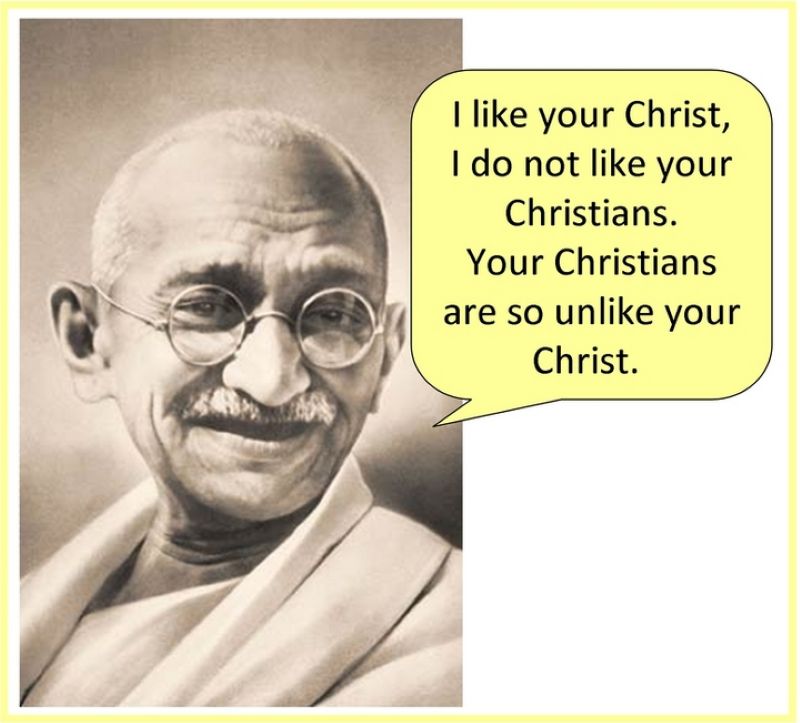
These were the historians who were supported and patronised, often openly, by the country’s leading historians led by Romila Thapar, R.S. Sharma, D.N. Jha and Irfan Habib, among others. It is interesting that while these second-rank historians took the lead in supporting the Babri Masjid cause, the top historians avoided doing so. They knew the pitfalls of their historiography. They knew it would not withstand cross-questioning. They were also not used to being questioned in public.

The case exposes a contradiction at the heart of elite academic discourse in the country. Historians who insist upon methodological rigour and denounce dissenters as “non-historians” were themselves, in a case as significant as Ayodhya, found relying on assumptions, ideological predispositions, or incomplete engagement with primary evidence.

The larger issue, however, is not that historians can make mistakes. Genuine scholarship always leaves room for error, revision and correction. The real problem is the culture of intellectual insulation that protected certain historians from sustained scrutiny for decades. Within academic and media ecosystems, their assertions were often treated as settled truth. Critical examination was discouraged because it threatened the ideological consensus that dominated post-Independence intellectual life.

The real challenge before Indian historiography today is not the existence of competing narratives. A confident civilisation can accommodate disagreements. The danger lies instead in treating one ideological school as the sole custodian of intellectual legitimacy while dismissing all dissent as ignorance.

Ironically, as Romila Thapar’s memoir itself suggests, the decline of intellectual monopolies often produces resentment. Much of the current anxiety and anger directed at “non-historians” appears rooted less in questions of qualification than in the loss of cultural and institutional control.

History does not—and cannot—belong permanently to any ideological priesthood. – Firstpost, 25 May 2026

Utpal Kumar is the author of the book, ‘Eminent Distorians: Twists and Truths in Bharat’s History’. 

Historian Cartoon

Marco Rubio and the Missionaries of Charity – Shravan K. Shukla

Marco Rubio & Sergio Gor

The US Secretary of State’s visit to the Missionaries of Charity, an organisation facing serious legal charges in Indian courts for forced conversions, child trafficking, and financial fraud is a flagrant disregard for India’s judicial system and internal security. – Shravan Kumar Shukla

United States Secretary of State Marco Rubio’s four-day visit to India has created a new political stir in the country. This is the first time in 14 years that a US Secretary of State has landed directly in Kolkata instead of the national capital, New Delhi. The last time a US representative landed straight in Kolkata was in 2012, when Hillary Clinton flew down to the city. But Rubio’s visit to Kolkata turned out to be highly controversial.

Upon reaching Kolkata, instead of attending any official or strategic event, he went straight to the headquarters (Mother House) of the Missionaries of Charity, founded by Mother Teresa.

Missionaries of Charity has been at the centre of intense Indian government surveillance, foreign funding restrictions, and serious allegations of violations of law over the past few years. Marco Rubio’s first visit to India upon his arrival and his closed-door meeting with the organisation’s officials do not look like mere diplomatic courtesy. In diplomatic circles, it is being seen as a concerted and strategic US effort to challenge India’s sovereignty and strengthen the global standing of the controversial Christian missionaries.

Let’s dive a little deeper to understand the entire incident and analyse the dark chapters and controversies associated with the Missionaries of Charity, which are echoing from the internet to the courts.

The controversy related to the government crackdown on funding, i.e., FCRA

The most significant administrative and financial conflict between the Missionaries of Charity and the Indian government emerged in December 2021. The Union Home Ministry completely halted the renewal of the organisation’s foreign funding license under the Foreign Contribution Regulation Act (FCRA). The Ministry had strong input that the large sums of money received by the organisation from abroad in the name of donations were being used for activities that were detrimental to the national interest.

Besides, the organisation failed to furnish the financial documents and account details required for the audit on time, which raised serious questions about its financial transparency. The administrative action sparked a major political storm within the country. The then-Chief Minister of West Bengal, Mamata Banerjee, and several opposition parties, including the Congress, baselessly accused the central government of targeting minorities.

The government took a firm stance on this matter, clarifying that it had not frozen any accounts, but the institution itself had submitted a request to the State Bank of India to freeze its accounts. Later, in January 2022, after being surrounded from all sides, when the institution submitted the necessary documents and clarifications to the government, its registration was reinstated.

Forced conversions under the guise of service and hurting Hindu sentiments

The organisation has long been accused of cunningly converting poor Hindus under the guise of ‘service’ and ‘help’. The case relating to one of the organisation’s children’s homes (shelter homes) in Vadodara, Gujarat, was the most vivid and horrifying example of its vile activities.

In December 2021, District Social Security Officer Mayank Trivedi and the Child Welfare Committee conducted a surprise inspection of a girls’ home in the Makarpura area. The findings shocked administrative officials as well as the entire Hindu community.

The investigation team found that destitute Hindu girls living in the orphanage were being forced to read Christian religious texts (the Bible). These innocent girls were also forced to participate in Christian prayers and wear crosses around their necks. An FIR was registered at the Makarpura police station under the Gujarat Freedom of Religion Act, 2003, for hurting Hindu religious sentiments and for allegedly using allurement to convert. This despicable scheme, operating under the guise of service, was exposed when officials discovered that the organisation was bent on eradicating all signs of the original religion of the girls.

The investigation committee’s report made shocking revelations, including an instance when a Hindu girl was given to a Christian family against her will. Furthermore, Hindu girls were forcibly served non-vegetarian food (meat) in an attempt to corrupt their religious beliefs.

While Missionaries of Charity spokespersons, as usual, dismissed all these allegations as baseless and false, a joint investigation team comprising several departments, formed by the police and the district collector, found these allegations to be true, leading to legal action.

The ugly face of human trafficking, involving the buying and selling of newborn babies

Forced religious conversions are not the only illegal activity that the Missionaries of Charity has been accused of; the organisation was also involved in inhumane acts of selling newborn babies for money. The organisation’s ugly face came to light in 2018 at one of its shelter homes in Ranchi, Jharkhand.

In Ranchi, the police arrested two Sisters (nuns) of the Missionaries of Charity red-handed while they were illegally trafficking newborn babies. This incident exposed the horrific network of child trafficking operating under the ‘holy’ and ‘compassionate’ facade of the organisation founded by Mother Teresa.

Considering the grave nature of the activities, the National Commission for Protection of Child Rights (NCPCR) directly approached the Supreme Court. The Commission urged the country’s highest court to establish a Special Investigation Team (SIT) under Supreme Court supervision to investigate the mysterious disappearances and sale of children from shelter homes run by these Christian missionary organisations.

The Commission alleged that the then government officials of Jharkhand adopted a very lax attitude in such a sensitive matter, and continuous efforts were made to suppress the investigation of this big racket.

The statistics revealed during the Commission’s in-depth investigation were horrifying and shocking. Between 2015 and 2018, approximately 450 destitute and impoverished pregnant women were admitted to this shelter home in Ranchi. However, when the records were examined, only 170 children were legally recorded.

The organisation had no information about the remaining 280 newborns, including where they went or what happened to them. Following this confirmation, the Supreme Court issued notices to the governments of nine states, including Jharkhand, West Bengal, Assam, and Bihar, and ordered an investigation into this human trafficking ring.

The Dark Truth of Mother Teresa – Deceit, Hypocrisy and the “Ghoul of Kolkata”

The Indian Constitution calls for the development of a scientific temper and a sense of rationality in every citizen. However, the entire process of Mother Teresa’s canonisation by the Vatican was based on blatant superstition, hypocrisy, and a direct insult to medical science.

To canonise Teresa, the Vatican made the ridiculous claim that simply touching her portrait cured people of incurable cancers and tumours overnight. Indian doctors and intellectuals denounced this as sheer sorcery for misleading people and promoting superstition.

Renowned British author Christopher Hitchens, in his acclaimed book The Missionary Position, blasted Mother Teresa’s hypocritical image. He directly referred to her as the “Ghoul of Kolkata”. Hitchens’s compelling argument was that Teresa’s institute was not dedicated to providing modern treatment to the suffering, but instead deprived the sick and the dying of modern medicine, leaving them to suffer. The sick were told that their suffering was divine punishment for their sins, and that they should endure it silently and without complaint.

The research of NRI Dr Arup Chatterjee is considered most significant in exposing the sordid truths of this organisation. He conducted on-ground research on the organisation’s operations for nearly 25 years and exposed all its dark deeds in his authoritative book, Mother Teresa: The Untold Story.

In the book, Dr Chatterjee stated that the organisation received billions and billions of rupees in donations from around the world, yet patients at its Kolkata centres lacked even basic medical facilities, clean needles, and painkillers. The Indian government was never given any account of where this vast sum of money disappeared.

Support from global powers and a controversial political nexus

Mother Teresa’s entire life was filled with controversies, radical statements, and stories of accepting donations from the world’s most notorious criminals and corrupt figures. When she was awarded the Nobel Peace Prize in 1979, she shocked the world by declaring in her speech that the greatest threat to global peace was not nuclear weapons or war, but abortion. This deeply conservative and anti-women statement was strongly condemned by modern society and women’s rights organisations worldwide, clearly revealing her narrow religious agenda.

In 1984, when the devastating gas tragedy struck Bhopal, India, killing thousands of innocent people, Mother Teresa went there to offer solace. But instead of fighting for justice, she offered the victims the suicidal advice of quietly forgiving the corporate culprit, Union Carbide.

Mother Teresa at Union Carbide, Bhopal.

Critics firmly believe that she consistently served as an agent of Western corporate powers and governments, such as Ronald Reagan and Margaret Thatcher. Furthermore, she accepted a $1.25 million donation from the notorious American financial fraudster Charles Keating and later defended him in court.

The US effort to provide oxygen to Christian missionaries

Despite all these murky controversies, lawsuits, and serious allegations of human trafficking surrounding the organisation, US Secretary of State Marco Rubio’s decision to visit the Missionaries of Charity as soon as he arrived in India appears to be a deliberate political plot. International affairs analysts believe that the US has consistently employed a devious policy of exerting strategic pressure on developing countries by using the false facade of “religious freedom” and “human rights.”

Rubio’s visit is actually an open attempt to provide oxygen to these missionaries who have been financially and socially weakened due to the tough stance of the Indian government, and revive them at the global level.

The US Secretary of State’s personal visit to an organisation facing serious legal charges in Indian courts for forced conversions, child trafficking, and financial fraud is tantamount to a flagrant disregard for India’s judicial system and internal security. Washington intends to convey the message through this visit that it stands as a shield for these Christian networks operating in India. – Opindia, 24 May 2026

Shravan Kumar Shukla is multimedia journalist passionate about digital media. He has been actively engaged in journalism, working across diverse platforms including agencies, news channels, and print publications. 

See also

  1. Kolkata will take a century to recover from Mother Teresa – Aroup Chatterjee
  2. How Mother Teresa became a saint – Christopher Hitchens
  3. Mother Teresa’s troubled legacy – S. Bedford
  4. Mother Teresa: More dirt on the saint of the gutters – Jayant Chowdhury
  5. Aroup Chatterjee: Revealing the whole truth about Mother Teresa – Kai Schultz
  6. St Teresa: The hypocrisy of it all – Jayant Chowdhury
  7. The scandal of Mother Teresa’s sainthood – Canterbury Atheist
  8. Mother Teresa defended notorious paedophile priest – Nelson Jones
  9. Mommie Dearest – Christopher Hitchens
  10. Nobel Prize acceptance speech – Mother Teresa
  11. To many critics, Mother Teresa is still no saint –  Adam Taylor
  12. Mother Teresa and her millions – Susan Shields & Walter Wuellenweber
  13. The ‘miracle’ that makes a saint out of Mother Teresa – Jaideep Mazumdar
  14. Mother Teresa was “anything but a saint” say research scholars – Kounteya Sinha
  15. Indian Rationalists question mother Teresa’s ovarian miracle – Sanal Edamaruku
  16. Mother Teresa brainwashed Hindus and fuelled an insurgency, claim BJP leaders – Andrew Marszal
  17. Is canonising Mother Teresa the Vatican’s strategy to gain ground in India? – Sandeep B.
  18. VIDEOS: Mother Teresa and her cult of suffering – Christopher Hitchens, Aroup Chatterjee & Others

Mother Teresa with Charles Keating