From Aurangzeb to the Pashupati seal, Audrey Truschke has inadvertently exposed the intellectual hollowness of Left-‘liberal’ historiography – Utpal Kumar
At the very outset, I must make a confession. I like Audrey Truschke. Not because I agree with her. Quite the opposite. I like her because few ‘historians’ in recent years have done more to expose the intellectual frailties, ideological biases and selective morality of contemporary Left-‘liberal’ historiography than she has.
In her relentless attempts to sanitise Aurangzeb, delegitimise Hindutva and challenge civilisational narratives associated with Bharat, Truschke has inadvertently become the perfect case study of what happens when ideology trumps scholarship. She represents a new clique of historians that is least interested in understanding the past and is determined to weaponise history to win politico-ideological battles.
Take her defence of Aurangzeb, for instance. One of her favourite arguments is that the Mughal emperor employed a large number of Hindus in his administration. And that’s why he was secular. To bolster her position, she claims that Aurangzeb employed more Hindus than Akbar. The implication is obvious: a ruler who employed Hindus could not have been anti-Hindu.
Empires, after all, do not recruit administrators and generals out of affection. They recruit them out of necessity. Aurangzeb employed Hindus such as Raja Jai Singh and Raja Jaswant Singh because they were militarily capable and politically useful. He needed Hindu warriors to fight Hindu adversaries, most notably the Marathas. And when they were not battling Marathas, these Hindu generals were useful in fighting difficult frontier campaigns such as Afghanistan. This was imperial pragmatism, not secular idealism. Even the British did the same to safeguard the Raj. The absurdity of the argument can be gauged from the fact that if the mere employment of members of a community is sufficient proof of affection for that community, then Hitler could be projected as a benefactor of Jews. After all, the Nazis had scores of Jews serving them.
Yet, this kind of reductionism has become a hallmark of Leftist historiography. More so of the Truschke-ian manual of history writing.
She has repeatedly claimed that Hindutva was inspired by Nazism and that its early proponents, especially those from the RSS, admired Hitler. To support this claim, she cites We, Or Our Nationhood Defined. Truschke claims M.S. Golwalkar wrote this book in 1939, even when the second RSS Sarsanghchalak had expressly said in May 1963 that it was an abridged translation of a Marathi text, Rashtra Mimansa, written by Babarao Savarkar.
Here again, the one thing that’s sacrificed is nuanced history. In 1939, when We, Or Our Nationhood Defined was published, the world did not possess the knowledge of Nazi atrocities that later generations would acquire. The Holocaust, as it is understood today, had not yet entered global consciousness. Ashley Rindsberg’s The Gray Lady Winked documents how influential Western institutions, including The New York Times, frequently downplayed the sinister nature of the Nazi regime. Holocaust-related stories were marginalised, buried deep within newspapers and denied the prominence their significance demanded.
Rindsberg writes, “In the six years of the war, The New York Times printed Holocaust-related stories on its front page exactly six times. Never once in the more than 18,000 Times issues during the war was a Holocaust story a lead article for the day. And, accordingly, never once has The New York Times officially apologised for the way that it covered—or did not cover—the Holocaust.”
If one is to apply contemporary moral standards retrospectively, then many revered Western institutions would stand equally accused. The very institutions Truschke often seeks legitimacy from. But then, by now we know Truschke’s history is bereft of nuances. It is more tabloid, clickbait history.
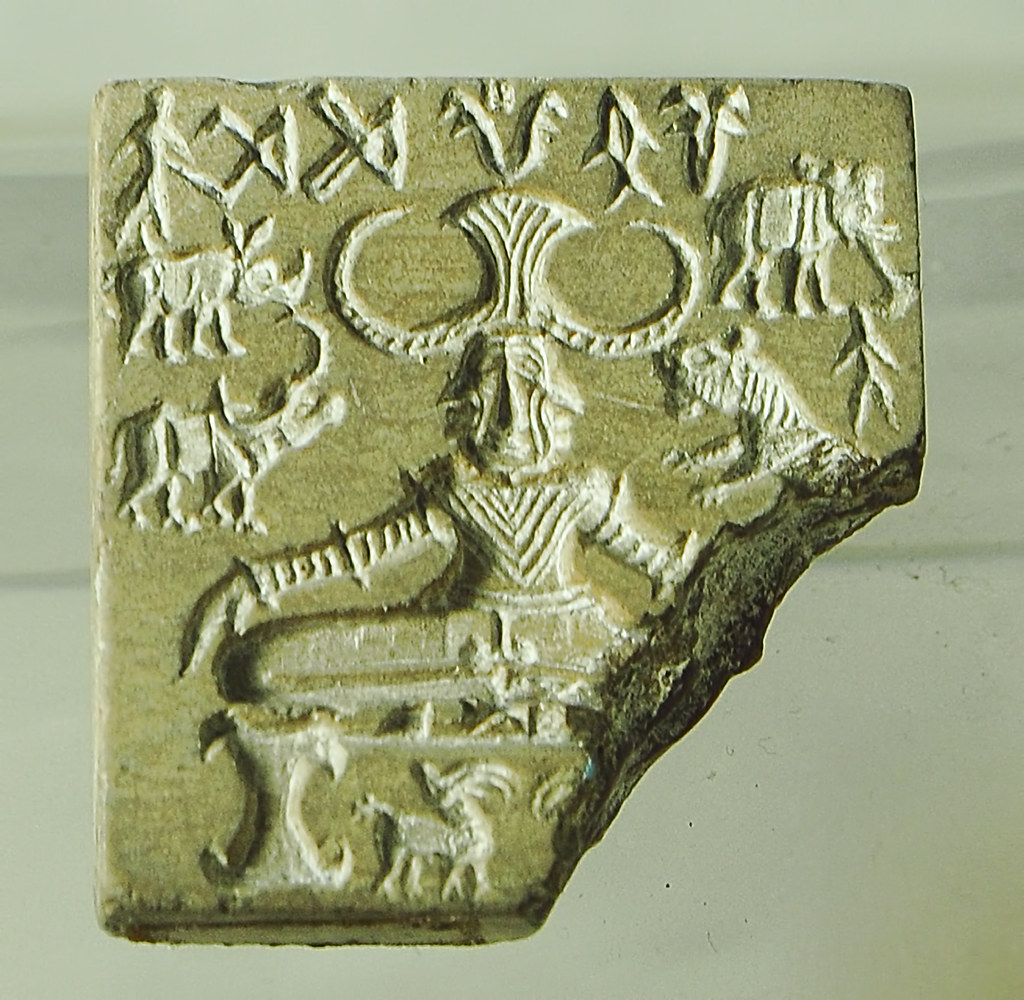
This week, one encountered another manifestation of Truschke-ian history when the professor of South Asian history at Rutgers University claimed that the famous Pashupati seal of the Saraswati (Harappa) civilisation has nothing to do with Pashupati (Shiva). Yes, you heard it right.
The controversy began after the Ministry of Culture shared the image of what is commonly believed (even among “eminent historians” led by Romila Thapar and A.L. Basham) to be the Pashupati seal, describing it as evidence of Bharat’s “civilisational continuity” and an early depiction of Shiva worship. Truschke took to social media, her new tool to push historical boundaries, to say that the figure should not be identified as Shiva and may instead reflect a broader “Lord of Animals” motif seen across ancient Eurasian cultures. The image was “more likely adapted from proto-Elamite iconography”, she wrote on X.
Given the ludicrousness of the claim, it does not even make sense to argue with her that recent scientific and archaeological findings mostly vindicate what Bharat’s long literary tradition has always maintained: that if there was ever any migration, it was westward, not otherwise. (Even the Satapatha Brahmana, which our “eminent historians” pompously quote, talks about an eastward journey within Bharat, and not from outside.) Given her preconceived notion of history, it does not make sense to waste time discussing with her how the supposedly illiterate, barbarian Aryans could compose such refined literature as the Vedas. How else can one react when one realises that she and her ilk are talking about Aryans invading (migrating into) the subcontinent and composing Vedic literature on the banks of the mighty Saraswati around 1500 BC when modern scientific and archaeological findings point to the river drying up around 1900 BC?
Given Truschke’s ideology-dictated state of mind, it defies logic to argue to her that most Harappan sites have been unearthed along the dried course of Saraswati. It would be too much to expect from her to appreciate that language is often the stickiest thing to let go of—even for those who have converted to another religion (look at Iran and Bangladesh); yet, the rich, urbane and sophisticated Harappans not only abandoned their own language but also willingly adopted that of their invaders. It would be even more difficult for her to understand that the words found in the 14th-century BC Mittani records (which our “eminent historians” claim were left when Aryans were still in Central Asia had not yet reached the subcontinent) are closer to the language used in later Vedic literature. Had the Mittanis been part of a pre-Rig Vedic phase, they would have shown similarities with that, rather than later Vedic language.
So, how should one react when Truschke comes up with such historical inventions?
First and foremost, it must be realised that she is an integral part of the larger Leftist historiography that innately believes Bharat is a doomed scenario. Any interpretation strengthening civilisational continuity within the Indic ecosystem must be subjected to scrutiny. Every possibility must be questioned. Every claim must be problematised. Every tradition must be treated with suspicion.
Truschke is a pop version of the “eminent historians”, pursuing clickbait historiography. Her difference from, say, Romila Thapar is tactical. The modus operandi is simple: The likes of Romila Thapar would claim that there existed Pashupati seals and connect them with proto-Shiva, and then, strategically, Truschke—and our own Ruchika Sharma—would be let loose to make such wild Eurasian claims. This makes the otherwise ludicrous Leftist claims of the likes of Thapar suddenly appear moderate. What was previously seen as controversial acquires an aura of reasonableness simply because something even more provocative has entered the conversation.
So, next time a Truschke or a Sharma makes an outrageous claim, don’t get outraged. Clickbait historians thrive on outcry. The best way to belittle the Leftist line of historiography is to come up with a new, longer line of nationalist historiography. Individual efforts have been made in that direction. What’s missing is the institutional approach. Till that’s done, keep exposing the likes of Romila Thapar and keep ignoring the pop distorians such as Truschke.
Bharat still awaits the institutionalisation of its history written from its own perspective. This cannot be Left to “eminent historians”. Far less their tabloid, clickbait versions. – Firstpost, 30 May 2026
› Utpal Kumar is the author of the book, ‘Eminent Distorians: Twists and Truths in Bharat’s History’.