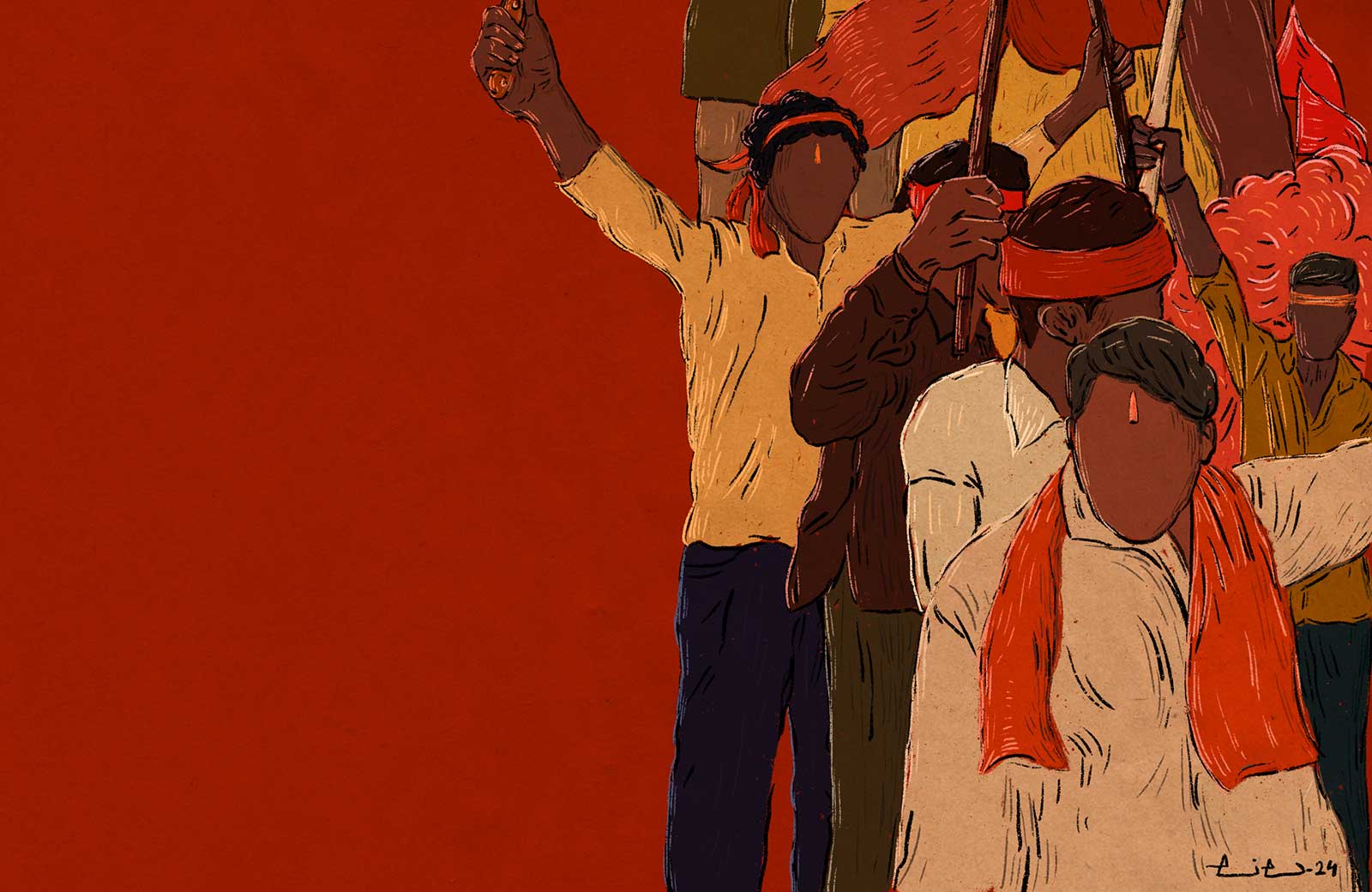
From Australia to UK, a global campaign to cancel Hindu identity – Yuvraj Pokharna

Hindus in Hindustan

Hindumisia isn’t just about Hindus; it’s about what happens when ignorance and tribalism win. … Hindu Dharma’s been about coexistence since forever, from sheltering Parsis in the 8th century to inspiring Gandhi’s non-violence. Letting Hindumisia fester betrays that legacy and hands bigots a win. – Yuvraj Pokharna

Yo, let’s talk straight. There was this Dismantling Global Hindutva conference some time ago. It wasn’t some academic tea-spilling session-based conference—it was a straight-up hit job. A masterclass in twisting facts, cherry-picking narratives, and serving piping-hot ignorance to demonize a 5,000-year-old civilization. The objective wasn’t critique; it was a calculated move to paint Hindu Dharma as the villain in a low-budget propaganda flick. Warning: The plot is flawed, and the facts don’t support it. Buckle up as we unpack this mess with real-world cases, names, and a vibe that’s equal parts woke and wise, calling out Hindumisia for what it is—a global campaign to cancel Hindu identity.

Hindumisia vs Hinduphobia: Know the Difference, Fam

First, let’s clear the fog. Hinduphobia and Hindumisia aren’t the same, though the West loves lumping them together like they’re interchangeable slang. Hinduphobia is that low-key shade—stereotypes, lazy tropes, and misrepresentations that make Hindu Dharma look like some backward, cow-worshipping relic. Think of media calling Diwali ‘noisy’ or yoga ‘exotic’ while ignoring their spiritual depth. It’s annoying, sure, but it’s mostly agenda dressed up as critique.

Hindumisia? That’s the real venom. It’s not just cussing and dissing the religion; it’s targeting Hindus as a people with hate so raw it spills into apartheid, expletives, and violence. We’re talking hate crimes, vandalism, and systemic erasure of Hindu identity. Hindumisia doesn’t just stereotype; it dehumanizes, painting Hindus as some fascist, oppressive blob that needs to be “dismantled”. The difference? Hinduphobia’s a vibe check that fails; Hindumisia’s a full-on frontal assault. And trust me, this hypothesis is not just a theory—it is now a lived reality, and we have instances happening on a global scale to support it.

The Colonial Roots: Where the Hate Began 

Hindumisia didn’t pop up overnight. It’s got roots deeper than a banyan tree, stretching back to the colonial era when European powers rolled into Bharat with their Bibles and inflated superiority complexes. To justify the exploitation and the loot of the subcontinent, they needed to make the Hindu Dharma look like the reprehensible guy. Cue the OG fake news: British scholars and missionaries branded Hinduism as “crude” and “superstitious”. They zoomed in on issues like caste or sati, blowing them out of proportion while ghosting the wisdom of the Vedas, the philosophy of the Upanishads, or the ethical flex of the Mahabharata.

Take Max Müller, the German Indologist who’s still a big name in Western academia. Dude loved Sanskrit but framed Hinduism through a Christian lens, calling it a “chaotic” religion that needed Western “order”. Monier Monier-Williams, known for his extensive Sanskrit dictionary, subtly advanced the notion that Hinduism was inferior to monotheism in his writings. These people weren’t just smart scholars; they were Westerners who concocted a story that made Bharat’s culture seem inferior to justify colonial rule. In 2025, that colonial shade still persists in how the West talks about Hindu Dharma.

The Failed Show of Dismantling Global Hindutva

The Dismantling Global Hindutva conference of 2021 was a virtual circus that more than forty North American universities, including Harvard and Rutgers, supported. Billed as an academic takedown of Hindutva, it was less about scholarship and more about slandering Hindu Dharma.  The speakers—many with zero lived experience of Hindu culture—threw around terms like “fascist,” “supremacist,” and “oppressive” like they were handing out flyers. They equated Hindutva with Nazism, ignoring its actual meaning: a philosophy of inclusivity, not a political hit list.

The conference wasn’t just sloppy; it was malicious. Organizers like Audrey Truschke, a self-professed Aurangzeb fan and a Rutgers professor known for her unpalatable takes on Hindu texts, pushed a narrative that flattened Hindu society into a caricature of violence and casteism. No mention of “Vasudhaiva Kutumbakam” (the world is one family) or the Rig Veda’s “Ekam sat vipra bahudha vadanti” (truth is one, sages call it by many names). Instead, they served a buffet of half-truths, like claiming Hindutva fuels all of India’s social woes while sidestepping Hindu Dharma’s history of pluralism and non-violence. It was the pinnacle of Hindumisia—disguised as scholarship but slobbering with contempt.

Real-World Receipts: Hindumisia in Real Life

This isn’t just an academic beef; Hindumisia hits hard IRL. Let’s talk names and cases that expose the hate for what it is.

Oxford’s Fallen Star (2021): Rashmi, a 22-year-old sharp girl from Karnataka, made history by becoming the first Indian woman to be president of the Oxford University Students’ Union. But five days after she was elected, she was forced to resign. Why? Critics called old tweets ‘racist’ and ‘insensitive’, but they didn’t bother to look at the context. Rashmi said it out loud: Hindumisia was the real cause. People used her Hindu identity against her, and online mobs and Oxford societies piled on until she quit. Of course, the university denied it, but the pattern is clear: being proud of being Hindu gets you cancelled.

Shubh Patel, Australia’s Soccer Snub (2022): Because he wouldn’t take off his Tulsi Mala, a sacred Hindu necklace, Shubh, a 12-year-old Hindu boy in Melbourne, was kicked out of a soccer game. It wasn’t a problem that he had worn it before. But this time, the referee wouldn’t let it happen because of ‘safety’ rules that seemed more like bias. Rajesh Patel, Shubh’s dad, told News18, “It felt like they were punishing my son for being Hindu.” The incident isn’t the only time this has happened; it’s part of a pattern in Australia where Hindu symbols are becoming more and more common.

Mississauga Park Attack, Canada (2023): A 44-year-old Hindu man named Anil Kumar was doing a puja with his wife and two kids in Streetsville Park when two teens started throwing rocks and yelling anti-Hindu slurs. Anil was hurt, and the family had to run away. Peel Regional Police said the attack was a hate crime, according to CBC reports. But what was the attackers’ reason? Pure Hindumisia, based on stereotypes about people who worship idols. Canada’s Hindu diaspora, which is more than 8,00,000 strong, has to deal with this vibe check way too often.

Pratima Roy, NASA’s Targeted Intern (2024): Pratima, a 21-year-old NASA intern from Kolkata, posted a pic of her desk with a Ganesha idol and a small puja setup. The X backlash was instant—trolls called her “superstitious” and “unfit for science”. One viral post racked up 10K likes, sneering, “NASA’s hiring cow worshippers now?” Pratima clapped back, saying, “My faith doesn’t clash with my work.” But the hate kept coming, proving Hindumisia’s alive and well in the digital age.

Leicester Riots, UK (2022): Post an India–Pakistan cricket match, Leicester saw anti-Hindu violence flare up. Hindu homes and businesses were vandalized, with reports of mobs chanting anti-Hindu slurs. The Hindu American Foundation noted fifteen arrests, but the UK media framed it as “clashes between communities”, downplaying the targeted Hindumisia. Local Hindu leader Mihir Shah told the BBC, “Our temples were attacked, but the narrative blames us equally.” These aren’t isolated Ls. From Australia to Canada to the UK, Hindumisia’s going global, and it’s not just random—it’s systemic, fuelled by a mix of colonial baggage and modern misinformation.

Hindutva: The Most Misunderstood Vibe

So, what’s Hindutva, and why does it trigger so many? The West slaps labels like “Hindu nationalism” or “Hindu supremacy” on it, but that’s like calling chai a latte—close, but no cigar. Hindutva, derived from the words “Hindu” and “tattva” (essence), is neither a religion nor a political manifesto. It’s a way of life, rooted in Bharat’s ancient philosophy of inclusivity, tolerance, and spiritual flex. Unlike “isms” that box you in with dogmas, Hindutva is about freedom—question the Vedas, reject a guru, or vibe with Jainism, and you’re still Hindu. No gatekeeping here.

J. Nandakumar, RSS thinker and author, nails it: “Hindutva’s only dogma is that it doesn’t permit dogmas.” It’s why Hindus have coexisted with Jains, Buddhists, and Sikhs for centuries—no beef (pun intended). Compare that to the Abrahamic lens the West uses, where religion’s a rulebook from god. Hindutva? It’s more like a playlist—diverse tracks, same vibe. The Rig Veda’s “Ekam sat vipra bahudha vadanti” (truth is one, call it what you want) or the Maha Upanishad’s “Vasudhaiva Kutumbakam” (world’s one family) aren’t just quotes—they’re the OG flex of Hindu pluralism.

But the West’s got no vocab for this. They call Hinduism a “religion” like it’s Christianity’s cousin, missing the point that it’s dharma—a cosmic framework for life, not a rulebook. Water’s dharma is to flow; a soldier’s is to protect. Attempt to incorporate that into a Western dictionary. Spoiler: you can’t.

The Colonial Hangover in Academia and Media

The Dismantling Global Hindutva conference is just the latest episode in a long-running series of academic Hindumisia. Scholars like Audrey Truschke or Wendy Doniger often lean on colonial frameworks, building careers with their egregious takes on Hindu texts and portraying Hinduism as a chaotic mess of caste and cow fetishism. Their work gets amplified in Ivy League halls and journals like Journal of Asian Studies, while Hindu scholars like Rajiv Malhotra or Koenraad Elst are sidelined as fringe. It reflects a form of academic gatekeeping.

The media’s no better. Media outlets such as The New York Times and The Guardian often portray Hindu nationalism in a monolithic manner, disregarding the diversity of Hindu thought. When they cover India’s BJP or RSS, they portray “Hindu extremism” without any nuance, portraying one billion Hindus as a monolithic group. Such coverage fuels real-world hate—like the 2023 vandalism of a Hindu temple in Cary, North Carolina, where swastikas (not the Hindu swastika, mind you) were spray-painted on a Ganesha statue. The local Hindu community, per a WRAL News report, was left shaken, with temple president Anil Bedi saying, “This isn’t just vandalism; it’s an attack on our identity.”

Fighting Back: A Call to Slay the Hate

Hindumisia’s not just a vibe—it’s a virus, and we need an antidote ASAP. Here’s the game plan:

Educate, Don’t Hate: Hindus have to own the narrative. Host workshops, drop X threads, and make reels that break down dharma’s depth—its philosophy, art, and science. Schools like Chinmaya Mission are already doing this, teaching kids about the Upanishads’ wisdom. Scale it up; make it viral.

Link Up with Allies: This battle isn’t just a Hindu fight. Team up with other faith groups—Sikhs, Jains, even progressive Christians—who vibe with pluralism. Interfaith dialogues, like those hosted by the Hindu American Foundation, can build bridges and dunk on prejudice.

Call Out the BS: When you see Hindumisia—whether it’s a shady conference or a biased BBC article—clap back. Write op-eds, flood X with facts, and hold academics and journalists accountable. Hashtags like #HindumisiaExposed can trend if we move as a squad.

•  Amplify Hindu Voices: Scholars like Ankur Barua or activists like Suhag Shukla deserve more mic time. Platforms like Swarajya or OpIndia are already pushing back against Hindumisia—support them, share them, and make them go viral.

•  Legal Flex: Hate crimes like the Mississauga attack or Leicester riots need justice. Push for stronger hate crime laws, like Canada’s Bill C-63 (2024), which targets online hate but needs teeth to protect Hindus specifically. Swami Vivekananda dropped the ultimate bar: “Arise, awake, and stop not until the goal is reached.” That’s the energy we need. Hindumisia thrives because we’ve not been unnerved. We have rather been calm and unruffled, letting colonial narratives and academic clowns define us. No more. It’s time to flex Bharat’s truth—dharma’s not just a religion; it’s a blueprint for a better world.

The Bigger Picture: Why This Matters

Hindumisia isn’t just about Hindus; it’s about what happens when ignorance and tribalism win. If we let this hate slide, it sets a precedent for any community to be targeted—Sikhs, Jews, Muslims, Jains, you name it. Hindu Dharma’s been about coexistence since forever, from sheltering Parsis in the 8th century to inspiring Gandhi’s non-violence. Letting Hindumisia fester betrays that legacy and hands bigots a win.

The Dismantling Global Hindutva conference served as a crucial awakening. It showed how far some will go to erase a civilization’s truth. But it also sparked a fire under internet-savvy Hindus, from X warriors to Gen Z creators, who are out here dropping truth bombs. A report by the Hindu American Foundation in 2023 noted a 30 per cent spike in anti-Hindu hate crimes in the US alone—proof the fight’s real, but so is our resolve. Hindumisia’s got no place in 2025. We are not only fighting for Hindu Dharma but also for a world where truth, tolerance, and respect are paramount. Let’s make it happen, fam. – The Print, 3 June 2026

Yuvraj Pokharna is a Surat-based educator, columnist, and social activist who keeps a eye on contemporary issues including Social Media, Education, Politics, Hindutva, Bharat (India) and Government Policies. He is the author of the book Hindutva For Gen Z, from which the above article has been excerpted.

NYC Hinduphobia Banner

India’s Pakistan conundrum – Claude Arpi

Attari-Wagha Border


India’s ‘dharmic genes’ have made it more generous towards a deceitful Pakistan without any receprocity. History can’t be rewritten, but one should perhaps learn from it. – Claude Arpi 

It has been argued that “Bharat has become a victim of its own innate dharmic nature—and, of course, democratic laws.”

This is a historical fact.

The Simla Agreement of 1972, repudiated by Pakistan after Delhi denounced the Indus Water Treaty of 1960, provided for the return of Pakistani prisoners of war. Unfortunately, India’s ‘dharmic’ genes accepted to release more than 90,000 Pakistani prisoners of war, against very little compensation. The Indian leadership probably thought that it was unethical (or adharmic) to keep so many Pakistani nationals in custody.

There are many more examples of the “dharmic” nature of the Indian leadership. We shall mention three here; if India had listened to saner elements, the situation would have been different on the borders today. It can, of course, be argued that it was plain stupidity, not ‘dharma’, which guided the Delhi establishment at that time.

Take Lahore

Lt. Gen Nathu Singh Rathore was one of the most remarkable officers of the Indian Army post-independence. When offered the post of first Indian Commander-in-Chief of the Indian Army, he refused and told the defence minister that Gen. K.M. Cariappa would do a better job than him.

But Gen. Nathu always spoke frankly, sometimes too frankly for the politicians in Delhi. At the end of 1947, he thought of taking Lahore to force the raiders and their Pakistani supporters to leave Kashmir and return to their bases. The general decided to speak to Nehru; his biographer wrote: “When he reached the prime minister’s house, he found him sitting on the lawn, talking to some ministers and civilian officials. Presently, Nehru got up and went inside. The others present there asked Nathu Singh for his views on the best way to deal with the crisis in Kashmir. Nathu Singh replied that if he had his way, he would use the minimum troops to hold the passes and, with maximum force, attack and capture Lahore. This would force Pakistan to withdraw and vacate all occupied territory in Jammu and Kashmir.”

The biographer continues: “The civilians were impressed by the logic of this argument, and when Nehru returned, they told him that the general had a good plan to throw out the invaders. When Nehru asked him to repeat what he had said, Nathu Singh demurred, saying that he would rather not, since he knew it would not find favour. But Nehru insisted, and Nathu repeated what he had told the others.”

But Nehru was horrified and became angry: “How can a responsible senior officer think of such a foolhardy scheme? It could cause an international crisis.”

Incidentally, in 1965, a similar plan was approved by Lal Bahadur Shastri, then prime minister, and the threat to Lahore probably saved Kashmir.

After the Pahalgam massacre, it is worth remembering this. Had the Indian Army advanced on Lahore in 1947, there would be no Kashmir issue today. But would the British have allowed it? This is another question.

Occupy Chumbi Valley

In October 1950, after the Chinese had captured Chamdo, the capital of Eastern Tibet, and were ready to advance towards Lhasa, Harishwar Dayal, an extremely bright ICS officer posted as Political Officer (PO) in Sikkim (looking after Tibet, Sikkim and Bhutan), wrote to the Ministry of External Affairs in Delhi about the Chinese advances on the Tibetan plateau.

Dayal quoted from a letter from Hugh Richardson, the Indian Head of the Mission in Lhasa dated June 15, 1949, who had then suggested that India might consider occupying Chumbi Valley up to Phari “in an extreme emergency” (meaning if China threatened to invade Tibet).

More than a year later, Dayal brought back the idea: “This suggestion was NOT favoured by the Government of India at the time. It was, however, proposed as a purely defensive measure and with NO aggressive intention. An attack on Sikkim or Bhutan would call for defensive military operations by the Government of India.”

China’s PLA planners today call this “active defence”.

Dayal explained his reasoning: “In such a situation, occupation of the Chumbi Valley might be a vital factor in defence. In former times it formed part of the territories of the rulers of Sikkim, from whom it was wrested by the Tibetans by force. It is now a thin wedge between Sikkim and Bhutan, and through it lie important routes to both these territories. Control of this region means control of both the Jelep La and Nathu La routes between Sikkim and Tibet as well as of the easiest routes into Western Bhutan, both from our side and from the Tibetan side.”

Dayal expressed his strategic views further: “It is a trough with high mountains to both east and west and thus offers good defensive possibilities. I would therefore suggest that the possibility of occupying the Chumbi Valley be included in any defensive military plans, though this step would NOT, of course, be taken unless we became involved in military operations in defence of our borders.”

Dayal had probably not realised that China was “friend” (or “brother”) of the leadership in Delhi; a few days earlier, the prime minister had already severely reprimanded the PO and Sumul Sinha, who had replaced Richardson in Lhasa, for not understanding that China was India’s friend.

What prompted Dayal to write this letter was probably his meeting with some of the members of the Himmat Singhji Committee, who would have asked him to put his views in writing in order to bring some pressure on the pacifists in South Block, who could only see the “wider perspectives”.

One can only wishfully dream of the implications an Indian advance in Chumbi would have had (no Siliguri Corridor, etc).

1971: Why not take Baltistan?

Another case: in August 1971, as the clouds were gathering over the Indo-Pakistan border, a young Ladakhi officer, Chewang Rinchen, joined again his old regiment, the Ladakh Scouts; he was asked to report with Colonel Udai Singh, his commanding officer, to his beloved Nubra Valley. Rinchen had already been awarded a Maha Vir Chakra in 1947 at the age of 17.

Rinchen confidently told his GOC that the Ladakhi Scouts and the Nubra Guards (known as the Nunnus they were later integrated into the Scouts) would do the “job” and repel the Pakistani forces.

The army base for the sector was located at Partapur in the Valley, and since 1960 an airfield had been opened at Thoise (till today the base camp for the operations on the Siachen Glacier).

The Nunnu was a good tactician; he always sought the cooperation of the local people, whether they were Buddhist, Muslim or Christian. He knew that most of the time, the troops had to depend upon local vegetables, meat and other supplies to survive.

While most of the commanders favoured a riverbed approach, Rinchen decided to cross over the mountains with his Dhal Force and follow the ridge. He argued that the enemy must be waiting with mines and machine gun nests near the river; he chose to capture Pt. 18,402, the highest Pakistan-occupied post, and then roll down to Chulunkha, the Pakistani base.

Soon after, on December 8, from the top of Pt. 18,402, Rinchen could see the entire valley from Turtok and Chulunkha in the east to the Indian Army headquarters at Partapur and the airfield at Thoise in the west. Rinchen’s tactics had paid off. He told his men, “Enjoy the Pakistani blankets and food”.

On December 9, advancing along the ridges, Rinchen and his men descended towards the Chulunkha defence complex, trying not to be seen by the enemy. Soon, Rinchen got a wireless message from Maj. Thapa informing him that Thapa’s team had managed to enter the enemy bunkers and a few Pakistani soldiers had been killed and a JCO captured.

On December 14 morning, soon after shelling started to destroy the roadblocks near the Turtok axis, the Dhal Force began its advance again.

At 10 pm, shelling was stopped, and the troops entered the Turtok village. Surprisingly, the village was absolutely silent.

The next phase of the operations was Tyakshi village, 6 km. from Turtok. It was concluded on December 14 in the evening. A few Pakistani soldiers were captured with arms and ammunition.

On December 17, Rinchen ordered his troops to get ready to launch an attack against Prahnu and Piun in Baltistan (Khapalu, the first large town in Baltistan, is located 28 miles away); it was never to happen.

In the afternoon, the Pakistani government agreed to a ceasefire. The Dhal Force was ordered to cease fire, greatly disappointing Chewang Rinchen’s men; they knew that in a few days they could liberate the entire Baltistan. Rinchen could not disobey orders from Delhi.

Had this been done, Pakistan would have lost its base for the Siachen Glacier operations, which were to start 13 years later.

Many such stories could be recounted, but history can’t be rewritten; but one should perhaps learn from history. – Firstpost, 27 April 2025

Claude Arpi is Distinguished Fellow, Centre of Excellence for Himalayan Studies, Shiv Nadar Institution of Eminence, Delhi. He is the director of the Pavilion of Tibetan Culture at Auroville.

Kashmir Map

Op Sindoor Banner

Hindus in South India must unite for their collective past and shared future – David Frawley

Thiruvalluvar

Hindus in South India must recognise that their vote is crucial in this democratic political era, where political influence is necessary for any social respect. To not vote for those who support you is to condemn yourself to be ruled by those who are against you. – Dr. David Frawley

South India has long been the most Hindu and Vedic part of India in terms of its culture and way of life. By South India we mean the states of Tamil Nadu, Kerala, Karnataka, Andhra Pradesh and Telangana.

South India has the largest, oldest, most numerous and most attended Hindu temples, particularly in Tamil Nadu, not simply museum pieces but centres of an active and devoted community.

Vedic culture is most studied and practised in South India, including Yoga, Vedanta, Ayurveda, Vedic Astrology, Vastu, Classical Indian Music and Dance, with Sanskrit Stotras and Vedic chanting. The three main Vedantic lines and Acharyas followed throughout India, Advaita and Shankaracharya, Vishishtadvaita and Ramanumujacharya, Dvaita and Madhvacharya, originated in South India and are still centred there. The main Himalayan temples like the Char Dham are run by priestly families from South India.

South Indian popular culture has the most Hindu influence, easy to see in their movies with stories and references to Hindu deities, which are now getting acclaimed throughout India. More people in South India have Sanskrit names, including politicians like Karunanidhi or Jayalalitha, while Sanskrit loan words are common in the vocabularies of its languages including Tamil or Malayalam.

South Indian kingdoms, notably the Vijayanagar Empire, whose capital city was one of the largest and richest in the world, preserved Vedic culture from destruction by the Muslim Turks. South Indian dynasties through history, notably the Pallava, Kakatiya, Hoysala, and the famous Cholas upheld Hinduism/Sanatana Dharma and its monumental temple culture. The Cholas in particular spread it from to Southeast Asia as far as Indonesia. The temple art and sculpture of these South Indian dynasties is still the most appreciated of India today, notably the Chola Shiva Nataraj statues.

Many great gurus honoured worldwide for their teachings on Yoga and Vedanta came from South India, including Bhagavan Ramana Maharshi, Swami Sivananda, Swami Chinmayananda, Swami Dayananda of Arsha Vidya, BKS Iyengar, and Tirumalai Krishnamacharya. Sri Aurobindo though from Bengal set up his ashram in Pondicherry. To study Yoga, Vedanta and Ayurveda today students come mainly to South India.

Increasing political contradiction for Hindus in South India

Yet in spite of Vedic practices prevailing in South India there is a dangerous contradiction that threatens the Hindus in the region, a new attack on its great traditions that have so far endured for millennia.

South Indians at a political level rarely vote to defend their Hindu culture, whether in state or national elections. They seldom vote to protect their human and social rights as Hindus. South India has been dominated by regional political influences which lack a national vision, many of which are staunchly anti-Hindu, like the Communists of Kerala and the DMK in Tamil Nadu.

Today the Communist influence in India (which still has not renounced Stalin or Mao) is most prominent in South India. In addition, Conversion activities targeting Hindus are prominent in South India, both Christian and Islamic. Islamic terrorist groups like PFI are most active in the South.

Christian missionaries have tried to subvert South Indian Hindu culture by creating their own Christian Bhajans, Christian Bharatnatyam, even Christian Yoga. Some churches are made to look like Hindu temples and perform aratis. Christian priests may wear saffron robes or rudrakasha malas. Missionaries have attempted to infiltrate and promote conversion at Hindu sacred sites extending to the most sacred Hindu site of Tirupati.

Aggression of anti-Hindu ‘Stalinism’

This anti-Hindu influence in South India has reached such a fevered pitch that a DMK leader like Udhaynidhi Stalin, with the support of his father Tamil Nadu Chief Minister M.K. Stalin, can vocally preach for the elimination of Hinduism/Sanatana Dharma, condemning it like a dangerous disease, proclaiming it is necessary to eradicate Sanatana Dharma for the sake of human equality and social progress as if it had no merits at all. Sadly, such a brazen call to harm Hindus and disrupt their way of life is ignored or downplayed, while a call to do so against other religious communities in India would have resulted in national and international outrage.

This DMK, though calling itself a Dravidian party, has in fact tried to suppress and destroy Dravidian culture, which has been largely Hindu and Vedic since the dawn of its long history. Even the ancient Matsya Purana says that Manu as a flood figure came from Kerala.

DMK is in denial of the great Hindu kingdoms, dynasties and temple culture of South India, its extraordinary art, sophisticated philosophies, profound Vedic sciences and yogic spirituality. There is little traditionally Dravidian about the DMK, except perhaps their Sanskrit names which highlights their own Hindu family past they are trying to erase.

DMK Dravidian politics, we should note, is not Indian, Bharatiya or traditional but an extension of European nationalism, where the different linguistic zones of Europe like Germany or France, wanted separate countries, defined according to western politics of the right and the left. Though claiming to be atheists and rationalists, it is Hindu traditions that the DMK criticises and maligns, not the others. Their main enemies that they target are the Brahmins not colonial rulers and their prejudices which they seem to share.

DMK’s inspiration Periyar on India’s Independence called for a day of mourning for Tamils for not getting their own separate state apart from India. He also supported a separate state for Pakistan and encouraged the partition of India. Clearly DMK began as an anti-India party, anti-Bharat, and so naturally anti-Sanatana Dharma, and retains that divisive mentality today. For them dictator Stalin remains a role model to be named after, not any of the leaders of the Indian Independence Movement or the great gurus of Tamil Nadu.

Challenging the danger ahead

Not bringing a Hindu spiritual and cultural Dravidian influence into politics has ceded the political field in South India and its powers to Leftists, Christians and Muslims that are more politically active, better organised and funded. It has resulted in a situation in which Hindus in South India are becoming misrepresented, marginalised and oppressed, with a declining political voice and decreasing social rights. Hindu temples remain under state control and expropriation. Public education portrays Hinduism in a negative light as regressive, while looking at anti-Hindu groups in a positive light as progressive, continuing the anti-Hindu colonial agenda in India.

This Hinduphobia is obvious in Communist-ruled Kerala like the Sabarimala temple issue. Overall, Kerala Hindus are marginalised and can be attacked if they give themselves a political voice. They may prefer to avoid public exposure at a political level to protect themselves and their families. In Kerala Communist political rallies, we see pictures of Marx, Engels, Lenin, Stalin, Mao, even Che Guevara, figures who promoted violent revolution and genocide. DMK anti-Brahminism resembles European anti-Semitic movements that resulted in oppression and genocide of the Jews.

Even the Congress party in Tamil Nadu has become under the rule of the DMK as a junior part of its alliance and accepts or defends their anti-Hindu propaganda. In Andhra Pradesh, Jagan Mohan Reddy and his YSR Congress caters to Christian missionary influences extending to direct financial support.

Fortunately, to counter this danger, a new Hindu resistance is arising in South India, though still in its initial phase. Notably, we find young Hindu leaders like K. Annamalai in Tamil Nadu and Tejasvi Surya in Karnataka taking up new Bharatiya activism. At the national level, PM Narendra Modi has honoured the traditional culture of South India with the Statue of Equality dedicated to Ramanujacharya’s ideas on equality in Hyderabad, by honouring Adi Shankara’s birthplace in Kerala, and by visiting Udupi and honouring the Madhva line as well.

In conclusion, Hindus in South India must recognise that their vote is crucial in this democratic political era, where political influence is necessary for any social respect. To not vote for those who support you is to condemn yourself to be ruled by those who are against you. In addition, Hindus need to challenge the anti-Hindu media in South India.

This call for a new political awareness is not a call for Hindus to oppress anyone, as it will likely be maligned, but for Hindus to have their right portrayal in history, their human, legal and religious rights, and freedom to live a Hindu way of life just like their ancestors did. It is very strange to find Hindus threatened in India with its Hindu majority and Hindu/Bharatiya past. But it is a real problem that must be addressed not only for Hindu human rights but for maintaining the cultural traditions of South India in all of its diversity and splendour, which is one of the greatest and oldest cultural heritages in the world. – Firstpost, 8 Septemeber 2023

› Dr. David Frawley (Pandit Vamadeva Shastri) is the director of the American Institute of Vedic Studies and the author of more than 30 books on Yoga and Vedic traditions. 

E.V. Ramaswamy Naicker Quote