For seventy years, India’s courts have claimed the power to decide what counts as truly sacred. The theology behind that claim isn’t Hindu—it’s Protestant. – Yashowardhan Tiwari & Krithika Jamkhandi
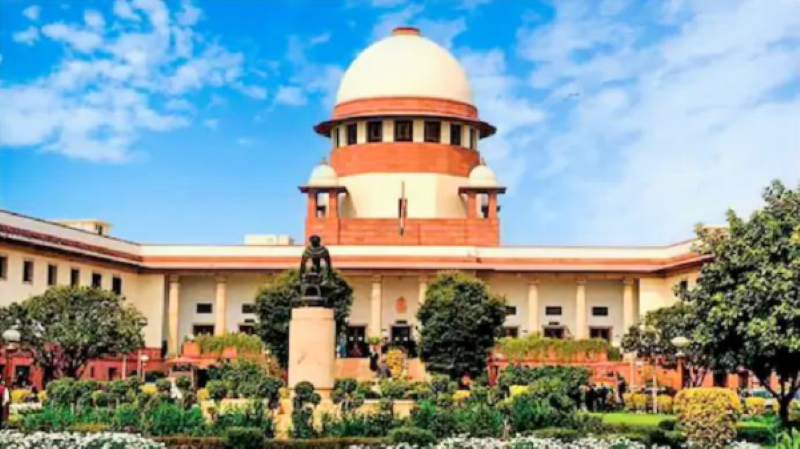
In 1954, a dispute over a monastery in the coastal town of Udupi reached the Supreme Court of India. The state of Madras wanted its commissioner to take over the administration of Shirur Math, a centuries-old Hindu institution.
The math’s leadership resisted, arguing that the Constitution guaranteed religious denominations the right to manage their own affairs in matters of religion. The state countered with what must have seemed like a reasonable proposition: surely, not everything a religious institution does is actually religious. Some of it—the hiring, the money, the logistics—is secular, and secular activities are fair game for regulation.
Seven justices considered this argument. What they produced, in a judgment now cited in virtually every religion case in India, was something nobody had quite bargained for: a new constitutional test that would empower judges to determine which religious practices deserve protection and which do not. They called it the test of “essential religious practices.”
It was, by almost any measure, a catastrophe of interpretation. And its consequences are still unfolding.
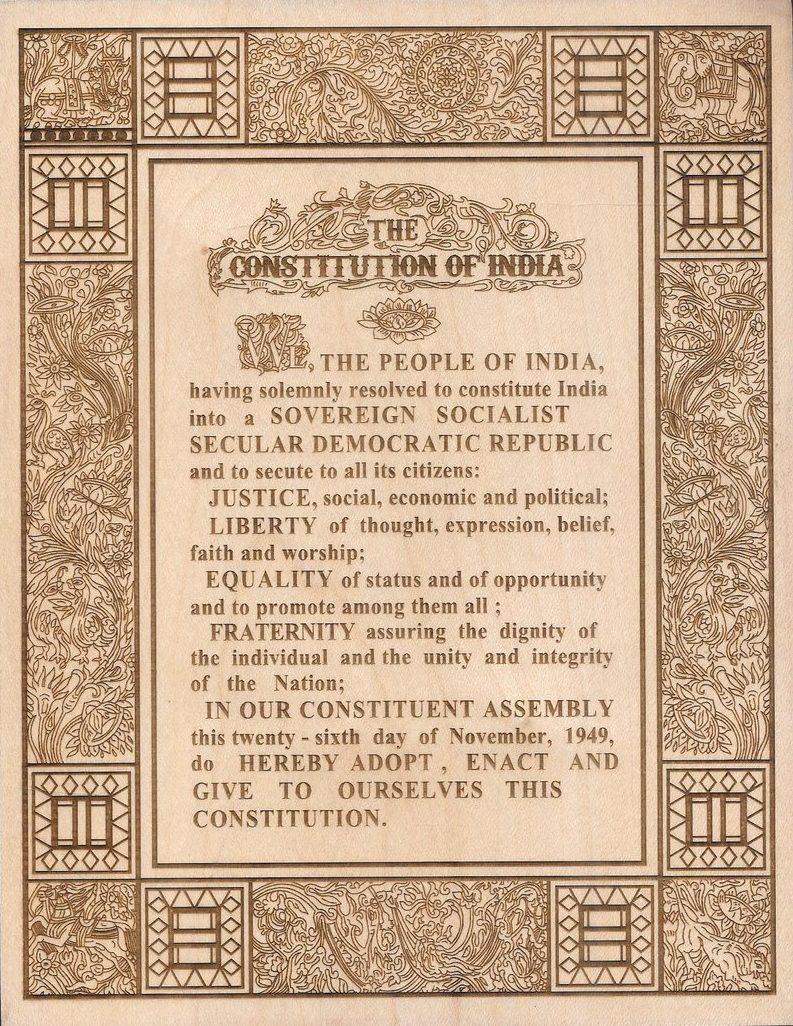
The architecture of religious freedom in the Indian Constitution is, on paper, relatively straightforward. Article 25 guarantees individuals the right to freely profess, practise, and propagate religion—subject to public order, morality, and health.
Article 26 extends similar protections to religious denominations. Article 25(2)(a) carves out an exception: the state can regulate “economic, financial, political, or other secular” activities that may be associated with religious practice.
The framers of the Constitution understood something important about Indian life.
As B.R. Ambedkar told the Constituent Assembly in December 1948, religious conceptions in India “are so vast that they cover every aspect of life, from birth to death.” His proposed solution was to limit the definition of religion so that constitutional protection wouldn’t freeze all social reform.
The protection was meant for practices that were “essentially religious”—practices closer to the religious end of the spectrum, as opposed to the secular activities that might orbit around them.
This distinction—between practices that are essentially religious in character and those that are essentially secular despite being associated with religion—is what the constitutional text actually contemplates. It is a sorting exercise: is this practice more religious than secular, or vice versa?
But in the Shirur Mutt judgment, the Supreme Court performed a quiet sleight of hand. Instead of asking whether a practice was essentially religious in nature, it began asking whether a practice was essential to the religion. The difference sounds subtle but it s not.
The first question asks about the character of an activity. The second asks about its importance within a theological hierarchy—a hierarchy that judges, not practitioners, would now define.
The court did acknowledge the difficulty. “Where is the line to be drawn between what are matters of religion and what are not?” it asked, with admirable candour.
Then it drew the line anyway, declaring that what constitutes the essential part of a religion must be ascertained with reference to the doctrines of that religion itself.
The essentiality test was born, and with it, the implicit claim that courts could read scripture well enough to rank religious practices by importance.
Two days later, the same judge—Justice B.K. Mukherjea—authored the Ratilal Gandhi decision, citing Shirur Mutt as precedent. The doctrine was entrenched before anyone had time to object.
What followed over the next seven decades was an extraordinary expansion of judicial authority into sacred space.
Armed with the essential religious practices test, Indian courts began adjudicating questions that would make most theologians nervous:
• Is the practice of tandava dance essential to the Ananda Marga faith?
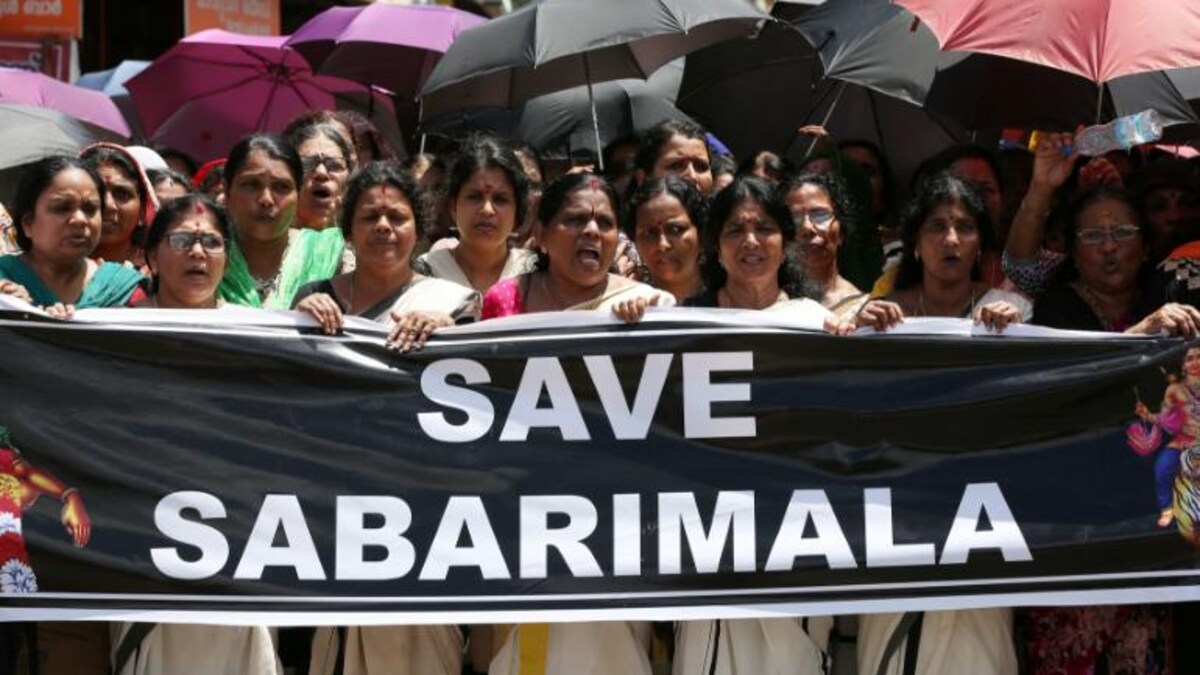
• Is the exclusion of women of menstruating age essential to worship at Sabarimala?
• Is cow slaughter incidental or central to Islamic observance during Eid?
The problem, as critics have pointed out with increasing force, is not just that judges lack theological training. It is that the test itself is structurally incoherent.
When the constitutionality of a religious practice is challenged, courts must first determine whether the practice is religious or secular in nature. If secular, the state can regulate it freely. If religious, the court must then determine whether it is essential to the religion.
If it is not essential, the state can regulate it anyway. Only if a practice clears both hurdles—genuinely religious and essential to the faith—does it receive constitutional protection. And even then, it can be struck down if it offends public order, morality, or health. In practice, this means the entire religious sphere lies open to state regulation.
The legal scholar Faizan Mustafa has argued that the doctrine effectively elevates the judiciary to the status of clergy. Writing at the turn of the millennium, the constitutional scholars Rajeev Dhawan and Fali Nariman offered a more vivid formulation: judges had assumed a theological authority greater than that of any high priest, maulvi, or dharmashastri. Few religious pontiffs, they noted, possess this kind of power.
The court’s preferred method of determining essentiality—examining scriptures and doctrines—compounds the problem. Indian religious life is staggeringly diverse, and much of it is rooted not in canonical texts but in oral traditions, local customs, and practices handed down across generations without anyone writing them down.
A doctrinal approach to essentiality privileges text-heavy, scriptural traditions and implicitly marginalises everything else. It is, in a sense, a test designed for religions that look like Christianity or Islam—faiths organised around a book—rather than for the sprawling, decentralised, often text-free practices that characterise much of Hindu, tribal, and folk religious life.
The scholarly case against the essential religious practices doctrine has grown formidable. Legal academics have attacked it from nearly every angle: it substitutes judicial judgment for religious conscience; it discriminates between practices without constitutional warrant; it rests on a misreading of the constitutional text.
One recent paper argued that the courts have been guilty of making ill-founded observations about the validity of religious practices, turning the constitutional question of “what is essentially religious” into the theological question of “what is essential in religion.”
The paper proposed that courts should instead focus solely on identifying what is secular—regulating only that—and leave the religious domain alone, subject to the narrow exceptions the Constitution already provides. The principle would be “limited state intervention but maximum protection.”
The constitutional lawyer Zaid Deva, writing in the Indian Constitutional Law Review, traced the doctrinal error to its source. The original mandate of Articles 25 and 26 was to protect essential and non-essential religious practices alike. What should have been a test to distinguish “essentially religious” activities from “essentially secular” ones became, through judicial alchemy, a test to rank practices within the religious sphere by their perceived theological importance.
Arpan Banerjee, writing in the HNLU Student Bar Journal, identified another dimension of the problem: the Constitution does not discriminate between religious practices based on their significance. It protects them all. The essential practices test introduces a hierarchy that the constitutional text explicitly declined to create.
And yet, for all its force, this body of criticism stops at a particular threshold. It questions the doctrine. It questions the court’s competence. It proposes alternative legal tests. What it does not question is the assumption beneath all of it: that within every religion, there exists a meaningful distinction between the sacred and the secular—and that this distinction can, in principle, be mapped.
This is where the story takes an unexpected turn. S.N. Balagangadhara, a philosopher of culture who spent four decades at the University of Ghent developing what he calls the “Comparative Science of Cultures,” has advanced a thesis that reframes the entire debate.
The secular-religious divide, he argues, is not a universal feature of human civilisation. It is a product of Christian history—specifically, of the centuries-long struggle between the Church and the Crown, the spiritual and the temporal, that defined European political life from late antiquity through the Reformation.
Within Christianity, the distinction between the sacred and the secular was always theologically loaded. Early Christianity imagined two realms—the spiritual, governed by the Church, and the temporal, governed by earthly rulers.
The relationship between these realms generated endless conflict: Who has authority over marriage? Over education? Over the moral formation of citizens?
The Protestant Reformation sharpened the divide further, insisting that nothing should stand between an individual and God, and pushed religion toward the private sphere.
The Enlightenment thinkers who followed secularised this Protestant story, recasting it in the language of universal political theory. What began as Christian theology became, through repetition and colonial export, the world’s default framework for thinking about the relationship between the state and the sacred.
Balagangadhara’s research traces how this framework universalised itself through two mechanisms. The first is straightforward conversion—the expansion of Christian communities across the globe. The second is subtler and, he argues, more consequential: the generation of secular variants of Christian theology that win adherents without anyone recognising the theology at work.
“De-Christianised Christianity,” he calls it—Christian doctrines that have spread far beyond the community of believers, dressed up in clothes that no longer look recognisably Christian.
The idea that the state must be separated from religion, on this account, is not a neutral discovery of political science. It is a theological doctrine of Protestant Christianity that has been secularised to the point of invisibility.
The implications for Indian constitutional law are profound. If the secular-religious divide is not a universal structural feature of all traditions but a specific product of the Christian intellectual inheritance, then the entire framework of Articles 25 and 26 rests on a borrowed assumption—an assumption that Indian traditions may not share.
The Constitution asks courts to distinguish between religious and secular practices within Hinduism, Sikhism, Jainism, and Buddhism. But these traditions may not contain the kind of internal sacred-secular boundary that the Constitution presupposes. The exercise is not merely difficult. It may be conceptually impossible.
This would explain why, after seven decades of trying, Indian courts have never produced a stable, coherent framework for making the distinction. It is not that the judges are insufficiently skilled. It is that they are searching for a boundary that does not exist—at least not in the form the Constitution imagines.
Balagangadhara’s thesis raises uncomfortable questions about the constitution-making process itself. Were the framers operating within what might fairly be called a colonial consciousness—accepting state neutrality toward religion as a universal political principle, when it was in fact a parochial one?
Did the experience of colonial modernity convince India’s founding generation that the secular-religious divide was a self-evident feature of all civilisations, rather than a specific inheritance of the Christian West?
These are not questions that courts can resolve. They belong to the domain of political philosophy, cultural anthropology, and honest historical reckoning.
But they cast the essential religious practices doctrine in a sharply different light. The doctrine is not merely a flawed legal test that can be repaired or replaced with a better one. It is the downstream consequence of a deeper conceptual error—the assumption that Indian religious life can be parsed through categories borrowed from a very different civilisational experience.
If this diagnosis is correct, the path forward is not simply a matter of the Supreme Court overruling one line of precedent. It demands a more fundamental conversation about the adequacy of the constitutional framework itself. Could a constitutional amendment reconceive the relationship between the state and India’s indigenous traditions? Would it survive judicial review under the basic structure doctrine? Would it fall foul of secularism—a principle that is itself, on Balagangadhara’s account, a secularised Christian theology?
The answers may not arrive soon, or cleanly. A nine-judge bench of the Supreme Court, constituted to reconsider the Sabarimala review, may offer an occasion to revisit the doctrine’s foundations—or it may simply sidestep them. The political incentives to leave it well enough alone are considerable.
But the intellectual case for the essential religious practices doctrine has collapsed. It rests on a misreading of the constitutional text, an impossible demand on judicial competence, a scriptural bias against India’s oral and customary traditions, and—most fundamentally—a borrowed theology that its practitioners do not recognise as theology at all.
The kindest thing the Supreme Court could do is grant the doctrine a quiet, dignified death, before it does any more damage to the traditions it was ostensibly designed to protect.
Here’s to hoping that the Sabarimala review bench engages with this pre-dated obituary of the essential religious practices doctrine, and that its judgment may serve as the official version of it. – Swarajya, 11 April 2026
› Yashowardhan Tiwari is a Program Manager in the Office of the Vice Chancellor at Rishihood University.
› Krithika Jamkhandi is an Advocate practicing in Karnataka High Court.