Two visions of India’s future at the beginning of British rule – Arvind Sharma

Raja Rammohun Roy

Raja Ram Mohan Roy (1772/74-1833) and Thomas Babington Macaulay (1800-1859) are two well-known public intellectuals of their times, both of whom presented a vision of the future of India which, at the time of their writing, had passed under British rule. The visions of both pertained to how this rule was likely to unfold, and to end.

I present below their visions in their own words, as I was struck by the similarity between the two, despite their radically different backgrounds.

Raja Ram Mohan Roy wrote as follows in a letter to an English friend in 1828:

“Supposing that one hundred years hence the Native character become elevated from constant intercourse with Europeans and the acquirement of general and political knowledge as well as of modern arts and sciences, is it possible that they will not have the spirit as well as the inclination to resist effectually any unjust and oppressive measures serving to degrade them in the scale of society? It should not be lost sight of that the position of India is very different from that of Ireland, to any quarter of which an English fleet may suddenly convey a body of troops that may force its way in the requisite direction and succeed in suppressing every effort of a refractory spirit. Were India to share one fourth of the knowledge and energy of that country, she would prove from her remote situation, her riches and her vast population, either useful and profitable as a willing province, an ally of the British Empire, or troublesome and annoying as a determined enemy.” – Ram Mohan Roy, The English Works of Rammohun Roy, edited by Kalidas Nag and Deba Jyoti Burman [Calcutta: Sadharan Brahmo Samaj, 1945-58], vol. 4, p. 103. See also Stephen Haye, editor, Sources of Indian Tradition, 2nd edition [New York: Columbia University Press, 1988], vol. 2, pp. 33-34.

Thomas Babington Macaulay

And Thomas Babington Macaulay declared, in the British Parliament, in the first half of the nineteenth century:

“The destinies of our Indian empire are covered with thick darkness. It is difficult to form any conjecture as to the fate reserved for a state which resembles no other in history, and which forms by itself a separate class of political phenomena. The laws which regulate its growth and its decay are still unknown to us. It may be that the public mind of India may expand under our system till it has outgrown that system; that by good government we may educate our subjects into a capacity for better government; that, having become instructed in European knowledge, they may, in some future age, demand European institutions. Whether such a day will ever come I know not. But never will I attempt to avert or to retard it. Whenever it comes, it will be the proudest day in English history. To have found a great people sunk in the lowest depths of slavery and superstition, to have so ruled them as to have made them desirous and capable of all the privileges of citizens, would indeed be a title to glory all our own. The sceptre may pass away from us. Unforeseen accidents may derange our most profound schemes of policy. Victory may be inconstant to our arms. But there are triumphs which are followed by no reverse. There is an empire exempt from all natural causes of decay. Those triumphs are the pacific triumphs of reason over barbarism; that empire is the imperishable empire of our arts and our morals, our literature and our laws.” – Thomas Babington Macaulay, Essays, Critical and Miscellaneous [Philadelphia: Carey & Hart, 1844], vol. 1, pp. 167-68. See also Arvind Sharma, The Ruler’s Gaze [Noida: Harper Collins Publishers, 2017], pp. 95-96.

What strikes one, on reading these two passages, is the remarkable convergence between these two visions, despite the radically different backgrounds of these two intellectuals.

However, in order to see this convergence, one has to dive deeper into the passages and read between the lines. Both of them are hinting at a future in which the Indians may demand ‘European institutions’. I see this as a call for the possibility, which both of them foresaw, but could not articulate at the time directly, namely, a demand by the Indians to bring an end to British rule. Both of them had gazed at the crystal ball and seen something similar––Indians demanding an end to the status quo. Or to put it more bluntly: an end to British rule. And both were uncannily prescient in foreseeing this. – News18, 15 february 2026

Prof. Arvind Sharma, formerly in the IAS, is the Birks Professor of Comparative Religion at McGill University in Montreal Canada.

The monotheistic interpretation of Hinduism originates in colonial Hindumesia – Yogendra Singh Thakur

Hindu Gods

The over-arching need to find common ground with Abrahamic faiths … has at the very heart of it the belief that Hinduism is somehow inferior to the supremacist, monopolist and violent monotheistic religions. – Yogendra Singh Thakur

Some time ago, the former Lok Sabha Speaker and Union Minister Shivraj Patil claimed that Hinduism has a concept of “jihad” similar to the one in Islam. Patil, highlighting that there is a lot of discussion on jihad in Islam, said that “the concept comes to the fore when despite having the right intentions and doing the right thing, nobody understands or reciprocates, then it is said one can use force.”

“It is not just in Quran, but in Mahabharata also, the part in Gita, Shri Krishna also talks of jihad to Arjun and this thing is not just in Quran or Gita but also in Christianity,” he said adding further fuel to the fire.

Faced with the natural and correct backlash on the statement, Patil attempted to dress the wound with a clarification. But the dressing was evidently soaked in salt as the clarification only worsened the situation. Patil went on to say that just as Islam and Christianity, Hinduism too does not endorse many gods but only one. Such a god has “no colour, no shape and no form,” he said. Basically, the former Union Minister was pushing the monotheistic belief—the existence of one sole formless god—which is the very foundation of Abrahamic faiths. This is the same belief which has been at odds with polytheistic Hinduism for centuries, leading to the many wars initiated and instigated by Muslims and Christians, the ethnic genocides that these two religions have carried out worldwide and in India, and even caused the Partition of the country.

Some days ago, another political leader from the state of Karnataka, made an ill-intentioned remark on Hinduism, calling the word Hindu, “dirty”. The leader went on to remark that we should rise above the boundaries of religion and that “it is not appropriate to glorify anything related to Hinduism.” One wonders why it is always that Hindus and Hinduism are targeted whenever there is a call to rise above religion and religious identity, and that these calls are usually followed or accompanied by abusing only Hinduism and Hindus.

This idea about rising above religion or a notion that religion, when it comes to Hinduism, is something to be insecure about is not limited to the remarks of ignorant and mischievous political leaders alone. The Supreme Court has very famously stated that Hinduism is not a religion but a way of life. What this statement evidently implies is that Hinduism is a cultural belief system with rituals, festivals, and beliefs about life and death, and it does not contain any larger social regulation system, any system of doctrines or practices related to spirituality or worship, that it does not have anything to do with the sacred, holy, absolute, divine, and of special reverence, or that Hindus do not have ant political aspirations as a community. Hence in a scenario when such a system is built or such aspirations are formed, it becomes, by definition, “un-Hindu”: Hindus are merely amoebic, shape-shifting human beings in this conception of the Supreme Court of India.

This is what senior Congress leader Salman Khurshid asserted, when he claimed that Hindutva, which advocates for certain political interests of Hindu society, is similar to Boko Haram and ISIS terrorist outfits. But despite such cruel, false, and provocative comparisons drawn on the basis of “Hinduism is a way of life” notion, many do like to continue advocating it, including our current Prime Minister himself.

It is this notion alone which is at the heart of an advocacy that Hindus are not a people following one religion but a people identifying with a certain culture, irrespective of religious affiliations—the kind of advocacy which the Rashtriya Swayamsevak Sangh (RSS) chief, Dr Mohan Bhagwat, does quite often. Dr Bhagwat often expresses that they “have been telling since 1925 (when the RSS was founded) that everyone living in India is a Hindu. Those who consider India as their ‘matrubhoomi’ (mother land) and want to live with a culture of unity in diversity and make efforts in this direction, irrespective of whatever religion, culture, language and food habit and ideology they follow, are Hindus.” He adds that everyone living inside the boundaries of his imagined 40,000-year-old Akhand Bharat are Hindus.

The over-arching need to find common ground with Abrahamic faiths—by saying that the concept of jihad and a single formless god is in the core of Hinduism or that all people living in India and amidst Indian culture are Hindu—has this understanding at the very heart of it—that Hinduism is somehow inferior to the supremacist, monopolist, violent, and culturally, civilizationally, spiritually, and experientially different faiths. The unreasonable urge to “rise above religion,” or to not appreciate the aspects of Hinduism, is also driven by the same notion of relative inferiority. People possessed with such a notion do not seek to maintain the differences between a Pagan polytheistic faith like Hinduism and Abrahamic monotheistic faiths like Islam and Christianity; or even between the socio-cultural beliefs of Hinduism and the beliefs of Utilitarian globalists.

And why does this particular notion exist in the modern Hindu with such prominence? The answer to this can be traced back to the social reform movements in early modern British India.

The British Raj in the late eighteenth and early nineteenth century was undergoing a change in attitude towards India. One of the reasons for this change in attitude was the French Revolution, which seemed to inspire revolution around the world, particularly posing a threat to the colonial nations under the British, the long standing enemies of the French. In order to prepare themselves ahead of any French attempts or “inspiration” to destabilise the British Empire, the English from the College of Fort William pressed for a unified Hinduism. Henry Thomas Colebrooke (1765-1837) and Lord Wellesley were central to these efforts [1].

Lord Wellesley was brother of the future Duke of Wellington (who later defeated Napoleon at Waterloo in 1815) and spoke many a time against the French Revolution. As David Kopf notes [2], “a root cause of Wellesley’s actions was, by his own admission, his fear and hatred of France and the very real danger of French expansion into India” [3].

And thus from the College of Fort William commenced reformist interpretations of Hinduism, to turn it into a bulwark against possible “social activism, revolutionary tendencies and challenges to the status quo.”

Colebrooke wrote, under a substantial influence of Jesuit missionaries, that Hinduism was originally—and in its true form—a monotheistic religion with only a formless god at its center. It was thought that the diversity of Hinduism posed a threat to the stability of the British Empire in India in the post French Revolution era.

Hindu reformers such as Ram Mohan Roy followed Colebrooke and aggressively propagated the idea that Hinduism at its core is a monotheistic faith with no room for image worship or idolatry. Roy, walking in the footsteps of Colebrooke’s orientalism, divided the Hindu past into a “monotheistic true era” and the “polytheistic false era”. The latter era, according to him, was destroying “the texture of society” [4].

Later, Ram Mohan Roy founded the Brahmo Samaj with the objective of institutionalising these reformist ideas and interpretations of and about Hinduism. In his attempt, Roy incorporated a large portion of Christian theology into Hinduism [5]. The motives of it, as popularly described by scholars, was to oppose Christian Jesuit activities. But as evidenced from his earlier writings, there was definitely a drive of the orientalist belief behind it which saw Hinduism as originally a monotheistic faith.

The implication of this monist/monotheistic view of Hinduism naturally resulted in attempts to essentially dissolve Hinduism as a separate theology and project it as just another branch of global universal theism. Ram Mohan Roy considered “different religions as national embodiment of universal theism and the Brahmo Samaj as a universalist church” [6].

The social reform movement was carried out against what the reformers deemed to be the backward aspects of Hindu culture, practices, and mores. The goal of the movement was a restructuring of Hindu institutions and beliefs. At the core of these reform movements was dislike or even hatred of polytheism, which is essentially the crux and whole of Hinduism. As a remedy for the ills in Hinduism, Ram Mohan Roy advocated a monotheistic Hinduism in which reason guides the adherent to “the Absolute Originator who is the first principle of all religions” [7]. Roy was essentially incorporating the core beliefs of an Abrahamic faith into a polytheistic religion, labelling it a guiding truth.

What was started by Ram Mohan Roy was taken to even greater lengths and to a much bigger audience by Dayananda Saraswati and his Arya Samaj (founded in 1875). Dayananda studied Vedic literature and aggressively propagated the monotheistic interpretation of Hinduism. Multiple gods, to Dayanand, were a Puranic corruption by the priestly class to control and mislead the masses. And all post-Vedic Hindu literature, including the epics Ramayana and Mahabharata, were deemed inauthentic. “Go back to Vedas,” Dayanand proclaimed.

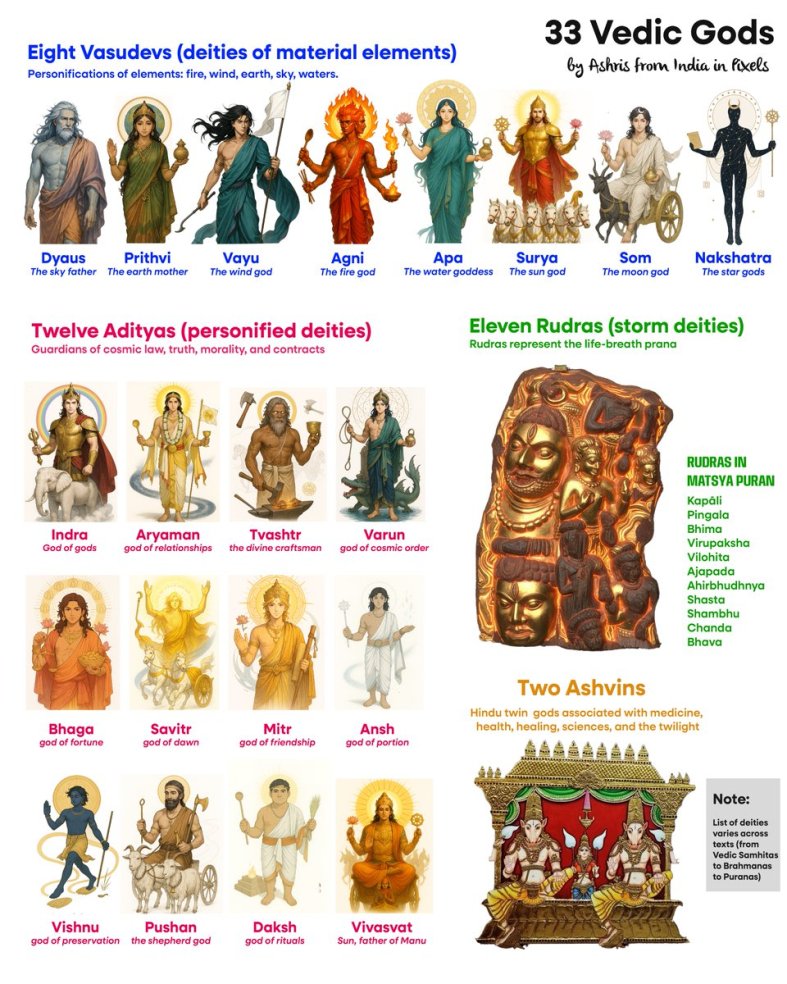
But amidst all this ground-breaking activism lay a highly prejudiced—and possibly Christian-centric—view of the Hindu past. Vedas speak proudly of many gods/deities with hymns dedicated to all of them. It is hard to imagine how this apparent fact could be interpreted into believing that the Vedas propagate monotheism, unless the interpreter has already concluded otherwise. Sure, the Vedas propound grand, cosmic speculation about the origins and nature of the cosmos, with the universe originating “through the evolution of an impersonal force manifested as male and female principles”. So, we find in the Vedas a “tension between visions of the highest reality as an impersonal force, or as a creator god, or as a group of gods with different jobs to do in the universe” [8].

Later the Ramakrishna Mission furthered similar monistic views of Hinduism, terming Hinduism as a religion of all, irrespective of faith or god. The notion of one religion for all, an umbrella theological belief system that could create a universal brotherhood of faiths, was taken to its extreme by the Theosophical Society founded by the Russian spiritualist Madame H.P. Blavatsky and the American Col. H.S. Olcott in 1875. In just nine years the Society had around a hundred branches along with its global centre in Adyar. The Theosophical Society used unconventional and indirect ways to further its ideas of theological universalism and monism. It managed to influence many important personalities who would later go on to change India’s politics via the Indian National Congress. The Society opened many schools and colleges including the Central Hindu College at Banaras.

The British establishment, no doubt, supported, encouraged and institutionalized these reforms, albeit for its own good. With the advent of the eighteenth century, British attitude towards India—which was purely an evangelic utilitarian one—was to somehow do away with the stagnation in Indian society by the work of law and “education” in Christian principles. The zealous goal of these efforts, as Udayon Mishra notes [9], was the creation of a “Europeanised India” with substantial incorporation of Christian ideas and beliefs into Hinduism. Hindu reformer organizations like the Brahmo Samaj, the Arya Samaj, the Theosophical Society, and others played that role exactly, knowingly or unknowingly, playing into the hands of British evangelicals.

This reformist approach of incorporating Christian core beliefs into Hinduism turned out to be a big help to the Christian missionaries and theologians. “By characterising Hinduism as a monistic religion, Christian theologians and apologists were able to criticise the mystical monism of Hinduism, thereby highlighting the moral superiority of Christianity,” Richard King notes. Christian theologians furthered the view that the enormous diversity of Hinduism—in gods, sects, and beliefs—was a sign of inferiority of the Indian stock, thereby making it a responsibility of the British to “educate, civilise, and save” Hindus and India.

“Educating” the Hindus on their so-called monotheistic core was also seen as a step that could help Britishers to club diverse Hindus into a group of single-minded people, easier to govern and less likely to start insurgencies. On the looming prospects of French expansion, an atmosphere of suspicion and anxiety about the stability of British rule led to the furthering of reformed interpretations of Hinduism.

And thus, the anxiety caused by the French Revolution and the British evangelical utilitarian zeal to Christianise India, guided the reformist view of Hinduism. This over-arching need to find common ground with Abrahamic faiths was born out of decades of colonial Hindumesia. – IndiaFacts, 15 December 2022

Footnotes

  1. Dhar, Niranjan, Vedanta and the Bengal Renaissance, Calcutta, Minerva Associates, 1977.
  2. As quoted by King, Richard A. H, Orientalism and Religion: Post-Colonial Theory, India and “The Mystic East”, 1999, pp. 130.
  3. David Kopf, British Orientalism and the Bengal Renaissance: The Dynamics of Indian Modernisation, 1773–1835, Berkeley and Los Angeles, University of California Press, 1969, pp. 46-47.
  4. Ibid., pp. 199-200.
  5. Charles H. Heimsath, Indian Nationalism and Hindu Social Reform, Oxford University Press, 1964.
  6. Dr. Sanjeev Kumar, Socio-religious reform movements in British colonial India, International Journal of History 2020; 2(2): 38-45.
  7. Heitzman and Worden, eds., “India: A Country Study,” 1995.
  8. Bijoy Prasad Das, Rammohan Roy: Progressive Role as a Social Reforms and Movements for Social Justice, International Journal of Humanities and Social Science Invention, Volume 10, Issue 6, pp. 57-59.
  9. Udayon Misra, “Nineteenth Century British Views of India: Crystallisation of Attitudes”, Economic and Political Weekly, vol. 19, no. 4, 1984, pp. 14–21.

Yogendra Singh Thakur is a freelance columnist from Betul, Madhya Pradesh. He is pursuing his studies, majoring in History, Political Science, and Sociology.
Vedic Gods

John Woodroffe: Sanskritist, yoga practitioner and author of books on tantra – Namit Saxena

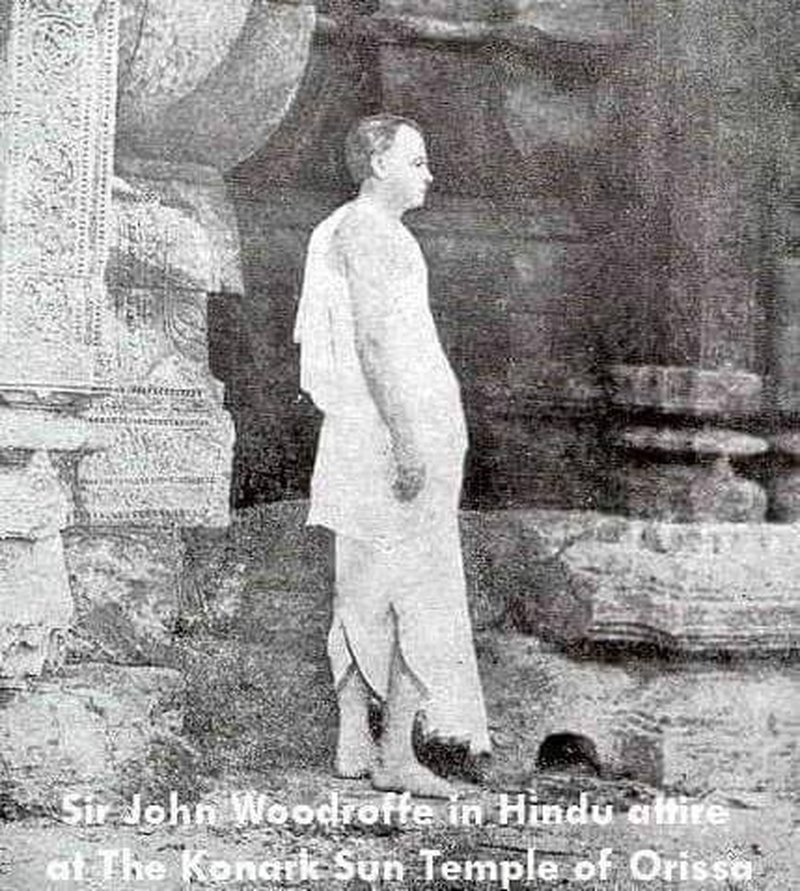
Sir John Woodroffe

Sir John Woodroffe chose the name Arthur Avalon as a pseudonym for his translations of Sanskrit texts and books on tantra. – Namit Saxena

A lot of us seek spiritual transformation, but few take on a journey towards that transformation. Depending upon the journey and the individual, the shastras have given different techniques to march forward on the chosen path. One of the most effective paths for the journey is that of tantra sadhana.

To perfect the techniques of attaining a certain level of spirituality in tantra sadhana, it takes a sadhaka years of practice.

Seldom do we find a foreign national, more so a British sitting judge of a high court, taking on such a journey in India. Sir John George Woodroffe, a former judge of the Calcutta High Court, is one such distinguished sadhaka.

The judge not only learnt Sanskrit, but also practised tantra sadhana, translated Sanskrit texts to English and wrote authoritative voluminous commentaries on various theoretical and practical aspects of kundalini yoga and tantra sadhana.

Born on December 15, 1865, John Woodroffe was educated at Woburn Park School and University College, Oxford, where he graduated in jurisprudence and cleared the Bachelor of Civil Law examinations. In 1890, he moved to India and enrolled as an advocate before the Calcutta High Court. He was soon made a Fellow of the Calcutta University and also appointed a Professor of Law there. He was later appointed Standing Counsel to the Government of India in 1902 and two years later, he was elevated to the High Court Bench at Calcutta.

It is during his stint as a judge of the Calcutta High Court that Woodroffe became interested in tantra sadhana and later delved into translations and writings of multiple texts on the same. How he got initiated into the tantra sadhana is also very interesting. The anecdotal story narrates that one day, Woodroffe was in his court and had to dictate a judgement in a matter which was supposed to be easy to decide with his magisterial calibre. However, when he tried to dictate the judgement, he felt that his mind was very clouded and he was unable to dictate the judgement properly. On enquiry, he found that one of the parties to the litigation had engaged a tantric practitioner who was outside his court, and with his siddhi he had clouded the mind of Woodroffe, making him unable to decide the case. Such a practice falls under the category of abhichaar in the tantra sadhana and is known as stambhan. Woodroffe got the practitioner chased off by his staff, but to no avail. This made Woodroffe curious about abilities of tantra practitioners.

On his engagement with a lot of people into yoga sadhana, Woodroffe got a glimpse of the depth of tantra—more particularly shakta tantra—and kundalini yoga. As he found that most of the texts were written in Sanskrit, he went to great lengths to learn the language so that he himself could read the texts.

Woodroffe chose the name Arthur Avalon as a pseudonym to write books and translations. The book titled Introduction to Tantra Shastra, is to date one of the leading books for beginners on understanding the basics and foundational principles of tantric practice. He further wrote The Serpent Power, The Garland of Letters, Principles of Tantra, Sakti & Sakta, The World as Power and The Great Liberation: Mahanirvana Tantra, amongst other books.

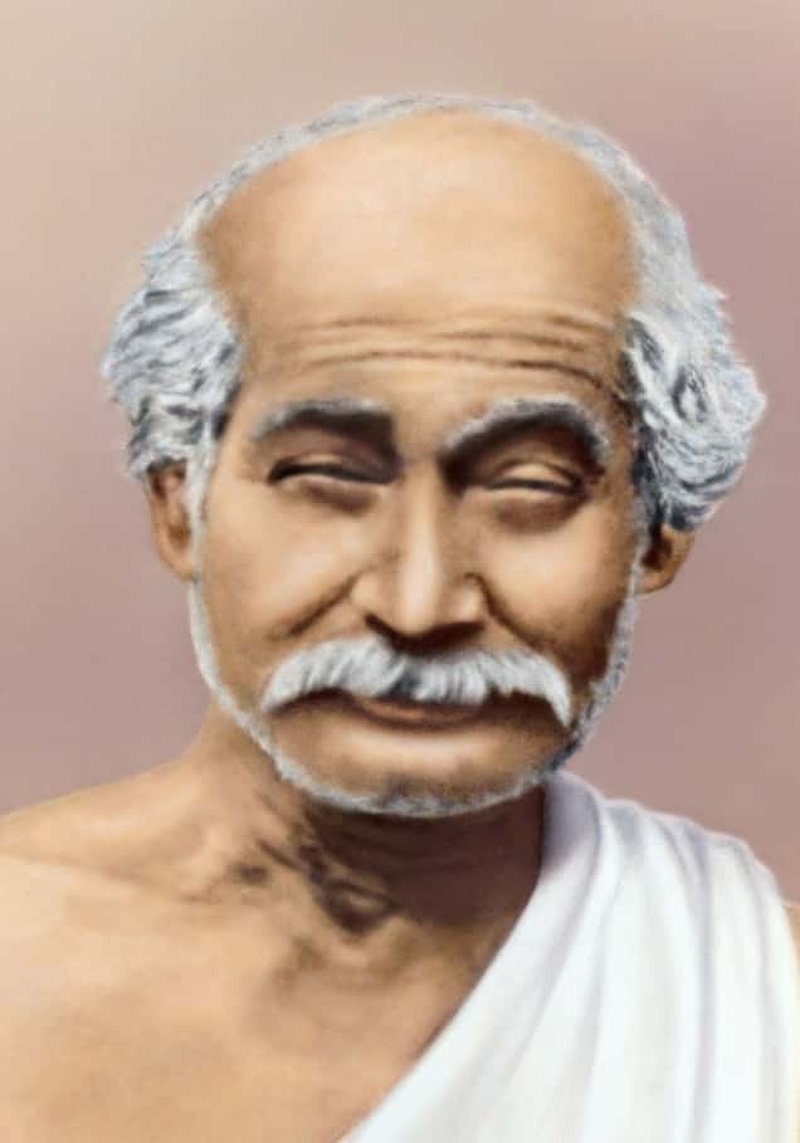
Lahiri Mahasaya

Woodroffe simultaneously also got initiated  into tantric practice and became a notable sadhaka under the aegis of various gurus, including the well known Lahiri Mahashay, who initiated him into the practice of Kriya Yoga.

Tantra sadhana has no discrimination on the basis of sex, gender, caste or creed etc. It rather tells one that male and female is only a matter of percentages, and that anyone can practice tantra sadhana and become a guru. This enabled Woodroffe to enter into the spiritual realm of tantric practise while conducting his duties as a judge of the Calcutta High Court.

Woodroffe’s writings on kundalini yoga and tantra sadhana not only present a simplified version of complex principles, but also introduce an enthusiast to insights on the path she should choose. Till date, the books by Woodroffe under the name Arthur Avalon are the most relied upon texts written in English for tantra sadhana enthusiasts. He remains perhaps the only English judge of a high court to become a leading name in the realm of tantra texts! – Bar and Bench,

› Namit Saxena is an Advocate-on-Record practising at the Supreme Court of India.

Shivacandra Vidyarṇava

See also


Logic behind the perversion of caste – Ram Swarup

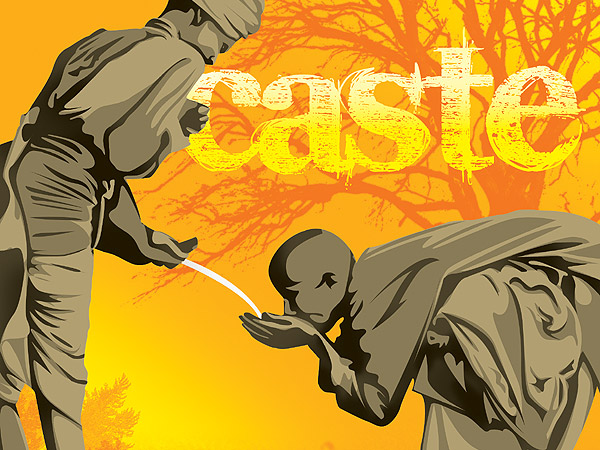
Caste

The self-styled social justice intellectuals and parties do not want an India without castes, they want castes without Dharma. This may be profitable to some in the short run but it is suicidal for all in the long run. – Ram Swarup

Today casteism is rampant. It is a new phenomenon. Old India had castes but no casteism. In its present form, casteism is a construct of colonial period, a product of imperial policies and colonial scholarship. It was strengthened by the breast-beating of our own “reformers”. Today, it has acquired its own momentum and vested interests.

In the old days, the Hindu caste-system was an integrating principle. It provided economic security. One had a vocation as soon as one was born—a dream for those threatened with chronic unemployment. The system combined security with freedom; it provided social space as well as closer identity; here the individual was not atomised and did not become rootless. There was also no dearth of social mobility; whole groups of people rose and fell in the social scale. Rigidity about the old Indian castes is a myth. Ziegenbalg (1682 – 1719) writing on the eve of the British advent saw that at least one-third of the people practised other than their traditional calling and that “official and political functions, such as those of teachers, councillors, governors, priests, poets and even kings were not considered the prerogative of any particular group, but are open to all”.

Nor did India ever have such a plethora of castes as became the order of the day under the British rule. Megasthenes (ca. 300 BCE) gives us seven-fold division of the Hindu society; Hsuan Tsang (ca. 650 CE) the Chinese pilgrim mentions four castes. Alberuni (ca. 973 – 1050 CE) too mentions four main castes and some more groups which did not strictly belong to the caste system.

Even the list of greatly maligned Manu contained no more than 40 mixed castes, all related by blood. Even the Chandals were Brahmins on their father’s side. But under the British, Risley (1851 – 1911) gave us 2,378 main castes, and 43 races! There is no count of sub-castes. Earlier, the 1891 census had already given us 1,150 sub-castes of Chamars alone. To Risley, every caste was also ideally a race and had its own language.

Caste did not strike early European writers as something specially Indian. They knew it in their own countries and saw it that way. J.S. Mill (1806 – 1873) in his Political Economy said that occupational groups in Europe were “almost equivalent to an hereditary distinction of caste”.

To these observers, the word caste did not have the connotation it has today. Gita Dharampal-Frick, an orientalist and linguist [currently at Heidelberg University], tells us that the early European writers on the subject used the older Greek word meri which means “a portion”, “share”, or “contribution”. Sebastian Franck (1499 – ca. 1543) used the German word rott (rotte) meaning a “social group”, or “cluster”. These words suggest that socially and economically speaking they found castes closer to each other than ordo or estates in Europe.

The early writers also saw no Brahmin domination though they found much respect for them. Those like Jurgen Andersen (1669) who described castes in Gujarat found that Vaishyas and not the Brahmins were the most important people there.

They also saw no sanskritisation. One caste was not trying to be another; it was satisfied with being itself. Castes were not trying to imitate the Brahmins to improve social status; they were proud of being what they were. There is a Tamil poem by Kamban (ca. 1180 – 1250) in praise of the plough which says that “even being born a Brahmin does not by far endow one with the same excellence as when one is born into a Vellala family”.

There was sanskritisation though but of a very different kind. People tried to become not Brahmins but brahmavadins. Different castes produced great saints revered by all. Ravidas (ca. 1450) a great saint, says that though of the family of Chamars who still go through Benares removing dead cattle, yet even most revered Brahmins now hold their offspring, namely himself, in great esteem.

With the advent of Islam the Hindu came under great pressure; it faced the problem of survival. When the political power failed castes took over; they became defence shields and provided resistance passive and active. But in the process, the system also acquired undesirable traits like untouchability. Alberuni who came with Mahmud Ghaznavi (971 – 1030) mentions the four castes but no untouchability. He reports that “much, however, as these classes differ from each other, they live together in the same towns and villages, mixed together in the same houses and lodgings”.

Another acquired another’s trait; they became rigid and lost their mobility. All mobility was now downward. H.A. Rose (1867 – 1933), Superintendent of Ethnography, Punjab, from 1901 to 1906, author of A Glossary of Punjab Tribes and Castes, says that during Muslim period, many Rajputs were degraded and they became scheduled castes and scheduled tribes. Many of them still retain Rajput gotra of Parihara and Parimara. Similarly, G. W. Briggs in his The Chamars, tells us that many Chamars still carry names and gotra of Rajput clans like Banaudhiya, Ujjaini, Chandhariya, Sarwariya, Kanaujiya, Chauhan, Chadel, Saksena, Sakarwar; Bhardarauiya, and Bundela, etc. Dr K.S. Lal (1920 – 2002) cites many similar instances in his recent Growth of Scheduled Tribes and Castes in Medieval India.

The same is true of Bhangis. William Crooke (1848 – 1923) of Bengal Civil Service tells us that the “rise of the present Bhangi caste seems, from the names applied to the castes and its subdivisions, to date from the early period of Mohammedan rule”. Old Hindu literature mentions no Bhangis of present function. In traditional Hindu rural society, he was a corn-measurer, a village policeman, a custodian of village boundaries. But scavenging came along with the Muslim and British rule. Their numbers also multiplied. According to 1901 Census, the Bhangis were most numerous in the Punjab and the United Provinces which were the heartland of Muslim domination.

Then came the British who treated all Hindus equally—all as an inferior race—and fuelled their internal differences. They attacked Hinduism but cultivated the caste principle, two sides of the same coin. Hinduism had to be attacked. It gave India the principles of unity and continuity; it was also India’s definition at its deepest. It held together castes as well as the country. Take away Hinduism and the country was easily subdued.

Caste in old India was a cooperative and cultural principle; but it is now being turned into a principle of social conflict. In the old dispensation, castes followed dharma and its restraints; they knew how far they could go. But now a caste is a law unto itself; it knows no self-restraint except the restraint put on it by another class engaged in similar self-aggrandisement. The new self-styled social justice intellectuals and parties do not want an India without castes, they want castes without Dharma. This may be profitable to some in the short run but it is suicidal for all in the long run.

In the old days, castes had leaders who represented the culture of the land, Who were natural leaders of their people and were organic to them. But now a different leadership is coming to the fore: rootless, demagogic and ambitious, which uses caste slogans for self-aggrandisement. – The Indian Express, 13 September 1996

» Ram Swarup (1920–1998) was a Sankhya philosopher, yogi, and colleague of historian Sita Ram Goel. Together they founded the publishing imprint Voice of India in New Delhi, to give Hindu intellectuals a voice when the mainstream media refused to give them any time or space .

Tribes and Castes