Audrey Truschke: In defence of a clickbait historian – Utpal Kumar

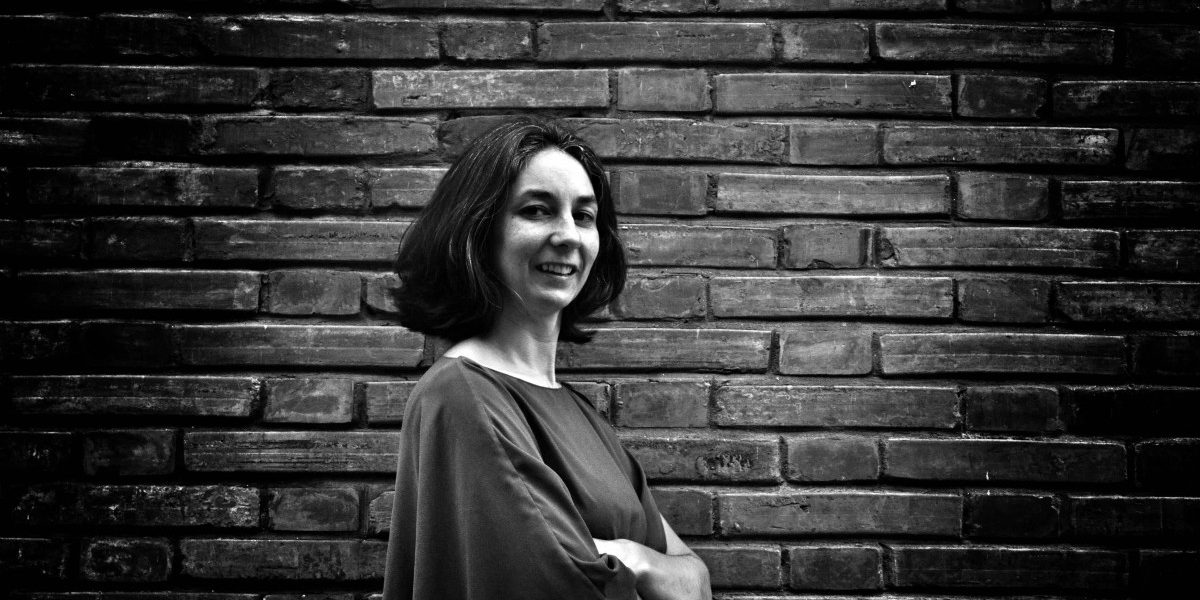
Dr. Audrey Truschke, associate professor in the Department of History at Rutgers University-Newark.

From Aurangzeb to the Pashupati seal, Audrey Truschke has inadvertently exposed the intellectual hollowness of Left-‘liberal’ historiography – Utpal Kumar

At the very outset, I must make a confession. I like Audrey Truschke. Not because I agree with her. Quite the opposite. I like her because few ‘historians’ in recent years have done more to expose the intellectual frailties, ideological biases and selective morality of contemporary Left-‘liberal’ historiography than she has.

In her relentless attempts to sanitise Aurangzeb, delegitimise Hindutva and challenge civilisational narratives associated with Bharat, Truschke has inadvertently become the perfect case study of what happens when ideology trumps scholarship. She represents a new clique of historians that is least interested in understanding the past and is determined to weaponise history to win politico-ideological battles.

Take her defence of Aurangzeb, for instance. One of her favourite arguments is that the Mughal emperor employed a large number of Hindus in his administration. And that’s why he was secular. To bolster her position, she claims that Aurangzeb employed more Hindus than Akbar. The implication is obvious: a ruler who employed Hindus could not have been anti-Hindu.

Empires, after all, do not recruit administrators and generals out of affection. They recruit them out of necessity. Aurangzeb employed Hindus such as Raja Jai Singh and Raja Jaswant Singh because they were militarily capable and politically useful. He needed Hindu warriors to fight Hindu adversaries, most notably the Marathas. And when they were not battling Marathas, these Hindu generals were useful in fighting difficult frontier campaigns such as Afghanistan. This was imperial pragmatism, not secular idealism. Even the British did the same to safeguard the Raj. The absurdity of the argument can be gauged from the fact that if the mere employment of members of a community is sufficient proof of affection for that community, then Hitler could be projected as a benefactor of Jews. After all, the Nazis had scores of Jews serving them.

Yet, this kind of reductionism has become a hallmark of Leftist historiography. More so of the Truschke-ian manual of history writing.

She has repeatedly claimed that Hindutva was inspired by Nazism and that its early proponents, especially those from the RSS, admired Hitler. To support this claim, she cites We, Or Our Nationhood Defined. Truschke claims M.S. Golwalkar wrote this book in 1939, even when the second RSS Sarsanghchalak had expressly said in May 1963 that it was an abridged translation of a Marathi text, Rashtra Mimansa, written by Babarao Savarkar.

Here again, the one thing that’s sacrificed is nuanced history. In 1939, when We, Or Our Nationhood Defined was published, the world did not possess the knowledge of Nazi atrocities that later generations would acquire. The Holocaust, as it is understood today, had not yet entered global consciousness. Ashley Rindsberg’s The Gray Lady Winked documents how influential Western institutions, including The New York Times, frequently downplayed the sinister nature of the Nazi regime. Holocaust-related stories were marginalised, buried deep within newspapers and denied the prominence their significance demanded.

Rindsberg writes, “In the six years of the war, The New York Times printed Holocaust-related stories on its front page exactly six times. Never once in the more than 18,000 Times issues during the war was a Holocaust story a lead article for the day. And, accordingly, never once has The New York Times officially apologised for the way that it covered—or did not cover—the Holocaust.”

If one is to apply contemporary moral standards retrospectively, then many revered Western institutions would stand equally accused. The very institutions Truschke often seeks legitimacy from. But then, by now we know Truschke’s history is bereft of nuances. It is more tabloid, clickbait history.
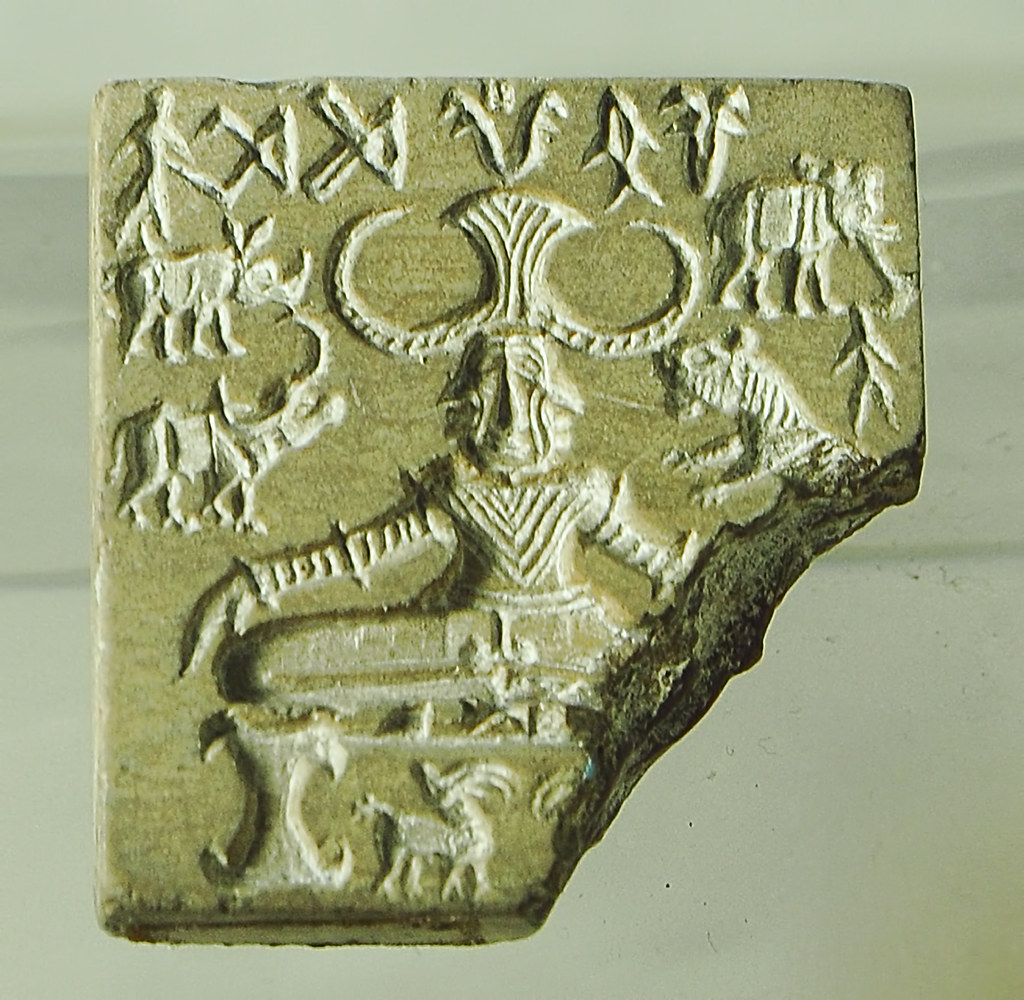
Pashupati Seal

This week, one encountered another manifestation of Truschke-ian history when the professor of South Asian history at Rutgers University claimed that the famous Pashupati seal of the Saraswati (Harappa) civilisation has nothing to do with Pashupati (Shiva). Yes, you heard it right.

The controversy began after the Ministry of Culture shared the image of what is commonly believed (even among “eminent historians” led by Romila Thapar and A.L. Basham) to be the Pashupati seal, describing it as evidence of Bharat’s “civilisational continuity” and an early depiction of Shiva worship. Truschke took to social media, her new tool to push historical boundaries, to say that the figure should not be identified as Shiva and may instead reflect a broader “Lord of Animals” motif seen across ancient Eurasian cultures. The image was “more likely adapted from proto-Elamite iconography”, she wrote on X.

Given the ludicrousness of the claim, it does not even make sense to argue with her that recent scientific and archaeological findings mostly vindicate what Bharat’s long literary tradition has always maintained: that if there was ever any migration, it was westward, not otherwise. (Even the Satapatha Brahmana, which our “eminent historians” pompously quote, talks about an eastward journey within Bharat, and not from outside.) Given her preconceived notion of history, it does not make sense to waste time discussing with her how the supposedly illiterate, barbarian Aryans could compose such refined literature as the Vedas. How else can one react when one realises that she and her ilk are talking about Aryans invading (migrating into) the subcontinent and composing Vedic literature on the banks of the mighty Saraswati around 1500 BC when modern scientific and archaeological findings point to the river drying up around 1900 BC?

Given Truschke’s ideology-dictated state of mind, it defies logic to argue to her that most Harappan sites have been unearthed along the dried course of Saraswati. It would be too much to expect from her to appreciate that language is often the stickiest thing to let go of—even for those who have converted to another religion (look at Iran and Bangladesh); yet, the rich, urbane and sophisticated Harappans not only abandoned their own language but also willingly adopted that of their invaders. It would be even more difficult for her to understand that the words found in the 14th-century BC Mittani records (which our “eminent historians” claim were left when Aryans were still in Central Asia had not yet reached the subcontinent) are closer to the language used in later Vedic literature. Had the Mittanis been part of a pre-Rig Vedic phase, they would have shown similarities with that, rather than later Vedic language.

So, how should one react when Truschke comes up with such historical inventions?

First and foremost, it must be realised that she is an integral part of the larger Leftist historiography that innately believes Bharat is a doomed scenario. Any interpretation strengthening civilisational continuity within the Indic ecosystem must be subjected to scrutiny. Every possibility must be questioned. Every claim must be problematised. Every tradition must be treated with suspicion.

Truschke is a pop version of the “eminent historians”, pursuing clickbait historiography. Her difference from, say, Romila Thapar is tactical. The modus operandi is simple: The likes of Romila Thapar would claim that there existed Pashupati seals and connect them with proto-Shiva, and then, strategically, Truschke—and our own Ruchika Sharma—would be let loose to make such wild Eurasian claims. This makes the otherwise ludicrous Leftist claims of the likes of Thapar suddenly appear moderate. What was previously seen as controversial acquires an aura of reasonableness simply because something even more provocative has entered the conversation.

So, next time a Truschke or a Sharma makes an outrageous claim, don’t get outraged. Clickbait historians thrive on outcry. The best way to belittle the Leftist line of historiography is to come up with a new, longer line of nationalist historiography. Individual efforts have been made in that direction. What’s missing is the institutional approach. Till that’s done, keep exposing the likes of Romila Thapar and keep ignoring the pop distorians such as Truschke.

Bharat still awaits the institutionalisation of its history written from its own perspective. This cannot be Left to “eminent historians”. Far less their tabloid, clickbait versions. – Firstpost, 30 May 2026

›  Utpal Kumar is the author of the book, ‘Eminent Distorians: Twists and Truths in Bharat’s History’. 
Historian Graffiti Cartoon

Audrey Truschke: A demagogue with a megaphone – Sankrant Sanu

Audrey Truschke

Hinduism, as a non-Abrahamic tradition, remains open season in many Western academic spaces. This double standard isn’t just unjust—it’s intellectually dishonest. – Sankrant Sanu

On the streets of New York, Audrey Truschke—then assistant professor of South Asian history at Rutgers University—stood with a megaphone and declared to a crowd: “Prime Minister Narendra Modi and his political party, the BJP, openly adhere to Hindutva.”

She then launched into her historical comparison: “Hindutva came about roughly 100 years ago. … It was inspired in its early days by Nazism. Did I say Nazis? Yeah, I said Nazis.” She emphasised: “I want to be clear that I am talking about real, actual, historical Nazis.”

Then came the most inflammatory claim: “Early Hindutva espousers openly admired Hitler. … They praised Hitler’s treatment of the Jewish people in Germany as a good model for dealing with India’s Muslim minority.”

With this inflammatory rhetoric, she branded India’s ruling BJP and its adherence to Hindutva as Nazi-like—by extension tarring the hundreds of millions of Indians who democratically elected this government, as fascists. It wasn’t scholarship; it was street theatre designed to demonise an entire community. For Hindus across America, this wasn’t just academic discourse—it was public vilification. To rub salt into the wound, the department of history at Rutgers gleefully posted Truschke’s diatribe on their Facebook feed with the endorsement: “That’s what we call public history.”

Now, with her latest book India: 5,000 Years of History on the Subcontinent hitting shelves this month, Truschke’s troubling methodology is reaching an even wider audience. The timing couldn’t be more urgent for examining what happens when academic platforms become weapons of ideological warfare.

The Hitler Analogy: History stripped of context

Truschke’s accusation draws from a controversial passage in We or Our Nationhood Defined, published in March 1939 and attributed to M.S. Golwalkar of the RSS. The reality is more complex than her megaphone moment suggests.

The book wasn’t authored by Golwalkar but paraphrased and translated by him. The historical context matters crucially: in 1939, the full extent of Nazi atrocities against Jews was not yet known. The Holocaust — the systematic extermination of six million Jews—wouldn’t begin until 1941. For many colonised peoples worldwide, including some Indians, Hitler was viewed primarily as an enemy of Britain—their colonial oppressor.

The passage reflects the ideological uncertainty of that era, when colonised peoples worldwide were grappling with competing definitions of nationalism and looking to various models of national reorganisation. More importantly, the RSS has explicitly disavowed this misattributed quote, and decades of subsequent Hindutva writings have evolved far beyond these early formulations. But such nuance doesn’t fit Truschke’s narrative.

Most perversely, her Hitler comparison erases a remarkable historical truth: Hindus have never persecuted Jews. For over two millennia, India has been a haven for Jewish communities—in Kerala, Maharashtra, and Bengal. While Jews faced pogroms in Europe, ghettos in the Middle East, and extermination in Nazi camps, they found safety and dignity in Hindu-majority India.

To draw parallels between Hindutva and Hitler isn’t just inflammatory—it’s a moral inversion of history that anachronistically applies knowledge of the Holocaust to judge a misattributed quote from an earlier period—and then use that nearly 100-year-old aside to define a contemporary political movement. This is not academic history; it is political pamphleteering.

A pattern of distortion

This isn’t an isolated incident. Truschke’s 2017 book Aurangzeb: The Life and Legacy of India’s Most Controversial King whitewashes a well-documented record of temple destruction, discriminatory taxation, and forced conversions. Despite abundant evidence from Aurangzeb’s own firmans (imperial decrees) documenting systematic iconoclasm and forced conversion of Hindus, she claims he “simply left temples alone” and was a protector of Hindus, dismissing documented destructions as merely following “an Indian stance dating back, at least, to the Chalukyas and Pallavas”.

This false equivalency ignores a crucial theological distinction. When Aurangzeb’s contemporary sources praise him for hitting against the “infidels” and spreading Islam through “holy war,” these aren’t political calculations—they’re expressions of religious doctrine. In Islamic theology, idol worship is the gravest sin, making temple destruction an act of piety. Hinduism contains no such mandate. Political motivations aren’t identical to doctrinal imperatives.

Truschke dismisses scholars like Jadunath Sarkar as unreliable while downplaying Persian sources that contradict her narrative. Her approach isn’t history—it’s revisionism designed to obscure inconvenient truths.

Her recently published India: 5,000 Years of History on the Subcontinent promises more of the same: selective citations, interpretive sleights, and wholesale demagoguery. We can expect the 600-page tome to follows the familiar pattern—Hinduism cast as irredeemably oppressive, Islam framed as emancipatory. There’s little interest in balance, complexity, or competing narratives. It is only in the politicised ghetto of “South Asian Studies”, where practicing Hindus have little voice, that an academic would get away with this level of propaganda.

Silencing students, stifling dialogue 

At a recent Georgia Tech event, a Hindu student described confronting Truschke at Princeton about her portrayals. Instead of engaging his respectful questions, she dismissed his concerns as “Hindutva propaganda” and shut him down. The room fell silent—a moment of intimidation, not academic exchange.

Hindu students at Rutgers report similar experiences: hesitating to speak in her classes, fearing they’ll be branded bigots for defending their faith. Many now avoid her courses entirely. In 2021, students petitioned against her teaching Hinduism, citing her claim that the Bhagavad Gita “rationalises mass slaughter” and her suggestion linking Hindus to the January 6 Capitol riot.

Rutgers defended her academic freedom and promised dialogue with the Hindu community. That dialogue never materialised.

The double standard problem

American universities rightfully crack down on antisemitism, Islamophobia, and anti-Black racism. Yet when Hindu students raise similar concerns, institutions often look away, or worse, actively endorse such writing.

Truschke positions herself as the victim of “Hindu nationalist trolls” while sidestepping legitimate concerns from students who feel unsafe in her academic spaces. When she tweeted that Lord Rama was a “misogynistic pig”—later claiming scholarly translation—even Robert Goldman, the scholar she cited, publicly rejected her framing. One wonders how the academy would react if a professor used the same language about a different revered figure, say Prophet Mohammad.

The damage spreads beyond academia. Hindu students report being mocked as “cow piss drinkers”, stereotyped as “Brahmin oppressors”, or casually equated with fascists. When they respond, they’re accused of extremism—silenced not by force, but by fear.

Drawing the line

This isn’t about suppressing legitimate criticism of Hindutva politics. It’s about distinguishing between scholarly critique and rhetorical abuse.

Truschke’s defenders, including Romila Thapar and Sheldon Pollock, argue that attacking Hindutva isn’t Hinduphobia.  In practice, targeting Hindutva often disguises targeting Hindus.

When Truschke abuses Rama, she is attacking an iconic figure in the Hindu tradition, revered across the length and breadth of India. There can be no better evidence of what her target is.

Would such treatment be tolerated toward any other faith community?

The answer is obvious. Hinduism, as a non-Abrahamic tradition, remains open season in many Western academic spaces. This double standard isn’t just unjust—it’s intellectually dishonest.

The path forward

Universities must confront this hypocrisy. If “safe spaces” truly exist for all, Hindu students deserve the same dignity afforded every other community. That means distinguishing between legitimate academic inquiry and inflammatory demagoguery—whether delivered through peer-reviewed journals, street megaphones, or 600-page histories now being peddled as the history of India.

Academic freedom must be balanced with academic responsibility. Scholars have the right to challenge religious and political traditions, but they also have an obligation to maintain scholarly standards, engage in good faith, and create inclusive learning environments.

With Truschke’s latest work now in circulation, the stakes have never been higher. Her interpretive framework isn’t confined to specialised academic journals—it’s shaping how a new generation learns about Indian civilisation.

Until universities address this imbalance, the promise of inclusive academia remains hollow. Hindu Americans will continue raising their voices—not to suppress debate, but to demand what every community deserves: fairness, intellectual honesty, and basic respect.

The megaphone may be loud, but truth has a voice of its own. – News18, 16 June 2025

Sankrant Sanu is an author, entrepenour, and researcher based in Seattle nad Gurgoan.