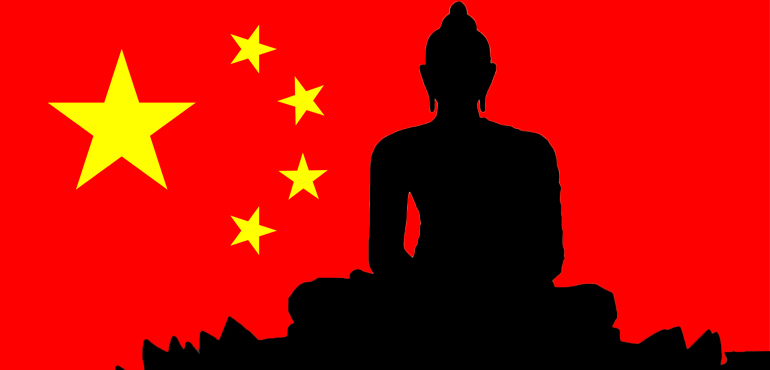
Red China pretends to be the world leader for Buddhism – Claude Arpi

Marxism vs Buddhism

Today, Beijing is using the same old propaganda to propagate another lie: that China is the leading Buddhist power in the world, conveniently forgetting that Tibetan Buddhism comes from Nalanda Mahavihara in Northern India. – Claude Arpi

Every year around the end of March, Beijing’s propaganda clamours that China “emancipated” Tibet and “liberated millions of serfs” after the Dalai Lama escaped to India in 1959 and his government was taken over by the Chinese Communist Party in Lhasa.

This year, China Tibet Online, an official website of the Communist Party of China, in the same vein, titled an article “Lamenting the Most Heinous Crimes Against Humanity”. It explained, “In days of old, the Land of Snows was a living hell; serfs shed blood and tears that soaked their very garments. Stripped of their skin and gouged of their eyes—they possessed no human rights; the cruel regime’s sins ran deep.”

It is not what outsiders—both Westerners and Indians—who visited the Land of Snows reported; on the contrary, the independent observers discovered that the Tibetan people were a happy lot, though there were undeniably differences between the aristocracy, the clergy and the common men.

But today China continues to say, “Democratic reform ushered in a new dawn; a million serfs rose to become the masters of their own destiny”, adding that the Dalai Lama “defected to serve as a foreign lackey—betraying his faith, sowing chaos in Tibet, and spurning the benevolence of the nation.”

The “foreign country” is presumably India, which has always honoured the Tibetan leader as a very special guest.

In fact, an impartial study of the history of modern Tibet shows quite the opposite picture; it is the ordinary men and women who revolted against the Chinese yoke, in particular in March 1959, when the entire population rose against the Chinese occupiers to protect the life of their revered leader and allow him to leave for India.

Today, Beijing is using the same old propaganda to propagate another lie: that China is the leading Buddhist power in the world, conveniently forgetting that Tibetan Buddhism comes from Nalanda Mahavihara in Northern India.

India has started countering this misinformation by, for example, organising the second Global Buddhist Summit at the Bharat Mandapam in New Delhi on January 24 and 25, 2026.

The two-day conference brought together more than 200 delegates, mostly Buddhist leaders, scholars, practitioners and policymakers, to discuss contemporary global challenges facing the planet.

Sinisation of Buddhism

Today Beijing would like the world to believe that Buddhism has for decades been a leading component of Chinese civilisation and that China should take the lead in the propagation of the teachings of the Great Monk, who more than 2,500 years ago wandered in the plains of North India, preaching compassion, mindfulness and interdependent arising.

Paradoxically, Beijing wants to teach Buddhism to Tibet!

In September 2025, a meeting was convened in Lhasa by Wang Junzheng, the secretary of the party committee of the Tibet  Autonomous Region (TAR), to address Communist officials dealing with “religion”.

Is it not surprising that a state supposedly following Karl Marx’s atheist precepts should deal with religion?

Wang insisted on the necessity “to earnestly study and implement General Secretary Xi Jinping’s important instructions on religious work and … systematically promote the Sinicisation of Tibetan Buddhism.”

The objective was to “lay a solid foundation for long-term peace and stability”. This means that to be stable, Tibet needs to be Buddhist, but with Chinese characteristics.

Wang mentioned Xi Jinping’s visit to Tibet in July 2025, during which the president gave “important instructions …to  emphasise Buddhism with the requirements to systematically promote the Sinicisation of China’s religion, strengthen the governance of religious affairs and the rule of law and guide Tibetan Buddhism to adapt to the socialist society.”

In other words, first Marx and then the Buddha.

On November 11, 2025, Wang Junzheng, again presiding over a symposium on religious legislation in Tibet, asked the participants to “solidly promote the construction of the Chinese national community, actively guide Tibetan Buddhism to adapt to the socialist society”.

Preaching Buddhism Outside China

On April 21, Massimo Introvigne wrote on Bitter Winter, a specialised website following development inside China: “Buddhist Friendship in Seoul to Advance Its Religious Policy Agenda”, explaining that a Communist Party of China-controlled delegation “promotes Beijing’s line while regional partners intensify pressure on the Unification Church, Shincheonji, and other groups labelled as cults.”

It cites the case of a delegation from the China Buddhist Association (CBA), led by vice president Zong Xing, who travelled to Seoul from March 30 to April 2 to attend the preparatory meeting for the 26th China-Korea-Japan Buddhist Friendship Exchange Conference.

Bitter Winter observed that Chinese media portrayed this visit as a continuation of the “golden bond” of trilateral Buddhist cooperation, an idea established in 1995 by senior monks from the three countries. Official reports described the gathering as a way to contribute to regional stability and world peace, using the familiar language that defines Chinese religious affairs propaganda.”

The China Buddhist Association (CBA) is not an independent religious group; in December 2022 the United States Commission on International Religious Freedom (USCIRF) noted that the CBA serves “as a tool of the Chinese Communist Party (CCP) to control Buddhism inside China and promote state narratives outside. USCIRF called the association a conduit and endorser of state propaganda”.

The Fate of Those Refusing to Follow the Party

On April 23, Amnesty International appealed to Chinese authorities, seeking information on the fate and whereabouts of a Tibetan religious leader and educator called Choktrul Dorje Ten Rinpoche from Chikdril County in the Golog Tibetan Autonomous Prefecture of Qinghai Province.

Rinpoche is a prominent religious and educational figure in the region; he founded a monastery and a vocational school supporting local Tibetan communities. He has been missing since December 2025. Thereafter, no information about his status, place of detention, or the charges could be obtained, though in January 2026, some individuals monitoring the case received informal indications suggesting that the Tibetan leader was ‘under investigation’.

According to Amnesty International, the prolonged incommunicado detention of religious figures “raises serious concerns under international human rights law. Such conditions, the group emphasised, place detainees at heightened risk of torture and other forms of ill-treatment.”

Take the case of another prominent Tibetan lama, Tulku Hungkar Dorje Rinpoche, who was arrested in Ho Chi Minh City, Vietnam, on March 25, 2025, through a joint operation by Vietnamese police and Chinese agents. Rinpoche died in custody four days later, and despite international concern over transnational human rights violations, nothing came out of the case.

The Lama, aged 56, was a respected Tibetan spiritual leader and head of the Lung Ngon monastery in Amdo (Qinghai province). He had to escape to Vietnam to escape persecution by Chinese authorities. He was arrested in a hotel in Ho Chi Minh City.

Such cases have been happening regularly.

China’s Political Influence

Politically China remains very influential. It managed to get the International Council for the Day of Vesak to endorse an appeal from the Buddhist Association of China to host the 21st UN Day of Vesak Celebrations in China in 2026. The 20th UN Day of Vesak was held in Ho Chi Minh City, Vietnam, from May 6 to 8, 2025, under the theme “Unity and Harmony for Human Dignity”, while the 19th UN Day of Vesak (2024) took place in Bangkok, Thailand, from May 19-20, 2024; the theme was “The Buddhist Way of Building Trust and Solidarity”.

This year it will be held in China. It is not being questioned.

A Positive Development in India

In this context, an extremely interesting development is the revival of Tibetan Buddhism in the Himalayan belt.

A conference on the contribution of Himalayan Buddhism to the spiritual and cultural heritage of India will be held in Leh, Ladakh, on May 3. According to the organisers: “Himalayan Buddhism is a distinct, esoteric form of Mahayana Buddhism practised across the Indian Himalayas as well as in Tibet, Bhutan and Nepal.” Himalayan Buddhism has indelibly shaped and contributed to the spiritual, cultural, and intellectual landscape of Asia by acting as a ‘living repository’ for ancient Indian traditions.”

A concept note added: “Centred on historic, high-altitude monasteries, this heritage features vibrant festivals, monastic education, and artistic traditions that promote peace, compassion, and harmony with nature.”

“A unique way of life that is practised daily” is what makes it different from Buddhism in China, which is mostly synonymous with repression and assimilation; the precepts of the Buddha are not practised in daily life.

The revival of the Buddha Dharma on the northern Indian borders also has a political message to China; where do you see stupas, prayer flags, and Om Mani Padme Hum stones in Tibet? No, only the red flag flies, even on the Potala Palace or in the Tsuglhakhang Central Cathedral in Lhasa. Isn’t it a sign? – Firstpost, 6 May 2026

Claude Arpi is Distinguished Fellow at the Centre of Excellence for Himalayan Studies, Shiv Nadar Institution of Eminence (Delhi), and writes on India, China, Tibet and Indo-French relations.
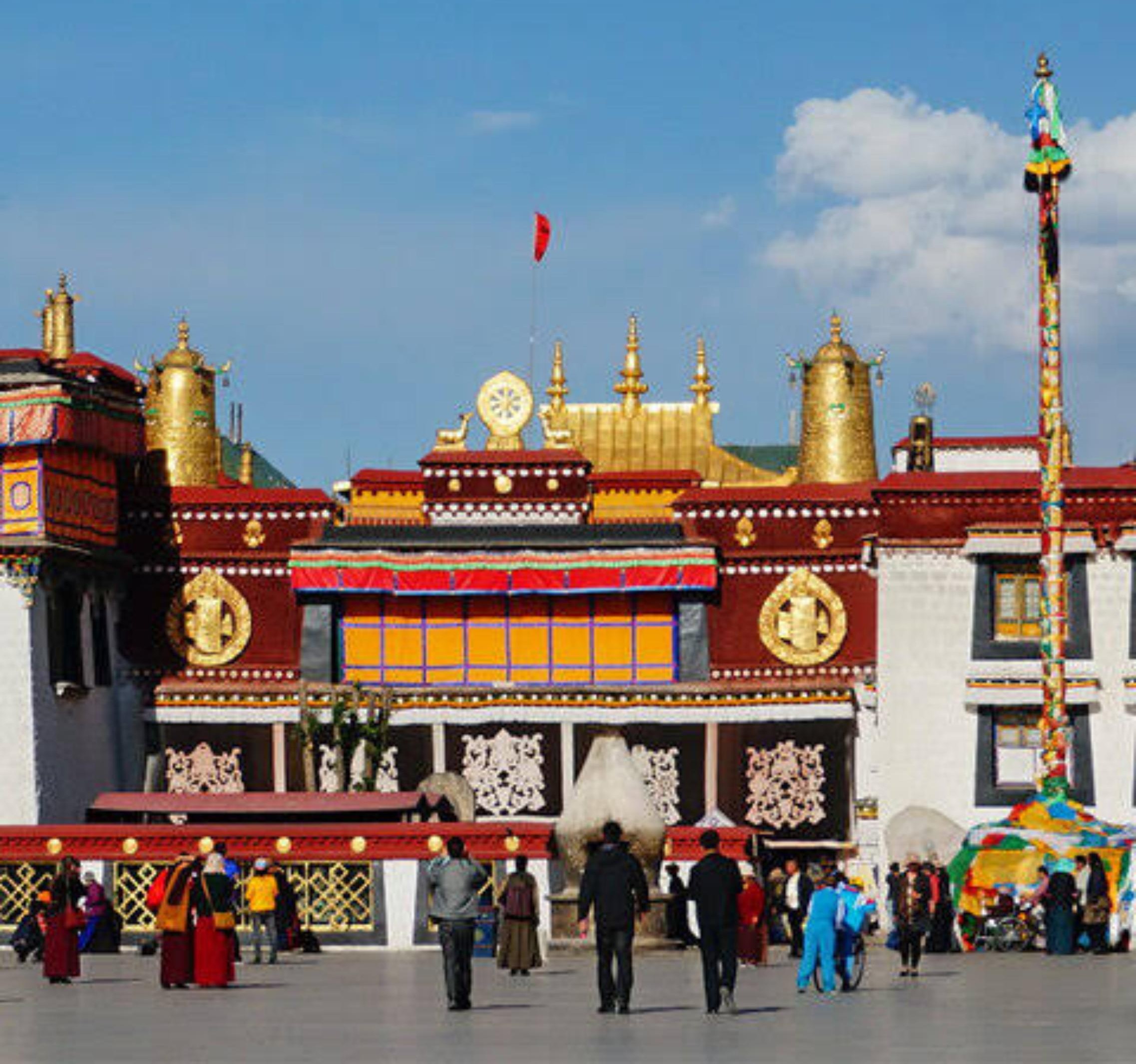
Jokhang Temple in Lhasa with China flag.

Marxism vs Buddhism: The next battlefield in Tibet – Claude Arpi

Karl Marx & Gautama Buddha

China is batting for a Chinese Dalai Lama, something that the current Dalai Lama has ruled out. – Claude Arpi

Strategic analysts have a hard time for the past few years; most of their views and predictions have gone wrong due to the turmoil which has been occurring all around the world. It is particularly true since the beginning of the Russia-Ukraine war, which was supposed to last only for a few days.

New war tactics and weaponry, for example the use of drones, have appeared in a big way. If it does not want to lose coming battles, India does not have much choice, it needs to take a relook at the battlefields. In these circumstances, information warfare takes an increasingly predominant place.

China has always been far ahead of the rest of the world in the field of propaganda and information warfare, which has sustained the totalitarian regime for decades.

Today, however, one of China’s favourite themes is Buddhism.

Beijing would like the world to believe that Buddhism has for centuries been an important component of Chinese civilisation and that China should take the lead in the propagation of the teachings of the Great Monk, who more than 2,500 years ago wandered in the plains of North India, preaching compassion, mindfulness and interdependent arising.

Paradoxically, Beijing wants to teach Buddhism to Tibet. In September 2025, a meeting was convened in Lhasa by Wang Junzheng, the secretary of the party committee of the Tibet Autonomous Region (TAR), to address Communist officials dealing with “religion”.

Is it not surprising that a state which follows Karl Marx’s atheist precepts should deal with religion?

Wang insisted on the necessity “to earnestly study and implement General Secretary Xi Jinping’s important instructions on religious work and … systematically promote the Sinicization of Tibetan Buddhism”. The objective was to “lay a solid foundation for long-term peace and stability”. This means that to be stable, Tibet needs to be Buddhist, but with Chinese characteristics.

Wang mentioned Xi Jinping’s visit to Tibet in July 2025, during which the president gave “important instructions … to emphasise Buddhism with the requirements to systematically promote the Sinicization of China’s religion, strengthen the governance of religious affairs and the rule of law and guide Tibetan Buddhism to adapt to the socialist society”.

In other words, first Marx and then the Buddha.

On November 11, Wang Junzheng, again presiding over a symposium on religious legislation in Tibet, asked the participants to “solidly promote the construction of the Chinese national community, actively guide Tibetan Buddhism to adapt to the socialist society”.

On the occasion of the 30th anniversary of his enthronement, Gyaltsen Norbu, called the “fake” Panchen Lama by Tibetans, mentioned the succession of the 14th Dalai Lama. Norbu said: “The reincarnation of the living Buddha is an internal affair of our country. Historically, the reincarnation of living Buddhas in Tibetan Buddhism in China has always adhered to the principles and traditions of domestic search, and there has never been a precedent for visiting abroad”.

He added: “China’s living Buddha reincarnation system belongs to Chinese monasteries, and its reincarnation management is an integral part of China’s religious affairs management.”

China is batting for a Chinese Dalai Lama, something that the latter has ruled out.

In December 2025, India took the initiative of organising a four-day international conference on the “Cultural and Historical Significance of His Holiness the Sixth Dalai Lama, Gyalwa Tsangyang Gyatso” in Tawang.

The sixth Dalai Lama was born in the 17th century in Tawang, Arunachal Pradesh.

In a post on X about the event on the Sixth Dalai Lama, Arunachal Pradesh chief minister Pema Khandu wrote: “Tawang [has] today become the centre of a global academic dialogue on his cultural, historical and spiritual legacy. He continues to inspire humanity through his timeless teachings, poetry and compassion.”

In another post, he remarked: “The world remembers his poetry, but not the fullness of his teachings and wisdom. It is time that changes.”

Beijing was not amused. It believes that Buddhism belongs to China—and that Tawang too is Chinese!

Pasang Norbu, honorary president of the Tsangyang Gyatso Cultural Research Association in Tibet, issued a statement about what he called the so-called “international conference”; he said that “it represents a blatant provocation to China’s territorial sovereignty and the established norms of international relations … Such actions seriously undermine the efforts of both China and India to resolve territorial disputes and enhance bilateral relations. Ultimately, this is a political farce with ulterior motives.”

Today, China seems to believe that it is the only “owner” of Buddhism.

In this connection, it was a positive move that the second Global Buddhist Summit was convened by the International Buddhist Confederation (IBC), in collaboration with the Union ministry of culture. It took place on January 24 and 25 at the Bharat Mandapam in New Delhi. It was a new occasion to reaffirm that Buddha is a Son of India.

The two-day conference brought together more than 200 delegates and around 800 participants from India and abroad, mostly Buddhist leaders, scholars, practitioners and policymakers, to discuss contemporary global challenges viewed through the message of the Buddha. The theme of the summit was “Collective Wisdom, United Voice, and Mutual Coexistence”.

The main objective was to convey that India stands for world peace in the troubled times that the planet is going through and planetary issues must be faced in the spirit of collaboration, respect for others and mindfulness.

It would be good for China to remember history.

During the 7th century AD, after marrying Princesses Bikruti of Nepal and Wencheng of China, King Songtsen Gampo had converted to Buddhism. A hundred years later, King Trisong Detsen requested Shantarakshita, the abbot of Nalanda University, to teach the Buddha Dharma and ordain the first monks. Shantarakshita immediately faced serious difficulties due to the strong opposition from the indigenous faithful. He convinced the king to invite the tantric guru Padmasambhava, who alone could subdue the forces adverse to Buddhism. The Indian Master succeeded in his endeavour and built the first monastery in Samye, south of Lhasa.

Later, Shantarakshita predicted that a dispute would arise between the Indian and Chinese schools of Buddhism. The dispute was sorted out through the famous Samye Debate. After two years of intense discussions (792-794 CE), the Indian path prevailed and a proclamation was issued stating that the Indian path was thereafter the state religion. Since then, the Nalanda tradition of Indian Buddhism has been the state religion of Tibet.

India must be prepared to tackle the propaganda onslaught from China; it will be tomorrow’s battlefield. – Deccan Chronicle, 18 March 2026

Claude Arpi is Distinguished Fellow at the Centre of Excellence for Himalayan Studies, Shiv Nadar Institution of Eminence (Delhi), and writes on India, China, Tibet and Indo-French relations.

Dalai Lama reads his succession statement in Dharmsala on July 2, 2025.

Statement Affirming the Continuation of the Institution of Dalai Lama – Office of the Dalai Lama – Dharamsala – July 2, 2025 

On 24 September 2011, at a meeting of the heads of Tibetan spiritual traditions, I made a statement to fellow Tibetans in and outside Tibet, followers of Tibetan Buddhism, and those who have a connection with Tibet and Tibetans, regarding whether the institution of the Dalai Lama should continue. I stated, “As far back as 1969, I made clear that concerned people should decide whether the Dalai Lama’s reincarnations should continue in the future.”

I also said, “When I am about ninety I will consult the high Lamas of the Tibetan Buddhist traditions, the Tibetan public, and other concerned people who follow Tibetan Buddhism, to re-evaluate whether or not the institution of the Dalai Lama should continue.”

Although I have had no public discussions on this issue, over the last 14 years leaders of Tibet’s spiritual traditions, members of the Tibetan Parliament in Exile, participants in a Special General Body Meeting, members of the Central Tibetan Administration, NGOs, Buddhists from the Himalayan region, Mongolia, Buddhist republics of the Russian Federation and Buddhists in Asia including mainland China, have written to me with reasons, earnestly requesting that the institution of the Dalai Lama continue. In particular, I have received messages through various channels from Tibetans in Tibet making the same appeal. In accordance with all these requests, I am affirming that the institution of the Dalai Lama will continue.

The process by which a future Dalai Lama is to be recognized has been clearly established in the 24 September 2011 statement which states that responsibility for doing so will rest exclusively with members of the Gaden Phodrang Trust, the Office of His Holiness the Dalai Lama. They should consult the various heads of the Tibetan Buddhist traditions and the reliable oath-bound Dharma Protectors who are linked inseparably to the lineage of the Dalai Lamas. They should accordingly carry out the procedures of search and recognition in accordance with past tradition.

I hereby reiterate that the Gaden Phodrang Trust has sole authority to recognize the future reincarnation; no one else has any such authority to interfere in this matter.

Dalai Lama

Dharamshala
21 May 2025

(Translated from the original Tibetan)

Gaden Phodrang Foundation of the Dalai Lama Logo

Nehru & Patel: Serious differences over China’s invasion of Tibet – Claude Arpi

Sardar Patel

Senior Congress leaders, led by Patel, violently opposed Nehru’s suicidal policy of appeasement with China, which led India to lose a peaceful border. – Claude Arpi

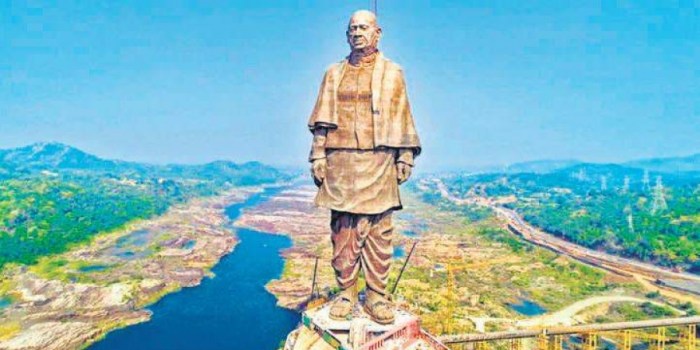
On October 31, the world’s tallest statue, the Statue of Unity dedicated to Sardar Vallabhbhai Patel, was unveiled by Prime Minister Narendra Modi. The work on the 182-metre tall statue has been completed after round the clock work by 3,400 labourers and 250 engineers at Sadhu Bet island on Narmada river in Gujarat. Sadhu Bet, located some 3.5 km away from the Narmada Dam, is linked by a 250-metre-long long bridge.

Unfortunately, for several reasons, scarce scholarly research has been done on the internal history of the Congress; the main cause is probably that a section of the party would prefer to keep history under wraps. Take the acute differences of opinion between Sardar Patel, the deputy prime minister, and “Panditji”, as Nehru was then called by Congressmen. In the last weeks of Patel’s life (he passed away on December 15, 1950), there was a deep split between the two leaders, leading to unilateral decisions for the PM, for which India had to pay the heaviest price.

The most serious cause of discord was the invasion of Tibet by the Chinese “Liberation Army” in October 1950. In the course of recent researches in Indian archives, I discovered several new facts. Not only did several senior Congress leaders, led by Patel, violently oppose Nehru’s suicidal policy, but many senior bureaucrats too did not agree with the Prime Minister’s decisions and objected to his policy of appeasement with China, which led India to lose a peaceful border.

On November 11, 1950, the deputy prime minister of India addressed a meeting organised by the Central Aryan Association to commemorate the 67th death anniversary of Swami Dayanand Saraswati. It was to be his last speech. What did he say? The Sardar spoke of the potential dangers arising from what was happening in Tibet and Nepal, and he exhorted his countrymen: “It was incumbent on the people to rise above party squabbles and unitedly defend their newly won freedom.” He cited the example of Gandhi and Swami Dayanand.

Sardar Patel then criticised the Chinese intervention in Tibet; he asserted that to use the “sword” against the traditionally peace-loving Tibetan people was unjustified: “No other country in the world was as peace-loving as Tibet. India did not believe, therefore, that the Chinese government would actually use force in settling the Tibetan question.” He observed that the Chinese government did not listen to India’s advice to settle the Tibetan issue peacefully: “They marched their armies into Tibet and explained this action by talking of foreign interests intriguing in Tibet against China.” The deputy prime minster added that this fear was unfounded; no outsider was interested in Tibet. The Sardar continued by saying that “nobody could say what the outcome of Chinese action would be. But the use of force ultimately created more fear and tension. It was possible that when a country got drunk with its own military strength and power, it did not think calmly over all issues.” He strongly asserted that the use of arms was wrong: “In the present state of the world, such events might easily touch off a new world war, which would mean disaster for mankind.”

Did he know that it was his last message? “Do not let cowardice cripple you. Do not run away from danger. The three year-old freedom of the country has to be fully protected. India today is surrounded by all sorts of dangers and it is for the people today to remember the teachings of the two great saints and face fearlessly all dangers.”

The deputy prime minister concluded: “In this Kalyug we shall return ahimsa for ahimsa. But if anybody resorted to force against us we shall meet it with force.” He ended his speech citing Swami Dayananda: “People should also remember that Swamiji did not get a foreign education. He was the product of Indian culture. Although it was true that they in India had to borrow whatever was good and useful from other countries, it was right and proper that Indian culture was accorded its due place.” Who is ready to listen to this, even today?

Days earlier, Patel had written a “prophetic” letter to Nehru, detailing the implications for India of Tibet’s invasion. In fact, Patel used a draft done by Sir Girja Shankar Bajpai, the secretary-general of the Ministry of External Affairs and Commonwealth Relations. However, Nehru decided to ignore Patel’s letter.

Witnessing the nefarious influence of K.M. Panikkar, the Indian ambassador to China, who ceaselessly defended China’s interests, Bajpai, the most seasoned Indian diplomat, had lost his cool. On October 31, in an internal note, he detailed the sequence of events which followed Tibet’s invasion and the role of Panikkar, whose attitude was compared to Sir Neville Chamberlain’s towards Hitler.

Bajpai’s anger demonstrates the frustration of many senior officers; the account starts on July 15, when the governor of Assam informed Delhi that, according to the information received by the local intelligence bureau, Chinese troops, “in unknown strength, had been moving towards Tibet from three directions.” Not only was Panikkar unable to get any confirmation, but he virtually justified Beijing’s military action by writing: “In view of frustration in regard to Formosa, the Tibetan move was not unlikely.” During the next three months, the Indian ambassador would systematically take the Chinese side.

After receiving Bajpai’s note, Patel wrote back: “I need hardly say that I have read it with a great deal of interest and profit to myself and it has resulted in a much better understanding of the points at issue and general, though serious, nature of the problem. The Chinese advance into Tibet upsets all our security calculations. … I entirely agree with you that a reconsideration of our military position and a redisposition of our forces are inescapable.”

Some more details of the seriousness of the situation filters through Inside Story of Sardar Patel: The Diary of Maniben Patel, the daughter of the Sardar. In an entry on November 2, 1950, Maniben wrote: “Rajaji and Jawaharlal had a heated altercation about the Tibet policy. Rajaji does not at all appreciate this policy. Rajaji very unhappy—Bapu (Patel) did not speak at all.”

Later in the afternoon, “Munshi complained about Tibet policy. The question concerns the whole nation—said he had written a personal letter to Panditji on Tibet.”

Later, Patel told K.M. Munshi: “Rajaji, you (Munshi), I (Patel), Baldev Singh, (C.D.) Deshmukh, Jagjivan Ram and even Sri Prakash are on one side, while Gopalaswami, Rafi, Maulana (Azad) are on his side.” There was a vertical split in the Cabinet; and it was not only about Tibet. The situation would deteriorate further during the following weeks.

On December 12, Patel was divested on his portfolios. Nehru wrote: “In view of Sardar Vallabhbhai Patel’s ill-health it is absolutely necessary that he should have complete rest and freedom from worry, so as to be able to recuperate as rapidly as possible. … No work should be sent to him and no references made to him in regard to the work of these ministries.”

Gopalaswami Ayyangar, from the “other side”, was allotted the Ministry of States and Nehru kept the Ministry of Home. The Sardar was only informed after the changes were made. He was a dejected man. Three days later he passed away. – Deccan Chronicle, 8 November 2018

» Claude Arpi is a French-born author, journalist, historian and tibetologist. He is the director of the Pavilion of Tibetan Culture at Auroville, Tamil Nadu.

Patel & Nehru