3 – Babur’s Sultanate: Parasite on an affluent civilisation? – Aabhas Maldahiyar

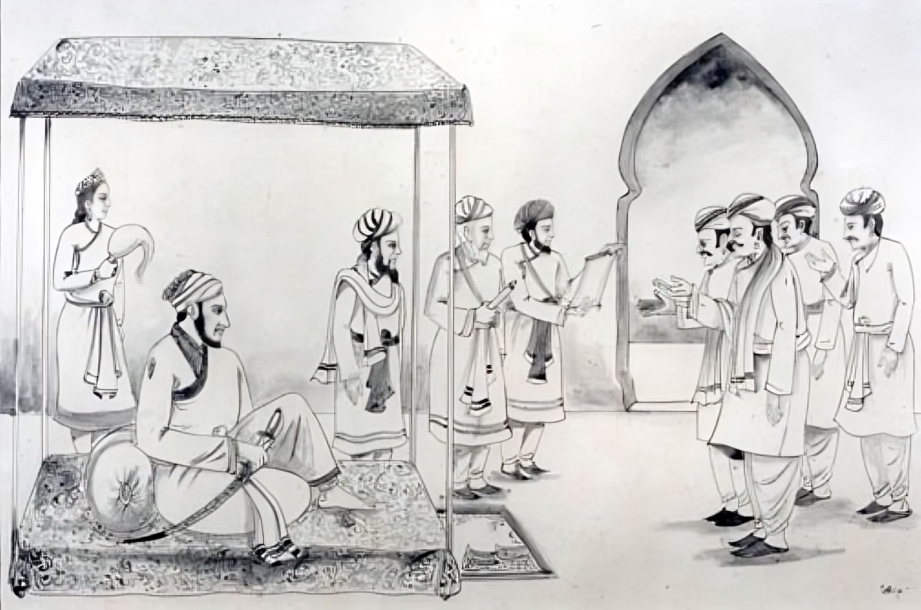
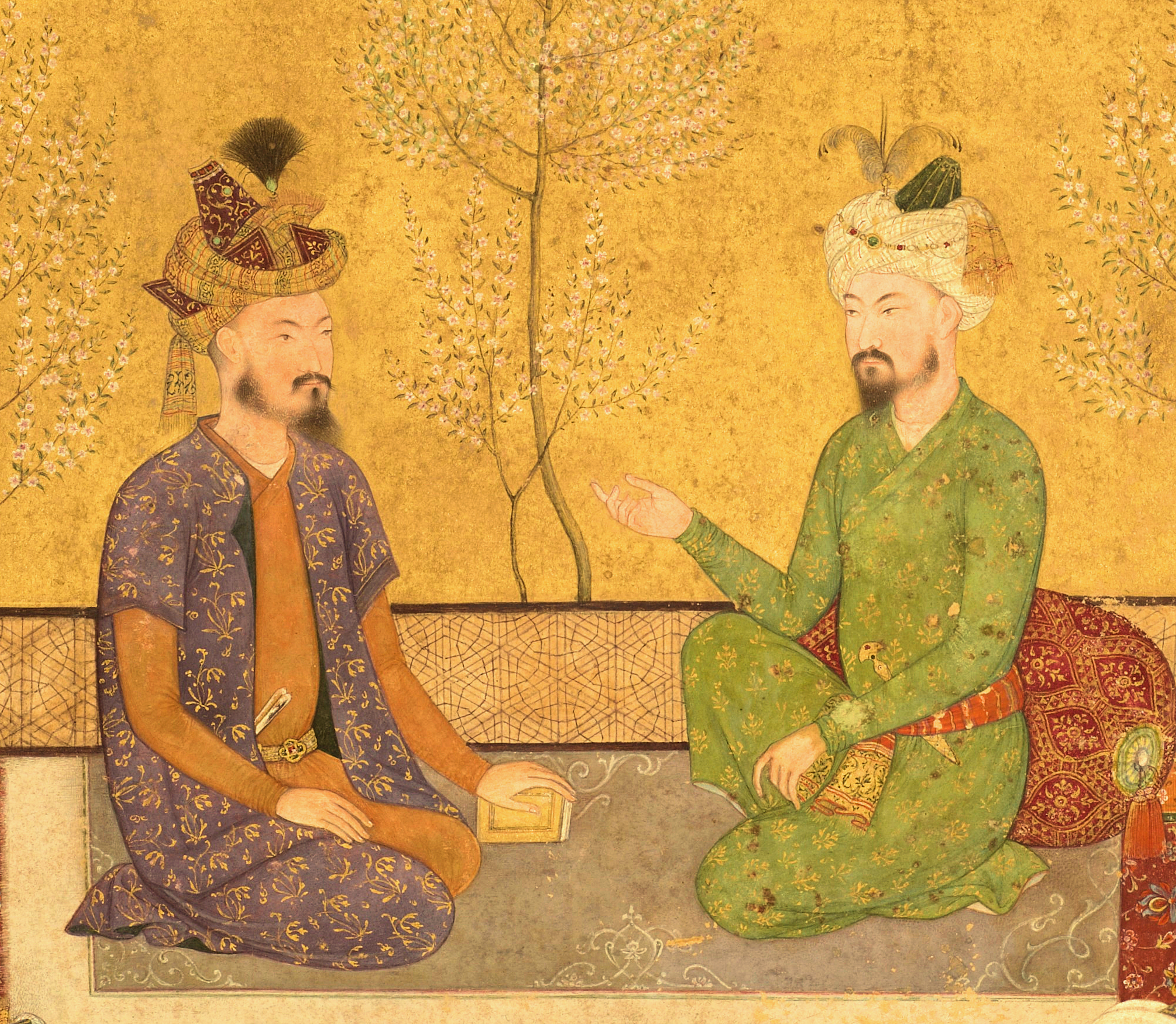
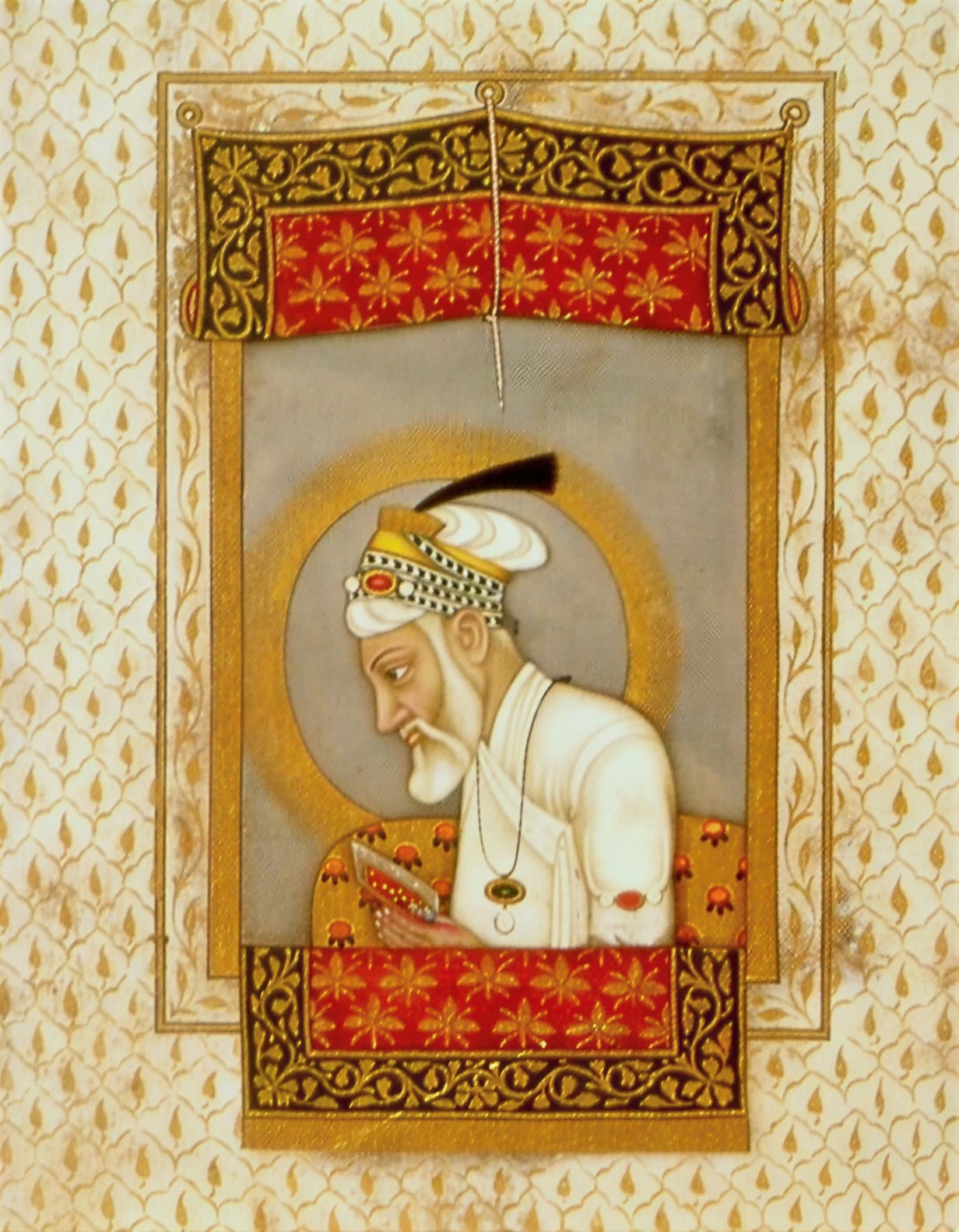
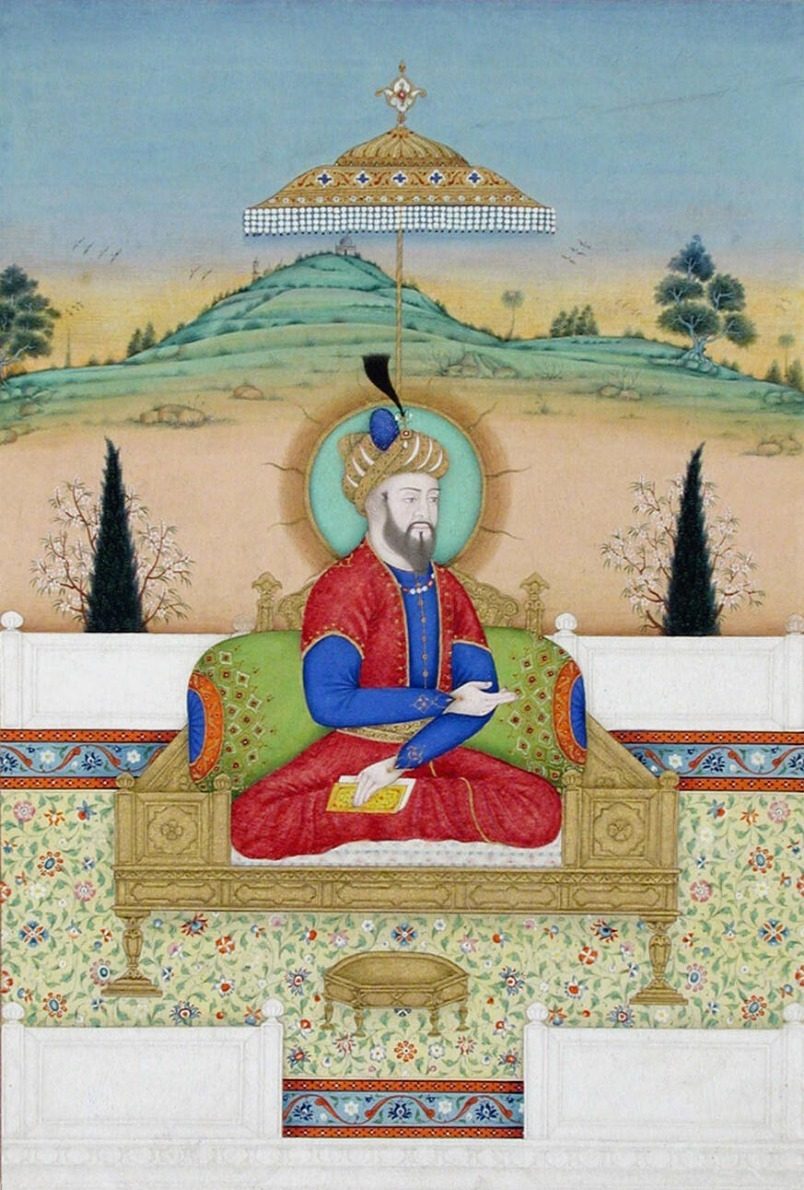
Babar enthroned.

When Babur established Timurid rule in Hindustan, the country already commanded about 24.4% of the world’s GDP, second only to China. Hindustan was not made rich by the Timurids. It was already rich when they arrived. – Aabhas Maldahiyar

Imagine a civilisation so wealthy that merchants crossed oceans to reach its shores, so advanced that students travelled thousands of miles to study in its universities, and so productive that its goods filled markets from East Africa to Southeast Asia. That civilisation was Bharat.

Long before Oxford came into existence, Nalanda and Vikramashila were attracting scholars from across Asia. Indian merchant guilds connected distant markets through sophisticated trade networks. Indian textiles clothed the world. Indian steel was prized across continents. Indian mathematicians and astronomers laid intellectual foundations that transformed human civilisation. At a time when large parts of Europe and West Asia were bleeding through endless wars fought in the name of God, Bharat stood as a centre of learning, production, and prosperity.

The ingredients for scientific advancement and even industrialisation already existed. We possessed abundant resources, thriving commerce, skilled artisans, and one of the world’s largest reservoirs of human capital. Yet a troubling question remains: how did such a civilisation eventually become one of the poorest regions on earth?

As we mark 500 years since Babur’s invasion, it is worth revisiting the economic legacy of the dynasty commonly and incorrectly called the Mughals, though they identified themselves as the Timurid Grkniyn. We are repeatedly told that India accounted for nearly one-fourth of the world’s GDP under their rule, as though this statistic alone proves prosperity.

But does a large share of global GDP automatically mean that ordinary people were flourishing? More importantly, was India’s GDP share not already extraordinary before the Timurids set foot on its soil?

The answer lies in the very source most often cited to glorify the Timurid era: British economist Angus Maddison. Yet Maddison’s own estimates undermine the popular narrative. According to his calculations, India possessed the world’s largest share of GDP until around AD 1000 and, at its peak, accounted for nearly one-third of global output. When Babur established Timurid rule in Hindustan, the country already commanded about 24.4% of the world’s GDP, second only to China. Hindustan was not made rich by the Timurids. It was already rich when they arrived.

What happened thereafter is even more revealing. By AD 1600, during Akbar’s reign, China’s lead had widened significantly. The claim that the Timurids created India’s prosperity struggles against the very evidence invoked to support it.

More crucially, GDP measures the size of an economy, not the wellbeing of its people. Maddison’s data shows that per capita GDP growth between AD 1500 and 1820 was negative. The empire remained wealthy, but its people did not become wealthier. The imperial treasury overflowed while large sections of society saw little improvement in their lives.
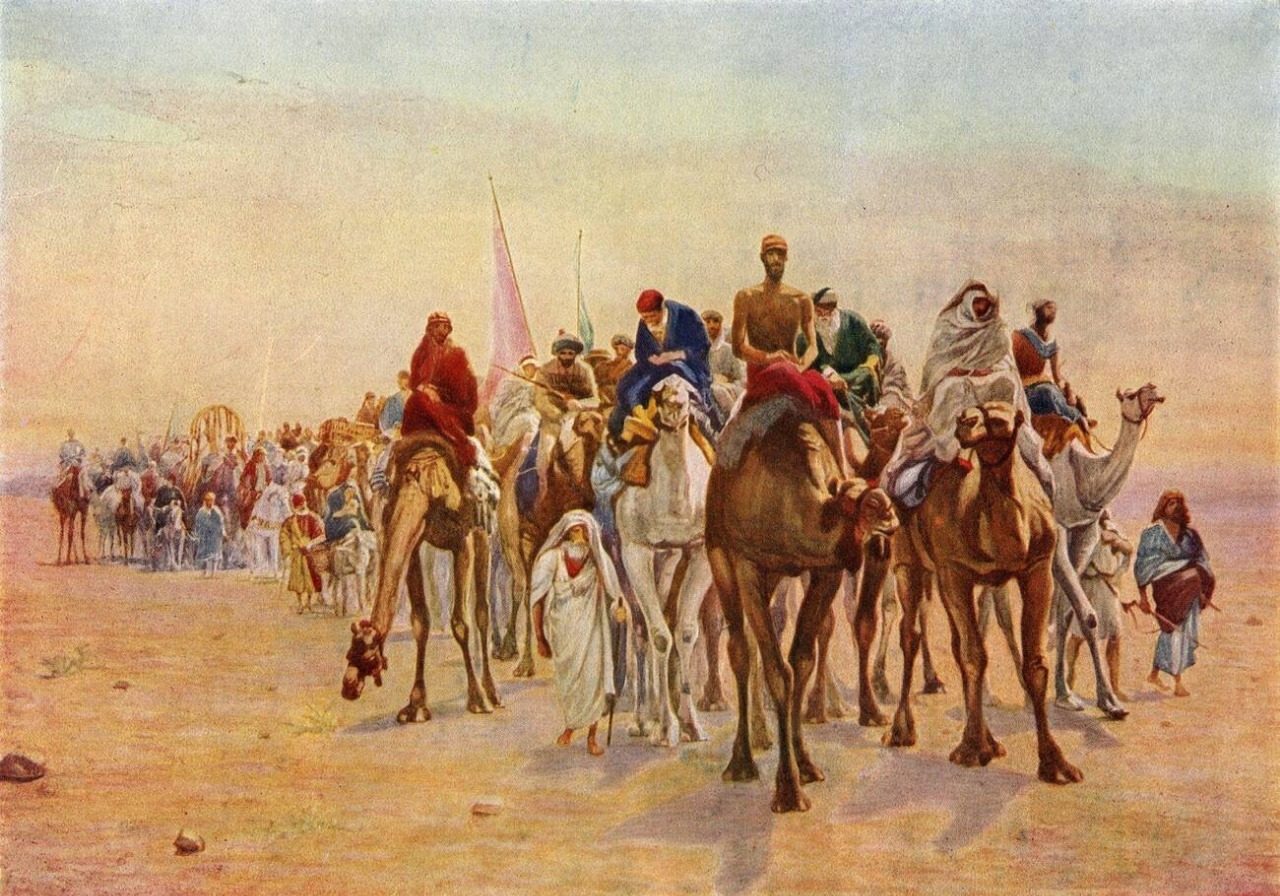
Haj caravans going to Mecca.

Contemporary travellers and court chronicles reinforce this picture. In the Baburnama, Babur records dispatching immense quantities of wealth after Panipat to Samarkand, Khurasan, Kashghar, Mecca, Medina, and Iraq. His successors continued the practice. After Akbar’s conquest of Gujarat in 1573 gave him access to Surat, enormous sums from Indian revenues were channelled into Hajj pilgrimages, gifts to Mecca and Medina, and projects designed to enhance Timurid prestige across the Islamic world.

This was not merely an expenditure. It was a sustained outward transfer of wealth from one of the richest lands on earth. The celebrated GDP figures tell only part of the story. To understand the reality of Timurid rule, one must ask a far more important question: who created the wealth, where did it go, and who ultimately benefited from it? One imperial proclamation issued during Akbar’s reign declared:

The travelling expenses of anybody who might intend to perform the pilgrimage to the Sacred Places should be paid.

The scale of wealth flowing out of Hindustan under Timurid patronage becomes stark when one examines the Hajj caravans. According to Dutch merchant-commander Wollebrant Geleynssen, in AD 1576 a royal caravan left Agra carrying six lakh rupees for Mecca. To understand this magnitude, a barber in AD 1637 earned roughly half a rupee a day. That single donation was equivalent to nearly 1.2 million days of a barber’s labour.

Nor was this an isolated gesture. The very next year, another caravan carried five lakh rupees, along with an additional one lakh rupees for the Sharif of Mecca. Contemporary accounts record that people from across the Islamic world flocked to Mecca hoping to receive a share of these riches drawn from Indian revenues.
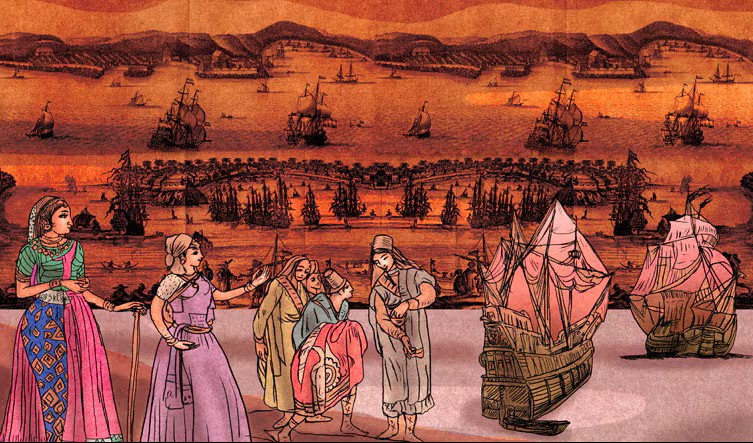
Moghul ships moored in Surat.

Behind this generosity lay political ambition. Akbar sought more than prestige. He aspired to become the foremost ruler—caliph—of Islam. In 1579, he persuaded the ulema to recognise his supreme religious authority, adopted the title Padshah-i-Islam, and even began leading Friday prayers in imitation of the Abbasid Caliphs. When these ambitions met resistance, he founded Din-i-Ilahi in 1582. The objective remained the same: Indian wealth was increasingly spent acquiring religious legitimacy and influence far beyond India’s borders.

After Akbar, Jahangir carried forward the same tradition. In his Tuzuk-e-Jahangiri, he records allocating two lakh rupees for the sponsorship of the Hajj:

During the reign of my father, the ministers of religion and students of law and literature, to the number of two and three thousand, in the principal cities of the empire, were already allowed pensions from the state; and to these, in conformity with the regulations established by my father, I directed Miran Sadr Jahan one of the noblest among the Seyeds of Herat, to allot a subsistence corresponding with their situation; and this is not only to the subjects of my own realms, but to foreigners—to natives of Persia, Roum, Bokhara, and Azerbaijan, with strict charge that this class of men should not be permitted either want or inconvenience of any type.

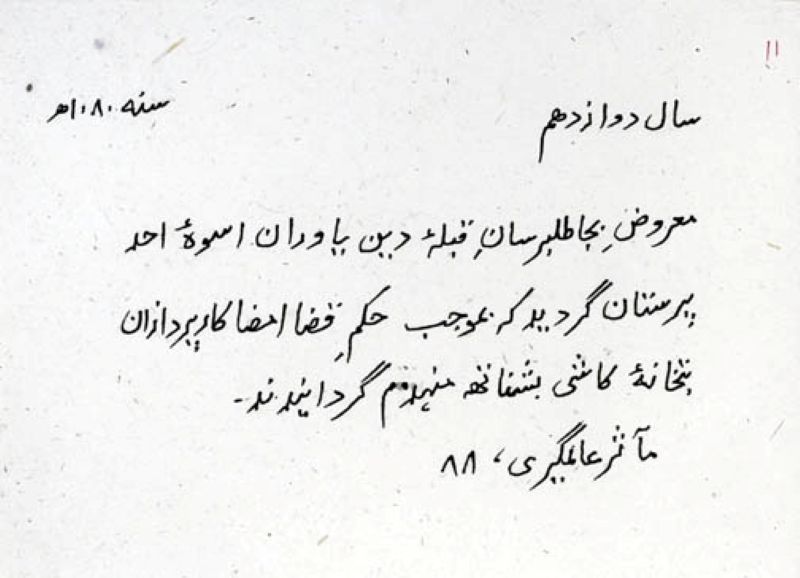
Despite his reputation for religious moderation, Jahangir also continued the transfer of Indian wealth to Mecca. He gifted an amber candlestick adorned with gold, gems, and diamonds, valued at an extraordinary Rs 2.5 lakh. In AD 1650, another jewel-encrusted candlestick accompanied a 300-carat diamond to the holy city. Under Aurangzeb, such patronage expanded further. Between AD 1661 and 1667, he lavished gifts upon rulers and dignitaries from Persia, Bukhara, Kashgar, Balkh, Urganj, and Ottoman-controlled Basra, continuing a long tradition of outward wealth transfers. Sir Richard Burn, the editor of Cambridge History of India, states:

His policy was to dazzle the eyes of these princes by lavish gifts of presents to them and to their envoys, and thus induce the outer Muslim world to forget his treatment of his father and brothers. The fame of India as a soft milch cow spread throughout the middle and near East, and the minor embassies were merely begging expeditions.

The scale of this outward flow of wealth was staggering. Timurid records indicate that Aurangzeb spent nearly Rs 30 lakh between AD 1661 and 1667, while also maintaining annual donations to Mecca through his agents. In AD 1668, he gifted Rs 10 lakh to Abdullah Khan, the deposed ruler of Kashgar who had sought refuge in his court. Yet this transfer of wealth was largely a one-way street, with little of substance returning to India.

French physician-traveller Franois Bernier illustrates this vividly:

When the Ethiopian monarch’s embassy arrived in AD 1664 bearing modest gifts; a mule skin, an ox horn, and a few impoverished slaves; Aurangzeb responded with lavish presents of far greater value.

Aurangzeb’s generosity towards foreign Muslim visitors extended far beyond diplomatic courtesy. The Ethiopian ambassadors were maintained entirely at public expense during their stay in Agra. At a subsequent audience, both were honoured again with rich sashes and a gift of 6,000 rupiah. Yet even here, religion influenced imperial favour. The Muslim merchant received 4,000 rupiah, while Murat, the Armenian Christian ambassador, received only 2,000 rupiah.

The merchant then played his cards shrewdly. He promised Aurangzeb that upon returning home, he would persuade the Ethiopian monarch to permit the restoration of a mosque allegedly destroyed by the Portuguese. Tempted by the prospect, Aurangzeb granted an additional 2,000 rupiah, hoping to finance a religious project in a distant land using revenues drawn from India.

Franois Bernier records a similar pattern with an embassy from the Uzbek Tatars, who arrived bearing modest gifts: boxes of lapis lazuli, a few long-haired camels, several horses, and loads of fresh and dried fruits. Bernier himself described them as remarkable for the “filthiness of their persons” and observed that “there are probably no people more narrow-minded, sordid, or unclean than the Uzbek Tatars”.

Yet none of this diminished Aurangzeb’s favour. The envoys were publicly showered with honours, receiving two rich sashes each, 8,000 rupiah in cash, costly brocades, fine linens, silk woven with gold and silver, carpets, and jewelled daggers. While such largesse flowed freely to foreign Muslim embassies, Bernier also records a harsher reality within India, where tax-defaulting subjects could be hanged from trees. His observations help explain how imperial wealth remained immense even as per capita prosperity stagnated or declined. He writes:

Gold and silver are not in greater plenty here than elsewhere; on the contrary, the inhabitants have less the appearance of a moneyed people than those of many other parts of the globe.

Bernier informs us about Aurangzeb’s period by stating as below:

Labourers perish due to bad treatment from Governors. Children of poor are carried away as slaves. Peasantry abandon the country driven by despair. As the land throughout the whole empire is considered the property of the sovereign, there can be no earldoms, marquisates, or duchies. The royal grants consist only of pensions, either in land or money, which the king gives, augments, retrenches or takes away at pleasure. The artisans who manufactured the luxury goods for the Mughal aristocracy were almost always on starvation wages.

The glitter of the Timurid court concealed a far darker reality. The artisans who produced the empire’s celebrated luxuries were rarely allowed to enjoy the fruits of their labour. Prices for their goods were often dictated by powerful buyers, and refusal to comply could invite imprisonment or even death. Franois Bernier tells us that the very weavers who created some of the finest brocades and textiles in the world walked about half-naked. The hands that clothed emperors could barely clothe themselves.
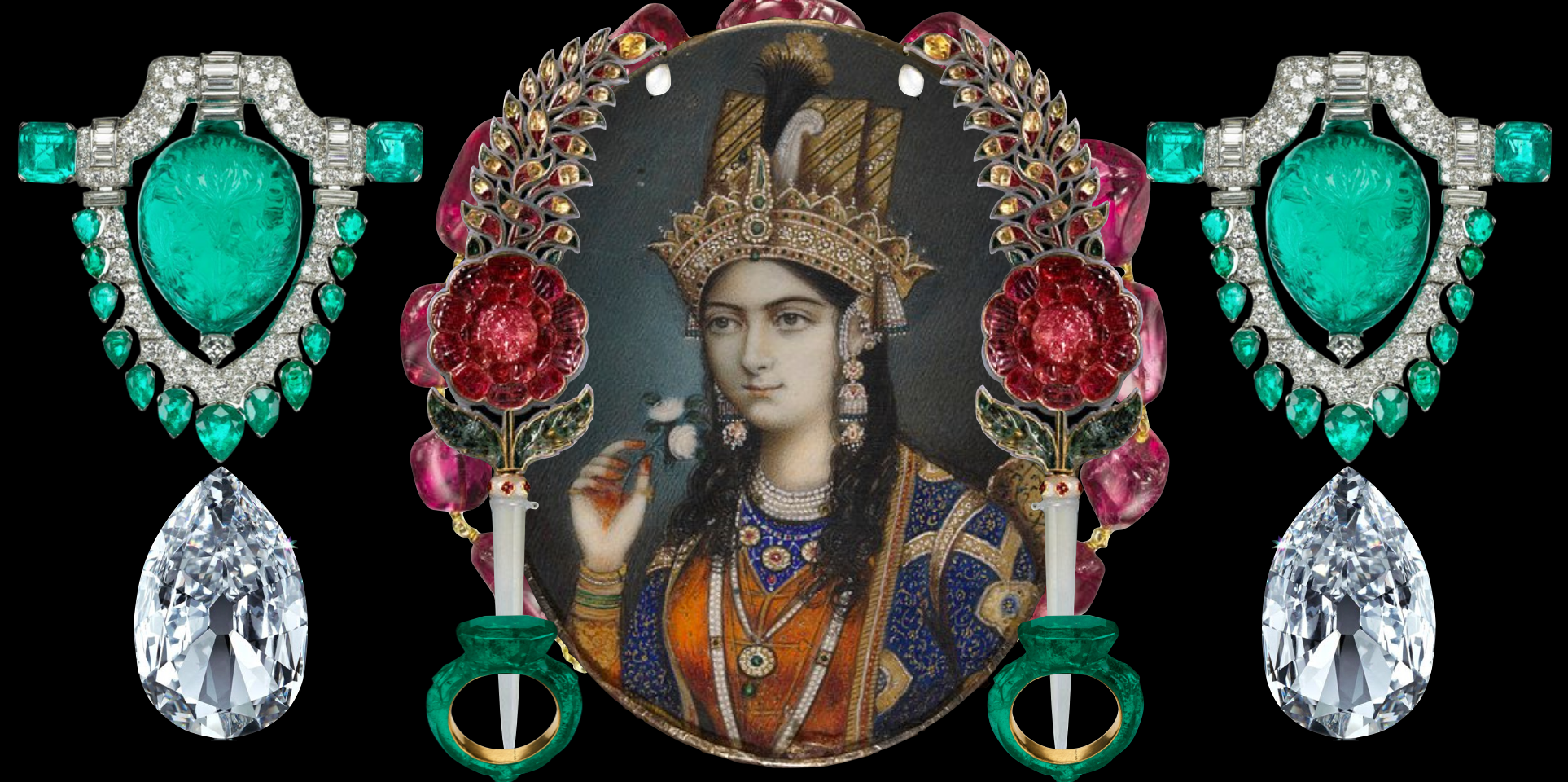
Mumtaz Mahal

The same contrast struck the English ambassador, Thomas Roe. In Jahangir’s court he saw dazzling displays of diamonds, pearls, rubies, and unimaginable wealth. Yet as he travelled from Surat to Delhi, another India unfolded before his eyes: an India of poverty, deprivation, and ordinary people struggling to survive beneath the shadow of imperial splendour.

Nothing illustrates this contradiction more brutally than the reign of Shah Jahan. As discussed in the introduction of my book Babur: The Chessboard King, his policies contributed to the catastrophic famine of AD 1630-32, a disaster estimated to have claimed around 7.4 million lives. It was during this very period that he commissioned the Taj Mahal at a cost of approximately 41.8 million silver coins.

The priorities of the Timurid state stand exposed in the celebrations of Nauroz in AD 1628. Shah Jahan opened the treasury with astonishing generosity. Mumtaz Mahal received 50 lakh rupiah. Jahan Ara was gifted 20 lakh rupiah and Raushan Ara 5 lakh rupiah. Contemporary records indicate that nearly 1.6 crore rupiah was distributed as rewards and pensions to the imperial elite alone.

Now place this beside the empire’s response to famine.

Contemporary accounts describe roads littered with corpses. Millions wandered in desperation for food. Fathers tried to sell their sons into slavery so they might survive. Mothers, unable to watch their children starve, threw themselves into rivers along with their daughters. Yet the relief sanctioned by Shah Jahan amounted to only 1 lakh rupiah, barely 2% of what he gifted Mumtaz Mahal on a single festive occasion. At the same time, Mumtaz’s annual maintenance was 1 crore rupiah, the treasury held 6 crore rupiah in cash, and the Peacock Throne alone was valued at nearly 3 crore rupiah.

This was not simply royal extravagance. Angus Maddison estimates that 15 to 18% of national income was absorbed by the state and its dependants. Nearly 21 million people were sustained by an imperial machine of courtiers, princes, harems, servants, slaves, eunuchs, and armies that consumed enormously while producing little. Maddison’s judgment is devastating: “As far as the economy was concerned, the Moghul state apparatus was parasitic.” He further argued that it resembled a regime of warlord predators where wealth was hoarded in jewels and precious metals rather than invested productively.
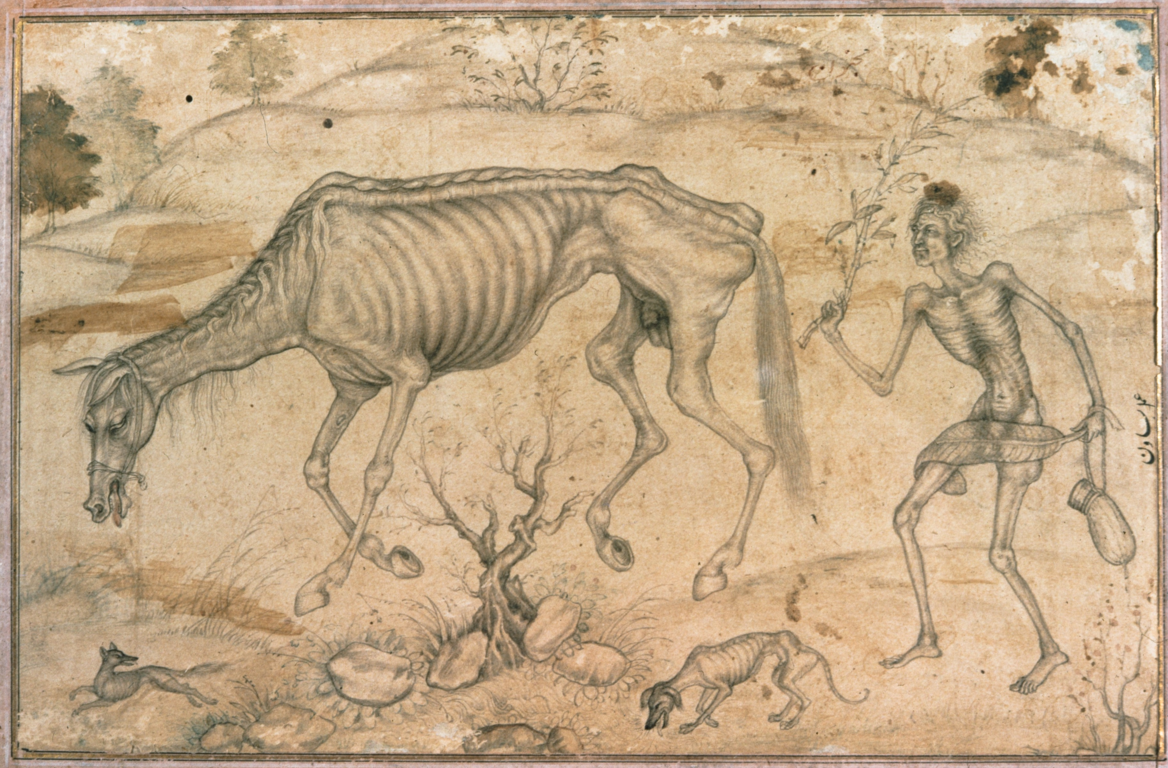
Drawing by Basawan, ca. 1595.

For a civilisation whose strength had long rested upon its farmers, craftsmen, and productive classes, this was a dangerous transformation. The burden of sustaining imperial grandeur fell upon those who tilled the soil and worked the looms, while the rewards accumulated at the top. As American historian J.F. Richards notes in Fiscal States in Mughal and British India:

The Mughal dynasty’s wealth and power was based upon its ability to tap directly into the agrarian productivity of the Indian sub-continent. Trade, manufacture and other taxes were much less important to the imperial revenues than agriculture, most estimates putting them at less than 10% of the total.

Let us again come back to the writings of Bernier:

Of the vast tracts of country constituting the empire of Hindustan, many are little more than sand, or barren mountains, badly cultivated and thinly peopled; and even a considerable portion of the good land remains untilled from want of labourers; many of whom perish in consequence of the bad treatment they experience from the Governors.

These poor people, when incapable of discharging the demands of their rapacious lords, are not only often deprived of the means of subsistence, but are bereft of their children, who are carried away as slaves. Thus, it happens that many of the peasantry, driven to despair by so execrable a tyranny, abandon the country, and seek a more tolerable mode of existence, either in the towns, or camps; as bearers of burdens, carriers of water, or servants to horsemen. Sometimes they fly to the territories of a Raja, because there they find less oppression, and are allowed a greater degree of comfort.

The reality becomes difficult to ignore once one moves beyond courtly glamour and examines the economic record. Across scholarly literature, the Timurid state never emerged as a benevolent engine of prosperity. Rather, in all those literatures, they appear a vast apparatus of extraction. Historian Tapan Raychaudhuri, in State and the Economy: The Mughal Empire, described it in stark terms:

The Mughal state was an insatiable Leviathan”.

The essays collected in The Cambridge Economic History of India, edited by Raychaudhuri and Irfan Habib, repeatedly underline the same point. The state appropriated an enormous share of the agricultural surplus, leaving little room for capital formation among the peasantry. In the same seminal work, it tells us that the extraction of wealth was not confined to taxation, courtly extravagance, or the export of treasure abroad. Even commerce itself was frequently bent towards serving the private interests of the ruling elite. Historians Habib and Raychaudhuri note that imperial intervention in trade often resembled organised extortion rather than economic governance.

A striking example occurred in 1640-41 when Shah Jahan and his powerful noble Asaf Khan invested 1,00,000 rupiah in cloth at Ahmedabad for export to Mocha. To secure their profits, weavers and dyers were ordered not to work for anyone else until imperial orders had been fulfilled. What should have been a free market was effectively transformed into a monopoly enforced by state power.

Habib and Raychaudhuri further point to the activities of Shaista Khan and Prince Azimushshan in Bengal. Their involvement in trade, they argue, amounted to “virtual extortion organised as commerce”. Merchants were compelled to buy and sell on terms dictated by powerful officials. Shaista Khan extended monopolistic control over commodities such as salt, saltpetre, beeswax, and even fodder. Under such conditions, trade ceased to be a voluntary exchange and became an instrument of extraction.

The consequences extended beyond immediate losses. Productive capital that could have expanded industry, irrigation, infrastructure, or enterprise was increasingly diverted into private hoards. Habib describes treasure accumulation as one of the most wasteful economic practices of the Timurid ruling class. Citing De Laet, he notes that Akbar’s treasury was estimated at an astonishing 522.4 million florins. Shaista Khan alone was believed to have accumulated wealth worth 38 crore rupiah during his tenure in Bengal. Numerous nobles left fortunes ranging between 30 lakh and 1 crore rupiah at their deaths.

The tragedy becomes even sharper when one asks what was done with this wealth. Angus Maddison noted that irrigation under the Timurids remained remarkably limited. In his words, “… But in the context of the economy as a whole, these were unimportant and probably did not cover more than 5% of the cultivated land of India”. For a predominantly agrarian civilisation, this was not a minor administrative lapse. It was a failure with consequences measured in poverty, insecurity, and stagnant productivity.

As I conclude this essay, constrained only by space and not by evidence, one question remains. The issue is not whether the Timurid court glittered. It did. The issue is who paid for that glitter. Every jewel on a throne, every gift to foreign lands, every overflowing treasury was ultimately financed by Indian peasants, artisans, merchants, and farmers. A civilisation does not become poor because it lacks wealth. It becomes poor when wealth is extracted instead of invested. The greatest myth is not that the Timurids made India rich. It is that India’s inherited wealth is mistaken for their achievement. – India Today, 8 June 2026
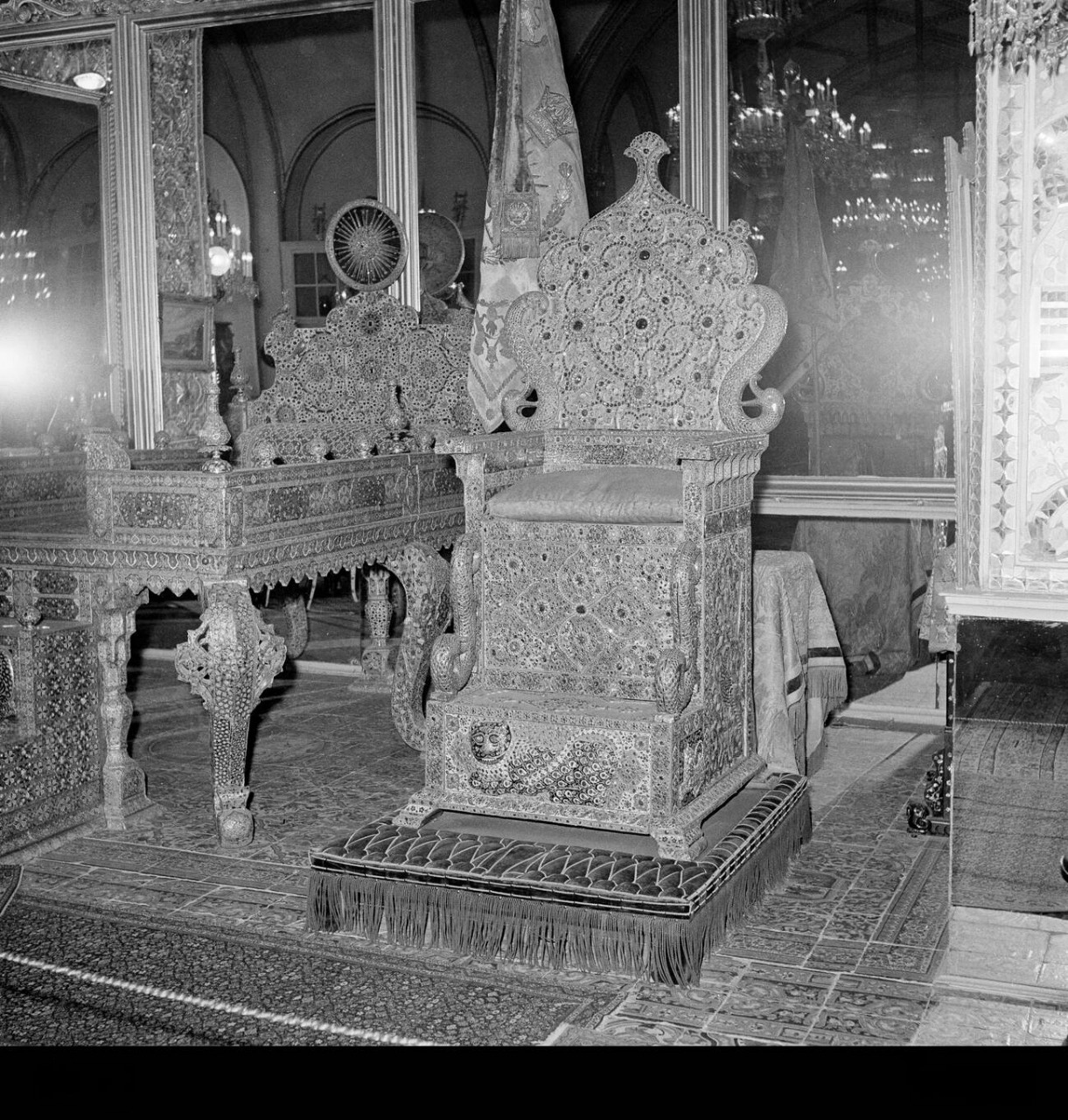
The Peacock Throne in the Golestan Palace in Tehran, Iran, shown Dec. 18, 1959. The Peacock Throne was constructed in 1628 in Delhi, India and in 1739 was taken by Nadir Shah back to Tehran as war booty.

› Aabhas Maldahiyar is an author, architect and historian. This is the last essay of a three-part series.
2 – If Ganga-Jamuni tehzeeb was harmony, why does Kashi’s Nandi still wait? – Aabhas Maldahiyar

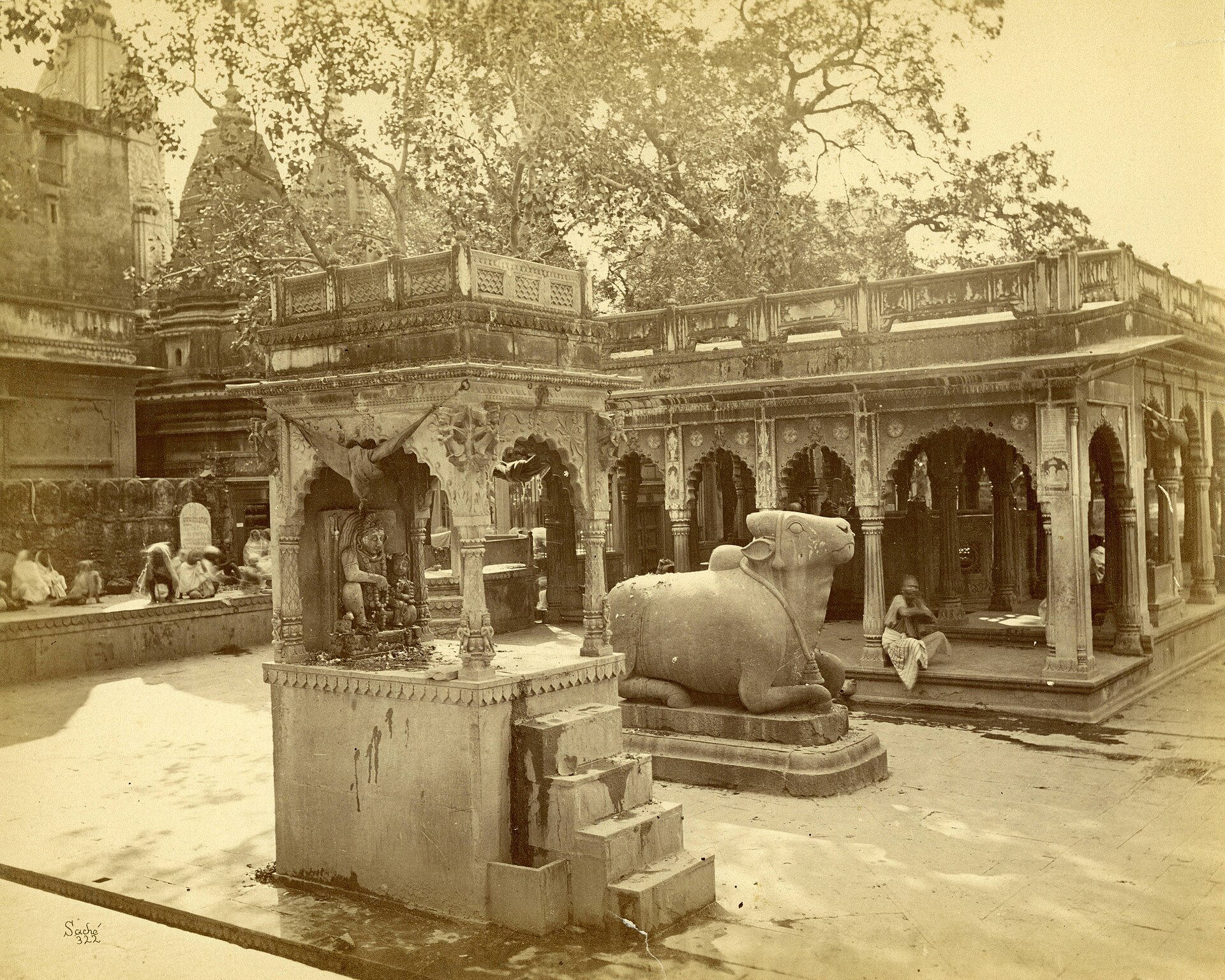
Nandi facing the Gyanvapi Mosque that Aurangzeb had built over the original Vishwanath Shiva Temple at Kashi.

If Ganga-Jamuni tehzeeb is to be discussed honestly, it must be remembered in its entirety: the courtly festivals and the conquered fortresses, the poetry and the pyres, the celebrations and the massacres. For history ceases to be history when it remembers only the flowers floating upon the river and forgets the ashes carried by its waters. – Aabhas Maldahiyar

Some myths are so beautiful that people stop asking whether they are true.

As I sat down to write the second part of my series on the Timurids, a dynasty still persistently and wrongly called the Mughals, a WhatsApp message arrived carrying a recent Scroll article claiming that Jahangir sought to reconcile Vedanta with Islam. I read it carefully and could only smile. The reason for that smile will become clear soon enough.

This essay concerns one of the most fashionable phrases in modern Indian historiography: Ganga-Jamuni tehzeeb. It is invoked as a golden age when faiths embraced, cultures mingled, and the wounds of conquest dissolved into a shared civilisation. Curiously, this renewed celebration arrives alongside the 500th anniversary of the First Battle of Panipat (1526), remembered as the foundation of an empire but seldom as one of the earliest recorded instances of an invading army using Indian villagers as human shields.

The expression Ganga-Jamuni traditionally referred to mixtures and alloys, gold and silver, copper and brass, even mixed grains and lentils. Only in the twentieth century was tehzeeb attached to the phrase, transforming it into a symbol of a supposedly syncretic culture associated with the Sultanate, Timurid, and Nawabi eras.

Yet before we surrender ourselves to the romance of this narrative, a question must be asked: was Ganga-Jamuni tehzeeb truly a confluence of rivers, or has history draped the wounds of conquest in the silk robes of nostalgia?

For even today, one of its most enduring monuments stands in Kashi. Nandi still waits for his Shiva, his gaze fixed upon the spot where the sanctum once stood. Centuries have passed, Timurids have crumbled, yet the faithful bull continues his silent vigil, looking towards what later generations were taught to call a fountain.

Perhaps that is the most fitting metaphor for Ganga-Jamuni tehzeeb itself.

A civilisation watched temples fall, sacred spaces transformed, and memories renamed. Then it was told that this was harmony. That conquest was accommodation. That loss was synthesis.

And so, before celebrating the flowers floating upon the river, it may be worth asking what became of the ashes carried beneath its waters.

My concern in this essay is only with the Samarkandis, as I prefer to call the Timurids for reasons explained in the earlier essay, and whether this celebrated Ganga-Jamuni tehzeeb truly existed in their realm.

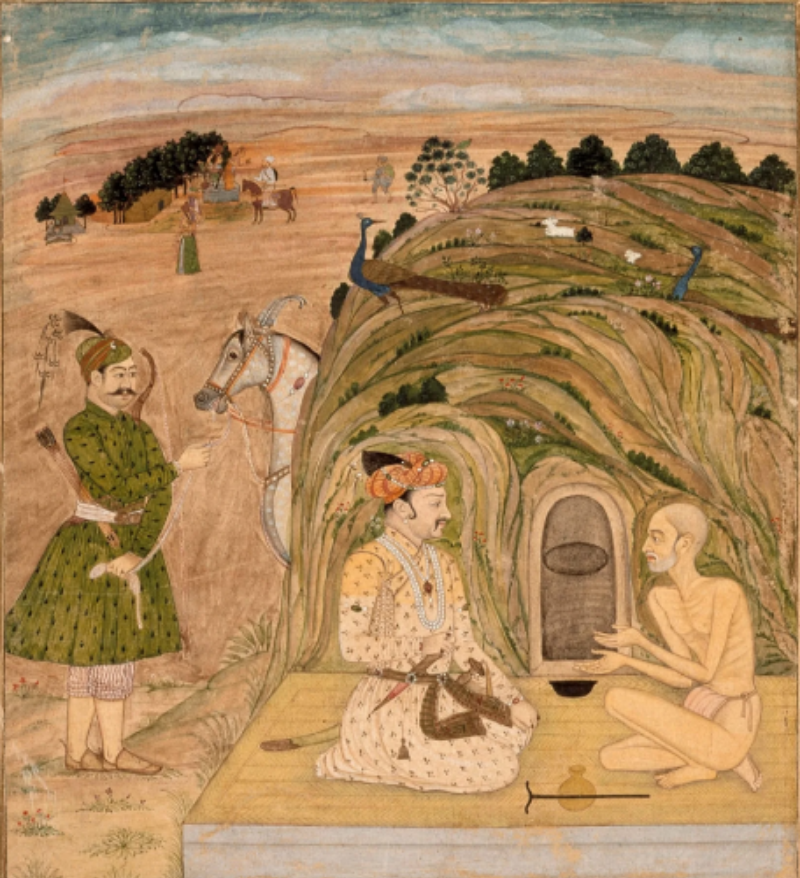
Jahangir visiting the ascetic Jadrup Gosain.

Let us go back to that WhatsApp message, and begin with our lover boy Salim, better known as Jahangir, whose interactions with the Vedantic philosopher Jadrup Gosain were highlighted in the Scroll article as evidence of syncretism. But can a handful of meetings really sustain such a sweeping claim?

According to the Tuzuk-i-Jahangiri, Jahangir met Jadrup only a few times. During these encounters, he interpreted aspects of Vedanta through an Islamic lens and even remarked that Vedanta contained many ideas similar to Islam. That observation itself suggests he misunderstood Vedanta largely, filtering it through familiar categories rather than engaging with it on its own terms.

Yet let us leave aside what Jahangir understood or misunderstood about Vedanta. The Tuzuk-i-Jahangiri reveals a more telling reality. For all his fondness for wine, conversation, and occasional reflections on virtue, a Hindu daughter could enter a Muslim household only after abandoning her gods and embracing Shari’a. Conversion was the price of admission to the emperor’s notion of “harmony”.

If she refused, her fate would be different. She could be reduced to the status of a concubine, a silent presence in the imperial harem, her faith and dignity sacrificed at the altar of accommodation. Such arrangements may be described as coexistence, but they rested upon a hierarchy where adjustment flowed in only one direction.

But the idea of a Muslim daughter crossing the threshold of a Hindu home? Astaghfirullah! A blasphemy so grave that it invited not acceptance, but punishment. Jahangir himself thundered in the Tuzuk-i-Jahangiri:

“They ally themselves with Hindus, and both give and take girls. Taking them is good, but giving them, Allah forbid! I gave an order that, hereafter, they should not do such things, and whoever was guilty of them, should be capitally punished.”

This, then, was the Timurid model of coexistence. Hindu women could be absorbed into Muslim households, but the reverse was treated as an affront to both religion and empire. Muslim honour was a fortress; Hindu society, a field open to penetration.

To portray Jahangir as inherently syncretic on the basis of a few philosophical conversations is a scam. Intellectual curiosity toward another tradition does not erase the larger pattern of conduct reflected in imperial decrees and court records.

And what of the supposedly benevolent Shah Jahan? He, too, walked in the footsteps of his father. This brings us to the curious case of Dalpat.

In the 10th year of his reign, a man named Dalpat of Sirhind married a Muslim woman named Zinab, renamed her Ganga, and raised their children as Hindus. Worse still, from the imperial perspective, he reconverted one Muslim boy and six Muslim girls to Hinduism.

Shah Jahan’s response was swift and unforgiving. Dalpat’s wife and children were separated from him, and he was presented with a choice that was often imitated as justice in medieval chronicles: embrace Islam or embrace death. Dalpat chose the sword over surrender, becoming the offering at the altar of Ganga-Jamuni tehzeeb.

But why stop at regulating marriages? Shah Jahan, never one for half-measures, decreed that apostasy itself was a capital crime. Conversion from Hinduism was celebrated as a triumph of faith; conversion away from Islam invited the executioner’s blade. The road into Islam was open and the road out of it led to the scaffold.

When his son Shuja assumed the governorship of Kabul, he carried this orthodoxy beyond the Indus. The domains of Sankar—ruler of the land—were subdued by force. Sixteen of his sons and dependents were converted, contributing to a reported tally of more than five thousand new adherents. Temples were transformed into mosques, and those who attempted to return to their former faith found little mercy awaiting them.

The rebellion of Jujhar Singh, Bundela ruler of Orchha, followed a similar pattern. Post defeat, his sons and grandsons were recast under new identities as Imam Quli and Ali Quli. His eldest son, Udai Bhan, refused conversion and chose death instead. A younger brother, still a child, too was absorbed into Islam. The women of the household, confronting the realities of conquest, chose self-immolation over captivity.

The conquest of Beglana—around present-day Dhule and Nashik districts in Maharashtra—unfolded at the same rhythm. Naharji’s son was renamed Daulatmand after his conversion, while Nasrat Jang forcibly converted a Brahmin boy, only to be repaid with a dagger in the darkness, a final act of resistance from one who had lost everything else.

Even when armies rested, the coercive power of the state remained active. Blasphemy became a crime carrying the gravest consequences. Hindus accused of insulting the Quran were executed. A Brahmin named Ghhaila, a qanungo of Berar, met the same fate for remarks deemed offensive to the Prophet.

Let us now turn to perhaps the most famous of all supposed symbols of this cultural synthesis: the legend of Jodha Bai.

The story has become so deeply embedded in popular imagination that many accept it as unquestioned fact. Yet the historical foundations are remarkably fragile. Neither the Ain-i-Akbari nor the Akbarnama of Abu’l-Fazl mentions a Rajput queen named Jodha Bai. The name emerges much later in the writings of James Tod, whose Annals and Antiquities of Rajasthan often blended folklore, bardic tradition, and historical reconstruction.

The legal framework of the empire rested firmly upon Shari’a. A formal nikah with a non-Muslim woman required her acceptance of Islam. This was not a matter of sentiment but of law. No woman, regardless of lineage or political importance, could attain the status of Malika-e-Hindustan without first entering the fold of Islam.

The woman later identified as Jodha Bai appears in the sources as Mariam-uz-Zamani. Before her marriage to Akbar, she entered Islam and thereafter lived under her Islamic title. Her burial was conducted according to Islamic rites, and her tomb near Sikandra stands as a monument to the identity under which she lived and died.

More broadly, no Hindu princess who entered the Timurid zenana is known to have retained her public Hindu identity. These unions were rarely romantic tales of civilisational fusion, as Bollywood and intellectuals often tried to present. They were political arrangements shaped by the realities of theological power.

Aurangzeb with Officials

So desperate has the search for Ganga-Jamuni tehzeeb become that some now seek its reflection even in the life of Aurangzeb. The usual defence follows: Hindu nobles in his court, Hindu generals in his armies, and occasional grants to temples.

Yes, Aurangzeb employed a number of Hindus in his administration for certain periods. But that fact, by itself, proves very little. Empires are not sustained by ideology alone; they are sustained by revenue, manpower, and political necessity. Even the most intolerant regimes in history have often relied upon members of the very communities they discriminated against. Do check the case of Hitler.

The notion that even a bigoted medieval autocrat like Aurangzeb would govern a vast empire populated overwhelmingly by kafirs (as he repeatedly described non-Muslims) without strategically accommodating at least a section of them, defies both logic and statecraft. Yet, as his reign matured, its court grew increasingly dominated by Muslim elites, many of them foreign-born, further distancing the ruling establishment from the people and land it governed.

One of the most frequently cited examples of his supposed tolerance is the famous farman issued to Abul Hasan, the faujdar of Varanasi, on 28 February 1659. In this order, Aurangzeb directed that old temples should not be demolished, while simultaneously prohibiting the construction of new ones. This document is routinely displayed as evidence of a tolerant and inclusive monarch—yet another ruler representing Ganga-Jamuni tehzeeb. Yet a closer look at the circumstances surrounding it reveals something rather different.

The year was 1659. Aurangzeb had only recently secured the Timurid throne after a brutal war of succession. Dara Shukoh had been defeated, and on 5 January 1659, at Khajwa, Aurangzeb crushed another rival, his brother Shuja. The defeated prince fled eastward towards Kashi.

At that moment, Kashi was not merely a sacred city. It was a strategically important centre whose population could potentially provide shelter, intelligence, or sympathy to a fleeing claimant to the throne. Barely weeks after Khajwa came the famous farman.

The message behind it was unmistakable: pacify the local Hindu population, prevent any alignment with Shuja, and tighten the net around a dangerous rival.

Sir Jadunath Sarkar saw through the political calculations with characteristic clarity. Referring to this order, he wrote that the farman “had been issued during Aurangzeb’s struggle with Shuja just by way of a political move to win, for the time being, the good will and co-operation of the Hindus for capturing Shuja and had nothing to do with his spirit of toleration”.

The document itself raises an obvious question. If Aurangzeb’s purpose was genuine religious tolerance, why did he simultaneously forbid the construction of new temples? A ruler committed to syncretism does not merely preserve existing shrines while preventing future ones from being built. Such a policy speaks of a calculated restraint.

The chronology, too, tells a lot. The Battle of Khajwa took place on 5 January 1659. The farman followed on 28 February 1659. The two events are separated by barely 54 days. This is not a distant and speculative connection of the kind sometimes invoked to explain away temple demolitions years after the fact. Here the political context and the imperial order stand virtually side by side.

And if one seeks testimony from someone outside modern ideological battles, consider the words of the Italian traveller Niccolao Manucci, who spent much of his life in India and observed the Timurid world from close quarters. In Storia do Mogor he wrote:

“The latter [Aurangzeb], rid of a rajah [Raja Jai Singh] whose influence might have been dangerous to his kingdom, declared that very hour an open war against Hinduism. He sent orders at once for the destruction of the fine temple called Lalta, in the neighbourhood of Dihli. He also ordered every viceroy and governor to destroy all the temples within his jurisdiction.”

Whether one accepts every detail of Manucci’s account or not, it remains difficult to reconcile such descriptions with the modern portrayal of Aurangzeb as a misunderstood apostle of Ganga-Jamuni tehzeeb.

Aurangzeb's firman ordering the destruction of the Kashi Vishwanath Temple (August 1669). 

Indeed, this is the fundamental problem with many contemporary attempts to rehabilitate him and others. Every act of temple destruction is explained away as political necessity, yet every temporary act of restraint is celebrated as evidence of tolerance. Political context is eagerly invoked when it softens his image, but quietly ignored when it exposes the limits of his supposed pluralism. Read together, Aurangzeb’s farmans, the Fatawa-e-Alamgiri, the Maasir-i-Alamgiri, court newsletters, and contemporary testimonies reveal a ruler who repeatedly viewed Hindu institutions through the prism of Islamic supremacy, occasionally tempering ideology only when political expediency demanded it.

And perhaps that is where the larger question of Ganga-Jamuni tehzeeb must be confronted. If this celebrated ideal truly represented a relationship of mutual respect and cultural reciprocity, why must its defenders rely so heavily on exceptions while treating episodes of persecution, coercion, and destruction as inconvenient footnotes?

Before taking leave of Aurangzeb, one final irony deserves mention. It was under his reign that music itself was officially banished from the imperial court. The ruler who is today enlisted as evidence of composite culture presided over one of the most severe assaults on a tradition that had long enriched the cultural life of Hindustan.

And before I bring this essay on Ganga-Jamuni tehzeeb to a close, allow me to leave you with a chilling anecdote.

Whenever the phrase is invoked, we are shown paintings of Akbar or Jahangir celebrating Holi. These scenes are endlessly reproduced as proof of a harmonious age where cultures merged like the waters of the Ganga and Yamuna. Yet there exists another Holi from the Timurid era, one that seldom finds a place in these romantic narratives.

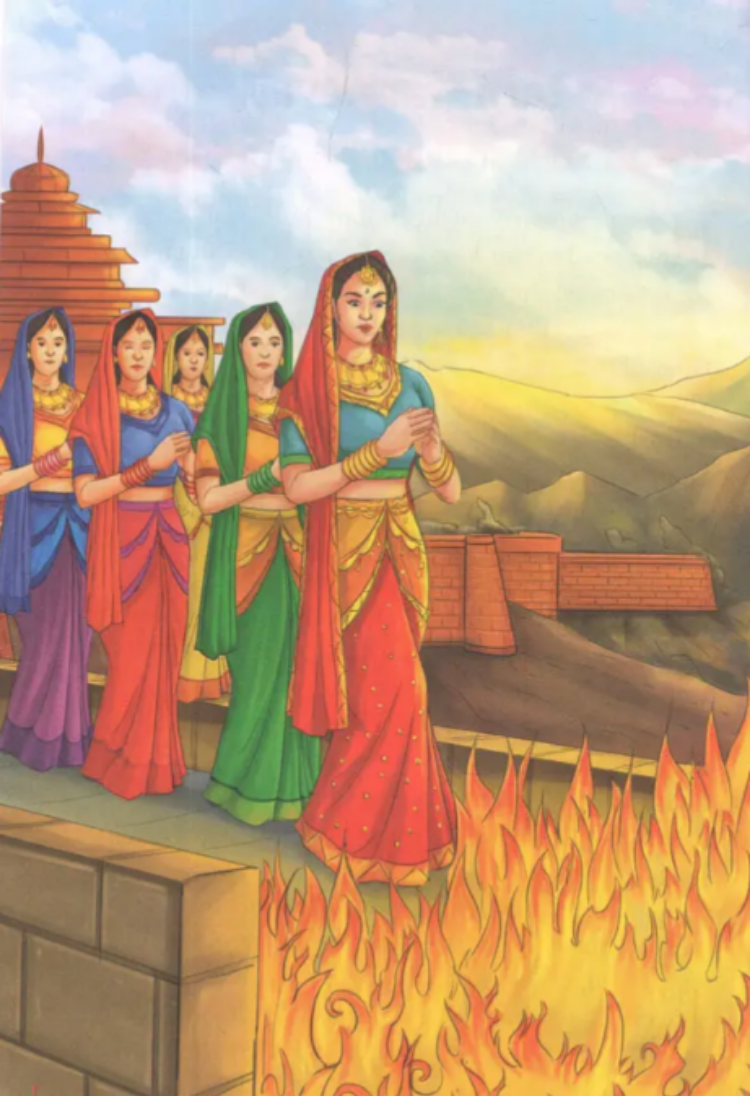
Rajput queens commit jauhar to save their honour.

The year was 1568. Akbar had laid siege to Chittor for four relentless months. Following the fall of Jaimal, the eve of Holi witnessed hundreds of Rajput women and girls entering the flames of jauhar, choosing death over slavery to mlecchas (as addressed by Indians back then). Then came the morning of Holi itself. Contemporary accounts record the massacre of roughly 30,000 civilians after the fort fell. Akbar celebrated it as a triumph of Islam over the kafirs.

For whenever I hear of the Holi supposedly shared between the Timurids and their subjects, my mind does not wander to painted miniatures of emperors playing with colours. It returns instead to Chittor. To the smoke rising from jauhar pyres. To the cries of a city facing annihilation. To a Holi where the red that covered the land did not come from gulal, but from blood.

If Ganga-Jamuni tehzeeb is to be discussed honestly, it must be remembered in its entirety: the courtly festivals and the conquered fortresses, the poetry and the pyres, the celebrations and the massacres. For history ceases to be history when it remembers only the flowers floating upon the river and forgets the ashes carried by its waters.

In memory of those ashes, and the countless brave men and women who became them, I now rest my keyboard. – India Today, 1 June 2026

› Aabhas Maldahiyar is an author, architect and historian.

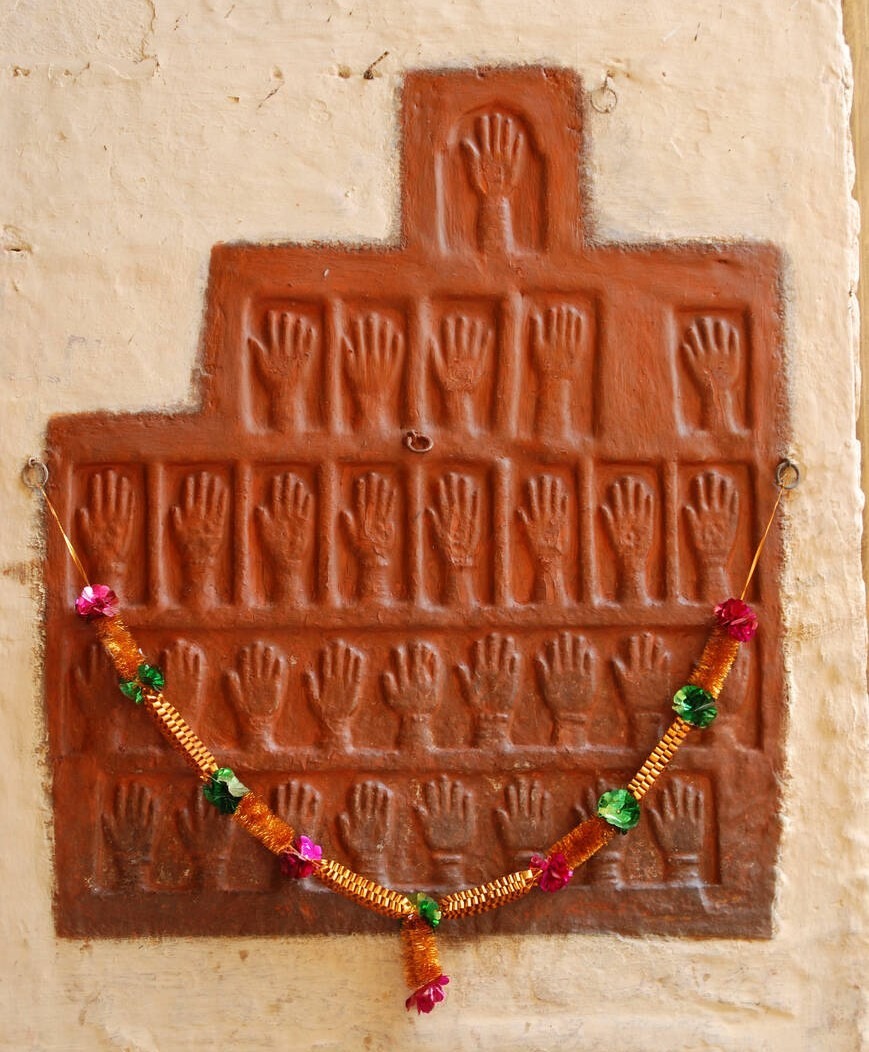
Handprints of Rajput queens.

1 – The Samarkand Syndrome: Why Babur and family never became ‘us’ – Aabhas Maldahiyar

Babur and Humayun

Hindustan gave the Timurids empire, wealth, and power, but Samarkand remained home, lost which they could never get back. India became the stage upon which their grandeur unfolded, while their emotional compass repeatedly pointed beyond the Hindu Kush toward the orchards, graves, and memories of Central Asia. – Aabhas Maldahiyar

Five centuries after the First Battle of Panipat (1526), Bharat finds itself revisiting the establishment of the Timurid Gurkhaniya Empire, though often under the historically imprecise label of “Mughal“. The battle itself has left behind celebrated images of gunpowder, cannons, and a transformed military landscape. Yet some legacies remain less discussed. Among them was Babur’s use of villages around Panipat as protective buffers (human shields) during his campaign, an aspect that rarely enters popular memory. But this is not the subject I intend to pursue here.

What concerns me instead is a larger historical assumption that has gradually hardened into conventional wisdom: that the Timurids eventually became Indians, that the dynasty which arrived from Central Asia dissolved itself completely into the soil of Hindustan and came to see India as its unquestioned homeland. The passage of time has made this notion appear almost self-evident.

This essay seeks to question that narrative. For beneath the marble splendour of Agra and the imperial grandeur of Delhi lay another inheritance, one that continued to look northward beyond the Hindu Kush, toward Samarkand, Balkh, and the ancestral landscapes of Timurid memory. To understand whether the Timurids truly became “us”, it is perhaps best to begin with the words of the dynasty’s founder himself.

So, I begin with Babur’s initial reflection on Hindustan:

Hindustan is a country of few charms. Its people have no good looks; of social intercourse, paying and receiving visits; there is none; none of genius and capacity; none of manners; in handicraft and work, there is no form or symmetry, method or quality; there are no good horses, no good dogs, no grapes, musk-melons or first-rate fruits, no ice or cold water, no good bread or cooked food in the bzrs, no hot-baths, no colleges, no candles, torches or candlesticks.

While he cries folly for India, he goes on to say this for Samarkand:

Samarkand, for nearly 140 years, had been the capital of our dynasty. An alien and of what stamp! An Azbeg foe, had taken possession of it! It had slipped from our hands; God gave it again! Plundered and ravaged, our own returned to us.

Indeed, Hindustan did not appear even as a consolation prize for Samarkand—the land Babur regarded as home. Babur himself lays out the reasons with striking clarity in the Baburnama for why he turned toward Hindustan:

1. To fulfil the ambition associated with his forefather Timur and establish Timurid authority in Hindustan under an Islamic political order.

2. Although Kabul was the first place where he assumed the title of Padshah, it generated limited revenue; Hindustan, in his own description, promised abundant wealth, plentiful labour, and a land rich in gold and silver.

3. He had effectively been pushed out of his Central Asian homeland, with his arch-rival Shaibani Khan steadily closing every path back. Thus, despite his enduring longing for Samarkand, the road home had gradually ceased to exist.

For Babur, Hindustan was not the destination of nostalgia; it was the destination of necessity, ambition, and opportunity. Samarkand remained the horizon of memory, while Hindustan became the terrain of survival and empire.

Carrying the old thread of longing across generations, Akbar’s chronicler Abu’l Fazl hints that a powerful attachment to Central Asia flowed through Timurid veins. In his words, even Timur, after devastating India, is described as having been “impelled by the love of his native land”. This was not merely an emotion confined to one ruler. It became an inherited memory, an ancestral pull that echoed through successive Timurid emperors.

As the dream of Central Asia often appeared brighter than its practical rewards, the corridor between Hindustan and the northwest remained a living artery, a strategic passage that the Timurids sought to preserve under their influence and control. Both Babur and Abu’l Fazl emphasise this reality in their respective writings by representing it as a pathway leading toward memory, legitimacy, and the geography of origin itself.

The argument becomes even more visible when one turns to Timurid writings produced after Babur. Their own words frequently reveal that Central Asia continued to occupy the position of “home” in the Timurid imagination. They use the term wilayat (one’s own province or homeland) repeatedly, tying Balkh and Transoxiana into an enduring sense of belonging. This language creates the impression that Hindustan, despite becoming the seat of imperial power, was often seen as an extension of an older world rather than its replacement.

The Maasir al-Umara by Samsam ud Daula Shah Nawaz Khan, a biographical work on Muslim and Hindu officers serving Timurid rulers in India from 1500 to around 1780, refers to Khwaja Abdullah Ahrari of Samarkand as belonging to the wilayat. This detail deserves attention. Shah Nawaz Khan was a courtier of Qamar ud Din Khan, Asif Jah I, the first Nizam of Hyderabad. Had Hindustan been fully internalised as the unquestioned homeland by the eighteenth century, it is difficult to explain why a courtier writing in the Deccan would continue to describe Samarkand as wilayat. The persistence of such terminology suggests that the older geography of belonging had not entirely faded.

The Maasir-i-Alamgiri provides many more such records. Mir Shihab ud Din Siddiqi, a courtier of Aurangzeb born in Bukhara, is described as someone who came from wilayat. The same text states that Khwaja Baha al-Din, the great-grandson of Subhan Quli of Balkh, had arrived from his homeland (az wilayat rasida). Equally, revealing is the manner in which Subhan Quli himself is described as wali (governor) of Balkh in this text. The importance lies in what such language reveals about political imagination. Even though Subhan Quli functioned in practical terms as ruler of Balkh, the vocabulary employed in Aurangzeb’s court framed him as a governor rather than an independent sovereign. Such terminology appears to preserve an older Timurid conception in which regions like Balkh and Transoxiana remained part of an inherited political and emotional universe:

The sword had lost its reach, but memory had not surrendered its territory.

Jahangir’s Tuzuk refers to Wali Muhammad as wali-yi-Turan, while the Padshahnama similarly describes the Uzbek ruler Imam Quli as wali-yi-Turan or “Governor of Turan”. Such language reflects a deeper political imagination and a carefully preserved imperial myth that Uzbek-held lands still existed, at least symbolically, within the orbit of Timurid grandeur and inherited claims.

When the dust of Panipat had barely settled in 1526, Babur distributed the fruits of his victory not merely within India but across the lands of memory. Gifts travelled northward to relatives in Central Asia, to Iran, and to holy men in Samarkand, Khurasan, and the Hejaz. Russian scholar A.A. Semenov sees in these gestures a heart still tied to its homeland, a ruler reluctant to call India home before reclaiming the lands of his ancestors. In a later letter, Babur instructed Humayun that all his subjects in India should aid the effort of reconquest of the homeland.

Seeing an opportunity in the Safavid seizure of Khurasan from the Uzbeks, Babur directed Humayun toward Balkh, Hisar, Samarkand, or Herat, “whichever side favours fortune”. Hisar was intended as Humayun’s province, Balkh for Kamran, and Samarkand as the restored Timurid capital. In 1528, as Humayun marched with forty thousand men toward Samarkand, Babur asked him to wait, assuring him that they would return to their “hereditary kingdoms” (wilayat-i-mawruthi) once Hindustan had been firmly secured.

Humayun failed to recover Central Asia, and soon lost India itself. One cannot help but wonder whether, had fortune favoured him, his gaze would have turned eastward toward India or northward toward his ancestral lands. Even during exile in Iran, his thoughts repeatedly returned to conquest and restoration. To secure Shah Tahmasp’s support, the Timurids surrendered Qandahar to the Safavids. Yet after reaching Kabul in 1549 with Safavid assistance, Humayun unexpectedly turned toward Balkh rather than India. Perhaps the pull of Central Asia still tugged harder than the possession of Hindustan, though Kamran’s betrayal ended that dream before it could take shape.

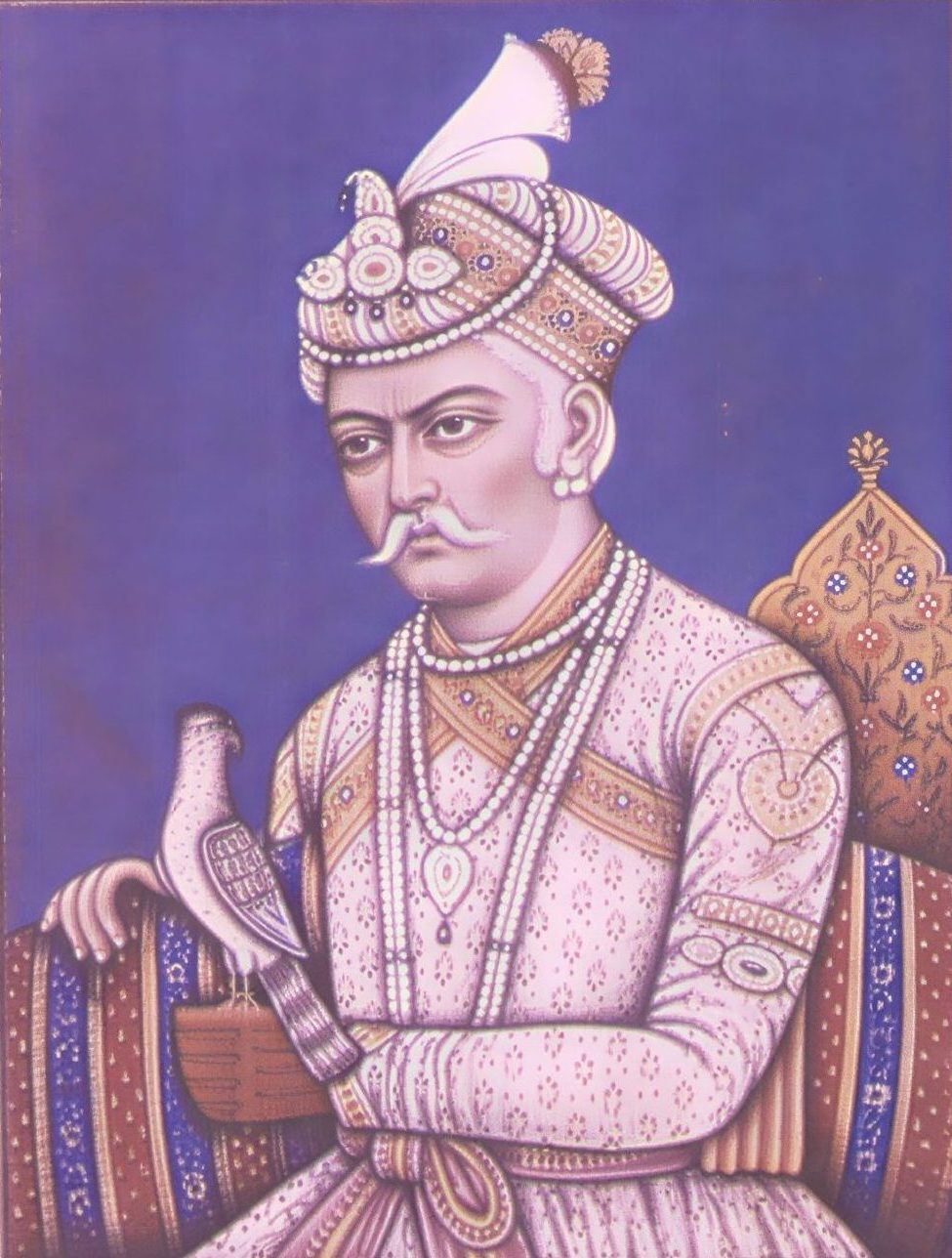
Akbar the Great

When Akbar ascended the throne in 1556, his early years were consumed by the struggle to secure his hold over India. Surrounded by rebellions and instability, he had little space to openly pursue his dreams of Turan. In time, the possibility narrowed further as the powerful Uzbek ruler Abdullah Khan consolidated Central Asia and placed the ancestral lands of the Timurids beyond easy reach. Yet Abu’l Fazl suggests that Akbar’s ambitions had not disappeared, only fallen into dormancy, remarking that “the time of the appearance of designs was in the future”.

When the Badakhshani Timurids, Sulayman and Ibrahim, ventured toward Balkh, Abu’l Fazl dismissed their efforts as premature, implying that such a harvest belonged to Akbar alone. On another occasion, Akbar even turned away the envoys of Abdullah Khan because he still entertained thoughts of recovering his ancestral territories. Abu’l Fazl portrays this vision as an echo of Babur’s strategy: India was first to be firmly secured, and only then would the Timurid banner advance toward Turan. As he writes, “Should the wide country of India be civilised by means of obedient vassals, (Akbar) would proceed to Turan…”

A point worth noting here, though beyond the immediate scope of this essay, is that Akbar too appears to have framed his role in terms of a civilising mission, much like later European imperial thought. Abu’l Fazl’s language suggests that Hindustan was never a homeland, but rather as a vast realm to be disciplined, ordered, and brought under the mould of Timurid statecraft with headquarters seated somewhere else (Samarkand).

Akbar’s own words also reveal that these ideas had not vanished. In 1577, responding to Uzbek mockery regarding Qandahar’s loss to the Safavid “outsiders” (biganaha), he replied that Timurid lands had hardly fared better under Uzbek control. A decade later, in 1587, Abu’l Fazl wrote to the Timurid ambassador in Bukhara that “His Majesty has turned his attention to the conquest of Turan”, though Akbar remained willing to set aside even broader ambitions if peace with Abdullah Khan could be secured.

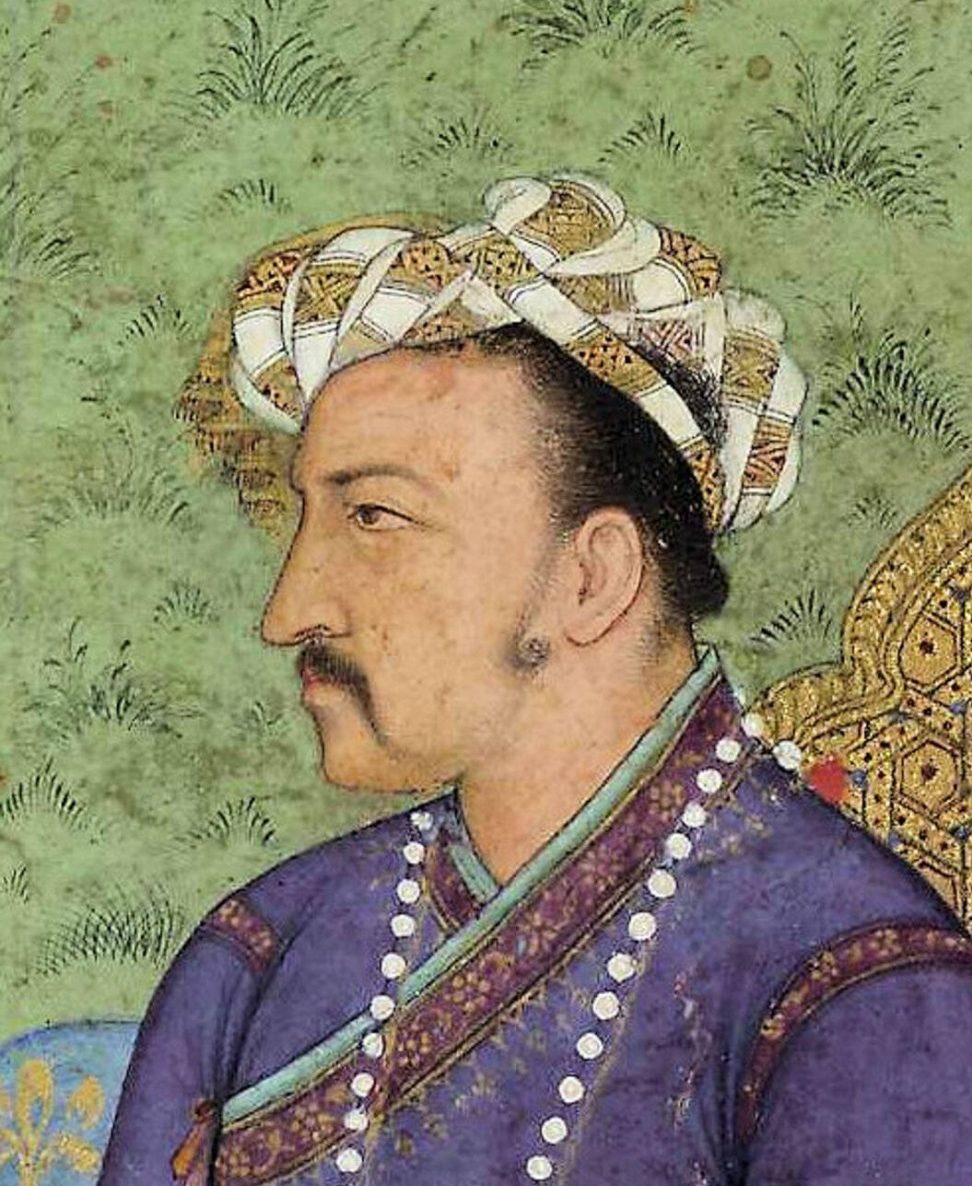
Jahangir

Jahangir, too, bequeaths a testament to this ancestral pull. In his memoirs, he confesses that his father Akbar never let slip the dream of Transoxiana, and that he, Jahangir, nursed two intentions:

One, that inasmuch as the conquest of Transoxiana was always in the pure mind of my revered father, though every time he determined on it, things occurred to prevent it. If this business (of getting Kafir rulers to submit) could be settled, and this danger dismissed from my mind, I would leave Parviz in Hindustan, and in reliance on Allah, myself start for my hereditary territories.

In the lofty cadence of his memoirs, he proclaims with customary grandeur:

As I had made up my exalted mind to the conquest of Transoxiana, which was the hereditary kingdom of my ancestors, I desired to free the face of Hindustan from the rubbish of the factious and rebellious, and leaving one of my sons in that country, to go myself with a valiant army in due array, with elephants of mountainous dignity and of lightning speed, and taking ample treasure with me, to undertake the conquest of my ancestral dominions.

After this brief expression of imperial ambition, Jahangir’s Tuzuk falls strangely silent. The subject of Central Asia scarcely returns. Historian R.C. Verma argues that this diplomatic lull until 1621 reflected Jahangir’s continued desire to reclaim his ancestral lands. His gaze remained fixed on Samarkand even if his throne stood in Lahore. Yet the silence may not have been one-sided, for Imam Quli Khan of Bukhara had earlier suspended relations after a perceived slight.

The estrangement was eventually softened, perhaps through the influence of Nur Jahan. M. Athar Ali suggests that in 1621, Imam Quli’s mother initiated reconciliation with the Timurid court. The growing Safavid threat likely compelled both Bukhara and Hindustan toward cooperation, allowing political necessity to outweigh wounded pride.

Even in the later years of his reign, Jahangir’s interest in Central Asia remained alive. In conversations with Mutribi Samarqandi, he displayed a persistent curiosity about the affairs of the region. This interest was not merely sentimental. At Nur Jahan’s urging, Mir Baraka, a Bukharan in Timurid service, was sent to restore ties with Imam Quli and carry imperial respects to the Juybari shaikhs. Baraka remained in Central Asia until 1627 and returned with Abd al-Rahim Khwaja, whose arrival Jahangir valued enough to delay his journey to Kashmir.

Jahangir died soon afterward, but the thread remained unbroken. Shah Jahan ensured continuity by dispatching Hakim Haziq to Bukhara with gifts for the shaikhs, preserving a connection that was political on the surface but still carried the echoes of an older Timurid attachment to their ancestral world.

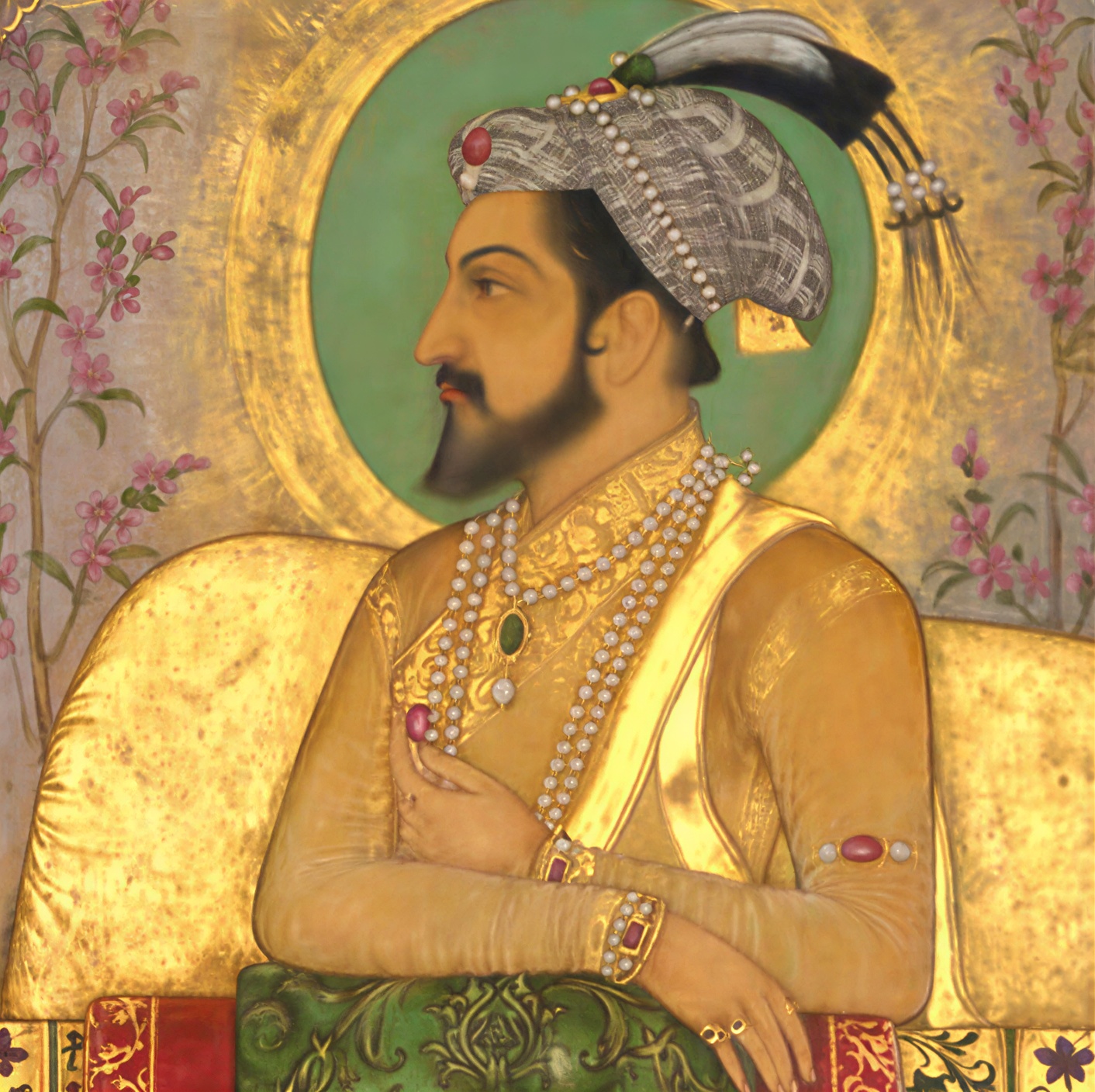
Shah Jahan

Shah Jahan’s longing too for the ancestral world of Turan was a deeply rooted aspiration. The imperial chronicles, clothed in the language of diplomacy, describe cordial relations with the Uzbeks during the first decade of his reign. Beneath this calm surface, however, lingered unresolved resentment. Nazr Muhammad’s (ruler of Balkh and Badhakshan) attempted siege of Kabul during the succession disturbances of 1629 had not been forgotten. Shah Jahan waited patiently for circumstances to shift, while continuing to send generous sums and support to allies in Mawarannahr, quietly nurturing influence beyond the Hindu Kush.

The first clear indication of his intentions appears in a letter written in 1640 by Hasan Khan Shamlu, the Safavid governor of Herat. Responding to a communication from the Timurid court, he referred to subtle hints about recovering the mulk-i-mawruthi, the “hereditary dominions”, and the gurkhana-yi-ajdad-i-izam, the resting place of imperial ancestors. Hasan records that Shah Jahan intended to return that very year to Kabul and would send one of his sons ahead to secure Balkh and Badakhshan.

Hasan sought reassurance that the campaign was directed toward Turan and not Khurasan. For the Safavids, the Uzbeks represented a constant strategic threat, and the possibility of Timurid intervention carried significance beyond diplomacy. In another letter, Hasan urged Asaf Khan to specify the date of the proposed march toward Turkistan so that Safavid and Timurid forces might move together and strike at Uzbek power.

Events, however, unfolded differently. The campaign materialised only five years later, and without Safavid participation.

The imperial records of Shah Jahan’s Balkh campaign leave little ambiguity regarding its purpose. They do not portray it as an ordinary military expedition or a search for territorial gain. Instead, they connect it directly to Shah Jahan’s desire to recover what were repeatedly described as his inherited lands. The roots of this ambition are traced back to the period following Jahangir’s death, when Nazr Muhammad’s actions at Kabul first revived in him a desire for Balkh and Badakhshan, not merely as strategic territories, but as lands bound to memory, ancestry, and dynastic inheritance.

The Timurid chronicle (Shah Jahannama) states:

From the time of the last Emperor Jahangir’s death, when Nazr Muhammad Khan had vainly attempted to seize Kabul, the mighty soul of the world-subduing monarch had been bent upon the countries of Balkh and Badakhshan, which were properly his hereditary dominions.

The chronicles attribute this 15-year delay to “impediments of state”, a phrase that conceals the relentless burdens of empire. Foremost among these was the grinding struggle in the Deccan, where the Shia Sultanates and rising Maratha power steadily consumed imperial resources. What began as a challenge would eventually tighten around the Timurid state and dominate the closing years of Aurangzeb’s reign.

According to A. Ansari, Shah Jahan viewed Qandahar as a political keystone. Recovering it from the Safavids would signal to both the Ottomans and the Uzbeks that Timurid ambitions looked beyond Persia and toward the ancestral lands across the Hindu Kush. Only then could a march toward Balkh acquire strategic credibility. R.C. Verma argues that although internal tensions between Nazr Muhammad and Imam Quli may have tempted Timurid intervention, the larger geopolitical situation, particularly tensions with the Safavids after the struggle over Qandahar, made a major invasion difficult.

Yet Hasan Khan’s correspondence suggests that in 1640 Safavid cooperation was actively offered, which disappeared with his death and Shah Safi’s renewed focus on Qandahar.

Aurangzeb

What is most striking is that even the humiliation of abandoning Balkh after scarcely two years did not extinguish Timurid aspirations. Aurangzeb himself had commanded imperial forces there and had witnessed the limits of such dreams more clearly than most. Yet even he, austere in temperament and hardened by campaigns, never entirely abandoned the pull of the ancestral horizon. In a letter to his son, the Crown Prince Muazzam, he entrusted that flame to another bearer:

If a father is unable to finish a work, the son must carry it to completion. … This mortal creature harbours a wish unfulfilled. It was the desire of Shah Jahan that I should dispatch one of his grandsons to those lands—with a grand army and the instruments of war.

Even as Aurangzeb’s attention increasingly turned toward the Marathas and the Deccan Sultanates, traces in his words and actions suggest that Turan never entirely faded from the Timurid imagination. The ancestral lands remained a distant echo at the edge of the empire, a memory not fully surrendered. The continuing references to mulk-i-mawruthi (hereditary dominions) and gurkhana-yi-ajdad-i-izam (the resting place of great ancestors) indicate that the symbolic and dynastic pull of Central Asia endured, even when military realities made reconquest increasingly impractical.

Italian traveller and scholar, Manucci observed that Aurangzeb still cherished thoughts of conquest of ancestral lands, and this sentiment appears to find support in subtle diplomatic gestures. One such example was the conferring of sarapa or robes of honour upon the ambassadors of Subhan Quli. Such honours were generally reserved for dependents and subordinate rulers. Though wrapped in the language of courtly etiquette, the act carried an imperial undertone, suggesting a symbolic assertion of superiority and perhaps reflecting an older Timurid conception of authority over the Uzbek world.

Aurangzeb also maintained links with the religious and intellectual networks of Central Asia. He preserved ties with scholars and Sufi figures from Balkh, including Abd al Ghaffar Dihbidi, and displayed interest in the educational institutions of Samarkand. French physician and traveller Bernier’s observations indicate that Central Asia occupied a place in the Timurid imagination beyond simple territorial ambition. It functioned as a source of legitimacy, memory, lineage, and continuity.

Even if the Timurids of Hindustan never regained the lands of their forefathers, their language and actions reveal a recurring nostalgia. Babur’s inheritance was not merely territorial. It was also emotional and ideological. For rulers like Shah Jahan and Aurangzeb, the story of Central Asia remained unfinished. This attachment also found expression in their concern for ancestral memory itself. As descendants of Timur, the emperors of Hindustan assumed responsibility, whether from genuine sentiment or dynastic obligation, for preserving the monuments of their lineage. Foremost among these stood the Gur-i-Amir in Samarkand, Timur’s mausoleum. More than a structure of stone, it was a monument of dynastic memory and a surviving fragment of a world they regarded as ancestral.

One revealing instance appears in the Tuzuk-i-Jahangiri. During the embassy of Mir Baraka to Bukhara in 1621, the mission extended beyond diplomacy with Imam Quli Khan. Jahangir instructed that gold be delivered for the maintenance of the mausoleum. The act carried significance beyond charity. It represented a conscious reaffirmation of lineage and ancestral connection.

Decades later, Aurangzeb continued the same tradition. Though his Balkh campaign had failed, and his focus had shifted to the Deccan, reports from Sayyid Oghlan of Central Asia moved him deeply. Learning that the Gur-i-Amir, Timur’s mausoleum in Samarkand, had fallen into neglect, he ordered a daily grant of twelve rupees for its restoration, declaring it to be made “on behalf of the souls of our ancestors”. The gesture is striking. From a ruler who pursued vigorous campaigns against temples in Hindustan, his concern for preserving the shrine of his ancestral lineage reveals much about the hierarchy of memory and attachment that still shaped Timurid consciousness.

Aurangzeb’s connection with Central Asia also extended into the intellectual sphere. His court remained deeply influenced by the traditions of Bukhara and Samarkand. He elevated Mulla Auz to the office of imperial censor, while the Fatawa-i-Alamgiri drew heavily upon Hanafi scholarship from Transoxiana. In 1675, he even commissioned a copy of Bahr al-Asrar, seeking not merely a chronicle of rulers but another glimpse into the world of his ancestors.

The empire had shifted southward, but memory had not entirely followed. Through stone, scholarship, diplomacy, and remembrance, the Timurids of Hindustan remained tethered to their ancestral winds. However, their vast dominion across India, their imagination continued to drift beyond the Hindu Kush, toward the orchards of Transoxiana and the blue domes of Samarkand.

Hindustan gave the Timurids empire, wealth, and power, but Samarkand remained home, lost which they could never get back. India became the stage upon which their grandeur unfolded, while their emotional compass repeatedly pointed beyond the Hindu Kush toward the orchards, graves, and memories of Central Asia. They extracted wealth from Hindustan, destroyed temples, imposed impossible taxes upon Indians, but their imagination never ceased searching for a road back to their ancestral world. This was not passing nostalgia. It was the Timurid condition itself: Indian crowns upon their heads, Samarkand in their hearts.

In the next essay of this series, I will turn to another narrative often accepted without scrutiny: Ganga Jamuni Tehzeeb and the realities that lie beneath its popular telling. – India Today, 25 May 2026

› Aabhas Maldahiyar is an author, architect and historian.

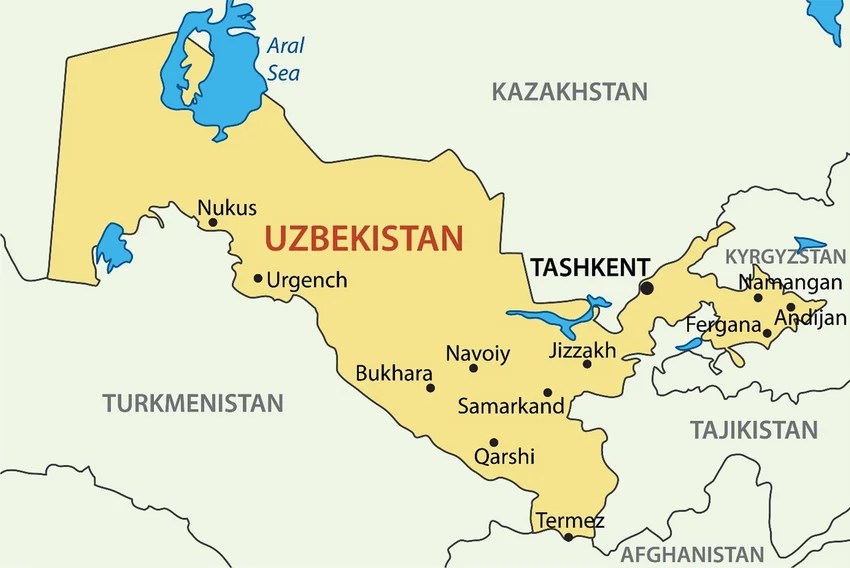
Samarkand Map