Man carries a longing for light and liberation, a restlessness with his own condition that no amount of material satisfaction resolves. … Those who wish to eradicate Sanatan Dharma should be required to specify what they propose to put in its place, because the longing it addresses does not go away when the tradition addressing it is removed. – Acharya Prashant
The word “Sanatan” means eternal. It is now among the most fiercely contested words in Indian public life, invoked often to denounce, defend or mobilise with an urgency that might suggest the arguers have some acquaintance with the tradition the word names. The urgency disguises a near-universal absence of that acquaintance. This is the characteristic condition of a tradition that has survived for several millennia: its label is loudly possessed while its philosophical core is quietly unread. A label offers identity without the cost of inquiry; the tradition’s core offers inquiry without the comfort of a pre-settled identity. These are incompatible offers, and the parties who fight most loudly over the label are, on both sides of every recurring controversy, determined to take the first and avoid the second.
When Udayanidhi Stalin declared in 2023 that Sanatan Dharma was like dengue, malaria, and the coronavirus, that it could not merely be opposed but had to be eradicated, and then renewed the substance of those remarks more recently, the response played out with perfect predictability. Defenders massed on one flank, critics on the other, and the noise between them was considerable. What the noise did not contain was any careful examination of the thing being argued about. The straw man, in which one constructs a distorted image of an opponent’s position and directs the criticism at the distortion, was not the property of one side alone. Critics attacked a version of Sanatan Dharma that bears little resemblance to what the term philosophically denotes. Defenders rushed to protect a version of Sanatan Dharma they have largely never read. In the middle, the actual philosophical tradition sat untouched by either party, as irrelevant to the noise as a library to a riot outside its doors.
The critics have genuine grievances that must be acknowledged without evasion. Caste discrimination, patriarchy, the ritual exploitation of the vulnerable, the sanctification of social hierarchy in the language of the sacred: these are real, documented, and still operative. Tamil Nadu’s history with precisely these abuses is not contested, and Periyar’s long campaign against them represents one of modern India’s more serious engagements with social oppression. His visit to Kashi, where he witnessed the conditions around the ghats and was then turned away from a feeding hall for not being a Brahmin, his years of questioning at Vaishnava religious gatherings as a young man, his decades of work against the abuse of caste authority: none of this is mythology. When a politician from that tradition objects to the spread of practices that historically served to brutalise the vulnerable, the objection carries genuine moral force. The criticism arrives from lived experience, not from ignorance of it.
Warranted indignation, however, is not the same as accurate targeting, and accurate targeting requires knowing what one is targeting. The social evils that animated Periyar did not arise from the philosophical core of the tradition called Sanatan Dharma. They arose from the ego’s characteristic capacity to commandeer any available language in service of exploitation. The animal within man, to use a formulation that appears in this tradition’s own diagnostic vocabulary, does not abandon its predatory instincts when it acquires the vocabulary of the sacred; it puts that vocabulary to use. The intention to exploit finds its cover in the language of religiosity, and thereafter the two are fused in public perception, so that attacking the exploitation feels like attacking the religion, and defending the religion feels like defending the exploitation. Both responses are mistaken, because the exploiter and the tradition the exploiter has hijacked are not the same thing.
If an unqualified practitioner causes harm in the name of medicine, that harm does not condemn the entire field; it condemns the practitioner’s departure from it. To use the malpractice as evidence that medicine itself must be eradicated is to punish the discipline for the quack’s crimes while leaving the quack untouched. This is precisely the structure of the argument against Sanatan Dharma. The social evils attributed to it were committed in its name, not in its spirit; to dispose of the tradition on this basis is to discard the antidote because the poison was administered in the same bottle.
The objection survives, of course, that if almost no one practices the antidote and the poison is what fills the bottles in actual circulation, the practical force of pointing to the antidote is limited. The honest answer is that the antidote is on the shelves where it has always been, untouched precisely because the work it demands is more difficult than the consolations of the poison. That untouched availability does not justify the poison; it indicts those who never opened the bottle.
What, then, does Sanatan Dharma actually mean? The answer lies in the tradition’s own language. The root “dharma” denotes that which is worth carrying, the fundamental obligation that one owes to one’s own existence. “Sanatan” denotes that which holds true irrespective of time, place, or circumstance. Together they name the obligation that is always operative. What in human experience qualifies as eternal in this sense? Ritual varies by village, belief varies by century, custom varies by caste and region and generation, all of these being local and contingent rather than eternal. What remains constant across all times, geographies, economic conditions, genders, and religious affiliations is the inner human condition: the restlessness, the fear, the greed, the bondage to desire and habit, the persistent registration that something is wrong within, that something essential is missing, that the ordinary strategies of accumulation and belonging have not and will not resolve the ache at the centre. This condition is neither Indian nor Hindu nor traceable to any particular scripture or founder. Every human being who has ever lived has inhabited it, whether in ancient Taxila or contemporary Tokyo. It does not abate with wealth or education or religious affiliation. It belongs, as the tradition itself diagnoses, to the structure of the ego that has not yet turned to look at itself. The dharma that arises from this eternal condition is equally universal: to move, through honest inquiry, from bondage toward understanding. This directional imperative, installed in the human situation itself, is what Sanatan Dharma names. Not a religion in the familiar sense of a founder and a creed and a list of compulsory observances, but a description of the ego’s most fundamental predicament and of what it owes itself in response.
A note on vocabulary is necessary before going further. The word “Atma,” which will recur, does not in this argument name a hidden substance behind the ego, a positive entity awaiting discovery once the ego is set aside. It names the limit of the ego’s reach, the point at which the categorising agent runs out of categories to apply. The classical commentators often used the word to name something positive, and the popular tradition has inherited this usage. The investigation conducted here is concerned with what the ego can honestly verify, and what it can verify is its own operations and the limit at which those operations terminate. Beyond that limit nothing can be said, including the claim that something positive lies there. The tradition’s most rigorous moments operate at this limit, not beyond it.
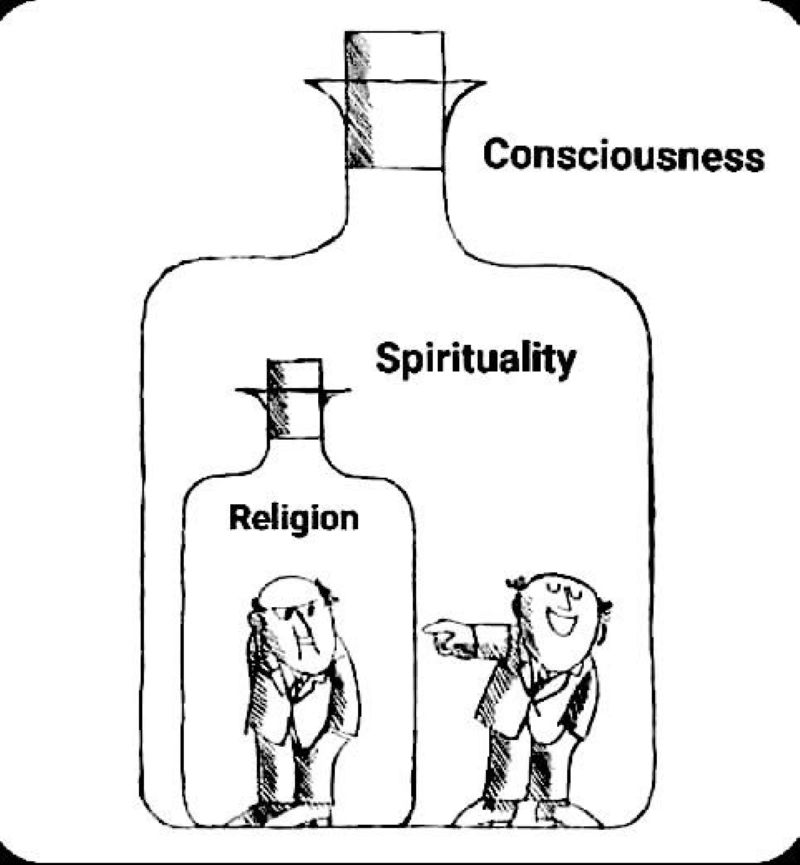
Man requires dharma precisely because he is not an animal. The animal inhabits its nature without remainder, and so requires no tradition, no scripture, no inquiry. Man is different. He carries a longing for light and liberation, a restlessness with his own condition that no amount of material satisfaction resolves. If that longing finds no honest framework through which to pursue movement toward dissolution, it does not disappear; it distorts. An ego denied a path toward its own dissolution does not stop seeking; it seeks more loudly, more violently, and in more dangerous directions. The consequences for any society that severs its population from a genuine dharmic orientation are not pleasant to contemplate. Those who wish to eradicate Sanatan Dharma should be required to specify what they propose to put in its place, because the longing it addresses does not go away when the tradition addressing it is removed.
What Sanatan Dharma actually is becomes clearer by examining what it is not. The tradition produced, over several thousand years spanning a geography from modern Afghanistan to Bengal and from Kashmir to Tamil Nadu, an enormous volume of text. Not all of it is of the same kind, and the confusion of kinds is one of the central sources of error in this debate. The tradition distinguishes sharply between shruti, that which was heard or revealed, and smriti, that which was remembered or composed. Shruti, which is to say the Vedas and the Upanishads that form their philosophical summit, constitutes the canonical core. Smriti, which includes the Manusmriti, the Puranas, and a vast body of supplementary texts, occupies a lower and explicitly derivative position. This distinction is built into the tradition’s own classification. The texts that contain the caste hierarchies, the patriarchal injunctions, the social regulations that the critics rightly find objectionable, belong overwhelmingly to the smriti category, and specifically to the Puranas, most of which were composed between a thousand and fifteen hundred years ago, vastly more recent than the Vedic core they claim to elaborate. The most widely practiced popular Hinduism today is largely pauranik, grounded in puranic stories and puranic ritual. Sanatan Dharma, properly understood, is Vedantic, grounded in the Upanishads, the Brahma Sutra, and the Bhagavad Gita. These are not the same thing.
It must be conceded that the classical commentators, including the greatest of them, did not always honour this hierarchy in their practical positions. Shankara, Ramanuja, and Madhva accepted the social authority of varnashrama in ways the upanishadic core does not require and in places actively contradicts. The lived tradition did not consistently operate on its own classification. The principal upanishadic corpus is itself heterogeneous: the Chandogya speaks of rebirth into “good wombs”; the Brihadaranyaka contains creation narratives that include varna; the Purusha Sukta of the Rig Veda is the well-known passage from which later commentators derived hereditary justification. These passages exist, and the honest reading acknowledges that the canonical core permits a caste-friendly interpretation. What the same corpus also contains, and contains in passages of unmistakable centrality, is the method that makes such interpretations impossible to sustain on the tradition’s own terms.
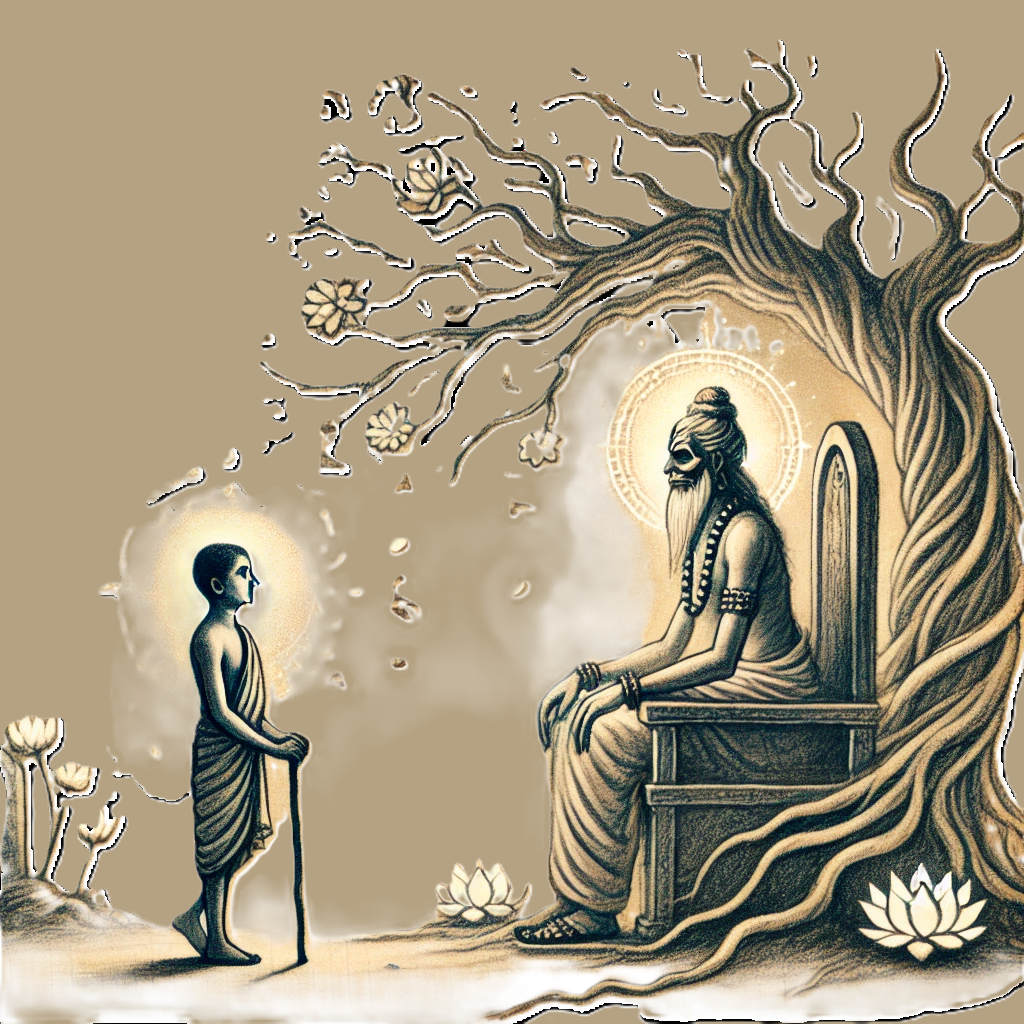
Consider how the method actually operates. In the Katha Upanishad, a young boy named Nachiketa approaches Yama, the Lord of Death, with a single question: what happens to a man after he dies, is there anything that remains, or does the matter end with the body? Yama, faced with the question, tries every available evasion. He offers Nachiketa long life, the kingship of the earth, wealth beyond reckoning, the company of women, sons and grandsons who will live a hundred years, anything at all in exchange for being released from the question. Nachiketa refuses each offer in turn. His refusals are not ornamental; they constitute the form of the inquiry. He says, in effect: these are the very things whose unsatisfactoriness produced my question; you cannot answer the question by offering me more of what produced it. The wealth will deplete, the kingdom will pass, the pleasures will end in their own exhaustion. The boy holds his position until the teaching he came for is delivered. Only when every comforting alternative to the actual question has been refused does the actual question receive its answer.
This is the form of the tradition. The student does not accept what is offered; he refuses everything offered until what is true is forced into the open. Authority does not settle the question; only the inquiry itself does. A tradition whose central texts operate this way cannot consistently produce a stable caste hierarchy, because the same method that demands the rejection of consolation in the search for truth demands the rejection of inherited social categories in the constitution of the self. The two refusals are the same refusal. The canonical core permits the caste reading, in the sense that scattered passages can be assembled into one; the canonical core’s method dissolves the caste reading, in the sense that the inquiry it demands cannot be conducted while one is still defending one’s inherited place in a hierarchy. The lived tradition often chose the assembly over the method. The unread tradition retains the method intact.
The Vajrasuchika Upanishad, though a minor and late text, makes the method explicit on this specific point. The student asks what caste is, and the teacher responds with a series of refutations. Can caste belong to the body? No, because all bodies arise from the same five elements. Can caste belong to Atma? No, because the word Atma names precisely the point at which the ego’s categories run out; nothing the ego adds can attach where the ego itself has not entered. The conclusion is unambiguous: caste belongs only to the ego, which is to say it is the ego’s construction, not a feature of any reality the ego did not itself produce.
The same dissolution operates throughout the principal Upanishads, not as a doctrine about caste but as the general method of the inquiry. Every egoic category, including but not limited to varna, is treated as the very obstruction the inquiry is designed to dissolve. To read the Ashtavakra Gita, which compresses the Sanatana spirit into one of its purest available forms, and to point to caste anywhere in its eighteen chapters would be an interesting exercise; the concept does not exist in the text, because the text is too busy dissolving the ego that would need such a category. Sanatan Dharma’s foundational position is that all divisions among human beings, of caste, colour, creed, language, gender, economic station, are constructions of an ego that is itself the central object of dharmic inquiry. This makes Sanatan Dharma not a source of division but one of the most radical philosophies of dissolution the species has produced. It does not unify what was divided; it dissolves the categorising agent that divided in the first place.
The confusion deepens because three categorically distinct things are routinely conflated in this debate. Sanatan Dharma, as described, is a philosophical orientation directed toward liberation from inner bondage, indifferent to creed and community. Hinduism, as the Supreme Court too has observed with a precision that deserves wider acknowledgment, is not a religion in the technical sense at all; it is a vast and internally inconsistent collection of belief systems, ranging from sophisticated non-dualism to local animism, held together by little more than geographical provenance, its very name derived from a river, applied by outsiders, and retaining that looseness to this day. A person can believe anything whatsoever, or nothing in particular, and still qualify as Hindu, because no practice forfeits the label and none confers it. The word has become nearly meaningless as a philosophical designation. Hindutva is a third entity, categorically different from both: a political ideology, barely a century old, that seeks to define Indian national identity through cultural markers whose actual roots lie largely in the Mughal and British periods rather than in the ancient philosophical tradition it claims to represent. When critics attack Sanatan Dharma and mean practiced Hinduism, they target a real problem with a wrong name. When defenders protect Sanatan Dharma and mean Hindutva, they mount a real defence of a wrong object. The vocabulary ensures that no genuine examination of any of the three things named can take place.
Behind the vocabulary problem lies a further one that deserves examination in its own right: the systematic attempt over recent decades to transform Sanatan Dharma into something resembling an Abrahamic religion. The effort is visible in concrete operations. The Bhagavad Gita is increasingly promoted as “the Hindu Bible,” a single canonical text in a tradition whose actual textual practice was always plural. Hindu weekend schools and dharma classes are organised on the explicit model of Sunday catechism. The language of “conversion” and “reconversion,” foreign to the older tradition, is now central to a significant strand of contemporary Hindu organisation. Demands appear for a single defining figure, a single boundary beyond which one is no longer a co-religionist, a posture of doctrinal exclusivity and communal aggression where there was previously argumentative plurality. This is not Sanatan Dharma; it is the ego’s inferiority complex given institutional form. The Hindu who wishes to Abrahamise his tradition is, in the most direct sense, expressing his admiration for the traditions he claims to oppose. One does not voluntarily remake oneself in another’s image unless one regards that other as superior; the imitation is the compliment. The stated motivation may be resistance to Christianity or Islam, but the actual operation is one of unacknowledged admiration: seeing the wealth and global influence of the one, seeing the demographic reach of the other, and concluding that these successes must owe something to the organisational character of those traditions, and therefore that emulation will produce equivalent results. An ego that genuinely regarded its own tradition as superior would not study the other in order to become it.
The Abrahamic model requires belief: entry into the tradition requires accepting certain propositions as true, and exit is triggered by rejecting them. This is precisely what Sanatan Dharma does not require and, in its philosophical core, explicitly refuses. The central word of Sanatan Dharma is not belief but jigyaasa, the hunger to know. Religion in the Abrahamic pattern tells the adherent what to believe and asks him to maintain it. Sanatan Dharma tells the seeker that his received beliefs, his maan and his mat, the opinions and convictions he has accumulated from family, culture, and community, are themselves the primary obstacle, the very substance of inner bondage that the dharma is designed to dissolve. A true Sanatani is therefore not someone who believes more intensely; he is someone who examines his own beliefs more rigorously than he examines anyone else’s. The inner examination begins at home, with the convictions one has never questioned precisely because one has held them longest. Sanatan Dharma is founded on jigyaasa; Abrahamic religion is founded on iman, faith, the acceptance of what has been given. These are not variations of the same impulse; they are structurally opposed.
This structural opposition has a remarkable implication that the controversy has entirely missed. By the criterion the tradition itself provides, a Muslim who sincerely inquires into the nature of his own inner bondage and actively moves toward its dissolution qualifies more as a Sanatani than a self-declared Hindu who has never examined a Vedantic text and defends his religious identity through aggression and superstition. A Christian, a Jew, a declared atheist, anyone whose inner life is oriented toward honest self-inquiry and the dissolution of the ego’s bondages, qualifies as a Sanatani under the tradition’s own definition. Conversely, the person who recites mantras without inquiry, performs rituals without examination, and wears religious identity as scaffolding for the ego’s project of self-promotion does not qualify as a Sanatani no matter what label he claims. There may not be a thousand truly Sanatani practitioners among those who loudly invoke the Sanatana name. This is uncomfortable, but it follows directly from the tradition’s own criteria, which are the only criteria with any legitimate claim to authority.
Similarly, astika in the tradition’s own usage does not mean what most assume. It does not mean “one who believes in God.” It means one who has an understanding of shruti, in the Vedantic revelation, in the tradition’s highest texts. Several of the six orthodox darshanas, the great philosophical systems of Sanatan tradition, are explicitly astika while containing no personal God whatsoever. Sankhya posits no Ishvara; Purva Mimamsa acknowledges ritual divinities but no creator god; both are astika systems, because they accept the authority of Vedic shruti. Theism and Sanatan Dharma are not the same requirement. One can be a genuine Sanatani without believing in any personal god, and one can believe in any number of gods while remaining, philosophically, entirely outside the tradition.
Behind the ego’s relationship to religion in general lies the deepest problem this controversy has not acknowledged. The ego registers itself as insufficient. It senses, without being able to name what it lacks, that it is not enough. Every strategy it employs to cover this registration, of accumulation, achievement, relationship, identity, provides temporary relief and then demands fresh effort, because the insufficiency the ego registers is the registration of itself, and no addition resolves what addition is the problem. Religion, at its philosophical root, is a response to this condition, the tradition’s accumulated attempt to diagnose the ego’s situation and point in the direction of its dissolution. But the ego does not receive religion this way. It receives religion as it receives everything else: as material for scaffolding, as another acquisition to be claimed, another identity to be defended, another credential to be deployed in the endless project of demonstrating adequacy. What was intended as a solvent of the ego becomes the ego’s most elaborately decorated possession. The devout man who visits the temple daily, who can cite scripture and observe ritual with impeccable fidelity, has constructed a performance that proves to himself, above all, that he is religious. The performance substitutes for the inquiry it was supposed to initiate. He has used religion to protect himself from religion’s actual demand. And the ego does not merely resist dharma’s transformation; it consumes dharma and grows on the consumption. The more religious paraphernalia the ego accumulates, the larger it grows, and the further it moves from the confrontation the dharma was designed to force. The ego that should have been dissolved by dharma instead fattens on dharmic props and calls the fattening growth.
A teaching is not the same thing as a tradition. The teaching is what was said or demonstrated in a particular historical moment, oriented toward the ego’s dissolution. The tradition is the institutional apparatus that develops around it over subsequent centuries, the lineages, the commentaries, the ritual prescriptions, the sectarian boundaries, the orthodoxies. Within a few generations of any teacher’s death, the institution begins serving its own survival. Within a few more, it produces material the original teacher would not have recognised, and defends that material as the original teaching. The texts that carry the original investigation, the Upanishads, the Ashtavakra Gita, are not empty of authority; they are astonishingly precise and demanding. But they have been buried under the pauranik overlay of story, ritual, and communal identity that the tradition-as-institution finds more tractable. The scripture survives while its function is buried under centuries of appropriation. The student who failed the examination because he never opened the textbook then turns on the teacher and the textbook as responsible for his failure. This is a precise description of what has happened to Sanatan Dharma’s relationship with those who carry its name.
The most pointed irony of the present controversy is one that will satisfy neither side. Periyar, the figure whose spirit the critics invoke to justify their objections, was animated throughout his life by a refusal to accept received authority, an insistence on questioning what others absorbed without examination, a rage against the exploitation of the vulnerable dressed in the language of the sacred, a commitment to rational inquiry over hereditary belief. He was silenced and dismissed as a young man for asking inconvenient questions at religious gatherings; he took the silencing not as a reason to stop asking but as confirmation that the questions mattered. In the framework of Sanatan Dharma properly understood, this disposition is not antithetical to the tradition; it is, in the most precise sense, the tradition itself. The Upanishads are dialogues built on the premise that inquiry rather than acceptance is the path: the student questions, the teacher responds, the student questions the response, and no claim is exempt from examination. The Ashtavakra Gita opens with a student who refuses to accept the teacher’s words on authority and demands that the truth be demonstrated. Nachiketa refused every consolation offered by the Lord of Death until the actual answer was given. Periyar, by this reckoning, was operating closer to the tradition’s own method than most of those who now invoke the tradition’s name to silence precisely the kind of questioning Periyar exemplified.
Extend the observation to Bhagat Singh and Ambedkar and the case must be made rather than asserted. Bhagat Singh wrote Why I Am an Atheist in a prison cell in 1930, knowing his execution was near. The essay is not, in any honest reading, a celebration of nihilism or a polemic against inquiry. It is one of the most careful pieces of self-examination produced in early twentieth-century Indian writing. He refuses to pray before his death not because he denies the value of seeking but because he refuses to use the seeking instrumentally, as a crutch in his final hours, when he had not credited it in the years that preceded them. This is the precise discipline the dharmic inquiry asks of the seeker: that the inquiry be honest enough to refuse the consolations it has not earned. Bhagat Singh did not reject Sanatan Dharma’s method; he rejected the practiced tradition’s appropriation of that method into communal identity. The two are not the same rejection, and the essay distinguishes between them with more care than most of his subsequent admirers have noticed.
Ambedkar’s case is sharper still. Annihilation of Caste is not a rejection of inquiry; it is a sustained accusation that the practiced tradition refused to apply inquiry to itself. His turn to Buddhism was not a turn away from the dharmic project but a turn toward a tradition that, in his reading, conducted the inquiry without insisting on the revealed authority of a corpus the inquiry could not interrogate. This is the jigyaasa-versus-iman distinction enacted as a life. Ambedkar would have rejected the label Sanatani, and the rejection must be honoured rather than overwritten. What cannot be honoured, because the texts do not permit it, is the claim that he was operating against the tradition’s actual method. He was operating against its institutional capture, and the operation was itself an exercise of the method. The label belongs to the egos that fight over labels. The method is available to anyone who undertakes it, regardless of what he calls himself or refuses to call himself.
You have read this far, and the question by now is not whether the defenders or the critics have it right. The question is whether the inquiry the tradition asks of you is one you have ever conducted, or only one you have argued about. The labels available, Sanatani, Hindu, secularist, atheist, are all the same label in one important respect: each can be carried as an identity without ever undertaking the examination from which the underlying tradition derives its name. If the identity is carried and the examination is not undertaken, the label is empty regardless of which one is chosen. The defender who has never read an Upanishad and the critic who has never read one are, in the only sense the tradition cares about, in exactly the same position.
There is something to be named here that neither side in this controversy has named. Sanatan Dharma is among the most rigorous philosophical traditions the species has produced. It has grappled, with extraordinary sophistication and over an enormous span of time, with the most fundamental questions available to a human being: who am I, what is the nature of suffering, what does the dissolution of bondage mean, how does the ego produce the very bondages it then suffers? Its summit texts are among the finest instruments of inner inquiry in any tradition. That these texts now largely sit unread, while the tradition that claims them produces superstition, caste violence, and communal aggression in their name, while the word Sanatan has in some quarters become a synonym for prejudice and exclusion, while those who have most faithfully practised the tradition’s actual method are sometimes found among its declared opponents: this is not the fault of the tradition. It is the fault of those who have used the tradition’s name while fleeing from its demand.
What is true religiosity, if it is not what either side in this controversy is defending or attacking? It is the ego’s honest engagement with its own condition, the willingness to examine what one actually is rather than what one has been told one is, the movement, however halting and partial, from bondage toward understanding. It asks no particular founder, no particular text, no particular ritual, no particular community for its legitimacy. It asks only that the ego turn, with something approaching courage, toward the very thing it has spent its entire existence avoiding: a direct encounter with its own fabrications. The tradition that carries this demand has been carrying it for several thousand years. Its central texts remain available, translated, annotated, accessible to anyone who wishes to read them.
Most do not, and most will not. The loudest voices in this controversy, on both sides, have almost certainly not read them. And the question that should trouble everyone involved, defender and critic alike, is this: what exactly were you fighting over? – The Pioneer, 16 may 2026
› Acharya Prashant is a philosopher and author whose work centres on self-inquiry and its application to contemporary life.