Today, Beijing is using the same old propaganda to propagate another lie: that China is the leading Buddhist power in the world, conveniently forgetting that Tibetan Buddhism comes from Nalanda Mahavihara in Northern India. – Claude Arpi
Every year around the end of March, Beijing’s propaganda clamours that China “emancipated” Tibet and “liberated millions of serfs” after the Dalai Lama escaped to India in 1959 and his government was taken over by the Chinese Communist Party in Lhasa.
This year, China Tibet Online, an official website of the Communist Party of China, in the same vein, titled an article “Lamenting the Most Heinous Crimes Against Humanity”. It explained, “In days of old, the Land of Snows was a living hell; serfs shed blood and tears that soaked their very garments. Stripped of their skin and gouged of their eyes—they possessed no human rights; the cruel regime’s sins ran deep.”
It is not what outsiders—both Westerners and Indians—who visited the Land of Snows reported; on the contrary, the independent observers discovered that the Tibetan people were a happy lot, though there were undeniably differences between the aristocracy, the clergy and the common men.
But today China continues to say, “Democratic reform ushered in a new dawn; a million serfs rose to become the masters of their own destiny”, adding that the Dalai Lama “defected to serve as a foreign lackey—betraying his faith, sowing chaos in Tibet, and spurning the benevolence of the nation.”
The “foreign country” is presumably India, which has always honoured the Tibetan leader as a very special guest.
In fact, an impartial study of the history of modern Tibet shows quite the opposite picture; it is the ordinary men and women who revolted against the Chinese yoke, in particular in March 1959, when the entire population rose against the Chinese occupiers to protect the life of their revered leader and allow him to leave for India.
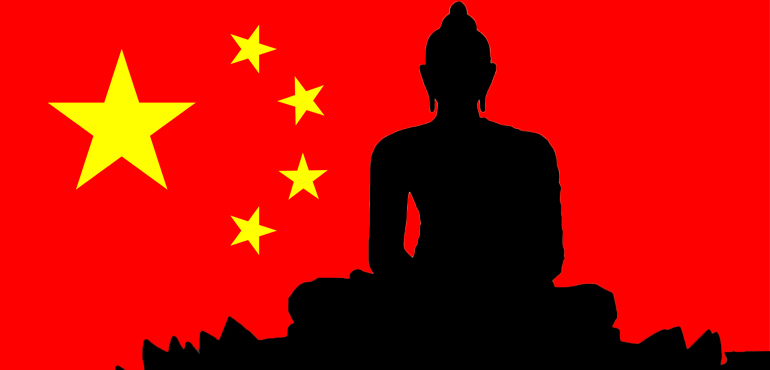
Today, Beijing is using the same old propaganda to propagate another lie: that China is the leading Buddhist power in the world, conveniently forgetting that Tibetan Buddhism comes from Nalanda Mahavihara in Northern India.
India has started countering this misinformation by, for example, organising the second Global Buddhist Summit at the Bharat Mandapam in New Delhi on January 24 and 25, 2026.
The two-day conference brought together more than 200 delegates, mostly Buddhist leaders, scholars, practitioners and policymakers, to discuss contemporary global challenges facing the planet.
Sinisation of Buddhism
Today Beijing would like the world to believe that Buddhism has for decades been a leading component of Chinese civilisation and that China should take the lead in the propagation of the teachings of the Great Monk, who more than 2,500 years ago wandered in the plains of North India, preaching compassion, mindfulness and interdependent arising.
Paradoxically, Beijing wants to teach Buddhism to Tibet!
In September 2025, a meeting was convened in Lhasa by Wang Junzheng, the secretary of the party committee of the Tibet Autonomous Region (TAR), to address Communist officials dealing with “religion”.
Is it not surprising that a state supposedly following Karl Marx’s atheist precepts should deal with religion?
Wang insisted on the necessity “to earnestly study and implement General Secretary Xi Jinping’s important instructions on religious work and … systematically promote the Sinicisation of Tibetan Buddhism.”
The objective was to “lay a solid foundation for long-term peace and stability”. This means that to be stable, Tibet needs to be Buddhist, but with Chinese characteristics.
Wang mentioned Xi Jinping’s visit to Tibet in July 2025, during which the president gave “important instructions …to emphasise Buddhism with the requirements to systematically promote the Sinicisation of China’s religion, strengthen the governance of religious affairs and the rule of law and guide Tibetan Buddhism to adapt to the socialist society.”
In other words, first Marx and then the Buddha.
On November 11, 2025, Wang Junzheng, again presiding over a symposium on religious legislation in Tibet, asked the participants to “solidly promote the construction of the Chinese national community, actively guide Tibetan Buddhism to adapt to the socialist society”.
Preaching Buddhism Outside China
On April 21, Massimo Introvigne wrote on Bitter Winter, a specialised website following development inside China: “Buddhist Friendship in Seoul to Advance Its Religious Policy Agenda”, explaining that a Communist Party of China-controlled delegation “promotes Beijing’s line while regional partners intensify pressure on the Unification Church, Shincheonji, and other groups labelled as cults.”
It cites the case of a delegation from the China Buddhist Association (CBA), led by vice president Zong Xing, who travelled to Seoul from March 30 to April 2 to attend the preparatory meeting for the 26th China-Korea-Japan Buddhist Friendship Exchange Conference.
Bitter Winter observed that Chinese media portrayed this visit as a continuation of the “golden bond” of trilateral Buddhist cooperation, an idea established in 1995 by senior monks from the three countries. Official reports described the gathering as a way to contribute to regional stability and world peace, using the familiar language that defines Chinese religious affairs propaganda.”
The China Buddhist Association (CBA) is not an independent religious group; in December 2022 the United States Commission on International Religious Freedom (USCIRF) noted that the CBA serves “as a tool of the Chinese Communist Party (CCP) to control Buddhism inside China and promote state narratives outside. USCIRF called the association a conduit and endorser of state propaganda”.
The Fate of Those Refusing to Follow the Party
On April 23, Amnesty International appealed to Chinese authorities, seeking information on the fate and whereabouts of a Tibetan religious leader and educator called Choktrul Dorje Ten Rinpoche from Chikdril County in the Golog Tibetan Autonomous Prefecture of Qinghai Province.
Rinpoche is a prominent religious and educational figure in the region; he founded a monastery and a vocational school supporting local Tibetan communities. He has been missing since December 2025. Thereafter, no information about his status, place of detention, or the charges could be obtained, though in January 2026, some individuals monitoring the case received informal indications suggesting that the Tibetan leader was ‘under investigation’.
According to Amnesty International, the prolonged incommunicado detention of religious figures “raises serious concerns under international human rights law. Such conditions, the group emphasised, place detainees at heightened risk of torture and other forms of ill-treatment.”
Take the case of another prominent Tibetan lama, Tulku Hungkar Dorje Rinpoche, who was arrested in Ho Chi Minh City, Vietnam, on March 25, 2025, through a joint operation by Vietnamese police and Chinese agents. Rinpoche died in custody four days later, and despite international concern over transnational human rights violations, nothing came out of the case.
The Lama, aged 56, was a respected Tibetan spiritual leader and head of the Lung Ngon monastery in Amdo (Qinghai province). He had to escape to Vietnam to escape persecution by Chinese authorities. He was arrested in a hotel in Ho Chi Minh City.
Such cases have been happening regularly.
China’s Political Influence
Politically China remains very influential. It managed to get the International Council for the Day of Vesak to endorse an appeal from the Buddhist Association of China to host the 21st UN Day of Vesak Celebrations in China in 2026. The 20th UN Day of Vesak was held in Ho Chi Minh City, Vietnam, from May 6 to 8, 2025, under the theme “Unity and Harmony for Human Dignity”, while the 19th UN Day of Vesak (2024) took place in Bangkok, Thailand, from May 19-20, 2024; the theme was “The Buddhist Way of Building Trust and Solidarity”.
This year it will be held in China. It is not being questioned.
A Positive Development in India
In this context, an extremely interesting development is the revival of Tibetan Buddhism in the Himalayan belt.
A conference on the contribution of Himalayan Buddhism to the spiritual and cultural heritage of India will be held in Leh, Ladakh, on May 3. According to the organisers: “Himalayan Buddhism is a distinct, esoteric form of Mahayana Buddhism practised across the Indian Himalayas as well as in Tibet, Bhutan and Nepal.” Himalayan Buddhism has indelibly shaped and contributed to the spiritual, cultural, and intellectual landscape of Asia by acting as a ‘living repository’ for ancient Indian traditions.”
A concept note added: “Centred on historic, high-altitude monasteries, this heritage features vibrant festivals, monastic education, and artistic traditions that promote peace, compassion, and harmony with nature.”
“A unique way of life that is practised daily” is what makes it different from Buddhism in China, which is mostly synonymous with repression and assimilation; the precepts of the Buddha are not practised in daily life.
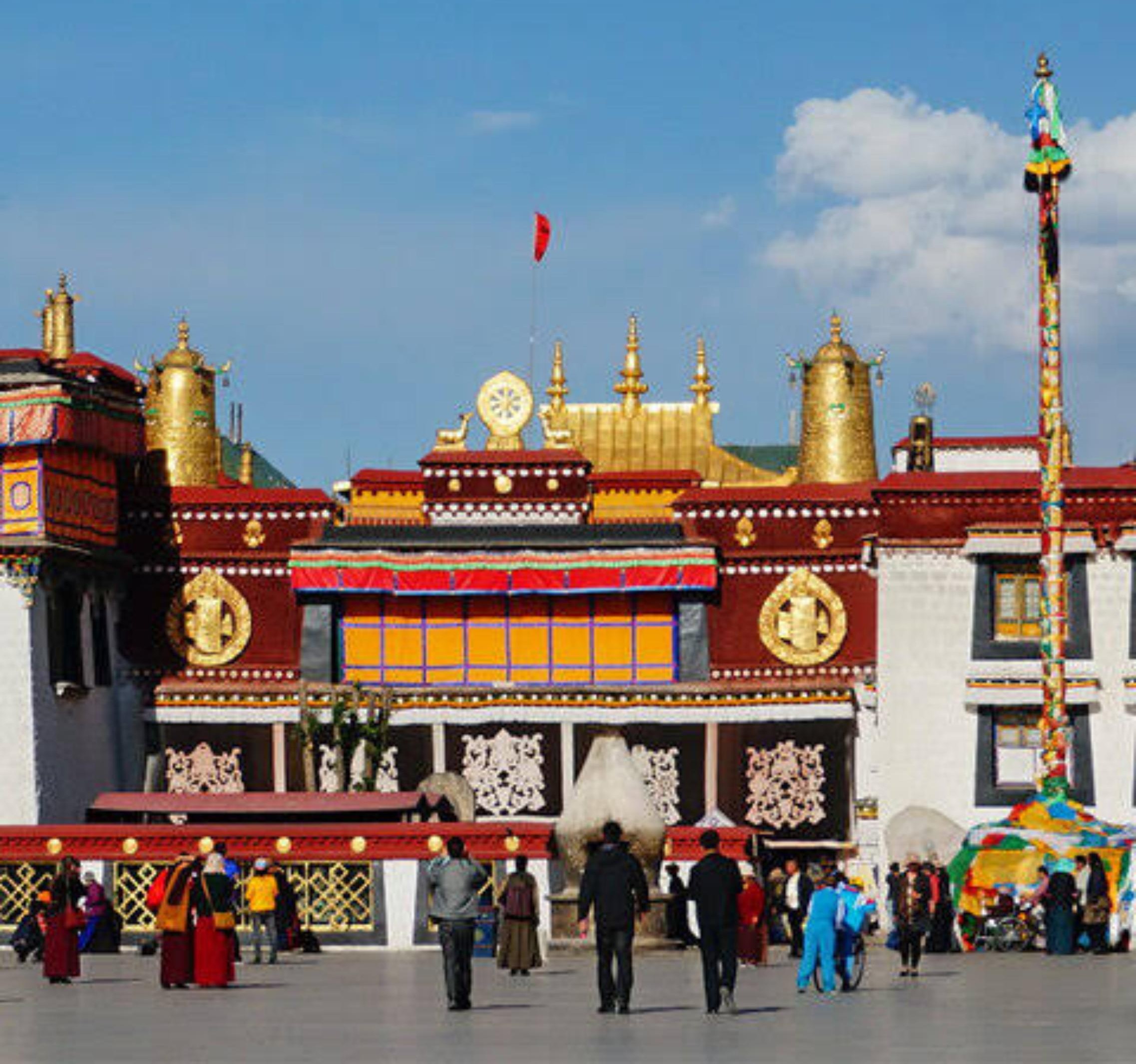
The revival of the Buddha Dharma on the northern Indian borders also has a political message to China; where do you see stupas, prayer flags, and Om Mani Padme Hum stones in Tibet? No, only the red flag flies, even on the Potala Palace or in the Tsuglhakhang Central Cathedral in Lhasa. Isn’t it a sign? – Firstpost, 6 May 2026
› Claude Arpi is Distinguished Fellow at the Centre of Excellence for Himalayan Studies, Shiv Nadar Institution of Eminence (Delhi), and writes on India, China, Tibet and Indo-French relations.