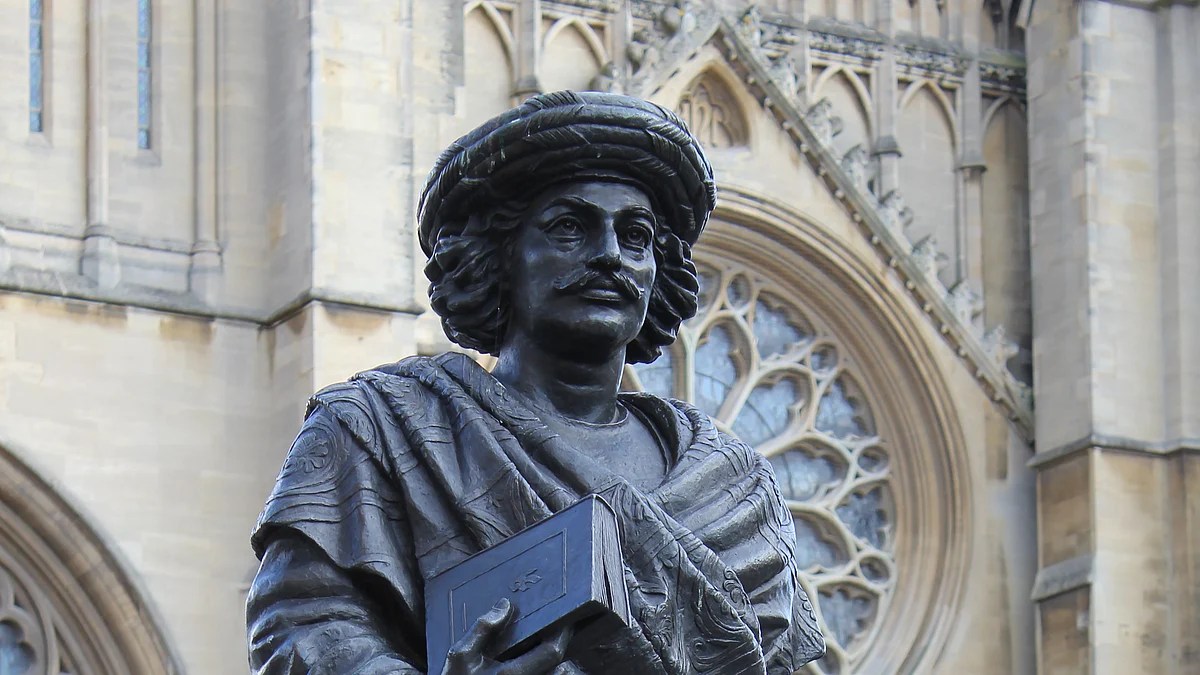
Raja Ram Mohan Roy (1772/74-1833) and Thomas Babington Macaulay (1800-1859) are two well-known public intellectuals of their times, both of whom presented a vision of the future of India which, at the time of their writing, had passed under British rule. The visions of both pertained to how this rule was likely to unfold, and to end.
I present below their visions in their own words, as I was struck by the similarity between the two, despite their radically different backgrounds.
Raja Ram Mohan Roy wrote as follows in a letter to an English friend in 1828:
“Supposing that one hundred years hence the Native character become elevated from constant intercourse with Europeans and the acquirement of general and political knowledge as well as of modern arts and sciences, is it possible that they will not have the spirit as well as the inclination to resist effectually any unjust and oppressive measures serving to degrade them in the scale of society? It should not be lost sight of that the position of India is very different from that of Ireland, to any quarter of which an English fleet may suddenly convey a body of troops that may force its way in the requisite direction and succeed in suppressing every effort of a refractory spirit. Were India to share one fourth of the knowledge and energy of that country, she would prove from her remote situation, her riches and her vast population, either useful and profitable as a willing province, an ally of the British Empire, or troublesome and annoying as a determined enemy.” – Ram Mohan Roy, The English Works of Rammohun Roy, edited by Kalidas Nag and Deba Jyoti Burman [Calcutta: Sadharan Brahmo Samaj, 1945-58], vol. 4, p. 103. See also Stephen Haye, editor, Sources of Indian Tradition, 2nd edition [New York: Columbia University Press, 1988], vol. 2, pp. 33-34.
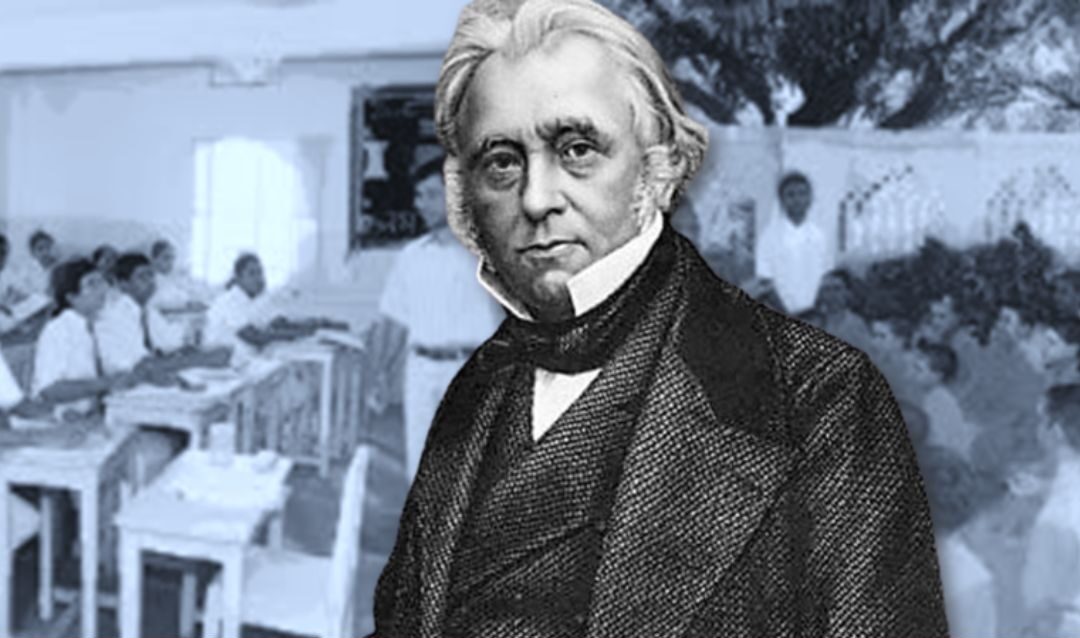
And Thomas Babington Macaulay declared, in the British Parliament, in the first half of the nineteenth century:
“The destinies of our Indian empire are covered with thick darkness. It is difficult to form any conjecture as to the fate reserved for a state which resembles no other in history, and which forms by itself a separate class of political phenomena. The laws which regulate its growth and its decay are still unknown to us. It may be that the public mind of India may expand under our system till it has outgrown that system; that by good government we may educate our subjects into a capacity for better government; that, having become instructed in European knowledge, they may, in some future age, demand European institutions. Whether such a day will ever come I know not. But never will I attempt to avert or to retard it. Whenever it comes, it will be the proudest day in English history. To have found a great people sunk in the lowest depths of slavery and superstition, to have so ruled them as to have made them desirous and capable of all the privileges of citizens, would indeed be a title to glory all our own. The sceptre may pass away from us. Unforeseen accidents may derange our most profound schemes of policy. Victory may be inconstant to our arms. But there are triumphs which are followed by no reverse. There is an empire exempt from all natural causes of decay. Those triumphs are the pacific triumphs of reason over barbarism; that empire is the imperishable empire of our arts and our morals, our literature and our laws.” – Thomas Babington Macaulay, Essays, Critical and Miscellaneous [Philadelphia: Carey & Hart, 1844], vol. 1, pp. 167-68. See also Arvind Sharma, The Ruler’s Gaze [Noida: Harper Collins Publishers, 2017], pp. 95-96.
What strikes one, on reading these two passages, is the remarkable convergence between these two visions, despite the radically different backgrounds of these two intellectuals.
However, in order to see this convergence, one has to dive deeper into the passages and read between the lines. Both of them are hinting at a future in which the Indians may demand ‘European institutions’. I see this as a call for the possibility, which both of them foresaw, but could not articulate at the time directly, namely, a demand by the Indians to bring an end to British rule. Both of them had gazed at the crystal ball and seen something similar––Indians demanding an end to the status quo. Or to put it more bluntly: an end to British rule. And both were uncannily prescient in foreseeing this. – News18, 15 february 2026
› Prof. Arvind Sharma, formerly in the IAS, is the Birks Professor of Comparative Religion at McGill University in Montreal Canada.
 VOICE OF INDIA