The Problem of Islamism – Sita Ram Goel

Islamism

What we mean by Islamism is a self-righteous psychology and a closed cultural attitude which make it impossible for Muslim converts to coexist peacefully and with dignity with other people. – Sita Ram Goel

The most malevolent of these residues is Islamism, the residue of the Muslim invasion of India spread over several centuries. Its basic tenets are ultimately derived from the teachings of Islam which has so far succeeded in sealing itself off from every shade of empiricism, rationalism, universalism, humanism and liberalism, the hallmarks of Hindu as well as modern Western culture. But in the context of India where Islam failed in its mission of lasting conquest and total conversion, these tenets have acquired a singularly sinister and subversive character.

Let it be clear that the reference here is not at all to our Muslim brethren who are our own flesh and blood, except for that microscopic minority which takes pride in the purity of its Arab, Persian or Turkish descent.[1] Instead of being the proponents of Islamism, the Muslims of India are its victims whom it is trying to use as vehicles of its poisonous virulence. The vast majority of Indian Muslims were converted to Islam by force or allurements. But the conversion did not help them socially or culturally as their status today in India’s Muslim society should amply prove. The Muslims of India, therefore, have to be freed from rather than accused of Islamism.

What we mean by Islamism is a self-righteous psychology and a closed cultural attitude which make it impossible for its converts to coexist peacefully and with dignity with other people. There are many Hindus who share several tenets of Islamism. On the other hand, there are many Muslims who are frightened by Islamism and who would gladly join the mainstream of Indian nationalism if they are freed from the whiphand which a minority of theologians, politicians and hooligans has come to wield in their community.

Those who want to know Islamism first-hand and in full measure are referred to Shaikh Sir Mohammed Iqbal’s two long poems which he wrote quite early in his career, and which earned for him the title of Allama among the adherents of this cult. These are the Shikwa and the Jawab-i-Shikwah which Mr. Khushwant Singh has recently published in an English translation.

The Shikwa ends by summing up that “naghma hindi hai tau kya, lai tau hijazi hai miri”, that is, “no matter if my idiom is Indian, my spirit is that of Hijaz”. Hijaz is that part of Arabia in which Mecca and Medina are situated.

The Jawab-i-Shikwah ends on a still more strident note. Allah announces to the Allama His supreme message for mankind in the following words: “kî wafã tûne muhammad se tau ham tere hain”, that is, “if you are faithful to Muhammad, I shall be faithful to you.”

Now, there are many Muslims in India who have never heard the name of Iqbal or listened to his muse. And there are many Hindus whose admiration for Iqbal is immeasurable. No, Islamism does not refer to any particular section of Indian society. It refers to that intellectual-or unintellectual-attitude which awards the monopoly of truth and virtue to a particular prophet, and consigns all knowledge to the pages of a particular book.

Taking our cue from Allama Iqbal and his lesser cohorts like Altaf Hussain Hali, we can safely summarise the credo of Islamism in the following five fundamentals:

1. That Indian society before the advent of Islam was living in utter spiritual, moral and cultural darkness (jahiliya) like pre-Islamic Arabia;

2. That Islam brought to India the only true religion, the only authentic moral values, the only humane culture, and the only progressive social order;

3. That this civilizing mission of Islam in India could not be completed, as in many other lands of Asia and Africa, due to the intervention of the wily British who cheated Islam of its empire in India, mostly by means of fraud;

4. That while the creation of Pakistan has been a triumph and consolidation of the power of Islam, west of the Ravi and east of the Hooghly, the conquest of India by Islam remains an unfinished task;

5. That Islam has a right to use all means, including force, to convert this Dãrul-harb of an India into a Dãrul-Islam, so that a Hakûmat-i-Ilãhiyah could liquidate all traces of jãhilîya and impose the law and culture of Islam.

There are many Hindus like the late Pandit Sunderlal who fully accept the first two fundamentals of Islamism. It is a different matter that their logic fails them at this stage and they do not proceed to the next three fundamentals which follow irrevocably. And there have been many Muslims like the late Rafi Ahmed Kidwai and Justice M.C. Chagla who rejects these fundamentals as repugnant.

Having thus outlined its version of past Indian history, and the apocalypse towards which future Indian history should be forced to travel, Islamism has evolved a strategy in which the Muslims of India are envisaged as a base and an arsenal. Some salient features of this strategy can be outlined as follows:

1. The Muslims of India, particularly the Muslim intelligentsia, should be sealed off from every shade of rationalism, universalism, humanism and liberalism, and an army of mullahs and maulvis trained in the tenets of Islam should be let loose to brainwash and keep them along the right track;

2. Every Muslim who does not accept Islamism or dares criticize it or stands for the mainstream of Indian nationalism, away from and above religious differences, should be denounced as a renegade and a legitimate victim for murderous Muslim mobs;

3. The Muslims should be encouraged to air as many grievances as can be invented, and try to pass off as a down-trodden minority, oppressed, exploited and treated as second class citizens by the “brute” Hindu majority;

4. These contrived grievances of the Muslims should be used to convert the Muslim community into a compact vote-bank which can function as a balancing factor in as many electoral constituencies as possible, and which can blackmail all non-Islamist political parties to accommodate Muslim candidates or include the maximum measure of concessions to the Muslim community in their election manifestos;

5. The Muslims should be made to agitate for India’s support to all international Islamic causes, right or wrong, legitimate or illegitimate, so that their attention is kept constantly diverted from demands of their own economic, social and cultural condition;

6. The Muslims should be progressively persuaded and prepared to stage street riots on the slightest pretext, be it a stray pig, or music before a mosque, or Urdu, or the minority character of the Aligarh Muslim University, or a purely personal fracas between toughs belonging to two communities, or the bombing of al-Aqsa mosque in Jerusalem by an Austrian adventurer, or the hanging of Z.A. Bhutto by President Zia of Pakistan, or the capture of the Kaaba by some disgruntled faction in Saudi Arabian politics, or some other similar event in the Islamic world at large;

7. The frequent riots should be used to frighten the Muslims who should then be coaxed to create, consolidate and extend exclusive Muslim enclaves which can be stocked with arms and ammunition, imported or otherwise.

The seven-fold strategy is aimed at the Muslims in India who are to be brainwashed, blackmailed, frightened and forced into the fold of Islamism. Another side of the same strategy has been worked out to neutralise, paralyse and blacken or pamper different sections of Hindu society so that the road is cleared for the forward march of Islamism.  Some salient features of this secondary strategy can be outlined as follows:

1. The concept of Secularism which is enshrined in the Constitution of India and which has become the most sacred slogan for all our political parties should be distorted, misinterpreted and misused to the maximum to block out the least little expression of Hindu culture in the state apparatus and public life of India;

2. The terms “communal” and “communalism” which have become terms of abuse in India’s political parlance, should be carefully cultivated and more and more mystified to malign all those organisations, institutions and parties which do not serve Islamism, directly and/or indirectly;

3. The accusation of being fascists and anti-secularists should be hurled at all those individuals and organisations who question the exclusive claims of Islam and its culture, who know and tell the truth about Islamic scripture and history, and who see through the Muslim game of grievances;

4. All praise and support should be extended to those Hindus who go out of their way to champion Islamic causes, national and international, and who see in Islam and its culture those higher values which Islamism claims for them;

5. All available platforms should be used to defeat and frustrate the emergence of a genuine and positive Indian nationalism by always harping on India’s multi-racial, multi-religious, multi-language, multi-national, and multi-cultural character.

Islamism did make some headway among the Muslims in Independent India mostly because the dominant section of Hindu intelligentsia partronised it for various reasons. The Congress politicians patronised it because they found out very soon that they were in a minority among the Hindus, and that they could survive in power only by combining a solid Muslim vote with whatever Hindu vote they could get. The Socialists went out of their way to patronise it partly because they harbour an anti-Hindu animus and partly in the hope of securing Muslim vote-a hope which has not as yet come anywhere near fulfilment. The Gandhians partronised it because they no more remembered that their great master, Mahatma Gandhi, was a Hindu with a profound faith in Sanãtana Dharma, and because they misunderstood his doctrine of non-violence towards all people, including the Muslims of India, as an endorsement of Islam. The Communists patronised it because they saw in it a powerful ally in their campaign against Hindu society which they viewed as their main enemy. The self-alienated Hindu intellectuals patronised it out of sheer animus towards Hindu society and culture which they were out to damn on any pretext. Extending patronage to Islamism thus became a pastime for all those who wanted to pass off as large-hearted liberals, progressives and secularists.

But in the absence of local resources and international patronage, the progress of Islamism in India was rather slow. Pakistan, which was its only patron abroad, could not provide much help beyond some hysteria in its mass media and propaganda in international political forums. The several wars which India was forced to fight with Pakistan to the disadvantage of the latter, also inhibited Islamism in India from acquiring the requisite degree of self-confidence.

The use of oil as a political weapon by Islamic countries and the influx of petro-dollars in plenty from several Arab countries, particularly Libya and Saudi Arabia, since the early 1970s, has given to Islamism in India a new glow of self-confidence in one sudden sweep. This influx of Arab money is a natural and inevitable phenomenon because, in the last analysis, Islamism is only another name for Arab imperialism which had, at one stage of its history, pillaged and populated with its own progeny many foreign lands and which even today keeps many non-Arab nations spiritually enslaved.

Islamism in India is now busy employing to the maximum advantage the Arab money which is pouring in through many channels and in increasing quantities. Some of these uses are very obvious to the eye. A few salient features of the new scenario can be listed as follows:

1. The rapid rise of a powerful press, mostly in Indian languages, and many publishing houses to propagate Islamism;

2. The generous funding of old and the founding of many new maktabs, madrasas and institutes for teaching Islam and training missionaries who are then employed at high salaries for purifying the faith of the Muslim flock and seeking new pastures for converts to Islam;

3. Buying of land and real estate all around in urban and rural areas by individual Muslims and Islamic institutions and organisations at whatever prices available;

4. Manufacturing and storing of arms in mosques, Muslim homes and localities and training of Muslim toughs;

5. Holding of frequent conferences, national and international, and taking out demonstrations in support of every Islamic cause;

6. Financing Muslim politics and inducing Muslim politicians to infiltrate and ingratiate themselves in every political party, and function from every public platform;

7. Bribing secularist Hindu intellectuals, scribes public workers and politicians, and buying them up for supporting Islamism, denigrating Hindu culture, and character-assassinating those who oppose Islamism;

8. Using the lure of money for winning converts to Islam from the weaker sections of Hindu society, particularly the Harijans.

The strategy is nothing new. The self-same strategy had been used by the Muslim League for the carving out of Pakistan. Only the aid and abetment which the British provided at one time have been replaced by the aid and abetment from Arab countries. And in the matter of a mere decade, Islamism in India has assumed the same menacing proportions as it had on the eve of Partition. The parallel should make us pause. – Extracted from Hindu Society Under Seige, 1996

Footnotes

1. See K.S. Lal, Indian Muslims: Who Are They, Voice of India, New Delhi, 1990.

Shariah

Tipu Sultan: Villain or Hero – Sita Ram Goel

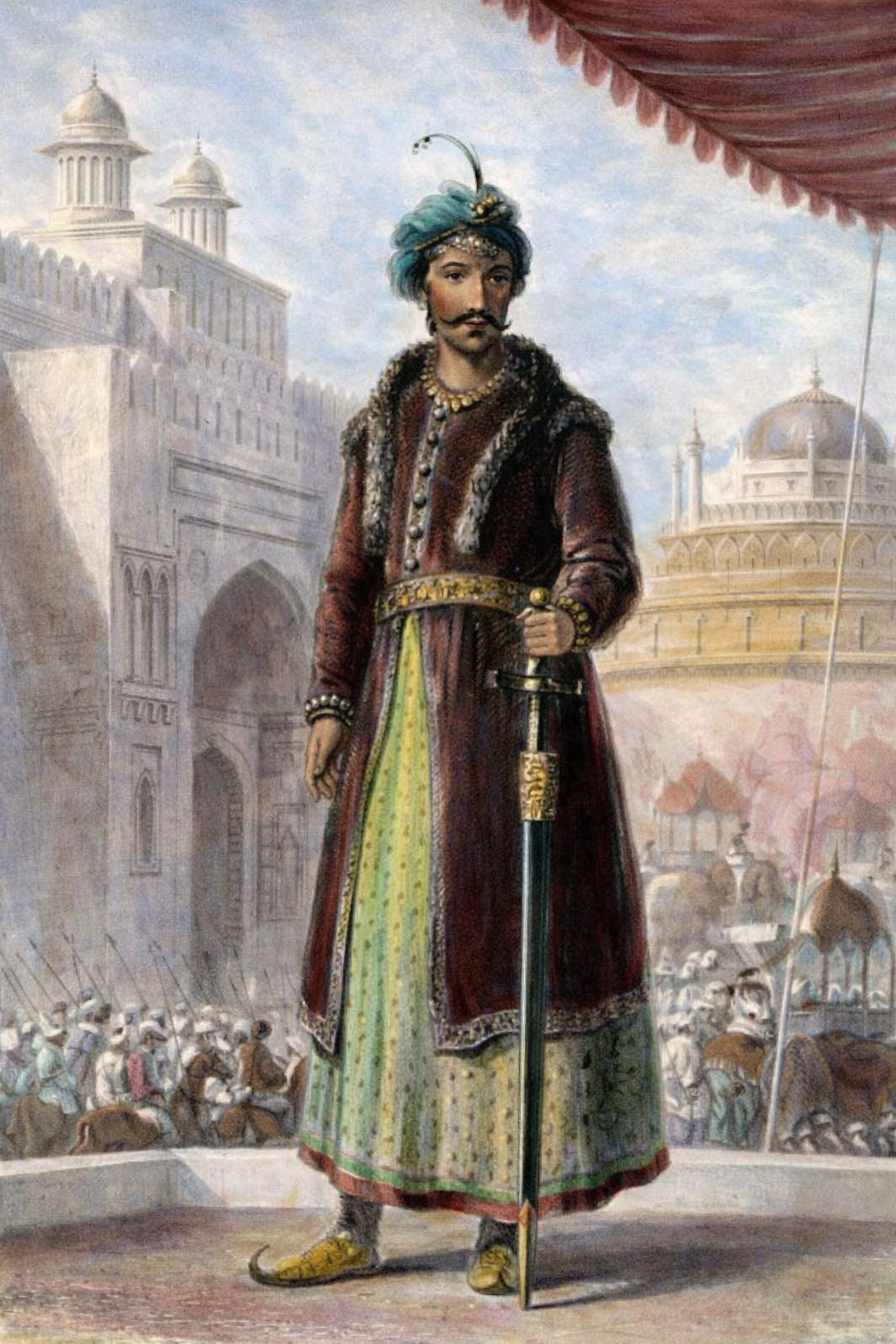
Tipu Sultan

One can conclude quite safely that Nehruvian Secularism is a magic formula for transmitting base metals into twenty-four carat gold. How else do we explain the fact of Islam becoming a religion, and that too a religion of tolerance, social equality, and human brotherhood; or the fact of Muslim rule in medieval India becoming an indigenous dispensation; or the fact of Sirajuddaula, Mir Qasim, Hyder Ali, Tipu Sultan, and Bahadur Shah Zafar becoming the heroes of India’s freedom struggle against British imperialism? – Sita Ram Goel

Secularism per se is a doctrine which arose in the modem West as a revolt against the closed creed of Christianity. Its battle-cry was that the State should be freed from the stranglehold of the Church, and the citizen should be left to his own individual choice in matters of belief. And it met with great success in every Western democracy.

Had India borrowed this doctrine from the modem West, it would have meant a rejection of the closed creeds of Islam and Christianity, and a promotion of the Sanatana Dharma family of faiths which have been naturally secularist in the modern Western sense. But what happened actually was that Secularism in India became the greatest protector of closed creeds which had come here in the company of foreign invaders, and kept tormenting the national society for several centuries.

We should not, therefore, confuse India’s Secularism with its namesake in the modern West. The Secularism which Pandit Jawaharlal Nehru propounded and which has prospered in post-independence India, is a new concoction and should be recognized as such. We need not bother about its various definitions as put forward by its pandits. We shall do better if we have a close look at its concrete achievements.

Going by those achievements, one can conclude quite safely that Nehruvian Secularism is a magic formula for transmitting base metals into twenty-four carat gold. How else do we explain the fact of Islam becoming a religion, and that too a religion of tolerance, social equality, and human brotherhood; or the fact of Muslim rule in medieval India becoming an indigenous dispensation; or the fact of Muhammad bin Qasim becoming a liberator of the toiling masses in Sindh; or the fact of Mahmud Ghaznavi becoming the defreezer of productive wealth hoarded in Hindu temples; or the fact of Muhammad Ghuri becoming the harbinger of an urban revolution; or the fact of Muinuddin Chishti becoming the great Indian saint; or the fact of Amir Khusru becoming the pioneer of communal amity; or the fact of Alauddin Khilji becoming the first socialist in the annals of this country; or the fact of Akbar becoming the father of Indian nationalism; or the fact of Aurangzeb becoming the benefactor of Hindu temples; or the fact of Sirajuddaula, Mir Qasim, Hyder Ali, Tipu Sultan, and Bahadur Shah Zafar becoming the heroes of India’s freedom struggle against British imperialism or the fact of the Faraizis, the Wahhabis, and the Moplahs becoming peasant revolutionaries and foremost freedom fighters?

One has only to go to the original sources in order to understand the true character of Islam and its above-mentioned luminaries. And one can see immediately that their true character has nothing to do with that with which they have been invested in our school and college text-books. No deeper probe is needed for unraveling the mysteries of Nehruvian Secularism.

This is not the occasion to go into the implications of this Secularism vis-a-vis India’s own spiritual vision, India’s own cultural wealth, India’s own national society, and India’s own native nationalism. I have dealt with this theme elsewhere. Suffice it to say that the other face of this Secularism is Hindu-baiting, which profession has been perfected by many scholars, scribes, and politicians, and has so far proved immensely profitable. I need not give the names. The stalwarts in this field are very well known.

The Bombay Malayalee Samajam has, therefore, rendered a great service in providing a test case, that of Tipu Sultan, for exposing the true character of Nehruvian Secularism. To the best of my knowledge, this Secularism has never faced a challenge such as was posed before it by the scholars and men of public spirit whom we meet in the pages of this book, Tipu Sultan: Villain or Hero? The wealth of first-hand source materials presented in the articles that comprise this book, portray not only the base metal that was Tipu Sultan but also the components of that alchemy which has transmuted him into twenty-four carat gold. VOICE OF INDIA is proud that it should have the privilege of publishing this study of an arch villain being sold as a great hero.

The fight for truth which is described in this book, has proved fruitful. The Statesman dated May 24, 1993 reports: “Once again Tipu Sultan has become a controversial topic in Karnataka. First it was the serial produced by Sanjay Khan which attracted criticism and protests from people, now it is the bicentenary of his death which has created quite a stir. … The Karnataka Board of Wakfs has organized the bicentenary, Urs-e-Sharif, of Hazrat Tipu Sultan Shaheed (R.A.), from May 21 to May 23 this year…. This has led to speculation that the Government will again spend several lakhs of rupees in 1999 to observe the 200th death anniversary of Tipu. The State Government has, however, remained tight-lipped over the issue and left the Board of Wakfs to answer these questions.” Had there been no challenge to the serial, the State Government would not have remained tight-lipped. It would have immediately untied its purse strings, and joined hands with the Board of Wakfs for singing hymns of praise to the Hazrat and the Shaheed.

What the Hazrat and the Shaheed stood for is described by Mir Hussain Ali Kirmani in his book, Nishan-i-Haidari, which he completed in AD 1802, three years after Tipu’s death. Kirmani writes: “It happened one day that a fakir (a religious mendicant), a man of saint-like mind, passed that way, and seeing the Sultan gave him a life-bestowing benediction, saying to him, ‘Fortunate child, at a future time thou will be the king of this country, and when thy time comes, remember my words—take this temple and destroy it, and build a masjid in its place, and for ages it will remain a memorial of thee.’ The Sultan smiled, and in reply told him that ‘whenever, by his blessings, he should become a padishah, or king, he would do as he (the fakir) directed’. When, therefore, after a short time, his father became a prince, the possessor of wealth and territory, he remembered his promise, and after his return from Nagar and Gorial Bunder, he purchased the temple from the adorers of the image in it (which after all was nothing but the figure of a bull, made of brick and mortar) with their goodwill, and the Brahmins, therefore, taking away their image, placed it in the Deorhi Peenth, and the temple was pulled down, and the foundations of a new masjid raised on the site….” That is the Masjid-i-Ala or Jama Masjid standing in Srirangapatanam on the site of a Shiva temple. One need not comment on Kirmani’s statement that Tipu “purchased the temple from the adorers of the image … with their goodwill”. It is not unoften that terror has produced this sort of goodwill in the minds of its helpless victims. – Preface to Tipu Sultan: Villain or Hero

1. The Sword of Tipu Sultan – V.M. Korath

Tipu Sultan who succeeded his father, considered it his primary duty to continue this unfinished jîhâd started by Hyder Ali Khan. However, the Islamic fanaticism of Tipu Sultan was much worse than that of his father. His war-cry of jîhâd was “Sword” (death) or “Cap” (forcible conversion). This makes very clear the character of Tipu Sultan’s military operations started in 1783. The intensity and nature of sufferings which the Hindu population had to bear during the nightmarish days of Padayottakkalam (military regime) were vividly described in many historical records preserved in the royal houses of Zamorin and Kottayam (Pazhassi), Palghat Fort and East India Company’s office. There is no apparent reason to disbelieve them. It is absurd and against reason to describe all this evidence as being forged for the purpose of creating enmity between Hindus and Muslims. READ MORE HERE …

2. Religious Intolerance of Tipu Sultan – P.C.N. Raja

When that Brahmin Prime Minister, Purnaiyya, presented to Tipu Sultan 90,000 soldiers, three crore rupees, and invaluable ornaments made of precious stones, he was tempted to rule as the Emperor of the South India. Tipu did not consider the Hindu rulers of Maharashtra, Coorg and Travancore or the Muslim ruler Nizam as impediments. He was afraid of only the British. He had convinced himself that he could easily become the Emperor of South India if he could somehow vanquish the British. Because of his intense and-British attitude, the so-called progressive and secular historians have made a vain attempt to paint Tipu Sultan as a great national hero. … Opposition to foreign powers need not always be due to love for one’s country. To achieve his selfish goal and to face the British forces, Tipu Sultan sought the assistance of another foreign power, the French, who were manoeuvring to establish their own domination in the country. How is it possible, therefore, for Tipu Sultan to be an enemy of foreign forces when he himself had sought help from Napoleon who was then a prisoner in St. Helena Island and also the French King, Louis XVI? READ MORE HERE …

3. Tipu’s Own Testimony – C. Nandagopalan Menon

William Kirkpatrick, who compiled many of Tipu’s letters, writes in his book, Selected Letters of Tipoo Sultan (published in 1811): “Tipoo knew his will to be a law the propriety of which … would never be questioned or doubted by any of his slaves…. He probably measured the sentiments in question by a different standard from that with which we estimate them. Thus the various murders and acts of treachery which we see him directing to be carried into execution, were not criminal, but on the contrary just, and even meritorious, in his eyes.” … “The Koran taught him that it was not necessary to keep faith with infidels, or the enemies of the true religion, in which case it was not difficult for him to persuade himself that it was right to include all who opposed or refused to cooperate in his views for the extension of that religion; or, in other words, for his own aggrandisement.” … This observation of Kirkpatrick is found to be valid when one goes through the letter of January 19, 1790, sent to Budruz Zuman Khan by Tipu himself. It says: “Don’t you know I have achieved a great victory recently in Malabar and over four lakh Hindus were converted to Islam? I am determined to march against that cursed “Raman Nair” very soon (reference is to Rama Varma Raja of Travancore State who was popularly known as Dharma Raja). Since I am overjoyed at the prospect of converting him and his subjects to Islam, I have happily abandoned the idea of going back to Srirangapatnam now” (K.M. Panicker, Bhasha Poshini, August, 1923). READ MORE HERE …

4. Tipu Sultan: As Known in Kerala – Ravi Varma

The ruins of hundreds of Hindu temples destroyed, and heavy concentration of Mappilas, all along the invasion routes of Tipu’s army, are standing and conclusive proofs of the brutalities and atrocities committed by the fanatic Tipu Sultan in Kerala. He was, all through, waging a cruel Islamic war against the Hindu population of Kerala, with a large Muslim army under Muslim field commanders ably assisted by the French, and with powerful field-guns and European troops. The period of Tipu Sultan and his father Hyder Ali Khan from 1766 to 1792 is the darkest period in Kerala history for all types of Islamic atrocities including forcible conversions. In spite of all these, historical documents and records are being deliberately suppressed, distorted and falsified in order to project this fanatic Tipu Sultan of Mysore as a liberal and magnanimous Muslim king. Worse still, this Muslim tyrant from Mysore is being glorified and projected as a national hero like Chhatrapati Shivaji, Maharaja Ranjit Singh, Rana Pratap Singh, and Pazhassi Raja of Kerala. To perpetuate the memory of this tyrant Tipu Sultan, the Central Government has released a postal stamp. Doordarshan has sanctioned a video serial to glorify the deeds and life of Tipu Sultan. And a special rehabilitation programme is being worked out for the benefit of the descendants of Tipu Sultan in Calcutta. It is an insult to our national pride and also to the Hindus of Kerala. At this rate, who knows that tomorrow our secular Government and the motivated Muslim and Marxist historians of Jawaharlal Nehru, Aligarh and Islamia universities will not project as national heroes villains like Mahmud Ghaznavi who destroyed the Somnath Temple, Babar who destroyed the Sri Rama Temple at Ayodhya, and Aurangzeb who destroyed the Vishwanath Temple at Kashi and the Sri Krishna Temple at Mathura? What a shame! What a degradation! READ MORE  HERE …

5. Scandalous Tele-Serial of Tipu Sultan – Prakash Chandra Asdhir

The secularist tribe in this country must realise that no useful purpose will be served by putting secular garbs on these barbaric rulers who were only usurpers. Such actions only revive the centuries-old wounds and embitter the relations between Hindus and Muslims. The whole exercise, it should be realised, runs against the process of National Integration envisaged by the Government and the people of this country. Ghaznavis, Ghuris, Baburs, Aurangzebs, Hyder Alis and Tipu Sultans can only carry the coffin of secularism and nothing more. Let the souls of these tyrants lie in their graves and be raised only on the day of “Qiamat” (Doomsday) when Allah will put them on trial for their crimes against humanity. READ MORE HERE …

6. Tipu Sultan: A Fanatic Muslim – Ravi Varma

It was Tipu Sultan and his fanatic Muslim army who converted thousands of Hindus—Thiyyas, Nairs and tribals—to Islam all along the invasion route, and occupied areas in North Kerala, Coorg, Mangalore and other parts of Karnataka. Besides, over 8,000 Hindu temples were desecrated and/or destroyed by his Muslim army in Malabar, Cochin, Coorg, Mysore and Tamil Nadu. … Tipu Sultan was only a usurper. He fought a war of expansion against Cochin and Travancore after running over the lands of a weak Zamorin. He could not succeed in his ambition and became a cripple because of the joint resistance by Cochin and Travancore armies. Simply because Tipu Sultan died in Srirangapatnam while escaping in the night from the fort which had been surrounded by the British army, does not make him a national hero. He fought an imperialist war in South India seeking the help of the French Army. … To project Tipu Sultan as a national hero is not only a distortion of South Indian history, but also an insult to the seventy crore Hindus, especially of South India. READ MORE HERE …

7.  Tipu Sultan and Doordarshan – K. Govindan Kutty

Some years later—well before Gidwani came out with his eulogy [of Tipu Sultan]—there was a still more breathtaking re-evaluation of Tipu’s exploits in Malabar. Its author, C.K. Kareem, a former editor of the Kerala State Gazetteer, went so far as to show Tipu as a philosopher and a great sufi, who viewed the whole cosmos as a mosque! Kareem’s “finding” was that Tipu came to be painted black just because those who wrote history in Kerala were the descendants of people who had to suffer hardships after his advent. His argument was that the repression represented by Tipu was not for the sake of Islam but to govern a newly-conquered territory. … The Hindu view of Tipu’s conquest of Malabar has not changed in spite of Balakrishnan’s and Kareem’s attempt to make him out as a sufi and a reformer. The historical view taken by K.M. Panicker and K.P. Padmanabha Menon and showing Tipu as a tormentor, continues to hold sway. READ MORE HERE …

8. The Tele-Serial of Tipu Sultan – P. Parameswaran

Tipu Sultan had not only given some financial assistance to a few temples including Sringeri Mutt, but he had also destroyed hundreds of temples and carried out forcible mass conversions as well. He had also indulged in mass murders. Letters and orders directing to do such horrible things were also issued by Tipu Sultan. If such things are deliberately suppressed, that will amount to injustice to the population who were the victims of his cruel atrocities. Even if it is only for promoting communal harmony, blatant lies should not be deliberately propagated. For the promotion of communal harmony, let people produce novel, poetry or even cinema. In the case of history, acknowledging the mistakes would be the best way to correct the mistakes; and not to whitewash the mistakes. If it is not done, that will result in emotional outbursts. READ MORE HERE …

9. A Letter to Shri P. Upendra – P.C.C. Raja

As a member of the Zamorin’s family my blood gets boiled even today when I hear the very mention of Tipu’s name because the worst crimes and the worst sort of atrocities were really perpetrated by him on the Hindus of Malabar. In fact the Zamorin of Calicut and the members of his family are well known for their religious tolerance and catholicity of outlook as would be seen from recorded history. But wholesale conversion of all people into Islam was indulged in by Tipu Sultan at gun point. Those who did not obey had either to flee away from the country or to face the bayonet. No other option was available according to recorded history. It will be useful if you will kindly refer to the writings of Prof K.V. Kristina Iyer as well as Malayalam Encyclopedia (Volume 7, published by Sahithyaka Pravasthaka Sahakarna Sangham Ltd., Kottayam, p. 996, para 3, column 1). The several inhuman, barbarous, and brutal acts done at the behest of Tipu Sultan cannot be summarised even in a thousand printed pages. In the circumstances, a cryptic statement that Tipu’s controversial roles are not purported to be dealt with in the serial can hardly assuage the feelings of the victims and would hardly render justice to the injured, their families, and their successors. Kindly also refer to the report of a joint Commission of Bengal and Bombay appointed to inspect the state and conditions of the province of Malabar in the years 1792 and 1793 (Volume 1, paras 52, 64, 67) kept in the National Archives of India, Janpath, New Delhi. A bare perusal of the above report will convince anyone that Tipu Sultan, far from being a benevolent ruler, was one of the worst fanatics, and more inhuman than even the Nazis. READ MORE HERE …

10. The Agitation Against the Tipu Sultan Serial – B.N. Jog

Three years back, one news item which appeared on the pages of many dailies attracted my attention. The news item was about a big studio-fire in Bangalore, where shooting of Shri Sanjay Khan’s tele-serial, “The Sword of Tipu Sultan” was in progress. Scores of young artistes died and many others were injured in the studio-fire. While going through the press report, I was amazed to read that “in this TV serial Tipu Sultan is being depicted as a great warrior and secular benevolent ruler”. Tipu Sultan who forcibly converted thousands of Hindus and Christians to Islam, hanged to death hundreds of innocent women and children, and destroyed and looted scores of temples and churches in Malabar, Cochin, Coorg, Dindigal, Mangalore and Coimbatore, a secular, fair-minded ruler! Hypocrisy also must have some limit. READ MORE  HERE …

11. History of Legal Battle Against the TV Serial The Sword of Tipu Sultan – Madhavrao D. Pathak

The legal fight against the shameful and motivated attempt of Doordarshan and the Government of India to project the usurper king of Mysore, Tipu Sultan, as a national hero, was a long, expensive and frustrating ordeal. According to authentic and documented history of the period, Tipu Sultan had hanged to death and sold as slaves a large number of innocent men, women, and children; looted and destroyed and burnt down hundreds of Hindu temples and Christian churches; and circumcised and converted to Muhammadanism thousands of Hindus and Christians in Mangalore, Coorg, Coimbatore, Dindigal, and Kerala. He had made territorial concessions to the French whose help he sought to fight the British. He had also sent emissaries to Islamic countries – Afghanistan, Iran, and Turky – inviting them to conquer the whole of North India for the glory and spread of Islam. But the Doordarshan serial on Tipu Sultan, based on a novel entitled The Sword of Tipu Sultan by Bhagwan Gidwani, was full of deliberate distortion, fabrication, and suppression of recorded facts of history with the object of glorifying a villain as a national hero, a benevolent ruler, and a paragon of all virtues. READ MORE HERE …

› Sita Ram Goel  (1921–2003) was a historian, author and publisher who founded the Hindu publishing house Voice of India

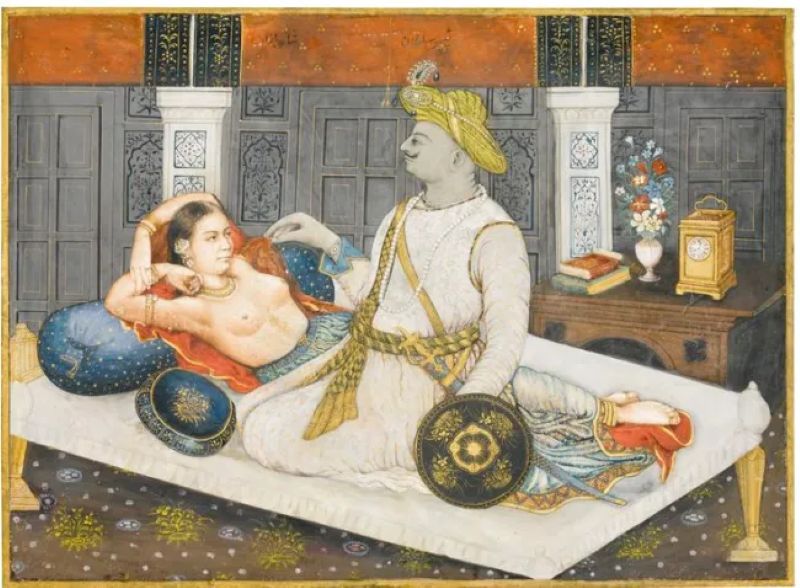
Tipu Sultan with his mistress.