Why ‘eminent historians’ still swear by the debunked Aryan theory – Makkhan Lal

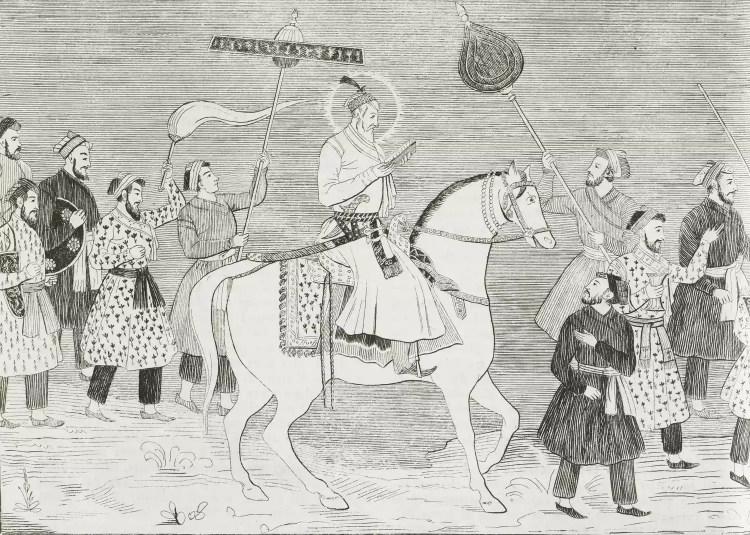
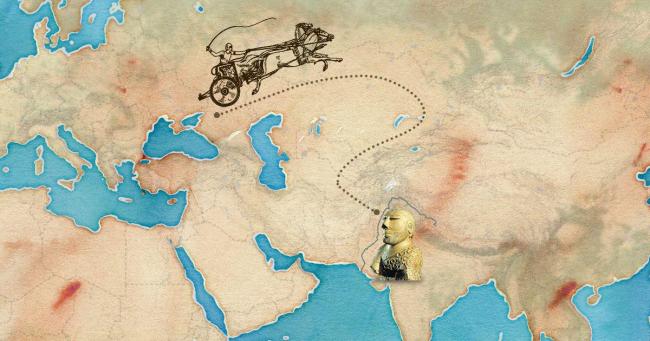
Image depicting the imaginary Aryan invasion of India from the Caspian Sea.

“It is difficult to say that all the earliest Aryans belonged to one race, but their culture was more or less the same type. Originally the Aryans seem to have lived somewhere in the steppes stretching from Southern Russia to Central Asia. On their way to India the Aryans first appeared in Central Asia and Iran. A little earlier than 1500 BC the Aryans appeared in India.” – R.S. Sharma

“By 1500 BC when the Aryans began to arrive in India, the Harappan culture had collapsed. We do not know where they came from; perhaps they came from north-eastern Iran or the region near the Caspian Sea or Central Asia.” – Romila Thapar

The two quotations from India’s two “eminent historians” sum up their approach to the Aryan Invasion Theory. Just look at expressions “difficult to say”, “seems to have”, “somewhere in steppes”, “we do not know where they come from”, “perhaps they came from north-eastern Iran or the region near Caspian Sea or Central Asia”. Despite so many probabilities, they are certain that Aryans came from outside. When and from where? No idea!

Despite all evidence to the contrary, why does the Aryan invasion/migration theory (AIT) continue to remain the lifeline of Indian Marxist historians? Let us now look at the AIT in historical perspectives.

Linguistic Evidence

Florentine merchant, Filippo Sassetti, who lived in Goa from AD 1583 to 1588, was struck by similarities between Sanskrit and European languages, especially Latin and Greek. Later, the relationship between Sanskrit and European languages was further elaborated by William Jones and many other scholars in the service of the East India Company. The efforts made towards understanding these linguistic similarities between Sanskrit on the one hand and Greek, Latin and some other modern European languages on the other gave rise to a new discipline called ‘comparative linguistics’. Its birth had questionably motivated considerations and in the last 200 years the discipline (if at all it is a discipline) of ‘Comparative Linguistics’ has shown a far greater variety of gymnastic exercises than the sport of gymnastics itself.

Since the earliest books (i.e. the Vedas) of the Aryans and so also all human beings are written in Sanskrit, it came to be recognised as the language of the Aryans. In the beginning, all European languages, along with Sanskrit, came to be clubbed as Aryan languages, and Sanskrit got identified as not only the oldest of all but also the mother of all European languages. Lord Monboddo was convinced that “Greek was derived from Sanskrit”. Frederick Schlegel, a highly respected German linguist wrote, “The Indian language is older and others [European languages] younger and derived from it.” Thus, Sanskrit came to be recognised as the mother of “all the less ancient Indo-European languages, as well as the modern European tongues and dialects”.

But these opinions did not last very long. Local pride, racial complexes and Evangelical considerations overshadowed everything as a part of a shift from ‘Indo-mania’ to ‘Indo-phobia’.

Though William Jones could not accept the earlier view that Sanskrit is the ‘mother’ of all Aryan languages. He advocated that Sanskrit is just a ‘sister’, i.e. a co-descendant of an earlier ancestor language. Following the lead provided by Jones, F. Bopp wrote: “I do not believe that Greek, Latin and other European languages are to be considered as derived from Sanskrit. I feel rather inclined to consider them together as subsequent variations of one original tongue, which however, the Sanskrit has preserved more perfect than its kindred dialects.”

So, a search for the original homeland of a language, namely ‘Proto-Indo-European’, led different scholars to different places. This search for the imagined original language homeland also meant the search for the ‘Original Homeland of Aryans’. This also gave rise to forging labels such as the ‘Indo-Aryan’, ‘Indo-European’, ‘Aryan languages’, ‘Indo-Aryan languages’, and the ‘Indo-European languages’. Sometime around the 1820s, the word ‘Aryan’ began to be dropped and it simply became ‘Indo-European’. Some German scholars even started using the term ‘Indo-German’ on the presumption that the Sanskrit and German languages, between them, covered the entire Indo-European speaking area—the farthest language to the east being Indic and German to the west.

Sanskrit, even today, may be “the greatest language of the world” or even if it “is of a wonderful structure, more perfect than Greek, more copious than Latin and more exquisitely refined” but so what? How could a language spoken by ‘niggers’ have been once the mother of languages today spoken by Europeans, i.e. white people? This position could not be accepted even by William Jones and Max Mueller, who have been so wholesome in their praise for Sanskrit.

Sanskrit was first demoted from mother to the position of a mere sister of all the ancient and modern European languages, but later on, with further building-up of the language tree, it came to be demoted to the position of grand-daughter, when it got linked to the so-called Indo-Iranian family. Thus, the position is: Proto-Indo-European language gave birth to the Indo-Iranian, which in turn produced Sanskrit. It’s already almost 200 years and the search for the grand-mother of Sanskrit (i.e. the Proto-Indo-European) is still on. We still do not know what she (the Proto-Indo-European Language) may have looked like, of what colour she may have been, or what may have been her physical and metaphysical structure. She still remains formless even in dreams. Quite often, these practitioners of philology were so illogical, so incoherent, so absurd, so adamant and arrogant, but, indeed, their impact has been so devastating that it has aptly been termed as ‘linguistic tyranny’.

Central Place Argument and Aryan Invasion

Once Sanskrit was demoted from the honoured status of being mother to all Indo-European languages and made a mere sister or niece of the European languages, a search started for the ‘original tongue’ i.e. the ‘Proto-Indo-European’. This cleared the deck also for legitimising the Aryan invasion of India; a theory which suggested that Sanskrit was brought here from the place where this imaginary language called ‘Proto-Indo-European’ was spoken. In 1842, A.W. von Schlegel claimed: “It is completely unlikely that the migrations which had peopled such a large part of the globe would have begun at its southern extremity (i.e. India) and would have continually directed themselves from there towards the northwest. On the contrary everything compels us to believe that the colonies set out in diverging directions from a central region.”

And for Schlegel this central region consisted of the areas around the Caspian Sea.

With the increasing hold of the British on India, the colonial and the Evangelical interests soon became a force in shaping Indian history for the rest of the academic world. Following the lead provided by A.W. von Schlegel, Max Mueller reiterated his position on the issue of the Aryan invasion and said in 1887: “If an answer must be given as to the place where our Aryan ancestors dwelt before their separation … I should still say, as I said forty years ago, ‘somewhere in Central Asia’ and no more.”

However, Srinivas Ayengar wrote in 1914: “The Aryans [in their entire literature] do not refer to any foreign country as their original home, do not refer to themselves as coming from beyond India, do not name any place in India after the names of places in their original land as conquerors and colonisers do, but speak of themselves exactly as sons of the soil would do. If they had been foreign invaders, it would have been humanly impossible for all memory of such invasion to have been utterly obliterated from memory in such a short time as represents the differences between the Vedic and Avestan dialects.”

It must be reiterated that it does not refer to a single name of flora and fauna found in Central Asia, Russia and Europe. If Rig Vedic people came from Central Asia how come they have no memory of it. Historically, linguistically and as per the oral traditions it is simply impossible.

The fallacy of this central-place theory as the origin of an imaginary language and then spreading all around can be explained with a contemporary example—English. Consider a situation wherein after a couple of thousand years, people forget that England was the place where the English language developed and spread from, and start looking for the place of its origin. The Central Place Theory will exclude England in the very first instance, as it is located on the outskirts of the world of the English language. The United States of America would be the natural choice from where it spread to Europe and Asia in the east, and Australia, New Zealand, Hawaii, etc, in the west and Canada in the north.

Lexicographic Evidence

Lexicography (the vocabulary of spoken/written words) is another area which was pressed in the service. Besides collecting a large number of the common words in various languages to prove their affinity, a number of words were chosen to prove the location of the language. For example, it has been argued that since there is no common word for the ocean in the Indo-European language, we can safely conclude that the Indo-European people were not aware of the ocean.

Varadpande rightly presses the points: “If we carry this reasoning further we shall have to suppose that ‘Indo-Europeans’ were living in a region where there was no air and no water, since there are no common words for air and water in all the ‘Indo-European’ Languages.”

The whole situation is that first a conjecture is turned into a hypothesis; to be later treated as a fact to be used in support of a new theory. For instance, language like Proto-Indo-European, Proto-Indo-Iranian and Proto-Dravidian are no more than hypothetical constructions, which may or may not have really existed; and yet these modern creations are often imposed on populations that lived thousands of years ago, to prove migrations theories.

Shaffer writes: “The Indo-Aryan invasion(s) as an academic concept in 18th-19th century Europe reflected the cultural milieu of that period. Linguistic data was used to validate the concept, which in turn, was used to interpret archaeological and anthropological data. What was theory, became an unquestioned fact that was used to interpret and organise all subsequent data. It is time to end the ‘linguistic tyranny’ that has prescribed interpretative frameworks of pre-and proto-historic cultural development in South Asia.”

The question of Aryan invasion/Aryan migration vis-a-vis philology has always been questioned. In the beginning of the last century, Aurobindo, while commenting on the philology, wrote: “Comparative philology has hardly moved a step beyond its origins; all the rest has been a mass of conjectural and ingenious learning of which the brilliance is equalled only by the uncertainty and unsoundness. … The very idea of the science of language is chimera.”

It is important to point out that in the last 30 years renowned linguists like Ram Bilash Sharma, S.S. Misra, S.G. Talgeri, N.S. Rajaram and Koenraad Elst have proved, on the basis of linguistic evidence itself, that this whole theory of Aryan invasion/migration is a fallacy.

Aryans, Racialism and Rig Veda

Subjugation of India by the British filled the masters with a desire to prove their all-round superiority. Racialism was one angle of it. Writings of Grant, Mill, Marx, Macaulay and their accomplices denigrated Indian people, culture, civilisation, society, history and religion.

Trautmann has traced the emergence of racialism and the development of physical anthropology as a resolution of the inescapable philological reality with the colonial need for cultural superiority over the natives of India. One of the most striking types of evidence of such an attitude is best seen in the writings of ACL Carlleyle. In 1879 he wrote: “We, British Europeans are Aryans, and far more pure and genuine Aryans than the Hindus, and no talk of the Hindus can alter our race, or make us any less or any different from what we are. It is the Hindus who have altered and deteriorated, and not we. The Hindus have become the coffee dregs, while we have remained the cream of the Aryan race. The Hindus are like the monkey.”

Some scholars think that the linguistic affinities of Indians and Europeans were also responsible for the development of physical anthropology leading the whole debate towards racialism. Most of the European scholars could not accept the view that Indians (‘niggers’, that is how most of the time Indians have been referred to in those writings) could have been once related to them and could have, indeed, been their forefathers, a conclusion which comparative linguistics was suggesting.

Edwin Bryant expresses it in the following words: “Even during the earlier phase of the homeland quest, when India was still a popular candidate, many scholars were uncomfortable about moving the Indo-Europeans too far from their biblical origins somewhere in the Near East. There were those among the British, in particular, whose colonial sensibilities made them reluctant to acknowledge any potential cultural indebtedness to the forefathers of the rickshaw pullers of Calcutta, and who preferred to hang on to the biblical Adam far more than their European contemporaries.”

Max Mueller himself was sad to note the mood of the day: “They would not have it, they would not believe that there could be any community origin between the people of Athens and Rome, and the so-called niggers of India.”

The newly developing science of physical anthropology was pressed into service to project Aryans as tall, white-skinned, blue-eyed, with sharp and high nose, and dolichocephalic. The non-Aryans came to be identified as natives with dark skin, flat nose, short stature, and so on. The dasas mentioned in the Rigveda were made to represent non-Aryans, i.e., the indigenous local population of India. Thus, the frame of the invasion of Aryans and the subjugation of the non-Aryan local population got corroborated with the evidence from Physical Anthropology.

The racial theory had a devastating impact on European polity. Each nation/state started claiming to be the real descendent of the Aryan race and considered others as inferiors. Max Mueller tried to intervene by declaring again and again: “If I say Aryans, I mean neither blood nor bones, nor hair nor skull. … How many misunderstandings and how many controversies are due to what is deduced by arguing from language to blood-relationship or from blood-relationship to language. … An ethnologist who speaks of an Aryan race, Aryan eyes and hair, and Aryan blood is as great a sinner as a linguist who speaks of a dolichocephalic dictionary or brachycephalic grammar.”

Alas! It was too late. The djinn created by Max Mueller had now grown up and was no longer under Mueller’s command. In the twilight years of his life, Max Mueller realised the devastating impact of distortions that he had made in Indian history in order to please his employers and the newly acquired faith. He died a sad man, preaching at the end of his career things like India: What Can It Teach Us.

He described India as: “The country most richly endowed with all the wealth, power and beauty that nature can bestow, … a very paradise on earth, … [a place where] human mind has most fully developed some of its choicest gifts, has most deeply pondered on the greatest problems of life.”

Racialism and DNA Evidence

In this context it will be useful to recall the studies carried out by K.A.R. Kennedy and his colleagues. For almost five decades they carried out a detailed study of a large number of pre- and proto-historic skeletons found in excavations from a large number of archaeological sites from all over the Indian sub-continent.

On the basis of their research, Kennedy and his colleagues concluded: “As for the question of biological continuity within the Indus valley, two discontinuities appear to exist. The first occurs between 6,000 and 4,500 B.C. The second occurs at some point after 800 B.C. but before 200 B.C.”

Both discontinuities exclude any adjustment for Aryan Invasion.

Besides the studies of Kennedy and his colleagues on ancient skeletons, an important study has come out recently on modern humans. Keeping in mind the AIT, Kivishield and his colleagues carried out a detailed study on gene pools of Western Eurasians and people of the Indian subcontinent. They studied the ‘genetic inheritance aspect’ of genes through the Mitochondrial DNA Test. It may be mentioned here that the mitochondrial DNA test can reveal the whole history of genetic changes and mutations that may have taken place even in the remote past i.e. several thousand years ago.

Kivishield and his colleagues have reached the conclusion that the Mitochondrial DNA, typical of Western Eurasians, is present among Europeans up to 70 percent whereas among Indians it is only up to 5.2 percent. The DNA gene pool of Western Europeans is very different from that of Indians. It has been very clearly stated that if there was any Aryan invasion of India a few thousand years ago, it must be visible in the mitochondrial DNA tests in terms of a splash in percentage of Western Eurasian genes. But this is not so. Further, the percentage and types of Western Eurasian genes present among south Indians and north Indians are almost the same. This fact establishes that there is no difference between the south Indian and north Indian gene pools, and the same goes against the Aryan invasion theory.

Conclusions

Now over a period of 200 years, the meaning of ‘Aryans’ has been constructed and reconstructed as being nomadic, pastoralists, sedentary agriculturists, dolichocephalic, brachycephalic, blond and fair, and from brown-haired to dark-haired. The Aryan homeland has been located and relocated everywhere, virtually from the North Pole to the South Pole, and from the shores of the Atlantic to Chinese deserts—South India, North India, Central India, Tibet, Bactria, Iran, the Black Sea, the Caspian Sea, Lithuania, the Caucasus, the Urals, the Volga Mountains, South Russia, the Steppes of Central Asia, Western Asia, Palestine, Anatolia, Scandinavia, Finland, Sweden, the Baltic, western Europe, northern Europe, central Europe, and eastern Europe.

The Aryan homeland, however, still remains elusive. J.P. Mallory has put the whole thing very succinctly: “One does not ask, ‘Where is the Indo-European homeland?’ but rather ‘where they put it now?’”

Anthropologist Edmund Leach of Cambridge University has most aptly summed up the whole question of the Aryan Invasion Theory. In 1990 in his article, Aryan Invasions over Four Millennia, Leach wrote: “Why do serious scholars persist in believing in the Aryan invasion? Why is this sort of thing attractive? Who finds it attractive? Why has the development of Sanskrit come so dogmatically associated with the Aryan invasion? The details of this theory fit in with this racist framework. … The origin myth of British imperialism helped the elite administrators in the Indian Civil Service to see themselves as bringing ‘pure’ civilisation to a country in which civilisation of the most sophisticated kind was already nearly 6,000 years old. Here, I will only remark that the hold of this myth on the British middle-class imagination is so strong that even today, 44 years after the death of Hitler and 43 years after the creation of an independent India and independent Pakistan, the Aryan invasions of the second millennium BC are still treated as if they were an established fact of history. … The Aryan invasion never happened at all.” – Firstpost, 20 July 2022

  Prof. Dr. Makkhan Lal is a well-known historian and the founder director of the Delhi Institute of Heritage Research and Management.

Rig Veda

Sita Ram Goel Vindicated: ‘Eminent historians’ no longer deny Islamic iconoclasm – R. Jagannathan

Sita Ram Goel

If the “eminent historians” now can acknowledge the reality of Islamic iconoclasm, surely they can promote Hindu-Muslim amity by getting Muslim groups to accept that damage was done in the past, and some remedy is called for in the present to let bygones become bygones. – R. Jagannathan

Our “eminent historians”, mostly from the Left, are showing signs that they are not beyond all education when hit repeatedly on their heads with facts and evidence. The late Sita Ram Goel, who was among the first to debunk the whitewashed versions of India’s Islamic history, stands vindicated.

Before the Babri was demolished, they repeatedly asserted that there was no temple below the mosque. Once the archaeological survey ordered by the Allahabad High Court established beyond doubt that there indeed was a temple below the Babri, their story-line changed from “no temple below the mosque”, to bland assertions that what was under the Babri was another mosque or even a Buddhist stupa. (Read some of what they said then here.)

When evidence kept surfacing of multiple temple demolitions under Islamic rule, the party line was that this was done not for religious reasons but political reasons. False equivalences were drawn between consistent and bigoted Islamic iconoclasm and the occasional damage done to temples or Buddhist and Jain places of worship. The latter were aberrations rather than the norm.

Now, with a survey seeking to establish the presence of Hindu carvings (and possibly a Shiv Linga) inside the Gyanvapi Mosque, these eminences are slowly abandoning the claim that no temples were destroyed.

In The Times of India today (24 May), there is a clear acceptance that Mughal rulers destroyed temples, though the argument has changed.

Irfan Habib, professor emeritus at the Aligarh Muslim University (AMU), is quoted thus: “Mughal emperor Aurangzeb destroyed temples in Varanasi and Mathura to raise mosques. However, the question today is whether what was done in 1670 should be repeated, despite the existence of the Indian Monuments Act. Should we do the same things as Mughal emperors did in the past?” (Read the details here.)

This is progress. Big progress. If we should not do what Aurangzeb did, it is an indirect admission that the Mughal emperor was a bigot. Facts are no longer denied, or conveniently misinterpreted as mere political acts of rulers in the past, though that is not entirely gone.

Shalin Jani of the Delhi University department of history is quoted as saying: “As far as Mughal India is concerned, we know about the politics of temple desecration during those times. We can’t resolve our contemporary problems by looking at the past.”

Well, maybe the Germans got it wrong when they refused to airbrush history or deny Hitler and the Nazi past. Without acknowledging the past, and making some amends, we cannot move forward.

The unwillingness to see religious bigotry behind temple desecration is not entirely gone, but the facts are no longer disputed.

Nadeem Rezavi, professor of mediaeval history at AMU, is clearer. “No one can justify what Aurangzeb did. However, we can’t behave like him and keep demolishing mosques to restore temples. What difference remains then between the Mughal ruler and rulers of today?”

Clearly, Audrey Truschke, who has tried to whitewash Aurangzeb’s reign in her book Aurangzeb: The Man and The Myth, clearly needs to hear what Habib and Rezavi now have to say. Aurangzeb was a bigot. Full stop. His temple desecrations were real, not just political fallout.

Clearly, the work done by Sita Ram Goel in volume two of his two-volume work on Hindu Temples: What Happened To Them  (Vol. 1 & Vol. 2), which examines both the Hindu and Muslim evidence, should now be required reading in all history departments, including AMU.

Later books by Meenakshi Jain (Rama & AyodhyaThe Battle For RamaFlight of Deities & Rebirth of Temples, Vasudeva Krishna and Mathura, have also completely sealed the evidence in favour of the Hindu version of Islamic destruction of key temples. It is also time to revisit the older historical works of R.C. Majumdar and Sir Jadunath Sarkar and not just junk them as “communal historians”.

The only way forward from here is not to live in the past, but to acknowledge it, and negotiate a deal to hand over the Kashi and Mathura temples back to Hindus fully in return for Hindus allowing the rest of the temple desecrations to remain as acknowledged facts of history with no recompense due.

If the “eminent historians” now can acknowledge the reality of Islamic iconoclasm, surely they can promote Hindu-Muslim amity by getting Muslim groups to accept that damage was done in the past, and some remedy is called for in the present to let bygones become bygones. – Swarajya, 4 May 2022

› R. Jagannathan is a senior journalist and editor and the Editorial Director of Swarajya Magazine.

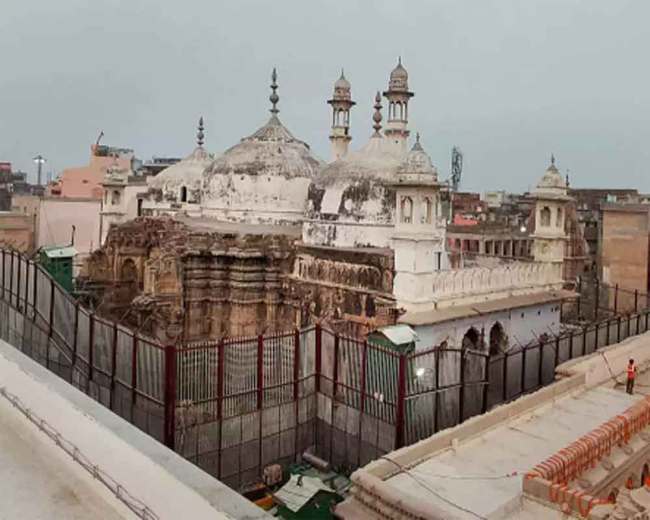
Gyanvapi Mosque back wall being the front wall of the ancient Vishwanath Temple.

A Feast of St. Thomas – Ishwar Sharan

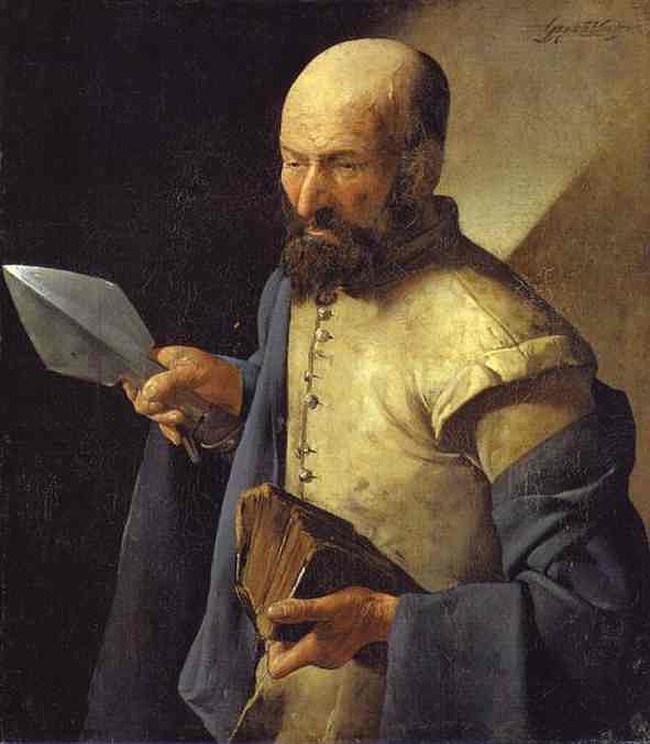
St Thomas by Georges de La Tour ca. 1632

The Roman Catholic Church in India owes Hindus an abject apology for the blood libel she has perpetuated for centuries, falsely charging Hindus with the murder of Apostle St. Thomas even as she falsely charges Jews with the murder of Jesus. – Ishwar Sharan

Fr Francis Gonsalves, SJThe Deccan Chronicle in Chennai carried on 2 July 2012 a “mystic mantra” column called “Feast of Thomas” (article now deleted) by Fr. Francis Gonsalves, the former president of the Jesuit-run Vidyajyoti Theological College in New Delhi. The feast for St. Thomas is celebrated on July 3rd every year in India. Fr. Francis knows better than this writer that the story of St. Thomas in India is untrue. He also knows that prestigious Jesuit schools in Europe would never refer to the Thomas in India story without first qualifying it as an unverified Gnostic moral fable. But Fr. Francis whose ancestors were Christian converts in Goa—by force or fraud we do not know—is an Indian Jesuit under a communal compulsion to deceive his congregation and support their fanciful apostolic aspirations for India.  And there is also the politics of which his religious order is more than famous—or should we say infamous. Fr. Francis had a candidate for the Indian presidency in the person of a deracinated tribal convert called Purno Sangma. Therefore, Fr. Francis must continue to perpetrate the St. Thomas in India lie as he believes that Thomas has already claimed India for Christ and that claim could have been actualised in the person of Purno Sangma. So Fr. Francis wrote:

I’m often asked by the people here in India and abroad, “When did Christianity come to India?” “Indian Christianity is about 2,000 years old,” I reply, adding, “Ever since St. Thomas, one of Jesus’ beloved disciples, came to India.” [1] Thus, we have the so-called “St Thomas Christians” [2]—mainly from Kerala—whose ancestors received Jesus’ “Gospel” soon after his resurrection. On July 3, Christians will celebrate the feast of Saint Thomas.

The Gospel of John records three utterances of St. Thomas that give glimpses of his character. First, when Jesus desires to go to Bethany, bordering Jerusalem, the disciples try to prevent him from going since he was almost stoned there for claiming kinship with God. Thomas, however, sticks by Jesus, and says, “Let’s also go that we may die with him” (John 11:16). This shows Thomas’ courage and his commitment to Jesus.

Second, when Jesus announces his imminent death and assures his disciples that he’ll prepare a place for them, he adds, “You know the way to the place where I’m going.” Thomas answers candidly, “Lord, we do not know where you are going. How can we know the way?” (John 14:5). This prompts Jesus to reply, “I am the way.”

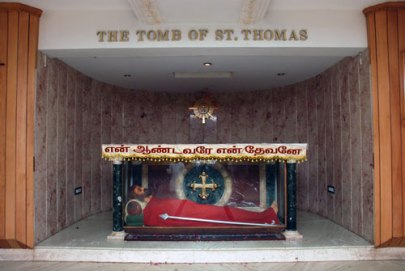
Thomas’ third utterance gives not only him, but also gifts us the appellation “doubting Thomas”. Being no pushover, Thomas asks for “proof” before he believes the unprecedented news of Jesus rising from the dead. But, on meeting the Risen Christ, he exclaims: “My Lord and my God!” (John 20:28). These words are etched in gold over the tomb of St. Thomas at the San Thome Cathedral, Chennai: a magnificent 16th-century Gothic church visited by innumerable pilgrims.

Having lived in Chennai, I cherish unforgettable moments at monuments built in memory of Apostle Thomas. I remember that morning of Sunday, December 26, 2004, when I was presiding over morning worship at San Thome Cathedral and the mighty ocean came crashing down upon Marina beach, leaving us distraught at the destruction wrought by the tsunami.

Two other churches in Chennai commemorate the Apostle: one built in 1523 atop “Saint Thomas Mount” near the airport, and, another big, circular one constructed in 1972 on “Little Mount”. The former contains the “Bleeding Cross”, believed to have been sculpted on stone by St.Thomas, while the latter rests beside the cave where the Apostle prayed.

Saints are not the exclusive property of one religion. St. Thomas teaches us all three things: (a) to be courageous and committed to a cause; (b) to be candid and to clarify things when in doubt; and (c) to be critical of things outside human experience; yet, also to believe in God who forever remains “The Beyond” while inspiring us to exclaim, “My Lord, my God!” in the everyday ordinariness of life.Deccan Chronicle, Chennai, 2 June 2012

IS-SDSThere is no historical evidence to support the legend that St. Thomas, called Judas Thomas in the Acts of Thomas, ever came to India. And when we say there is no historical evidence in Western literature, we say emphatically that there is no evidence for St. Thomas or Indian Christianity in ancient Tamil literature either. Even up to the tenth century and Raja Raja Chola’s time, Tamil literature has no record of Christians or Christianity being present in the land.

The story of Thomas’s Indian sojourn exists only in the Acts of Thomas. This long religious romance was probably  written by the Syrian Christian Gnostic poet Bardesanes about 210 CE at Edessa, Syria. Bardesanes was familiar with India and had met and discussed Indian philosophy with Buddhist monks travelling west to Alexandria. It was therefore quite natural for him to place his moral fable in India, a land from which all kinds of religious ideas emanated. [3]

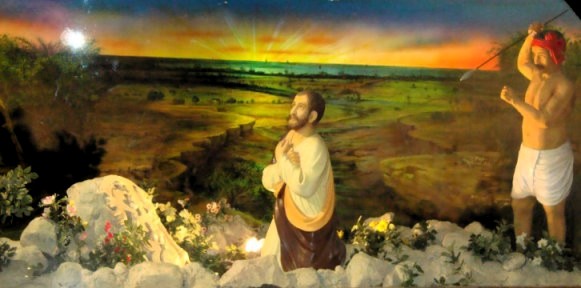
Bardesanes story is centred on the moral imperative that all Christians must lead a chaste and celibate life. In the story he has Judas Thomas, who is presented as a look-alike twin brother of Jesus, persuade a newly married royal couple not to consummate their marriage. This angers the Parthian king of the desert land where Thomas is present and he has to flee for his life to another part of the country. Here he comes into contact with another Parthian king called Gundaphorus—possibly a first century king of  Gandhara, i.e. North-West Pakistan and Afghanistan—and promises to build him a palace. Thomas cheats the king of his money but succeeds in converting him to Christianity. He then leaves Gundaphorus and concerns himself with a talking donkey and a dragon who claims to be Satan. Thomas slays the dragon, but because of his interest in converting the women and girls of the area to Christianity and alienating them from family life, he is called before a third Parthian king called Mazdai—Mazdai being a Zoroastrian name after the Zoroastrian deity Ahura Mazda—and ordered to leave the country. When Thomas ignores the king’s warning and converts the queen and her son, the king in exasperation at the apostle’s evil deeds orders him executed. He is then speared to death by soldiers on a royal acropolis and the body shortly afterwards taken away to Edessa.

In all records Thomas is executed on the Parthian royal acropolis and soon after buried at Edessa where a cult grows up around his tomb—until Marco Polo, in his famous travelogue Il Milione, puts his tomb on the seashore in an unnamed little town in South India. Marco, who never came to India, was repeating the stories told to him by Muslim and Syrian Christian merchants he met in Constantinople.

This is how St. Thomas got to South India. The Portuguese who knew Marco’s popular travel book,  decided quite arbitrarily that Mylapore was the unnamed little town Marco was referring to [4]—and Mylapore also had a good harbour and a great heathen temple that could be turned into a Christian apostle’s tomb. As they say, the rest is history—and a falsified history at that!

Though Bardesanes represents Judas Thomas as a second Christ, he does not represent him as a good man. What we gather from the story in the Acts, and what Fr. Francis and his Church neglect to tell the faithful, is that

  • Jesus was a slave trader who sold his brother Thomas to the trader Abbanes for thirty pieces of silver;
  • Thomas was an antisocial character who lied to his royal employer and stole money from him;
  • Thomas ill-treated women and enslaved them;
  • Thomas practised black magic and was executed for disobeying the king’s order to stop and leave the country;
  • Thomas was Jesus’s twin brother, implying that the four canonical Gospels are unreliable sources which have concealed a crucial fact, viz. that Jesus was not God’s Only Begotten Son. In fact, Jesus and Thomas were God’s twin-born sons. In other words, accepting the Thomas legend as history is equivalent to exploding the doctrinal foundation of Christianity.

Enough said about Judas Didymus Thomas.

About San Thome Cathedral which houses his fake tomb—the real tomb for St. Thomas is at Ortona, Italy—it has been established by reputed Jesuit and Indian archaeologists that the church stands on the ruins of the original Kapaleeswara Shiva Temple destroyed by the Portuguese in the sixteenth century. So do the churches at Little Mount and Big Mount stand on ruined Murugan and Shiva temples respectively. The “Bleeding Cross” Fr. Francis refers to and which is kept in the Portuguese church on Big Mount, has these words carved around the edge of it in Pahlavi script: “My lord Christ, have mercy upon Afras, son of Chaharbukht the Syrian, who cut this.” The cross is dated by experts to the eighth or ninth century.

Apostle Thomas was a Jew and the Roman cross would have been a most abhorrent symbol to him. Certainly he did not bring a cross—or a Bible for that matter; there was no compiled Bible in the first century—to India. Christians did not use the Roman cross as a religious symbol until the third century or later. They used a fish sign with the Greek word ΙΧΘΥC (ikhthus meaning “fish”)—an acronym for JESUS—inscribed in its body to identify themselves and their cult. Curiously Indian Christianity has never referenced or employed a fish symbol in its religious culture. This is because there were no Christians in India before the fourth century. The cross and Bible were brought later by Syrian Christian refugees from Mesopotamia and Persia after the fourth century.

We wish to assure Fr. Francis and the Christian congregations that he has deceived, that Hindus are not going to demand the return of misappropriated temple property. But we do feel an apology for past crimes is in order and that some restraint is observed when perpetuating the communally-charged St. Thomas tale among the faithful—especially as Thomas’s persecution and death are falsely attributed to a Hindu king and his Brahmin priests. Arun Shourie has stated that the apology should include the following items:

  • an honest accounting of the calumnies which the Church has heaped on India and Hinduism; informing Indian Christians and non-Christians about the findings of Bible scholarship [including the St. Thomas legend];
  • informing them about the impact of scientific progress on Church doctrine;
  • acceptance that reality is multi-layered and that there are many ways of perceiving it;
  • bringing the zeal for conversion in line with the recent declarations that salvation is possible through other religions as well.

Besides this apology, we feel the Archbishop of Madras-Mylapore may donate a piece of the vast estate Bishop’s House stands on for a memorial to the courageous Hindus who resisted the Portuguese when they with the help of Franciscan, Dominican and Jesuit priests were destroying the Kapaleeswara Shiva Temple by the sea.

The Archbishop of Madras-Mylapore, who may today be an honest man unlike his predecessors, also must stop perpetuating the claim that Tiruvalluvar was a disciple of Thomas and a Christian convert. Tiruvalluvar lived a hundred years before Christ and anybody who has read the Tirukurral can see that this claim is a malicious falsehood.

The St. Thomas legend has been insinuated into Indian history and Indian history must now be told according to the known facts, not according to the fabricated anti-national theories of Indian Jesuits and Marxist historians. Even Pope Benedict has denied that St. Thomas came to South India—never mind that his editors changed his statement the next day to include South India because Kerala’s bishops had threatened secession or worse if the Church did not support their dearly held tale of origins.

Dr. Koenraad Elst, educated in Europe’s most prestigious Catholic university in Leuven, Belgium, writes in his foreword to The Myth of Saint Thomas and the Mylapore Shiva Temple: “It is clear enough that many Christians including the Pope have long given up the belief in Thomas’s Indian exploits, or—like the Church Fathers—never believed in them in the first place. In contrast with European Christians today, Indian Christians live in a 17th century bubble, as if they are too puerile to stand in the daylight of solid historical fact. They remain in a twilight of legend and lies, at the command of ambitious “medieval” bishops who mislead them with the St. Thomas in India fable for purely selfish reasons.”

What a sad observation on Indian Christians who have access to the best education and health care in the country. And what a shrewd observation on Indian bishops who are probably the most wealthy, corrupt, and politically astute caste living in India today.

› Francis Gonsalves teaches systematic theology  at Jnana-Deepa Vidyapeeth, Pune.

› Ishwar Sharan is the author of The Myth of Saint Thomas and the Mylapore Shiva Temple, Voice of India, New Delhi. His website is called Acta Indica.

Notes

1. India’s political leaders are fond of telling their constituents and the nation that Christianity arrived in India before it arrived in Europe. This historical conceit is not true. Apostle Paul says in Romans 15:24 & 15:28 that he plans to visit Spain (which already had a Christian community). In Acts 19:21 he travels from Ephesus to Greece—Macedonia and Achaia—en route to Jerusalem, and then on to Rome. This took place in the 40s CE—some historians say he was writing after 44 CE. So even if it was true that Apostle Thomas landed in Kerala in 52 CE—the spurious date is of 19th century origin—Christianity would still have arrived in Europe a decade earlier.

2. Thomas of Cana, also known as Knai Thoma, led the first group of 72 Syrian Christian families to India in 345 CE. There is no record of Christian communities in India prior to this date. Thomas of Cana and his companion Bishop Joseph of Edessa brought with them the tradition of St. Thomas the Apostle of the East. Later, Christian communities in Kerala would identify Knai Thoma with Mar Thoma—Thomas of Cana with Thomas the Apostle—and claim St. Thomas had arrived in Kerala in AD 52 and established the first Christian church at Musiris—the ancient port near present day Kodungallur—the main trading center of the day.

The Rev. Dr. G. Milne Rae of the Madras Christian College, in The Syrian Church in India, did not allow that St. Thomas came further east than Afghanistan (Gandhara). He told the Syrian Christians that they reasoned fallaciously about their identity and wove a fictitious story of their origin. Their claim that they were called “St. Thomas” Christians from the 1st century was also false.

Syrian Christians were called Nasranis (from Nazarean) or Nestorians (by Europeans) up to the 14th century. Bishop Giovanni dei Marignolli the Franciscan papal legate in Quilon invented the appellation “St Thomas Christians” in 1348 to distinguish his Syrian Christian converts from the low-caste Hindu converts in his congregation.

3. The oriental ubiquity of St. Thomas’s apostolate is explained by the fact that the geographical term “India” included, apart from the subcontinent of this name, the lands washed by the Indian Ocean as far as the China Sea in the east and the Arabian peninsula, Ethiopia, and the African coast in the west.

Ancient writers used the designation “India” for all countries south and east of the Roman Empire’s frontiers. India included Ethiopia, Arabia Felix, Edessa in Syria (in the Latin version of the Syriac Diatessaron), Arachosia and Gandhara (Afghanistan and Pakistan), and many countries up to the China Sea.

In the Acts of Thomas, the original key text to identify St. Thomas with India (which all other India references follow), historians agree that the term India refers to Parthia (Persia) and Gandhara (Afghanistan/Pakistan). The city of Andrapolis named in the Acts, where Judas Thomas and Abbanes landed in India, has been identified as Sandaruck (one of the ancient Alexandrias) in Balochistan.

4. Marco Polo had written,  “It is in this province, which is styled the Greater India, at the gulf between Ceylon and the mainland, that the body of Messer St. Thomas lies, at a certain town having no great population.”

So Marco’s reference is to a town on the Gulf of Mannar and not Mylapore at all!

Tableau of St. Thomas and his Hindu assassin in San Thome Cathedral, Chennai, India.

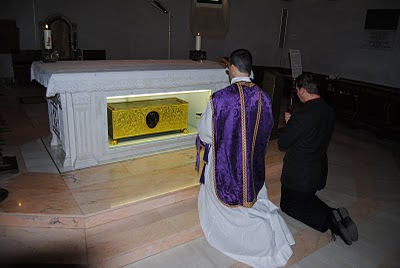
Tomb of St. Thomas in San Tommaso Basilica, Ortona, Italy, which has had in its possession the complete skeleton of Thomas since the 13th century.

St Thomas Tomb Mylapore

› See more photos here


How history was made up at Nalanda – Arun Shourie

Arun Shourie

Given what we have seen of Marxist historians even in this brief book, the brazen-faced distortions—to the point of falsehood—do not surprise me. – Arun Shourie

“The mine of learning, honoured Nalanda”—that is how the 16th-17th century Tibetan historian, Taranath, referred to the university at Nalanda. At the time I-Tsing was at the university, there were 3,700 monks. The total complex had around 10,000 residents. The structures housing the university were as splendid and as extensive as the learning they housed. When excavations began, the principal mound alone was about 1,400 feet by 400 feet. Hieun Tsang recounts at least seven monasteries and eight halls. The monasteries were of several storeys, and there was a library complex of three buildings, one of them nine storeys high.

As the Islamic invaders advanced through Afghanistan and north-western India, they exterminated Buddhist clergy, they pillaged and pulverised every Buddhist structure—the very word “but”, the idols they so feverishly destroyed, was derived from “Buddha”. Nalanda escaped their attention for a while—in part because it was not on the main routes. But soon enough, the marauders arrived, and struck the fatal blow. The ransacking is described in the contemporary Tabakat-i-Nasiri by Maulana Minhaj-ud-din.

Minhaj-ud-din rose and came to the notice of the rulers of the time—Qutb-ud-din Aibak and others—because of his raids and depredations, and because of the enormous booty he gathered, booty sufficient for him to set himself up as a plunderer in his own right. “His reputation reached Sultan (Malik) Qutb-ud-din, who dispatched a robe of distinction to him, and showed him honour,” the historian writes. With its high wall, its large buildings, Nalanda seemed like a well-endowed fortress to Ikhtiyar-ud-din and his force. He advanced upon it with two hundred horsemen “and suddenly attacked the place”. Minhaj-ud-din continues,

“The greater number of inhabitants of that place were Brahmans, and the whole of those Brahmans had their heads shaven, and they were all slain. There were a great number of books there; and when all these books came under the observation of the Musalmans, they summoned a number of Hindus that they might give them information respecting the import of those books; but the whole of the Hindus had been killed. On being acquainted (with the contents of the books), it was found that the whole of that fortress and city was a college, and in the Hindu tongue, they call a college, Bihar [vihara].”

“When that victory was effected,” Minhaj-ud-din reports, “Muhammad-i-Bakhtiyar returned with great booty, and came to the presence of the beneficent sultan, Qutb-ud-din I-bak, and received great honour and distinction.…”—so much so that other nobles at the court became jealous. All this happened around the year 1197 AD.

And now the Marxist account of the destruction of this jewel of knowledge. In 2004, D. N. Jha was the president of the Indian History Congress. In the presidential address he delivered—one to which we shall turn as an example of Marxist “scholarship”—this is the account he gives of the destruction of Buddhist viharas, and of Nalanda in particular:

“A Tibetan tradition has it that the Kalacuri King Karna (11th century) destroyed many Buddhist temples and monasteries in Magadha, and the Tibetan text  Pag Sam Jon Zang refers to the burning of the library of Nalanda by some ‘Hindu fanatics’”.

“Hindu fanatics”? The expression struck me as odd. A Tibetan text of the 18th century using so current an expression as “Hindu fanatics”? Especially so because, on Jha’s own reckoning, Hinduism is an invention of the British in the late 19th century? So, what is this “Tibetan text”? What does it say? Had Jha looked it up?

Pag Sam Jon Zang was written by Sumpa Khan-Po Yece Pal Jor. The author lived in 1704-88: that is, 500 years after the destruction of Nalanda.

That is the first thing that strikes one: our historian disregards the contemporaneous account, Tabakat-i-Nasiri, and opts for a text written 500 years after the event. But had he read the text at all? Could a self-respecting Marxist have at all believed what is written in it?

This is how Sarat Chandra Das, the translator and editor of Pag Sam Jon Zang, sets out the account of the destruction of Nalanda as given in this text:

“While a religious sermon was being delivered in the temple that he (Kakuta Sidha, a minister of a king of Magadha) had erected at Nalanda, a few young monks threw washing water at two Tirthika beggars. The beggars being angry, set fire on the three shrines of dharma ganja, the Buddhist university of Nalanda—that is, Ratna Sagara, Ratna Ranjaka including the nine-storey building called Ratnadadhi which contained the library of sacred books” (pg 92).

Two beggars could go from building to building of that huge campus and, with all the monks present, burn down the entire, huge, scattered complex?

And, the account of the relevant passage reproduced above is the one set out by Sarat Chandra Das in his Index. That is, it is just a summary of the actual passage—in an index, it scarcely could be more. What does the relevant section, and in particular the passage about the burning down of the library, say?

The author is giving an account of how Dharma has survived three rounds of destructive attempts. One round was occasioned by the fluctuating relations between Khunimamasta, a king of Taksig (Turkistan?), and Dharma Chandra, a king of Nyi-og in the east. The latter sends gifts. The former thinks these are part of black magic. He, therefore, swoops down from “dhurukha” and destroys “the three bases” of Magadha—monasteries, scriptures and stupas. Khunimamasta drives out and exiles the monks. Dharma Chandra’s uncle sends many scholars to China to spread the teaching. He receives gold as thanksgiving. He uses this and other gifts to appease rulers of smaller kingdoms to join the fight against the king of Taksig (Turkistan?). The uncle thereafter revives “the three bases”. Almost all the shrines are restored and 84 new ones are built. And so, the Dharma survives.

In the next round, “the teacher who taught Prajnaparamita for 20 years is assassinated by burglars from Dhurukha. His blood turned into milk and many flowers emerged from his body. (Thus) he flew into the sky.”

We now come to the crucial passage, the one that Jha has ostensibly invoked. I reproduce the translation of it by Geshe Dorji Damdul in full:

“Again at that time, there was a scholar by the name Mutita Bhadra, who was greatly involved in renovating and building stupas. Eventually he had a vision of Bodhisattva Samantabhadra. He flew to Liyul by holding the garment (of Bodhisattva Samantabhadra) and there he made great contributions to the welfare of sentient beings and the Dharma. Reviving the Dharma that way, the Dharma flourished for 40 years in the Central Land (Magadha?). At that time, during the celebration over the construction of a shrine in Nalanda by Kakutasita, a minister of the king, some naughty novice monks splashed (dish) washing water on two non-Buddhist beggars and also pressed (the two) in-between the door and (the door frame.) Angry over these gestures, one (beggar) served as the attendant to the other who sat in a deep pit for 12 years to gain the siddhi of the sun. Having achieved the siddhi, they threw ashes of a fire puja (havan) they did, on 84 Buddhist shrines. They were all burned. Particularly, when the three dharma ganja of Nalanda—the shrines which sheltered the scriptures—as well got consumed in fire, streams of water ran down from the scriptures of Guhyasamaja and Prajnaparamita, which were housed in the ninth storey of the Ratnadhati shrine. This saved many scriptures. Later, fearing penalty from the king, the two (beggars) escaped to Hasama in the north. However, the two died due to immolation, which happened on its own.”

Surely, no self-respecting Marxist could have made his account rest on not just one miracle—acquiring siddhis and raining fire on to the structures—but two, for we also have the streams of water running down from the scriptures.

But we strain unnecessarily. There is a clue in Jha’s lecture itself. He doesn’t cite the Tibetan text, he does what Marxists do: he cites another Marxist citing the Tibetan text! To see what he does, you must read the lines carefully. This is what we saw Jha saying:

“A Tibetan tradition has it that the Kalacuri King Karna (11th century) destroyed many Buddhist temples and monasteries in Magadha, and the Tibetan text Pag Sam Jon Zang refers to the burning of the library of Nalanda by some ‘Hindu fanatics’”.

As his authority, Jha cites a book by B. N. S. Yadava, Society and Culture in Northern India in the Twelfth Century. What did Yadava himself write? Here it is: “Further, the Tibetan tradition informs us that Kalacuri Karna (11th century) destroyed many Buddhist temples and monasteries in Magadha.”

Jha has clearly lifted what Yadava wrote word for word—at least he has been faithful to his source. But in the very next sentence, Yadava had gone on to say: “It is very difficult to say anything as to how far this account may be correct.”

Words that Jha conveniently left out!

Yadava had continued, “However, we get some other references to persecution.”

He cited two inscriptions and a Puranic reference. And then came to the Tibetan text. Recall what Jha wrote about this text: “… and the Tibetan text Pag Sam Jon Zang refers to the burning of the library of Nalanda by some ‘Hindu fanatics’”.

And now turn to what Yadava wrote about this very text: “The Tibetan text Pag Sam Jon Zang contains a [I am leaving out a word] tradition of the burning of the library of Nalanda by some Hindu fanatics.”

Close enough to pass for plagiarism? But wait, there is originality! Notice, first, that two Hindu beggars have become “Hindu fanatics”. Notice, next, that the words “Hindu fanatics” that Jha had put in quotation marks as if they were the words that the author of the Tibetan text had used to describe the arsonists, were actually the words of his fellow Marxist, Yadava. But the best clue is the word that I omitted from what Yadava had actually written. Yadava’s full sentence was as follows: “The Tibetan text Pag Sam Jon Zang contains a doubtful tradition of the burning of the library of Nalanda by some Hindu fanatics.”

Just as he had left out the words, “It is very difficult to say anything as to how far this account may be correct,” Jha now leaves out the word “doubtful”. And all this in the presidential address to the Indian History Congress.

In a word, there is a Tibetan text written five hundred years after the destruction of Nalanda. Sarat Chandra Das annotates it, and includes in his Index a summary in English of a passage in the text—the summary naturally leaves out telling components of the original passage.

Yadava looks only at the summary in the Index—“non-Buddhist beggars” becomes “Hindu fanatics.”

Yadava notes that the account is based on a “doubtful tradition”.

Jha omits the word “doubtful”.

And we have a presidential address to the Indian History Congress!

Given what we have seen of Marxist historians even in this brief book, the brazen-faced distortions—to the point of falsehood—do not surprise me.

What does surprise me is that no one looked up either the source that Jha had cited or the text.

Indeed, in concluding his section, Yadava had stated:

“A great blow to Buddhism was, no doubt, rendered by the Turkish invasions, leading to the destruction and desertion of the celebrated Buddhist monasteries of Magadha and Bengal. Many Buddhist scholars fled to Tibet and Nepal.” – Indian Express, 28 June 2014

» Arun Shourie is a former Rajya Sabha MP from the BJP and leading public intellectual. This article has been excerpted by the Indian Express from his book, Eminent Historians: Their Technology, Their Line, Their Fraud.

Eminent Historians by Arun Shourie