As Socrates taught: evil is, upon closer analysis, a case of ignorance. Never attribute to malice what can be explained by incompetence. – Dr Koenraad Elst
Let us consider what Ram Swarup said about Hindu-bashing, or what is nowadays called “Hinduphobia”. The word, though in existence since more than a century, was not yet in vogue as Hinduism’s ad hoc counterweight against the omnipresent propaganda term “Islamophobia”. But the phenomenon was already dominant in India and increasingly present abroad.
In fact, it was quite old. Several tribes of Muslims with a doctrinally motivated hatred for the Hindus, followed by the Portuguese Christians with a similar aversion, had actively persecuted Hinduism for centuries. They represent a permanent source of anti-Hindu violence that now takes the form of occupation of parts of the Hindu homeland by the Islamic states of Pakistan and Bangladesh; of Pakistani incursions; of terrorism and of rioting. But while they bludgeoned Hindu society and inflicted huge human and material losses on it, they did not penetrate it or take control of its institutions.
Tribes of haters
The British, by contrast, could rule India with more limited violence largely outsourced to native sepoys, but their influence penetrated far more deeply. Firstly, they managed to pit several Hindu sub-groups against the mainstream: most obviously the Sikhs, for whom the status of separate religion was made of whole cloth, promoted as a social reality and underpinned at the scholarly level. In several booklets, Ram Swarup went against this colonial-engineered separatism by documenting how, as per their own scriptures and history, Sikhism was a self-identified sect of Vedic Hinduism.
The creation of bad blood between Buddhism and mainstream Hinduism only took the institutional form of keeping Sri Lanka and later Burma outside of British India, but was far more influential at the scholarly level. There, the underlying paradigm of all Buddhist studies and of Indian histories as instilled through the schools became: “Hinduism bad, Buddhism good.” Even before 1947, “Christian missionaries (…) were presenting Buddhism (as they have been doing with Sikhism) as (…) a revolt against ‘Brahmanism’ and the “Hindu” caste system.” (Hinduism and Monotheistic Religions, p.519, originally 1991) They had no use for the Buddha, except for making him into a stick to beat Hindu society with. The Macaulayites and Marxists followed this example: “they tried to use their learning and position to undermine Hinduism (…) and show that there was little difference between Marxism and Buddhism. Now Communist historians are telling us that Hindus demolished Hindu temples.” (p.519)
Likewise with the Dalits and tribals, who came to benefit from an incipient reservation system, and with the non-Brahmin Tamils. The then-popular Aryan Invasion Theory was used to pit them against the upper castes and the North Indians. The thrust of the exercise was invariably to put Hindus into the dock and make them feel guilty for their very existence. Needless to say, this caste-based discrimination with a good social conscience has only become more encompassing over the years, and the [Aryan Invasion] paradigm still is the official one.
But the second effect was even more detrimental to Hindu assertiveness: “The British took over our education and taught us to look at ourselves through their eyes. They created a class Indian in blood and colour, but anti-Hindu in its intellectual and emotional orientation. This is the biggest problem rising India faces—the problem of self-alienated Hindus, of anti-Hindu Hindu intellectuals.” (p.45)
Then again, in numerical terms, this impact on Hindu society was still quite small even by 1947. Many millions in the countryside had never seen a Briton, less than 1% of the population spoke good English. If the Indian leadership had wanted, it could have undone this influence in a matter of decades.
A crucial factor here was the choice of language. Ram Swarup himself was quite at home with British culture and thought, being most influenced by British liberalism: Bertrand Russell, George Bernard Shaw, Aldous Huxley, George Orwell. In his case, this didn’t stop him from fighting for freedom from British rule, with active participation in the Quit India Movement. But for less independent minds, gulping down English influence would only end up estranging them from their Hindu roots, as it had done in the case of Jawaharlal Nehru. The vote in the Constituent Assembly’s Language Committee should have been crucial: 50% voted for Sanskrit, 50% for Hindi (which was given victory by the deciding vote of the chairman), and 0% for English. For the generation that had achieved independence, it was completely obvious that decolonisation implied abolishing the coloniser’s language. Yet by 1965, when this abolition was due to become effective, the English-speaking elite had gathered enough power to overrule this solemn commitment. Ever since, the influence of English and of the thought systems conveyed by it has only gone on increasing, and at some levels, India is becoming a part of the Anglosphere—hardly what the freedom fighter envisioned. Today, most Anglophone secularists are nearly as knowledgeable about Hindu culture as first-time foreign tourists who have crammed up the Lonely Planet’s few pages summarising India’s religious landscape.
Marx and Mao
Compare with China, not formally colonised but having been repeatedly humiliated by colonial incursion, yet now again proud and assertive. Of course it has retained its language, and adopting a foreign language as medium for education or the judiciary is simply unthinkable. Ram Swarup, who wrote several books criticising the record of Maoism, wouldn’t emphasise this, but it is one thing the Communists undoubtedly achieved: a clean break with the colonial age. Under the nationalist regime (1912-49), China was increasingly under Anglo-American influence, and the Christian missions could operate on a large scale. Nationalist leader Jiang Jieshi (who later was to give an award to Ram Swarup’s and Sita Ram Goel’s anti-Communist think tank Society for the Defence of Freedom in Asia) was a Christian along with much of his family. By contrast, when Mao Zedong came to power, all missionaries were imprisoned, killed, or at best banished.
On the other hand, by importing Marxism, China was opening itself up to another Western doctrine, and actively imposing it on its population. The same counted for those circles in India that came to espouse Marxism. Under Nehru, it started influencing the power-wielding circles, and from Indira Gandhi onwards, it achieved control over education policy and much of cultural policy. This ideology was “more Eurocentric than regular imperialism. It used radical slogans but its aims were reactionary. … Marx fully shared the contempt of the British imperialists for India. He fully subscribed to the theses of colonial scholarship that India was not a nation, had no history and was meant for subjugation. Marxism was Macaulayism at its most hostile. It blackened Indian history systematically. It gave to [the] Indian social and political system its own format, the one it had learnt from its European teachers. It saw in Hinduism not … a great spiritual civilisation but only communalism.” (p.45-46)
Newer forms of Marxist or soft-Marxist thought (critics speak of “cultural Marxism”) remain entrenched in the Indian institutions, and are more powerful than ever in the relevant departments of Western universities. Their construction of Indian reality remains dominant and is more than ever spread to the new Hindu generations, leading to more culpabilisation c.q. sense of shame for Hinduism.
Race to the exit
The trends unambiguously traced to colonial policies have not been reversed by the Nehruvian regime, but have instead been continued and magnified. Thus, the British policy of separating Hindu subsets from general Hinduism has continued with an affirmation at different times of minority status for Buddhism, Sikhism, the Arya Samaj, Jainism, Virashaivism and Sarna “animism”. In every case, the administrative separation was fortified with a change in discourse: the need for a non-Hindu identity was in each case buttressed by an increased blackening of Hinduism. This anti-Hindu attitude has even crept into Hindu organisations without the institutional ambition of minority status, e.g. the ISKCON (Hare Krishna) calls itself non-Hindu, except when it is canvassing for donations from Hindu communities.
When Ram Swarup wrote against separatism among the Sikhs, it was an interesting intellectual entertainment for his readers, but had no impact at all on policy-making. The Narasimha Rao government managed to neutralise armed Sikh separatism, but did nothing to change Sikh separatist thought, so that there remains a constant threat of its political revival. In a healthy society, we might expect power-wielders to listen to sages like Ram Swarup, but this was not the case; just as it is still not the case today.
As described in Ram Swarup’s booklet The Ramakrishna Mission in Search of a New Identity, the Ramakrishna Mission, besieged by the Communist-supported Teachers’ Union in its school network, felt compelled as a matter of survival to relieve this pressure. In India, by virtue of Article 30 of the Constitution, minority schools (and similarly, places of worship) are autonomous and immune from government take-over, whereas classification as Hindu makes them vulnerable to nationalisation. But the RK Mission did not try to have the discrimination against Hindu schools abolished, did not appeal to Hindu society, but did the dishonourable thing of trying to escape by seeking minority status, like a rat leaving a sinking ship. The Bengal High Court gave it the coveted minority status, then finally (or so it seemed) the Supreme Court denied it, entirely in accordance with RK Mission founder Swami Vivekananda’s assertion of Hindu pride.
Superficial Hindus might jubilate that this was a victory for Hindu unity, but Ram Swarup warned that the Mission would now have to live down the anti-Hindu attitudes which it had come to espouse. Here again, some of its swamis make all the right noises for the respective audiences they address, sometimes calling themselves Hindu, but the “we are not Hindus” animus has not disappeared: when Mamata Banerjee’s Trinamool Congress won the state elections ending decades of Communist rule, the Mission asked her for minority status. And promptly it received her assurance that it would henceforth be treated as a minority, thus de facto overruling the “final” Supreme Court verdict. Ram Swarup always emphasised that institutional arrangements are unimportant in themselves, merely the materialisation of convictions and mentalities. If you want to stop the race to the exit, it is imperative to change people’s unfavourable impression of Hinduism.
Down with conspiracy thinking
A final point for the attention of the rather hot-headed Hindu activists and polemicists. They always see conspiracies against Hinduism, e.g. the Aryan Invasion Theory was a “British concoction”, the Partition of India was “imposed by machinations by the British” who had “brainwashed” the Muslim League leadership. In this case, “Hinduphobia” is deemed to be an expression of an intractable “hatred” that for some reason (in the case of Westerners, “racism”) animates Hinduism’s numerous enemies. This fuming hot air in Hindu discourse puts off many neutral observers and produces Hinduphobes. But in all of Ram Swarup’s works, there is not a single example of this approach.
For a single example, he describes a novel about the Buddha’s wife Yashodhara, Lady of the Lotus, by a well-meaning American, William E. Barrett. It has totally fictitious episodes about the couple’s visits to the quarters of the Untouchables: “They were revolted by the sight. They saw that ‘the traffic in the streets was, in the main, animal.’” And about the sight of hungry people: “Next day when they were in bed, light dawned on Siddharta that ‘No one has to be hungry … and no one should live as these people live.’” (p.527) In reality, the Buddha was not particularly interested in the difference between rich and poor, high and low; he taught that suffering was basic to the human condition in general. He did not propagate liberation from poverty, but liberation from the human condition. The socialist reinterpretation of the Buddha as a social rebel conflicts with the Buddha’s teachings. It is typical for the post-religious worldview to reduce religion to socio-economic considerations, i.e. to cultivate ignorance about the existential passions that have generated religions.
The most interesting part of Ram Swarup’s account is: “The author was not hostile to India but he was doing his best to depict Hindus and their history as he knew it.” (p.528) This is crucial to understanding “Hinduphobia”: while some classes of people, say mullahs and missionaries, have an interest in blackening Hinduism, most people don’t. They just go by the information they have been fed. This American novelist has been fed the fable that the Buddha was a rebel against Hindu societal reality, so that is what he puts into his story: Buddhism social, Hinduism oppressive. As Socrates (translated into Hindi as Satyakām Sokratez by Ram Swarup’s friend Sita Ram Goel) taught: evil is, upon closer analysis, a case of ignorance. Never attribute to malice what can be explained by incompetence.
› Dr Koenraad Elst is an historian. linguist and orientalist from Belgium who visits India to study and lecture.
Comparisons between great men are odious at best, but in the numerous interactions he had with Ambedkar, Gandhi comes across as a sophomore arguing with his dean—sometimes wide-eyed, sometimes a playground bully, unsure and disposed to bouts of arrogance; and then, as the last throw of dice, couching his ignorance with borrowed theological wisdom. – Prof Anand Ranganathan
It is not that we do not understand Ambedkar; it is that we fear him. Mahatma Gandhi was no different.
The fear of Ambedkar is justified, for how can one man be so authoritative on every subject he ever professed a view on, be it Islam, Communism, Hinduism, history, theology, science, economics, politics, society, literature, law, foreign policy, education, and journalism. One may, admittedly, veer towards bombast and hyperbole while acknowledging this to be a non-human trait. After all, it is but a thin line that separates fear from worship. Everyone makes mistakes, everyone is wrong at some point, or as the philosopher-mathematician Bertrand Russell put it: I would never die for my beliefs, for I might be wrong. What, then, would one call someone who overwhelmingly defies these maxims?
Bhimrao Ramji Ambedkar.
There is no other way of saying this. Mahatma Gandhi was frightened of Ambedkar’s intellect. We have all been there before, trying to hold our icy core before an adversary armed with a blowtorch—that awful, gut-wrenching moment when he smirks and decides not to embarrass you with the truth, that you were found wanting, that you have been defeated. Defeated, some retreat into humility, others into hubris. Gandhi chose the latter.
Ultimately, greatness is judged not by how right you were but, rather, how wrong. Gandhi got it wrong more times than Ambedkar got it right, which was, in this author’s opinion, almost always.
Gandhi was a kind man, he was a good man, and therefore fallible. He was prone to vanity and narcissism. Ambedkar wasn’t. He wasn’t because every single day of his life he was made aware of the fact that the mediocre have inherited the Earth and control it. And on days he wasn’t made to feel worthless, his worth was patronised. Nothing came easy to Ambedkar, least of all his genius.
Granted, comparisons between great men are odious at best, but in the numerous interactions he had with Ambedkar, Gandhi comes across as a sophomore arguing with his dean—sometimes wide-eyed, sometimes a playground bully, unsure and therefore disposed to bouts of arrogance; and then, as the last throw of dice, couching his ignorance with borrowed theological wisdom because it was underwritten by those as ignorant as him. These are not charitable words, but then an assessment of Gandhi is rarely charitable if it is to be ruthlessly objective. And who else but Ambedkar to have assessed Gandhi like no one ever dared to before or after him.
Gandhi was not a liberal—his beliefs on societal structure, on economy, on a concept-state, on what Indians should eat or drink, would make even the most ardent of conservatives blush. His theories were based less on logic and more on a bizarre sense of faith-based entitlement that can only be described as an inseparable emulsion of homeopathy and spirituality. Gandhi was an intelligent and cunning god-man. He was made for India. He held her pulse, pumped her heart. Ambedkar, on the other hand, was the only true liberal this nation has produced in the last many centuries. Gandhi was a theologian pretending to be a politician; Ambedkar, a supreme scholar. Gandhi was a Social Darwinian; Ambedkar, a Darwinian. Gandhi said he would not “weep over the disappearance of machinery”; Ambedkar wanted an industrialised India. Gandhi could have ruled independent India had he chosen to for as long as he wanted; Ambedkar lost an election by some margin. Twice. Gandhi saw the village as India’s liberator; Ambedkar called it a cesspool and a den of ignorance. Gandhi’s self-confidence was buttressed by the blind devotion of his countless followers; Ambedkar’s stemmed from his ability to speak his mind, stand all by himself, and appease no one.
Gandhi had an army of men; Ambedkar was a one-man army.
Ambedkar saw through Gandhi. Worse, the Mahatma gauged this, but, like a stunned ostrich, pretended to hold fort, employing as bulwarks his minions who were also petrified of Ambedkar’s intellect.
India has forever been a land of such tragedies. The one who truly was a Mahatma fought a man pretending to be one, and lost. But he went down fighting. And how.
That Gandhi was dealing with a different kind of man should have become obvious to him after their very first formal extended meeting. The conversation, which took place on 14 August 1931, has been recorded for posterity and is revealing beyond measure.
Gandhi: “I understand that you have got some grievances against the Congress and me. I may tell you that I have been thinking over the problem of Untouchables ever since my school days—when you were not even born.”
Ambedkar: “It is true, Mahatmaji, that you started to think about the problem of Untouchables before I was born. All old and elderly persons always like to emphasize the point of age.”
Gandhi 0, Ambedkar 1.
Gandhi: “The Congress has spent not less than rupees twenty lakhs on the uplift of the Untouchables.”
Ambedkar: “The Congress is not sincere about its professions. Had it been, it would have surely made the removal of untouchability a condition, like the wearing of khaddar, for becoming a member of the Congress. No person who did not employ untouchable women or men in his house, or rear up an untouchable student, or take food at home with an untouchable student at least once a week, should have been allowed to be a member of the Congress. Had there been such a condition, you could have avoided the ridiculous sight where the President of the District Congress Committee was seen opposing the temple entry of the Untouchables. You might say that Congress lacked strength and therefore it was unwise to lay down such a condition. Then my point is that Congress cares more for strength than for principles. This is my charge against you and the Congress. You say the British Government does not show a change of heart. I also say that the Hindus have not shown a change of heart in regard to our problem, and so long as they remain adamant, we would believe neither the Congress nor the Hindus. We believe in self-help and self-respect.”
Gandhi: “It is really surprising that men like you should offer opposition to me and to the Congress.”
Ambedkar: “We are not prepared to have faith in great leaders and mahatmas. Let me be brutally frank about it. History tells that mahatmas, like fleeting phantoms, raise dust, but raise no level.”
Game over.
It would be wrong to suggest that Ambedkar hated Gandhi. Hate cannot cloud the judgement of a man as rational and detached as Ambedkar, for if it did, he would no longer be the guardian of these virtues. What Ambedkar employed, instead, was logic, through which, slowly, methodically, year on year, decade on decade, he dismantled Gandhi’s sainthood. There was no hate involved, just the brute force of reasoning and judgement. Ambedkar was unsparing and unyielding, and the Mahatma was only too glad to oblige.
When the Great War ended with the disbanding of the Ottoman Empire, Gandhi persuaded the Congress to support the Khilafat Movement—a violent agitation for restoration of the Islamic Caliphate deposed by the victorious British. Before long, he pinched his nose and plunged into the murky waters of religious appeasement and terror rationalisation in the wake of the ghastly anti-Hindu violence perpetrated by the Malabar Muslims (Moplahs) in 1921.
Ambedkar, who saw Gandhi’s advocacy of the Khilafat Movement as a pernicious political stunt—(“The movement was started by the Muslims. It was taken up by Mr Gandhi with a tenacity and faith which must have surprised many Muslims themselves.”)—viewed the Moplah rebellion as nothing but jihad. The Muslim agitators, he said, “preached the doctrine that India under the British Government was Dar-ul-Harab [The Abode of War; a place where the Muslims are not in power] and that the Muslims must fight against it and if they could not, they must carry out the alternative principle of Hijrat.”
Ambedkar continued, pulling no punches. “The aim was to establish the kingdom of Islam by overthrowing the British Government. Knives, swords and spears were secretly manufactured, bands of desperadoes collected for an attack on British authority. On 20th August a severe encounter took place between the Moplahs and the British forces at Pinmangdi. Roads were blocked, telegraph lines cut, and the railway destroyed in a number of places. As soon as the administration had been paralysed, the Moplahs declared that Swaraj had been established. A certain Ali Mudaliar was proclaimed raja, Khilafat flags were flown, and Ernad and Wallurana were declared Khilafat kingdoms. As a rebellion against the British Government it was quite understandable. But what baffled most was the treatment accorded by the Moplahs to the Hindus of Malabar. The Hindus were visited by a dire fate at the hands of the Moplahs. Massacres, forcible conversions, desecration of temples, foul outrages upon women, such as ripping open pregnant women, pillage, arson and destruction—in short, all the accompaniments of brutal and unrestrained barbarism, were perpetrated freely by the Moplahs upon the Hindus until such time as troops could be hurried to the task of restoring order through a difficult and extensive tract of the country. This was not a Hindu-Moslem riot. This was just a Bartholomew [reference to the St. Bartholomew’s Day massacre in 1572].”
To Ambedkar’s horror, Gandhi laid the blame squarely on the Hindus. “Hindus,” said the Mahatma, “must find out the causes of Moplah fanaticism. They will find that they are not without blame. They have hitherto not cared for the Moplah. They have either treated him as a serf or dreaded him. They have not treated him as a friend and neighbour, to be reformed and respected. It is no use now becoming angry with the Moplahs or the Muslims in general.”
If such rationalisation wasn’t unpleasant enough, Gandhi went further, blaming everyone else for the Moplah barbarity but the Moplahs themselves. “The Government has thoroughly exploited the Moplahs’ madness,” he said. “They have punished the entire Moplah community for the madness of a few individuals and have incited the Hindus by exaggerating the facts. Malabar Hindus, like the Moplahs, are an excitable people and the Government has incited them against the latter.”
The outbreak, said Gandhi, “would not have taken place if the collector had consulted the religious sentiment of the Moplahs”.
That religious sentiment, as analysed by Ambedkar, was jihad. Indeed, Muslim leaders themselves agreed with Ambedkar. Maulana Hasrat Mohani, the eulogised freedom fighter and a friend of the Mahatma, and one who had coined the slogan “Inquilab Zindabad”, justified the massacre of Hindus by saying that this was Islamic jihad and that according to the rules of jihad, those who help the enemy become enemies themselves.
Shockingly, Gandhi was conciliatory towards the Maulana. “I do not blame the Maulana. He looks upon the British Government as an enemy. He would defend anything done in fighting it. He thinks that there is much untruth in what is being said against the Moplahs and he is, therefore, not prepared to see their error. I believe that this is his narrowness, but it should not hurt the Hindus. The Maulana speaks what is in his mind. He is an honest and courageous man. All know that he has no ill will against the Hindus.”
“In spite of his amazingly crude views about religion,” said Gandhi, “there is no greater nationalist nor a greater lover of Hindu-Muslim unity than the Maulana”.
So here was Gandhi, a Hindu, schooling a maulana on Islam. He wasn’t done yet. He transmogrified next into a maulana himself, quibbling on Islamic sanctions just so he could venture into the minds of the men who Ambedkar had called barbarians and rationalise their barbarity. “Their [the Moplahs’] notions of Islam were of a very crude type,” claimed the Mahatma.
“Forcible conversions are horrible things,” counselled Gandhi. “But Moplah bravery must command admiration. These Malabaris are not fighting for the love of it. They are fighting for what they consider is their religion and in the manner they consider is religious.”
Then came the cruellest of blows—a plea to the Hindus to rationalise the bloodbath by taking recourse in dharma.
“Even if one side is firm in doing its dharma,” said Gandhi, “there will be no enmity between the two. He alone may be said to be firm in his dharma who trusts his safety to God and, untroubled by anxiety, follows the path of virtue. If Hindus apply this rule to the Moplah affair, they will not, even when they see the error of the Moplahs, accuse the Muslims.”
“I see nothing impossible in asking the Hindus to develop courage and strength to die before accepting forced conversion,” preached the saint. “I was delighted to be told that there were Hindus who did prefer the Moplah hatchet to forced conversion.”
“Even so is it more necessary for a Hindu to love the Moplah and the Muslim more, when the latter is likely to injure him or has already injured him.”
“Why should a single Hindu have run away on account of the Moplahs’ atrocities?”
This was sheer lunacy. The Mahatma was beseeching the Hindus to hold their ground even as they were being hunted down and butchered.
One could quote more, much more, of this utterly reprehensible apologia from the Mahatma’s playbook were it not so tormenting. Of little comfort is the fact that the saint continued to hold such views despite condemnation by men like Ambedkar. Decades later, while preaching to those affected by the pre-partition Hindu-Muslim violence, he said: “Hindus should not harbour anger in their hearts against Muslims even if the latter wanted to destroy them. Even if the Muslims want to kill us all we should face death bravely. If they established their rule after killing Hindus we would be ushering in a new world by sacrificing our lives. None should fear death. Birth and death are inevitable for every human being. Why should we then rejoice or grieve? If we die with a smile we shall enter into a new life, we shall be ushering in a new India.”
Ambedkar was incensed at Gandhi’s selectivity, more so of his stand on the Moplah Massacre.
“Mr Gandhi has never called the Muslims to account even when they have been guilty of gross crimes against Hindus,” said Ambedkar. “Mr Gandhi has never protested against such murders [of prominent Hindus like Swami Shradhanand, Rajpal, Nathuramal Sharma]. Not only have the Muslims not condemned these outrages but even Mr Gandhi has never called upon the leading Muslims to condemn them. He has kept silent over them. Such an attitude can be explained only on the ground that Mr Gandhi was anxious to preserve Hindu-Muslim unity and did not mind the murders of a few Hindus, if it could be achieved by sacrificing their lives.”
Ambedkar next turned to Gandhi’s behaviour during the Moplah massacre, a pogrom he had condemned in the strongest of terms earlier. “This attitude to excuse the Muslims any wrong, lest it should injure the cause of unity, is well illustrated by what Mr Gandhi had to say in the matter of the Moplah riots. The blood-curdling atrocities committed by the Moplahs in Malabar against the Hindus were indescribable. All over Southern India, a wave of horrified feeling had spread among the Hindus of every shade of opinion, which was intensified when certain Khilafat leaders were so misguided as to pass resolutions of ‘congratulations to the Moplahs on the brave fight they were conducting for the sake of religion’. Any person could have said that this was too heavy a price for Hindu-Moslem unity. But Mr Gandhi was so much obsessed by the necessity of establishing Hindu-Moslem unity that he was prepared to make light of the doings of the Moplahs and the Khilafats who were congratulating them. He spoke of the Moplahs as the ‘brave God-fearing Moplahs who were fighting for what they consider as religion and in a manner which they consider as religious’.”
Another incident around the same time brought to light the differences between Ambedkar and Gandhi, underscoring further the gap that exists between objectivity and selectivity, and how the latter is used to devastating effect in politics. It was the publication of a pamphlet called Rangila Rasool, written as a retaliation for Sita ka Chhinala, a book penned by a Muslim that claimed Lord Rama’s wife, Sita, was a prostitute. Ambedkar stood for Mahashe Rajpal, the publisher of the pamphlet who was assassinated by a Muslim fanatic, Ilm-ud-din, this while Muhammad Ali Jinnah defended Ilm-ud-din in court, and none other than Allama Iqbal carried Ilm-ud-din’s coffin at the funeral.
Ambedkar was outraged at what was done to Rajpal; Gandhi was outraged at what Rajpal did. “I am no defender of the author of Rangila Rasool,” said Gandhi, adding that the book gave him “deep pain”. He called the book offensive and its author a mischief-maker. He wanted the law changed.
The law changed. In came the dreaded IPC section 295a, calling for punishing those who “hurt religious sensibilities”, and the India of the kind Ambedkar had imagined, an India proclaiming liberty and freedom of expression, changed forever. For the worse.
The dismantling of Gandhi’s sainthood by Ambedkar took a decisive turn in the late 1920s. It is revealing that of the 98 weighty volumes that make up the Collected Works of Mahatma Gandhi, Ambedkar’s name doesn’t figure till the fifty-third. From then on, there is a veritable Cambrian explosion and Ambedkar features regularly and copiously—the build-up to the Poona Pact, the Temple Entry Bill, the state of the so-called Depressed Classes and, tellingly, Gandhi’s anxiety that Ambedkar, and not he, was the true representative of Dalits.
Gandhi couldn’t stomach the rise of Ambedkar. Time and time again, he tries to show Ambedkar his place, is patronising to the extreme, displays uncharacteristic rudeness, and gets into banal contests as to who truly represented Dalits. And right through their duels, one cannot help but imagine Ambedkar eyeing the Mahatma with a wry smile while steaming his glasses and massaging them with his tie-end. The battle was over even before it had begun.
Here is Gandhi, bristling with unease and envy. “I repudiate his [Ambedkar’s] claim to represent them [the depressed classes]. I am the representative of the depressed classes. Get a mandate and I may not be elected but Ambedkar cannot be returned.”
What Gandhi blurted out was true. He not only would have been elected, he would have been elected with a thumping majority, and on any seat he wished to contest. India was eating out of his hands. Ambedkar, on the other hand, would have forfeited his deposit. He lost two elections that he later contested. Fame and foresight are rarely bedfellows.
The Mahatma, meanwhile, was relentless. It was almost as though he was canvassing door-to-door. “I am speaking with a due sense of responsibility, and I say that it is not a proper claim which is registered by Dr Ambedkar when he seeks to speak for the whole of the untouchables of India.”
When a delegation of Dalits asked him, “To what extent can we consider you as our man,” Gandhi replied, “Since before Ambedkar was born, I have been your man.”
And here is Gandhi displaying cringe-worthy condescension when confronted on the subject of “temple entry” by a cool and collected Ambedkar: “When you use derogatory and angry words for me, I tell myself that I deserved that. I will not get angry even if you spit on my face. I say this with God as witness. I know that you have drunk deep of the poisoned cup. However, I make a claim that will seem astounding to you. You are born an untouchable but I am an untouchable by adoption. And as a new convert I feel more for the welfare of the community than those who are already there.”
Ambedkar was beginning to get used to such patronising fluff. “I have no interest in the temples being thrown open to us,” he told Gandhi.
Things came to a head on the subject of untouchability, caste, and varna. Ambedkar’s views were well-known. He had honed them through decades of studying Hinduism. His thoughts weren’t meant to win political battles, but, rather, philosophical, even existential ones. The scholarship was astounding, as also seen later in The Annihilation of Caste and the Ranade Speech; each word a distillate of thoughtful reflection, each quote an exposition of philosophical depth. Gandhi stood no chance.
“The outcaste is a by-product of the caste system,” Ambedkar told Gandhi. “There will be outcastes as long as there are castes. Nothing can emancipate the outcaste except the destruction of the caste system. Nothing can help to save Hindus and ensure their survival in the coming struggle except the purging of the Hindu faith of this odious and vicious dogma.”
The Mahatma’s responses exposed him wholly for what he was—an unintentional casteist bigot. “I do not believe the caste system, even as distinguished from varnashrama, to be an odious and vicious dogma,” he asserted. “It has its limitations and its defects, but there is nothing sinful about it as there is about untouchability, and, if it is a by-product of the caste system it is only in the same sense that an ugly growth is of a body, or weeds of a crop. It is as wrong to destroy caste because of the outcastes as it would be to destroy a body because of an ugly growth in it, or a crop because of the weeds.”
As for casual casteism, he spoke of Ambedkar thus, thinking he was giving Ambedkar a compliment: “His exterior is as clean as that of the cleanest and the proudest Brahmin.”
When asked by a Dalit delegation about his views on the varna system, Gandhi replied: “All occupations should be hereditary. Millions of people are not going to become prime ministers and viceroys.”
There was nothing sinful about the caste system. It was not a vicious dogma. It was wrong to destroy it. Said the father of our nation.
Indeed. Millions of people are not going to become prime ministers. A chaiwalah must remain a chaiwalah and his progeny must carry forward the family tradition of pouring a steaming cup of milk tea in a kullarh without spilling a drop.
Gandhi was an ardent, almost militant supporter of the caste system, not just early on in his life (when one could be forgiven for subscribing to uninformed opinions) but well into his mature political and spiritual avatar. “I believe that if Hindu Society has been able to stand it is because it is founded on the caste system,” he declared as late as 1921, by which time he had already anointed himself as the saviour of Dalits.
“The seeds of swaraj are to be found in the caste system. Different castes are like different sections of military division. Each division is working for the good of the whole. A community that can create the caste system must be said to possess unique power of organisation. Caste has a ready-made means for spreading primary education. Every caste can take the responsibility for the education of the children of the caste. Caste has a political basis. It can work as an electorate for a representative body. Caste can perform judicial functions by electing persons to act as judges to decide disputes among members of the same caste. With castes it is easy to raise a defence force by requiring each caste to raise a brigade. I believe that inter-dining or intermarriage are not necessary for promoting national unity. Taking food is as dirty an act as answering the call of nature. The only difference is that after answering call of nature we get peace while after eating food we get discomfort. Just as we perform the act of answering the call of nature in seclusion so also the act of taking food must also be done in seclusion. To destroy caste system and adopt western European social system means that Hindus must give up the principle of hereditary occupation, which is the soul of the caste system. Hereditary principle is an eternal principle. To change it is to create disorder. I have no use for a Brahmin if I cannot call him a Brahmin for my life. It will be chaos if every day a Brahmin is to be changed into a Shudra and a Shudra is to be changed into a Brahmin. The caste system is the natural order of society. I am opposed to all those who are out to destroy the caste system.”
A few years down the line, Gandhi watered down his love for the caste system a little (without abandoning it) and bestowed his tenderness, instead, on the varna system. Except that now his views became even more bizarre and bigoted. “I believe that the divisions into varna is based on birth,” he asserted. “There is nothing in the varna system which stands in the way of the Shudra acquiring learning or studying military art of offence or defence. The varna system is no bar to him. What the varna system enjoins is that a Shudra will not make learning a way of earning a living. There is no harm if a person belonging to one varna acquires the knowledge or science and art specialised in by persons belonging to other varnas. But as far as the way of earning his living is concerned he must follow the occupation of the varna to which he belongs which means he must follow the hereditary profession of his forefathers. The object of the varna system is to prevent competition and class struggle and class war. I believe in the varna system because it fixes the duties and occupations of persons. Varna means the determination of a man’s occupation before he is born. In the varna system no man has any liberty to choose his occupation. His occupation is determined for him by heredity.”
These, then, were the views of the self-anointed Redeemer of Dalits—that a Shudra could gain and dispense knowledge, fight in a war, do business, but he must earn his living through serving others. Reading, fighting, and doing business were to be his hobbies, nothing more.
One cannot but appreciate the herculean restraint Ambedkar would have had to exercise in the face of such theories. Gandhi had become the supreme test for ahimsa himself.
There was no way out. The Mahatma just wouldn’t admit he could be wrong, that he was building a house of cards while tormented by a sneezing fit. Sadly, his crude, unscholarly churnings only increased in their ferocity and obstinacy with time, even as he could see he was on thin ice. Hereditary varnashramadharma was Hinduism’s greatest gift to mankind, he said, while what Ambedkar desires, he complained, “is complete destruction of varnashramadharma of his imagination. Varnashrama to him means the essence of superiority and inferiority. I admit that today varnashrama does mean that, if it also means much more, but the evil of high-and-low-ness is represented by untouchability. When, therefore, the latter is demolished, varnashrama will be purged of the very thing for which Dr Ambedkar abhors it.”
This was nonsense, and Ambedkar told him as much. “I shall have nothing to do with varnashrama that would keep me and mine for ever at the bottom of the social scale.”
On caste and the cruelty of it, Ambedkar’s masterpiece, The Annihilation of Caste, remains unsurpassed in its literary distinction and sheer raw energy. It has the power to move mountains. But not saints.
“I have questioned the authority of the Mahatma whom they revere,” says Ambedkar of his invitees in the opening pages of The Annihilation. “They hate me,” he laments. They hated him, alright. His invite was cancelled at the last moment.
Step by step, page by page, Ambedkar lays out in astonishing detail the evil nature of the caste system and the ambivalence in Hinduism that propagated and preserved it. Next, he turns to the varna system and demolishes its logic with stunning analytical precision, while emphasising that “destroying caste would not destroy Hinduism”. It is the work of a scientist-philosopher. Never has clarity of thought jumped out from every paragraph, every sentence, so effortlessly.
Ambedkar understood, experienced, and witnessed that the varna system was inherently and irrevocably intertwined with the caste system. Only a congenital idiot would believe in the chaturvarna as an ideal form of society, he once said.
“The names Brahmin, Kshatriya, Vaishya, and Shudra are names which are associated with a definite and fixed notion in the mind of every Hindu. That notion is that of a hierarchy based on birth. So long as these names continue, Hindus will continue to think of the Brahmin, Kshatriya, Vaishya, and Shudra as hierarchical divisions of high and low, based on birth, and to act accordingly. The Hindu must be made to unlearn all this. But how can this happen, if the old labels remain, and continue to recall to his mind old notions? If new notions are to be inculcated in the minds of people, it is necessary to give them new names. To continue the old names is to make the reform futile. To allow this chaturvarnya based on worth to be designated by such stinking labels as Brahmin, Kshatriya, Vaishya, Shudra, indicative of social divisions based on birth, is a snare.”
What Ambedkar says next is crucial for understanding the intertwining of the varna and the caste, a point missed by some who support the varna and not the caste, or others like Gandhi who support both the varna and the caste. “Chaturvarnya is based on worth. How are you going to compel people who have acquired a higher status based on birth, without reference to their worth, to vacate that status? How are you going to compel people to recognize the status due to a man, in accordance with his worth, who is occupying a lower status based on his birth? For this, you must first break up the caste system, in order to be able to establish the chaturvarnya system. How are you going to reduce the four thousand castes, based on birth, to the four varnas, based on worth? This is the first difficulty that the protagonists of the chaturvarnya must grapple with. Modern science has shown that the lumping together of individuals into a few sharply-marked-off classes is a superficial view of man, not worthy of serious consideration. Consequently, the utilisation of the qualities of individuals is incompatible with their stratification by classes, since the qualities of individuals are so variable. Chaturvarnya must fail for the very reason for which Plato’s republic must fail—namely, that it is not possible to pigeonhole men, according as they belong to one class or the other. That it is impossible to accurately classify people into four definite classes is proved by the fact that the original four classes have now become four thousand castes.”
Gandhi, true to his nature, hung on till his last in claiming there was a distinction between varna and caste, even though to him both were hereditary cohorts. No amount of brilliant, methodical, and detailed reasoning provided by Ambedkar could convince him to think otherwise. Gandhi’s rebuttal to The Annihilation of Caste was predictable and lacking in intellectual depth. “Dr Ambedkar is a challenge to Hinduism,” began Gandhi, and then tried to counter Ambedkar’s arguments on the need for forgoing caste and forgetting varna. It was secluded and patronising in tone.
Ambedkar rebutted Gandhi’s rebuttal. “I am not in the habit of entering into controversy with my opponents unless there are special reasons which compel me to act otherwise. Had my opponent been some mean and obscure person, I would not have pursued him. But my opponent being the Mahatma himself, I feel I must attempt to meet the case to the contrary which he has sought to put forth.”
Yet again, Ambedkar was forced to channel all his energies into countering Gandhi, and yet again he did it with precision and aplomb, ending with words that continue to resonate long after they have been read. “The Hindus, in the words of Matthew Arnold, are wandering between two worlds, one dead, the other powerless to be born. What are they to do? The Mahatma to whom they appeal for guidance does not believe in thinking, and can therefore give no guidance that can be said to stand the test of experience. The intellectual classes to whom the masses look for guidance are either too dishonest or too indifferent to educate them in the right direction. We are indeed witnesses to a great tragedy. In the face of this tragedy all one can do is to lament and say – such are thy Leaders, O Hindus!”
Ambedkar’s dismantling of the Mahatma was not linear or chronological in the sense that his rebuttals and critiques were not always immediate follow-up responses to Gandhi’s arguments. But Ambedkar made sure he never missed an opportunity to critique them in the strongest possible terms even if years had lapsed since they were uttered.
And it is then that one realises what Ambedkar was up to. He was preparing for posterity an enormous counter-balance resource against someone who, he knew only too well, was soon going to make the jump from a mahatma to a deity, the keeper of truth and purity of thought, a messiah who could not err. The entire world would fall at this apostle’s feet and any criticism of him would soon be considered blasphemous. Ambedkar was preparing us for that day. He even wrote a big fat book and titled it What Congress and Gandhi have done to the Untouchables with chapter headings that were self-explanatory: “Beware of Mr Gandhi”; “Gandhism: The Doom of the Untouchables”.
“Beware of Mr Gandhi” contains 14,075 words and each one of them speaks a thousand pictures. Ambedkar, as was his nature, charts out in piercing detail Gandhi’s political timeline beginning 1894, demonstrating beyond doubt that Gandhi was a fraud when it came to the Dalit cause.
In the next chapter, “Gandhism: The Doom of the Untouchables”, Ambedkar unwearyingly peels away all vestiges of Gandhi’s remaining credibility and his principles, leaving the reader breathless. From caste to varna to economy to hamlet utopia to industrialisation to class war to coercion to starvation blackmails to appeasement—the point-by-point exposé is unnerving, to say the least. Stop, Babasaheb, stop for the love of God, cries the reader; this is our Mahatma you are taking on, the great soul, the father of our nation, the saint who adorns our currency notes, the apostle who cannot be faulted. Stop, Babasaheb, I beg of you.
What Congress and Gandhi have done to the Untouchables is one spectacular demolition of Mahatma Gandhi, just as The Annihilation of Caste was of the proponents of varna and the caste system. Indeed, it could so easily have been titled “The Annihilation of Gandhi”. Some claim that the Congress banned this book, although one could find no evidence of this. In any case, very few know of its existence and even fewer have read it. Just as well because after absorbing its contents chapter and verse, one is forced to reflect on who really was this man we call “Mahatma” and the father of our nation.
Ambedkar had, of course, reflected on this very question for decades. In a rare radio interview to the BBC one year before his death, he explained the duplicitous core of the Mahatma with chilling lucidity. “I knew Gandhi better than most people because he opened his real fangs to me, and I could see the inside of the man. Gandhi was all the time double-dealing. He ran a paper in English and another in Gujarati, and if you read them both you will see how he was deceiving the people. In the English paper he posed himself as an opponent of the caste system and of untouchability and that he was a democrat, while in the Gujarati one he supported the caste system and professed all the orthodox dogmas that have kept India down all through the ages. Someone ought to write his biography by making a comparative study of the statements he made in these papers. The West reads only the English paper. Gandhi never wanted real upliftment of the Dalits. All he cared about were issues of absolutely no consequence to us like temple entry. Gandhi was never a reformer.”
“However strong and however filthy be the abuses that the Congress Press chooses to shower on me,” said Ambedkar once, “I must do my duty. I am no worshipper of idols. I believe in breaking them. I insist that if I hate Mr Gandhi and Mr Jinnah—I dislike them, I do not hate them—it is because I love India more. That is the true faith of a nationalist. I have hopes that my countrymen will some day learn that the country is greater than the men, that the worship of Mr Gandhi or Mr Jinnah and service to India are two very different things and may even be contradictory of each other.”
Yes, Gandhi birthed India in 1947 and so technically, he is her father. But whom does one call a father when honours are bestowed in the abstract?
Nations aren’t inspired through sharing ancestral genes; they aren’t shown the righteous path though gene-pool commandments. Nations need purity of the mind more than that of the heart. Nations need catharsis.
Ambedkar was not Gandhi. All his life he tried, but he could not touch in Indians that which Gandhi could, this thing called the soul. But Ambedkar touched something more important than the soul. He touched the mind.
Let there be no doubt. The real father of our nation is Bhimrao Ramji Ambedkar. – Swarajya, 14 April 2021
› Prof Anand Ranganathan is the author of three novels, most recently The Rat Eater (co-authored). He is a scientist who works in the area of Directed Evolution and Pathogenesis, with a special emphasis on Tuberculosis and Malaria.
The Constitution discriminates against Hinduism, and that this has large-scale consequences for the transmission of Hinduism to the next generation is one of India’s better-kept secrets. Most academics suppress this information and pretend loudly that India is a secular state, i.e. a state with equality of all citizens before the law. It is not, and it will be hard for secularists to object to a constitutional reform that would turn India into a true secular state, one in which no religion is discriminated against. – Dr. Koenraad Elst
One year ago, on Autumnal Equinox, 21 September 2019, Hindus organised a conference in Delhi devoted to the discrimination against Hindus in the Constitution, and, on this bedrock, also extant in India’s laws and effective policies. This was not a Sangh initiative (though VHP leader Alok Kumar was present and being honoured), rather it had been called to formulate demands addressed to the Bharatiya Janata Party. Formally, it was the work of an ad hoc group, the Equal Rights For Hindus Charter.
Some discriminations are rather academic and only consequential at several removes. Thus, the understanding of religious freedom as guaranteed in Article 25, especially the inclusion of the right to propagate one’s religion and thus to encourage others to convert, is tailor-made for the Christian mission. This interest group had successfully lobbied to ensure that the right to convert be included in the Constitution. It also fits the Islamic design to Islamise all of humanity, but the notion of conversion is foreign to Hindus and even more to Parsis. So, the constitutional right to convert seemingly creates a level playing field, counting for all religions, yet in practice it upholds a right central to Christianity and Islam but meaningless (except negatively) to Hinduism. It legalises the aggression by the foreign and conquering religions to the detriment of the indigenous religion.
At the initiative of the Scheduled Tribes, targets par excellence of the missionary efforts, several Indian states have enacted laws against forcible or fraudulent conversion (which according to the missionaries and their secularist allies are non-existent anyway). But these state laws can never acquire teeth as long as the Constitution guarantees the right to propagate religion. Thanks to this unshakeable guarantee, the missionary apparatus considers these anti-conversion laws as but an impotent scarecrow, useful only to underpin its own internationally propagated image of hapless victims being persecuted by an overbearing Hindu majority.
Education
The most consequential and effective discrimination is comprised in Article 30. It guarantees to the minorities (leaving the majority unmentioned) the right to found and manage educational institutions. This means that Hindu schools can be nationalised or subjected to other government controls from which minority schools are exempt. In the application of this discrimination, the Right to Education Act, enacted by the Congress-Communist combine in 2008, imposes a back-breaking burden on Hindu schools (putting hundreds out of business), and from which it exempts minority schools.
But before this too, the discrimination was already palpable. Thus, in the 1980s the Ramakrishna Mission’s schools in West Bengal were harassed by the Communist teachers’ unions and threatened with nationalisation. Instead of appealing to Hindu society to come to its rescue, and instead of challenging the discriminatory rules which made this hostile takeover possible, it dishonourably decided to abandon Hindu society and distance itself from all other Hindu sects that invest in schooling. The Ramakrishna Mission approached the Court to get itself recognised as a non-Hindu minority, exemplifying the scramble for the exit from Hinduism.
The RK Mission failed in its attempt at de-Hinduisation, as had happened before already to the Sri Aurobindo Society: the Court had to admit that the respective founders, Swami Vivekananda and Sri Aurobindo, had explicitly stated that they were Hindu and had never intended to found a new religion. But the Arya Samaj at the Punjab state level, the Jains, and the Lingayats did succeed in getting recognition as non-Hindu minority religions.
The point is that Article 30 is a constant invitation to the Hindu sects to leave Hinduism. It tends to fragment Hindu society. Apart from the sheer injustice of this anti-Hindu discrimination, its power to trigger the fragmentation of Hindu society should be reason enough for pro-Hindu activists to do something about it. It also helps to confirm the state’s right to interfere in other fields of Hindu life, especially the places of worship, again unlike the minorities’ inviolable churches and mosques.
These two areas—education and places of worship—are extremely important in today’s world. In centuries past, children became Hindu by spontaneously absorbing the religion and culture because these were all around them. That is much less the case today. By contrast, formal schooling is far more important than ever before. Keep the teaching of Hinduism out of the schools (a requirement of enforcing “secularism”, but only on the Hindus), and it will enter the children’s minds less and less. Unknown makes unloved, and it makes Hindus unable to defend the choice for Hinduism to others and even to themselves. This way, they become easy prey for whomever wants to seduce them into abandoning their ancestral religion and entering other worlds and embracing other worldviews and ways of life. For Hinduism, removing these discriminations is a matter of life and death.
Abolition
The conference a year ago resolved to try and influence the government into finally taking up the problem of this Constitutional inequality. But it can be doubted whether anyone except the participants has even heard of it. For the Government, it has not made any difference. In 2018 there was a Private Bill by BJP MP Satyapal Singh, but both the party and the Government refused to take it up.
If the BJP and Narendra Modi had cared about Hinduism, they would have prepared the correct parliamentary procedures before acceding to power and set to work in 2014 itself. Failing that, they could have come to their senses in the next phase, and belatedly set to work anyway. Instead, while they may have done their job on the development front, they remained emphatically passive on the “communal” front. Many in there are just timeservers satisfied with enjoying the perks of being in government.
The slightly more principled types, of RSS provenance, had absorbed so much of secularist thought that the idea of recognising and abolishing anti-Hindu discriminations that were strangling Hindu life, just did not even occur to them. Instead, they take pride in outdoing Congress in minority appeasement, having replaced Hindutva with “BJP secularism” as their ideological backbone. Even independent activist Hindus tend to get carried away by minor issues and muster no more than fleeting attention to the main issue.
The problem here is that Hindus are suckers for tokenism. With superficial gestures, wearing Hindu clothes, and getting filmed visiting a temple here and there, BJP ministers can assure themselves of Hindu votes. A child’s hand is easy to fill, and Hindus will gladly believe that only economic issues are “the real issues”, while the reforms that would make a difference to the life and future of Hinduism are but “boutique issues” (to borrow the term that a Hindu actually used).
When put on the spot, BJP supporters defend the BJP’s actual performance against the ideals to which they were once committed, like “justice for all, appeasement of none”. They insist that the leaders “need time”: even after more than six years in power, without discerning any BJP intention to stray from the Nehruvian path of minority appeasement (for that is what maintaining the anti-Hindu discrimination amounts to), many are still not ashamed to say this, all while consistently remaining passive on the issues for which they supposedly needed that time.
What to do?
If you want to achieve any goal, you must be coldly realistic. Let us face the fact that there is very little commitment among even activist Hindus to abolish these discriminations. This is an instance of a situation with which leaders ought to be familiar. Some policies have popular appeal, but other policies, though the best-informed and most prescient leaders see how necessary they are, just don’t ring a bell among the people. Yet, if a leader explains the need for abolishing these discriminations, every parliamentarian of the BJP (and many others too) will fall in line. Many don’t think it is a priority, some had never thought about it, but no one will object to it.
This is all the more true because abolishing the Constitutional inequality between Hindus and non-Hindus is not hard to do. First of all, it may not even be necessary to amend the Constitution; possibly it is enough to approach the Supreme Court for an authoritative opinion. The judges may point out that the Constituent Assembly could not have meant to deny Hindus the rights they were giving to the minorities. At that time, Muslims and Christians were on the defensive, acutely feeling how that they were deemed guilty of the Partition massacres, and the just-concluded colonial exploitation. The Hindu members had no reason at all to enact discriminations against themselves.
Secondly, if amending the Constitution still proves necessary, this need not be insurmountable. Many opposition MPs may support reforms amounting to more equality. Congress and other parties still have their eyes on the Hindu vote-bank: maybe they never would have taken the initiative for this reform, but they will hesitate to oppose it once it is there. And with the thumping majority that it has, the BJP needs very few votes from outside. What a luxury, which they and you will miss it when it’s gone.
The normalisation of the Kashmir situation was harder, needing lots of security precautions and triggering many negative reactions from the usual suspects. But the BJP was ready to take these challenges on, partly because it was a safely secular issue. Everybody knows the separate status of Kashmir was due to its character as a Muslim-majority state, yet the relevant laws did not mention religion. It could be framed in terms of national unity, a discourse in which the RSS and the BJP are more at home than in anything pertaining to Hindu aspirations.
Once religion comes into the picture, the going gets tougher. This was clear from the Citizenship Amendment Act (CAA) controversy earlier this year, about the welcome to be given to non-Muslims oppressed in Bangladesh, Pakistan, and Afghanistan. Here, the enemy had it easy to deduce BJP “fanaticism” from the obvious “inequality” between religions in the CAA. This inequality between oppressed communities and the oppressor community had its justification, but the mere mention of inequality counted as criminal to most outside observers. The episode ended as a publicity failure, a loss of face for the BJP government.
Well, here you don’t have to accept the burden of a word that triggers negative knee-jerk reactions. Here you don’t have to justify inequality, only to advertise equality. Who could be against equality?
That the Constitution discriminates against Hinduism, and that this has large-scale consequences for the transmission of Hinduism to the next generation is one of India’s better-kept secrets. Most academics suppress this information and pretend loudly that India is a secular state, i.e. a state with equality of all citizens before the law. It is not, and the good implication is that for secularists it will be hard to object to a reform that would turn India into a secular state, one in which no religion is discriminated against.
But
Of course, the secularists are going to resist this normalisation of India’s inter-religious relations. They will for the first time be put in a position of openly having to defend inequality, but some will find a way of stooping that low without getting a bad conscience. Thus, some will say that in order to achieve equality, a little bit of inequality is necessary. That is the principle behind America’s “affirmative action”.
So, they will claim (and we already have heard some professors, when pressed to pronounce on this, affirm it) that as a majority, the Hindus owe the minorities something. But in a secular state, there is no such thing as a minority: there are only equal citizens. To insist nonetheless on this point, they will allege that the American white majority has kept the black minority as slaves, ergo majorities commit injustice against minorities (an unjustified generalisation); ergo in India too the majority has oppressed the minorities.
Well, we have news for them: no, the Hindus have never oppressed Christians nor the Muslims. The reverse, yes. So, if inequality can be justified as a compensation for past injustice, then it is the Christians and Muslims who must pay compensation.
But we should not go that far. For the present and future, simple equality will do.
Conclusion
The achievement of equality is not the end. Once the state has created a level playing field, civil society has the task of using the opportunities that arise. Hindus will have to take initiatives. A religion that relies on state patronage will become weak.
Hindus should not want (and fortunately, by and large don’t want) to replace a system discriminating against them by a system where they can discriminate against others. Just equality will do, and then let the best principles and way of life win. But that very limited goal of equality is really necessary and is now becoming urgent.
After 2019 even more than before, BJP supporters smugly assume that they are natural election-winners, so that they can safely postpone any jobs till next term. Right now, the opposition is in relative disarray and not in a position to win against the BJP. But this can change. One of my farthest memories about Indian politics concerns the accession to power of the Janata Party, prepared by Jayaprakash Narayan’s mass campaign that galvanised the opposition against the seemingly invincible Indira Gandhi. In the coming years too, we might see the rise of a leader who manages to unite and motivate the opposition.
If the BJP loses power, many Hindus will rue the missed opportunities. What are the chances that an avowedly secularist government will care about justice for Hinduism and take the initiative to revise Articles 25-30? Crying and gnashing of teeth, that is what many Hindus will feel when they realise that the seemingly timeless window of opportunity has passed, and that an ever-shrinking Hindu society has little chance of ever bringing it back.
But it need not come that far. You still have more than three years to get the job taken up and finished. What have you done to persuade the BJP leadership to use the unique window of opportunity that still presents itself? – IndiaFacts, 22 September 2020
› Dr Koenraad Elst is an author, linguist and orientalist who visits India often from his home in Belgium.
Whether it is Dharmic darshanas, global Pagan revival, study of Western philosophies and theologies from Hindu perspective, study of language from Hindu framework or, resistance to monopolistic ideologies—Ram Swarup has gifted every aspiring Hindu with vision, values and tools for his or her search . – Aravindan Neelakandan
The globalised environment today has created both challenges and opportunities for local, natural cultures. Among such natural cultures and spiritual traditions, Hindu Dharma represents the largest and the longest-continuing traditions. In fact, Hindus are the last standing nation of such a natural culture and spirituality.
With predatory and monopolistic forces threatening such a theo-diversity-laden ecosystem as Hindu Dharma and society, how should Hindus respond?
How do Hindus interact with other cultures and be a blessing to humanity while being rooted in their traditions, and without insulating themselves?
The answer may well lie with the works of Ram Swarup, who should be considered and can be considered as the greatest Hindu thinker and seer after Sri Aurobindo.
In many ways, he carried forward the thinking and vision of both Sri Aurobindo and Swami Vivekananda into the future, meeting head-on the challenges of the present and showing the thinking Hindu the opportunities embedded in every challenge.
For many millennial Hindutvaites, Ram Swarup would be known as the mentor of Sita Ram Goel.
The duo was like Sri Krishna and Arjuna in the dharma kshetra of life and rashtra.
Just as Sri Krishna is far more than the charioteer of Arjuna and Gitacharya, though that is a core dimension of the avatar, Ram Swarup was the mentor and guide of Sita Ram Goel and the sattvic energy behind Voice of India, but he was also much more than that.
And it will benefit the Hindu society to go through these other dimensions of Sri Ram Swarup as his centennial celebrations commence this year. And with the Ram Swarup foundation, we will also understand and utilise the work of Sita Ram Goel better.
By any reckoning, this work should be considered a milestone in both study of religions and the study of languages.
Here, Ram Swarup takes linguistics to a different plane entirely. The magnificent view that Ram Swarup shows here is not partisan to any sectarian group of humanity.
Though he has limited his study to what he calls the “Indo-European” languages, he points out that “if speech and meaning are deeply human phenomena and if they follow deeply-laid patterns of the mind and heart, then they must share certain common characteristics, however differently clothed, and certain truths must hold good for them all”.
Going through this book, one is immersed into the beauty of words and their meaning—where the perspective is deeply Hindu, and the phenomenon studied is universal.
The book has two parts. In Part I, he explores how words are formed and what creates the relation between a word and its meaning.
He states:
“The process of naming is complicated and deeply psychological. It operates at subconscious level. Different elements that go into making of a name—the referent, the sound, the meaning—all tend to coalesce in the mind so much so that it is difficult to separate them from one another. … The process of naming may also be too much forced or fanciful; it may not be keeping with the deeper wisdom of the mind.”
What Ram Swarup talks about is an important aspect which educationists who are working to provide science and technical education in mother languages should pay attention to.
For example, in Tamil Nadu, the Dravidianists have only one purpose in their attempt to create Tamil terms for science and technology; it is not taking the concepts to the child but to remove Sanskrit from the words they coin. But still, they must use the term “kanakku” for mathematics which in turn is derived from Sanskrit gana and ganitham.
Similarly, “botany” is “thavaraviyal”, which in turn is derived from the Sanskrit sthavara.
Our tradition, from poet Kalidasa to sage Kumaragurupara, has handed over the relation between the word and the meaning as Shakti and Shiva and pure consciousness as the substratum from which the word and the meaning arise.
Sri Ramana Maharishi takes this further and hints at a roadmap for preserving linguistic diversity through this common spiritual matrix. In his famous Aksharamanamalai, he speaks of the non-dual union as the union of azhaku and sundaram—both being Tamil and Sanskrit terms for the same aspect: beauty.
In Part II of the book, Ram Swarup studies the names of gods. Here, he shows how humanity reaches its greatest linguistic possibilities in arriving at the names of the divine. Language, through the names of the divine, becomes a tool to elevate human consciousness to reach more “profound heights”.
The way Ram Swarup harmonises the spiritual elements in various traditions of the world is very important for every Hindu. He has provided a solid foundation for engaging in a proper dialogue with mutual respect for non-Hindu religions.
In discussing the names of the Vedic gods, he points out that all gods have multiple names and the knowledge of these multiple names is an important and holy knowledge.
Then he says:
“In all spiritual traditions, there is something analogous to it. The God of the Jews has many names. … But according to Jewish mysticism, God has also a secret name which should not even be uttered. Therefore, the Jews simply called it ‘the Great Name’ or ‘the Great Precious Name’ or just ‘the Name’. … Islam too admits of God’s Names though it denies His Forms. But the admission receives a certain narrowing at the hands of the more orthodox and faithful. … Socrates presents this idea in the language of understanding. He proclaims the awe, mystery and unknowability of Gods and their names but also tells us how these are ultimately names of man’s own intentions and meanings. … According to Hindu thought too, the names of Gods are not names of external beings. These are names of the truths of man’s highest Self.”
One can see how softly but sharply Ram Swarup creates a Hindu framework for the study of monopolistic religions—preserving whatever spiritual components they have and pointing out where the sublime truth is lost to rigidity inevitable to monopolistic theology.
His critique of the emergence of monopolistic rigidity traces to Paul who represented “a passionate attachment to a fixed idea which is closed to wider viewpoints and larger truths of life”.
To him, this was more an ideology than a spiritual idea. From the very early days to the present, this had worked in aid of imperialism. If rigidity and closing minds to larger truths of existence plague monotheism “polytheism too is subject to the despiritualizing influence of externalizing mind”.
As against these two, he points out that the Vedic approach “gives unity without sacrificing diversity … a deeper unity and deeper diversity beyond the power of ordinary monotheism and polytheism”.
Ram Swarup writes:
“God transcends every one of His Names; He also lives fully and indivisibly in each one of them. In one Name we should be able to see all the Names; in one God, we must be able to see all the Gods; otherwise, our knowledge of a God and His Names is not sufficient. We must also be able to see that a God exceeds all his Forms and Names, individually and collectively. The heart of a God is an enigma.”
Here is an interesting self-experiment for the inquisitive reader.
After reading the chapters on the names of gods in The Word as Revelation, one should read the science fiction short story The Nine Billion Names of God (1953) by Arthur C Clarke.
It will be rewarding to see how Ram Swarup’s framework transforms the way the short story gets internalised.
Another must read is On Hinduism: Reviews and Reflections (2000). Published posthumously, the book has eight long essays and contains his very early writing on Hinduism.
Here is an example of the alertness and conceptual clarity of Ram Swarup. One of the essays is “Buddhism vis-a-vis Hinduism“, originally published in July 1958.
Impressed by this essay, Rajaji wrote the following in Swarajya (21 May 1966):
“I read with great interest Sri Ram Swarup’s scholarly paper on the intimate connection, amounting almost to identity, between the Buddhistic philosophy and the Vedanta of the Upanishads. Hindu conformism sensed the danger lurking in a close identity with a school of thought which may well be misunderstood to be denial of God and soul. … Sri Ram Swarup’s paper explains how Hinduism saved itself from the dangers of its own philosophical dialectics through the cult of Bhakti and surrender. …”
Ram Swarup responded to this much later in a detailed footnote when he was updating the essay for a new reprint.
He wrote:
“[Rajaji] was a sage and a great spokesman of Hinduism. His views command our greatest respect. But I beg to make one clarification. Sri Rajagopalacharya agrees that there was a great affinity between the Vedanta and the Buddhist philosophy, but according to him Hinduism saw in it a danger at being misunderstood and identified with a school which denied God and soul; and it met the danger by developing the school of Bhakti and surrender. I believe Hinduism sensed no such danger and it did not panic into Bhakti and surrender because of any such danger. The fact is Bhakti and surrender even as a ‘school’ are older than Buddhism. … At no point there was any intention of keeping Buddhism ‘out of pale’. … [Hindus] protected Buddhism and defended it when it was threatened; they gave refugee to Buddhists when they were persecuted in Persia, Khurasan, Iraq, Mosul by king Gushtap and his descendants—in the same manner they are doing it at present to Buddhist Chakmas fleeing from persecution in Bangladesh.”
The importance of this response cannot be overstated. The idea that Bhakti movement was a reactionary movement against Buddhism and Jainism is one of the cornerstones of colonial and Marxist indology. It had been internalised by almost all scholars of Hinduism of that time. This continues to this day.
Well-meaning Hindu scholars too fell into this trap and spoke of Bhakti as a response to either Buddhist-Jain movements or Islamist invasion and persecution.
While Bhakti did allow a strong resistance movement against Islamist invasion, that was not its origin or motive. Nor did Bhakti movement in Tamil Nadu or elsewhere emerge as a strategy or response to counter Buddhism.
Ram Swarup stands for eternity as the pioneering Hindu scholar, whose deeply penetrating Hindu insight identified this fallacy and cautioned students of Hindu Dharma against this.
This essay, running to almost 40 pages, is an excellent guide for anyone who wants to study Hindu influence on the Western philosophical traditions, particularly in modern times.
Here is Ram Swarup’s analysis of Aldous Huxley’s critique of Christian art.
“Despite non-representative Christian mystics like Eckhart, Tauler and Ruysbroeck, the profound inner mystic landscape and its elements could not find their expression in Christian art. Huxley observes that there is nowhere ‘equivalents of those Far Eastern Buddhas and Bodhisattvas who incarnate, in stone and print, the experience of ultimate reality.’”
Ram Swarup, pointing out that Huxley stops here and does not get into the deeper cause, analyses further:
“Christian artists were talented and innovative; they performed all the tasks set for them by their religion and fulfilled all its needs for what they were worth. … Similarly, they discovered important techniques like perspective and foreshortening by which they could portray the third dimension and render horizons and depth in space. … The fact is that Christian art failed at a deeper level. It failed not in execution but in conception and vision and this failure was at bottom failure of Christian theology in which mysticism is rudimentary and peripheral. … A deeper iconography needed the support of a deeper theology and vision. This explains why Christian art has no equivalents of Far Eastern Buddhas and Bodhisattvas as Huxley notices.”
In the essay, “Gods, God, Unity, Unit” which deals with the origin of Hindutva, some striking parallels between what Ram Swarup puts forth and the way some pioneering neuro-psychological studies look at the evolution of religions, have been shown.
Ram Swarup proves to possess a perspective which, in hindsight, was more scientific and holistic than that of the Western psychologists.
Whether it is Dharmic darshanas, global Pagan revival, study of Western philosophies and theologies from Hindu perspective, study of language from Hindu framework, literary criticism, resistance to monopolistic ideologies, Dharmic ecology—Ram Swarup has gifted every aspiring Hindu with vision, values and tools for his or her search.
It is amazing that a person could do all these in one life.
There was no Internet then. He neither sought nor had any cult following as many have and seek now. He worked in solitude, his writing was his sadhana, his tapas, his yajna—the fruits of which shall always be there for generations of seekers.
Thus, among us lived a rishi. And he was born a hundred years ago. – Swarajya, 14 October 2020
› Aravindan Neelakandan is an author, psychology and economics major, and contributing editor at Swarajya.
It is so strange even by common sense, not to say political-intellectual sense, that Hindutva quarters did not see the need to make Dr Elst’s stature influential or at least more visible. Elst is personally known to many tall Hindutva leaders, who are directly in power for decades. But it never occurred to anyone to set even a little ground beneath his feet, so that he could continue to work comfortably. – Prof Shankar Sharan
Koenraad Elst has coined two evocative terms to help understand Indian socio-political situation: “Negationism in India” and “Decolonizing the Hindu mind”. These are also the names of his two most important books published in 1992 and 2001 respectively. Going through just these two books one can understand his great contribution to current Indology. Yet his assistance to the Hindu side on the Ayodhya debate is as significant, though surprisingly little known even to Hindutva leaders.
In fact, the Ayodhya issue changed the course of Koenraad’s life. He was incidentally in India when the controversy erupted on the national scene. He observed the falsehood being spread by eminent Marxist historians and liberals in Indian media, and could not resist the urge to fight it out. The common adventurer in this European young academic decided to take it on, even without any support. Except that Sita Ram Goel decided to publish his first book: Ram Janmabhoomi vs. Babri Masjid, A Case Study in Hindu-Muslim Conflict (Voice of India, 1990).
It was also the first book on the dispute based on first-hand sources written by an unbiased Western scholar. Koenraad rebutted the false claims of the Marxist historians, then actively campaigning for the Muslim side, or put better, against the Hindu side. The book was released by none other than L.K. Advani and Girilal Jain, then the most important figures in politics and media respectively. Advani at the time was the Hindutva hero, after his recently concluded famous Rath Yatra that put the Ram mandir in Ayodhya on the national agenda.
However, as it became clear later painfully, Koenraad had inadvertently put his career and by implication his life on line to defend the Hindu position on Ayodhya and other related issues. Hindu leaders and organizations happily used his hard research, data, facts and arguments he marshaled. But hardly thanked him and, more importantly, never provided some succor to compensate the hardship he invited upon himself by just becoming the friends of Hindus.
The situation has not changed since. Although today Koenraad is an internationally recognized Indologist, well known to all organized anti-Hindu forces. He is even feared by many left-liberals. No Indian left-liberal or Islamic apologist is ready to face him in any standard debate on Ayodhya or on issues related with the theory and practice of secularism in India. For the same reason he has also been denied academic situations in the Western world, mostly controlled by left-liberals. The unstated reason everywhere is the same: he is a supporter of “Hindutva forces”, by itself deemed as a bad entity.
Yet, the very Hindutva forces never invested even in his well-being, let alone thanking and celebrating his scholarship. A first rate scholarship that put leftwing superciliousness in place. Hardly any Indian left-winger or secularist ever took up Koenraad’s works to find faults, though they all know its weight. Initially they tried even to deny his existence, saying that Koenraad Elst is a fictitious name created by cunning Hindutvawadis to give their “lies” a Western support! An uber-secularist Khushwant Singh also fell for this propaganda, until he by chance met Koenraad in real flesh. This kind of denial attempt by the left-liberal powerhouses in India was also a revelation of their puerile scholarship. By the same token, it was also a left-hand recognition of Koenraad’s prowess.
That is why it is so strange even by common sense, not to say political-intellectual sense, that Hindutva quarters did not see the need to make his stature influential or at least more visible. Koenraad is personally known to many tall Hindutva leaders, who are directly in power for decades. But it never occurred to anyone to set even a little ground beneath his feet, so that he could continue work comfortably. The work which benefited the Hindutva leaders themselves. His scholarly contribution on the Ayodhya controversy is just a case in point.
The VHP and BJP were campaigning for Hindu claim over the disputed Ramjanmabhumi-Babri Masjid site for years. Yet they did not collected hard evidences to be used in court for their claim. The campaign was largely emotional, based on traditional lore. It was important but where a court was hearing the matter and the issue was debated in media and academia, such an approach was hardly winnable. It was Koenraad, encouraged and helped by Sita Ram Goel, who took upon himself to present a systematic case for Hindus with authentic historical and logical evidences. This was his second book Ayodhya and After: Issues before Hindu Society (Voice of India 1991), a first introduction to all aspects of India’s religious conflicts.
Thus, Koenraad Elst was one of the rare individual scholars who put paid to the pretensions of eminent Marxist historians. Soon they started dragging feet because they depended on the mere emotionalism of the Hindu forces, and were sure to win the thinking classes by flaunting their high academic chairs. Koenraad, Sita Ram Goel and also some others such as Arun Shourie, Swapan Dasgupta, etc. challenged them on facts, arguments and historical method. Thence the Marxists changed their tune, fled the court contest and finally also the arbitration the Prime Minister Chandra Shekhar had constituted to resolve the issue on evidence.
It would be ungrateful if we do not recognize the role Koenraad also played, indirectly, in Hindus winning the Ayodhya court case. The archeological evidence, after the Allahabad High Court ordered the Archeological Survey of India to dig into the site, further corroborated the contentions of Koenraad and Sita Ram Goel presented in their books about temple destructions.
This long prelude is necessary to explain the importance of his new book, Hindu Dharma and the Cultural Wars (Rupa, 2019). It may be useful to evaluate the book, as it helps to understand the continuity of his concerns and consistency ever since he voluntarily took up the case of Hindus vis-à-vis their opponents in politics and academia.
The articles in this book are on diverse issues, all combined make the outline of a cultural war presently raging which Hindus are compelled to fight. Yet they are ever so reluctant to fight, as the articles about the BJP and their governments in this volume also indicate. Many Hindus, including their leaders, are not ready yet to even acknowledge that there is such a war going on. Even as they are feeling the heat of the war for a long time. This strange apathy is also addressed in some articles in the collection.
Some new insightful pieces in this collection of 25 articles are: Hindu Fearlessness through the Ages (pp. 1-6), A Diversity of ‘White saviours’ (178-194), Debating the Hindu Right (43-46), The Modi Government as an Exponent of BJP Secularism (39-42), Hindus Need Dharmic Awakening? Rather, the BJP needs Dharmic Awakening (72-74), Academic Bullies (152-167) , and The RSS in Western Media (127-133). For a new reader every article would be a novelty and provide food for thought. They all combined make the title meaningful, suggesting that the Hindus are in the midst of a cultural war. Even though many highly educated Hindus are blissfully unaware of it.
That makes this book rather more valuable. The author himself said it is a “very good book”. Should Hindu organizations study and propagate it seriously, a great need of the time may be fulfilled. The need of making uninformed Hindus aware of the dangers they are facing. The Modi government in power has not thwarted it. At best the dangers seem subsided or waiting at a distance, but they are very much alive and focused.
Take, for example, any issue discussed in the book. Yoga, Ramakrishna, Saint Thomas, Golwalkar, Aurangzeb, Macaulay, Hinduphobia, nationalism, or even Ayodhya. The daily discussions, observations and comments about it in our prestigious media are found invariably opposite to the hard realities, past or present. They tend to take, as a rule, an anti-Hindu and pro-Islamic or pro-church stance. Sometimes even knowingly so. What this shows, if not that many leading Hindu intellectuals are fighting from the enemy side? They even take pride in being “liberal” and more “fair” to others. Totally oblivious of the dire results of such a naïve Gandhian stance in the recent past, as in Bengal and Punjab during the years 1947-48 or in Kashmir since 1989 onwards for more than a decade. Not to speak of the great devastation the Hindu society earlier suffered during centuries of barbaric Islamic onslaught.
Being increasingly ignorant of the un-natural calamities that fell upon Hindus, past or present, is the hallmark of Indian academic discourse in independent India. By extension of our media too. As a result, they simply deny there is any cultural war going on. If at all, they say it is the “minorities” who are at the receiving end. Any single day a prestigious Indian English newspaper would reveal a score of evidence in its coverage, headlines, comments, op-ed articles, and even in selection of pictures or data or words. Not only they summarily speak a different tune, from the concerns expressed in this book of Koenraad, but also definitely ridicule it in more or less open manner.
Therefore, the problems the Hindu society is facing on cultural fronts are as acute as ever. In fact, the BJP securely in power has somewhat lulled many in the Hindu movement. All the while the enemies of Hindus are relentlessly playing the victim card, and getting rewards, even more easily. Any event of significance, be it the legislation for banning triple talaq, or the hearing on Ayodhya in the Supreme Court, or abrogation of Article 370, or meeting of the RSS chief with an Islamic leader, or even just BJP winning an election is used as a common indicator of the “hurt” non-Hindus are feeling regularly. This refrain is articulated and propagated more regularly and forcefully by Hindu liberals than a Muslim or Christian writer. In no case, such as mentioned above, a left-liberal Hindu would even care to give a voice to a single Hindu hurt, as if such a hurt is non-existent or irrelevant.
This makes the Koenraad book much more noteworthy. It brings to light some still hidden truths about the history of the Hindu society. It also challenges many wrong notions entrenched in its intellectual classes. At present is a golden opportunity because influential Hindu organizations in India could use such works to awaken sleeping sections of our country, reeducate the misinformed sections and correct the wrong notions wantonly propagated by misinformed or misguided intellectuals. Not only the Hindus but at least a section of Muslims also mouth falsehoods due to plain ignorance.
If candid rebuttals and correct information could be disseminated with equal seriousness and regularity, the tide of the cultural war can be turned successfully. That is the opportunity at hand. Are the so-called organized Hindutva forces up to it? It remains to be seen. Meanwhile individual Hindu warriors may rejoice that one of their inspirations—a maharathi—is still fighting the battle, despite being without a rath. This seems an apt imagery to depict Koenraad Elst, the Belgian scholar and orientalist. Through his scholarly contributions he has been fighting for Hindus with his two bare hands—without weapons customarily available to those on high academic chairs. Grateful Hindus must salute the rare warrior on completing his 60 years recently! – IndiaFacts, 21 December 2019
› Dr Shankar Sharan is Professor of Political Science at the NCERT, New Delhi.
What is relevant in Mahatma Gandhi … is not his failure in solving the Muslim problem but his success in re-affirming the language of Sanatana Dharma which had been revived during the Swadeshi Movement. – Sita Ram Goel
Introduction
The language of British and Christian imperialism had stood fully exposed for what they were in essence by the time the Swadeshi Movement swept forward after the Partition of Bengal in 1905. The language of Islamic imperialism had revived but was not resounding enough as yet to ring bells in the minds of national leaders. And the language of Communist imperialism had not yet appeared on the scene.
The last two languages came into their own by the end of the twenties. The freedom movement had to feel their full blast by the middle of the thirties. The leader who had emerged in complete command of the freedom movement by that time was Mahatma Gandhi. And his role vis-a-vis these two languages has been a matter of controversy.
Mahatma Gandhi showed the same understanding of the languages of British and Christian imperialism as had been shown earlier by the leaders of the Swadeshi Movement. There were indications in his writings and statements that he suspected the language of Communist imperialism as something sinister, though he started faltering when this language became the language of Leftism in the mouths of Pandit Nehru and the Congress Socialists. But his response to the language of Islamic imperialism was not at all what could be expected from a man of his instinctive perceptions.
His failure vis-a-vis the language of Islamic imperialism can be explained in various ways. But the fact remains that this failure made the Muslims more and more aggressive and created a lot of resentment in a section of Indian nationalists. These anti-Gandhi nationalists have not been able to get reconciled to his role even after his death in very tragic circumstances. On the other hand, all sorts of Hindu-baiters have been invoking his name and fame to put Hindu society in the wrong.
Mahatma Gandhi in hostile lands
The Leftists had no use for Mahatma Gandhi during his life time. They had hurled their choicest swear words at him. But the Mahatma dead seems to have become an asset for them. Not that they have revised their estimate of his role in the past or acquired any respect for him in the present. They are only using him as a stick to beat Hindu society into shame.
Muslims, too, have staged a similar volte-face. They had opposed him tooth and nail during his life-time. The language which their press had used for him provides a study in pornography. But after his death, they have been holding him up in order to harangue Hindu society. Not that they have changed their opinion about him or imbibed any of his teachings. They are only using him as a device to put Hindu society on the defensive.
The Gandhians present a very curious case. They claim to have inherited the message of the Mahatma. But the only people with whom they feel at home are Hindu-baiters. They avoid all those who are not ashamed of being Hindus or who take pride in Hindu history and heritage. They suspect that “Hindu communalism” has been and remains India’s major malady. The only point to which they never refer is that Mahatma Gandhi was a proud Hindu with a profound faith in Sanatana Dharma and that a reawakening and rejuvenation of Hindu society was his most important preoccupation.
The Hindu-baiters highlight the fact that the Mahatma was murdered by a Hindu. But they hide the fact that it was the Hindus who had always rallied round Mahatma Gandhi, who had adored him throughout his life, who had followed him as their leader and who had stood by him through thick and thin. It is tantamount to insinuating that Hindus have done nothing in the whole of their history except murdering the Mahatma. The only parallel is provided by the Catholic Church which has known the Jews only as murderers of Jesus.
This exercise in employing the name of a great Hindu to malign Hindu society has succeeded because whatever nationalists have come forward to lead Hindu society in the post-independence period have chosen to ignore all facets of the Mahatma’s life and teachings except one, namely, his handling of the Muslim problem. They have meditated, one must say rather morbidly, on the one mistake he made in his life, namely, his understanding of Islam. They have never taken into account the sterling services he rendered to Hinduism and Hindu society in so many spheres. The only thing they remember with resentment is his failure in one field, namely, his final inability to prevent partition.
Two significant facts
The anti-Gandhi nationalists have never tried honestly to face the fact that it was he and not they who had stirred the minds and hearts of Hindu masses. It was he and not they who had mobilized Hindu society to make sacrifices in the service of the motherland. Nor have the denunciations of anti-Gandhi nationalists succeeded in doing the slightest damage to his stature. In fact, his stature has risen higher with the passing of time. He continues to be cherished by Hindu masses as one of the greatest in their history. Reverence for him in the world at large has also continued to grow. He is now regarded as a profound thinker on problems created by an industrial civilisation and a hedonistic culture. Hinduism has gained abroad because Gandhi is known as a great Hindu.
On the other hand, it must be admitted that the failure which the Mahatma met vis-a-vis the Muslims was truly of startling proportions. Hindu-Muslim unity was a goal which he had pursued with great dedication throughout his life. He had paid high tributes to Islam, its prophet, its caliphs and its scriptures. He had espoused the cause of Khilafat in order to win Muslim hearts. He had befriended even questionable characters like Mohammad Ali {Jinnah] because the latter enjoyed the confidence of Muslim masses. He had gone out of his way to humour Jinnah who was always cold and quite often nasty in his manners. He had ignored the invectives that were hurled at him by the Muslim press and politicians. He had even advised the British to hand over power to Muslims and quit. he had always frowned at all efforts to organise Hindus in order to call the Muslim bluff. In short, his policy towards Muslims had been full of appeasement at the cost of Hindu society. But nothing had helped. Muslims had continued to grow more and more hostile.
If we put these two facts together, we can perhaps draw some worthwhile conclusions. First, it follows that Hindu society responds only to a call which is deeply religious and cultural. Anti-Gandhi nationalists have failed to move Hindu masses because their appeal has been purely political. These nationalists have drawn most of their inspiration from the modern West and not from India’s own great past. Secondly, there must be something very hard in the heart of Islam so that even a man of an oceanic goodwill like Mahatma Gandhi failed to move it. He succeeded with the British by making them feel morally in the wrong. He succeeded with such sections of Hindu society as had nourished some grievances of their own and had tried to turn away from the freedom movement. It was only the Muslims with whom he failed miserably.
In justice to Mahatma Gandhi
There is no doubt that Mahatma Gandhi’s failure vis-a-vis Muslims was great and has had grievous consequences. But the failure can be attributed to him only in so for as he was at the helm of affairs during that particular period of Indian history. It is highly doubtful if Hindu society would have been able to prevent partition even if there had been no Mahatma Gandhi. On the other hand, there is ample evidence that Hindu society would have failed in any case. In fact, the seeds of that failure had been sown long before Mahatma Gandhi appeared on the scene.
The first thing to be done in this context is to put straight the record of the freedom movement and find out how Hindu leaders who preceded Mahatma Gandhi had functioned vis-a-vis the Muslim problem. For, although the Mahatma dominated the freedom movement for more than twenty-five years, he had appeared on the scene when thirty-five years had already passed since the founding of the Indian National Congress in 1885.
Sir Syed Ahmed Khan was the first leader to start sabre-rattling on behalf of his community. That was a year or two after the Congress came into existence. There is no evidence that any Hindu leader called his bluff at that time or at a subsequent stage. On the other hand, there is ample evidence of how Hindu leaders tried to appease the bully. To top it all, Hindus contributed quite a lot of money towards the establishment of his Anglo-Oriental Mohammedan College at Aligarh which was to become the main seat of Muslim separatism at a subsequent stage. Mahatma Gandhi was nowhere near the scene.
The Swadeshi Movement was the next step in the struggle for freedom. It was immediately followed by the founding of the Muslim League. Muslims not only boycotted the movement but also let loose an orgy of riots which were particularly violent and beastly in Bengal. But there is no record of Hindu leaders coming forward to beat back the aggression. The only Hindu response to this Muslim mayhem was to hail Siraj ud-Daulah, Hyder Ali and Tipu Sultan as national heroes. Again, Mahatma Gandhi was not on the scene.
Then came the Lucknow Pact of 1916. Muslim leaders had made no secret that pan-Islamic causes rather than patriotism had made them move towards a joint front with the Congress. But no Hindu leader cared to look into the motivation of Muslims. Only a slight gesture from the Muslim League was enough to elicit an enthusiastic response from the Congress. Hindu leaders conceded not only separate electorates to Muslims but also one-third representation in the Central Assembly to a less than one-fourth of the total Indian population. It was Lokmanya Tilak and not Mahatma Gandhi who was the leader of the Congress at that time.
Once the legitimacy of the pan-Islamic cause was recognised by the national leadership, it was only a short step to the Khilafat agitation. The meeting that was held on June 1, 1920, under the auspices of the Central Khilafat Committee, in order to solicit Congress support for the Sultan of Turkey, was not attended by Mahatma Gandhi alone. Leaving aside Motilal Nehru. Tej Bahadur Sapru and Jawaharlal Nehru, whose support for all Islamic causes was always a bygone conclusion, the others who sat by the side of Mahatma Gandhi in that crucial meeting were Lala Lajpat Rai, Bipin Chandra Pal, Madan Mohan Malaviya, Satyamurti, C. Rajagopalachari, and Chintamani. The proceedings of that meeting exist in cold print. Some of these Hindu leaders did oppose the proposal for a Non-Cooperation Movement to be launched simultaneously with the Khilafat agitation. But no one pointed out that the national movement should have nothing to do with a pan-Islamic platform. The same story was repeated at the Special Session of the Congress at Calcutta in September that year and at its Annual Session at Nagpur in December. Later on, Swami Shraddhananda was to be lionised for lambasting the British Government from the steps of the Jama Masjid at Delhi. He was speaking in support of the Khilafat agitation.
The Congress and the Muslim League never came together again at an all-Indian level after this brief period of six years which ended with the suspension of the Non-Cooperation Movement in February 1922. Muslims made no secret of their belief that they had been betrayed by Mahatma Gandhi. They let loose another orgy of riots all over the country. It was in the midst of this bloodshed, and while Mahatma Gandhi was behind prison bars that Deshbandhu C.R. Das led the Bengal Provincial Congress into signing a Hindu-Muslim Pact which permitted Muslims to kill cows during their festivals but forbade Hindus from playing music before the mosques!
Justice demands that anti-Gandhi nationalists review Hindu history vis-a-vis Islam and lay the blame where it belongs. They will soon find out that Mahatma Gandhi was neither the first nor the last to accord the status of a religion to Islam, the dignity of a deity to Allah, the aura of an avatar to Muhammad, the sanctity of a scripture to the Quran, the holiness of saints to the Sufis, the majesty of a place of worship to the mosque and the rights of a minority to the Muslim millat. Most Hindus are still chanting sarva dharma sama bhava vis-a-vis Islam in the face of Muslim fanaticism, though over three decades have passed since the death of Mahatma Gandhi.
The Mahatma’s Failure: A failure of Hindu society
There is ample evidence in the Mahatma’s writings that he could see quite clearly the pattern of perverse behaviour on the part of Muslims. That was at the back of his statement repeated several times, that an average Muslim was a bully and an average Hindu a coward. But he refused to believe that this pattern was derived directly from the teachings of the prophet.
That, however, is the story of Hindu society in its centuries-old encounter with Islam. Hindu society has always viewed Islam through the eyes of its own spirituality. Islam had shown its full face to Hindu society quite early not only in the devil dance of its swordsmen but also in the pronouncements and prolific writings of its mullahs, sufis and historians. But Hindu society had all along failed to draw the right conclusions. It had continued to regard Islam as a religion. The folly has persisted till the present time.
Modern Hindu and Sikh scholars have done something worse. They have presented Islam not only as a superior religion but also as a superior social system. This is obvious in hundreds of books written by them about the nirguna saints like Kabir and Nanak. These saints alone had the courage to question the exclusive claims of Islam while they sang in the advaitic tunes set by ancient Hindu spirituality. Islam had no impact on their teachings. But modern scholars have paraded these saints as monotheists who were in revolt against the multiplicity of Hindu gods and goddesses, as iconoclasts who were against image worship in Hindu temples and as social reformers who denounced the so-called caste system under the “influence of an equalitarian Muslim society.” The saints have thus been turned into tawdry social reformers. Falsehood can go no farther.
The relevant in Mahatma Gandhi
Sri Aurobindo has said in his Uttarpara Speech that India rises with the rise of Sanatana Dharma. Mahatma Gandhi proved the aptness of this observation. What is relevant in Mahatma Gandhi, therefore, is not his failure in solving the Muslim problem but his success in re-affirming the language of Sanatana Dharma which had been revived during the Swadeshi Movement. I give below a few specimens.
“The English have taught us that we were not one nation before and that it will require centuries before we become one nation. This is without foundation. We were one nation before they came to India. One thought inspired us. Our mode of life was the same. It was because we were one nation that they were able to establish one kingdom.” (Hind Swaraj, Chapter IX)
“I believe that the civilisation India has evolved is not to be beaten in the world. Nothing can equal the seeds sown by our ancestry. Rome went; Greece shared the same fate; the might of the Pharaohs was broken; Japan has become westernised; of China nothing can be said; but India is still, somehow or other, sound at the foundation.” (Ibid., Chapter XIII)
“Hinduism is a relentless pursuit after truth and if today it has become moribund, inactive, irresponsive to growth, it is because we are fatigued. As soon as the fatigue is over, Hinduism will burst forth upon the world with a brilliance perhaps never known before.” (Young India, 24-4-1924)
“What the divine author of the Mahabharata said of his great creation is equally true of Hinduism. Whatever of substance is contained in any other religion is always to be found in Hinduism, and what is not contained in it is insubstantial or unnecessary.” (Ibid., 27-9-1925)
“Hinduism is like the Ganga, pure and unsullied at its source but taking in its course the impurities in the way. Even like the Ganga it is beneficent in its total effect. It takes a provincial form in every province, but the inner substance is retained everywhere.” (Ibid., 8-4-1926)
“Our sages have taught us to learn one thing: ‘As in the Self, so in the Universe.’ It is not possible to scan the universe as it is to scan the self. Know the self and you know the universe.” (Ibid.)
“Now when we talk of brotherhood of men, we stop there and feel that all other life is there for man to exploit for his own purposes. But Hinduism excludes all exploitation.” (Ibid., 26-12-1926)
“Hinduism insists on the brotherhood of not only all mankind but of all that lives.” (Harijan, 28-3-1936).
Such sayings of Mahatma Gandhi about Hinduism can be multiplied. He affirmed, again, and again not only the fundamentals of Hindu spirituality but also the framework of Hindu culture and social life. He valued “the spirit behind idol worship” and declared his determination “to defend with my life the thousands of holy temples which sanctify this land of ours.” For him cow protection was “the dearest possession of the Hindu heart” and “no one who does not believe in cow protection can possibly be a Hindu.” The sacred thread had a deep meaning for him because it was “the sign of the second birth, that is spiritual.” He believed that varnashrama was “inherent in human nature, and Hinduism had simply reduced it to a science.” He wrote several articles in defence of the “much-maligned Brahmin” and had not a shadow of doubt in his mind that “if Brahmanism does not revive, Hinduism must perish.” There was no symbol of Sanatana Dharma which did not stir him to the depths and which he did not trace back to its inner and eternal spirit.
And he served Hinduism not by words alone. His whole life was an uninterrupted hymn to Hinduism. He rendered many sterling services to Hindu society. He staked his life in order to free Hindu society from the stigma of untouchability. He wanted the Hindus to shed fear and be brave. By all accounts, his place should be secure in the mainstream of Indian nationalism.
There was no lack of Hindu leaders during the Mahatma’s life-time who appealed in the name of political patriotism. They left Hindu society cold and unresponsive. Nor has a purely political approach to Hindu society succeeded after the passing away of the Mahatma. The one lesson we learn from the freedom movement as a whole is that a religious and cultural awakening in Hindu society has to precede political awakening. The language of Indian nationalism has to be the language of Sanatana Dharma before it can challenge and defeat the various languages of imperialism. The more clearly Hindu society sees the universal truth of Hindu spirituality and culture, the more readily it will reject political ideologies masquerading as religion or promising a paradise on this earth.
Mahatma Gandhi stands squarely with Maharshi Dayananda, Bankim Chandra, Swami Vivekananda, Lokamanya Tilak and Sri Aurobindo in developing the language of Indian nationalism. His mistake about Islam does not diminish the lustre of that language which he spoke with full faith and confidence. On the contrary, his mistake carries a message of its own. – Pragyata, 1 October 2019
Prof Lynn Townsend White was a historian of medieval Christianity who conjectured that Christian influence in the Middle Ages was the root cause of the ecological crisis in the 20th century. He gave a lecture on December 26, 1966, called “The Historical Roots of Our Ecological Crisis” at the Washington meeting of the American Association for the Advancement of Science, that was later published in the journal Science. White’s article was based on the premise that “all forms of life modify their context,” that is, we all create change in our environment. His ideas were considered by some to be a direct attack on Christianity and set off an extended debate about the role of religion in creating and sustaining the West’s destructive attitude towards—and exploitation of—the natural world. — Editor
The Historical Roots of Our Ecological Crisis
A conversation with Aldous Huxley not infrequently put one at the receiving end of an unforgettable monologue. About a year before his lamented death he was discoursing on a favorite topic: Man’s unnatural treatment of nature and its sad results. To illustrate his point he told how, during the previous summer, he had returned to a little valley in England where he had spent many happy months as a child. Once it had been composed of delightful grassy glades; now it was becoming overgrown with unsightly brush because the rabbits that formerly kept such growth under control had largely succumbed to a disease, myxomatosis, that was deliberately introduced by the local farmers to reduce the rabbits’ destruction of crops. Being something of a Philistine, I could be silent no longer, even in the interests of great rhetoric. I interrupted to point out that the rabbit itself had been brought as a domestic animal to England in 1176, presumably to improve the protein diet of the peasantry.
All forms of life modify their contexts. The most spectacular and benign instance is doubtless the coral polyp. By serving its own ends, it has created a vast undersea world favorable to thousands of other kinds of animals and plants. Ever since man became a numerous species he has affected his environment notably. The hypothesis that his fire-drive method of hunting created the world’s great grasslands and helped to exterminate the monster mammals of the Pleistocene from much of the globe is plausible, if not proved. For 6 millennia at least, the banks of the lower Nile have been a human artifact rather than the swampy African jungle which nature, apart from man, would have made it. The Aswan Dam, flooding 5000 square miles, is only the latest stage in a long process. In many regions terracing or irrigation, overgrazing, the cutting of forests by Romans to build ships to fight Carthaginians or by Crusaders to solve the logistics problems of their expeditions, have profoundly changed some ecologies. Observation that the French landscape falls into two basic types, the open fields of the north and the bocage of the south and west, inspired Marc Bloch to undertake his classic study of medieval agricultural methods. Quite unintentionally, changes in human ways often affect nonhuman nature. It has been noted, for example, that the advent of the automobile eliminated huge flocks of sparrows that once fed on the horse manure littering every street.
The history of ecologic change is still so rudimentary that we know little about what really happened, or what the results were. The extinction of the European aurochs as late as 1627 would seem to have been a simple case of overenthusiastic hunting. On more intricate matters it often is impossible to find solid information. For a thousand years or more the Frisians and Hollanders have been pushing back the North Sea, and the process is culminating in our own time in the reclamation of the Zuider Zee. What, if any, species of animals, birds, fish, shore life, or plants have died out in the process? In their epic combat with Neptune have the Netherlanders overlooked ecological values in such a way that the quality of human life in the Netherlands has suffered? I cannot discover that the questions have ever been asked, much less answered.
People, then, have often been a dynamic element in their own environment, but in the present state of historical scholarship we usually do not know exactly when, where, or with what effects man-induced changes came. As we enter the last third of the 20th century, however, concern for the problem of ecologic backlash is mounting feverishly. Natural science, conceived as the effort to understand the nature of things, had flourished in several eras and among several peoples. Similarly there had been an age-old accumulation of technological skills, sometimes growing rapidly, sometimes slowly. But it was not until about four generations ago that Western Europe and North America arranged a marriage between science and technology, a union of the theoretical and the empirical approaches to our natural environment. The emergence in widespread practice of the Baconian creed that scientific knowledge means technological power over nature can scarcely be dated before about 1850, save in the chemical industries, where it is anticipated in the 18th century. Its acceptance as a normal pattern of action may mark the greatest event in human history since the invention of agriculture, and perhaps in nonhuman terrestrial history as well.
Almost at once the new situation forced the crystallization of the novel concept of ecology; indeed, the word ecology first appeared in the English language in 1873. Today, less than a century later, the impact of our race upon the environment has so increased in force that it has changed in essence. When the first cannons were fired, in the early 14th century, they affected ecology by sending workers scrambling to the forests and mountains for more potash, sulphur, iron ore, and charcoal, with some resulting erosion and deforestation. Hydrogen bombs are of a different order: a war fought with them might alter the genetics of all life on this planet. By 1285 London had a smog problem arising from the burning of soft coal, but our present combustion of fossil fuels threatens to change the chemistry of the globe’s atmosphere as a whole, with consequences which we are only beginning to guess. With the population explosion, the carcinoma of planless urbanism, the now geological deposits of sewage and garbage, surely no creature other than man has ever managed to foul its nest in such short order.
There are many calls to action, but specific proposals, however worthy as individual items, seem too partial, palliative, negative: ban the bomb, tear down the billboards, give the Hindus contraceptives and tell them to eat their sacred cows. The simplest solution to any suspect change is, of course, to stop it, or better yet, to revert to a romanticized past: make those ugly gasoline stations look like Anne Hathaway’s cottage or (in the Far West) like ghost-town saloons. The “wilderness area” mentality invariably advocates deep-freezing an ecology, whether San Gimignano or the High Sierra, as it was before the first Kleenex was dropped. But neither atavism nor prettification will cope with the ecologic crisis of our time.
What shall we do? No one yet knows. Unless we think about fundamentals, our specific measures may produce new backlashes more serious than those they are designed to remedy.
As a beginning we should try to clarify our thinking by looking, in some historical depth, at the presuppositions that underlie modern technology and science. Science was traditionally aristocratic, speculative, intellectual in intent; technology was lower-class, empirical, action-oriented. The quite sudden fusion of these two, towards the middle of the 19th century, is surely related to the slightly prior and contemporary democratic revolutions which, by reducing social barriers, tended to assert a functional unity of brain and hand. Our ecologic crisis is the product of an emerging, entirely novel, democratic culture. The issue is whether a democratized world can survive its own implications. Presumably we cannot unless we rethink our axioms.
The Western Traditions of Technology and Science
One thing is so certain that it seems stupid to verbalize it: both modern technology and modern science are distinctively Occidental. Our technology has absorbed elements from all over the world, notably from China; yet everywhere today, whether in Japan or in Nigeria, successful technology is Western. Our science is the heir to all the sciences of the past, especially perhaps to the work of the great Islamic scientists of the Middle Ages, who so often outdid the ancient Greeks in skill and perspicacity: Al-Razi in medicine, for example; or Ibn-al-Haytham in optics; or Omar Khayyam in mathematics. Indeed, not a few works of such geniuses seem to have vanished in the original Arabic and to survive only in medieval Latin translations that helped to lay the foundations for later Western developments. Today, around the globe, all significant science is Western in style and method, whatever the pigmentation or language of the scientists.
A second pair of facts is less well recognized because they result from quite recent historical scholarship. The leadership of the West, both in technology and in science, is far older than the so-called Scientific Revolution of the 17th century or the so-called Industrial Revolution of the 18th century. These terms are in fact outmoded and obscure the true nature of what they try to describe—significant stages in two long and separate developments. By A.D. 1000 at the latest—and perhaps, feebly, as much as 200 years earlier—the West began to apply water power to industrial processes other than milling grain. This was followed in the late 12th century by the harnessing of wind power. From simple beginnings, but with remarkable consistency of style, the West rapidly expanded its skills in the development of power machinery, labor-saving devices, and automation. Those who doubt should contemplate that most monumental achievement in the history of automation: the weight-driven mechanical clock, which appeared in two forms in the early 14th century. Not in craftsmanship but in basic technological capacity, the Latin West of the later Middle Ages far outstripped its elaborate, sophisticated, and esthetically magnificent sister cultures, Byzantium and Islam. In 1444 a great Greek ecclesiastic, Bessarion, who had gone to Italy, wrote a letter to a prince in Greece. He is amazed by the superiority of Western ships, arms, textiles, glass. But above all he is astonished by the spectacle of waterwheels sawing timbers and pumping the bellows of blast furnaces. Clearly, he had seen nothing of the sort in the Near East.
By the end of the 15th century the technological superiority of Europe was such that its small, mutually hostile nations could spill out over all the rest of the world, conquering, looting, and colonizing. The symbol of this technological superiority is the fact that Portugal, one of the weakest states of the Occident, was able to become, and to remain for a century, mistress of the East Indies. And we must remember that the technology of Vasco da Gama and Albuquerque was built by pure empiricism, drawing remarkably little support or inspiration from science.
In the present-day vernacular understanding, modern science is supposed to have begun in 1543, when both Copernicus and Vesalius published their great works. It is no derogation of their accomplishments, however, to point out that such structures as the Fabrica and the De revolutionibus do not appear overnight. The distinctive Western tradition of science, in fact, began in the late 11th century with a massive movement of translation of Arabic and Greek scientific works into Latin. A few notable books—Theophrastus, for example—escaped the West’s avid new appetite for science, but within less than 200 years effectively the entire corpus of Greek and Muslim science was available in Latin, and was being eagerly read and criticized in the new European universities. Out of criticism arose new observation, speculation, and increasing distrust of ancient authorities. By the late 13th century Europe had seized global scientific leadership from the faltering hands of Islam. It would be as absurd to deny the profound originality of Newton, Galileo, or Copernicus as to deny that of the 14th century scholastic scientists like Buridan or Oresme on whose work they built. Before the 11th century, science scarcely existed in the Latin West, even in Roman times. From the 11th century onward, the scientific sector of Occidental culture has increased in a steady crescendo.
Since both our technological and our scientific movements got their start, acquired their character, and achieved world dominance in the Middle Ages, it would seem that we cannot understand their nature or their present impact upon ecology without examining fundamental medieval assumptions and developments.
Medieval View of Man and Nature
Until recently, agriculture has been the chief occupation even in “advanced” societies; hence, any change in methods of tillage has much importance. Early plows, drawn by two oxen, did not normally turn the sod but merely scratched it. Thus, cross- plowing was needed and fields tended to be squarish. In the fairly light soils and semiarid climates of the Near East and Mediterranean, this worked well. But such a plow was inappropriate to the wet climate and often sticky soils of northern Europe. By the latter part of the 7th century after Christ, however, following obscure beginnings, certain northern peasants were using an entirely new kind of plow, equipped with a vertical knife to cut the line of the furrow, a horizontal share to slice under the sod, and a moldboard to turn it over. The friction of this plow with the soil was so great that it normally required not two but eight oxen. It attacked the land with such violence that cross-plowing was not needed, and fields tended to be shaped in long strips.
In the days of the scratch-plow, fields were distributed generally in units capable of supporting a single family. Subsistence farming was the presupposition. But no peasant owned eight oxen: to use the new and more efficient plow, peasants pooled their oxen to form large plow-teams, originally receiving (it would appear) plowed strips in proportion to their contribution. Thus, distribution of land was based no longer on the needs of a family but, rather, on the capacity of a power machine to till the earth. Man’s relation to the soil was profoundly changed. Formerly man had been part of nature; now he was the exploiter of nature. Nowhere else in the world did farmers develop any analogous agricultural implement. Is it coincidence that modern technology, with its ruthlessness toward nature, has so largely been produced by descendants of these peasants of northern Europe?
This same exploitive attitude appears slightly before A.D. 830 in Western illustrated calendars. In older calendars the months were shown as passive personifications. The new Frankish calendars, which set the style for the Middle Ages, are very different: they show men coercing the world around them—plowing, harvesting, chopping trees, butchering pigs. Man and nature are two things, and man is master.
These novelties seem to be in harmony with larger intellectual patterns. What people do about their ecology depends on what they think about themselves in relation to things around them. Human ecology is deeply conditioned by beliefs about our nature and destiny—that is, by religion. To Western eyes this is very evident in, say, India or Ceylon. It is equally true of ourselves and of our medieval ancestors.
The victory of Christianity over Paganism was the greatest psychic revolution in the history of our culture. It has become fashionable today to say that, for better or worse, we live in the “post-Christian age.” Certainly the forms of our thinking and language have largely ceased to be Christian, but to my eye the substance often remains amazingly akin to that of the past. Our daily habits of action, for example, are dominated by an implicit faith in perpetual progress which was unknown either to Greco-Roman antiquity or to the Orient. It is rooted in, and is indefensible apart from, Judeo-Christian theology. The fact that Communists share it merely helps to show what can be demonstrated on many other grounds: that Marxism, like Islam, is a Judeo-Christian heresy. We continue today to live, as we have lived for about 1700 years, very largely in a context of Christian axioms.
What did Christianity tell people about their relations with the environment? While many of the world’s mythologies provide stories of creation, Greco-Roman mythology was singularly incoherent in this respect. Like Aristotle, the intellectuals of the ancient West denied that the visible world had a beginning. Indeed, the idea of a beginning was impossible in the framework of their cyclical notion of time. In sharp contrast, Christianity inherited from Judaism not only a concept of time as nonrepetitive and linear but also a striking story of creation. By gradual stages a loving and all- powerful God had created light and darkness, the heavenly bodies, the earth and all its plants, animals, birds, and fishes. Finally, God had created Adam and, as an afterthought, Eve to keep man from being lonely. Man named all the animals, thus establishing his dominance over them. God planned all of this explicitly for man’s benefit and rule: no item in the physical creation had any purpose save to serve man’s purposes. And, although man’s body is made of clay, he is not simply part of nature: he is made in God’s image.
Especially in its Western form, Christianity is the most anthropocentric religion the world has seen. As early as the 2nd century both Tertullian and Saint Irenaeus of Lyons were insisting that when God shaped Adam he was foreshadowing the image of the incarnate Christ, the Second Adam. Man shares, in great measure, God’s transcendence of nature. Christianity, in absolute contrast to ancient Paganism and Asia’s religions (except, perhaps, Zorastrianism), not only established a dualism of man and nature but also insisted that it is God’s will that man exploit nature for his proper ends.
At the level of the common people this worked out in an interesting way. In Antiquity every tree, every spring, every stream, every hill had its own genius loci, its guardian spirit. These spirits were accessible to men, but were very unlike men; centaurs, fauns, and mermaids show their ambivalence. Before one cut a tree, mined a mountain, or dammed a brook, it was important to placate the spirit in charge of that particular situation, and to keep it placated. By destroying Pagan animism, Christianity made it possible to exploit nature in a mood of indifference to the feelings of natural objects.
It is often said that for animism the Church substituted the cult of saints. True; but the cult of saints is functionally quite different from animism. The saint is not in natural objects; he may have special shrines, but his citizenship is in heaven. Moreover, a saint is entirely a man; he can be approached in human terms. In addition to saints, Christianity of course also had angels and demons inherited from Judaism and perhaps, at one remove, from Zoroastrianism. But these were all as mobile as the saints themselves. The spirits in natural objects, which formerly had protected nature from man, evaporated. Man’s effective monopoly on spirit in this world was confirmed, and the old inhibitions to the exploitation of nature crumbled.
When one speaks in such sweeping terms, a note of caution is in order. Christianity is a complex faith, and its consequences differ in differing contexts. What I have said may well apply to the medieval West, where in fact technology made spectacular advances. But the Greek East, a highly civilized realm of equal Christian devotion, seems to have produced no marked technological innovation after the late 7th century, when Greek fire was invented. The key to the contrast may perhaps be found in a difference in the tonality of piety and thought which students of comparative theology find between the Greek and the Latin Churches. The Greeks believed that sin was intellectual blindness, and that salvation was found in illumination, orthodoxy—that is, clear thinking. The Latins, on the other hand, felt that sin was moral evil, and that salvation was to be found in right conduct. Eastern theology has been intellectualist. Western theology has been voluntarist. The Greek saint contemplates; the Western saint acts. The implications of Christianity for the conquest of nature would emerge more easily in the Western atmosphere.
The Christian dogma of creation, which is found in the first clause of all the Creeds, has another meaning for our comprehension of today’s ecologic crisis. By revelation, God had given man the Bible, the Book of Scripture. But since God had made nature, nature also must reveal the divine mentality. The religious study of nature for the better understanding of God was known as natural theology. In the early Church, and always in the Greek East, nature was conceived primarily as a symbolic system through which God speaks to men: the ant is a sermon to sluggards; rising flames are the symbol of the soul’s aspiration. The view of nature was essentially artistic rather than scientific. While Byzantium preserved and copied great numbers of ancient Greek scientific texts, science as we conceive it could scarcely flourish in such an ambience.
However, in the Latin West by the early 13th century natural theology was following a very different bent. It was ceasing to be the decoding of the physical symbols of God’s communication with man and was becoming the effort to understand God’s mind by discovering how his creation operates. The rainbow was no longer simply a symbol of hope first sent to Noah after the Deluge: Robert Grosseteste, Friar Roger Bacon, and Theodoric of Freiberg produced startlingly sophisticated work on the optics of the rainbow, but they did it as a venture in religious understanding. From the 13th century onward, up to and including Leitnitz and Newton, every major scientist, in effect, explained his motivations in religious terms. Indeed, if Galileo had not been so expert an amateur theologian he would have got into far less trouble: the professionals resented his intrusion. And Newton seems to have regarded himself more as a theologian than as a scientist. It was not until the late 18th century that the hypothesis of God became unnecessary to many scientists.
It is often hard for the historian to judge, when men explain why they are doing what they want to do, whether they are offering real reasons or merely culturally acceptable reasons. The consistency with which scientists during the long formative centuries of Western science said that the task and the reward of the scientist was “to think God’s thoughts after him” leads one to believe that this was their real motivation. If so, then modern Western science was cast in a matrix of Christian theology. The dynamism of religious devotion shaped by the Judeo-Christian dogma of creation, gave it impetus.
An Alternative Christian View
We would seem to be headed toward conclusions unpalatable to many Christians. Since both science and technology are blessed words in our contemporary vocabulary, some may be happy at the notions, first, that viewed historically, modern science is an extrapolation of natural theology and, second, that modern technology is at least partly to be explained as an Occidental, voluntarist realization of the Christian dogma of man’s transcendence of, and rightful master over, nature. But, as we now recognize, somewhat over a century ago science and technology—hitherto quite separate activities—joined to give mankind powers which, to judge by many of the ecologic effects, are out of control. If so, Christianity bears a huge burden of guilt.
I personally doubt that disastrous ecologic backlash can be avoided simply by applying to our problems more science and more technology. Our science and technology have grown out of Christian attitudes toward man’s relation to nature which are almost universally held not only by Christians and neo-Christians but also by those who fondly regard themselves as post-Christians. Despite Copernicus, all the cosmos rotates around our little globe. Despite Darwin, we are not, in our hearts, part of the natural process. We are superior to nature, contemptuous of it, willing to use it for our slightest whim. The newly elected Governor of California, like myself a churchman but less troubled than I, spoke for the Christian tradition when he said (as is alleged), “when you’ve seen one redwood tree, you’ve seen them all.” To a Christian a tree can be no more than a physical fact. The whole concept of the sacred grove is alien to Christianity and to the ethos of the West. For nearly two millennia Christian missionaries have been chopping down sacred groves, which are idolatrous because they assume spirit in nature.
What we do about ecology depends on our ideas of the man-nature relationship. More science and more technology are not going to get us out of the present ecologic crisis until we find a new religion, or rethink our old one. The beatniks, who are the basic revolutionaries of our time, show a sound instinct in their affinity for Zen Buddhism, which conceives of the man-nature relationship as very nearly the mirror image of the Christian view. Zen, however, is as deeply conditioned by Asian history as Christianity is by the experience of the West, and I am dubious of its viability among us.
Possibly we should ponder the greatest radical in Christian history since Christ: Saint Francis of Assisi. The prime miracle of Saint Francis is the fact that he did not end at the stake, as many of his left-wing followers did. He was so clearly heretical that a General of the Franciscan Order, Saint Bonaventura, a great and perceptive Christian, tried to suppress the early accounts of Franciscanism. The key to an understanding of Francis is his belief in the virtue of humility—not merely for the individual but for man as a species. Francis tried to depose man from his monarchy over creation and set up a democracy of all God’s creatures. With him the ant is no longer simply a homily for the lazy, flames a sign of the thrust of the soul toward union with God; now they are Brother Ant and Sister Fire, praising the Creator in their own ways as Brother Man does in his.
Later commentators have said that Francis preached to the birds as a rebuke to men who would not listen. The records do not read so: he urged the little birds to praise God, and in spiritual ecstasy they flapped their wings and chirped rejoicing. Legends of saints, especially the Irish saints, had long told of their dealings with animals but always, I believe, to show their human dominance over creatures. With Francis it is different. The land around Gubbio in the Apennines was ravaged by a fierce wolf. Saint Francis, says the legend, talked to the wolf and persuaded him of the error of his ways. The wolf repented, died in the odor of sanctity, and was buried in consecrated ground.
What Sir Steven Runciman calls “the Franciscan doctrine of the animal soul” was quickly stamped out. Quite possibly it was in part inspired, consciously or unconsciously, by the belief in reincarnation held by the Cathar heretics who at that time teemed in Italy and southern France, and who presumably had got it originally from India. It is significant that at just the same moment, about 1200, traces of metempsychosis are found also in western Judaism, in the Provencal Cabbala. But Francis held neither to transmigration of souls nor to pantheism. His view of nature and of man rested on a unique sort of panpsychism of all things animate and inanimate, designed for the glorification of their transcendent Creator, who, in the ultimate gesture of cosmic humility, assumed flesh, lay helpless in a manger, and hung dying on a scaffold.
I am not suggesting that many contemporary Americans who are concerned about our ecologic crisis will be either able or willing to counsel with wolves or exhort birds. However, the present increasing disruption of the global environment is the product of a dynamic technology and science which were originating in the Western medieval world against which Saint Francis was rebelling in so original a way. Their growth cannot be understood historically apart from distinctive attitudes toward nature which are deeply grounded in Christian dogma. The fact that most people do not think of these attitudes as Christian is irrelevant. No new set of basic values has been accepted in our society to displace those of Christianity. Hence we shall continue to have a worsening ecologic crisis until we reject the Christian axiom that nature has no reason for existence save to serve man.
The greatest spiritual revolutionary in Western history, Saint Francis, proposed what he thought was an alternative Christian view of nature and man’s relation to it; he tried to substitute the idea of the equality of all creatures, including man, for the idea of man’s limitless rule of creation. He failed. Both our present science and our present technology are so tinctured with orthodox Christian arrogance toward nature that no solution for our ecologic crisis can be expected from them alone. Since the roots of our trouble are so largely religious, the remedy must also be essentially religious, whether we call it that or not. We must rethink and refeel our nature and destiny. The profoundly religious, but heretical, sense of the primitive Franciscans for the spiritual autonomy of all parts of nature may point a direction. I propose Francis as a patron saint for ecologists. — Science Magazine, 1967
» Prof Lynn Townsend White, Jr. (April 29, 1907–March 30, 1987) was a professor of medieval Christian history at Princeton and Stanford universities. He was the son of a Calvinist professor of Christian Ethics and had himself earned a master’s degree at Union Theological Seminary.
Both Nehru and Ambedkar believed by implication that at some point in his life, the Hindu-born renunciate Gautama had broken away from Hinduism and adopted a new religion, Buddhism. This notion is now omnipresent, and through school textbooks most Indians have lapped this up and don’t know any better. However, none of the believers in this story have ever told us at what moment in his life the Buddha broke way from Hinduism. When did he revolt against it? Very many Indians repeat the Nehruvian account, but so far, never has any of them been able to pinpoint an event in the Buddha’s life which constituted a break with Hinduism.” – Dr. Koenraad Elst
When did the Buddha break away from Hinduism?
Orientalists had started treating Buddhism as a separate religion because they discovered it outside India, without any conspicuous link with India, where Buddhism was not in evidence. At first, they didn’t even know that the Buddha had been an Indian. It had at any rate gone through centuries of development unrelated to anything happening in India at the same time. Therefore, it is understandable that Buddhism was already the object of a separate discipline even before any connection with Hinduism could be made.
Buddhism in modern India
In India, all kinds of invention, somewhat logically connected to this status of separate religion, were then added. Especially the Ambedkarite movement, springing from the conversion of Dr. Bhimrao Ambedkar in 1956, was very driven in retro-actively producing an anti-Hindu programme for the Buddha. Conversion itself, not just the embracing of a new tradition (which any Hindu is free to do, all while staying a Hindu) but the renouncing of one’s previous religion, as the Hindu-born politician Ambedkar did, is a typically Christian concept. The model event was the conversion of the Frankish king Clovis, possibly in 496, who “burned what he had worshipped and worshipped what he had burnt”. (Let it pass for now that the Christian chroniclers slandered their victims by positing a false symmetry: the Heathens hadn’t been in the business of destroying Christian symbols.) So, in his understanding of the history of Bauddha Dharma (Buddhism), Ambedkar was less than reliable, in spite of his sterling contributions regarding the history of Islam and some parts of the history of caste. But where he was a bit right and a bit mistaken, his later followers have gone all the way and made nothing but a gross caricature of history, and especially about the place of Buddhism in Hindu history.
The Ambedkarite world view has ultimately only radicalized the moderately anti-Hindu version of the reigning Nehruvians. Under Jawaharlal Nehru, India’s first Prime Minister, Buddhism was turned into the unofficial state religion of India, adopting the “lion pillar” of the Buddhist Emperor Ashoka as state symbol and putting the 24-spoked cakravarti wheel in the national flag. Essentially, Nehru’s knowledge of Indian history was limited to two spiritual figures, viz. the Buddha and Mahatma Gandhi, and three political leaders: Ashoka, Akbar and himself. The concept of cakravarti (“wheel-turner”, universal ruler) was in fact much older than Ashoka, and the 24-spoked wheel can also be read in other senses, e.g. the Sankhya philosophy’s world view with the central Purusha/Subject and the 24 elements of Prakrti/ Nature. The anglicized Nehru, “India’s last Viceroy”, prided himself on his illiteracy in Hindu culture, so he didn’t know any of this, but was satisfied that these symbols could glorify Ashoka and belittle Hinduism, deemed a separate religion from which Ashoka had broken away by accepting Buddhism. More broadly, he thought that everything of value in India was a gift of Buddhism (and Islam) to the undeserving Hindus. Thus, the fabled Hindu tolerance was according to him a value borrowed from Buddhism. In reality, the Buddha had been a beneficiary of an already established Hindu tradition of pluralism. In a Muslim country, he would never have preached his doctrine in peace and comfort for 45 years, but in Hindu society, this was a matter of course. There were some attempts on his life, but they emanated not from “Hindus” but from jealous disciples within his own monastic order.
So, both Nehru and Ambedkar, as well as their followers, believed by implication that at some point in his life, the Hindu-born renunciate Buddha had broken away from Hinduism and adopted a new religion, Buddhism. This notion is now omnipresent, and through school textbooks, most Indians have lapped this up and don’t know any better. However, numerous though they are, none of the believers in this story have ever told us at what moment in his life the Buddha broke way from Hinduism. When did he revolt against it? Very many Indians repeat the Nehruvian account, but so far, never has any of them been able to pinpoint an event in the Buddha’s life which constituted a break with Hinduism.
The term ‘Hinduism’
Their first line of defence, when put on the spot, is sure to be: “Actually, Hinduism did not yet exist at the time.” So, their position really is: Hinduism did not exist yet, but somehow the Buddha broke away from it. Yeah, the secular position is that he was a miracle-worker.
Let us correct that: the word “Hinduism” did not exist yet. When Darius of the Achaemenid Persians, a near-contemporary of the Buddha, used the word “Hindu”, it was purely in a geographical sense: anyone from inside or beyond the Indus region. When the medieval Muslim invaders brought the term into India, they used it to mean: any Indian except for the Indian Muslims, Christians or Jews. It did not have a specific doctrinal content except “non-Abrahamic”, a negative definition. It meant every Indian Pagan, including the Brahmins, Buddhists (“clean-shaven Brahmins”), Jains, other ascetics, low-castes, intermediate castes, tribals, and by implication also the as yet unborn Lingayats, Sikhs, Hare Krishnas, Arya Samajis, Ramakrishnaites, secularists and others who nowadays reject the label “Hindu”. This definition was essentially also adopted by V.D. Savarkar in his book Hindutva (1923) and by the Hindu Marriage Act (1955). By this historical definition, which also has the advantages of primacy and of not being thought up by the wily Brahmins, the Buddha and all his Indian followers are unquestionably Hindus. In that sense, Savarkar was right when he called Ambedkar’s taking refuge in Buddhism “a sure jump into the Hindu fold”.
But the word “Hindu” is a favourite object of manipulation. Thus, secularists say that all kinds of groups (Dravidians, low-castes, Sikhs etc.) are “not Hindu”, yet when Hindus complain of the self-righteousness and aggression of the minorities, secularists laugh at this concern: “How can the Hindus feel threatened? They are more than 80%!” The missionaries call the tribals “not Hindus”, but when the tribals riot against the Christians who have murdered their Swami, we read about “Hindu rioters”. In the Buddha’s case, “Hindu” is often narrowed down to “Vedic” when convenient, then restored to its wider meaning when expedient.
One meaning which the word “Hindu” definitely does not have, and did not have when it was introduced, is “Vedic”. Shankara holds it against Patanjali and the Sankhya school (just like the Buddha) that they don’t bother to cite the Vedas, yet they have a place in every history of Hindu thought. Hinduism includes a lot of elements which have only a thin Vedic veneer, and numerous ones which are not Vedic at all. Scholars say that it consists of a “Great Tradition” and many “Little Traditions”, local cults allowed to subsist under the aegis of the prestigious Vedic line. However, if we want to classify the Buddha in these terms, he should rather be included in the Great Tradition.
Siddhartha Gautama the Buddha was a Kshatriya, a scion of the Solar or Ikshvaku dynasty, a descendant of Manu, a self-described reincarnation of Rama, the son of the Raja (president-for-life) of the Shakya tribe, a member of its Senate, and belonging to the Gautama gotra (roughly “clan”). Though monks are often known by their monastic name, Buddhists prefer to name the Buddha after his descent group, viz. the Shakyamuni, “renunciate of the Shakya tribe”. This tribe was as Hindu as could be, consisting according to its own belief of the progeny of the eldest children of patriarch Manu, who were repudiated at the insistence of his later, younger wife. The Buddha is not known to have rejected this name, not even at the end of his life when the Shakyas had earned the wrath of king Vidudabha of Kosala and were massacred. The doctrine that he was one in a line of incarnations which also included Rama is not a deceitful Brahmin Puranic invention but was launched by the Buddha himself, who claimed Rama as an earlier incarnation of his. The numerous scholars who like to explain every Hindu idea or custom as “borrowed from Buddhism” could well counter Ambedkar’s rejection of this “Hindu” doctrine by pointing out very aptly that it was “borrowed from Buddhism”.
Career
At 29, he renounced society, but not Hinduism. Indeed, it is a typical thing among Hindus to exit from society, laying off your caste marks including your civil name. The Rigveda already describes the munis as having matted hair and going about sky-clad: such are what we now know as Naga sadhus. Asceticism was a recognized practice in Vedic society long before the Buddha. Yajnavalkya, the Upanishadic originator of the notion of Self, renounced life in society after a successful career as court priest and an equally happy family life with two wives. By leaving his family and renouncing his future in politics, the Buddha followed an existing tradition within Hindu society. He didn’t practice Vedic rituals anymore, which is normal for a Vedic renunciate (though Zen Buddhists still recite the Heart Sutra in the Vedic fashion, ending with “sowaka”, i.e.svaha). He was a late follower of a movement very much in evidence in the Upanishads, viz. of spurning rituals (karmakanda) in favour of knowledge (jnanakanda). After he had done the Hindu thing by going to the forest, he tried several methods, including the techniques he learned from two masters and which did not fully satisfy him, — but nonetheless enough to include them in his own and the Buddhist curriculum. Among other techniques, he practised Anapanasati, “attention to the breathing process”, the archetypal yoga practice popular in practically all yoga schools till today. For a while he also practised an extreme form of asceticism, still existing in the Hindu sect of Jainism. He exercised his Hindu freedom to join a sect devoted to certain techniques, and later the freedom to leave it, remaining a Hindu at every stage.
He then added a technique of his own, or at least that is what the Buddhist sources tell us, for in the paucity of reliable information, we don’t know for sure that he hadn’t learned the Vipassana (“mindfulness”) technique elsewhere. Unless evidence of the contrary comes to the surface, we assume that he invented this technique all by himself, as a Hindu is free to do. He then achieved bodhi, the “awakening”. By his own admission, he was by no means the first to do so. Instead, he had only walked the same path of other awakened beings before him.
At the bidding of the Vedic gods Brahma and Indra, he left his self-contained state of Awakening and started teaching his way to others. When he “set in motion the wheel of the Law” (dharma-cakra-pravartana, Chinese falun gong), he gave no indication whatsoever of breaking with an existing system. On the contrary, by his use of existing Vedic and Upanishadic terminology (Arya, “Vedically civilized”, Dharma), he confirmed his Vedic roots and implied that his system was a restoration of the Vedic ideal which had become degenerate. He taught his techniques and his analysis of the human condition to his disciples, promising them to achieve the same awakening if they practised these diligently.
Caste
On caste, we find him is full cooperation with existing caste society. Being an elitist, he mainly recruited among the upper castes, with over 40% Brahmins. These would later furnish all the great philosophers who made Buddhism synonymous with conceptual sophistication. Conversely, the Buddhist universities trained well-known non-Buddhist scientists such as the astronomer Aryabhata. Lest the impression be created that universities are a gift of Buddhism to India, it may be pointed out that the Buddha’s friends Bandhula and Prasenadi (and, according to a speculation, maybe the young Siddhartha himself) had studied at the university of Takshashila, clearly established before there were any Buddhists around to do so. Instead, the Buddhists greatly developed an institution which they had inherited from Hindu society.
The kings and magnates of the eastern Ganga plain treated the Buddha as one of their own (because that is what he was) and gladly patronized his fast-growing monastic order, commanding their servants and subjects to build a network of monasteries for it. He predicted the coming of a future awakened leader like himself, the Maitreya (“the one practising friendship/charity”), and specified that he would be born in a Brahmin family. When king Prasenadi discovered that his wife was not a Shakya princess but the daughter of the Shakya ruler by a maid-servant, he repudiated her and their son; but his friend the Buddha made him take them back.
Did he achieve this by saying that birth is unimportant, that “caste is bad” or that “caste doesn’t matter”, as the Ambedkarites claim? No, he reminded the king of the old view (then apparently in the process of being replaced with a stricter view) that caste was passed on exclusively in the paternal line. Among hybrids of horses and donkeys, the progeny of a horse stallion and a donkey mare whinnies, like its father, while the progeny of a donkey stallion and a horse mare brays, also like its father. So, in the oldest Upanishad, Satyakama Jabala is accepted by his Brahmins-only teacher because his father is deduced to be a Brahmin, regardless of his mother being a maid-servant. And similarly, king Prasenadi should accept his son as a Kshatriya, even though his mother was not a full-blooded Shakya Kshatriya.
When he died, the elites of eight cities made a successful bid for his ashes on the plea: “We are Kshatriyas, he was a Kshatriya, therefore we have a right to his ashes”. After almost half a century, his disciples didn’t mind being seen in public as still observing caste in a context which was par excellence Buddhist. The reason is that the Buddha in his many teachings never had told them to give up caste, e.g. to give their daughters in marriage to men of other castes. This was perfectly logical: as a man with a spiritual message, the Buddha wanted to lose as little time as possible on social matters. If satisfying your own miserable desires is difficult enough, satisfying the desire for an egalitarian society provides an endless distraction from your spiritual practice.
The Seven Rules
There never was a separate non-Hindu Buddhist society. Most Hindus worship various gods and teachers, adding and sometimes removing one or more pictures or statues to their house altar. This way, there were some lay worshippers of the Buddha, but they were not a society separate from the worshippers of other gods or awakened masters. This box-type division of society in different sects is another Christian prejudice infused into modern Hindu society by Nehruvian secularism. There were only Hindus, members of Hindu castes, some of whom had a veneration for the Buddha among others.
Buddhist buildings in India often follow the designs of Vedic habitat ecology or Vastu Shastra. Buddhist temple conventions follow an established Hindu pattern. Buddhist mantras, also outside India, follow the pattern of Vedic mantras. When Buddhism spread to China and Japan, Buddhist monks took the Vedic gods (e.g. the twelve Adityas) with them and built temples for them. In Japan, every town has a temple for the river-goddess Benzaiten, i.e. “Saraswati Devi”, the goddess Saraswati. She was not introduced there by wily Brahmins, but by Buddhists.
At the fag-end of his long life, the Buddha described the seven principles by which a society does not perish (which Sita Ram Goel has given more body in his historical novel Sapta Shila, in Hindi), and among them are included: respecting and maintaining the existing festivals, pilgrimages and rituals; and revering the holy men. These festivals, etc. were mainly “Vedic”, of course, like the pilgrimage to the Saraswati which Balaram made in the Mahabharata, or the pilgrimage to the Ganga which the elderly Pandava brothers made. Far from being a revolutionary, the Buddha emphatically outed himself as a conservative, both in social and in religious matters. He was not a rebel or a revolutionary, but wanted the existing customs to continue. The Buddha was every inch a Hindu.
» Dr. Koenraad Elst is a Belgian scholar and orientalist. He has authored many English language books on topics related to Indian politics and communalism, and is one of the few western writers to actively defend the Hindutva ideology.
The Twenty-Two Pledges of a Neo-Buddhist
I will not accept Brahma, Vishnu and Mahesh as God and will not worship them.
I will not accept Rama and Krishna as God and will not worship them.
I will not accept Gauri, Ganpati, etc. belonging to Hindu canon, as God / Goddesses and will not worship them.
I will not act contrary to principles and teachings of Buddhism.
I will not get any function performed in which the Brahmin is officiating as a priest.
I believe that all human beings are equal.
I will strive to establish equality.
I will follow the Eightfold Path prescribed by the Buddha.
I will abide by the Ten Paramitas prescribed by the Buddha.
I will show loving kindness to all animals and look after them.
I will not commit theft.
I will not commit adultery.
I will not speak lies.
I will not indulge in liquor drinking.
I will live my life by relating pradnya (knowledge), sheel (purity of action) and karuna (compassion).
I renounce Hinduism which has proved detrimental to progress and prosperity of my predecessors and which has regarded human beings as unequal and despicable; and embrace Buddhism.
I have ascertained that Buddhism is saddamma (pure way of life).
I believe that this (embracing Buddhism) is my new birth.
I take the Pledge that hereafter I shall live / behave as per the teaching of the Buddha.
Senior Congress leaders, led by Patel, violently opposed Nehru’s suicidal policy of appeasement with China, which led India to lose a peaceful border. – Claude Arpi
On October 31, the world’s tallest statue, the Statue of Unity dedicated to Sardar Vallabhbhai Patel, was unveiled by Prime Minister Narendra Modi. The work on the 182-metre tall statue has been completed after round the clock work by 3,400 labourers and 250 engineers at Sadhu Bet island on Narmada river in Gujarat. Sadhu Bet, located some 3.5 km away from the Narmada Dam, is linked by a 250-metre-long long bridge.
Unfortunately, for several reasons, scarce scholarly research has been done on the internal history of the Congress; the main cause is probably that a section of the party would prefer to keep history under wraps. Take the acute differences of opinion between Sardar Patel, the deputy prime minister, and “Panditji”, as Nehru was then called by Congressmen. In the last weeks of Patel’s life (he passed away on December 15, 1950), there was a deep split between the two leaders, leading to unilateral decisions for the PM, for which India had to pay the heaviest price.
The most serious cause of discord was the invasion of Tibet by the Chinese “Liberation Army” in October 1950. In the course of recent researches in Indian archives, I discovered several new facts. Not only did several senior Congress leaders, led by Patel, violently oppose Nehru’s suicidal policy, but many senior bureaucrats too did not agree with the Prime Minister’s decisions and objected to his policy of appeasement with China, which led India to lose a peaceful border.
On November 11, 1950, the deputy prime minister of India addressed a meeting organised by the Central Aryan Association to commemorate the 67th death anniversary of Swami Dayanand Saraswati. It was to be his last speech. What did he say? The Sardar spoke of the potential dangers arising from what was happening in Tibet and Nepal, and he exhorted his countrymen: “It was incumbent on the people to rise above party squabbles and unitedly defend their newly won freedom.” He cited the example of Gandhi and Swami Dayanand.
Sardar Patel then criticised the Chinese intervention in Tibet; he asserted that to use the “sword” against the traditionally peace-loving Tibetan people was unjustified: “No other country in the world was as peace-loving as Tibet. India did not believe, therefore, that the Chinese government would actually use force in settling the Tibetan question.” He observed that the Chinese government did not listen to India’s advice to settle the Tibetan issue peacefully: “They marched their armies into Tibet and explained this action by talking of foreign interests intriguing in Tibet against China.” The deputy prime minster added that this fear was unfounded; no outsider was interested in Tibet. The Sardar continued by saying that “nobody could say what the outcome of Chinese action would be. But the use of force ultimately created more fear and tension. It was possible that when a country got drunk with its own military strength and power, it did not think calmly over all issues.” He strongly asserted that the use of arms was wrong: “In the present state of the world, such events might easily touch off a new world war, which would mean disaster for mankind.”
Did he know that it was his last message? “Do not let cowardice cripple you. Do not run away from danger. The three year-old freedom of the country has to be fully protected. India today is surrounded by all sorts of dangers and it is for the people today to remember the teachings of the two great saints and face fearlessly all dangers.”
The deputy prime minister concluded: “In this Kalyug we shall return ahimsa for ahimsa. But if anybody resorted to force against us we shall meet it with force.” He ended his speech citing Swami Dayananda: “People should also remember that Swamiji did not get a foreign education. He was the product of Indian culture. Although it was true that they in India had to borrow whatever was good and useful from other countries, it was right and proper that Indian culture was accorded its due place.” Who is ready to listen to this, even today?
Days earlier, Patel had written a “prophetic” letter to Nehru, detailing the implications for India of Tibet’s invasion. In fact, Patel used a draft done by Sir Girja Shankar Bajpai, the secretary-general of the Ministry of External Affairs and Commonwealth Relations. However, Nehru decided to ignore Patel’s letter.
Witnessing the nefarious influence of K.M. Panikkar, the Indian ambassador to China, who ceaselessly defended China’s interests, Bajpai, the most seasoned Indian diplomat, had lost his cool. On October 31, in an internal note, he detailed the sequence of events which followed Tibet’s invasion and the role of Panikkar, whose attitude was compared to Sir Neville Chamberlain’s towards Hitler.
Bajpai’s anger demonstrates the frustration of many senior officers; the account starts on July 15, when the governor of Assam informed Delhi that, according to the information received by the local intelligence bureau, Chinese troops, “in unknown strength, had been moving towards Tibet from three directions.” Not only was Panikkar unable to get any confirmation, but he virtually justified Beijing’s military action by writing: “In view of frustration in regard to Formosa, the Tibetan move was not unlikely.” During the next three months, the Indian ambassador would systematically take the Chinese side.
After receiving Bajpai’s note, Patel wrote back: “I need hardly say that I have read it with a great deal of interest and profit to myself and it has resulted in a much better understanding of the points at issue and general, though serious, nature of the problem. The Chinese advance into Tibet upsets all our security calculations. … I entirely agree with you that a reconsideration of our military position and a redisposition of our forces are inescapable.”
Some more details of the seriousness of the situation filters through Inside Story of Sardar Patel: The Diary of Maniben Patel, the daughter of the Sardar. In an entry on November 2, 1950, Maniben wrote: “Rajaji and Jawaharlal had a heated altercation about the Tibet policy. Rajaji does not at all appreciate this policy. Rajaji very unhappy—Bapu (Patel) did not speak at all.”
Later in the afternoon, “Munshi complained about Tibet policy. The question concerns the whole nation—said he had written a personal letter to Panditji on Tibet.”
Later, Patel told K.M. Munshi: “Rajaji, you (Munshi), I (Patel), Baldev Singh, (C.D.) Deshmukh, Jagjivan Ram and even Sri Prakash are on one side, while Gopalaswami, Rafi, Maulana (Azad) are on his side.” There was a vertical split in the Cabinet; and it was not only about Tibet. The situation would deteriorate further during the following weeks.
On December 12, Patel was divested on his portfolios. Nehru wrote: “In view of Sardar Vallabhbhai Patel’s ill-health it is absolutely necessary that he should have complete rest and freedom from worry, so as to be able to recuperate as rapidly as possible. … No work should be sent to him and no references made to him in regard to the work of these ministries.”
Gopalaswami Ayyangar, from the “other side”, was allotted the Ministry of States and Nehru kept the Ministry of Home. The Sardar was only informed after the changes were made. He was a dejected man. Three days later he passed away. – Deccan Chronicle, 8 November 2018
» Claude Arpi is a French-born author, journalist, historian and tibetologist. He is the director of the Pavilion of Tibetan Culture at Auroville, Tamil Nadu.
Christian missionaries usurp Hindu spiritual and cultural heritage and call it “cultural inclusiveness”. In reality, it is a specious theology of aggressive spiritual deceit. – Aravindan Neelakandan
Recently the Outlook magazine came out with the feature article on inculturation attempts of the Christian denominations in Tamil Nadu particularly by the Catholic Church. “This has emanated from the popular devotion of the faithful”, the article quoted Joe Varghese, a Catholic priest of a famous church of Marian cult in Chennai. Many theologians featured in the article presented the inculturation-evangelical project as “cultural inclusiveness”. Are they merely a spontaneous expression of popular devotion and cultural inclusiveness as claimed by the Christian evangelists or is there more to it than what meets the eye?
Let us start from the article itself. In the article, the Christian appropriation of the name “Periyanayagi” by Constanzo Besci, an eighteenth century Catholic missionary in Tamil Nadu, is explained by a Catholic theologian as “cultural inclusiveness”. In Tamil Hindu tradition, Periyanayagi is the name of the consort of Shiva. She is a goddess in her own right and is part and parcel of the vital aspect of Shiva. She is primordial and independently divine. She is Brahman. On the other hand, Mary in Christian theology is not even part of the Holy Trinity. She is only a saint—a rank well below the male deity in Christianity. Saints in Christian theology are sort of divine brokers between the devotee and the Christian deity seeking the mercy of the deity for the devout. Thus, when the Catholic Church allows the use of the name of a Hindu goddess for Mary, it not only appropriates the name of the deity but also downgrades the name in view of the Christian theological context. It is not inclusive culture. It is theology of aggressive spiritual deceit.
The pattern can be seen continuously in all Christian manoeuvres of the inculturation process and it has a long history. It was the Hindu scholar Sita Ram Goel (1921-2003) who made the first major and systematic study of this Christian phenomenon when he published in 1988 the book Catholic Ashrams. In 1994, an enlarged edition came out. Goel had collected the letters from the promoters and proponents of the inculturation projects as well as its critics—particularly Swami Devananda and Ram Swaroop from the Hindu side and Wayne Teasdale and Fr Bede Griffiths from the other side. This work so far remains the best documented work from the Hindu side on this movement. With the inculturation movement today steadily acquiring a popular and theo-political colour it is time we look deep into the theology that forms the basis of the inculturation movement—particularly in Tamil Nadu.
Jules Monchanin
In 1950, Jules Monchanin, a 40-year-old French Catholic missionary, who had been till then “unexceptionally” working in India, succeeded in persuading his Church superiors to allow him to establish a Christian institution with a Hindu sounding name at the village of Kulithalai near Trichy. In establishing the institution, he had declared that his aim was “nothing less than the assumption into the Church of the age-old Indian sannyasa [life of total renunciation] itself.” The mission plan was stated thus:
We would like to crystallize and transubstantiate the search of the Hindu sannyasi. Advaita and praise of the Trinity are our only aim…. This means that we must grasp the authentic Hindu search for God in order to Christianize it. — (J. G. Weber, In Quest of the Absolute: The Life and Work of Jules Monchanin, Cistercian Publications, Kalamazoo, p.73)
The Hindu label is only for the Indian evangelical market. Within the hierarchy of the Roman Catholic Church it would be listed as a Benedictine monastery. While securing permission from the Church, Monchanin had help from French Benedictine monk, Henri Le Saux. The latter in turn got interested in the project and wrote to Monchanin about active collaboration:
We can begin together. I will initiate into life in India, and you will initiate me into Benedictine life, for I strongly agree with you, that [Saint Benedict,] the Patriarch of the West must also, in the plan of God, become the Patriarch of the East. — (Jules Monchanin quoted in Iona Misquitta, An Ashram in India under the rule of Saint Benedict: Jules Monchanin (1895-1957) as seen from East and West, Vol. II, Saccidananda Ashram/ISPCK, Delhi 2001, p.76)
Monchanin and Henri Le Saux now gave themselves Hindu names. Monchanin became Swami Parama Arubi Anandam (ultimate, formless happiness) and Henri Le Saux, Swami Abhishiktananda (bliss of the anointed one).
The official name of the institution, inaugurated on 21 March 1950, the feast day of Benedict, was Saccidananda Ashram, which they translated as Hermitage of the Most Holy Trinity. James Stuart, the hagiographer of Herni Le Saux explains the well thought strategy behind the adaptation of the name:
Saccidananda i.e. Sat (being), cit (awareness), ananda (bliss) is one of the deepest Hindu insights concerning God, with Trinitarian overtones which are drawn out in Abhishiktananda’s book of the same name. — (James Stuart, Swami Abhishiktananda: His life told through his letters, ISPCK, Delhi 2000, p.35)
However, such appropriations of Hindu names—[the hermitage is also known as Shantivanam]—in no way diminished the innate aversion towards Hinduism for the missionary in Monchanin. To him, Indian religion was tainted with errors and made vain attempts for salvation. His aim was humbling of Hinduism before Christianity. Making a comparison between pagan Greece and present day India he wrote:
Unfortunately Indian wisdom is tainted with the erroneous tendencies and looks as if it has not yet found its own equilibrium. So was the Greek wisdom before Greece humbly received the Paschal message of the Risen Christ … we hope that India, once baptized to the fullness of her body and soul, and to the depth of her age-long quest for Brahman will reject her pantheistic tendencies and discovering in the splendors of Holy Ghost, the true mysticism and finding a long last the vainly longed for philosophical and theological equilibrium…. India has to receive humbly from the Church the sound and basic principles of true contemplation, to keep them faithfully, to stamp her own seal, and develop through them along with the other members of the Church. — (Jules Monchanin, Contemplation: The essential vocation of the Church and of India inSwami Parama Arubi Anandam (Fr. J. Monchanin), 1895-1957: A Memorial, Saccidananda Ashram 2007, p.125)
Monchanin simultaneously criticised and tried to appropriate yoga. In 1952, writing on the theme of “Christian yoga”, he underlined four “perils” (in upper case) of yoga—“physiological, psychological, moral and spiritual”. Catholic scholar Thomas Matus details Monchanin’s view of yoga thus:
The greatest dangers are of a moral and spiritual order; in both cases, an underlying “Pelagianism” in the various Hindu and Buddhist schools (Monchanin allows very few exceptions to this blanket judgment) seems to subtract yogi from grace; under the illusion that the isolated ego is the Higher Self, the yogi falls prey to the seduction of a monism that allows no room for agapic love. — (Thomas Matus, Jules Monchanin and Yoga in Jules Monchanin (1895-1957) as seen from East and West, Vol. II, Saccidananda Ashram / ISPCK, Delhi 2001, p.113)
Despite all these “dangers” and “perils”, he does not lose sight of the importance of “Christianising yoga” to the evangelical mission as “(Yoga’s) non-Christianisation would be tantamount to refusing to Christianise India itself”. So to achieve this, Monchanin made a tactful adjustment. Matus explains:
At this point Monchanin makes an important distinction: Yoga does not pertain to the essence of Indian civilization but to its form…. Yoga as a ‘method’ not ‘doctrine’ as ‘form-manifestation’ not ‘essence’ would seem to guarantee considerable freedom in a Christian theologian’s assessment of the Yoga component in the various Indian schools, while also guaranteeing a Christian contemplative’s use of yogic forms of meditation.
According to him yoga in its original form excluded grace. Yet Monchanin hoped:
In spite of this accumulation of obstacles, the need remains urgent: if Yoga is not Christianized, an essential aspect of India … will forever remain outside the pleroma of the Mystical Body.
As the inculturation project progressed, important differences started emerging between him and his collaborator Henri Le Saux. The latter wanted to extend Christianising to Advaitic experience also. Towards this end Henri Le Saux took extensive tours to Hindu places of pilgrimage and started practising meditation. Monchanin strongly disapproved of this and warned against going to Rishikesh, which he said was “a place where sadhus, real or supposedly so (both kinds no doubt) devote themselves to delusive exercises verging on mirage”.
Monchanin dreaded and detested the non-dualist experience more than anything. This hatred reached new heights as his life neared its end. He wrote:
It seems to me more and more doubtful that the essence of Christianity can be found by going through Advaita (the non-dualism of Sankara). Advaita like yoga and more than yoga is an abyss. Whoever dizzily plunges into it cannot know what he will find in its depths. I fear it may be himself rather than the living triune God.
It is for harbouring this Advaitic vision that Hinduism should die:
In this mystery, Hinduism (and especially Advaita) must die to rise up again Christian. Any theory which does not fully take into account this necessity constitutes a lack of loyalty both to Christianity—which we cannot mutilate from its essence—and to Hinduism—from which we cannot hide its fundamental error and its essential divergence from Christianity. Meanwhile our task is to keep all doors open, to wait with patience and theological hope for the hour of the advent of India into the Church…. Hinduism must reject its atman-brahman equation, if it is to enter into Christ. — (Jules Monchanin, quoted in Harry Oldmeadow, A Christian Pilgrim in India: The Spiritual Journey of Swami Abhishiktananda, World Wisdom Inc, 2008)
Harry Oldmeadow, a sympathetic biographer of Henri Le Saux reveals how this drift was creating some bitterness among the crusaders running the appropriation project:
In later years Abhishiktananda (Henri Le Saux’s Indian alias) himself referred to Monchanin’s skepticism about any reconciliation of Christianity and Vedanta and spoke of Monchanin’s fear that his Christian faith might be overwhelmed by Vedanta as it had nearly been earlier by Greek rationalism. Some hard words on these subjects were exchanged at Shantivanam but their mutual respect and deep affection withstood the strain imposed by these disagreements.
In 1957 Monchanin died and Henri Le Saux took over the “ashram”. Even the burial structure over his dead body serves his mission of appropriation. One finds here a verse from Manikkavacagar a ninth century Saivaite mystic poet and one of the four seers venerated by Tamil Saivism. The verse written on the grave of Monchanin is the verse in which Manikkavacagar speaks of the greatness of Shiva coming as his own guru. The verse when written over the grave of a Christian priest evokes two ambiguous meanings both of which belittle the original Saivaite context.
If one is to take the verse to mean Monchanin himself (by his disciples) then that is a downgrading statement on Shiva to a Christian missionary. If the statement is made as a reference to Jesus then again there is a problem. In Saivism, Siva comes in human form when the disciple has obtained a critical mass of inner preparedness. This human form in which Shiva appears is according to Saivism, is neither an avatar nor does it have a human birth. It is only a form that appears, initiates the disciple and disappears. Hence if the statement of Manikkavacagar is applied to Jesus then it is an intentional distortion of the original verse.
Since his death, his project has been safeguarded and nourished. At times his successors had to gloss over his real motives. Bede Griffiths who was the third head of this Catholic institution, positioned himself often as an eclectic Christian who respected Hinduism genuinely. Nevertheless he was as fanatical and scheming but more deceptive than Monchanin. When a knowledgeable Hindu monk Devananda questioned Bede Griffith’s motives vis-a-vis Monchanin, Griffiths was quick to distance himself and the organisation Monchanin established from the writings of Monchanin:
Thank you for your letter and the enclosure about Father Monchanin. Of course, if I held the same view as Father Monchanin, you would be justified in suspecting me of deception. But you must remember that Father Monchanin was writing forty years ago and immense changes have taken place in the Church since then. — (Bede Griffiths’ letter to Swami Devananda dated 31.8.1987, in Sita Ram Goel, Catholic Ashrams: Sannyasins or Swindlers, Voice of India 1988 &1994, p.135)
One can note that in the letter Griffiths tactfully accepted that Monchanin was indulging in deception. And also one can see that the supposed distancing from the deception of Monchanin was attributed by Griffiths, not to any ethical change of heart but rather changes in the establishment of the Church. Even this statement by Griffiths is not completely true. The mission of Monchanin still remains very much integral to and is at the heart of Shantivanam movement as evidenced by the fact that the Golden String, the bulletin of the Bede Griffiths Trust in its winter 1997-8 issue hailed Monchanin’s quote to “grasp the authentic Hindu search for God in order to Christianize it” as “prophetic”.
Today, the strategy of “Christianisation” of yoga has become even stronger. The seemingly paradoxical stand of Monchanin in outlining the “perils” of yoga while at the same time taking efforts to Christianise it is reflected in the stand taken by the Church at large in India today. Catholic educational institutions do have their own form of yoga curriculum in their schools and campuses. At the same time they oppose any attempt by Indian Government to bring yoga into the school curriculum.
When the present government announced the draft for the National Education Policy in 2016, there was a protest led by Bishop of Coimbatore Diocese L. Thomas Aquinas, Superintendent of Roman Catholic Schools, Coimbatore Diocese, A. Maria Joseph and other high officials of the Catholic Church, teachers, non-teaching staff and members of the management of Christian-run education institutions in and around Coimbatore. Among other things the Catholic priests protested against “promoting yoga”, which they declared “was not a panacea for all ills”. The Catholic Bishops Conference of India (CBCI) in its “report of the national education consultation” held on 24 and 25 October 2017 in New Delhi, announced that introduction of yoga as also part of “gradual saffronisation”.
In other words, here we see how the seemingly abstract theological strategy of Monchanin in Christianising yoga taking concrete political steps in the national discourse. With yoga curriculum decoupled from any state support in the educational system and with the huge network of Catholic institutions free to teach their own versions of yoga, they can soon become the only cost-effective channel for an average Indian child to learn yoga—which of course will initially be merely “the form” devoid of the authentic spirit of yoga and later acquire a Christian spirit—or Christian yoga. — Swarajya, 23 November 2017
Henri Le Saux
Catholic missionary J. Monchanin (1895-1957) had established the “Saccidananda Ashram” in 1950 and had started an elaborate mission to “Christianise” Hindu spirituality. He wanted Hinduism to die, shed Vedanta and get resurrected in Christianity. In 1957, he died and was succeeded by another French Catholic missionary Henri Le Saux (1910-1973). Henri Le Saux assumed the Hindu name “Swami” Abhishiktananda as part of his mission strategy.
When Henri Le Saux first came to India, Monchanin took him to Sri Ramakrishna Tapovan so that the former could observe first hand a Hindu ashram. At the same time Monchanin was also observing Henri Le Saux to see what effect the place was having on him. Monchanin made the following observation:
(Henri Le Saux) senses quite independently of me, the human impossibility of the conversion of a Hindu who is truly a Hindu (…): the more spiritual a Hindu becomes, the further in a sense he distances himself from Christianity. — (James Stuart, Swami Abhishiktananda: His life told through his letters, ISPCK, Delhi 2000, p.28)
Henri Le Saux hence decided to understand and dismantle the Hindu spirituality so that it could be Christianised. So as part of the project, he started visiting Hindu pilgrim places in South India. Wearing the saffron robes of a Hindu sannyasin he visited the temples of Chidambaram, Kumbakkonam and Thanjavur enjoying the hospitality of gullible Hindus who welcomed him into their temples. He recounts in a letter of this experience in Chidambaram—the great Saivite temple:
… [At Chidambaram] they were very liberal and showed us every thing. They even wanted to give rice and cakes presented to the images. You can understand that all the same our devotion could not go as far as that! — (Henri Le Saux’s letter dated 9.11.1949)
At Srirangam—the great Vaishnavite centre he purportedly violated the explicit notice at the entrance that non-Hindus are not allowed inside the temple. He went into the inner corridor. His hagiographer James Stuart admiringly writes how “clad in kavi (saffron robes) he followed a group of children into the inner sanctuary of the temple at Srirangam carefully averting his eyes from the notice which prohibits entry to all non-Hindus.”
Nevertheless, standing right before the sacred statue of Vishnu he refused with derision to accept the aarti. In his words:
… and the priest took up a tray containing camphor, … set it alight, recounted the glories of Sri Rangam Nathar [i.e., Vishnu], and began to offer a puja in my honour. … I have never had such good treatment but, all the same it was nothing doing, for I should have had to make the anjali, prostrate spread my hands over the flame and bring them to my eyes, put the ashes on my forehead etc. … I protested—horror indignation! — (Henri Le Saux’s letter dated 26.02.1950)
One place that particularly interested him was Arunachala—another great Saivite centre where the mountain itself is considered as a form of Shiva. It was also where Sri Ramana Maharishi experienced Advaitic state of the Self. In 1953, in his letter to his family, Henri Le Saux expressed his desire regarding Arunachala, “When will Arunachala be inhabited by Christian monks?”
Sri Ramana Maharishi was having a great influence on the seekers of the West. This had to be countered. Henri Le Saux had a plan. He revealed this to a fellow Catholic priest:
We have to work out a Christian advaita, and you know what that means; we shall not come to that by exploding advaita at the outset on the ground of its incompatibility. We have to strive to be faithful to advaita to the end. Only a heroic fidelity will make it possible in God’s own time to transcend it. … Not mutilation but sublimation. — (Henri Le Saux’s letter dated 12.01.1954)
By 1955, he was grooming a young Christian boy of 20 years to become a Christian Ramana, which however could not materialise (James Stuart, p.79). In 1957, following the death of Monchanin, Henri Le Saux then in charge of Shantivanam, soon developed the “fulfillment theology” to “Christianise” Advaitic experience.
The “fulfillment theology” was one of the prominent and strong weapons in the theological arsenal of Christianity.
Fulfillment theology was prominently employed in the study of Hinduism by a Scottish educational missionary John Nicol Farquhar then working in the YMCA (1902-23). His book Crown of Hinduism published by prestigious Oxford University became popular both in Indology circles as well as with Protestant missionaries. Fulfillment theology in the Hindu context as put forth by Farquhar states:
Christ provides the fulfillment of each of the highest aspirations and aims of Hinduism…. In Him is focused every ray of light that shines in Hinduism. He is the crown of the faith of India. — (John Nicol Farquhar, The Crown of Hinduism, Oxford University Press, 1913, pp.485-6)
Like Roman Catholic Monchanin did decades after him, Protestant Farquhar also declared that Hinduism should die in Christianity: “Hinduism must die in order to live. It must die into Christianity.”
Catholic counterpart of Farquhar was Pierre Johanns a Jesuit missionary. Johanns made the claim that “almost all elements of Christian religion … are to be found among them [the Hindus] in a higher form than they were ever known among the Greeks.” Both Johanns and Farquhar paid special attention to Vedanta. Farquhar wrote:
The Vedanta is not Christian and never will be—simply as Vedanta: but very definite preparation for it…. It is our belief that the living Christ will sanctify and make complete the religious thought of India.
In the 1920s, Johanns was publishing a periodical entitled The Light of the East where he serialised articles under the title “To Christ through the Vedanta” over a period of 20 years. According to Harry Oldmeadow, the biographer of Henri Le Saux, “fulfillment theology” had an abiding presence in the work of both Monchanin and Henri Le Saux.
As the head of the institution, Henri Saux set to work. In 1962 he finished a 100-page draft. Elaborately titled The Experience of Saccidananda: Advaitin Experience and its Trinitarian Fulfillment the text would become an important document in the appropriation project. According to James Stuart the book brought “together Advaitic experience and Christian faith … through the adoption of a ‘theology of fulfillment’”. In the book, Henri Saux explained the need to Christianise Advaitic Vedanta:
… the integration of the advaitic experience into his own faith is for the Christian a necessary task. Christianity presents itself to the world as the supreme message from God to mankind, as possessing the definitive word in which God has revealed all that can be told of the divine life and love. If the Church’s claim is true, then it follows that whatever men have found that is true, beautiful and good, both can and should be integrated into Christian experience. — (Henri Le Saux, Sacchindananda: A Christian Approach to Advaitic Experience, ISPCK, Delhi 1974, p.47)
Henri Le Saux wrote that Hinduism belongs to a category called the religions of the “cosmic covenant” which means all religious traditions outside the Biblical revelation. Of these non-Biblical cosmic revelations he called Hinduism in general and Advaita in particular as “the acme of man’s spiritual in the cosmic religions”. However he stressed that though “the cosmic covenant and Christ’s revelation are not opposed to one other”, they are not the same. On the contrary “it is that the first prepares the way for the second”. In the case of Advaita, it is the primeval evil that entered the Garden of Eden that is stopping this fulfillment of Hindu Advaita in Christian Divinity:
There is nothing true, beautiful or good that does not bear the mark of the Spirit. Evil only emerges when what is true, beautiful or good stops short at itself claiming to be the All, the final plenitude, and refuses the role in the history of salvation which is the very purpose of its creation. This was the temptation of the cherub in the Garden of Eden.
Even as he was undertaking these efforts, Henri Le Saux harboured serious doubts whether through fulfillment theology he could really Christianise Advaita. When the draft appeared as the book he had dropped the subtitle “Vedanta to Trinity”. In a letter to Raimundo Panikkar, another fulfillment theologian, he confessed: “… whatever we do is it not a qualified visishta advaita?—and advaita is lost as soon as there is qualification?” Such doubts and confusions never made him lose sight of his ultimate goal which he explained this in one of his letters thus:
“Without this recollection in [Jesus], the Indian Church will never be capable of transforming Hindu India into Christian India.” — (Henri Le Saux’s letter dated 10.10.1963)
In his worldview, the spiritual traditions outside the Church exist only because God conserves them for the Christian to bring them into the Church. After a spiritual tradition is appropriated by the Church it ceases the need to exist outside the Church.
The prayer “for the heathen” ought to turn into a prayer that the Christians may at last gather in the spiritual riches of the Gentiles, so that God might finally have no more need to conserve them outside the Church, precisely in order to prevent these riches from being lost. — (Henri Le Saux’s letter dated 12.04.1965, quoted in James Stuart, 2000, p.171)
Unlike Monchanin who worked mostly within the confines of Shantivanam, Henri Le Saux took the appropriation crusade right into Hindu holy places. He always made it a point to go to the most venerated places of Hindus and conduct a Christian mass while unsuspecting Hindus would take the saffron clad missionary for a Western Hindu sannyasin.
It started as early as 1955 when he visited the Elephanta caves. He claimed it for Jesus by conducting a Mass before the famous Mahadeva statue:
Yesterday evening we came here to Elephanta. Here Hindu temples cut out of the rock, only one well preserved. I was thunderstruck! I am more Hindu than Buddhist. You know the Shiva with three heads, incorrectly called Trimurti.… When I saw it, I simply had to hold on to a pillar for support…. This morning we said our Mass immediately in front of it. There is nothing pagan here. — (Henri Le Saux’s letter dated 18.07.1955)
Later a three-headed Jesus would adorn the entrance of his Catholic monastery at Shantivanam [see image at top of this article].
In January of 1965, he climbed to the summit of Arunachala—the sacred hill worshipped by Hindus and conducted a Christian mass there. While at Uttarkashi, another highly esteemed place of Hindu pilgrimage, while enjoying the hospitality of a Hindu ashram, he went into “the crypt of a small temple besides Ganges” where “sitting cross-legged” he conducted the Christian ritual alone with “the bread and wine after the order and rite of Melchizedech. …” and then “declared this act as ‘a prophetic sign’”. ( James Stuart, 2000, p.172) It was at Uttarkashi, which he visited once again, he started experimenting an Indian liturgy with a Sanskrit base. He wrote:
In the loft fitted up in my hut I offer Masseach morning seated like a brahmin priest, with ceremonies of offering water, incense, fire. I read the gospel in Sanskrit and also sing the Our father in Sanskrit…. My Upanishadic rite takes shape day by day. [Details follow] But all that is very Hindu…. — (Henri Le Saux’s letter dated 29.7.1965 and 28.8.1965)
He now started fashioning his masses based on fulfillment theology. Christmas eve celebrations of 1965 started with the reading of Hindu texts followed by the prophets and then Christian Gospel—thus Hindu texts becoming the preparation for the advent of Christianity. He called mantras as short prayer phrases which could be related to Christian devotion. In his work Prayer he drew parallels between the Hindu Om and Sacchidananda and the Christian Abba, the prayer of Jesus. The mechanism for creating a Christian mantra, which Henri Le Saux called as “mantra sandwich” was later consolidated in Shantivanam. Here a traditional Indic mantra venerated and practised for thousands of years like Om Nama Sivaya or Om Namo Bhagavathe Vasudevaya or Om Mani Padme Hum are taken. Then the Hindu or Buddhist spiritual principle (deity’s name or symbol) is removed and Christian name is slipped in between.
Thus Om Nama Shivaya or Om Namo Narayana becomes Om Namo Christaya, Aum Sri Yesu Bhagavathe Namaha. Om Mani Padme Hum became Om Yesu Christa Hum. Ringu Tulku and Mullen in their paper Buddhist use of Compassionate Imagery (2004) trace the Christian appropriation of Buddhist mantras to the Shantivanam project and justify it through the fulfillment theology: “A strong connection between Om Mani Padme Hum, as a universal expression into human heart and the spirit of Jesus has already been made in Buddhist circles.”
In 1968, Henri Le Saux left Shantivanam handing over the charge to new occupants. On parting, he gave a four-fold advice to a Jesuit priest who had founded a Christian centre for dialogue with Hindus. In that advice, Henri Le Saux suggested that Christians should take up the celebration of Hindu festivals such as Deepavali as a joyful expression of their own faith and also use aarti or deepa puja in Christian churches giving it their own Christian interpretation.
There is an interesting twist in the life story of Henri Le Saux. Leaving Shantivanam and living by the banks of Ganges, there seemed to have happened in him some genuine transformation. According to Wayne Teasdale, a Catholic theologian, Henri Le Saux “seemed to lapse into purely monistic Advaita”. Abhishiktananda declared that it was the Advaitic experience and realisation that is important and everything else need to be dropped:
Jesus may be useful in awakening the soul—as is the guru—but is never essential and, like the guru, he himself must in the end lose all his personal characteristics. No one really needs him. … Whoever, in his personal experience … has discovered the Self, has no need of faith in Christ, of prayer, of the communion of the Church. — (Henri Le Saux’s diary entry dated 10.7.1969, Ascent to the Depth of the Heart: The Spiritual Diary (1948-73) of Swami Abhishiktananda (Dom Henri Le Saux), ISPCK 1998, p. 217)
He also got critical about the Church though he offered Mass till his death. He felt the Church’s insistence of Christ was as an obstacle to final spiritual liberation:
Christ’s namarupa necessarily explodes, but the Church wants to keep us virtually at the level of the namarupa. — (Henri Le Saux’s diary entry dated 24.4.1972)
In another diary entry he again criticised the Church—this time quoting a verse from the Upanishad:
Christianity believes that salvation comes from the outside, through thoughts rites, “sacraments”. The level of namarupa. Nothing comes from the outside, nothing that is made, krita, leads to what is un-made, akrita! (MU I:2:12) — (Henri Le Saux’s diary entry dated 28.5.72)
He died on 7 December 1973. Meanwhile, Shantivanam itself had passed into the hands of a more virulent Hindu-phobic theologian who also would become more aggressive in appropriating Hindu spirituality and culture for evangelism. – Swarajya, 24 November 2018
So Far
Suddenly a “folk” Christianity has exploded prominently in the public conscience of Tamil Nadu. It is claimed that it is a spontaneous movement of the people who are expressing their Christian devotion through local cultural forms. However, an investigation shows that it is more a result of a well-prepared strategy that goes back decades in the past. The Church has been working silently and very systematically in creating these Hindu-like “folk” expressions.
In Tamil Nadu, it started with a French Catholic priest Jules Monchanin (1895-1957), who wanted to “kill” Hinduism while appropriating the key Hindu elements into Christianity. He had observed that the more a Hindu becomes spiritual the more it becomes impossible to convert him to Christianity. He founded the “Saccidananda Ashram”, which is actually a Benedictine monastery. After his death, Henri Le Saux (1910-1973) took over the institution. He undertook fieldwork by visiting Hindu holy places and conducting clandestine Christian masses in the sacred spaces of Hindus. He wanted to create what he called “Christian Advaita”; he even had a project for creating a “Catholic Ramana”.
However, before his death he started criticising the exclusive nature of the Church and even questioned the necessity of Jesus for a real spiritual pursuit. Nevertheless, he produced some of the most important manuals for appropriation of Hindu culture and dilution of its spirituality. After his death, the appropriation project was taken over by his successor Bede Griffiths.
Bede Griffiths
Griffiths who gave himself the name Swami Dayananda, just like Henri Le Saux, started visiting various Hindu holy places. Wearing saffron robes and donning the Hindu name, which he used less frequently, he made friends with Hindus, who took him into the temple interiors. Witnessing Hindu credulity first hand, he was optimistic that soon Hinduism would die. He wrote:
I am gradually clarifying my views on Hinduism. I feel it is passing away. However strong it may be at the moment, it cannot survive the impact of modern thought which is undermining it on all sides. What is necessary is that its essential holiness should be preserved. … Its mythology – however beautiful cannot stand. It must come to recognize Christ as the unique historic manifestation of God and only then can its essential values be preserved. — (Bede Griffiths’ letter dated 5.8.1955. From Adrian B. Rance, Falling in love with India: From the letters of Bede Griffiths, Saccidananda Ashram, 2006)
Theology of Colonialism as Christian Love
Griffiths was an apologist for colonialism. His colonialism was theological. In any negative incident he observed in Indian context, he was ready to stereotype and essentialise Indian culture. When a Syrian Catholic inmate was found stealing and having affairs with women, Griffiths blamed it on both Hinduism as well as the general Indian nature:
There was also as I believe you would find in a typical Hindu, a vivid sense of the presence of God in nature and a spontaneous piety. But with all this there goes almost complete absence of moral principle, and I am afraid this is terribly typical of India. I have found that it is almost impossible to trust anyone’s word. Lying, cheating, stealing, swindling seems to be in the blood and in his case at least (I don’t know how much of this is general) sexual promiscuity. — (Bede Griffiths’ letter dated 25.3.1956)
The racial and colonial prejudice almost bordering a hatred towards Indians and Hinduism is a constant factor one sees throughout the writings of Griffiths. What is astonishing is that he was able to pen down these views after his own West had seen what such prejudices and hatred could do as in the case of Nazi Germany. However, Griffiths was able to always camouflage his hatred as “Christian love” which wanted to rectify the innate Hindu deficiency. He explained in a letter in what sense really he loved Indians:
Of course I love these Indians as my brothers. … But I assure you I have no illusions about them. I see the virtues of the British very clearly – they are honest, straightforward just and reliable – while Indians are lacking in these qualities. Of course India owes almost everything as a modern nation to the British…. But the British had a fatal defect—they could not accept the Indians as their equals—they always imagined themselves to be a superior race. There is good reason for this—we are superior in certain ways—but the Indians have qualities of religion and virtue and affection. … They need us and (we) can help them and they are deeply thankful for all we have given them—but they could not accept (us) as superiors—that is why we had to go. — (Bede Griffiths’ letter dated 6.6.1959)
The letter is important because in a way Griffiths brings out the mindset of most of the post-colonial Western Indologists as well. As we will see, the world-view of Griffiths and his works prefigure the works of Western religious scholars like Wendy Doniger and Jeffrey Kripal studying Hinduism. His colonial prejudice of Indians and his faith in the lack of morality in Indian psyche was so deep-rooted that he treated even Indian Catholics close to him with suspicion. For example, a Gandhian Catholic named Stephen was attracted by this saffron-clad westerner. About him Griffiths writes:
I have been trying to form a group of oblates here … two or three young Indian Catholics. One of these is called Stephen—he has become a very close friend of mine. He calls me his “guru” and I act as his director. He is working in Vinoba Bhave’s Sarvodaya movement. … Stephen is heart and soul in this movement and is doing wonderful work…. — (Bede Griffiths’ letter dated 21.03.1960)
The “guru” was finding the “Indian” nature of his “disciple” unpredictable. (“Like all Indians he needs watching—you never quite know what they will do next!”) Nevertheless, he was very happy that the “disciple” was “very faithful to us” and “had taken a private vow of obedience”. However, soon Griffiths discovered Stephen‘s behaviour not very satisfactory. So the “guru” blamed the disciple in a letter—it was of course Hinduism which had to be blamed.
But Stephen is a queer mixture. I am afraid that he is very unbalanced. He had wonderful ideas but was quite incapable of carrying them out…. All these are of course problems of the unconscious, which is still find it difficult to fathom. … This gives wonderful spontaneity, but it leaves one terribly exposed to the forces of emotions and the imagination. That is why I find people here so unreliable—they are carried away by their feelings and imagination (Stephen is very much this type) and you can never rely on them. They may also be exposed to the deeper forces of the unconscious – the gods and demons. This is evident in Hinduism generally.… — (Bede Griffiths’ letter dated 27.08.1960)
As one can see the shallow stereotyped analysis of defects in a human individual as a result of the unconscious forces of his culture and reducing the sacred in another culture to “deeper forces of unconscious”, have all been done already by Griffiths. So when a Wendy Doniger or a Paul Courtright does similar “analysis” of Hinduism, what is essentially being carried out, intentionally or unknowingly, is a crypto-colonial project which embeds in its core theo-racism.
Coming back to his own project in India, of all the three, Griffiths shows remarkable consistency in his approach to Hinduism. He too was an advocate of fulfillment theology. In 1956, he wrote that India needed the “moral force” of Christianity outlining how to present Jesus as the fulfillment of Bhagavad Gita:
Christ must be seen as the fulfillment of Krishna in the Bhagavad Gita: Krishna is not sufficient to receive the devotion he asks for, he is not serious enough. — (Bede Griffiths’ letter dated 8.4.1956)
Using Hindu Universalism for Christian Exclusiveness
Griffiths also decided to use one important aspect of Hinduism as an evangelical tool—its universal inclusiveness.
My idea is that Hinduism is valid as far as it goes but it is incomplete and needs Christ to fulfill its true purpose. If a man goes far enough in Hinduism with a sincere desire for truth, he will eventually come to Christ…. I find that most of these [Hindu] boys know something of Christ and no Hindu finds any difficulty in acknowledging him as a son of God, an avatar (like the Buddha). But to realize how Christ is the son of God, how he fulfills all religion, how he delivers from sin and incorporate all mankind in himself, how he introduces us into inner life of the Trinity—all this is beyond them at present, and can only come in time. — (Bede Griffiths’ letter dated 27.5.1956)
While he saw the Hindu boys accepting Jesus as one of the avatars like Buddha as a stepping stone towards evangelising them to Christianity, he vehemently opposed any Western / Christian author adopting a similar syncretic inclusive vision of all spiritual traditions. Thus he rejected the thesis of Frithjof Schuon (1907-1998) thus:
I have been reading Schuon’s latest book Sentier de Gnose (Footpaths of Gnosis (Knowledge)). I see more clearly than I have ever done how fundamentally false is his whole position. … Everything he writes of Christianity is false in this sense—it is fundamentally perverted. It is nothing but a form of Gnosticism, the ancient heresy. … Schuon is more subtle, because he knows the whole oriental tradition and attempts to assimilate Christianity, a form of Gnosis—an esoteric wisdom which places it on a level with Hinduism, Buddhism and Islam…. — (Bede Griffiths’ letter dated 23.6.1957)
So what is useful and valid for evangelism in Hindu mindset, when it accepts Jesus as divine similar to an avatar, becomes “fundamentally false” and “fundamentally perverted” when a Christian / Western author tries to place Christianity “on a level” with other religions!
What is important is that these theological studies are not abstract entities residing only in the papers. They get translated into concrete evangelical entities.
In Sandhya Vandhana, the prayer book that is in use in Shantivanam, the popular Hindu bhajans in every major Indian language are distorted to Christianise them. The famous Ragupathi Ragava Raja Ram used by Mahatma Gandhi declares Hindu universalism and aims to promote communal harmony. In the Hindi section of bhajans present in the ashram handbook, the verses are twisted to proclaim the superior exclusiveness of Jesus and Christianity:
Sab bole Prabhu Yesu nam Patita pavana Yesu nam. … Sab se accha Yesu Nam Papa nivarana Yesu nam [The name of Jesus is better than other names]. — (Sandhya Vandana, Saccidananda Ashram, Shantivanam, pp. 41:2)
Fritjof Schunon to Gandhi bhajan, the Hindu universalism becomes a doorway to proclaim Christian exclusiveness.
Hindu Seers—Belittled Inside but Praised Outside
What was true for Hinduism and Indian culture was also true for the great seers of Hinduism. Thus Sri Ramakrishna was no more holy than Ramana Maharishi and could come only just nearer to St Francis of Assisi, and could not even be his equals. To Griffiths the life of Ramakrishna also showed what Hinduism lacked with respect to Christianity. He wrote:
By the way Bernard Kelly sent me the Gospel of Ramakrishna. It is the most wonderful book. … I don’t think he is more holy than Ramana Maharishi, but his character is much more rich. His was the way of bhakti and he was carried away in ecstasy of love.… He is perhaps nearer to St Francis of Assisi than anyone. … I don’t think that anything gives a better idea of the real heart of Hindu religion. One can also see what it lacks in comparison with Christianity. — (Bede Griffiths’ letter dated 22.7.1956)
Belittling Hindu seers by comparing them to Jesus or Christian saints is another consistent feature of Griffith’s writing. Almost a decade after writing the above lines, he wrote again about these two remarkable self-realised saints of recent times:
I mentioned Ramakrishna and Ramana Maharishi with their triumph over pain and their capacity to live in God above the whole state of the body. But I don’t honestly believe that this is the highest state. Christ accepted pain—he really suffered, physically and mentally, as they did not and through his suffering he came to the total surrender to God. — (Bede Griffiths’ letter dated 12.6.1966)
Regarding the disciples of Swami Sivananda addressing him as bhagawan, he called that as “a weakness of Hinduism”. Though he thought Swami Sivananda as one with great powers and one having done much good, he found the atmosphere “not pleasant”. Swami Sivananda was “very fat and rather sickly man … conducted to coach and laid out as if in bed by devout females” many of whom were “Germans of a theosophical kind”. — (Bede Griffiths’ letter dated 22.4.1964)
Despite all these reservations and criticism against Hindu saints, which he was free to have as a devout Christian, he would not hesitate to indulge in deception by uttering the names of very same Sri Ramakrishna and Ramana Maharishi as his guides, when confronted by Hindu scholars and seers. When a Hindu sannyasi Swami Devananda questioned the right of a Christian missionary to appropriate Aum, he accused the Hindu of being “a sectarian” and wrote:
I am concerned with the universal essence of Hinduism, as found in the Vedas, the Upanishads, the Gita and in modern masters like Ramakrishna, Vivekananda, Aurobindo, Ramana Maharishi and Mahatma Gandhi. These have always been my guides. — (Bede Griffiths to Swami Devananda, letter dated 16.10.1987, in Sita Ram Goel, Catholic Ashrams: Sannyasins or Swindlers, Voice of India, 1988 & 1994, p.143)
Even before he took over, while staying at Shantivanam, he took many scouting visits to the great Hindu temples of South India—particularly Chidambaram, Kumbakonam, Thanjavur and Srirangam—very similar to his predecessor Henri Le Saux. Mixing with Hindus, projecting himself as an admirer of Hinduism and hiding his Christian identity, he could gain access to the inner sanctum of the temples where only Hindus are allowed. From these visits he conjectured that it was the darkness of the unconscious that the Hindu temples represented and this was their attraction:
The whole effect is very strange—the Brahmin priests naked to the waist wearing the sacred thread and with heads half shaven, the weird primitive music with beating of drums and the scent of incense—the crowds of people. Yet I felt through it all intense appeal to the unconscious … this great world of unconscious which is the real Hindu temple—architecture, music, sculpture, the shrine half hidden in darkness—all belong to the world of unconscious, and it is this symbolism of the unconscious that draws the millions of India to the temples. — (Bede Griffiths’ letter dated 22.12.1956)
After seeing Thanjavur big temple, his visit ended with Srirangam—the greatest of the Vaishnavite shrines. Now he wrote decisively:
I have never seen anything so sublime, not even in a Romanesque church. But at the same time one feels the limitation of his [Hindu] religion. It is a religion of nature and never rising above nature. I came away with the sense of oppression. I feel that this is essentially a primitive religion which must be transcended. A time must come when Christ takes the place of all the worship which is offered to these gods of nature. As education grows people will not be content with the myths of Siva and Vishnu; they will want the truth and only Christ can answer this need of the soul. — (Bede Griffiths’ letter dated 22.12.1956)
Like Henri Le Saux, Griffiths also visited Elephanta caves. He also wrote about it later:
When I landed at Bombay I went to see the Elephanta caves and the great statue of Siva there left a lasting impression on me. Here at the threshold of India I found graven in stone that profound spirit of contemplation which has given inner meaning…. — (Bede Griffiths, Christ in India: Essays Towards a Hindu-Christian Dialogue, Bangalore 1967 & 1984, p.20)
In the same book he also makes it clear that Shiva is nothing more than “shadow of the mystery of Christ” (p.100).
Not only Hindus, but all those outside the Catholic Church, according to Griffiths, were just making “better use of lesser grace” and “fullness of grace and revelation” being present only within the Church, it becomes “our privilege and responsibility” to convert and bring all non-Catholics into the Church. Soon he was deconstructing Hindu symbols as well. The Hindu symbols were not only incomplete which had to be fulfilled by Jesus but left to themselves they would become evil and negative, he reasoned:
I believe that these symbols, the Golden Flower for instance or the Hindu temple can be a genuine revelation of God. But in so far as they are not redeemed—in other words do not belong to Christ—they have a daemonic aspect which can have a devastating power. … I see more and more clearly that Hinduism must be redeemed in order that it may reveal all is hidden power and beauty, otherwise it can devour the soul. — (Bede Griffiths’ letter dated 23.6.1957)
Griffiths combined the traditionally implicit Christian anti-Semitism in the replacement theology with a Hindu-hatred in his fulfillment theology drawing parallels:
In the same way in so far as Krishna in the Bhagavad Gita reveals the way to ultimate goal of the Atman, he may be said to be a type of Christ. What Christianity brings is the fulfillment of this cosmic revelation. Christ is infinitely more than Krishna and the Kingdom of Heaven is infinitely (more) than Nirvana. But just as St. Thomas [Aquinas] holds that the knowledge of the Trinity and the Incarnation is implicit in primeval revelation, so I would say that the knowledge of Christ and Kingdom of Heaven is implicit in the experience of the Atman or of Nirvana. … They are the same supernatural reality but it is only in Christ that the fullness of this supernatural mystery is revealed. There is very close analogy with the Old Testament. Noah, Melchisedec and Job (who are pagans), Moses, David and Isaiah, all had true knowledge of God, but their knowledge was incomplete, and their experience therefore imperfect. Christ fulfills at once the Old Testament and the cosmic covenant. In this sense both Hinduism and Buddhism await their fulfillment in Him. — (Bede Griffiths’ letter dated 21.3.1960)
Griffiths often descended into an attack on the Hindu deities declaring that they were ‘attractive’ but not ‘good’ and that they lacked morality.
The Infinite holy god of wonder and terror was also the God of infinite justice and moral goodness. In India idea of the holy is still overwhelmingly strong, but it is not particularly moral. Siva (with his lingam) is a holy God, at once terrible and lovely, but he is not particularly good! So also Krishna is holy—an object of worship and love and adoration. But he does not make any great demand on his devotees. I feel that this is what Hinduism lacks and why it needs Christ. He alone is absolutely holy and absolutely good. — (Bede Griffiths’ letter dated 19.10.1958)
What is remarkable about Griffiths is the way such ideas about Hinduism become so fixed and rigid in his thought process. Despite his claims of “studying Hinduism” and being guided by its universal essence, etc. one finds the very same ideas expressed again in almost the very same words almost 17 years late in 1976:
What is more, he (Krishna) is morally ambivalent. He is a symbol of highest divinity, yet as a man he is shown to be a trickster, a deceiver who brings disaster on his people and is finally ignominiously slain…. [Siva] is the symbol of the purest love but this is in terms of gross sexuality. It is the same with Siva. He is the God of love, of infinite beauty and grace, whose nature is being, knowledge and bliss, the Father, the Saviour, the Friend. Yet his symbol is the lingam and like Krishna has many wives. — (Bede Griffiths, Return to the Centre, Collins, U.K. 1976, pp.76-7)
To him, Hinduism was nothing but descent into the darkness of unconscious with all its attractions and dangers and that to swim across it unharmed and reach real spiritual liberation one needed Jesus, as Hinduism was deficient:
…how I love Hinduism! Everything is there except Christ. I see more and more clearly that all we have to do is to place Christ in the centre of Hinduism. But how to do it? … I am sure that it is a question of coming to terms with the unconscious (the Hindu lives from the unconscious), … The unconscious is full of demons and daemonic powers which seek to ‘possess’ us as you say. … There is evil in Hinduism and in all Hindu society. … I believe that it is Christ alone who can set us free from the unconscious. … For me Hinduism seems to act as a means for regaining contact with the unconscious but it must be Hinduism transformed by Christ. Hinduism by itself will not do. — (Bede Griffiths’ letter dated 23.7.1960)
The depiction of Hinduism as nothing but the unconscious or the “dark” or “negative” (as deemed by the Christian values) forces of the unconscious is so pervasive in the works of Griffiths. Today, they are very familiar in the Western academic circles studying Hinduism—particularly in Wendy Doniger-Jeffrey Kripal school. Doniger-Kripal school of course does not speak of Jesus but in the place of Jesus they place the superior Western academic discourse, which, of course, always has been unwittingly an aid for evangelism during both colonial centuries and post-colonial decades.
Despite all his seemingly adoring words to portray Hinduism, a small scratch on the surface—an intelligent criticism over his real motives would bring out torrents of the hatred he harboured against Hinduism. Almost 30 years after he wrote the above lines, in 1990 he wrote scathingly to Sita Ram Goel when he questioned the ethics of the methods and the theology underlying them:
I suggested to Mr. Goel that the Voice of India might well make a special study of the various aspects of Hinduism. I suggest as a beginning the history of human sacrifice and temple prostitution from the earliest times to the present day…. Another institution is the practice of sorcery and magic…. Above all there is the problem of untouchability. Surely one of the greatest crimes in the history of religion…. I love Hinduism, not only the Vedas and the Gita and Vedanta but popular Hindu piety and its cultured traditions but I try to get a balanced view of it. — (Bede Griffiths’ letter dated 06.4.1990, from Sita Ram Goel 1988 &1994, pp.171-2)
Obsession with Marriage Syndrome
The second part of Griffiths’ autobiography is titled: The Marriage of East and West. In this he wrote:
I wanted to experience in my life the marriage of these two dimensions of human existence, the rational and intuitive, the conscious and unconscious, the masculine and feminine. I wanted to find the way to the marriage of East and West. — (Bede Griffiths, The Marriage of East and West, Templegate Publisher, 1982, p. 8)
This marriage notion of Griffiths has been often lauded by his followers as some sort of a deeper spiritual synthesis. A reviewer of a hagiographic video on Griffiths says:
The persistent theme throughout is of the union of opposites: East and West, Christianity and Hinduism (and other religions), right brain / left brain, masculine / feminine, rational / intuitive. — (Beatrice Bruteau, Film Review: “A Human Search: The Life of Father Bede Griffiths, The Golden String”, Bulletin of the Bede Griffiths Trust, Vol. I, No. I, Spring 1994, p.7)
However, a study of the origin of this theme in its formative stages in the works of Griffiths, reveals more colonial prejudice and personal pathos than any genuine spiritual need for the harmony of deeper opposites. To Griffiths, though Hinduism had “affection and natural grace” it lacked being “honest, straightforward, just and reliable” These qualities of Hinduism, he identified with the feminine and found the British element masculine. He wrote:
I feel in a sense they are our opposites—it is male versus female—conscious versus unconscious, and it is not easy to marry with them. Yet this is what we ought to have done for their own sake.… — (Bede Griffiths’ letter dated 6.6.1959)
He would reveal later that in seeking the feminine in India he was also resolving a personal crisis:
…I am sure that my problem is that of the anima. At school we were brought up in a totally masculine world. We scarcely even referred to a mother or sister and a mother was known as ‘the mater’. We never saw girls or women (except for the matron). … Unfortunately, there were not many feminine contacts at home either, so altogether I was starved…. That is why people like Cherian and Stephen attract me—and why India attracts me. People here all live from the anima.… Hence all the lying and cheating and stealing, and a lack of moral integrity. — (Bede Griffiths’ letter dated 15.10.1961)
Repressed sex was also bothering him. After a stroke in the early 1990s he explained:
It is your flesh and your blood that this has to penetrate. It then moves down through the sex region. That is very important too, because that tends to be suppressed. In my own experience it was very much repressed. I am rediscovering the whole sexual dimension of life at the age of eighty-six, really. And that also means discovering the feminine. — (Bede Griffiths quoted in “Self-Surrender and Self-Realization in Bede Griffiths” by Bruno Barnhart, The Golden String Newsletter, Vol. 6, No. 2)
One wonders if his attacks on Sri Krishna and Shiva as well as his stereotyping of Hindus and India as lacking moral sense, being dishonest, etc. were more the amalgamation of his own repressed sexuality combined with the colonial theology. He wrote that he was starved of the feminine. Was his conversion attempts then elaborate predatory rituals on the nation and culture perceived as the feminine prey? In fact in the current context one has to ask if these innate tendencies of Catholic Church are what making the priests turn predatory paedophiles on their own flock?
Is it time for Hindus to reverse the direction and do a fulfillment mission on Christianity? Perhaps what Christianity needs is the replacement of a crucified Christ by a dancing Siva or a Krishna whose melody can redeem the Church of its repressed sexuality?
Despite Griffiths and his acolytes claiming that the so-called “Christian Advaita” was deeper than Sankara’s Advaita, Cyprian Consiglio, another Catholic theologian, found him saying in his previous interviews that Griffiths thought Abhishiktananda “went too far”.
Appropriating the Vision of New Physics
Meanwhile, new developments were happening in physics which had theological consequences for Christianity. Griffiths was painfully aware that Hinduism even with no institutional mechanism like the Church was able to get itself into a constructive dialogue with the philosophical impacts of New Physics. Griffiths was equally aware of the deficiencies of his own Christian theology. He noted:
David Bohm speaks as a theoretical physicist, of unity and interconnectedness in what he calls the implicate order, prior to the world of separate entities which is our normal experience. The implicate order is constantly unfolding, giving rise to the explicate order of particular forms and structures. This is where the new scientific understanding of the universe meets with the non-dualist traditions of Hinduism, Buddhism and so on. — (Bede Griffiths, “The New Consciousness” quoted in “New Age and New Science in Bede’s thought” by Everado Pedraza, The Golden String, Vol. 14, No. 1, Summer 2007)
He was acutely aware of the deficiency of Christianity to incorporate into it the holistic vision provided by New Physics and the parallels pointed out by physicists like Schrodinger, Capra, Bohm, etc. between the vision of New Physics and Indic systems of inner science. Quoting Teasdale, Everardo Pedraza, an admiring author of Griffiths writes:
Yet there was still the question of where and how Christianity and its mystical tradition fit into this interdisciplinary and interreligious dialogue. Indeed, “Father Bede was aware of this deficiency and sought in numerous lectures to show how Christianity and its mystical tradition fit in, primarily through the intuitions of Trinity, Godhead, and the Incarnation.” — (Everardo Pedraza, “New Age and New Science in Bede’s thought” in The Golden String, 2007)
To achieve this, he recruited Rupert Sheldrake—a British biologist advocating questionable pseudo-scientific vitalist theories—who also shared the colonial prejudices of Griffiths including the negative stereotyping of Indic traditions as fatalistic and uncaring towards human suffering.
To make Christian theology presentable as being in sync with the world-view emerging from New Physics, Griffiths did not hesitate to take Hindu darshanas and then give a little Christian tweak to them. How this is done by providing a Christian twist to an originally Hindu concept is unwittingly described by Catholic theologian Brian J. Pierce:
From there Fr. Bede makes his usual connections with the new physics, especially the theory of ‘implicate order’ proposed by David Bohm. ‘The whole physical universe today is understood as a vast field of energies vibrating at different frequencies,’ says Fr. Bede. He then likens these varied energy vibrations to whirlpools in a river, concluding that ‘my body is a particular whirlpool, and yours, and so on…. Christ is the new Adam in whom our dis-integrated human family is healed and so made one again (1 Cor 15:45ff). In the 1989 satsang he connects this image with the Hindu figure of the Purusha, a theme which he develops further in chapters six and seven of A New Vision of Reality. — (Brian J. Pierce, “This Is My Body—This Is That”, The Golden String, Vol. 4 No. 2, Winter 1997-98)
But all these borrowing from Hinduism to compensate the deficiencies of his own religion does not make him acknowledge this fact. Rather he went on pointing to what he perceived as the deficiencies of Hinduism. Apart from the lack of “moral” compass, Hinduism also lacked social conscience as Advaita made people withdraw from the world. Griffiths wrote:
I feel the danger of Hindu mysticism is to retire into an inner reality of infinite riches and beauty and so on, but it doesn’t relate you to others, and the danger of the sannyasi in India is he is not really concerned with other people. That’s why you can meet people dying in the streets of Calcutta and not worry much about it. It’s part of karma. — (Bede Griffiths in an interview dated September 1992, from the transcript of Exploring the Christian-Hindu Dialogue: A Visit with Bede Griffiths, Inner Explorations, USA)
In hindsight, the historical irony is cruel. In reality, it was a British Christian Winston Churchill who engineered one of the severest famines of that century in Bengal and countless people perished in the streets of Calcutta because of the inhuman Hindu-phobic attitude of Churchill to which his Christian upbringing also contributed in no small amount. It was Hindu nationalist Syama Prasad Mukherjee and Hindu volunteers who fought against the famine created by the British. The subsequent post-independent Calcutta scenario too was more because of the colonial impoverishment rather than the stereotyped Hindu apathy.
Shantivanam, Aryan-Dravidian Racism and Evangelism in the Field
While Griffiths was not primarily interested in Aryan-Dravidian race theory, he did use them in his approach to Hinduism. And where he used them, he tried to show Hinduism as an Aryan development that integrated into itself a positive element of non-Aryan tribal tradition.
Thus Krishna worship, tantra, Shiva worship were all originally non-Hindu, tribal (for he considers tribal as non-Hindu and Aryan as Hindu) traditions integrated into Aryan Hinduism. When analysing the historical development of the Krishna worship and devotion in India, he suggested that “Krishna had been a non-Aryan deity absorbed into the Hindu pantheon through his identification with Vishnu”. With regard to tantra, Griffith speculated:
But in the third century C.E., this movement of Tantra came into Hinduism and Buddhism. It was a movement from below and must have come from pre-Aryan people. It’s not Aryan which is patriarchal, but pre-Aryan—it comes from the earth. (Bede Griffiths with Matthew Fox, The Other Half of My Soul: Bede Griffiths and the Hindu-Christian Dialogue, Quest Books, 1996, p.328)
In an article that was published in the winter 2004-2005 issue of The Golden String, the bulletin of Bede Griffiths Trust, the writer appreciatively described the Griffiths perspective of grouping Indic spiritual traditions into racial binaries:
Bede marvelously traces how historically the Tantric texts, which first begin to appear in the third century CE, rise up out of the indigenous Dravidian Shaivism of south India, where devotion to God as mother is very strong, so the tendency is to assert the values of nature and of the body, of the senses and of sex. Many things which tended to be suppressed in the Aryan Vishnu tradition came to be reverenced by Tantra. — (Cyprian Consiglio, “Awaken and Surrender”, The Golden String, Bulletin of the Bede Griffiths Trust, Vol. 11, No. 2, Winter 2004-2005, p.1)
Again one can see here the framework that would also be used by David Gordon White—studying tantra through the Brahmin-non-Brahmin ethnic binary.
After assigning such non-Hindu roots to tribal spiritual traditions (which in reality are organically associated with Hindu Goddess traditions), Mary is introduced as the “dark mother of the oppressed”. Here is where the abstract theological conjectures and experimental structures fabricated in Shantivanam slowly enter the political space. Another Shantivanam product, Christian artist Jyoti Sahi, elaborates upon this idea of Griffiths thus:
Some years ago I was asked to make an image of the ‘Dalit ki Mata’, or the Mother of the Dalits. The word Dalit, coming from Dal, meaning the earth, or that which is broken, crushed, made me think of this image of the cave. Could the Mother of the Dalits be this primordial figure of the woman in the cave? But then what would this woman look like? Traditionally she has been pictured as dark-skinned, as in the figure of the ‘Black Madonna’ who was definitely a representation of ‘Our Lady of the Rocks’, who perhaps was in ancient times worshiped in dark caves, where she was associated with the chthonic forces of the underworld. — (Jyoti Sahi, The Lady and the Cave, Reflections on the Meaning of the Black Madonna, United Theological College, Women’s Studies Department, Bangalore)
Interestingly, this again, the image of Mary as the mother of the oppressed seems to be for Indian evangelical market. Where Catholicism had triumphed, feminist theologian China Galland witnessed as late as 2000 in Brazil how Catholic priests exhorting people to be like Mary “obedient, reasonable, serene above all obedient”, writes:
Once again I see how the devotion to Mary … is also used by the Church to control people, especially women. — (The Black Madonna and the Limits of Light: Looking Underneath Christianity, A Teaching for Our Time in the Fabric of the Future: Women Visionaries of Today illuminate the Path to Tomorrow, ed. M. J. Ryan, Patrice Wynne, Conari, 2000)
One can find many icons of Mary clad in Indian dress placed in many areas at Shantivanam. The chapel entrance tower displays a Mary similar to a Hindu goddess donning a vermillion mark and performing abhaya hasta, seated below Jesus. Today, we find in select areas of Tamil Nadu such promotion of Indianised form of Mary—specifically to compete with and replace Mariamman—the mother goddess of the folk tradition, who was popularised during the freedom struggle by Tamil poet Subramania Bharathi. After strategically promoting such designed syncretism, the missionary scholars enter, do research and proclaim that there are similarities between worship of Mary and Mariamman. For example, in the book Christian Folk Traditions: An introductory study published from the Bishop House, Nagercoil, in 2007, Brigitte Sebastia had a paper “Maariyamman—Mariyamman: Catholic Practices and Image of Virgin in Velankanni”.
Shantivanam chapel itself is built in the style of Hindu symbols. For example, generally, Hindu temples of South India have in the four corners of the gopuram, an animal, which is the mount of the deity. In the case of goddess it is lion and in the case of Shiva it is the bull. The Shantivanam chapel features very similar bull, lion, eagle and they actually represent the evangelists Luke, Mark and John. Those recognised by the Catholic Church as officially saints are shown in the base tier of the gopuram—in Hindu saffron clothing—like mendicants or siddhas and above them Jesus is depicted in yogic postures. In Shiva temples usually on the southern side of the gopuram, Shiva is depicted as Dakshinamurthi. In the Shantivanam chapel, Jesus is depicted as Dakshinamurthi.
The inculturation attempt to Christianise Hindu sculptural and temple architectural elements cannot be seen in isolation. In parallel to what Shantivanam is doing, Christian missionaries are developing pseudo-historical narratives that it was the revolution of ancient Christianity brought by St Thomas to India that became all the Saivaite and Vishnu temples in South India, which were later appropriated by Aryan Brahmins. Thus a notorious Dravidianist—Christologist, Deivanayakam and his late daughter Devakala, both of whose works were promoted by Chennai Roman Catholic Diocese, claimed:
Though Saivism and Vaishnavism have nothing to do with the Vedas the Saivite and Vaishnavite figures came to be considered as Brahminical gods and goddesses. … The pantheon of the Hindu gods were given anthropomorphic form only in the later period. Saivism and Vaishnavism are the offshoots of early Indian Christianity and the sculptures of Saivism and Vaishnavism are actually the visual aids for the doctrine of Trinity, and the doctrine of incarnation or avatar. … This triune God is depicted as “three faced Siva” with one body. In Ellora and Elephanta the icons of Siva with three faces in one body are seen in large numbers. — (M. Deivanayagam & D. Devakala, Iconography of Hindu Religion)
Griffiths also gives Christian meaning to the most venerated Hindu symbols like the dance of Shiva and instructs Catholic missionaries how to Christianise Nataraja, the presiding deity of Chidambaram. Kim “Nataraja”, an acolyte of Shantivanam project explains:
When Fr. Bede visited Sr. Pascaline, a member of the Benedictine Sisters of Perpetual Adoration at the Osage Monastery, Forest of Peace, in Oklahoma in 1978. He presented them with a statue of Nataraja, saying that Christians must begin to see Nataraja as the symbol of the risen Christ. It is easy to see why he felt this to be so. — (Kim Nataraja, “The Dancing Siva” inThe Bede Griffiths Sangha Newsletter, Vol. 2, Is. 3, September 1999)
In the “evangelical manual” given to evangelical workers in Tamil Nadu, question number 193 is about Nataraja. The explanation given is that it in reality symbolises Jesus winning over death but the book claims that these meanings were distorted by the Aryan Brahmins.
Today, many such texts which claim India to be “a Christian nation” and provide evangelical guidelines based on inculturation and appropriation are available throughout Tamil Nadu in many Christian stores. These books are approved by Roman Catholic Diocese officials.
Sleeper Cells for Christianising Hinduism
Inside Shantivanam, one finds thus various forms of Jesus at experimental stage. These forms imitate popular Hindu sacred icons. Jesus sitting in the lotus position like a yogi with four forms of him sitting adjacent to each other in four directions looks typically Hindu. The aim is to increase the Hindu universal acceptance to a point where he or she will accept the Trojan of Jesus-exclusiveness presented in Indian garb.
There is a statue of Jesus in yoga pose under a five-headed serpent. Given the fact that Tamil Nadu waysides and the banks of village water bodies abound in the images of Hindu gods and goddesses seated under such five-headed serpents, eventual installation of such theo-plagiarised Christian statues can create considerable confusion in the minds of people while at the same time fulfilling the mission of the Shantivanam founders to replace the Hindu deities with the Christian deity at the centre of Hindu spiritual traditions.
They are at the experimental stage—waiting for the right time of launch—for Christianising Hindu institutions and spiritual traditions. The Shantivanam movement finds parallel for this kind of operation in the history of the Church—when it captured the [ancient Greek and Roman] pagan religious institutions, their celebrations and places of worship.
A commemorative issue in honour of Monchanin, its founder, published by Saccidananda Ashram explains:
When St. Gregory the Great sent the monk Augustine to the Angles, he directed him not to deprive them of their places of worship or customary festivities, but to transform their temples into Christian ones and to dedicate to the Saints their religious festivals. The Indian Church at least in the Tamil Nadu made at times wonderful use of these directives…. In short Shantivanam was only an attempt amongst others an effort to recapture a spirit and to prepare this spirit to find in due time its right outcome and Christian expression, in matters of cult, art, etc.
Today, the experiments done in the quite obscure corners of Tamil Nadu are being tested openly by the Church. For example, John Samule, a Christian zealot and director of Institute of Asian Studies spearheaded the “Murugan conferences”. He emphasised that his approach was more to approach Murugan as a historical figure than a deity. Though Saivism categorically states that Murugan has no human birth, this thesis was first put forward in the Murugan conferences.
Later, Seeman, a Christian born Tamil secessionist started vociferously stating that Murugan was just a deified ancestor of Tamils. Soon, St Thomas, who in a historically unattested story [was said to have been] martyred in Madras, was presented by the Church similar to Murugan with his spear, and his forehead adorned with holy ashes and vermillion in Hindu fashion.
Meanwhile, Shantivanam and many such institutions throughout India and abroad silently carry out their mission and operation, making full use of the Hindu ignorance of the preparations for a “war” against them. – Swarajya, 26 November 2017
» Aravindan Neelakandan is an economist, psychologist, author and contributing editor at Swarajya magazine. He is best known for the book Breaking India which he co-authored with Rajiv Malhotra.

 A crucial factor here was the choice of language. Ram Swarup himself was quite at home with British culture and thought, being most influenced by British liberalism: Bertrand Russell, George Bernard Shaw, Aldous Huxley, George Orwell. In his case, this didn’t stop him from fighting for freedom from British rule, with active participation in the Quit India Movement. But for less independent minds, gulping down English influence would only end up estranging them from their Hindu roots, as it had done in the case of Jawaharlal Nehru. The vote in the Constituent Assembly’s Language Committee should have been crucial: 50% voted for Sanskrit, 50% for Hindi (which was given victory by the deciding vote of the chairman), and 0% for English. For the generation that had achieved independence, it was completely obvious that decolonisation implied abolishing the coloniser’s language. Yet by 1965, when this abolition was due to become effective, the English-speaking elite had gathered enough power to overrule this solemn commitment. Ever since, the influence of English and of the thought systems conveyed by it has only gone on increasing, and at some levels, India is becoming a part of the Anglosphere—hardly what the freedom fighter envisioned. Today, most Anglophone secularists are nearly as knowledgeable about Hindu culture as first-time foreign tourists who have crammed up the Lonely Planet’s few pages summarising India’s religious landscape.
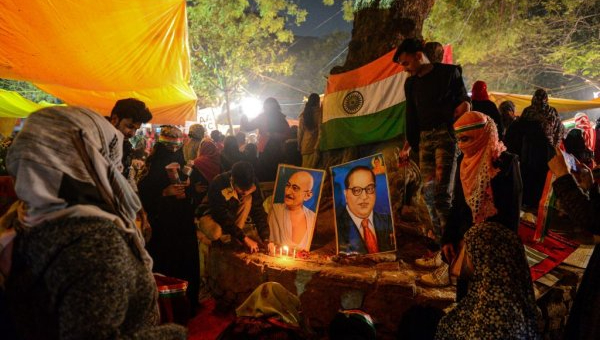





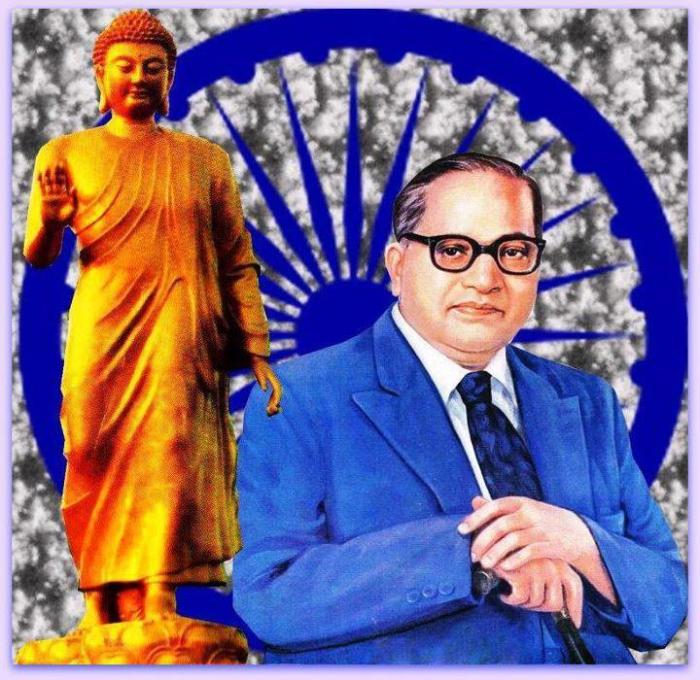
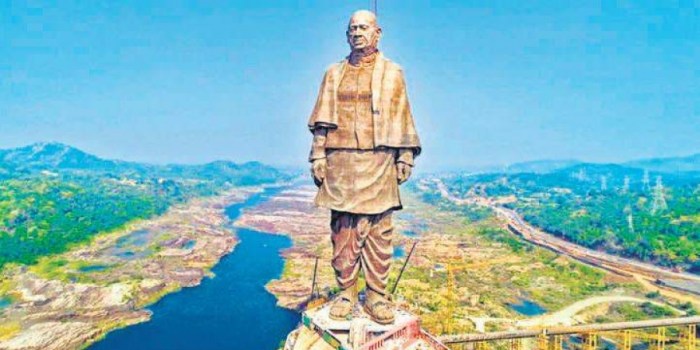


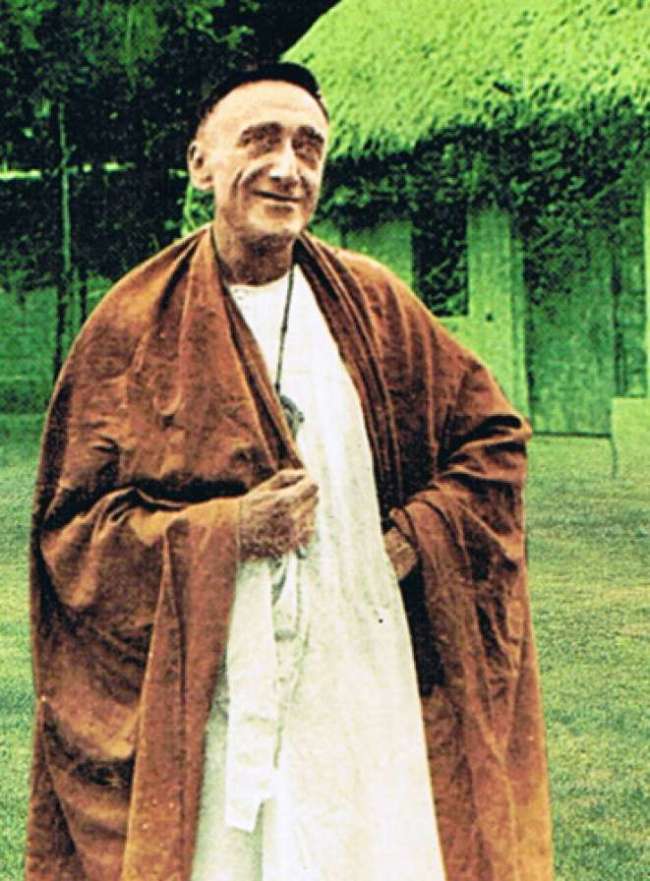

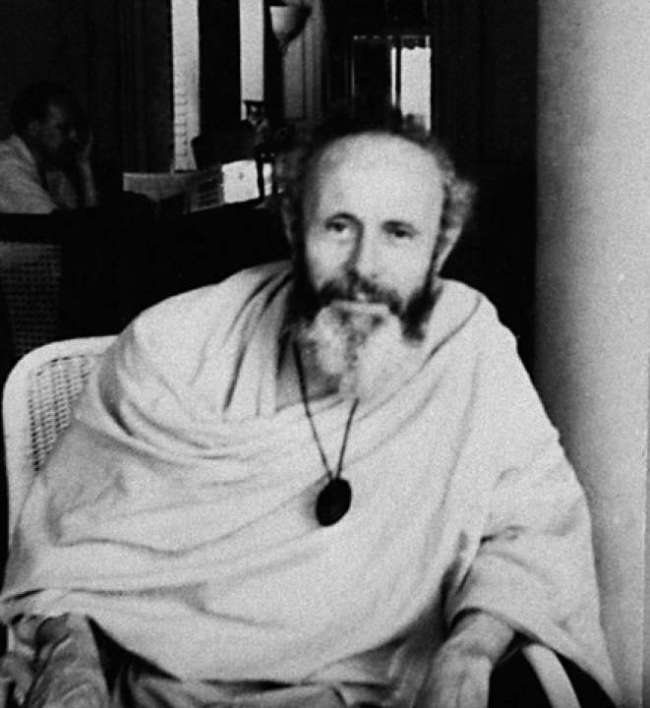


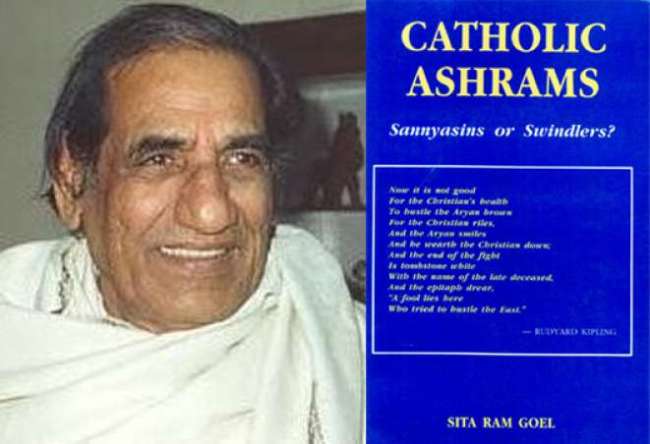



 VOICE OF INDIA