
Without self-enquiry, rationalism turns outward-only. It scrutinizes religion, superstition, tradition, politics, and the beliefs of others, but it never pauses to examine the psychological centre doing the scrutinizing. The ego remains untouched, and rationality becomes its armour. – Acharya Prashant
Rationalism was meant to be a method, not an identity. It was to be the discipline of honest seeing, not another tribe of the like-minded. You question, you examine, you see clearly. You hold no belief sacred, no authority exempt, including your own. Every conclusion must justify itself, and if it cannot, you let it go: that is the original promise. From the Greek sceptics to the Enlightenment philosophers to the modern scientific temper, this is what rationalism has always claimed as its essence: the courage to ask, the willingness to discard, the refusal to bow before any idea simply because it is old or revered or comfortable.
This inheritance has served humanity well: superstition loosened its grip, the tyranny of priests and kings could be challenged, and questions forbidden for centuries could finally be asked. Science, medicine, law, and political freedom all owe something to this spirit of inquiry. The courage to question rather than blindly obey, to examine rather than merely accept: this is what allows the mind to mature and society to remain free.
None of this is an argument against rationalism as method. The method works. Peer review catches errors, replication weeds out fraud, falsification disciplines speculation. The institution of science corrects what the individual scientist cannot. But the method’s virtue does not automatically transfer to the practitioner. A system can be self-correcting while the people within it remain thoroughly self-deceived. It is this gap, between what rationalism promises and what the rationalist practices, that concerns us here. Yes, there are rationalists who already practice what this essay calls for: who hold conclusions lightly, who examine their own motivations, who do not need the identity of “rational person” to feel secure. This essay is not addressed to them. It is addressed to those who have made reason into a fortress rather than a discipline.
Somewhere along the way, the rationalist method itself became an identity. Rationalism stopped being something you do and became something you are. To call oneself rational became a badge, a tribe, a source of pride and belonging. And the moment rationalism became identity, it could no longer examine itself, for the ego does not question its own hiding places.
When the questioner himself is never questioned, rationalism quietly shifts its role. It stops being an instrument of truth and becomes an instrument of the ego. What was meant to liberate becomes a fortress; what was meant to clarify becomes a tribal flag. The very capacity that could have set you free becomes a new bondage, subtler and therefore more dangerous than the old.
The Outward Gaze
Without self-enquiry, rationalism turns outward-only. It scrutinizes religion, superstition, tradition, politics, and the beliefs of others, but it never pauses to examine the psychological centre doing the scrutinizing. The ego remains untouched, and rationality becomes its armour.
Watch the rationalist in action. He will tell you precisely why the pilgrim is wasting his time at the temple, but he cannot tell you why he himself spent three hours last night arguing with strangers on the internet. He will explain the cognitive biases that make people believe in astrology, yet he has never once examined the compulsion that makes him need to correct them. He writes essays on why people cling to tradition. Still, he cannot see that his own identity as “the one who sees through tradition” is just as clung to, just as defended, just as psychologically necessary to him as any ritual is to the devotee.
Pause and ask: What were you really protecting in that argument? Truth, or self-image? What did you get from being right? What did you fear would happen if you were seen as wrong? If nobody applauded your correctness, would the compulsion still be there?
This is the fatal flaw. Reason directed only outward is not complete reason; it is half-reason, and half-reason is often more dangerous than no reason at all, because it comes with the illusion of completeness.
The religious believer at least knows he believes. The rationalist who has made reason into identity does not know he believes; he thinks he merely sees. And so his beliefs operate unchecked, unexamined, all the more powerful for being invisible to himself.
Here, rationalism becomes belief in reason, not the use of reason. The distinction is crucial. The use of reason is alive, flexible, self-correcting; it holds conclusions lightly, knowing that new evidence or deeper insight may require revision. It is comfortable with uncertainty, because it does not need conclusions to provide identity. It can say, “I do not know,” without feeling diminished.
Belief in reason is something else entirely. It is reason frozen into dogma, producing certainty rather than clarity, positions rather than understanding, debates rather than insight. The believer in reason has made rationality into a flag, and he will defend that flag as fiercely as any religious zealot defends his scripture. His positions are not held because they are true but because they are his; his arguments are not aimed at understanding but at victory. His rationalism has become, in everything but name, a faith.
This is why so many rationalist spaces feel like battlegrounds, not laboratories. The atmosphere is not shared inquiry but competing certainties. People do not come to learn; they come to win. They do not listen to understand; they listen to rebut. The form is rational, but the substance is tribal.
The Psychology Beneath the Logic
Such rationalism is often loud, combative, and moralistic; it seeks victory, not truth. The vocabulary has changed: we now speak of “evidence-based” and “peer-reviewed” instead of “revealed” and “ordained.” But the psychological posture is identical.
It replaces gods with data, scriptures with graphs, priests with experts. The structure remains the same; only the vocabulary has been updated.
Rationalism without self-enquiry cannot see its own motivations. Fear, insecurity, superiority, the need to be right: these operate freely beneath the language of logic. The rationalist believes he is defending truth, but he does not see that he is defending himself. He believes he is exposing others’ irrationality, but he does not see the irrationality of his own emotional investment in being the one who exposes.
Reason is then used to justify psychological compulsions rather than dissolve them. The ego learns to speak in syllogisms; it marshals data the way a lawyer marshals precedents, not to find truth but to win the case. And the case is always the same: I am right, I am rational, I am superior to those who are not.
This is why the most aggressive rationalists so often resemble the fundamentalists they oppose. The content differs: God versus no God, scripture versus science, tradition versus progress. But the structure is the same. Both need certainty, both need enemies, both cannot tolerate ambiguity, and both derive identity from their conclusions. In this condition, rationalism becomes collective prejudice in modern dress.It calls itself progressive, but it is deeply conformist; any community that prides itself on rational thinking quickly develops orthodoxies as rigid as any religious sect.
In certain Western rationalist circles, approved conclusions function as membership tests. Deviate, even carefully and with evidence, and you are not refuted but reclassified: you become a denialist, a bigot, someone who has “revealed their true colors.” The argument is not answered; the arguer is diagnosed. Among several Indian rationalists, the pattern mirrors. One must hold the correct contempt for all religion and the “correct” suspicion of all tradition. Suggest that an ancient text contains genuine philosophical insight, and you risk being treated as a communal apologist; question whether one particular civilizational model is the only path to human flourishing, and you become intellectually untouchable.In both cases, the permitted conclusions are known in advance, and argument no longer exists to discover truth but to police boundaries. This is not reason at work; it is the ego defending its shelter, now speaking the language of rationality.
It calls itself free, but it is bound to identity, group approval, and intellectual fashion. The rationalist who prides himself on thinking independently often thinks exactly what his intellectual community thinks. He reads the same sources, reaches the same conclusions, expresses the same outrage, and dismisses the same enemies. He has not escaped the herd; he has joined a different herd, one that flatters itself as a gathering of independent minds.
This is not the failure of rationalism; it is the predictable outcome of rationalism that refuses to examine the rationalist. When the ego is never questioned, it will use any tool, including reason, to do what the ego always does: seek security, belong to a group, feel superior, and avoid the terror of standing alone.
The Inward Turn
True rationality is inseparable from self-enquiry.
This is what separates genuine reason from its counterfeit. The moment reason turns inward and asks, “Why do I need this conclusion? What does this belief give me psychologically?”, rationalism regains its original power.The question is not merely “Is this true?” but “Why do I want it to be true? What fear would arise if it were false? What image of myself depends on this position? What would remain of me if I surrendered this certainty?”
Try it now. Pick a position you hold dear, one you have defended publicly, one that feels obviously correct. Ask: what do I get from holding this? Not what is true about it, but what does it give me? Watch what arises. If the mind rushes to justify the position, that rush is the answer. If irritation arises at the question itself, that irritation is the answer. Self-enquiry does not require you to abandon your conclusions; it only asks you to see who is clinging to them, and why.
This is the questioning the ego cannot survive. It can survive any external argument; it can change positions, update beliefs, switch tribes, and remain fundamentally intact. What it cannot survive is being seen. The moment awareness turns on the one who argues, the game is exposed: the certainties are revealed as defences, the positions as props for identity. The rationalism that seemed so solid turns out to be a house built on the shifting sand of psychological need.
This is why self-enquiry is so rare, and why it is so essential. The rationalist who has never asked, “What am I really doing when I argue?”, who has never noticed the pleasure in being right, the fear of being wrong, the satisfaction of superiority, has never used reason fully. He has used reason the way a child uses a stick: to hit things, defend territory, feel powerful. He has not yet used reason the way a surgeon uses a scalpel: to cut through illusion, beginning with his own.
When self-enquiry accompanies rationalism, everything changes. Positions become lighter and can be revised without trauma. Disagreement becomes information rather than attack. Uncertainty becomes tolerable, even interesting, because identity no longer depends on knowing. The rationalist stops performing and starts inquiring, stops defending and starts seeing, stops winning and starts learning.
This is reason restored to its original purpose: not a weapon for victory but a light for seeing. And that light must fall on the one who holds it, not only on the objects he chooses to examine.
Without that inward turn, rationalism is not liberation; it is merely a sophisticated cage.
The bars are elegant, the locks are logical, and the prisoner is convinced he is free because he can critique the cages of others. But he remains inside, for he has never questioned the one who built the cage, who maintains the cage, who is terrified of life outside the cage. His cage has a sign on it that says “No Cage,” and he believes the sign.
This is the final irony: the one who prides himself on questioning becomes the one who cannot be questioned. The identity of “questioner” becomes the most protected possession of all.
Liberation is not a change of content; it is freedom from the need to cling to any content. The liberated mind can hold positions without being held by them, can use reason without being used by the ego’s need for reason, can think without needing thought to tell it who it is.
This liberation is not achieved by abandoning rationalism; it is achieved by completing it, by turning the light that has illuminated so much of the external world, finally, uncompromisingly, on the one who holds the light.
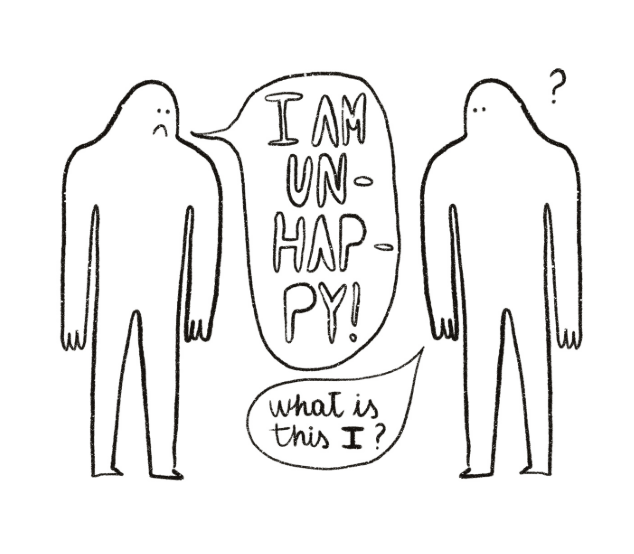
The question is not whether you can question religion, tradition, politics, or superstition; you have already demonstrated that capacity. The question is whether you can question the questioner. Can you ask, with genuine not-knowing: What am I defending? What am I afraid of? Who would I be if I could no longer call myself rational?
You have spent years examining everything except the examiner. That exemption is the source of your bondage. The rationalist who cannot examine his own rationalism is no different from the believer who cannot examine his own belief; both are prisoners, and one is simply more articulate about the prison walls.
Begin there. That is the only beginning worth the name. Refuse, and you remain what you have always been: an ego armed with arguments, a prisoner who has memorised every book on liberation but never bothered to look at his own chains. – The Pioneer, 24 january 2026
› Acharya Prashant is a teacher, author, and founder of the PrashantAdvait Foundation.



 VOICE OF INDIA