What Mahmud of Ghazni did must not be forgotten – Reshmi Dasgupta

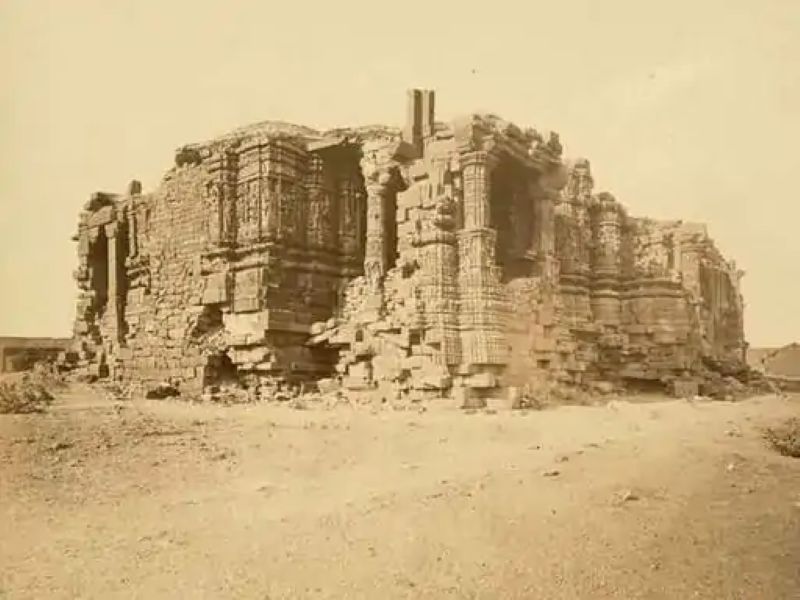
Somnath temple converted to mosque ca 1931.

What happened during this week 1,000 years ago was not a one-off assault by a greedy Central Asian despot who just incidentally happened to be Muslim. Mahmud’s destruction of Somnath set off a millennium-long assault on it by men who definitely had one thing in common apart from Islam: an animus towards the Jyotirlinga. – Reshmi Dasgupta

From January 6 to 9, 1026, the army of Mahmud of Ghazni lay siege to the wondrous temple of Somnath near the port city of Veraval. The defenders of the fortified shrine eventually could not repel the troops of the Central Asian invader and Somnath was captured. It was Mahmud’s 16th raid on India and loot was not the only target. Contemporary sources mention that Hindu merchants offered more money if he spared the idol; he refused and struck the first blow.

For that act, Mahmud earned the title “Butshikan” or idol-breaker, from an admiring Islamic world and his renown for the desecration of Somnath and other major Hindu temples in India persisted for centuries. Sultan Sikandar Shah earned the same Butshikan title in the 14th century for destroying temples in Kashmir in pursuance of the precepts of the Sufi preacher Mir Mohammad Hamadani. Even 600 years later, Aurangzeb appreciated Mahmud’s Islamic fervour.

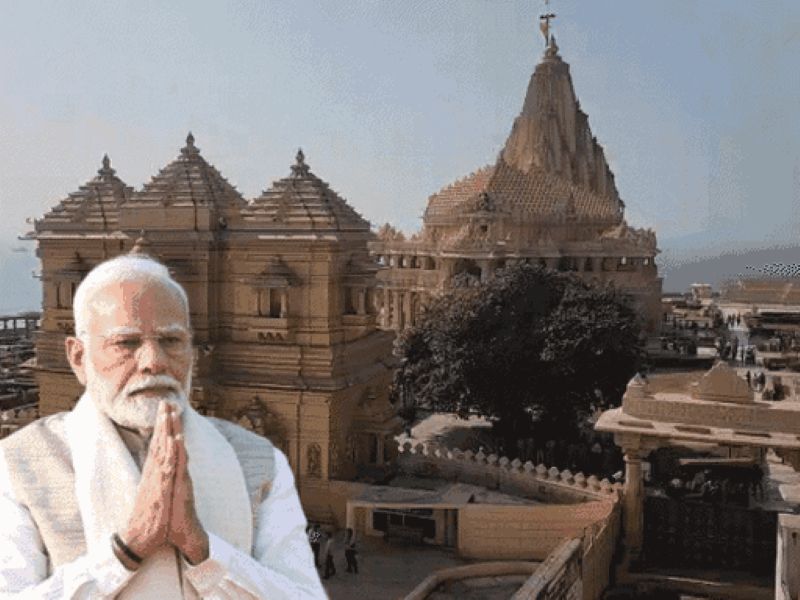
It is inevitable that Prime Minister Narendra Modi’s commemoration of the 1000th anniversary of the first destruction (as opposed to the misleading word “sacking” commonly used for the violent actions of Mahmud of Ghazni) of the Somnath temple will be countered with supposed “proof” of either “Arab” heroism or Hindu perfidy or both. It is now almost an article of faith among certain sections in India and abroad that Mahmud was more maligned than malevolent.

As has been often pointed out in recent times, the assertions of the high priestess of the secular camp Romila Thapar on the destruction of Somnath lack basis in actual facts even if delivered with withering condescension in impeccable upper class accented English. But there are plenty of willing believers in Thapar’s argument that Mahmud was not communal—merely venal—and that his destruction of the magnificent Shiva lingam at Somnath was incidental.

Indeed, the PM calling the repeated rebuilding of Somnath after each brutal destruction and plunder a symbol of the “unbreakable courage of countless children of Bharat Mata who protected our culture and civilisation” will be met with predictable counters. First, that “Arabs”—mainly traders who had settled in the area and married local women—died protecting Somnath from Mahmud’s marauders. Second, that there were many Hindus in Mahmud’s army.

There were indeed Hindus in Mahmud’s army, including battalion commanders, and he used them with varying effectiveness in campaigns on the subcontinent and even further north in Central Asia. But the phenomenon of mercenaries—soldiers of fortune who fight for the best paymaster—is well known. The presence of Hindus in his army cannot be taken to mean Mahmud was “secular” or that his actions were not intended to attack and diminish India’s majority faith.

There is no dependable account of Arabs dying while defending Somnath, but they could well have been miffed by their co-religionists from Ghazni disturbing their livelihoods. Arabs had all been Islamised by then although earlier traders and sailors may have adhered to pre-Islamic faiths including Christianity. So, it would be a stretch to imagine they would risk irking Allah by actually fighting alongside local Hindus kafirs to save Somnath from his holy warriors.

The Veraval Inscriptions (so named for the ancient port town next to the Somnath, which had a bustling mercantile trading business) dated to about 250 years after Mahmud’s destruction of the great Shiva lingam, highlight the dynamic between the two communities in the last millennium. The bilingual inscriptions from the reign of the Vaghela king Arjundev, records an agreement for the financing of the upkeep of a mosque at Somnath Patan built by a resident of Hormuz.

Curiously, the longer Sanskrit inscription lists the Hindu king and hierarchy but mendaciously describes the lord of the mosque as Vishwanatha and Shunyarupa and even calls Prophet Mohammed a “prabodhak” or preceptor. The Muslim shipowner donor from Hormuz Nuruddin Firoz is called a “dharmabandhav” of Sri Chhada who seems to be the mosque’s chief administrator. But in the shorter Arabic notation, there is no attempt to Indianise Allah or his Prophet.

The twin inscriptions seem to indicate that Hindu rulers bore no lasting animus against all Muslims—especially the Arab and Persian merchants from the Gulf—for the depredations of the Turkic invader from Ghazni 200 years before, and allowed them to set up mosques near the temple. But one sentence of the Arabic inscription points to the thinking of the Muslims even if they attempted to couch their initial outreach to the Hindus with seemingly syncretic gestures.

The Arabic inscription expresses the hope that Somnath will one day become a city of Islam, and that infidels and idols will eventually be banished from it. Why did the officials of the Vaghelas (the last Hindu kingdom of the region) allow that explicit expression of intent to pass unchallenged? Could they not read Arabic? Or were they persuaded, as indeed are some academics reading it 750 years later, that it was a “pro forma” statement and did not constitute a threat?In the event, though Somnath was revered enough for the 11th century Chalukya ruler Bhima I to rebuild it after Ghazni’s desecration, local inhabitants naively seemed to have borne no permanent suspicion of Muslims as the Veraval inscriptions two and a half centuries later seems to confirm. But a mere 35 years after those twin plaques were incised, the army of Delhi’s Sultan Alauddin Khilji under Ulugh Khan pillaged and destroyed Somnath yet again.

And that deed was approvingly chronicled by no less than the much-admired (even today) Persian poet Amir Khusro. In Khazain-ul-Futuh (Treasures of Victory), he gleefully wrote in 1310 (after Khilji’s armies attacked again in 1304 and annexed all of Gujarat):

“So the temple of Somnath was made to bow towards the Holy Mecca; and as the temple lowered its head and jumped into the sea, you may say that the building first said its prayers and then had a bath.”

He also added:

“It seemed as if the tongue of the imperial sword explained the meaning of the text: ‘So he (Abraham) broke them (the idols) into pieces except the chief of them, that haply they may return to it.’ A pagan country, the Mecca of the Infidels, now became the Medina of Islam. The followers of Abraham now acted as guides in place of the Brahman leaders. The robust-hearted true believers rigorously broke all idols and temples wherever they found them.”

Khusro also dispelled doubts about the intent of the Arabic Veraval inscription:

“Owing to the war, ‘takbir,’ and ‘shahadat’ was heard on every side; even the idols by their breaking affirmed the existence of God. In this ancient land of infidelity, the call to prayers rose so high that it was heard in Baghdad and Madain while the Khutba resounded in the dome of Abraham and over the water of Zamzam. The sword of Islam purified the land as the Sun purifies the earth.”

That Khusro described Somnath as the “Mecca of Infidels” underlines its primacy as a Hindu centre of worship, reiterating its pride of place as the first of the 12 Jyotirlingas listed in the Shiva Purana. So it is not surprising that every Muslim ruler thereafter who wanted to assert his religious cred and supremacy attacked Somnath, from Muzaffar Shah to Mahmud Begada to Aurangzeb. But it was restored, rebuilt, reconsecrated faithfully by Hindu rulers each time.

What is glossed over by apologists is that Somnath was not considerately left to resume worship. It was converted into a mosque by several Islamic attackers and then reconstructed repeatedly as a temple by Hindu monarchs. It was turned into a domed mosque by Aurangzeb in 1665. And the final rebuild happened in 1951, thanks to the determined efforts of Sardar Patel, KM Munshi and Dr Rajendra Prasad in the teeth of opposition from Prime Minister Jawaharlal Nehru.

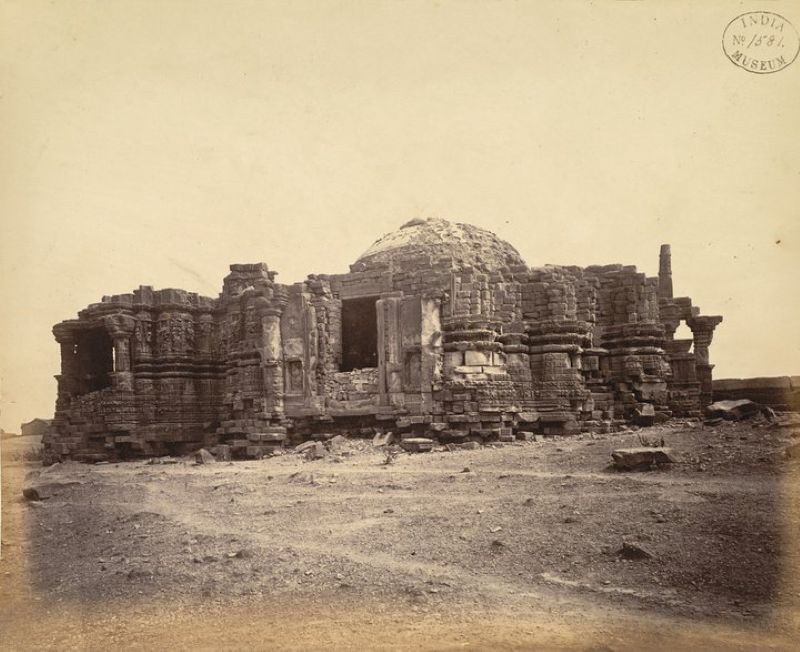
In 1783, the formidable Maratha queen Ahilyabai Holkar had another Shiva temple constructed 200 metres from the original site of Somnath, whose added dome and minaret can be seen in late 19th century photographs now in the British Library. She had done the same three years earlier in Varanasi where the original Kashi Vishwanath temple had been mostly destroyed (only one wall left standing) and rebuilt as “Gyanvapi” mosque, also on Aurangzeb’s orders.

So, what happened during this week 1,000 years ago was not a one-off assault by a greedy Central Asian despot who just incidentally happened to be Muslim. Mahmud’s destruction of Somnath set off a millennium-long assault on it by men who definitely had one thing in common apart from Islam: an animus towards the Jyotirlinga. That it is standing proudly again is indeed a testament to the quiet determination and faith of the children of Bharat Mata, as PM Modi said. – News18, 7 January 2026

›  Reshmi Dasgupta is a freelance writer formerly with the Times of India Group. 
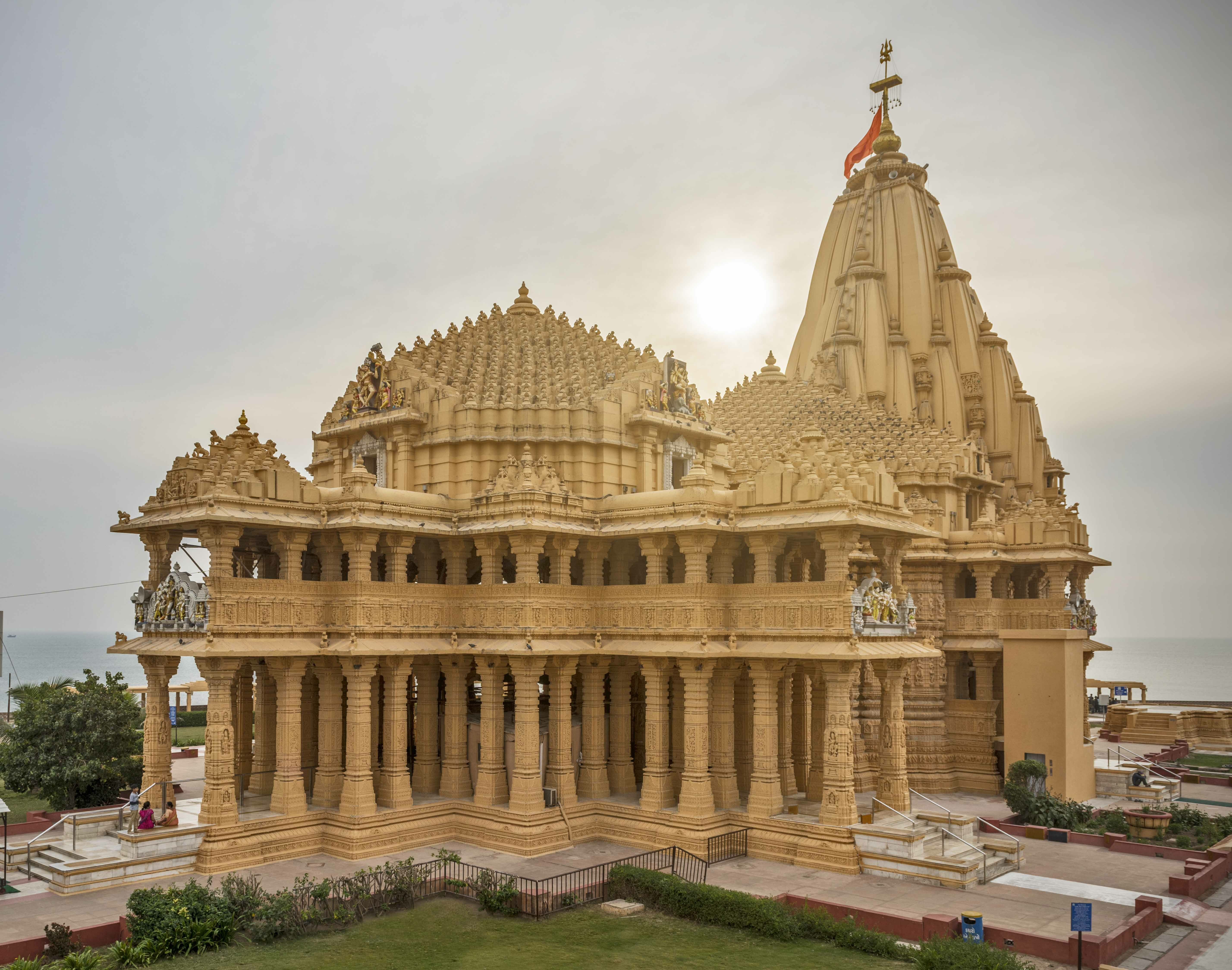
Somnath Temple

Somnath: A thousand years of unbroken faith – Narendra Modi

Narendra Modi at the Somnath Temple.

If the Somnath Temple, which was attacked a thousand years ago and faced continuous attacks thereon, could rise again and again, then we can surely restore our great nation to the glory it embodied a thousand years ago before the invasions. – PM Narendra Modi

Somnath … hearing this word instils a sense of pride in our hearts and minds. It is the eternal proclamation of India’s soul. This majestic temple is situated on the western coast of India in Gujarat, at a place called Prabhas Patan. The Dwadasha Jyotirling Stotram mentions the 12 Jyotirlings across India. The stotram begins with “सौराष्ट्रे सोमनाथं च…” symbolising the civilisational and spiritual importance of Somnath as the first Jyotirling.

It is also said:

सोमलिङ्गं नरो दृष्ट्वा सर्वपापैः प्रमुच्यते ।

लभते फलं मनोवाञ्छितं मृतः स्वर्गं समाश्रयेत्॥

It means: Just the sight of Somnath Shivling ensures that a person is freed of sins, achieves their righteous desires and attains heaven after death.

Tragically, this very Somnath, which drew the reverence and prayers of millions, was attacked by foreign invaders, whose agenda was demolition, not devotion.

The year 2026 is significant for the Somnath Temple. It has been 1,000 years since the first attack on this great shrine. It was in January of 1026 that Mahmud of Ghazni attacked this temple, seeking to destroy a great symbol of faith and civilisation, through a violent and barbaric invasion.

Yet, one thousand years later, the temple stands as glorious as ever because of numerous efforts to restore Somnath to its grandeur. One such milestone completes 75 years in 2026. It was during a ceremony on May 11th 1951, in the presence of the then President of India, Dr. Rajendra Prasad, that the restored temple opened its doors to devotees.

The first invasion of Somnath a thousand years ago in 1026, the cruelty that was unleashed upon the people of the town and the devastation that was inflicted upon the shrine have been documented in great detail in various historical accounts. When you read them, the heart trembles. Each line carries the weight of grief, cruelty and a sorrow that refuses to fade with time.

Imagine the impact it had on Bharat and the morale of the people. After all, Somnath had great spiritual significance. It was also on the coast, giving strength to a society with great economic prowess, whose sea traders and seafarers carried tales of its grandeur far and wide.

Yet, I am proud to state unequivocally that the story of Somnath, a thousand years after the first attack, is not defined by destruction. It is defined by the unbreakable courage of crores of children of Bharat Mata.

The medieval barbarism that began a thousand years ago in 1026 went on to ‘inspire’ others to repeatedly attack Somnath. It was the start of an attempt to enslave our people and culture. But, each time the temple was attacked, we also had great men and women who stood up to defend it and even made the ultimate sacrifice. And every single time, generation after generation, the people of our great civilisation picked themselves up, rebuilt and rejuvenated the temple. It is our privilege to have been nurtured by the same soil that has nurtured greats like Ahilyabai Holkar, who made a noble attempt to ensure devotees can pray at Somnath.

In the 1890s, Swami Vivekananda visited Somnath and that experience moved him. He expressed his feelings during a lecture in Chennai in 1897 when he said:

“Some of these old temples of Southern India and those like Somnath of Gujarat will teach you volumes of wisdom, will give you a keener insight into the history of the race than any amount of books.

“Mark how these temples bear the marks of a hundred attacks and a hundred regenerations, continually destroyed and continually springing up out of the ruins, rejuvenated and strong as ever! That is the national mind, that is the national life-current. Follow it and it leads to glory. Give it up and you die; death will be the only result, annihilation, the only effect, the moment you step beyond that life current.”

The sacred duty of rebuilding the Somnath Temple after independence came to the able hands of Sardar Vallabhbhai Patel. A visit during Diwali time in 1947 moved him so much that he announced that the temple will be rebuilt there. Finally, on May 11th 1951, a grand temple in Somnath opened its doors to devotees and Dr. Rajendra Prasad was present there. The great Sardar Sahib was not alive to see this historic day, but the fulfilment of his dream stood tall before the nation.

The then Prime Minister, Pandit Jawaharlal Nehru, was not too enthused with this development. He did not want the Honourable President as well as Ministers to associate with this special event. He said that this event created a bad impression of India. But Dr. Rajendra Prasad stood firm and the rest is history. No mention of Somnath is complete without recalling the efforts of K.M. Munshi, who supported Sardar Patel very effectively. His works on Somnath, including the book, Somanatha: The Shrine Eternal, are extremely informative and educative.

Indeed, as the title of Munshiji’s book conveys, we are a civilisation that carries a sense of conviction about the eternity of spirit and of ideas. We firmly believe that that which is eternal is indestructible, as outlined in the famous Gita verse “नैनं छिन्दन्ति शस्त्राणि….” There can be no better example of our civilisation’s indomitable spirit than Somnath, which stands gloriously, overcoming odds and struggles.

It is this same spirit that is visible in our nation, one of the brightest spots of global growth, having overcome centuries of invasions and colonial loot. It is our value systems and the determination of our people that have made India the centre of global attention today. The world is seeing India with hope and optimism.

They want to invest in our innovative youngsters. Our art, culture, music and several festivals are going global. Yoga and Ayurveda are making a worldwide impact, boosting healthy living. Solutions to some of the most pressing global challenges are coming from India.

Since time immemorial, Somnath has brought together people from different walks of life. Centuries ago, Kalikal Sarvagna Hemchandracharya, a respected Jain monk, came to Somnath. It is said that after praying there, he recited a verse, “भवबीजाङ्करजनना रागाद्या: क्षयमुपगता यस्य।”. It means: “Salutations to That One in whom the seeds of worldly becoming are destroyed, in whom passion and all afflictions have withered away.” Today, Somnath holds the same ability to awaken something profound within the mind and soul.

A thousand years after the first attack in 1026, the sea at Somnath still roars with the same intensity as it did back then. The waves that wash the shores of Somnath tell a story. No matter what, just like the waves, it kept rising again and again.

The aggressors of the past are now dust in the wind, their names synonymous with destruction. They are footnotes in the annals of history, while Somnath stands bright, radiating far beyond the horizon, reminding us of the eternal spirit that remained undiminished by the attack of 1026. Somnath is a song of hope that tells us that while hate and fanaticism may have the power to destroy for a moment, faith and conviction in the power of goodness have the power to create for eternity.

If the Somnath Temple, which was attacked a thousand years ago and faced continuous attacks thereon, could rise again and again, then we can surely restore our great nation to the glory it embodied a thousand years ago before the invasions. With the blessings of Shree Somnath Mahadev, we move forward with a renewed resolve to build a Viksit Bharat, where civilisational wisdom guides us to work for the welfare of the whole world.

Jai Somnath! – The New Indian Express, 5 January 2026

Narendra Modi is the Prime Minister of India and Chairman of the Shri Somnath Temple Trust.

Ruins of Somnath as viewed in 1869

Nehru, Patel and the Babri Masjid: Rajnath Singh exposes Nehruvian double-speak – Utpal Kumar

Nehru & Patel

Rajnath Singh’s remarks on Nehru, Patel, Somnath and Babri Masjid, rather than being fabrications or distortions of history, reflect realities that were suppressed later by the Nehruvian ecosystem. – Utpal Kumar

Truth can often be stranger than fiction. This became obvious when Defence Minister Rajnath Singh’s recent statement about Jawaharlal Nehru, Sardar Vallabhbhai Patel and the Babri Masjid opened a Pandora’s box, pushing the country to revisit the uneasy truths of its early years as an independent entity.

The Congress, quite expectedly and duly supported by its ecosystem, has strongly denied Singh’s assertions, calling them “lies” devoid of archival backing. Yet, when one turns to the memoirs, diaries, and biographies written by contemporaries of Nehru and Patel, a more complex picture emerges—one that suggests history is more often than not written by victors, which in the country’s case were Nehru and his acolytes.

Rajnath Singh’s intervention touches on two sensitive issues: one, whether Nehru had proposed using government funds to build the Babri Masjid; and two, the first prime minister’s alleged reluctance to support a national memorial for Sardar Patel. Contrary to claims that Singh is distorting or inventing history, the fact is that these incidents were explicitly recorded in books and personal documents from the 1950s and 1960s.

The Babri Masjid Question

The most striking material comes from the diary of Maniben Patel, Sardar Patel’s daughter. In one of her entries, she notes that Nehru had raised the question of the Babri Masjid and its reconstruction. According to her account, Sardar Patel immediately made it clear that the government could not spend public money to build or rebuild a mosque. He also reminded Nehru that the case of the Somnath temple had been entirely different. In her entry dated September 20, 1950, Maniben Patel writes,

“Bapu (Sardar) said (the) government cannot give money for building a mosque? He knew it very well so that Junagadh was taken over well in advance, and land [was] obtained from [the] Junagadh government for Somnath, and a trust was created and credited Rs 30 lakh. Panditji wrote a chit to Munshi that [the] government cannot spend money on Somnath, as ours is a secular state. Munshi transferred [it] to him (Bapu). He replied that this is a trust of which Jamshed is chairman and Munshi a member and no government money is going to be used in it. He (PM) was silenced then.”

This diary entry is significant because it directly contradicts the categorical denials made today that Nehru ever entertained any proposal regarding government involvement with the Babri Masjid. It also supports Rajnath Singh’s remark that Patel had explicitly opposed such an idea. The suggestion that Nehru even considered using public funds for the mosque complicates the popular portrayal of him as a secularist who maintained a firm line separating religion and state.

The Somnath Saga

The Nehruvian double standard becomes more acute when one looks at the Somnath temple reconstruction episode. In his book Pilgrimage to Freedom, K.M. Munshi, a key leader in the Somnath project, recounts that when Junagadh acceded to India, Sardar Patel, as deputy prime minister, pledged the government to rebuild the temple. Munshi writes that the Union Cabinet, with Nehru presiding, initially approved the reconstruction at government expense.

It was Mahatma Gandhi, not Nehru, who advised that the temple must be rebuilt not with state funds but with voluntary contributions from Hindus. Sardar Patel accepted Gandhi’s advice and swiftly set in motion the creation of a trust to oversee public fundraising. Munshi himself was appointed chairman of the advisory committee for reconstruction.

What surprised Munshi was Nehru’s conduct after Sardar Patel’s death. He records that Nehru repeatedly criticised him for his involvement, despite the fact that the early Cabinet decision had Nehru’s own assent. Munshi writes that he had to remind the prime minister in a detailed letter that “everything was done … in accordance with the decision of the Cabinet taken under his guidance”.

The Somnath saga thus exposes another, little-known aspect of Nehruvian hostility to things Hindu—that the first prime minister’s opposition to state involvement in temple reconstruction was not a position he held from the start; it emerged only later, especially when he became all-powerful after the death of Sardar Patel. And, more damningly, this secular posturing did not stop him from discussing public support for the Babri Masjid, as Maniben Patel’s diary shows.

The Unfinished Legacy of Sardar Patel

The second part of Rajnath Singh’s critique concerns the systematic neglect of Sardar Patel’s memory and legacy after his death. Here, too, the archival material is extensive.

In his book The Sardar of India, P.N. Chopra describes how a plan to build a national memorial for Patel was approved by the Congress Working Committee. The target was Rs 1 crore. Industrialist G.D. Birla, a close aide of both Mahatma Gandhi and Sardar Patel, raised Rs 50 lakh and handed it to the All-India Congress Committee, while state units began collecting contributions.

Yet the project stalled. According to S.K. Patil, a Congressman, as quoted by Chopra, Nehru “remained passive throughout” and eventually suggested that since Patel had been an “agriculturist” and “friend of villagers”, the collected money should be used instead for digging wells and constructing village roads. S.K. Patil found the suggestion “nonsensical”, as “digging of wells and constructing roads was the normal responsibility of the government. That responsibility could not be shared by the memorial fund”.

Chopra also records that Nehru objected even to raising Patel’s statue at Vijay Chowk. Only after much difficulty was a new site secured on Parliament Street, funded not by the Congress’s official memorial fund but by money raised separately in Bombay, now Mumbai.

More startling is the account related by R.L. Handa in his book Rajendra Prasad: Twelve Years of Triumph and Despair. Handa, who was the press secretary to President Rajendra Prasad, writes that upon Patel’s death in 1950, Nehru issued a direction to ministers and secretaries asking them not to go to Bombay for the funeral. When he requested President Rajendra Prasad to avoid attending as well, Prasad refused. Durga Das, in his book India: From Curzon to Nehru and After, corroborates this, noting that Prasad felt Nehru was attempting to diminish Patel’s stature.

These testimonies strengthen Rajnath Singh’s argument that there was a concerned attempt to diminish Patel’s legacy in the years following Independence—an observation shared not merely by modern political actors but by several of Sardar Patel’s contemporaries.

Rajnath Singh’s remarks, rather than being fabrications or distortions of history, reflect realities that were suppressed later by the Nehruvian ecosystem. They show that the early years of the republic were far from monolithic, carved from Nehruvian stone, as is being projected today, and that the country’s slide towards amoral, soulless secularism detached from ageless Sanatana ethos was neither inevitable nor uncontested. In that sense, the ongoing debate sparked by Rajnath Singh has reopened a window onto a past that continues to challenge our assumptions, proving yet again that truth is indeed stranger than fiction. – News18,

Utpal Kumar is Opinion Editor at Firstpost and News18 and is the author of the book Eminent Distorians: Twists and Truths in Bharat’s History.