Vande Mataram marginalised in the name of secularism – Utpal Kumar

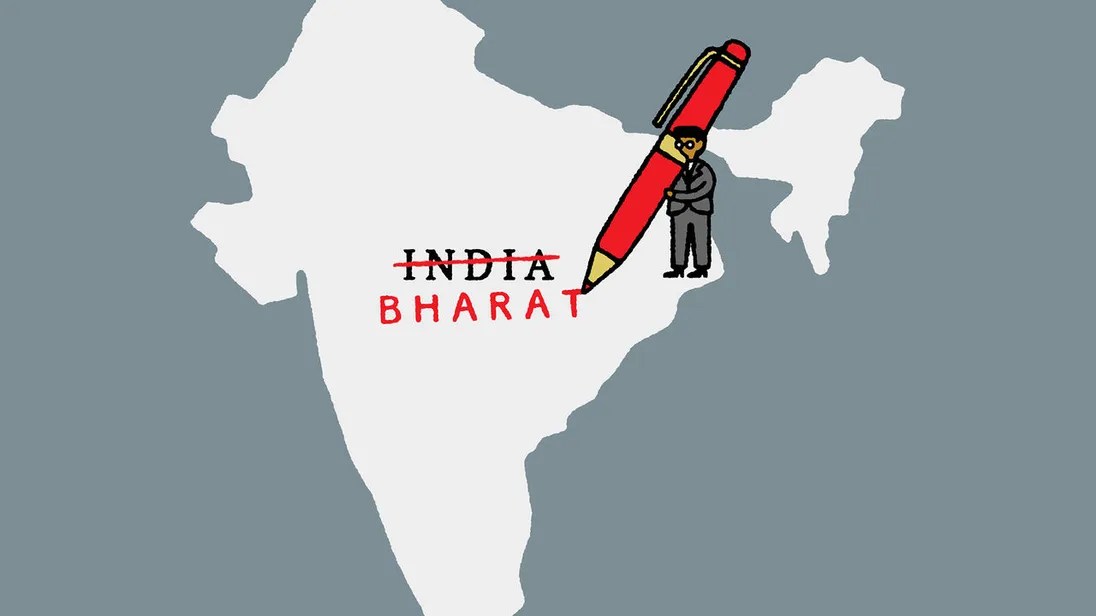
Bharat Mata (Tamil Vijaya Mag 1909).

The Congress, in its post-Independence avatar, began to craft a “secular” nationalism that saw overt Hindu imagery as regressive, even dangerous. In doing so, it vacated a cultural space that epitomised the soul of Bharat. – Utpal Kumar

In his seminal work The Open Society and Its Enemies (1945), Karl Popper explains what he calls the “paradox of tolerance”. He writes, “Unlimited tolerance must lead to the disappearance of tolerance. If we extend unlimited tolerance even to those who are intolerant, if we are not prepared to defend a tolerant society against the onslaught of the intolerant, then the tolerant will be destroyed, and tolerance with them.” Popper, however, adds a rider, saying that as long as one can counter intolerant views “by rational argument and keep them in check by public opinion, suppression would certainly be most unwise”.

Seven decades later, Nassim Nicholas Taleb reaches a similar conclusion in his 2018 book Skin in the Game, where he explains how it is the most intolerant, however minuscule they might be, who succeed in imposing their views on the majority. Among others, he gives the example of halal food to show how a small, stubborn group’s preferences dictate changes for everyone.

Today, as we celebrate 150 years of ‘Vande Mataram’, composed by sage and seer Bankim Chandra Chattopadhyay in 1875 and later included in his novel Anandamath (1881), Popper’s “paradox of tolerance” and Taleb’s “minority rule theory” seem vindicated as never before.

Few symbols capture the trajectory of Bharat’s nationalist evolution—and its post-Independence identity crisis—as poignantly as Vande Mataram. Once the heartbeat of the freedom struggle, this ode to Bharat Mata (the motherland) became, over time, an inconvenient liability—an “extra”, to use Swapan Dasgupta’s term in his book Awakening Bharat Mata—awkwardly preserved but carefully marginalised too.

Vande Mataram’s journey from revolutionary anthem and rallying cry of the nationalist movement to contested, “communal” symbol reflects not only Bharat’s pseudo-secular identity politics but also the deliberate reshaping of national consciousness to accommodate the intolerant, who brand their intransigence as the anxieties of a besieged minority.

The retreat of Vande Mataram was threefold. While it became an “extra” post-Independence, this wasn’t the only time this song was viciously assaulted. The verses of Vande Mataram inspired one of the most enduring icons of Indian nationalism—the image of Bharat Mata. As per Bankim’s notion, she is an embodiment of both divine power (Shakti) and cultural identity:

Terrible with the clamorous shouts of seventy million throats,
and the sharpness of swords raised in twice seventy million hands,
Who sayeth to thee, Mother, that thou art weak?
Holder of multitudinous strength,
I bow to her who saves,
to her who drives from her the armies of her foemen,
the Mother!

Yet, by the early 20th century, alternative depictions began to emerge. Abanindranath Tagore’s 1905 painting of Bharat Mata showed a saffron-robed, serene woman—gentle, ascetic and unarmed. This transformation from Shakti to Sadhvi was further solidified when Mahatma Gandhi entered the freedom movement arena in the country.

Gandhi, though deeply religious, was wary of any symbol that could alienate Muslims. He revered Vande Mataram but readily surrendered to the opposition: “It never occurred to me that it was a Hindu song. … But in such times it is wisdom not to market pure gold.” His retreat symbolised the nationalist leadership’s helplessness—which was more like surrender—to the intolerant. The Congress, anxious to sustain Hindu-Muslim unity, began to treat Vande Mataram with utmost restraint.

The Muslim League, led by Mohammad Ali Jinnah, rejected Vande Mataram outright, calling it “idolatrous” and “anti-Muslim”. Its depiction of the nation as a goddess was deemed an affront to Islamic monotheism. To pacify Muslim sentiment, the Congress decided that only the first two stanzas—devoid of explicit religious imagery—would be sung, and even then, never by compulsion.

This compromise of the majority didn’t stop the rise of Muslim separatism; it gave it further impetus. The country got its independence but at the cost of partition—in the name of religion. And as happens with concessions, one leads to another—the smaller takes us to the bigger ones.

On January 24, 1950, the Constituent Assembly adopted Rabindranath Tagore’s Jana Gana Mana as the country’s national anthem. Interestingly, the decision was reached without debate or vote. Vande Mataram was given “equal honour”, yet it was relegated to ceremonial margins—sung only in part, on rare occasions.

The author’s intent isn’t to question Jana Gana Mana, and it is ludicrously silly to link it with the British monarchy. The point being raised here is the discomfort which first the Gandhian worldview and then the post-Independence Nehruvian ecosystem had with Hindu imagery and underpinnings. The Congress, in its post-Independence avatar, began to craft a “secular” nationalism that saw overt Hindu imagery as regressive, even dangerous. In doing so, it vacated a cultural space that epitomised the soul of Bharat.

The assertive spiritual nationalism of the early freedom struggle was recast as an embarrassment—something to be remembered but not revered. Vande Mataram thus became the “extra” of Indian nationalism—honoured in rhetoric bereft of its Sanatana sacredness and explicit Hindu imagery, thus denying its rightful place at the centre of national identity.

The story of Vande Mataram is the story of Bharat struggling to reconcile its ancient Sanatana soul with its modern “secular” anxieties. It is also a reminder that concessions to a bully, even if he is a minority, do not pay. They backfire. – Firstpost, 9 November 2025

› Utpal Kumar is Opinion Editor at Firstpost and News18 and is the author of the book Eminent Distorians: Twists and Truths in Bharat’s History.

Vande Mataram

William Dalrymple: Admiring Indian civilisation, undermining the Hindu spirit behind it – Utpal Kumar

William Dalrymple

Scottish author William Dalrymple wants to safeguard the physical infrastructure of Indian civilsation but is working hard to tamper with its Hindu soul. – Utpal Kumar

William Dalrymple is suddenly the darling of a section of the Right. One prominent Right-wing think tank has even invited him for a talk on his new book, The Golden Road. The book highlights “how ancient India transformed the world”—a subject close to those whose heart is in the ‘Right’ place.

There’s absolutely nothing wrong in engaging in a dialogue over a book—in fact, this culture of dialogue with contrarian views should be encouraged. The problem, however, could be when this intellectual exercise leads to legitimisation of the other viewpoint without due deliberation and critical enquiry. What one fears is that The Golden Road, which has already become a bestseller soon after hitting the bookstores, might become a cover to push blatant historical lies.

At the very outset, it must be clarified that this is a good book, pushing forward India’s narrative. Dalrymple cannot claim—and he doesn’t either—that what is written in the book hasn’t been told in the past. Where the author scores is the style of his writing: A history book is better written when the author thinks like a historian but writes like a novelist. History, after all, is about stories and the lessons one can learn from them.

Dalrymple is undoubtedly a “gifted historian” who writes engaging prose. His research work for his books is almost impeccable. And one finds affinity and warmth in him for his karmabhoomi, which is India.

But, then, Dalrymple is a double-edged sword, often cutting both ways. This 59-year-old British author, born in Scotland, is an unapologetic admirer of Delhi, but his love gets confined to the era of “Djinns”; the other, non-Islamic characteristics of the city rarely get his attention. The same partisanship is evident in his writings on the Mughals, especially the late Mughals. The decadence of the late Mughals, about which Sir Jadunath Sarkar bemoans in his extensive studies and regards as among the dominant causes of the Mughal decline, is what excites Dalrymple the most.

In The Last Mughal, for instance, Dalrymple writes: “… while Zauq led a quiet and simple life, composing verse from dusk until dawn, rarely straying from the tiny courtyard where he worked, Ghalib was very proud of his reputation as a rake. Only five years before the wedding, Ghalib had been imprisoned for gambling and subsequently wore the affair—deeply embarrassing at the time—as a badge of honour. When someone once praised the poetry of the pious Sheikh Sahbai in his presence, Ghalib shot back, ‘How can Sahbai be a poet? He has never tasted wine, nor has he ever gambled; he has not been beaten with slippers by lovers, nor has he once seen the inside of a jail.’ Elsewhere in his letters he makes great play of his reputation as a ladies’ man.”

Similarly, in The Anarchy, Dalrymple writes about the unabashed loot and plunder by the East India Company. He begins this book by saying how “one of the first Indian words to enter the English language was the Hindustani slang for plunder: loot”. He then takes the readers to Powis Castle, “a craggy fort” built during the 13th century in the Welsh Marches. According to him, Powis “is simply awash with loot from India, room after room of imperial plunder, extracted by the East India Company (EIC) in the 18th century”.

Yet, the same Dalrymple had made a public appeal last year asking Britain not to return the loot to India! According to him, Mughal treasures looted by the British might never be displayed if they are returned to India, which is currently run by “a Hindu nationalist government that does not display Mughal items”. (Dalrymple’s prejudiced mind stopped him from seeing what was obvious: That the wealth stolen was not Mughal’s but India’s.) He said, “You can go to Delhi and not see a display, at the moment, of Mughal art at all. But it’s there, beautifully displayed, in the British Library, the British Museum, the Victoria and Albert Museum.”

Dalrymple’s propensity to run with the hare and hunt with the hounds is evident in the narration of his 2009 book, Nine Lives, too. In one of the stories, he recounts with empathy the story of “The Dancer of Kannur”, in which Hari Das, a Dalit from Kerala, is a “part-time prison warden for 10 months of the year”, but during the Theyyam dancing season between January and March, he is “transformed into an omnipotent deity” to be worshipped even by the high-caste Brahmins. However, in the same book, his reverence for the sacred goes missing as he invokes Romila Thapar’s idea of “syndicated Hinduism” to intellectually discredit Hindu resurgence in India. Dalrymple, quite mischievously, calls it “Rama-fication of Hinduism”.

Coming to The Golden Road, Dalrymple’s new-found love for ancient India may remind one of American Sanskrit scholar Sheldon Pollock, who not very long ago was zeroed upon by a group of wealthy non-resident Indians (NRIs) in New York, along with the top administrative leaders of Sringeri Peetham in India and representatives of Sringeri Peetham in the US, to head a newly found American university chair in the name of Adi Shankara. They had, by 2014, collected $4 million for the chair, which was to be set up at the prestigious Columbia University. There was a lot of enthusiasm and support for Pollock, as he was seen to be an ardent advocate for the revival of Sanskrit. What these people didn’t realise was that Pollock’s idea of revival was, as Rajiv Malhotra writes in The Battle for Sanskrit, “the reinvigorated study of Sanskrit as if it were the embalmed, mummified remnant of a dead culture”.

Pollock sought to revive Sanskrit studies, but wanted no association with Sanskrit language and culture. He loved Sanskrit but without its sacred cultural (Hindu) identity. In the same way, Dalrymple acknowledges India’s contribution but doesn’t seem to be quite enthusiastic about the Hindu roots of the same. He would talk with gusto about Central Asia’s Buddhist connections, but the same enthusiasm is lacking vis-à-vis Hinduism. Dalrymple’s love for India is obvious, but without its cultural/civilisational moorings. He wants to safeguard the physical infrastructure but is working hard to tamper with its soul.

Dalrymple tells the story of the great Buddhist scholar Kumarajiva (344-413 CE). Born to a Kashmiri father, probably a minister in the Takshashila royal court, and a Kuchean mother, Kumarajiva learnt Buddhism in Kashmir, but to study Vedas, he chose to go to Kashgar in the Xinjiang region. It’s pertinent to note that the land where Kumarajiva went to study Vedas was the hub of Buddhism, disputing the predominant Hindu-Buddhist conflict narrative put forward by colonial-Leftist historiography. What further manifests the Hindu-Buddhist cultural continuum in the region is that “not very far” from a monastery in Miran, as Dalrymple himself writes in The Golden Road, “some of the very earliest surviving fragments of the text of the Mahabharata have recently been dug up”.

A couple of quotes from The Golden Road should expose the real intent of the author. Dalrymple writes in the last chapter of the book, “The fate of Nalanda is much disputed: it had been in decline for centuries and archaeology shows that it was burned several times, with some of these conflagrations clearly dating to before the arrival of the Turks. Either way, the Tibetan monk Dharmaswami, who visited Nalanda in 1235, describes the Turushka soldiers prowling the ruins while he and his guru lay hidden in a deserted monastery. There is some evidence that Nalanda continued to function in a much-reduced form until the early fourteenth century, when the last Tibetan monks are described as coming to study philosophy in its ruins.”

Nalanda was “burnt several times” before the fury of Bakhtiyar Khilji in 1193 AD! The ancient Indian university survived the Muslim assault to “function in a much-reduced form until the 14th century”! One, thus, gets two assessments from the above lines: That while Muslims burnt Nalanda once, Hindus had done it “several times” in the past; and also that the Muslim assault wasn’t bad enough as the university could survive for the next two centuries! How is Dalrymple’s assessment different from, say, Romila Thapar and D.N. Jha?

In the same chapter, Dalrymple provides another gem of assessment, exposing his state of mind. He writes, “During the days of Nehruvian rule in the 1950s and early 1960s, Indian school textbooks and most academic histories were written by left-leaning, Congress-supporting figures. These historians tended to underplay the violence and iconoclasm that came with the Turkish invasions, partially in the interests of what they saw as ‘nation building’ following the terrible inter-religious violence that had taken place during partition. Today, under the current right-wing BJP government, the reverse is true, and the destruction of Hindu temples is almost all that many in India seem to know of the complex but fascinating medieval period of Indo-Islamic history.”

Given this line of thinking being promoted in the book, where the Indian physical superstructure is admired but the innate Hindu spirit is denied and damned, it’s astounding to see a section of the Right getting excited with The Golden Road. Maybe the excitement is the result of intellectual haziness and laziness: No one has bothered to read between the lines and instead got excited with the book’s tagline: “How ancient India transformed the world”. Maybe the colonial hangover is still going strong in India. A British historian highlighting the “greatness” of ancient India can still be a heady moment for some of us. Maybe the more things change in Indian history, the more they remain the same.- Firstpost, 23 November 2024

Utpal Kumar is the Opinion Editer for Firstpost and News18.

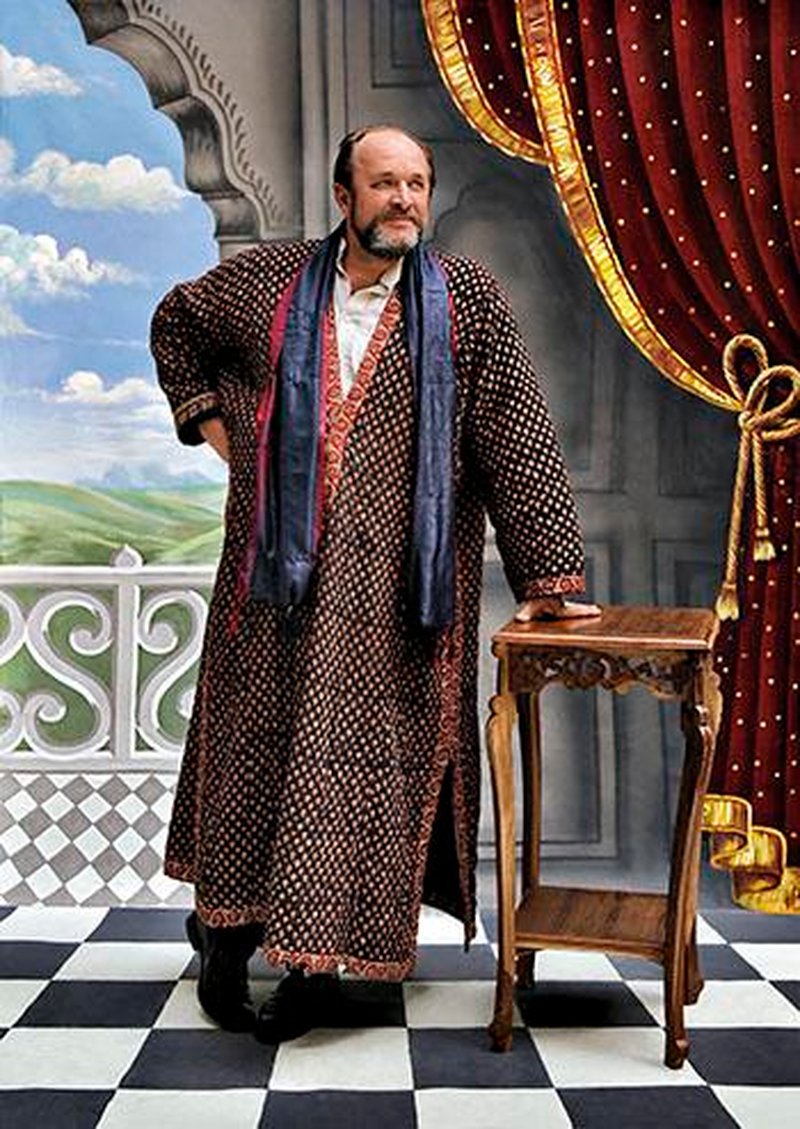
Wm. Dalrymple at St. Mary Magdalen Church, Oxford.

See also

Rethinking the Indus Valley civilisation – Nanditha Krishna

Mohenjo-daro Dancing Girl (ca. 2300-1750 BCE).

Vasant Shinde, who has excavated several Harappan sites, was fortunate to isolate DNA from the skeleton of a Harappan lady at Rakhigarh. The result was a South Asian gene spread all over India, with no Steppe or Iranian ancestry. But Harappan genomes have been found in Iran and Turkmenistan, giving credence to the Out of India theory. – Nanditha Krishna

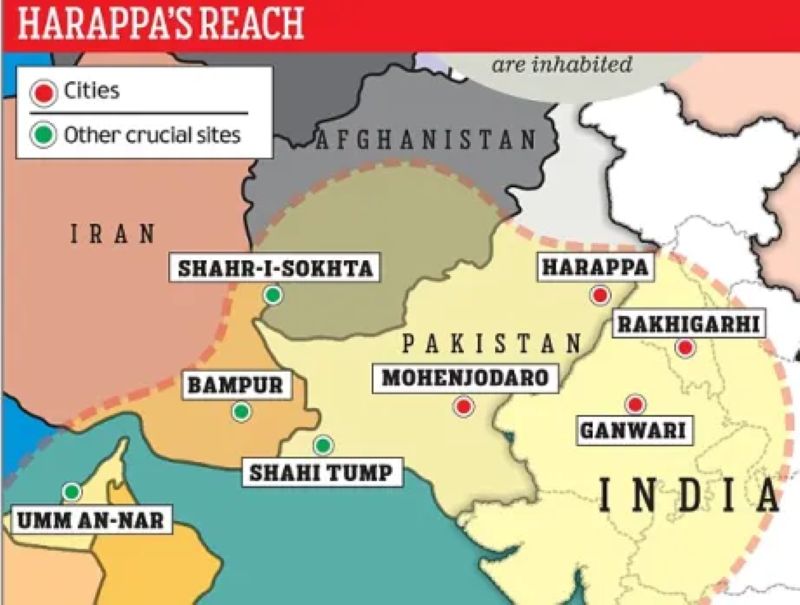
A seminar on ‘Art in the Indus Civilization’ was recently held in Chennai. Why art? Because the unverifiable readings of the Indus script are a major impediment, art becomes the most reliable source of information. This Bronze Age civilisation covered a vast area, from Balochistan in the west to Western UP in the east, from Afghanistan in the north to Gujarat in the south, the largest “empire” of the ancient world. Remains of agriculture from 6500 BCE are found in Mehrgarh, Balochistan.

Although Kalibangan (in India) was discovered first, Mohenjo Daro and Harappa were reported first but went to Pakistan during Partition. Subsequent excavations revealed that 75 per cent of the Indus civilisation is situated along the Ghaggar-Hakra, now identified with the river Saraswati. However, it is still known as the Indus Civilisation because the first sites were excavated there. Kalibangan, Dholavira, Lothal and Rakhigarhi are among the important sites subsequently excavated. In 1924, the Indus civilisation was declared a site of remote antiquity by the British, who had earlier maintained that Indian history began in 600 BCE!

The art of the Indus civilisation includes terracottas, ceramics, glyptics, sculpture, jewellery made of carnelian, steatite, gold, silver and, faience and beads. Art “expresses important ideas or feelings” of a people. Early terracottas are primitive, made of pressed clay and pinched, with huge holes for eyes. The mature period produced beautiful images of trees, animals, birds and deities engraved on seals and paintings on pottery. The art residues are distinctive spokespersons for this civilisation. The seals were made of steatite, faience and terracotta and used commercially and ritually. Dogs with collars and elephants with rugs over their back suggest that they had been domesticated. Images of horses, rhinos, monkeys, rams, other animals and birds appear either as toys or on seals. Ornaments, shells, turquoise and lapis lazuli were moved from 500 to 1500 km away.

Why is the naked bronze dancing girl presumed to be dancing? Why is the stone priest-king of Mohenjo Daro presumed to be a priest-king? There are no answers. Several images of yoga poses exist, while two naked male torsos of grey lime are outstanding. One twists a leg, a male dancing figure comparable to the Nataraja pose. The other is in samabhanga, perhaps a Tirthankara (Yajurveda mentions three). 

The earliest worship scene in India is a seal from the Indus Civilisation where a three-horned male figure stands inside a stylised pipal tree. There are several seals of male figures with three pipal leaves protruding from the head, recalling the Ashvatavriskshastotram. The second important seal type is a tree with prickly thorns and small leaves, the khejari or shami, with a female figure seated on a branch and a tiger below, reminiscent of the paalai or desert described by Tolkappiyar, whose goddess is Kotravai or Durga and plant, the prickly kotran. Durga’s vehicle is the tiger. In the Vedas, ashvata and shami were rubbed together to produce fire. Three-headed male figures meditate in yogic moolabandhaasana. All these are Harappan and Vedic iconography. Popular animal stories from the Panchatantra are painted on jars.

Vasant Shinde, who has excavated several Harappan sites, was fortunate to isolate DNA from the skeleton of a Harappan lady at Rakhigarh. The result was a South Asian gene spread all over India, with no Steppe or Iranian ancestry. But Harappan genomes have been found in Iran and Turkmenistan, giving credence to the Out of India theory. According to Dr Shinde, the dominant gene in most south Asians is 25 to 30 per cent Harappan. By craniofacial reconstruction, he found that Harappans resembled contemporary Haryanvis.

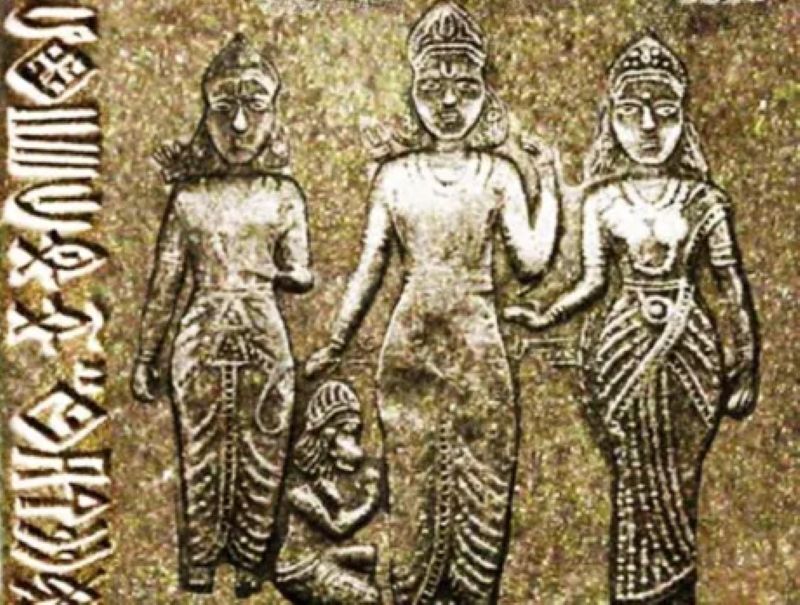
Radha and Krishna playing chess.

Some scholars believe that the second urbanisation of 1000 BCE was disconnected from Harappa, with a dark Vedic Age in between. This is false, says Prof Michel Danino, because the same technologies in pottery, water management, metallurgy and crafts are pursued throughout Indian culture. Fire altars and lingassindoor and Mother Goddess figurines, lost wax technique to cast bronze statues, and more have continued since Harappa. Tribal women wear Harappan-style bangles on their arms, and chessmen from Lothal and dice from Harappa are still popular games. Swastika and tree worship still prevailed, while the Harappan weight system continued throughout Indian culture. Check dams to avoid flooding, bathrooms with commodes and drainage lines with manholes for cleaning are Harappan legacies. So, did “untouchability” begin there? Unlike Egypt and Mesopotamia, the Indus people didn’t build pyramids and ziggurats, but made life comfortable for the common person in well-built cities.

When people travel with their musical instruments, they retain their names. The piano and violin retain their names everywhere. Shail Vyas researched Mesopotamian references to Meluha (as the Indus Valley was known there) and found the names of 30 Indian musical instruments and 60 items of trade, including animals, birds and timber species, from Meluha, all in Sanskrit, with similar Mesopotamian equivalents. These had gone with the sea-faring Meluhans of the Indus.

It is time to rethink the Harappan civilisation, a culture with much archaeology but little literature. Vedic culture is all literature, and no material remains—is it possible? The Vedas speak of copper, not iron, making it a Bronze Age civilisation like Harappa. The Vedic civilisation was riverine and agricultural, like the Harappan. The Early Harappan Period lasted from 3300 to 2900 BCE, the Mature period from 2900 to 1900 BCE and the Late Harappan from 1900 to 1500 BCE. By 1000 BCE, the Painted Grey-Ware of the Mahabharata period had appeared, so the Vedas would have to be much earlier. The Vedas do not speak of any homeland outside India. The two civilisations were contemporary, probably the same, for Meluhan Sanskrit in Mesopotamia is compelling evidence. It is time our history books reveal the truth. – The New Indian Express, 12 march 2023

> Nanditha Krishna is an author, historian, educationalist and environmentalist.

Sindhu-Saraswati (Indus Vally) Civilisation Map

Nightmare of Nehruism – Sita Ram Goel

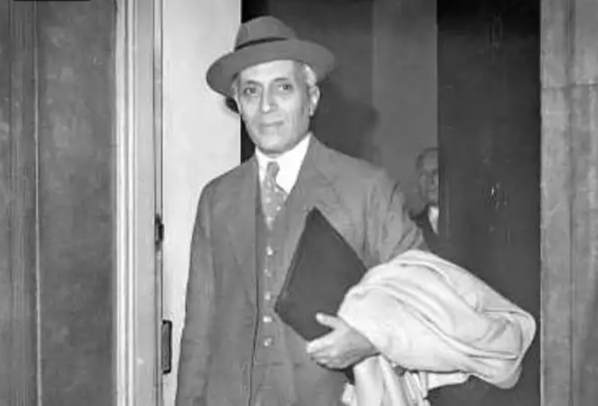
Jawaharlal Nehru (London 1946)

The late Sita Ram Goel, a prominent historian, author, and publisher, had Left leanings during the 1940s, but later became an outspoken anti-Communist. He also wrote extensively on the damage to Bharatiya culture and heritage wrought by Nehruism. The article below is an extract from Goel’s book, How I Became a Hindu, first published by Voice of India in 1982.

Today, I view Pandit Jawaharlal Nehru as a bloated brown sahib, and Nehruism as the combined embodiment of all the imperialist ideologies—Islam, Christianity, White Man’s Burden, and Communism—that have flooded this country in the wake of foreign invasions. And I do not have the least doubt in my mind that if India is to live, Nehruism must die. Of course, it is already dying under the weight of its sins against the Indian people, their country, their society, their economy, their environment, and their culture. What I plead is that a conscious rejection of Nehruism in all its forms will hasten its demise, and save us from the mischief which it is bound to create further if it is allowed to linger.

I have reached this conclusion after a study of Pandit Nehru’s writings, speeches and policies ever since he started looming large on the Indian political scene. But lest my judgement sounds arbitrary, I am making clear the premises from which I proceed. These premises themselves have been worked out by me through prolonged reflection on the society and culture to which I belong.

I have already described how I returned to an abiding faith in Sanatana Dharma under the guidance of Ram Swarup. The next proposition which became increasingly clear to me in discussions with him, was that Hindu society which has been the vehicle of Sanatana Dharma is a great society and deserves all honour and devotion from its sons and daughters. Finally, Bharatavarsha became a holy land for me because it has been and remains the homeland of Hindu society.

There are Hindus who start the other way round, that is, with Bharatavarsha being a holy land (punyabhumi) simply because it happens to be their fatherland (pitribhumi) as well as the field of their activity (karmabhumi). They honour Hindu society because their forefathers belonged to it, and fought the foreign invaders as Hindus. Small wonder that their notion of nationalism is purely territorial, and their notion of Hindu society no more than tribal. For me, however, the starting point is Sanatana Dharma. Without Sanatana Dharma, Bharatavarsha for me is just another piece of land, and Hindu society just another assembly of human beings. So my commitment is to Sanatana Dharma, Hindu society, and Bharatavarsha—in that order.

In this perspective, my first premise is that Sanatana Dharma, which is known as Hinduism at present, is not only a religion but also a whole civilisation which has flourished in this country for ages untold, and which is struggling to come into its own again after a prolonged encounter with several sorts of predatory imperialism. On the other hand, I do not regard Islam and Christianity as religions at all. They are, for me, ideologies of imperialism. I see no place for them in India, now that India has defeated and dispersed Islamic and Christian regimes.

I have no use for a secularism which treats Hinduism as just another religion, and puts it on par with Islam and Christianity. For me, this concept of secularism is a gross perversion of the concept which arose in the modern West as a revolt against Christianity and which should mean, in the Indian context, a revolt against Islam as well. The other concept of secularism, namely, sarva dharma samabhava, was formulated by Mahatma Gandhi in order to cure Islam and Christianity of their aggressive self-righteousness, and stop them from effecting conversions from the Hindu fold. This second concept was abandoned when the Constitution of India conceded to Islam and Christianity the right to convert as a fundamental right. Those who invoke this concept in order to browbeat the Hindus are either ignorant of the Mahatma’s intention, or are deliberately distorting his message.

My second premise is that Hindus in their ancestral homeland are not a mere community. For me, the Hindus constitute the nation, and are the only people who are interested in the unity, integrity, peace and prosperity of this country. On the other hand, I do not regard the Muslims and the Christians as separate communities. For me, they are our own people who have been alienated by Islamic and Christian imperialism from their ancestral society and culture, and who are being used by imperialist forces abroad as their colonies for creating mischief and strife in the Hindu homeland. I therefore, do not subscribe to the thesis that Indian nationalism is something apart from and above Hindu nationalism.

For me, Hindu nationalism is the same as Indian nationalism. I have no use for the slogans of “composite culture”, “composite nationalism” and “composite state”. And I have not the slightest doubt in my mind that all those who mouth these slogans as well as the slogan of “Hindu communalism”, are wittingly or unwittingly being traitors to the cause of Indian nationalism, no matter what ideological attires they put on and what positions they occupy in the present set-up.

My third premise is that Bharatavarsha has been and remains the Hindu homeland par excellence. I repudiate the description of Bharatavarsha as the Indian or Indo-Pak subcontinent. I refuse to concede that Afghanistan, Pakistan, and Bangladesh have ceased to be integral parts of the Hindu homeland simply because they have passed under the heel of Islamic imperialism. Hindus have never laid claim to any land outside the natural and well-defined borders of their ancient homeland, either by right of conquest or by invoking a promise made in some scripture. I, therefore, see no reason why Hindus should surrender their claim to what they have legitimately inherited from their forefathers but what has been taken away from them by means of armed force. Moreover, unless the Hindus liberate those parts of their homeland from the stranglehold of Islam, they will continue to face the threat of aggression against the part that remains in their possession at present. These so-called Islamic countries have been used in the past, and are being used at present as launching pads for the conquest of India that has survived.

My fourth premise is that the history of Bharatavarsha is the history of Hindu society and culture. It is the history of how the Hindus created a civilisation which remained the dominant civilisation of the world for several millennia, how they became complacent due to excess of power and prosperity and neglected the defences of their homeland, how they threw back or absorbed in the vast complex of their society and culture a series of early invaders, and how they fought the onslaughts of Islamic, Christian, and British imperialism for several centuries and survived.

I do not recognise the Muslim rule in medieval India as an indigenous dispensation. For me, it was as much of a foreign rule as the latter-day British rule. The history of foreign invaders forms no part of the history of India, and remains a part of the history of those countries from which the invaders came, or of those cults to which they subscribed. And I do not accept the theory of an Aryan invasion of India in the second millennium BC. This theory was originally proposed by scholars as a tentative hypothesis for explaining the fact that the language spoken by the Indians, the Iranians and the Europeans belong to the same family. And a tentative hypothesis it has remained till today so far as the world of scholarship is concerned. It is only the anti-national and separatist forces in India which are presenting this hypothesis as a proven fact in order to browbeat the Hindus, and fortify their divisive designs. I have studied the subject in some depth, and find that the linguistic fact can be explained far more satisfactorily if the direction of Aryan migration is reversed.

These are my principal premises for passing judgement on Pandit Nehru and Nehruism. Many minor premises can be deduced from them for a detailed evaluation of India’s spiritual traditions, society, culture, history, and contemporary politics. It may be remembered that Pandit Nehru was by no means a unique character. Nor is Nehruism a unique phenomenon for that matter. Such weak-minded persons and such subservient thought processes have been seen in all societies that have suffered the misfortune of being conquered and subjected to alien rule for some time. There are always people in all societies who confuse superiority of armed might with superiority of culture, who start despising themselves as belonging to an inferior breed and end by taking to the ways of the conqueror in order to regain self-confidence, who begin finding faults with everything they have inherited from their forefathers, and who finally join hands with every force and factor which is out to subvert their ancestral society. Viewed in this perspective, Pandit Nehru was no more than a self-alienated Hindu, and Nehruism is not much more than Hindu-baiting born out of and sustained by a deep-seated sense of inferiority vis-a-vis Islam, Christianity, and the modern West.

Muslim rule in medieval India had produced a whole class of such self-alienated Hindus. They had interpreted the superiority of Muslim arms as symbolic of the superiority of Muslim culture. Over a period of time, they had come to think and behave like the conquerors and to look down upon their own people. They were most happy when employed in some Muslim establishment so that they might pass as members of the ruling elite. The only thing that could be said in their favour was that, for one reason or the other, they did not convert to Islam and merge themselves completely in Muslim society. But for the same reason, they had become Trojan horses of Islamic imperialism, and worked for pulling down the cultural defences of their own people. The same class walked over to the British side when British arms became triumphant. They retained most of those anti-Hindu prejudices which they had borrowed from their Muslim masters, and cultivated some more which were contributed by the British establishment and the Christian missions. That is how British rule became a divine dispensation for them. The most typical product of this double process was Raja Ram Mohun Roy.

Fortunately for Hindu society, however, the self-alienated Hindu had not become a dominant factor during the Muslim rule. His class was confined to the urban centres where alone Muslim influence was present in a significant measure. Second, the capacity of Islam for manipulating human minds by means of ideological warfare was less than poor. It worked mostly by means of brute force, and aroused strong resistance. Finally, throughout the period of Muslim rule, the education of Hindu children had remained in Hindu hands by and large. So the self-alienated Hindu existed and functioned only on the margins of Hindu society, and seldom in the mainstream.

All this changed with the coming of the British conquerors and the Christian missionaries. Their influence was not confined to the urban centres because their outposts had spread to the countryside as well. Second, they were equipped with a stock of ideas and the means for communicating them which were far more competent as compared to the corresponding equipment of Islam. And what made the big difference in the long run was that the education of Hindu children was taken over by the imperialist and the missionary establishments. As a cumulative result, the crop of self-alienated Hindus multiplied fast and several fold.

Add to that the blitzkrieg against authentic Hindus and in favour of the self-alienated Hindus mounted by the Communist apparatus built up by Soviet imperialism. It is no less than a wonder in human history that Hindu society and culture not only survived the storm, but also produced a counter-attack under Maharshi Dayananda, Swami Vivekanand, Sri Aurobindo and Mahatma Gandhi such as earned for them the esteem of the world at large. Even so, the self-alienated Hindus continued to multiply and flourish in a cultural milieu mostly dominated by the modern West.

And they came to the top in the post-Independence period when no stalwart of the Hindu resurgence remained on the scene. The power and prestige which Pandit Nehru acquired within a few years after the death of Sardar Vallabhbhai Patel had nothing to do with his own merits, either as a person, or as a political leader, or as a thinker. They were the outcome of a long historical process which had brought to the fore a whole class of self-alienated Hindus. Pandit Nehru would have never come to the top if this class had not been there. And this class would not have become dominant or remained so, had it not been sustained by establishments in the West, particularly that in the Soviet Union.

It is not an accident that the Nehruvian regime has behaved like the British Raj in most respects. The Nehruvians have looked at India not as a Hindu country but as a multi-racial, multi-religious and multi-cultural cockpit. They have tried their best, like the British, to suppress the mainstream society and culture with the help of “minorities”, that is, the colonies crystallised by imperialism. They have also tried to fragment Hindu society, and create more “minorities” in the process. In fact, it has been their whole-time occupation to eliminate every expression of Hindu culture, to subvert every symbol of Hindu pride, and persecute every Hindu organisation, in the name of protecting the “minorities”, Hindus have been presented as monsters who will commit cultural genocide if allowed to come to power.

The partition of the country was brought about by Islamic imperialism. But the Nehruvians blamed it shamelessly on what they stigmatised as Hindu communalism. A war on the newly born republic of India was waged by the Communists in the interests of Soviet imperialism. But the Nehruvians were busy apologising for these traitors, and running hammer and tongs after the RSS. There are many more parallels between the British Raj on the one hand and the Nehruvian regime on the other. I am not going into details because I am sure that the parallels will become obvious to anyone who applies his mind to the subject. The Nehruvian formula is that Hindus should stand accused in every situation, no matter who is the real culprit. – How I became a Hindu, 1982

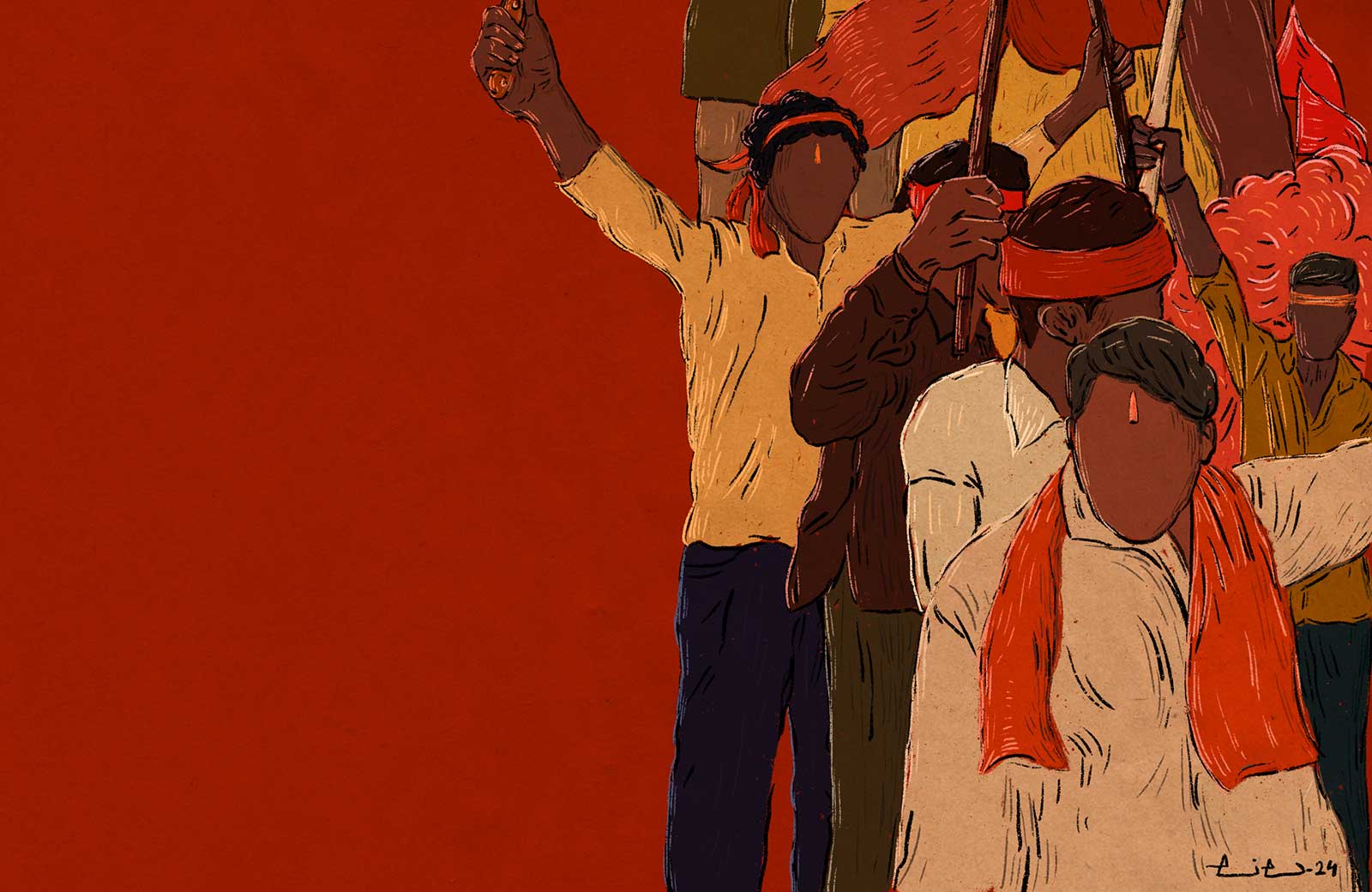
Sita Ram Goel Quote