West’s 100-year-old dream of a Christian nation in South Asia – Sumit Ahlawat

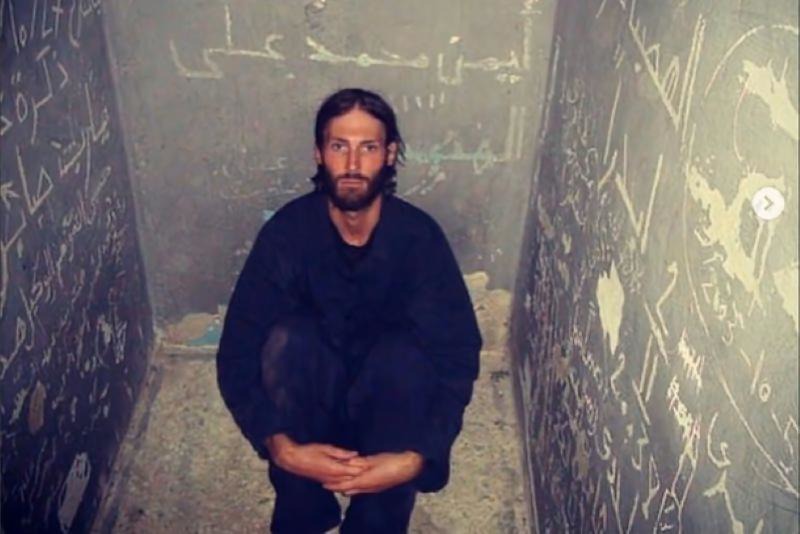
Mathew Aaron VanDyke

The theory that Western countries, primarily the US, are actively abetting armed insurgency to establish a Christian state in India’s northeastern region, similar to East Timor, that could also serve as a Western military base in the Bay of Bengal, has gained credence with the arrest of foreign mercinaries in Myanmar – Sumit Ahlawat

The arrest of seven foreigners, including six Ukrainians and one known US mercenary, Matthew VanDyke, for illegally crossing into Myanmar, supplying weapons, and providing drone training to armed rebel groups, has once again fanned the theory of a long-term Western conspiracy to carve out a Christian majority state from contiguous parts of northeastern India, Bangladesh, and Myanmar.

VanDyke is an internationally renowned, notorious figure who first gained attention during the Libyan Civil War in 2011, when he joined rebel fighters on the ground and was imprisoned.

Subsequently, VanDyke founded an organisation called Sons of Liberty International (SOLI), which provides military training to local armed groups in conflict zones worldwide. Reportedly, he has also participated in the Syrian Civil War and the Russia-Ukraine War.

According to India’s premier counterterrorism agency, the NIA, as many as 14 Ukrainian nationals entered India on tourist visas on different dates. They flew to Guwahati and then travelled to Mizoram without the required documents, before illegally crossing into Myanmar.

While the theory that Western countries, primarily the US, are actively abetting armed insurgency to establish a Christian state in this region, similar to East Timor, that could also serve as a Western military base in the Bay of Bengal, was often dismissed as speculative and sensational, the arrest of these foreigners is a smoking gun and lends credence to these allegations.

The theory was first suggested by none other than former Bangladesh Prime Minister Sheikh Hasina in 2024, was alluded to by the Chief Minister of the Indian state of Mizoram in 2025, and, with the arrest of these foreigners, can no longer be dismissed as a conspiracy theory.

Interestingly, the idea of a Christian-majority, ethno-nationalist state in the region, backed by Western powers, providing a military base to the US in the Bay of Bengal, and actively serving as a frontline state against Chinese interests in the region, is not as bizarre as it seems to be.

The idea is supported by the peculiar religious demography of the region, the long-standing connection of these communities to the Baptist Church in the US, pre-existing ethnic/tribal clevages, real or imagined grievances of injustice, and has a very long pedigree.

In fact, the idea goes back nearly a century and was initially floated by the UK during the dying days of British imperialism.

In the 1940s, when India was about to gain independence, there was an attempt to carve out a separate Crown Colony from the tribal hill districts of Northeast India and parts of Western Burma, directly under the control of the British Crown.

That Crown Colony would have provided the UK a foothold in South Asia and the Bay of Bengal even after the end of their British Indian Empire, the so-called Jewel in the Crown.

Christian Country Carved Out Of India, Bangladesh, and Myanmar?

In 2024, months before her tragic fall as the prime minister of Bangladesh, Sheikh Hasina had claimed that “conspiracies” were being hatched to topple her government and that she may be assassinated just like her father, Sheikh Mujibur Rahman.

She further alleged that a Western power is conspiring to establish a “Christian country” out of Bangladesh and Myanmar, similar to East Timor.

She alleged that a “white man” offered her easy re-election in 2024 if she agreed to allow a foreign country to build an airbase in Bangladesh.

“If I allowed a certain country to build an airbase in Bangladesh, then I would have had no problem,” she said. The offer came from a “white man”, she said. “It may appear it is aimed at only one country, but it is not. I know where else they intend to go.”

“There will be more trouble,” she had warned.

“Like East Timor … they will carve out a Christian country, taking parts of Bangladesh (Chattogram) and Myanmar with a base in the Bay of Bengal.”

A few months after these comments, Hasina’s government was toppled in Bangladesh, and she had to flee the country.

In March 2025, Mizoram chief minister Lalduhoma warned that foreign nationals, including those from the US and UK, were using the state as a transit route to enter Myanmar. These foreigners were suspected of training insurgent groups in Myanmar.

These foreigners were suspected of providing training in drone warfare and supplying sophisticated weapons to these rebels, including drones.

Notably, insurgents in both India’s northeast and in the Chin state of Myanmar have used drones in their armed struggle against security forces.

In September 2024, for the first time, armed rebels in Manipur used drones to drop bombs on security forces. This was the first time ever that drones were used in India by an insurgent group.

Similarly, armed rebels in the Chin state of Myanmar have regularly used armed drones to hit Myanmar security forces.

The Religious Demography of ‘Zo Land’

A Christian-majority country, caved out of Hindu-majority India, Muslim-majority Bangladesh, and Buddhist-majority Myanmar might seem bizarre; however, the peculiar religious demography of this region could support this idea.

The so-called Christian majority, ethno-nationalist country has also been called “Zo land” (or Zogam/Zoram), which refers to the ancestral homeland of the Zo people, a Kuki-Chin-Mizo ethnic group inhabiting parts of India, Myanmar, and Bangladesh.

The Kuki tribes of Manipur, the Mizo tribes of Mizoram, the Chin people of Myanmar, and the tribal people in Bandarban district and adjoining areas of Bangladesh’s Chittagong division have recently collectively started calling themselves the Zo people.

All of these tribes are also Christian-majority.

For instance, Manipur has approximately 41.3% Christian population. However, the state’s population is divided along ethnic and religious lines.

Manipur has two large groups: Meiteis and Kukis.

The Meiteis, who mostly live in the Manipur plains, are overwhelmingly Hindu.

The Kukis, living in the hilly areas of Manipur, are overwhelmingly Christian (up to 98%).

Similarly, in the Mizoram state of India, the Christian population is 87 percent.

In the Chin state of Myanmar, the Christian population is over 85 percent.

The Bandarban district of Bangladesh also has a significant Christian minority.

These people, the Kuki-Chin-Mizo or the Zo people, are, therefore, connected by religious and ethnic ties.

They also live in a geographically contiguous region comprising India’s Manipur and Mizoram states, Myanmar’s Chin state, and Bangladesh’s Chittagong division.

However, their ancestral lands have been divided into three different countries.

Ironically, the same colonial state that is responsible for Christianizing them was also responsible for dividing their ancestral lands into three different countries.

19th century American Baptist missionary baptising tribals in Burma.

Christianity in India’s North East

In the 19th century, most of these people followed various tribal and animistic religions.

Nagaland and Mizoram came under British control in the 19th century following the First Anglo-Burmese War (1824–1826) and the Treaty of Yandabo.

The British annexed Assam and, by 1880, brought the Naga Hills under control through military expeditions. Similarly, Mizoram (Lushai Hills) was controlled by 1890-1895 through punitive expeditions.

The British encouraged Christian missionary work in these tribal areas. At the same time, the British imposed an inner-line permit regime for these areas, which helped shape a separate identity for these groups, distinct from the rest of India.

Most of the conversion took place in the 20th century, between 1931 and 1951.

In the 1940s, when it became apparent that India would gain independence, a few colonial administrators floated the idea of a Christian-majority ‘Crown colony’ in India’s northeast, to be administered directly from London.

The plan would have ensured a British base in South Asia even after India’s independence.
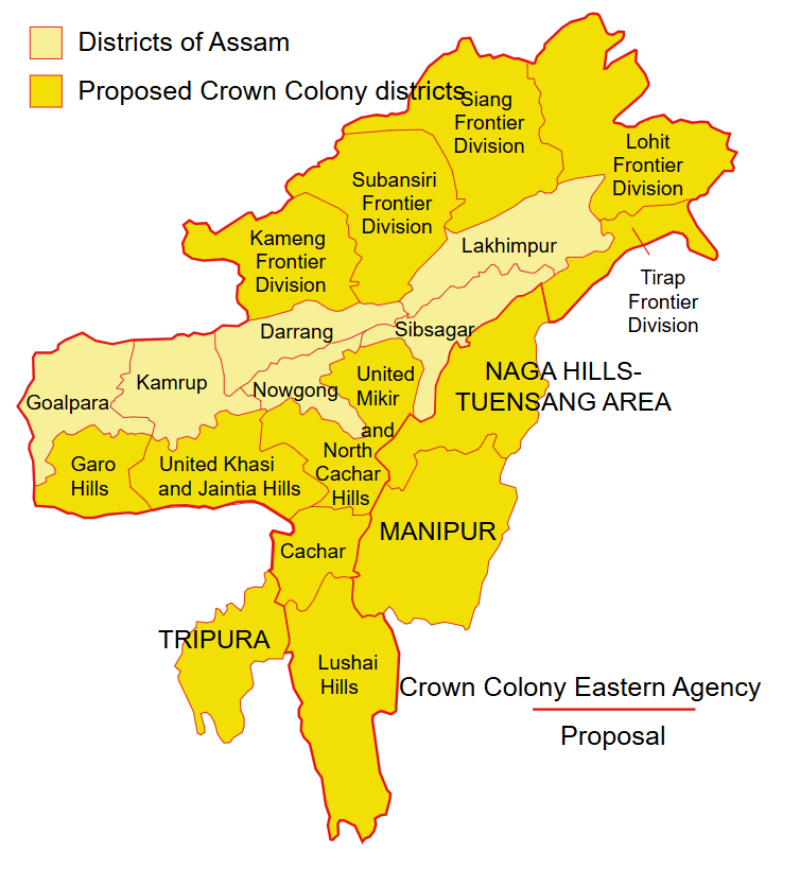
British Crown Colony Map

The plan was known as The Coupland Plan.

Named after its architect, Sir Reginald Coupland, this plan proposed creating a separate administrative unit comprising the tribal, Christian-majority areas of Assam and the tribal regions of Burma (present-day Myanmar). The core idea was to keep these territories under direct British control even after India gained independence in 1947.

The idea was initially kept secret, but soon it gained popularity and a degree of acceptance, both among the tribals as well as in the British bureaucracy. The way maps were being redrawn around the world meant anything was possible.

Singapore, Bermuda, Aden, and Gibraltar were already British Crown colonies, and so was Hong Kong.

However, multiple factors, including fierce opposition from the Indian National Congress, the economic dependence of these regions on the Indian plains, and opposition by many tribal leaders themselves, ensured that the plan was quietly abandoned by 1946.

Still, the British divided these regions into three separate countries. Chhitangong was a Buddhist-majority region, and thus, according to the logic of Indian partition, it should have become part of India. Yet, Britishers made it part of Muslim-majority Pakistan.

In 1971, after Bangladesh’s independence, it became part of Bangladesh.

Burma was officially separated from India in 1937, separating indigenous communities like the Nagas, Kukis, and Mizos.

Following India’s independence in 1947 and Burma’s in 1948, the border became an international frontier.

So, the British colonial state, which encouraged the conversion of these tribal communities to Christianity, thereby helping to emerge pan-ethno-religious identities, and formulated the idea of a separate crown colony, was also responsible for dividing these communities into three countries.

Now, nearly eight decades later, the idea of a separate Christian-majority country in India’s northeast is again fanned by Western countries, primarily the US, hoping to gain a military base in the Bay of Bengal, and a frontier to destabilise South Asia and check China’s expansion.

The plan was earlier alluded to by Sheikh Hasina and the Mizoram chief minister; now, the arrest of these individuals is further proof that this is not just some conspiracy theory, but foreign intelligence agencies and transnational mercenary groups are already working on such a plan. – EurAsian Times, 19 March 2026

Sumit Ahlawat is a Senior Editor at The EurAsian Times.
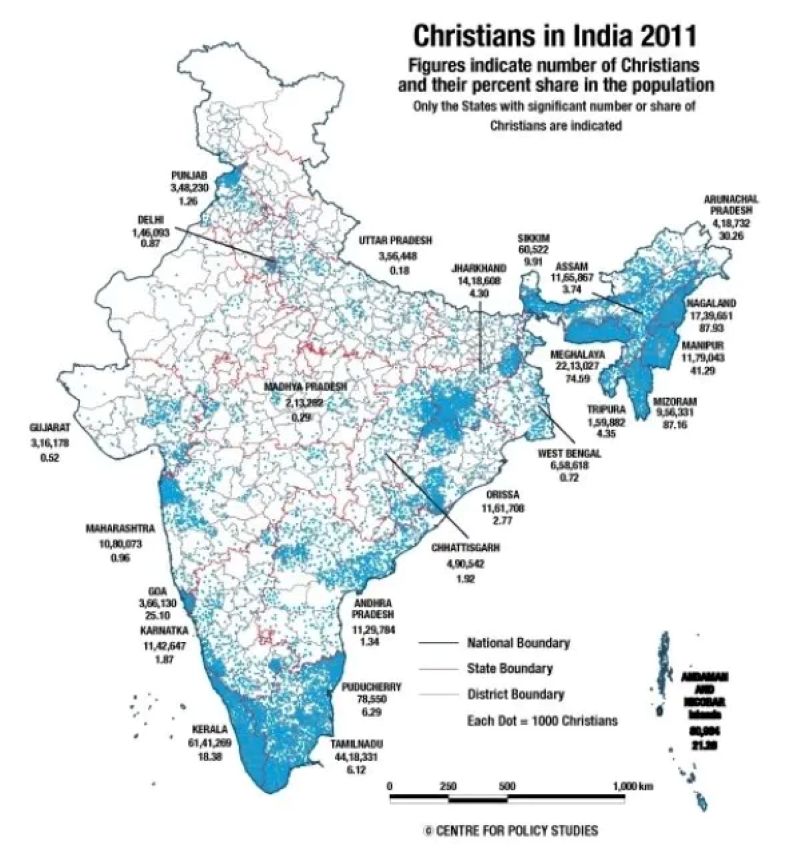
Christians in India (2011 Census)

Why nations go to war – Acharya Prashant

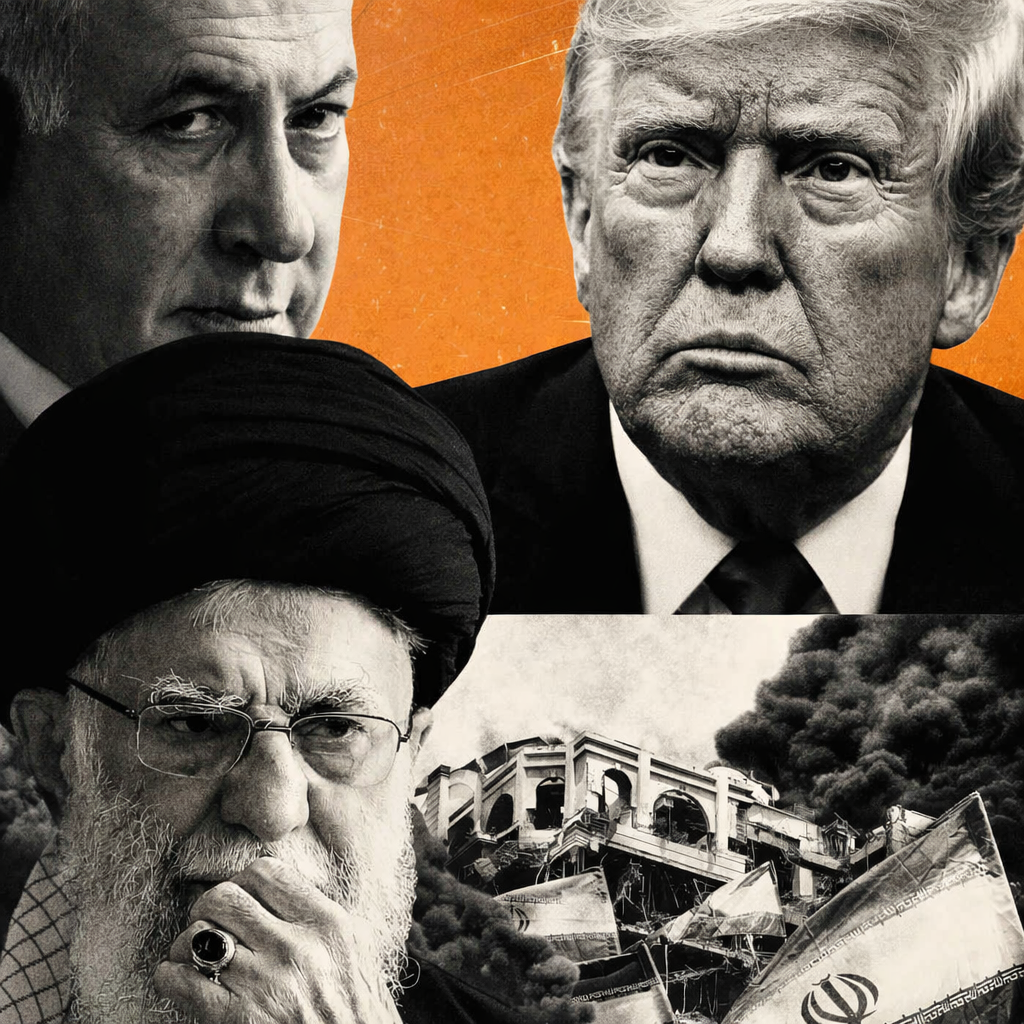
Benjamin Netanyahu, Donald Trump & Ali Khamenei

You cannot burn your neighbour’s house and rest in peace, not because of some mystical law, but because the act of burning changes the one who burns, and that changed person then returns to the home he imagined was safe and wonders why he cannot sleep. – Acharya Prashant

There is a question that goes unasked every time the world erupts in war, and its absence is more revealing than anything the analysts say. The question is not about which side is right, or which grievance is legitimate, or which alliance has been betrayed. Those questions get asked at great length, with great sophistication, by very worldly, credentialed people. The question that does not get asked is simpler and more dangerous: who is the one fighting? Not which nation, not which ideology, not which scripture, but who, actually, is doing this, what does this person want, and why does the wanting never stop?

That question is dangerous because it turns the lens around. All the other questions look outward, at the adversary, at the system, at the historical injustice. This one looks at the looker. And the looker, it turns out, has a very strong interest in not being looked at.

In the recent weeks, US and Israeli strikes on Iran have killed several top military and political figures, including senior leadership; Iran retaliated with strikes on Israeli positions and on American bases and allied targets in parts of the Gulf region; Pakistan launched strikes into Afghanistan; the Ukraine-Russia front continues its grinding attrition; and all this is happening while the devastating war in Gaza is still quite fresh in the collective memory. Across every editorial room and foreign ministry, the same machinery cranks into motion: geopolitical analysis, balance-of-power calculations, resource competition, historical grievance mapping. These explanations are not wrong, exactly. They describe the furniture of the room quite well. But what they do not explain is who is sitting in it, or why that person keeps setting the room on fire and then expressing surprise at the flames.

Nations Don’t Fight

There is no such thing as a nation as a conscious entity. A nation is a principle, and a principle has no agency of its own; it can only express the consciousness, or the unconsciousness, of the people who generate it. When a people is inwardly chaotic, driven by fear and the need for dominance, it produces a nation that is belligerent, exclusive, and always in search of an enemy to confirm its own identity. When a people is inwardly clear, the nation it generates can be genuinely civilising. But we do not speak this way. We say “the US attacked Iran” as though two abstract entities are in principled competition; the label launders the real actor, the human ego, into a flag, and the flag then takes the responsibility while the ego escapes into the applause.

Consider what a single historical fact does to the entire geopolitical narrative of the current US-Iran crisis. Until 1979, Iran and Israel were functional allies. Iran was an important oil supplier to Israel during the Shah’s era; Israeli and Iranian intelligence services collaborated closely; Iran extended de facto recognition to Israel in 1950 and maintained working relations with it throughout the Shah’s rule, at a time when every Arab neighbour had gone to war to prevent exactly that. Two countries that today describe each other in the language of surgical removal and satanic identity, “the cancerous tumour must be excised,” “the Little Satan must perish,” were, within living memory, strategic partners. No territory changed hands between them in 1979; no oil field was found or lost; no ancient wound was reopened. What changed decisively was the 1979 revolution that placed religious identity at the absolute centre of the Iranian state, and the same country that had been a partner became the enemy. The Islamic Republic made opposition to Israel a central ideological position of the new state, not because Israel had done anything new, but because a state founded entirely on theological identity requires its identity to be defined against something. A Jewish state served that purpose with theological precision.

This is not geopolitics wearing a religious costume. This is religion being worn by the ego as its most respectable armour, and it tells us everything we need to know about the nature of the conflict.

Religion exists to civilise the animal. Every great tradition, at its irreducible core, was attempting to do one thing: take the creature that emerges from the womb driven entirely by the biological logic of survival: consume, expand, eliminate the threat, secure the territory, and elevate it into something capable of clarity, compassion, and self-knowledge. That is the whole project. The animal, however, is remarkably resourceful. It can colonise the very force meant to tame it; it can drape itself in scripture, recite the holy verses with genuine feeling, and emerge looking not like a beast at all, but like a soldier of God. When that happens, religion does not merely fail at its purpose; it becomes the most potent accelerant the ego has ever discovered, because now the hunger for dominance carries the blessing of the divine, the violence is sanctified, and the enemy is not merely an adversary to be defeated but a heretic whose destruction is itself an act of devotion.

Look at the region, and the pattern is visible everywhere at once. The Shia-Sunni schism, a theological dispute over succession thirteen centuries old, continues to shape proxy wars across Iran, Saudi Arabia, Iraq, Syria, and Lebanon; the hatred between those who share the same God, the same Prophet, and nearly the same scripture exceeds in ferocity the hatred between people who share nothing. In the United States, some influential evangelical constituencies hold a literal belief in Biblical prophecy that makes their support for Israeli military policy not a political position but an eschatological one; they believe the Second Coming is contingent on certain territorial arrangements in the Middle East, and no diplomatic argument reaches a conviction rooted in the Book of Revelation. Hamas frames every missile launch in the language of holy liberation. The Israeli state, forged in the trauma of the Holocaust and the genuine existential terror of being a country the size of a few Indian districts surrounded by populations that have repeatedly declared their wish to see it gone, responds with a hardness the world has rarely seen directed so openly at a civilian population, and does so while invoking its own theological entitlement to the land. Every party has its scripture and its God. Every party’s God appears to have personally endorsed that party’s military strategy. One must pause and ask with full seriousness: what kind of God is this, who sides so reliably with whoever happens to be invoking him at the moment of the airstrike?

The answer, of course, is that this God does not exist. What exists is the ego, which has been using the name of God since it first discovered that the name confers immunity from examination.

Not Resources, But Identity.

Strip away the theological dressing and the geopolitical framework, and what remains is something both simpler and more intractable: the ego’s bottomless hunger to feel complete. This is the actual engine beneath every war, and no diplomatic architecture has ever been built to address it, because the architects themselves are running the same engine.

The resource explanation for the US-Iran confrontation is the most persistent alibi and the most easily dismantled. The United States is among the world’s largest energy producers; it has no material need for Iranian oil that could justify the risks of direct military confrontation with a nation of ninety million people in one of the world’s most volatile regions. Iran, for its part, possesses no intercontinental missile capable of reaching American cities, and by several credible accounts a negotiated arrangement, with Omani mediation, was genuinely within reach: Iran would continue enriching fissile material but not stockpile it, making weaponisation impossible without abrupt and easily detectable reversal. None of this fits a resource or security conflict in the conventional sense. What it fits is the logic of an ego that requires dominance not as a strategy but as a psychological condition; an ego that cannot tolerate the existence of an entity that refuses to subordinate itself to the hierarchy. You cannot give it enough. Feed it every oil field in the Gulf and it will discover it needs recognition; give it recognition and it will discover it needs submission; give it submission and it will discover it needs the annihilation of any future possibility of challenge. The hunger has no floor because the hollowness it is trying to fill has no floor either.

This is also why every coercive attempt to prevent Iran’s nuclearisation produces the very outcome it claims to be preventing. The lesson that every capital in the world is drawing from watching a sovereign nation’s senior leadership eliminated by a foreign military strike is not “we should negotiate more sincerely.” It is: “We need a nuclear-tipped intercontinental missile, because that is the only thing that makes us genuinely untouchable.” North Korea understood this early and has not been subjected to the same treatment as Iraq, Libya, or now Iran; every government in the world has registered exactly why, and is drawing its own conclusions quietly. Pakistan articulated the logic with unusual candour in the 1990s when it was reported to describe its nuclear programme as the “Islamic bomb”; the theology was decoration, the calculation underneath is now a standard operating assumption in most strategic planning ministries on earth. You can prevent a country from manufacturing a weapon; you cannot prevent it from purchasing one, trading for one, or receiving one through channels that only appear in retrospective intelligence reports five years later. The ego will always find a route around the obstacle, because self-preservation is its oldest and deepest competence, and it will spend every gram of available intelligence in that service. What you cannot route around is the inner condition that makes the weapon feel necessary. Everything else: the sanctions, the strikes, the frameworks, the summits, is rearranging weapons into configurations that feel temporarily safer and calling the rearrangement peace.

The Fire Was Lit In Here

There is a temptation, particularly for citizens of the nations doing the striking, to watch all of this from a position of apparent safety: to feel either pride at a display of power or simple relief that the devastation is happening at a geographical distance comfortable enough to be consumed as news. The objects of the conflict are far away: Iran, Gaza, Afghanistan, Ukraine. The subject, the one who has authorised, funded, and often enough cheered for these operations, remains at home, apparently untouched. This is the ego’s most seductive illusion: that the fire it lights in the world stays in the world, that you can sanction the destruction of other people’s cities and return to your own life carrying none of that destruction inside you.

The fire does not stay outside. It never has.

The inner condition that produces belligerent foreign policy is the same inner condition that produces the epidemic of depression, anxiety, addiction, and inner purposelessness that has become the defining psychological signature of the most militarily powerful societies on earth. It feels counterintuitive to connect these; it feels like a category error to link America’s mental health catastrophe with decades of American military conduct across the world. And yet this is precisely what honest seeing reveals when it is applied without flinching. The violence directed outward, and the suffering experienced inward, are not two events happening in two different places; they are the same ego operating in two directions, and the ego that lights the fire and the ego that cannot sleep afterward are not two separate entities but a single disturbed centre. The ego believes it can cleanly separate the one who acts from the one who suffers. But the one who lights fires has already become a person who lights fires; the one who sanctions collective punishment has already become a person capable of sanctioning collective punishment; and that becoming does not halt at any border. You cannot burn your neighbour’s house and rest in peace, not because of some mystical law, but because the act of burning changes the one who burns, and that changed person then returns to the home he imagined was safe and wonders why he cannot sleep.

The senses are made to face outward, and therefore the ego, using only the senses, sees only what is outside, never what is within. This is the structural predicament of the geopolitically entranced ego: it looks outward at the adversary, at the threat, at the historical injustice, and it never pauses to notice that what it keeps finding out there, the hunger, the fear, the need for enemies, the certainty of its own righteousness, is a precise mirror of what has never been examined within. Nations go to war for the same reason individuals destroy their own relationships: something hurts, something feels insufficient, and the instinct is to locate the source of that pain outside oneself. The nation blames the enemy state; the individual blames the partner; and in both cases the real author of the suffering, the unexamined centre that requires enemies in order to know what it is, goes untouched, free to generate the next crisis with the same efficient reliability.

Ask yourself what genuinely disturbs you when you read the news from that region. If you find that a missile strike produces something that feels uncomfortably close to satisfaction, a sense that the right people are being punished, that your side is winning, that the world is being corrected, sit with that feeling for a moment before moving to the next headline. Ask what it is fed by. Ask what it would mean for your sense of identity if the world stopped arranging itself into enemies you could feel righteous about. These wars are not aberrations in an otherwise rational world order; they are the outward expression of an inward condition that is universal and ancient, that operates identically in the head of state and in the citizen consuming the coverage, differing only in the scale of damage each has access to.

The ego that requires enemies to sustain its own sense of coherence does not disappear when the missiles stop. It waits until it finds the next available occasion. And the wheel turns again.

The wheel will not be stopped from the outside. There is no treaty elegant enough, no balance of power stable enough, no diplomatic architecture sophisticated enough to address what keeps turning it. The wheel is turned from within, by the unexamined centre that has been given every instrument of analysis and statecraft except the one that could actually change something: the willingness to look at itself with the same ruthlessness it has always reserved for its enemies.

That is the only disarmament that lasts. Not a new agreement, not a new government, not a new ideology dressed in the vocabulary of the old one, but just a human being, finally willing to ask: what in me is producing this world, and what would remain of my sense of who I am if I could no longer find an enemy to confirm it?

That question, honestly pursued, is the beginning of the only peace that has ever been real. It will need to be asked again tomorrow. And the day after. Because the ego that found the question will, by the next headline, have found a new enemy. But each asking weakens the wheel by a fraction, and a fraction, repeated across enough human beings, is the only force that has ever slowed it. – The Pioneer, 7 March 2026

Acharya Prashant is a teacher and author whose work centres on self-inquiry and its application to contemporary life.

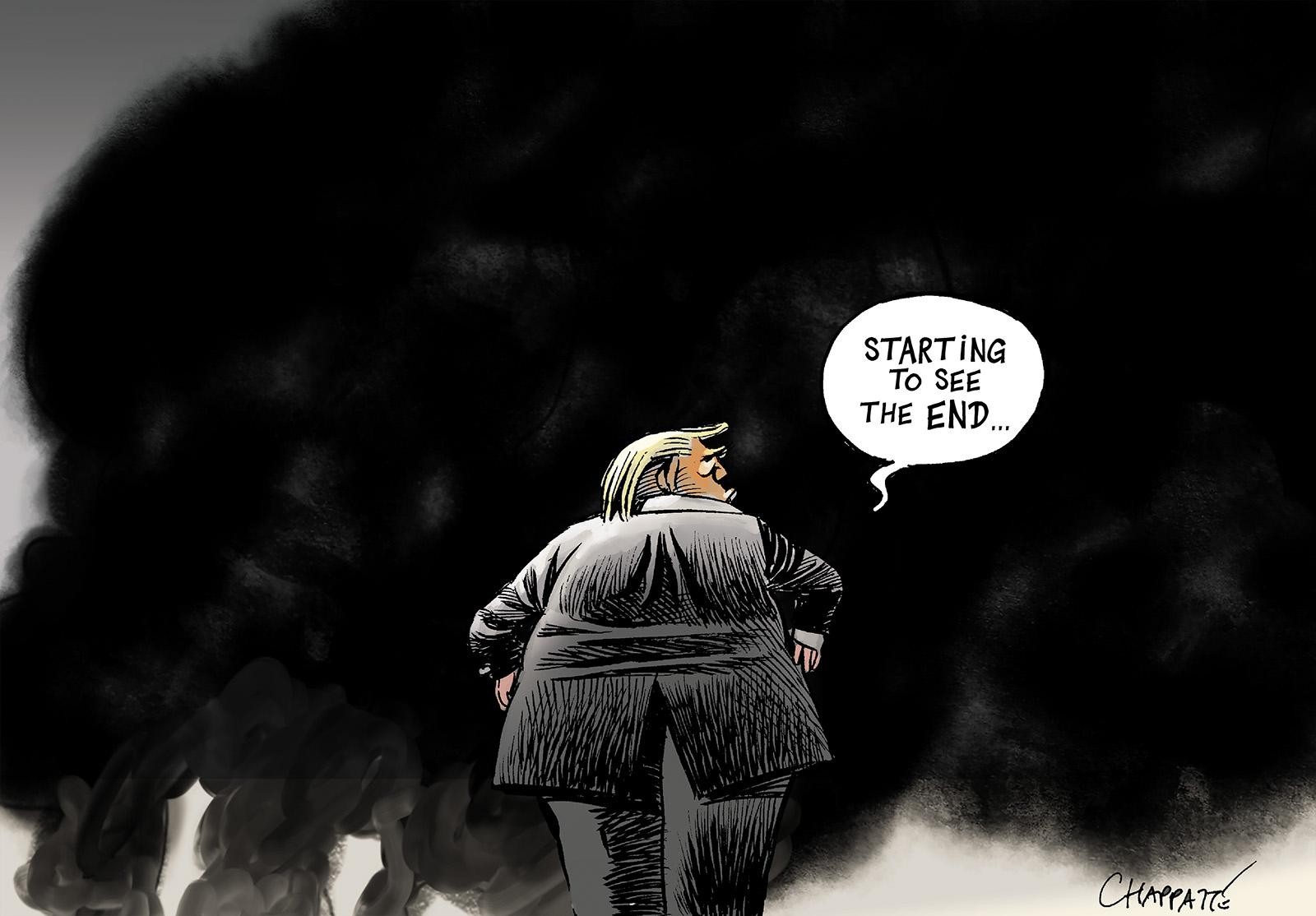
Trump Cartoon

Pakistan: Islamic nation or hater of its own roots? – Balbir Punj

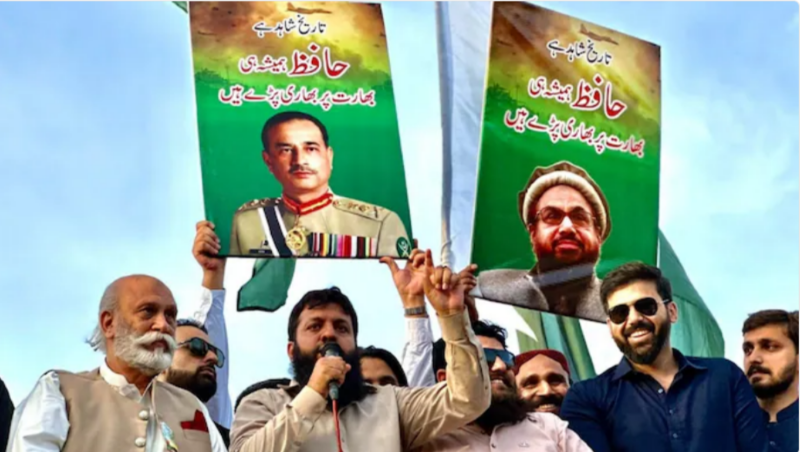
Pakistan Anti-India Rally

Pakistan is contradiction personified. It is a declared Islamic nation that kills more Muslims than most non-Muslim regimes. It allies with powers that bomb or erase Muslims elsewhere and survives by playing the sidekick to global powers. It is an ideological construct consumed by hatred of its own pre-Islamic heritage, history, and civilisational traits, such as plurality. – Balbir Punj

The suicide bombing at the Khadija Tul Kubra Shia Mosque in Islamabad on February 6, 2026, which killed at least 36 worshippers and left over 160 injured during Friday prayers, was not merely another act of terrorism in Pakistan’s troubled history. It was not an isolated tragedy either.

It was, in fact, part of a grim continuum. In November 2024, a Shia procession in Parachinar was attacked, killing 44 civilians, including women and children. In March 2022, the Islamic State-Khorasan Province (ISKP) bombed the Kucha Risaldar Shia Mosque in Peshawar, killing over 60 worshippers.

In 2015, a Shia mosque in Shikarpur was targeted during Friday prayers, leaving 61 dead. Earlier still, the Hazara Shia community of Quetta endured near-genocidal violence, including the twin bombings of 2013 that killed over 200 people.Pakistan today is home to more than 40 million Shia Muslims—nearly one-fifth of its population. Yet more than 4,000 Shias have been killed in sectarian attacks in the past two decades alone. These are not accidental casualties of instability; they are victims of a sustained ideological assault.

A state that cannot – or will not—protect such a large section of its Muslim population forfeits its claim to Islamic legitimacy. Sectarian targeting has become a structural feature of Pakistan’s internal life. Even more telling was the state’s immediate instinct to deflect responsibility. Pakistan’s Defence Minister Khawaja Asif rushed to blame India and Afghanistan—without evidence or investigation.

But facts are stubborn things. Pakistan’s sectarian violence is neither imported nor imposed. It is indigenous, ideologically nurtured, and politically patronised.

The reasons for mass murders committed in the name of Islam lie not only in theology but also in governance. Pakistan has failed to act as a neutral guarantor of religious plurality. Instead, it has repeatedly aligned itself with extremist Sunni majoritarianism, allowing sectarian hatred to harden into political currency.

Groups such as Tehreek-e-Labbaik Pakistan (TLP) and Ahl-e-Sunnat-Wal-Jamaat (ASWJ), globally recognised for their virulent anti-Shia ideology, have been allowed to operate openly. In September 2020, more than 30,000 extremists marched through Karachi, openly calling Shias “blasphemers” and demanding their beheading. Similar rallies followed in Islamabad. These were not clandestine gatherings; they were public demonstrations of ideological impunity.

Legislative measures such as Punjab’s Tahaffuz-e-Bunyad-e-Islam Bill (2020) further marginalised Shias by privileging a singular Sunni interpretation of Islam. Electoral expediency has repeatedly trumped constitutional responsibility. Extremists are not confronted; they are courted, because they deliver street power and votes.The deeper question remains: how does such an ideology repeatedly find fertile ground in Pakistan?

The answer lies in the circumstances leading to its birth and decades of state policy. A state that once distinguished between “good” and “bad” terrorists should not feign surprise when violence turns inward. Islam, reduced to an instrument of power, inevitably devours its own.

Pakistan’s well-worn narrative, in which India is portrayed as inherently anti-Muslim and anti-Islamic, collapses under empirical scrutiny. At the time of Partition, residual India had roughly 30 million Muslims. Today, that number exceeds 220-240 million, making India home to one of the largest Muslim populations in the world. Over eight decades, Indian Muslims have grown demographically, participated politically, and lived under a secular constitutional framework that guarantees religious freedom.

India maintains strong relations with Saudi Arabia, the UAE, Iran, and other Islamic nations. Even under Prime Minister Narendra Modi—frequently caricatured by Pakistani propaganda—India’s engagement with the Islamic world has deepened. Pakistan’s accusation is not grounded in reality; it is an ideological necessity to sustain its founding hostility.

Contrast this with Pakistan, where non-Muslims and non-Sunni Muslims, including Ahmadiyas, have been reduced to statistical insignificance, treated as second-class citizens, and are virtually invisible in the country’s public spaces.

Pakistan’s antagonism towards India is less theological and more civilisational. Pakistan was conceived not as a cultural continuation but as a negation of the subcontinent’s pre-Islamic past. Official Pakistani historiography traces its origins to Muhammad bin Qasim’s invasion of Sindh in 712 CE. Islamic invaders who destroyed temples and erased indigenous traditions are glorified as ideological ancestors.

This civilisational rupture was not accidental. As documented by former Indian diplomat Narendra Singh Sarila in The Shadow of the Great Game and economist Prasenjit K. Basu in Asia Reborn, the partition of India was deeply embedded in Britain’s imperial strategy.

Classified British correspondence reveals that on May 5, 1945, Prime Minister Winston Churchill commissioned a secret report recommending that Britain retain a military presence in India’s north-west—present-day Pakistan—to counter the Soviet Union. The report advocated detaching Baluchistan to safeguard British interests in the Gulf and the Middle East, highlighting its value as a military base, transit hub, and reservoir of “manpower of good fighting quality”.

On June 3, 1947, British Foreign Secretary Ernest Bevin candidly admitted that the division of India would help Britain consolidate its position in the Middle East. A 1947 British military report went further, stating that Britain’s strategic requirements in the subcontinent could be met through an agreement with Pakistan alone, even if India refused cooperation.

As Prasenjit K. Basu notes, Pakistan was integral to Britain’s grand strategy of retaining influence over the oil-rich regions of Iran, Iraq, and the Gulf. This logic seamlessly transferred to the United States during the Cold War. Pakistan joined SEATO and CENTO, became a frontline ally against the Soviet Union, and hosted CIA operations, including from the Peshawar airbase.

The United States later used Pakistan as a conduit to China and, during the 1971 war, openly sided with Islamabad against India. America replicated the weaponisation of Islam that Britain had perfected—most dramatically in Afghanistan. To counter the Soviet Union, Washington built a global jihadist ecosystem, with Pakistan as its ideological and logistical incubator.

Post-9/11, Pakistan became indispensable once again, even as it played a double game. Islam was never the objective; it was the instrument.

If Pakistan genuinely loved Islam, it would stand unequivocally with Muslim causes worldwide. Pakistan does not.

While Gaza burns and Iran faces sustained Israeli-American hostility, Pakistan’s establishment maintains strategic silence—or worse, strategic collaboration. Reports of Pakistani facilities being used indirectly by US forces against Iran, and the Pakistani Army Chief’s simultaneous engagements in Washington, expose the hollowness of Ummah rhetoric.

Nowhere is Pakistan’s moral bankruptcy clearer than in its embrace of China. While Beijing systematically erases Uyghur Islamic identity—demolishing mosques, banning Quranic practices, and incarcerating over a million Muslims in “re-education camps”—Pakistan remains conspicuously mute.

A self-proclaimed Islamic state reduced to a surrogate of an empire committing cultural genocide against Muslims is a contradiction too grotesque to ignore: loans, corridors, and strategic relevance purchase Pakistan’s silence.

Perhaps the most devastating indictment came from Shia protesters in Kashmir, who marched with the Indian tricolour, asking a simple but searing question, as media reported: “Shia Muslims are targeted in Pakistan. It is painful to see Muslims being killed inside mosques during prayers. What kind of jihad is this?” Pakistan is contradiction personified. It is a declared Islamic nation that kills more Muslims than most non-Muslim regimes. It allies with powers that bomb or erase Muslims elsewhere and survives by playing the sidekick to global powers. It is an ideological construct consumed by hatred of its own pre-Islamic heritage, history, and civilisational traits, such as plurality. – The Pioneer, 28 February 2026

Balbir Punj is a columnist, author, and former Chairman of the Indian Institute of Mass Communication (IIMC).

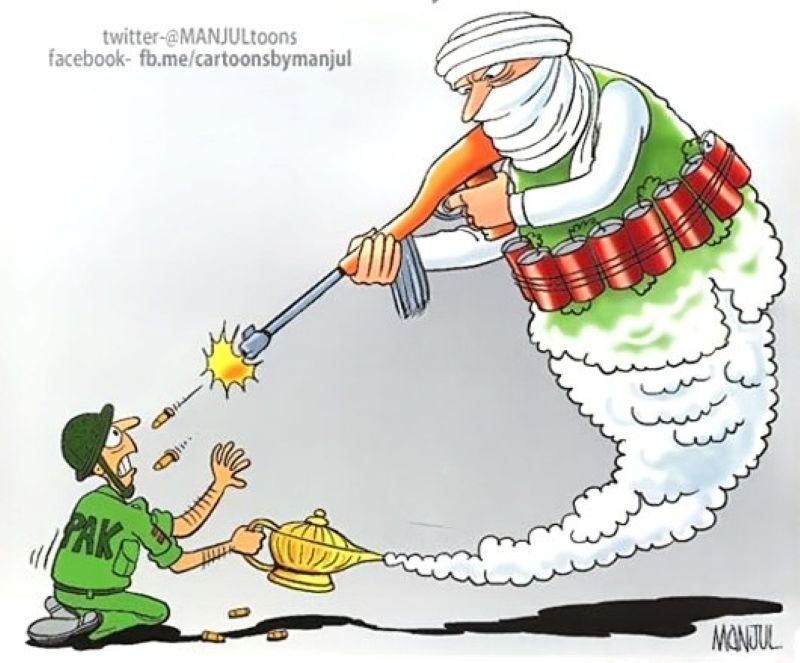
Pakistan Cartoon

USA: Seven stages of imperial decline – Samannay Biswas

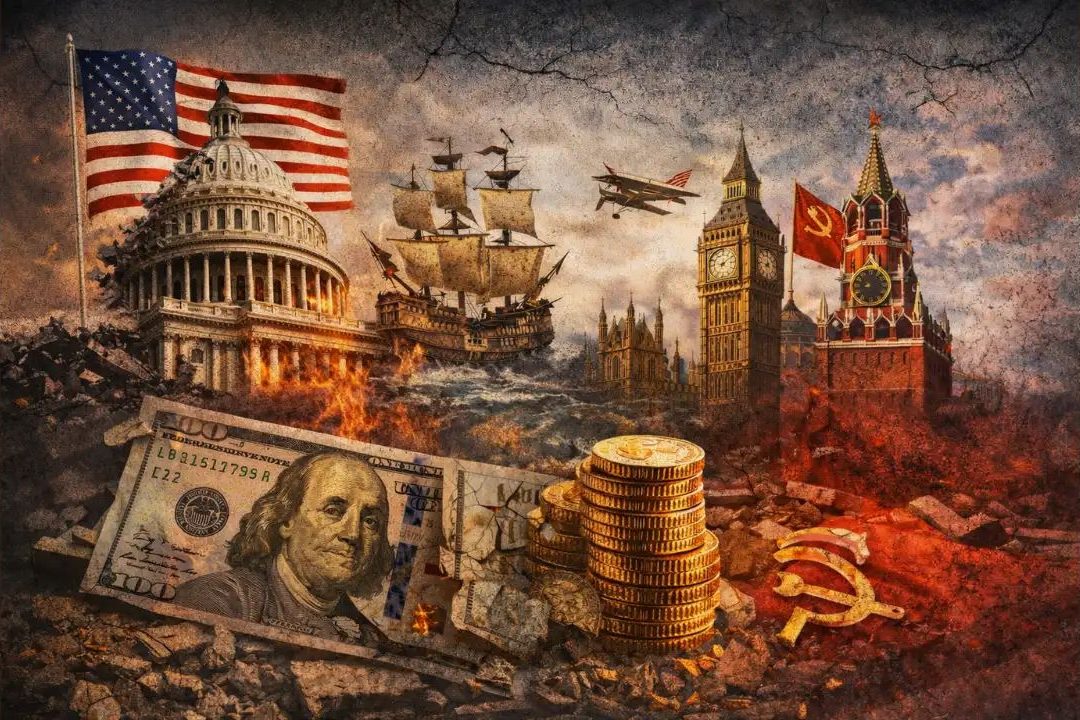
Empires

The United States, as the world’s leading superpower since the mid-20th century, exhibits many hallmarks of late-stage economic and imperial decline, patterns already seen in Spain, Britain, and the Soviet Union. – Samannay Biswas

All throughout history, major empires and superpowers have followed recurring patterns of economic decline, often resulting in collapse. This framework, popularised in analyses of Spain, Britain, and the Soviet Union, identifies seven stages driven by overextension, financial mismanagement, and societal shifts.

The “seven stages of empire” was a theory conceived by Lieutenant General Sir John Bagot Glubb, also known as “Glubb Pasha.” Glubb was a soldier in World War I and a long-time commander of the Arab Legion in Jordan until his retirement in 1956. During his retirement, he became a historian and an author.

In 1976, he wrote the essay The Fate of Empires and Search for Survival based on research of over a dozen empires over a period of 3,000 years, including the Assyrians and the British Empire. His observations were that the life span of most empires is typically around 250 years, with all empires following a cyclic pattern consisting of seven parts: the pioneers, the conquest, the commerce, affluence, intellect, decadence, and decline.

In his view, whether in a culture and technology-dominated world or a materialistic and fragmented one, the moral and social trajectory of an empire draws upon a same pattern of duty, discipline, and then materialism, fragmentation, and loss of unity. Though not a deterministic theory, Glubb’s idea was a caution, and it influences current arguments regarding an imperialism ascent and fall, including an America one.

With evidence drawn from historical data and current trends related to the US economy, as of January 2026, this article explores these phases, how they appeared within previous empires, and why it appears to be moving through these phases faster than projected. With evidence drawn from historical data and current trends related to the US economy, as of January 2026, this article explores

Stage 1: Military Overextension

It’s also a fact that the fall of many empires started with the thinning out of resources around the world.

There are many examples throughout history. Spain during the 16th century had military forces deployed on four different continents, with military expenditures accounting for half of its spending. The British Empire, which extended to six continents by 1900, had costs it couldn’t sustain during World War I, with expenditures reaching $40 billion, or $1 trillion in today’s currency. The Soviet Union supported wars ranging from Afghanistan to Africa with 15-20% of its spending.

Meanwhile, military expenditures for the U.S. recorded $900.6 billion during fiscal year 2026, surpassing the total military spending of the next 10 countries combined. Furthermore, despite maintaining more than 750 bases in 80 countries and deployed troops in 150 countries, the US is facing difficulties in maintaining its presence through aged military hardware and manpower deficiencies. Others see this repeating the same mistakes of the past.

Stage 2: Currency Debasement

To finance themselves, empires have no choice but to debase their currency.

Spain also brought a lot of copper into the silver currency; thus, the purity level of the silver currency fell from 100% to nearly 0% by the end of 1600. This increased inflation. Britain left the gold standard by 1931. This reduced the value of the pound by 25%. The ruble in the Soviet Union was not convertible, meaning that it relied on the exports of gold and oil.

The US lost the gold standard in 1971, and the fiat currency has been used since. But the US dollar has lost 98% of its value since then. The value of the money supply in the US has increased by 400% since the year 2000, and nearly $6 trillion has been printed since 2020. The decline of the US dollar currency in the modern era may cause potential inflation risks given the structure of the economy.

Stage 3: Debt Spiral

If left uncheckded, borrowing translates to defaults or unaffordable interest payments.

There were four bankruptcies between 1557 and 1596. Britain had $30 billion in debt by 1945, which was above GDP. Reserve depletion was a result of economic stagnation in the 1980s.

As of the data cut off of January 18, 2026, the US national debt was recorded at $38.62 trillion, with its debt-to-GDP ratio recorded at 123.6%. The interest payments are inching closer to $1 trillion, which even surpasses spending on the military. Also, the deficit for 2025 was recorded at $1.74 trillion, which is 5.9% of GDP, and it is forecasted to increase to 6.1% in 2035.

Stage 4: Loss of Productive Capacity

Wealth influxes result in deindustrialization.

The import of gold from Spain undermined the manufacturing industries in Spain. Britain’s relocation of industries after World War II undermined industries in Britain. The USSR’s central planning system led to inefficiencies in grain production, causing the USSR to import grains.

There has been a decrease of 49,000 factory jobs in the US between February and September 2025, marking the 70,000th job cut since April 2025, leading the overall employment level to 12.69 million, the lowest level since March 2022. The trade gap of the country has also escalated by 14% or 95.2 billion dollars in the first nine months of 2025, registering an acceleration of 131.3 billion dollars for goods imports. Importation of medications and electronics is still a notable component.

Stage 5: Social Decay

Economic strain manifests in societal breakdowns.

Spain experienced rising crime and emigration. Britain’s post-empire period was marked by inequality. The USSR faced disillusionment and brain drain.

In America, homelessness increased by 18% to 771,480 in 2024, with an increase of 23% in initial incidents since 2019. Drug overdose deaths decreased by 21% to approximately 73,000 in the year to August 2025, yet they continue to be high. Birth rates will also be lower, with slower growth in population due to an increase in overdose and suicide deaths. Trust in institutions has reached an all-time low with a rise in crime levels.

Stage 6: Loss of Reserve Currency Status

Countries that are allied start diversifying away from the dominant currency.

The loss of global acceptance was even worse for Spain. “The British pound depreciated from $4.03 in 1940 to $1.27 today. The ruble never became a reserve currency.”

“Dedollarization is gathering pace.” Countries within the BRICS are lining up alternatives, with central banks buying more gold than ever before for five straight years as of 2022. The value of China’s yuan-denominated trade is increasing, and Saudi Arabia has started accepting funds for oil exports in something other than US dollars. The dollar’s role in international reserves is at a two-decade low. This may heighten US vulnerabilities.

Stage 7: Total Collapse

Sudden crises frequently precede final collapse.

Spain became a secondary power by the year 1700. An empire was lost by Britain within two decades after the year 1945. The USSR fell apart in 1991, after about 900 days of acute crisis.

The US is arguably already in Stage 5, with warnings of Stage 6. The forces pushing for acceleration are rapid growth of debt, evidence of dedollarization, and increased societal stresses. Debt is projected to close in on 118% of GDP by 2035. But there are arguments opposing it, pointing to collapses that never occurred and with growth running at 1.8 to 1.9% CAGR.

The Decline of the Spanish Empire

The Spanish Empire reached its peak in the 16th century under rulers like Charles V and Philip II, controlling territories across Europe, the Americas, Africa, and Asia. At its peak around 1580, it dominated global gold and silver production, with the Spanish real serving as a reserve currency.

The Spanish Empire had decayed into a financially drained, non-preeminent state by the end of the 17th century. The decline was the result of economic neglect, military overextension, domestic rebellions, and inefficiency.

Spain waged warfare relentlessly, such as the Eighty Years’ War waged against rebels from the Netherlands or wars fought against the Ottoman Empire and the English or the French. By 1580, troops were spread across four continents, absorbing over fifty-percent of government expenditures.

The inflow of silver caused inflation, followed by bankruptcy and the collapse of domestic industry due to imports. The forced expulsion of Jews and Moriscos reduced the skilled workforce. Poor leadership and corruption exacerbated the decline of Spain, resulting in an empire that was large in terms of appearance but shallow in reality.

The Decline of the British Empire

At its height, the British Empire controlled 25% of the planet’s land surface and populations, and the pound sterling was the world’s reserve currency.

The decline accelerated following World War I and became irrevocable following World War II. Overextension of the military, war debts, decline of industry, and the rise of colonial nationalism contributed to the inability of the imperial power to maintain control. Britain went bankrupt following World War II with its debt level exceeding its GDP.

Currency devaluation, loss of colonies such as India, and geopolitical setbacks like the Suez Crisis confirmed Britain’s diminished status. By the late 20th century, the empire had dissolved into the Commonwealth, marking the end of Britain’s imperial era.

The Decline and Collapse of the Soviet Union

The Soviet Union found itself a superpower after World War II but disintegrated in 1991. Expenditures due to military build-up, economic stagnation, inefficiency in central planning, and a drop in oil prices were factors in its disintegration.

Reforms of Gorbachev revealed faults in the system that brought relaxation in control in politics and prompted movements for independence in Eastern Europe as well as the USSR. Factors such as ethnicity conflicts, corruption, decay in institutions, and poor governance led to dissolution without a major war.

Where The US Stands?

Even so, there are some traits indicative of a further six stages of decline which the United States shares with Spain, Britain, and the USSR. These include a powerful global position, but still some key advantages, such as innovation, flexibility, well-developed capital markets, or military might, that the United States has vis-à-vis its putative competitors. It is possible to trace signs of growing weaknesses in each stage.

What these trends foretell is that a possible decline might emerge sooner than the historical precedents had indicated in the past since the magnitude of global interdependence, debts, and new geopolitics are all involved.

Stage 1: Military Overextension

Military overextension has persisted, with the US maintaining the world’s largest defense budget. The Department of Defense’s fiscal year 2026 budget request is approximately $892.6 billion—near-flat from prior years but still above the combined spending of the next several major powers.

Commitments range from more than 750 bases in over 80 countries, NATO obligations in Europe, relationships in Asia such as Japan, South Korea, and the Philippines, to deterrence in China, Russia, and Iran. Recruitment difficulties, aging inventory, and possible multiple front situations such as Taiwan, Ukraine crises, and the Middle East war zones keep stretching their capacity.

These pressures mirror the unsustainable military burdens that exhausted prior empires.

Stage 2: Currency Debasement

Currency debasement has continued through fiat mechanisms. The dollar has lost about 98% of its purchasing power since the gold standard ended in 1971.

The massive monetary expansion-especially since 2020-has been a given source of sustained inflationary pressures, even if partly moderated in recent times. This is a similar dynamic to Spain’s coin debasement and Britain’s post-war struggles with currency stability, though it comes on a far larger scale given the dollar’s role as the global reserve currency.

Stage 3: Debt Spiral

The debt spiral has never been higher. As of January 7, 2026, the gross national debt is at $38.43 trillion, an increase of $2.25 trillion from last year, averaging a daily increase of a staggering $8.03 billion.

This translates to 120% of GDP and interest payments that are approaching and surpassing $1 trillion a year. The deficit impact for fiscal year 2026 has shown borrowing of $602 billion for the first three months.

In contrast to sovereign bankruptcies in Spain or the debt crises in post-WWII Britain, the US has the “benefit of being able to borrow in its own currency because its dollar is widely held as a foreign exchange reserve currency.” Still, the rising cost of borrowing and fiscal risk of “debt monetization”—monetary policy being used to pay debt—“may push the system to its tipping point sooner than before.”

Stage 4: Loss of Productive Capacity

Decreased productivity can also be seen in the deindustrialization of the economy. Factory employment plummeted in 2025, posting its eighth consecutive monthly decline in December, reaching around 12.692 million, which is the lowest in several years.

The industry lost tens of thousands of employment positions due to tariffs, supply chain shifts, and global forces, despite government policy initiatives targeting reshoring. Though the trade gap for the goods and services trade declined slightly late in 2025, deficits remain.

Heavy reliance on imports for electronics, pharmaceuticals, and critical components parallels Spain’s historical import dependence and Britain’s erosion of its industrial edge.

Stage 5: Social Decay

The various indicators are where social decay manifests. Homelessness reached record highs, with over 771,000 people affected in 2024, as housing costs and a widening inequality led to this movement.

New drug overdose deaths, despite recent declines, are elevated, and the fertility rate is continuing to trend downward. Population growth increasingly relies on immigration, and under current projections, natural decline is possible by 2030.

With political polarization, crime issues in urban centers, and emigration of skilled talent in certain sectors, confidence in institutions is at historic lows. These dynamics echo social fragmentation in previous empires under economic stress.

Stage 6: Loss of Reserve Currency Status

A loss of reserve currency status is already exhibiting visible, but increasing, trends. Central banks are stockpiling gold, alternative currencies, such as the yuan, are finding increasing use in the settlement of trades, and the BRICS countries are making progress in new systems.

The dollar’s holding in global reserves has been gradually reduced over two decades, but it remains around 57-60%. However, it remains dominant in global foreign exchange transactions. The move by Saudi Arabia away from dollar-denominated oil contracts, as well as attempts by China, Russia, and India to avoid dollar-based payment systems, show that there is momentum.

Stage 7: Total Collapse

While complete collapse is still a prospect rather than an imminent danger, the coincidence of the above factors, as well as possible external shocks in the form of large-scale geopolitical turmoil, sudden interest rate spikes, or speeded-up dedollarization, may start a abrupt collapse.

Historical cases of collapse have differed greatly in the speed of collapse: its taking several decades in Spain, its taking perhaps two decades in Britain following World War II, in contrast to the few years in the Soviet Union. The highly interconnected nature of the US’s role in the world means that whatever crisis emerges—whether debt ceiling crisis, a serious default scare, or a run on reserves—the US’s finance sectors are likely to be more susceptible to a faster cascade in a crisis.

While resilience factors such as innovation and policy flexibility remain, the arithmetic of compounding debt, eroding productive capacity, and shifting alliances suggests the window for course correction is narrowing, potentially leading to significant economic reconfiguration sooner than many anticipate. Times Now, 18 January 2026

›  Samannay Biswas writes financial stories for Times Now Digital. 

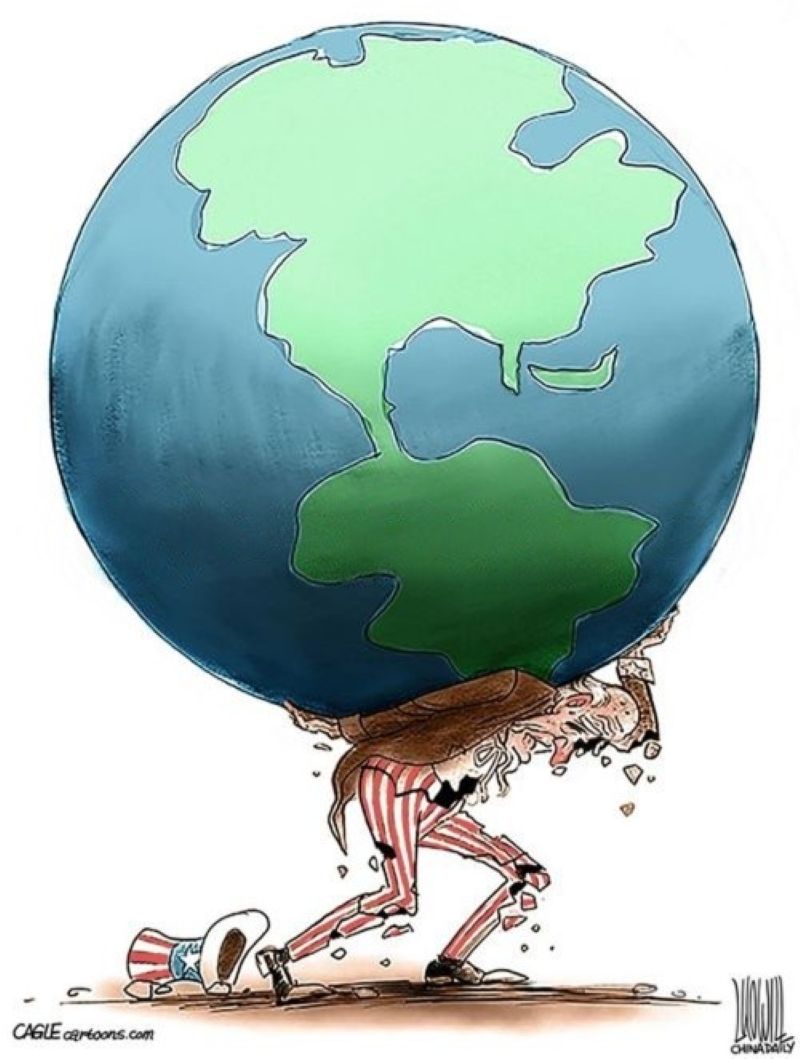
Uncle Sam