West’s 100-year-old dream of a Christian nation in South Asia – Sumit Ahlawat

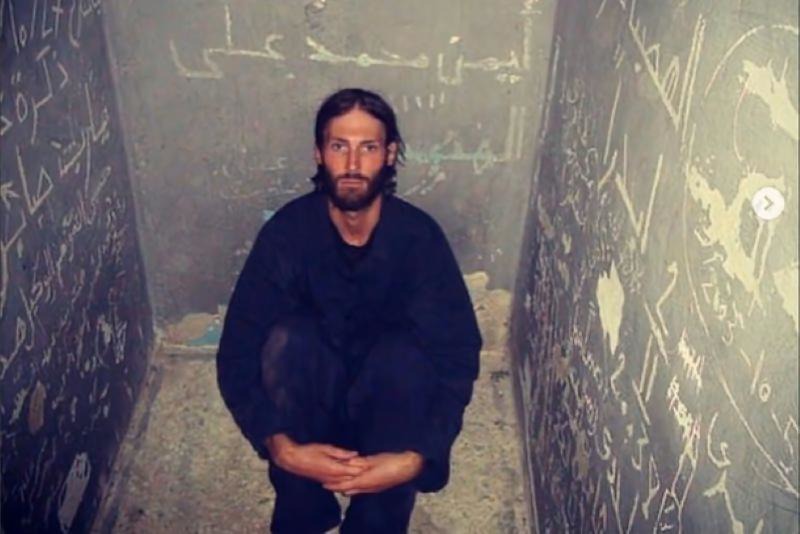
Mathew A. VanDyke

The theory that Western countries, primarily the US, are actively abetting armed insurgency to establish a Christian state in India’s northeastern region, similar to East Timor, that could also serve as a Western military base in the Bay of Bengal, has gained credence with the arrest of foreign mercinaries in India – Sumit Ahlawat

The arrest of seven foreigners, including six Ukrainians and one known US mercenary, Matthew VanDyke, in India for illegally trying to cross into Myanmar, supply weapons and provide drone training to armed rebel groups, has once again fanned the theory of a long-term Western conspiracy to carve out a Christian majority state from contiguous parts of northeastern India, Bangladesh, and Myanmar.

VanDyke is an internationally renowned, notorious figure who first gained attention during the Libyan Civil War in 2011, when he joined rebel fighters on the ground and was imprisoned.

Subsequently, VanDyke founded an organisation called Sons of Liberty International (SOLI), which provides military training to local armed groups in conflict zones worldwide. Reportedly, he has also participated in the Syrian Civil War and the Russia-Ukraine War.

According to India’s premier counterterrorism agency, the NIA, as many as 14 Ukrainian nationals entered India on tourist visas on different dates. They flew to Guwahati and then travelled to Mizoram without the required documents.

While the theory that Western countries, primarily the US, are actively abetting armed insurgency to establish a Christian state in this region, similar to East Timor, that could also serve as a Western military base in the Bay of Bengal, was often dismissed as speculative and sensational, the arrest of these foreigners is a smoking gun and lends credence to these allegations.

The theory was first suggested by none other than former Bangladesh Prime Minister Sheikh Hasina in 2024, was alluded to by the chief minister of the Indian state of Mizoram in 2025, and, with the arrest of these foreigners, can no longer be dismissed as a conspiracy theory.

Interestingly, the idea of a Christian-majority, ethno-nationalist state in the region, backed by Western powers, providing a military base to the US in the Bay of Bengal, and actively serving as a frontline state against Chinese interests in the region, is not as bizarre as it seems to be.

The idea is supported by the peculiar religious demography of the region, the long-standing connection of these communities to the Baptist Church in the US, pre-existing ethnic/tribal clevages, real or imagined grievances of injustice, and has a very long pedigree.

In fact, the idea goes back nearly a century and was initially floated by the UK during the dying days of British imperialism.

In the 1940s, when India was about to gain independence, there was an attempt to carve out a separate crown colony from the tribal hill districts of Northeast India and parts of Western Burma, directly under the control of the British crown.

That crown colony would have provided the UK a foothold in South Asia and the Bay of Bengal even after the end of their British Indian Empire, the so-called Jewel in the Crown.

Christian Country Carved Out Of India, Bangladesh, and Myanmar?

In 2024, months before her tragic fall as the prime minister of Bangladesh, Sheikh Hasina had claimed that “conspiracies” were being hatched to topple her government and that she may be assassinated just like her father, Sheikh Mujibur Rahman.

She further alleged that a Western power is conspiring to establish a “Christian country” out of Bangladesh and Myanmar, similar to East Timor.

She alleged that a “white man” offered her easy re-election in 2024 if she agreed to allow a foreign country to build an airbase in Bangladesh.

“If I allowed a certain country to build an airbase in Bangladesh, then I would have had no problem,” she said. The offer came from a “white man”, she said. “It may appear it is aimed at only one country, but it is not. I know where else they intend to go.”

“There will be more trouble,” she had warned.

“Like East Timor … they will carve out a Christian country, taking parts of Bangladesh (Chattogram) and Myanmar with a base in the Bay of Bengal.”

A few months after these comments, Hasina’s government was toppled in Bangladesh, and she had to flee the country.

In March 2025, Mizoram chief minister Lalduhoma warned that foreign nationals, including those from the US and UK, were using the state as a transit route to enter Myanmar. These foreigners were suspected of training insurgent groups in Myanmar.

These foreigners were suspected of providing training in drone warfare and supplying sophisticated weapons to these rebels, including drones.

Notably, insurgents in both India’s northeast and in the Chin state of Myanmar have used drones in their armed struggle against security forces.

In September 2024, for the first time, armed rebels in Manipur used drones to drop bombs on security forces. This was the first time ever that drones were used in India by an insurgent group.

Similarly, armed rebels in the Chin state of Myanmar have regularly used armed drones to hit Myanmar security forces.

The Religious Demography of ‘Zo Land’

A Christian-majority country, caved out of Hindu-majority India, Muslim-majority Bangladesh, and Buddhist-majority Myanmar might seem bizarre; however, the peculiar religious demography of this region could support this idea.

The so-called Christian majority, ethno-nationalist country has also been called “Zo land” (or Zogam/Zoram), which refers to the ancestral homeland of the Zo people, a Kuki-Chin-Mizo ethnic group inhabiting parts of India, Myanmar, and Bangladesh.

The Kuki tribes of Manipur, the Mizo tribes of Mizoram, the Chin people of Myanmar, and the tribal people in Bandarban district and adjoining areas of Bangladesh’s Chittagong division have recently collectively started calling themselves the Zo people.

All of these tribes are also Christian-majority.

For instance, Manipur has approximately 41.3% Christian population. However, the state’s population is divided along ethnic and religious lines.

Manipur has two large groups: Meiteis and Kukis.

The Meiteis, who mostly live in the Manipur plains, are overwhelmingly Hindu.

The Kukis, living in the hilly areas of Manipur, are overwhelmingly Christian (up to 98%).

Similarly, in the Mizoram state of India, the Christian population is 87 percent.

In the Chin state of Myanmar, the Christian population is over 85 percent.

The Bandarban district of Bangladesh also has a significant Christian minority.

These people, the Kuki-Chin-Mizo or the Zo people, are, therefore, connected by religious and ethnic ties.

They also live in a geographically contiguous region comprising India’s Manipur and Mizoram states, Myanmar’s Chin state, and Bangladesh’s Chittagong division.

However, their ancestral lands have been divided into three different countries.

Ironically, the same colonial state that is responsible for Christianizing them was also responsible for dividing their ancestral lands into three different countries.
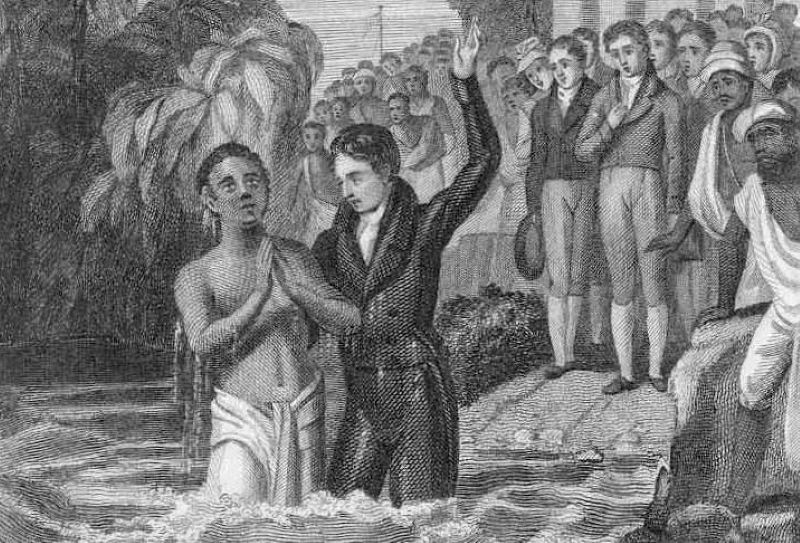
19th century American Baptist missionary baptising tribals in Burma.

Christianity in India’s North East

In the 19th century, most of these people followed various tribal and animistic religions.

Nagaland and Mizoram came under British control in the 19th century following the First Anglo-Burmese War (1824–1826) and the Treaty of Yandabo.

The British annexed Assam and, by 1880, brought the Naga Hills under control through military expeditions. Similarly, Mizoram (Lushai Hills) was controlled by 1890-1895 through punitive expeditions.

The British encouraged Christian missionary work in these tribal areas. At the same time, the British imposed an inner-line permit regime for these areas, which helped shape a separate identity for these groups, distinct from the rest of India.

Most of the conversion took place in the 20th century, between 1931 and 1951.

In the 1940s, when it became apparent that India would gain independence, a few colonial administrators floated the idea of a Christian-majority crown colony in India’s northeast, to be administered directly from London.

The plan would have ensured a British base in South Asia even after India’s independence.
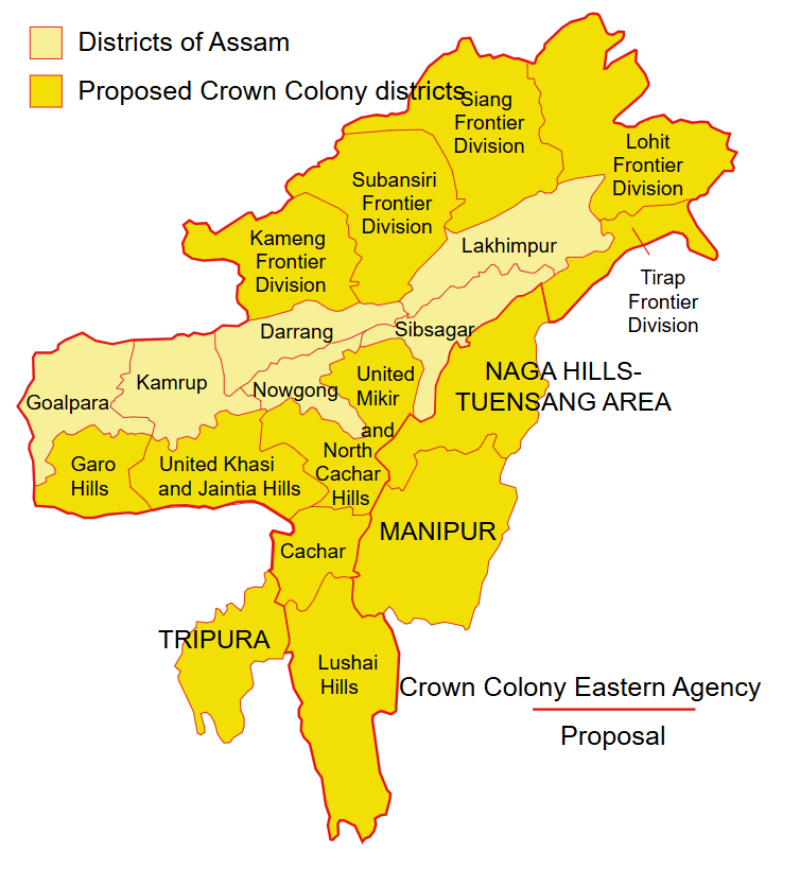
British Crown Colony Map

The plan was known as The Coupland Plan.

Named after its architect, Sir Reginald Coupland, this plan proposed creating a separate administrative unit comprising the tribal, Christian-majority areas of Assam and the tribal regions of Burma (present-day Myanmar). The core idea was to keep these territories under direct British control even after India gained independence in 1947.

The idea was initially kept secret, but soon it gained popularity and a degree of acceptance, both among the tribals as well as in the British bureaucracy. The way maps were being redrawn around the world meant anything was possible.

Singapore, Bermuda, Aden, and Gibraltar were already British crown colonies, and so was Hong Kong.

However, multiple factors, including fierce opposition from the Indian National Congress, the economic dependence of these regions on the Indian plains, and opposition by many tribal leaders themselves, ensured that the plan was quietly abandoned by 1946.

Still, the British divided these regions into three separate countries. Chhitangong was a Buddhist-majority region, and thus, according to the logic of Indian partition, it should have become part of India. Yet, Britishers made it part of Muslim-majority Pakistan.

In 1971, after Bangladesh’s independence, it became part of Bangladesh.

Burma was officially separated from India in 1937, separating indigenous communities like the Nagas, Kukis, and Mizos.

Following India’s independence in 1947 and Burma’s in 1948, the border became an international frontier.

So, the British colonial state, which encouraged the conversion of these tribal communities to Christianity, thereby helping to emerge pan-ethno-religious identities, and formulated the idea of a separate crown colony, was also responsible for dividing these communities into three countries.

Now, nearly eight decades later, the idea of a separate Christian-majority country in India’s northeast is again fanned by Western countries, primarily the US, hoping to gain a military base in the Bay of Bengal, and a frontier to destabilise South Asia and check China’s expansion.

The plan was earlier alluded to by Sheikh Hasina and the Mizoram chief minister; now, the arrest of these individuals is further proof that this is not just some conspiracy theory, but foreign intelligence agencies and transnational mercenary groups are already working on such a plan. – EurAsian Times, 19 March 2026

Sumit Ahlawat is a Senior Editor at The EurAsian Times.
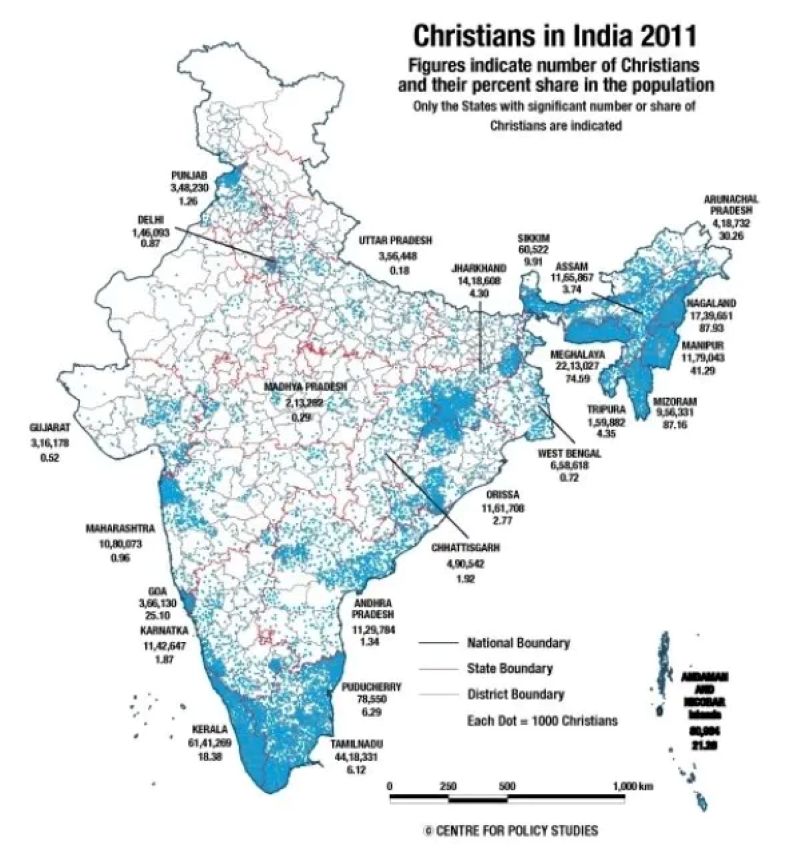
Christians in India (2011 Census)

A Feast of St. Thomas – Ishwar Sharan

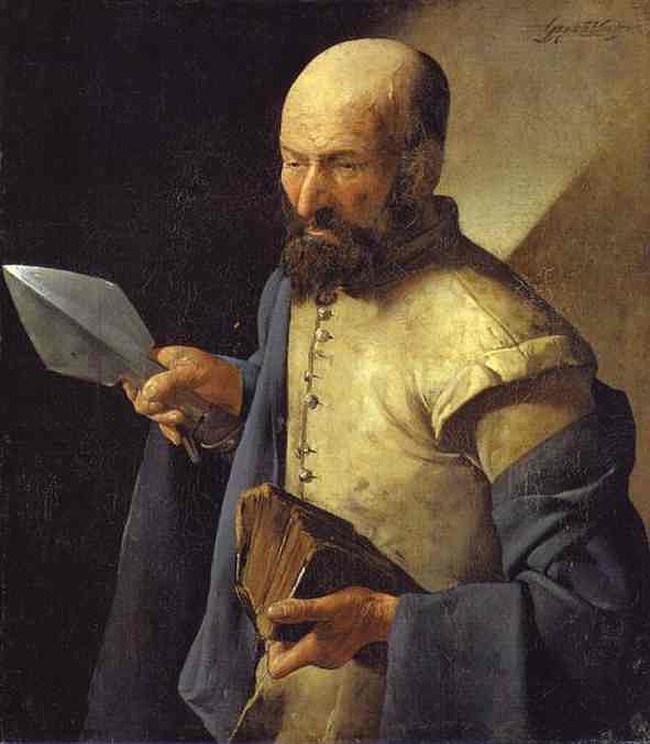
St Thomas by Georges de La Tour ca. 1632

The Roman Catholic Church in India owes Hindus an abject apology for the blood libel she has perpetuated for centuries, falsely charging Hindus with the murder of Apostle St. Thomas even as she falsely charges Jews with the murder of Jesus. – Ishwar Sharan

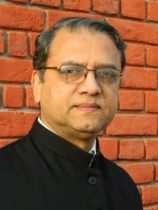
Fr Francis Gonsalves, SJThe Deccan Chronicle in Chennai carried on 2 July 2012 a “mystic mantra” column called “Feast of Thomas” (article now deleted) by Fr. Francis Gonsalves, the former president of the Jesuit-run Vidyajyoti Theological College in New Delhi. The feast for St. Thomas is celebrated on July 3rd every year in India. Fr. Francis knows better than this writer that the story of St. Thomas in India is untrue. He also knows that prestigious Jesuit schools in Europe would never refer to the Thomas in India story without first qualifying it as an unverified Gnostic moral fable. But Fr. Francis whose ancestors were Christian converts in Goa—by force or fraud we do not know—is an Indian Jesuit under a communal compulsion to deceive his congregation and support their fanciful apostolic aspirations for India.  And there is also the politics of which his religious order is more than famous—or should we say infamous. Fr. Francis had a candidate for the Indian presidency in the person of a deracinated tribal convert called Purno Sangma. Therefore, Fr. Francis must continue to perpetrate the St. Thomas in India lie as he believes that Thomas has already claimed India for Christ and that claim could have been actualised in the person of Purno Sangma. So Fr. Francis wrote:

I’m often asked by the people here in India and abroad, “When did Christianity come to India?” “Indian Christianity is about 2,000 years old,” I reply, adding, “Ever since St. Thomas, one of Jesus’ beloved disciples, came to India.” [1] Thus, we have the so-called “St Thomas Christians” [2]—mainly from Kerala—whose ancestors received Jesus’ “Gospel” soon after his resurrection. On July 3, Christians will celebrate the feast of Saint Thomas.

The Gospel of John records three utterances of St. Thomas that give glimpses of his character. First, when Jesus desires to go to Bethany, bordering Jerusalem, the disciples try to prevent him from going since he was almost stoned there for claiming kinship with God. Thomas, however, sticks by Jesus, and says, “Let’s also go that we may die with him” (John 11:16). This shows Thomas’ courage and his commitment to Jesus.

Second, when Jesus announces his imminent death and assures his disciples that he’ll prepare a place for them, he adds, “You know the way to the place where I’m going.” Thomas answers candidly, “Lord, we do not know where you are going. How can we know the way?” (John 14:5). This prompts Jesus to reply, “I am the way.”

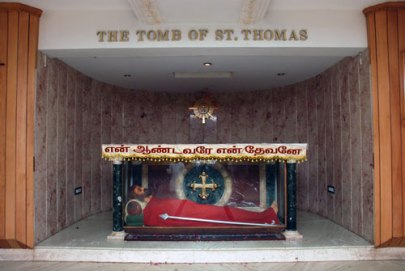
Thomas’ third utterance gives not only him, but also gifts us the appellation “doubting Thomas”. Being no pushover, Thomas asks for “proof” before he believes the unprecedented news of Jesus rising from the dead. But, on meeting the Risen Christ, he exclaims: “My Lord and my God!” (John 20:28). These words are etched in gold over the tomb of St. Thomas at the San Thome Cathedral, Chennai: a magnificent 16th-century Gothic church visited by innumerable pilgrims.

Having lived in Chennai, I cherish unforgettable moments at monuments built in memory of Apostle Thomas. I remember that morning of Sunday, December 26, 2004, when I was presiding over morning worship at San Thome Cathedral and the mighty ocean came crashing down upon Marina beach, leaving us distraught at the destruction wrought by the tsunami.

Two other churches in Chennai commemorate the Apostle: one built in 1523 atop “Saint Thomas Mount” near the airport, and, another big, circular one constructed in 1972 on “Little Mount”. The former contains the “Bleeding Cross”, believed to have been sculpted on stone by St.Thomas, while the latter rests beside the cave where the Apostle prayed.

Saints are not the exclusive property of one religion. St. Thomas teaches us all three things: (a) to be courageous and committed to a cause; (b) to be candid and to clarify things when in doubt; and (c) to be critical of things outside human experience; yet, also to believe in God who forever remains “The Beyond” while inspiring us to exclaim, “My Lord, my God!” in the everyday ordinariness of life.Deccan Chronicle, Chennai, 2 June 2012

IS-SDSThere is no historical evidence to support the legend that St. Thomas, called Judas Thomas in the Acts of Thomas, ever came to India. And when we say there is no historical evidence in Western literature, we say emphatically that there is no evidence for St. Thomas or Indian Christianity in ancient Tamil literature either. Even up to the tenth century and Raja Raja Chola’s time, Tamil literature has no record of Christians or Christianity being present in the land.

The story of Thomas’s Indian sojourn exists only in the Acts of Thomas. This long religious romance was probably  written by the Syrian Christian Gnostic poet Bardesanes about 210 CE at Edessa, Syria. Bardesanes was familiar with India and had met and discussed Indian philosophy with Buddhist monks travelling west to Alexandria. It was therefore quite natural for him to place his moral fable in India, a land from which all kinds of religious ideas emanated. [3]

Bardesanes story is centred on the moral imperative that all Christians must lead a chaste and celibate life. In the story he has Judas Thomas, who is presented as a look-alike twin brother of Jesus, persuade a newly married royal couple not to consummate their marriage. This angers the Parthian king of the desert land where Thomas is present and he has to flee for his life to another part of the country. Here he comes into contact with another Parthian king called Gundaphorus—possibly a first century king of  Gandhara, i.e. North-West Pakistan and Afghanistan—and promises to build him a palace. Thomas cheats the king of his money but succeeds in converting him to Christianity. He then leaves Gundaphorus and concerns himself with a talking donkey and a dragon who claims to be Satan. Thomas slays the dragon, but because of his interest in converting the women and girls of the area to Christianity and alienating them from family life, he is called before a third Parthian king called Mazdai—Mazdai being a Zoroastrian name after the Zoroastrian deity Ahura Mazda—and ordered to leave the country. When Thomas ignores the king’s warning and converts the queen and her son, the king in exasperation at the apostle’s evil deeds orders him executed. He is then speared to death by soldiers on a royal acropolis and the body shortly afterwards taken away to Edessa.

In all records Thomas is executed on the Parthian royal acropolis and soon after buried at Edessa where a cult grows up around his tomb—until Marco Polo, in his famous travelogue Il Milione, puts his tomb on the seashore in an unnamed little town in South India. Marco, who never came to India, was repeating the stories told to him by Muslim and Syrian Christian merchants he met in Constantinople.

This is how St. Thomas got to South India. The Portuguese who knew Marco’s popular travel book,  decided quite arbitrarily that Mylapore was the unnamed little town Marco was referring to [4]—and Mylapore also had a good harbour and a great heathen temple that could be turned into a Christian apostle’s tomb. As they say, the rest is history—and a falsified history at that!

Though Bardesanes represents Judas Thomas as a second Christ, he does not represent him as a good man. What we gather from the story in the Acts, and what Fr. Francis and his Church neglect to tell the faithful, is that:

  • Jesus was a slave trader who sold his brother Thomas to the trader Abbanes for thirty pieces of silver;
  • Thomas was an antisocial character who lied to his royal employer and stole money from him;
  • Thomas ill-treated women and enslaved them;
  • Thomas practised black magic and was executed for disobeying the king’s order to stop and leave the country;
  • Thomas was Jesus’s twin brother, implying that the four canonical Gospels are unreliable sources which have concealed a crucial fact, viz. that Jesus was not God’s Only Begotten Son. In fact, Jesus and Thomas were God’s twin-born sons. In other words, accepting the Thomas legend as history is equivalent to exploding the doctrinal foundation of Christianity.

Enough said about Judas Didymus Thomas.

About San Thome Cathedral which houses his fake tomb—the real tomb for St. Thomas is at Ortona, Italy—it has been established by reputed Jesuit and Indian archaeologists that the church stands on the ruins of the original Kapaleeswara Shiva Temple destroyed by the Portuguese in the sixteenth century. So do the churches at Little Mount and Big Mount stand on ruined Murugan and Shiva temples respectively. The “Bleeding Cross” Fr. Francis refers to and which is kept in the Portuguese church on Big Mount, has these words carved around the edge of it in Pahlavi script: “My lord Christ, have mercy upon Afras, son of Chaharbukht the Syrian, who cut this.” The cross is dated by experts to the eighth or ninth century.

Apostle Thomas was a Jew and the Roman cross would have been a most abhorrent symbol to him. Certainly he did not bring a cross—or a Bible for that matter; there was no compiled Bible in the first century—to India. Christians did not use the Roman cross as a religious symbol until the third century or later. They used a fish sign with the Greek word ΙΧΘΥC (ikhthus meaning “fish”)—an acronym for JESUS—inscribed in its body to identify themselves and their cult. Curiously Indian Christianity has never referenced or employed a fish symbol in its religious culture. This is because there were no Christians in India before the fourth century. The cross and Bible were brought later by Syrian Christian refugees from Mesopotamia and Persia after the fourth century.

We wish to assure Fr. Francis and the Christian congregations that he has deceived, that Hindus are not going to demand the return of misappropriated temple property. But we do feel an apology for past crimes is in order and that some restraint is observed when perpetuating the communally-charged St. Thomas tale among the faithful—especially as Thomas’s persecution and death are falsely attributed to a Hindu king and his Brahmin priests. Arun Shourie has stated that the apology should include the following items:

  • An honest accounting of the calumnies which the Church has heaped on India and Hinduism; informing Indian Christians and non-Christians about the findings of Bible scholarship [including the St. Thomas legend];
  • Informing them about the impact of scientific progress on Church doctrine;
  • Acceptance that reality is multi-layered and that there are many ways of perceiving it;
  • Bringing the zeal for conversion in line with the recent declarations that salvation is possible through other religions as well.

Besides this apology, we feel the Archbishop of Madras-Mylapore may donate a piece of the vast estate Bishop’s House stands on for a memorial to the courageous Hindus who resisted the Portuguese when they with the help of Franciscan, Dominican and Jesuit priests were destroying the Kapaleeswara Shiva Temple by the sea.

The Archbishop of Madras-Mylapore, who may today be an honest man unlike his predecessors, also must stop perpetuating the claim that Tiruvalluvar was a disciple of Thomas and a Christian convert. Tiruvalluvar lived a hundred years before Christ and anybody who has read the Tirukkural can see that this claim is a malicious falsehood.

The St. Thomas legend has been insinuated into Indian history and Indian history must now be told according to the known facts, not according to the fabricated anti-national theories of Indian Jesuits and Marxist historians. Even Pope Benedict has denied that St. Thomas came to South India—never mind that his editors changed his statement the next day to include South India because Kerala’s bishops had threatened secession or worse if the Church did not support their dearly held tale of origins.

Dr. Koenraad Elst, educated in Europe’s most prestigious Catholic university in Leuven, Belgium, writes in his foreword to The Myth of Saint Thomas and the Mylapore Shiva Temple: “It is clear enough that many Christians including the Pope have long given up the belief in Thomas’s Indian exploits, or—like the Church Fathers—never believed in them in the first place. In contrast with European Christians today, Indian Christians live in a 17th century bubble, as if they are too puerile to stand in the daylight of solid historical fact. They remain in a twilight of legend and lies, at the command of ambitious “medieval” bishops who mislead them with the St. Thomas in India fable for purely selfish reasons.”

What a sad observation on Indian Christians who have access to the best education and health care in the country. And what a shrewd observation on Indian bishops who are probably the most wealthy, corrupt, and politically astute caste living in India today.

› Francis Gonsalves teaches systematic theology  at Jnana-Deepa Vidyapeeth, Pune.

› Ishwar Sharan is the author of The Myth of Saint Thomas and the Mylapore Shiva Temple, Voice of India, New Delhi. His website is called Acta Indica.

Notes

1. India’s political leaders are fond of telling their constituents and the nation that Christianity arrived in India before it arrived in Europe. This historical conceit is not true. Apostle Paul says in Romans 15:24 & 15:28 that he plans to visit Spain (which already had a Christian community). In Acts 19:21 he travels from Ephesus to Greece—Macedonia and Achaia—en route to Jerusalem, and then on to Rome. This took place in the 40s CE—some historians say he was writing after 44 CE. So even if it was true that Apostle Thomas landed in Kerala in 52 CE—the spurious date is of 19th century origin—Christianity would still have arrived in Europe a decade earlier.

2. Thomas of Cana, also known as Knai Thoma, led the first group of 72 Syrian Christian families to India in 345 CE. There is no record of Christian communities in India prior to this date. Thomas of Cana and his companion Bishop Joseph of Edessa brought with them the tradition of St. Thomas the Apostle of the East. Later, Christian communities in Kerala would identify Knai Thoma with Mar Thoma—Thomas of Cana with Thomas the Apostle—and claim St. Thomas had arrived in Kerala in AD 52 and established the first Christian church at Musiris—the ancient port near present day Kodungallur—the main trading center of the day.

The Rev. Dr. G. Milne Rae of the Madras Christian College, in The Syrian Church in India, did not allow that St. Thomas came further east than Afghanistan (Gandhara). He told the Syrian Christians that they reasoned fallaciously about their identity and wove a fictitious story of their origin. Their claim that they were called “St. Thomas” Christians from the 1st century was also false.

Syrian Christians were called Nasranis (from Nazarean) or Nestorians (by Europeans) up to the 14th century. Bishop Giovanni dei Marignolli the Franciscan papal legate in Quilon invented the appellation “St Thomas Christians” in 1348 to distinguish his Syrian Christian converts from the low-caste Hindu converts in his congregation.

3. The oriental ubiquity of St. Thomas’s apostolate is explained by the fact that the geographical term “India” included, apart from the subcontinent of this name, the lands washed by the Indian Ocean as far as the China Sea in the east and the Arabian peninsula, Ethiopia, and the African coast in the west.

Ancient writers used the designation “India” for all countries south and east of the Roman Empire’s frontiers. India included Ethiopia, Arabia Felix, Edessa in Syria (in the Latin version of the Syriac Diatessaron), Arachosia and Gandhara (Afghanistan and Pakistan), and many countries up to the China Sea.

In the Acts of Thomas, the original key text to identify St. Thomas with India (which all other India references follow), historians agree that the term India refers to Parthia (Persia) and Gandhara (Afghanistan/Pakistan). The city of Andrapolis named in the Acts, where Judas Thomas and Abbanes landed in India, has been identified as Sandaruck (one of the ancient Alexandrias) in Balochistan.

4. Marco Polo had written,  “It is in this province, which is styled the Greater India, at the gulf between Ceylon and the mainland, that the body of Messer St. Thomas lies, at a certain town having no great population.”

So Marco’s reference is to a town on the Gulf of Mannar and not Mylapore at all!

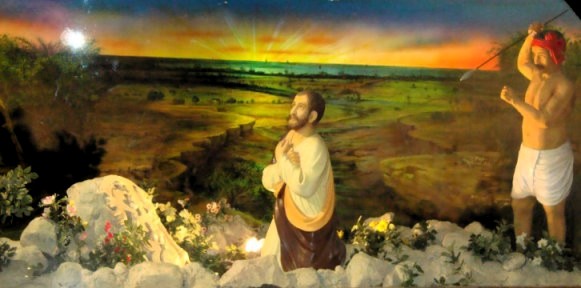
Tableau of St. Thomas and his Hindu assassin in San Thome Cathedral, Chennai, India.

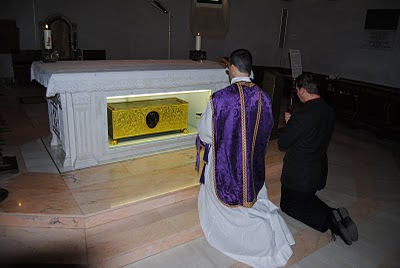
Tomb of St. Thomas in San Tommaso Basilica, Ortona, Italy, which has had in its possession the complete skeleton of Thomas since the 13th century.

St Thomas Tomb Mylapore

› See more photos here