
Christianity is not as original as it flatters itself to be. Just as it is now widely accepted that the Old Testament has profusely borrowed from older Mesopotamian and Egyptian sources, the New Testament has likewise borrowed some of its core imagery and defining beliefs from the ambient Hellenistic cosmopolitan culture and from the Indic teachings which had gained a certain popularity in the Eastern Mediterranean region. This implies that rather than being a direct gift from God, Christianity is simply a human construct, just as it already believes all other religions to be. Those who are inspired by Jesus’ example and teachings might do well to study their Saviour’s own sources of inspiration. – Dr. Koenraad Elst
Christianity was born in a region and age full of cross-pollination between different religions and philosophies. In particular, Indic traditions had been influencing the intellectual climate in the Eastern Mediterranean and among them, Buddhism made its mark most strongly on the scriptures and doctrines of the nascent religion named after Jesus Christ. Some of these borrowings are anecdotal and peripheral, others go to the heart of Christianity’s distinctive beliefs, e.g. the doctrine of Incarnation. The Christian doctrine of Salvation (in a non-worldly sense, as distinct from the Jewish belief in a political “salvation” amounting to the restoration of David’s kingdom by the Messiah) is borrowed in its essential features from Upanishadic-Buddhist notions of Liberation transformed in a devotional-theistic sense. It sets Christianity apart from the other members of the “Abrahamic” tradition. Indeed, a closer study of the Indic elements in Christianity reveals a dimension which cuts through the neat dichotomy between Abrahamic and Pagan religions.
1. Jesus in India?
In the 19th century, the Hindu reform movement Brahmo Samaj (1820) tried to protect the essence of Hinduism against the perceived threat from missionary Christianity by incorporating the latter’s most attractive elements and “recognizing” them as somehow part of Hinduism’s own tradition. In particular, monotheism, the notion of “the fatherhood of God and the brotherhood of man” and the rejection of idol-worship were borrowed from Protestant Christianity. The Brahmoists didn’t simply replace Hindu notions with Christian ones but rather reinterpreted Hinduism, e.g. they explained Hindu polytheism as a masked monotheism (“polymorphous theism”), taking support from the Vedic verse: “Indra, Agni, Varuna, the wise ones call the One True Being by many names”.
Another reform movement, the Arya Samaj (1875), followed suit: though it took a more polemical stand against the Christian missionaries than the Brahmos ever did, it professed monotheism and actively campaigned against idol worship. Next, the mixed Indian-European membership of the syncretistic Theosophical Society added more colourful ideas of Hindu-Buddhist-Christian interaction and mystical common denominators, e.g. by explaining the Christian notion of “the Kingdom of God” as referring to a blissful yogic state of consciousness. The Brahmo Samaj and the Theosophical Society, though numerically small, were very influential among the anglicized bourgeoisie, while the Arya Samaj exercised a strong influence on India’s national liberation movement and on Hindu nationalism. Though the strictures against idol-worship and participation in popular Hindu festivals gradually gave way to an accommodation with the Hindu mainstream, some doctrinal innovations persisted and started influencing the mainstream in turn. It should not come as a surprise, then, that numerous Hindus have interiorized certain Christian notions, most prominently a highly favourable prejudice regarding the person of Jesus Christ.
With hindsight, we can say that this partial incorporation of Christian elements was the most effective defence of Hinduism against the lure of Christian conversion campaigns under circumstances of Christian colonial dominance. Rather than confronting Christianity, this approach neutralized its appeal by understanding Jesus in Hindu terms, as a spiritual teacher, venerable yet only one among many, not as a unique saviour. By giving Jesus a place, it made the acceptance of the full doctrinal package of Christianity seem superfluous. Instead, modern Hindus including Mahatma Gandhi started evaluating all religions as roughly equivalent “paths” leading to the same goal. Most of them don’t realize that this idea is not welcomed but rather abhorred by orthodox Christians.
The incorporation of Jesus in Indian spiritual tradition was given a more concrete shape in the belief that Jesus learned his trade in India before going on an eventful preaching tour in Palestine whence he returned to stay and breathe his last in Kashmir at the ripe age of 115 (e.g. Kersten 1986). This claim of Jesus’s sojourn among Indian yogis is frequently heard among Hindus, Theosophists, some South Asian Muslims and even—since Indian spirituality is internationally often identified with its Buddhist variant—among Buddhists from Japan to California. In 1983, I attended a lecture by the Japanese Zen teacher Hogen-san, in which he held up a photograph of an ancient painting purportedly showing a meeting of the Buddha and Christ!
This story apparently comes from the Ahmadiyyas (following Notovitch), a Muslim sect founded in the later 19th century by Mirza Ghulam Ahmad . He claimed to be a prophet in defiance of the Islamic dogma that Mohammed was the final prophet. The belief that Jesus, a high-ranking prophet in Islam, had lived in India, was meant to buttress Ahmad’s claim that India, though far away from the West-Asian homeland of the Abrahamic religions, could nonetheless be the locus of a legitimate prophet’s mission. It is sometimes given additional support with the late-medieval theory that the Pathans, who live just to the west of Kashmir, are descendants of the lost tribes of Israel, which would explain how Jesus’ Jewish parents could send their son to distant relatives in north-western India for his education. Or how one eccentric theory can carry an even more eccentric one in its bosom.
Meanwhile, there have also been Christian overtures towards Hinduism, particularly in the “Christian ashram” movement. The idea was launched by a Bengali convert, Brahmabandhab Upadhyay (d. 1907), who was enough of a nationalist to insist on giving a Hindu colouring to his adopted Christian religion. He clashed with his superiors when he held a devotional ritual to goddess Saraswati and gave praise to Krishna and the Vedas. After independence, his inculturation experiments were revived by Catholic missionaries like Jules Monchanin (d. 1957), Henri Le Saux (d. 1973) en Bede Griffiths (d. 1999), who justified this move as a necessary strategy to speed up the disappointingly slow process of converting India.
In their “ashrams”, designed with temple-like architecture and ornamentation, they served vegetarian meals, wore homespun saffron robes and incorporated into their liturgy Vedic phrases such as: “Lead me from death to immortality”. Le Saux renamed himself Abhishiktananda, “bliss of the Anointed One [i.e. the Messiah]”, while Monchanin called his hermitage the Sacchidananda Ashram, “hermitage of Being-Consciousness-Bliss”: fortunately for them, Hindu religious vocabulary contained not only explicitly polytheistic and un-Christian god-names but also many abstract spiritual concepts which a Christian may use without overtly lapsing into heresy.
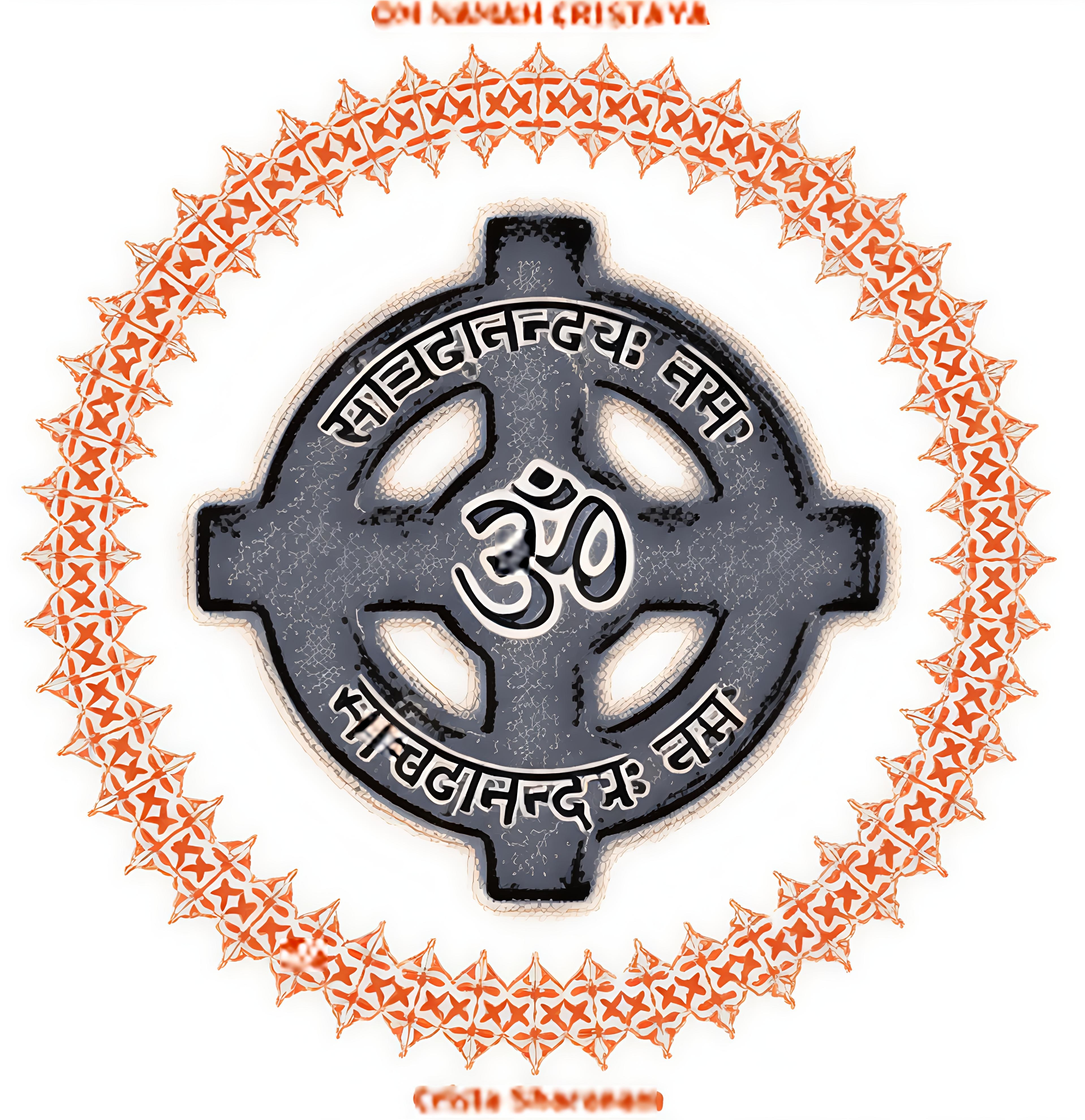
All the same, Indian Christians and especially recent converts rejected this “paganization of Christianity”. So do the guardians of orthodoxy, e.g. in his book Crossing the Threshold of Hope (1994), Pope John-Paul II denounced the trend among Christian monks and laymen to explore Eastern forms of meditation, and in 2000, his statement Dominus Jesus reaffirmed that salvation can only come through Jesus, not through other “paths”. Genuine Hindus aren’t too enthusiastic either. Thus, one of the favourite symbols of the Christian ashram movement was the Aum sign on a cross. The combination is absurd, at least if the cross is taken in its Christian sense as the symbol of suffering. Though Hinduism has a place for the notions of suffering and sin, the Aum sign by contrast represents the cosmic vibration and eternal bliss.
In this paper, we have no intention of arguing for this relatively recent tradition of Hindu-Christian syncretism or for the thesis of Jesus’ sojourn in India. Instead, we will explore the unsensational possibility of India-related influences on Christianity which can be explained through cultural tendencies present in the Eastern Mediterranean, in Jesus’ surroundings. We will survey indications that some elements in Judaism, in Jesus’s preachings and in mature Church doctrine can indeed be traced to the broader Indo-Iranian tradition through three of its layers and offshoots: (1) the basic Indo-European culture of which certain motifs were still palpable in the ambient Hellenistic culture; (2) Zarathustra’s Mazdeism, a (partly rebellious) offshoot of the Indo-Iranian religion, which influenced Judaism in the 6th-4th century BCE, and whose Romano-Hellenistic offshoot Mithraism influenced the nascent Christian doctrine; (3) ideas from missionary Buddhism and other Indian schools of thought which were in the air in the eastern Roman empire and influenced the Gospels, sometimes through the mediation of other Hellenistic philosophy schools. For our present purposes, a brief overview of these common or borrowed elements will suffice before we focus on their meaning and implications for the science of comparative religion.
2. More than inculturation
It is well-known that in its campaigns of conversion, Christianity followed a policy of inculturation. This means that it adopted Pagan elements in christianised form in order to ease the transition from Paganism to Christianity. To be sure, the reinterpretation of religious items long predates Christianity: Judaism turned an ancient spring festival into a day of remembrance of the exodus from Egypt (replacing universal nature with national history as its religious point of reference), Hindus turned an ancient harvest celebration into a commemoration of victorious Rama’s coronation (Diwali), and Buddhists turned May Day into a celebration of the Buddha’s birth or enlightenment (Wesak). But Christianity was the first to use this type of reinterpretation systematically as a strategy for conversion.
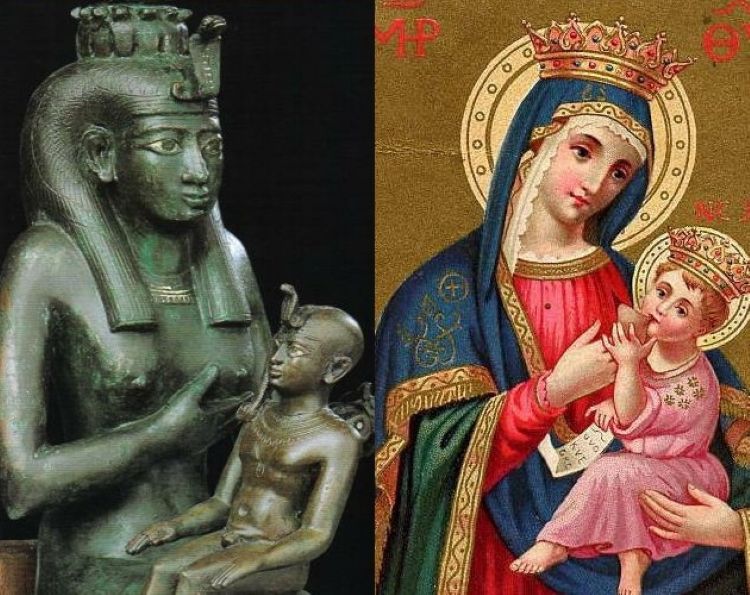
Pagan gods became Christian saints, e.g. Isis with the babe Horus became the Madonna with Child. The bearded and horse-borne Germanic god Wodan became Saint Nicolas, later americanized as Santa Claus. Even the Buddha found a place on the saints’ calendar under the name Saint Josaphat. The autumnal celebration of the dead became All Saints’ Day and All Souls’ Day, which is nowadays regaining its purely Pagan colours in the form of Hallowe’en. The date of Easter (from the Germanic dawn goddess Eostra/Ostarra) combines the Pagan symbolism of spring equinox and full moon with the Christian innovation of Sunday as the day of the Lord—an innovation which itself was borrowed from the solar cult of Mithraism, a late-Roman type of Masonic Lodge inspired by both Iranian Mazdaism and astrology. Winter solstice as its feast of the Invincible Sun became Christmas.
In fact, the whole cult of the year cycle in Mithraism (not unrelated to that of the Vedic year-cycle god Prajapati) deeply influenced the Christian liturgical calendar, so that Protestant fundamentalists would later protest quite accurately that most Church festivals including even Christmas are Pagan borrowings devoid of scriptural foundation. The ritual of the Eucharist, in which Christians are deemed to be drinking Christ’s blood (sacrilege to Jews), may also be of Mithraic origin.
A separate priesthood was created along with a standard liturgy, on the model of religious professionalism in the established Pagan religions or in the popular mystery cults. Concepts and terms from Greek philosophy were incorporated in Christian theology. Among the typically Christian innovations vis-à-vis Judaism, the notion of the Divine Trinity (rejected by Jews and Muslims as crypto-polytheistic) clearly bears the imprint of the Indo-European tripolar cosmology known as trifunctionality, well-attested in the ancient Roman religion. Churches arose where temples or sacred trees had stood, so that worshippers could keep on coming to their old places of worship and gradually get used to the Christian liturgy there.
In this process of inculturation, the Christian Church remained in control: it adapted old forms to its new message, but made sure that through the Pagan veneer the Christian doctrine was impressed upon the converts. However, the incorporation of Indic and particularly Buddhist elements which we will now discuss, has had a far deeper impact. It preceded the genesis of a discernible Christian religion and Church and determined some of their most central doctrines.
The Gospels contain a number of almost literal repetitions of phrases, parables and scenes from the Buddhist canon, particularly from the Mahaparinirvana Sutra: the master walking on water (and saying to the baffled disciples: “It’s me”), the simile of the blind leading the blind, the multiplication of the loaves of bread, the master asking and accepting water from a woman belonging to a despised community, the call not to pass judgment on others, the call to respond to hostility with love, and other overly well-known motifs. (Gruber & Kersten 1995, Derrett 2001) Both doctrinal elements and biographical anecdotes have been borrowed. The Buddha’s mother saw in a dream how a white elephant placed the promising boy in her womb while a heavenly being revealed the great news to the father, roughly like the annunciation to Mary and Joseph. The loose but devout woman Mary Magdalene is a neat copy of the Buddha-revering courtesan Amrapali. (Lindtner 2000) The iconography of Jesus resembles that of the expected future Buddha Maitreya, a name derived from maitri, “fellow-feeling, friendship”, close enough to the Christian notion of agape/charity. The Maitreya is depicted with lotus flowers in the places where Jesus has stigmata of the crucifixion.
This is becoming too much for coincidence, and the similarity is moreover strengthened by very specific details. Thus, Jesus relates how a widow offers two pennies from her humble possessions and thereby earns more merit than a wealthy man who gives a larger gift from his abundant riches. In Buddhist texts we find the same message in several variants, among them that of a widow offering two pennies; a holy monk disregards the larger gift of a wealthy man and praises the widow’s piety.
Not to make all this too idyllic, we can point out a less fashionable item which Christianity may have borrowed from Buddhism: the depreciation of woman as focus of lust and continuator of life in this vale of tears. We do not mean the belief in the inequality of man and woman, which is near-universal, even in fertility-promoting religions like Judaism, Vedic Brahmanism or Confucianism. While these cultures celebrate intercourse with woman and the harvest of her womb as a grand sacrament of life, Christianity and Buddhism tend to condemn life as tainted by sin and suffering, hence procreation and sexuality as sources of misery, and woman as an inauspicious temptress. Celibacy as the Buddhist monks’ way of life was foreign to both Greeks and Jews but was adopted and held up as ideal by Saint Paul and the Christian monks. Buddhism and Christianity allow sex and procreation to the outer circle of half-hearted followers (“better to marry than to burn”), but prefer total asceticism for the inner circle of true seekers.
3. Abrahamic versus Pagan
The gap between the Hindu-Buddhist tradition and Christianity is at first sight much deeper than that between Christianity and Judaism or Islam. Unlike the latter two, Indic religions have no common “Abrahamic” roots with Christianity. Hinduism in particular may count as par excellence the representative of the ancient hate object and scapegoat of the Abrahamic religions including Christianity: Paganism. Hostility towards Paganism is historically the first and defining commitment of the Abrahamic tradition. “Thou shalt have no other Gods”, or: “There is no God except Allah”, concretely meant to its original audiences: “Fight Paganism and its false Gods.”
As mentioned above, many modern Hindus have interiorized the Abrahamic strictures against polytheism and against the use of icons in worship. It is only in recent decades that the late Ram Swarup (1980, 1992) has taken up the defence of both polytheism and “idolatry”. He dismisses the numerical quarrel over one or many as silly and irrelevant to Hinduism, which acknowledges both the unity and the multiplicity of the Divine. Concerning idolatry, he points out that depictions of the Godhead are only visual aides to mental concentration on the Divine Person behind the image (as the Roman Catholic and Orthodox segments of the Abrahamic family have also argued). As even ordinary Hindus are heard arguing: does keeping a photograph of a loved one diminish or harm your love for him or her? Does destroying the photograph make the love more authentic? Ram Swarup also adds a spiritual critique: Christian (and mutatis mutandis, Islamic) exclusivism, which limits salvation to those who believe in Christ’s divinity and resurrection, betrays a lack of confidence in God’s omnipresence.
In contemporary forums for Jewish-Christian or Muslim-Christian dialogue, the “common Abrahamic roots” are eagerly highlighted. The religions concerned are said to have plenty in common, starting with their belief in One Creator and in His Self-Revelation through prophets. The dialogue delegates, and even the less dialogue-minded orthodox theologians, agree that certain basic doctrines set the Abrahamic religions collectively apart from all the other religions, collectively known as Paganism. While inter-religious dialogue is a recent fad, Christians have always made the distinction between the Abrahamic (viz. Muslim or Jewish) and the Pagan non-Christians, acknowledging in the former a far greater religious kinship with themselves than in the latter.
Along with Ram Swarup, many contemporary Hindus have interiorized this dichotomy between Abrahamic and Pagan religions, but this time to line up against the Abrahamic alternative, deemed narrow-minded and spiritually immature. While the disagreement about which doctrine is good and which is bad remains, there is now an agreement between these Hindu ideologues and their Abrahamic opponents about at least this fundamental division of the religious landscape in two opposing poles: the Pagan religions professed and practised by mankind since the Palaeolithic, and Abrahamic religions springing from God’s Self-revelation to selected human beings in West Asia in the last few millennia. And yet, this dichotomy may not be all that neat.
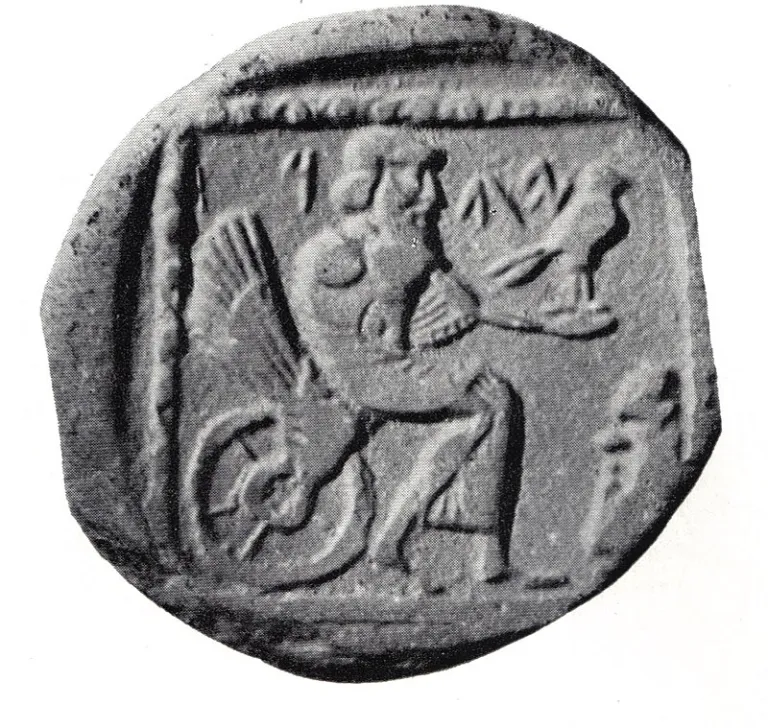
Firstly, it has often been pointed out that the crucial belief in monotheism may well have as one of its tributaries an evolute of the Indo-Iranian religion, hence a sister of the Vedic religion, viz. Iranian Mazdeism. In at least some layers of Mazdeic scripture, we find the rejection of the Indo-Iranian gods (daevas), who are turned into devils, in favour of the double-god Mitra-Varuna, extolled under the appellative name Ahura Mazda, “Lord Wisdom”. This seems to prefigure Mohammed’s rejection of most Arab gods in favour of a single one among them, Allah, and also to resemble Moses’s rejection of Semitic gods like Ba’al in favour of Yahweh alone. Given that the genesis of true monotheism in ancient Israel was a slow and complicated process, and given the occupation of West Asia by the Mazdeic Iranians in the 6th century BCE (where they explicitly helped to re-establish the Yahwist cult in the rebuilt temple of Jerusalem), it is not far-fetched to propose a Mazdeic influence on Israelite monotheism, though its outline remains vague.
However, if there was such a Mazdeic influence, it cannot be construed as an indirect influence from the Vedic upon the Israelite religion, for it concerns precisely that part of Mazdeism which originated in the break-away from and reaction against the Indo-Iranian polytheist mainstream as preserved in the Vedas. Likewise, others elements attributed to Mazdeic influence, such as the eschatology of physical resurrection, arrival of a redeemer and final judgment, definitely originate in later internal developments in Mazdeism unrelated (whether by conserving or rejecting) to the old Indo-Iranian core beliefs.
The second element interfering with the neat dichotomy between Pagan and Abrahamic looks more promising for our present study. We will be able to show that there are doctrinal similarities between the Christian and the Hindu-Buddhist traditions which set the former apart from the other Abrahamic religions, and the latter from the other Pagan religions. These similarities are certainly the fruit of historical contacts, though apart from the presence of a Buddhist community outside Alexandria (the Therapeutae), the details of the whereabouts of Buddhists in West Asia are as yet eluding us. We will consider the two most important common points of doctrine: Incarnation and Salvation.
4. Salvation
In the Upanishads, the youngest layer of Vedic literature, attention shifts from the ritual fire sacrifice to the interior of man’s consciousness. If we empty it of the sensory and mental contents which usually occupy it, we see in it our true nature, the Self. However, experiencing the mental silence in which the realization of the Self dawns is easier said than done. So, determined seekers made it their full-time occupation to pierce the veil of mental dross, to seek liberation from the web of ignorance, false identification and attachment. It is among this class of seekers that the Buddha emerged as the discoverer and teacher of the most successful and well-rounded method.
The goal of the Upanishadic and Buddhist yogis was “liberation” (mukti, moksha), or, in the Buddha’s more negative-sounding terminology, “blowing out” (nirvana). This is a double-negative concept: first a problem intrinsically affecting all people is defined (suffering, ignorance, attachment), then a method of eliminating the problem is devised and put into practice, ideally resulting in liberation. Exactly the same doctrinal structure forms the core of Christianity: all human beings are afflicted with original sin incurred by Adam and Eve, and now they stand in need of salvation, which the religion provides. This notion of a radical wrongness in the human condition and of a concomitant radical jump out of it and into the state of salvation does not exist in Judaism and Islam. Neither does it exist in most Pagan religions, such as the ancient Greek religion, Confucianism or Shinto, nor even, apparently, in the oldest Vedic layer of Hinduism.
How is liberation or salvation achieved? The original Hindu-Buddhist answer is: through right effort, viz. through a meditative practice which stills all mental distractions. However, this path of self-liberation is demanding and fails to deliver the immediate consolation ordinary people hope for. So, soon enough a devotional practice developed which attributed to the Buddha, or to Shiva or Krishna, the power to somehow “grant” liberation to his devotees. Hindu philosophers have distinguished between two approaches to liberation: the “way of the baby monkey”, which clings to its mother through its own effort, and the “way of the kitten”, which is picked up by its mother between her teeth. In practice, the way of the kitten is the most popular by far: people make the effort of putting themselves into a religious mood but expect the real breakthrough to salvation from a caring and interventionist divine person. Though most Hindus and Buddhists vaguely know of the fruits of meditation, few of them actually practise it, while most settle for devotional practices such as chanting and waving incense sticks before an idol of a divine or liberated Person.
It is at this devotional stage, which purists would evaluate as a degenerative stage, that Christianity has picked up the Hindu-Buddhist notion of salvation. Just like the Oriental devotee expects Shiva or the Amitabha Buddha or Guan Yin (Chinese Buddhist goddess) to save him, the Christian reveres Jesus Christ as the agent of his salvation. Though Christian mystics have tried to come closer to God through meditative techniques, Christianity as such has no technology of Salvation, unlike orthodox Buddhism. Official Christian doctrine confines the possibilities of salvation to the salvific intervention of God through his only-begotten son, Jesus Christ.
5. Incarnation
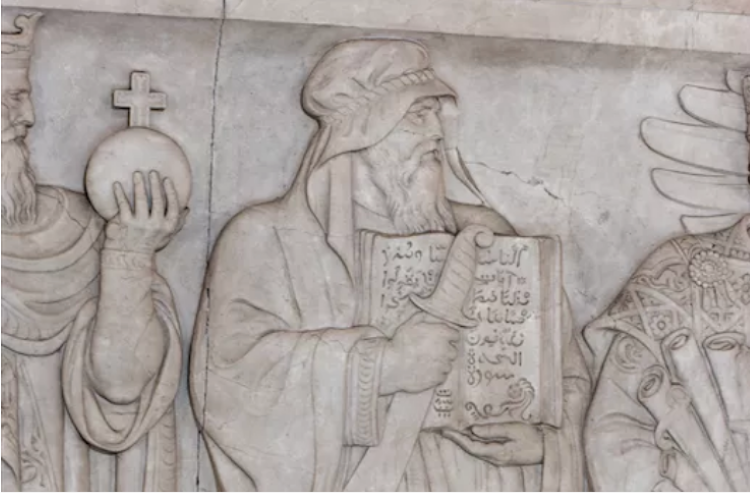
Jews and Muslims have always denounced Christianity as an incomplete or downright false pretender to monotheism. They see the doctrine of the Trinity (Father, Son and Holy Spirit) as detracting from God’s unity and unicity. Leaving aside for now the Holy Spirit, it is mainly the Divine Person of the Son, God incarnate, which strict monotheists find theologically incorrect.
In Hellenistic society, people had a very fuzzy notion of “god” and didn’t mind describing remarkably spiritual people or purported miracle workers as “divine”. Ancient heroes such as Hercules were deified after their deaths in a process known as apotheosis, “transformation into a god”, and placed among the stars in the night sky. The Hindus posthumously deified their heroes Rama and Krishna by reinterpreting their lives as incarnations of Lord Vishnu. In Buddhism, the historical Buddha is gradually given the status of a divine incarnation, one in a series of enlightened beings descended on earth in order to bring liberation to all the suffering beings. Pagan Semitic cultures, e.g. in Ugarit, likewise gave a posthumous divine status to their revered kings by associating them with one of the gods, such as El or Ba’al. This process of association was called shirk, a term generalized by Mohammed to every “association” of lesser beings with the one God, Allah (“the god”). Muslims refer to all polytheists as mushrikin, “associators”, viz. of lesser beings with Allah.
In the opinion of the Muslims, the Jews and the Arian heretics of Christianity, the allotment of a divine status to Jesus Christ is not truly different from the procedure by which the Pagans gave divine status to their kings and saints, to stars and mountains, even to animal species (Egyptian cats, Hindu cows) and sculpted statues and trees, briefly to creatures instead of the Creator. They think, quite sensibly, that Christian belief detracts from monotheism by adopting as its most central dogma the highly Pagan notion that a creature, the son of a woman, could be God. On this point, Christianity is undeniably less akin to Judaism and Islam than to those sects of Hinduism and Buddhism which deify historic figures like Krishna and the Buddha.
6. Charity
Christianity’s number one selling point is its emphasis on the virtue of love (not to be misinterpreted as erotic love) or charity. Missionaries love to contrast universal Christian charity with Jewish ethnocentrism, Muslim or Marxist conflict-prone fanaticism, Hindu callous indifference to the suffering of anyone belonging to another caste, or Buddhism’s ethereal disinterest in any useful worldly work per se. However, this notion of universal fellow-feeling and its implementation in works of charity definitely predates Christianity.
Four centuries before Christ, the Chinese school of Mozi already preached jian’ai, “universal love”, and put it into practice in self-supporting communities (comparable to those established by the Epicureans in the Hellenistic world). These Mohists argued that one’s love should be distributed evenly over all fellow men, while their Confucian contemporaries contended that love should be differentiated in intensity: more love for close relatives, less for distant acquaintances, less still for unknown people. Yet, even the Confucians taught that some fellow feeling or “fellow humanity” (ren) should be extended to all mankind. Meanwhile in India, the Vedas and later the Buddha extolled fellow-feeling or compassion (daya c.q. karuna), not just towards one’s fellow men but towards all sentient beings.
It may be admitted that Christianity gave its own twist to charity. The activist streak of going out and opening orphanages or hospitals is less in evidence in Hinduism or Buddhism than in Christian settlements. Unlike Buddhist and Hindu monks, who are only expected to do their devotional or yogic duties, Christian monks of most orders are required to work. It may be conceded that Buddhist monks sometimes did take upon themselves certain charitable activities, notably in medicine, which is after all an application of the basic Buddhist vocation to relieve suffering. Among the duties of kings, Hindu scriptures include the care for the needy and the handicapped. Even so, there is just no denying that among religious personnel, Christian monks were and are encouraged far more systematically than any others to give a materially constructive expression to their sense of charity.
The reason for this difference, according to Hindus and Buddhists convinced of the superiority of their own tradition, is that Christian missionaries had to “sell” their doctrinal “product” by giving the extra bonus of material help, just like salesmen of inferior products try to make people buy them with the lure of extras. In this view, a convert to Buddhism opts for the Buddhist Way, while a convert to Christianity may take Christian beliefs in his stride while primarily seeking access to the Christian network of charity. A less polemical explanation would be that the wider family units in India could better provide for the needs of their own sick and needy members, hence requiring less help from “public” charities than the uprooted masses of the late Roman empire or the industrial-age West (note that Mother Teresa made her name in Kolkata among uprooted immigrants into the modern city, not in a traditional Hindu social setting). The reason may also be that Christianity simply happened to acquire its mature form in a pre-existing activist culture: first the Romans with their no-nonsense dynamism and their feats of engineering, later the Germanic peoples in their cold climate requiring daily labour and inventiveness for sheer survival, as contrasting with the Buddha’s Gangetic setting where the relative opulence of nature and the immense heat discourage physical exertion.
But the most fundamental reason why traditions originating in India lay less emphasis on material compassion and activist forms of charity, is simply that they pay more attention to what they perceive as a deeper human need. Clothing the naked and feeding the hungry is very fine, but as the Buddha knew from his own young days of luxury, even the well-fed and well-clad are subject to unhappiness and suffering. The highest compassion is therefore not the sharing of material things or emotional attention, but the imparting of the ethical and meditative methods leading to Nirvana.
In any case, the whole idea that man should care about his brother, that he should take responsibility for the welfare of society as a whole or for needy human beings in particular, clearly precedes Christianity. Like the Christian, though since centuries earlier, the Hindu or the Buddhist is his brother’s keeper, and is taught from childhood not to indulge in self-centred inanities and mindless self-indulgence, of course not to be confused with disciplined self-introspection. Caring for others may legitimately be called a Christian virtue, but it is not exclusively Christian and finds older models in at least Mohism, Confucianism, Hinduism and Buddhism, and no doubt in other pre-Christian teachings as well.
7. Conclusion
Christianity is not as original as it flatters itself to be. Just as it is now widely accepted that the Old Testament has profusely borrowed from older Mesopotamian and Egyptian sources, the New Testament has likewise borrowed some of its core imagery and defining beliefs from the ambient Hellenistic cosmopolitan culture and from the Indic teachings which had gained a certain popularity in the Eastern Mediterranean region. This implies that rather than being a direct gift from God, Christianity is simply a human construct, just as it already believes all other religions to be. Those who are inspired by Jesus’ example and teachings might do well to study their Saviour’s own sources of inspiration. – Acta Indica, 2019
Bibliography
- Abhishiktananda, Swami (Le Saux, Henri): Hindu-Christian Meeting-Point, Delhi 1976.
- Brockington, John: Hinduism and Christianity, MacMillan, London 1992.
- Dayananda Swaraswati, Swami (of Coimbatore), and Girndt, Helmut: A Vedantin’s View of Christian Concepts, Arsha Vidya Gurukulam, Saylorsburg PA 1998.
- Derrett, J. Duncan M.: The Bible and the Buddhists, Sardini, Bornato (Italy) 2001.
- Goel, Sita Ram: Papacy, Its Doctrine and History, Voice of India, Delhi 1986.
– Catholic Ashrams, Sannyasins or Swindlers?, 2nd ed., Voice of India, Delhi 1994.
– Jesus Christ, an Artifice for Aggression, Voice of India, Delhi 1994.
– History of Hindu-Christian Encounters (AD 304 to 1996), 2nd ed., Voice of India, Delhi 1996.
- Griffiths, Bede: Christ in India, Bangalore 1986.
- Gruber, Elmar, en Kersten, Holger: The Original Jesus: The Buddhist Sources of Christianity. Element Books, Shaftesbury 1995 (München 1995).
- Kattackal, Jacob: Comparative Religion, St. Thomas Apostolic Seminary, Kottayam 1990.
- Kersten, Holger: Jesus Lived in India. His Unknown Life Before and After the Crucifixion, Element Books, Shaftesbury 1986 (Munich 1983).
- Kung, Hans, en Von Stietencron, Heinrich: Christendom en Wereldgodsdiensten, 2: Hindoeïsme, Gooi en Sticht, Hilversum 1987.
- Leeming, Joseph: Yoga en de Bijbel, Lulof, Almelo 1963.
- Lindtner, Christian: Amrapali in the Gospels, Adyar Library Bulletin 46, 2000.
- Majumdar, R.C.: The History and Culture of the Indian People, Bharatiya Vidya Bhavan, Bombay 1963 ff.
- Oddie, Geoffrey: Hindu and Christian in South-East Asia, SOAS, London 1991.
- Parrinder, Geoffrey: Avatar and Incarnation. A Comparison of Indian and Christian Beliefs, OUP, New York 1982.
- Prabhavananda, Swami: De Bergrede in het Licht van de Vedanta-Leer, De Driehoek, Amsterdam n.d.
- Rajaram, N.S.: Christianity’s Scramble for India and the Failure of the ‘Secularist’ Elite, Hindu Writers’ Forum, Delhi 1999.
- Secretariatus Pro Non-Christianis: Pour un Dialogue avec l’Hindouisme, Ancora, Milano n.d.
- Swarup, Ram: The Word as Revelation: Names of Gods, Impex India, Delhi 1980.
– Hinduism vis-à-vis Christianity and Islam, 3rd ed., Voice of India, Delhi 1992.
– Pope John Paul II on Eastern Religions and Yoga: A Hindu-Buddhist Rejoinder, Voice of India, Delhi 1995.
› Dr. Koenraad Elst is an Orientalist (Indology & Sinology), linguist, historian and author.





 VOICE OF INDIA