The West repeatedly sends academic Trojan horses who would erase and distort Indian history, attack self-esteem, construct divisive narratives, and collude with India’s own sell-out intelligentsia to project credibility. – Abhijit Majumder
India is the imperialist’s unfinished project. Few lands that have been touched by Christian or Islamic imperialists have managed to remain largely unconverted and geopolitically intact. In a little over 100 years since 1900, the centuries-old fluid indigenous faiths in the entire African continent, for instance, dwindled from 76 per cent of the population to just 8 per cent, having been replaced by the two hardcoded religions.
Bharat, or what remains of it after Pakistan and Bangladesh were created, still has not given in. Sanatan Dharma is still the way of life for more than 75 per cent of Indians, and in spite of the best efforts of invaders and colonialists, its nationalism and civilisational self is rising again, its economy rapidly growing, its military gaining muscle.
The mere presence of Bharat—with its staggering size, diversity, and potential—has unnerved the West enough across ages to repeatedly send academic Trojan horses who would erase and distort history, attack self-esteem, construct divisive narratives, and collude with India’s own sell-out intelligentsia to project credibility.
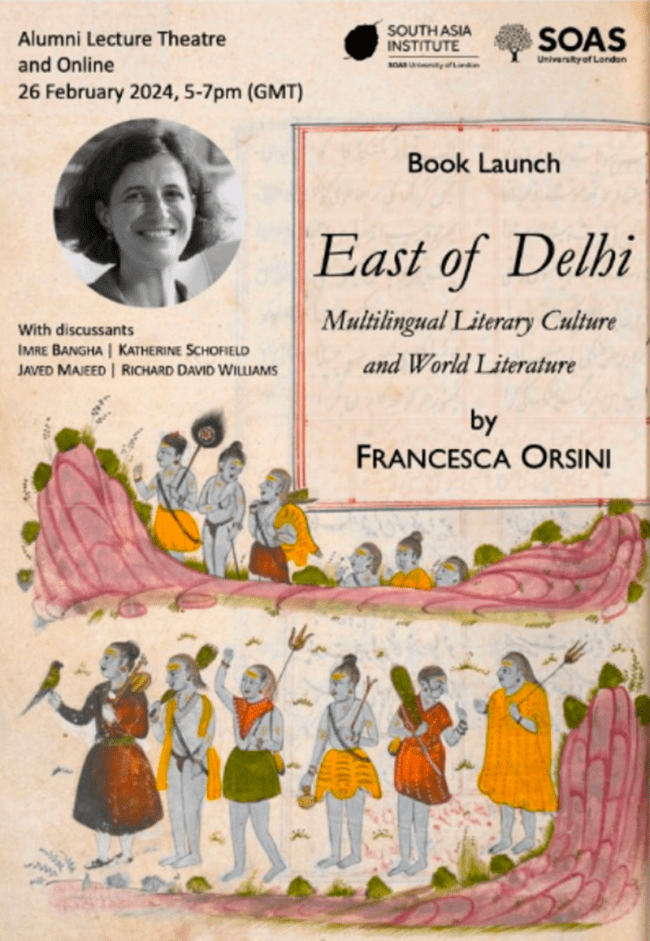
The controversy around Francesca Orsini, Hindi scholar from London-based SOAS, is a continuation of that. A white woman specialising in an Indian language may fascinate us, but a look into her political activism in academic guise begins to reveal a different story.
She accuses the very language she teaches, Hindi, of political usurpation of other languages. She has a problem with Indian nationalism. In 2020, she introduced a resolution in the Seattle City Council against India’s Citizenship Amendment Act (CAA) and the National Register of Citizens (NRC).
While India is not obligated to host those arriving to spread intellectual poison, Orsini was deported recently after landing in Delhi for gross violation of visa conditions during her previous visits. Orsini is a rather mediocre entrant in the galaxy of Western radicals who have got into the study of Indology, history, Sanskrit and other languages only to undermine Bharat.
German philologist Friedrich Max Müller, hired by the British colonialists in 1847, came with a mission to bury the Vedas, which he described in a letter to his wife as “the root of their religion, and to show them what that root is, I feel sure, the only way of uprooting all that has sprung from it during the last 3,000 years”. He also wrote: “The ancient religion of India is doomed, and if Christianity does not step in, whose fault will it be?”
Then there was James Mill, a Scottish historian and economist whose work, The History of British India (1817), divided Indian history into Hindu, Muslim, and British periods. In his book, Mill extensively describes Hindus as “uncivilised”, “barbaric”, “savage”, and “rude”. This gentleman wrote with astonishing confidence on India without once stepping on this land and no knowledge whatsoever of Indian languages.
The more recent gift horses from the West to India like Wendy Doniger, Sheldon Pollock, and Audrey Truschke employ a more sophisticated packaging but are no less venomous. Doniger uses psychoanalytic quackery to introduce a homosexual angle to the relationship between Ramkrishna Paramhansa and his disciple Swami Vivekananda; Pollock blames the Sanskrit language for the Holocaust; and Truschke swoons over the genocidal Mughal Aurangzeb.
India’s intellectual tradition is among the most welcoming mindscapes in the world. Bharat has continuously assimilated knowledge and made “outsiders” its own. Even in the modern era, it has been enriched by foreigners from Sister Nivedita to David Frawley, Michael Danino to Koenraad Elst, Francois Gautier to Maria Wirth. These scholars have taken a dharmic approach. They did not approach Indic knowledge with the mission to debase it.
But ultimately, Indians will have to take a major part of the blame for not taking up their own knowledge universe seriously, neglecting languages like Sanskrit, writing their own history, and leaving a vast vacuum for the likes of Orsini to fill.
Unless Bharat begins to take its own story seriously, vultures will come to feast. – News18, 25 October 2025
› Abhijit Majumder is a senior journalist and editor-in-chief at Earshot Media, New Delhi. He is the author of the book, ‘India’s New Right’.
It is impossible to ignore that Western scholars—overwhelmingly White—have exercised an unrestrained entitlement to interpret, categorise, and often diminish Indian culture, religion, and society with little pushback from Indian institutions themselves. – Hindol Sengupta
In 1998, Jaswant Singh wrote one of the fiercest defences of India’s choice of acquiring nuclear weapons with an essay called ‘Against Nuclear Apartheid’. The time has come to focus on a different—but no less problematic—apartheid.
India has endured a long history of scholastic apartheid, especially in the humanities. The term “scholastic apartheid” here refers to the entrenched and systematic cultural and institutional barriers that have long prevented Indian or non-Western scholars from critically engaging, on equal terms, with the West and its intellectual traditions. Western, especially White, scholars, on the other hand, are not only permitted but encouraged to dissect, critique, and even deride Indian society, civilisation, religion, and history.
It is impossible to ignore that Western scholars—overwhelmingly White—have exercised an unrestrained entitlement to interpret, categorise, and often diminish Indian culture, religion, and society with little pushback from Indian institutions themselves. These analyses, interpretations, and often prejudiced criticisms not only gain currency within the academy and mainstream media in the West but are frequently internalised by Indian intellectuals and the broader Indian public, who often lap up Western validation with scant scepticism.
At the same time, no Indian scholar—no matter how credentialed, nuanced, or deeply trained in the Western humanities—has ever been afforded a comparable footing to turn the gaze on Western civilisation. While the Indian academy is populated by numerous ‘experts’ on the West who largely parrot or celebrate Western thought, rarely do critical studies produced in India or by Indians elsewhere, particularly those that challenge fundamental Western narratives, get any meaningful hearing or space in Western institutions, media, or discourse networks.
This asymmetry is not simply a matter of academic preference. It is rooted in deeper epistemic and institutional racism and the continued coloniality of Western academia.
For instance, any German historian working on Indian topics is treated with a presumed authority and seriousness by institutions in both Germany and India, but if an Indian historian proposes to research, say, the Protestant Reformation or the intellectual legacy of the Enlightenment from a critical Indic perspective, they are met with cold indifference, suspicion, or even ridicule.
Such work is seldom, if ever, funded, published, or incorporated into major Western scholarly discourse. One of the most powerful critiques by Indian scholars of German Indology and its profound biases, Vishwa Adluri and Joydeep Bagchee’s The Nay Science: A History of German Indology (2014) received little attention, and mostly derision, from the Western academic world. Sadly, it is so complicit in the Indian system in such neglect that it never got much attention even from Indian institutions.
Imagine, for a moment, an Indian academic proposing a deep, critical study of the enduring racial caste system in the United States, not as a sympathetic outsider, but as a critical analyst pointing out the systemic failures and foundational hypocrisies of its democracy. Imagine a researcher from Delhi securing a major grant to study the role of French laïcité as an instrument of state-sponsored anti-religious hegemony, particularly against its minority populations. Imagine a team from Mumbai or Kolkata publishing a definitive, critical ethnography of the British class system, exposing its role in perpetuating social immobility and political dysfunction.
Where would such a scholar publish? Which major Western university press would champion this work? Which mainstream media outlet, from The New York Times to The Guardian, would grant it a serious, respectful review, let alone a celebratory feature? The answer is self-evident.
Such work would be marginalised from the beginning. It would be dismissed as “biased”, “polemical”, “un-rigorous”, or “lacking in theoretical grounding”—a coded phrase meaning it does not originate from or pay sufficient fealty to the established Western theoretical canon. The non-White scholar is permitted to speak, but only as a “native informant”, providing raw data about their own exotic society. They are never, ever accepted as a peer, a theorist, or a critic with the standing to analyse the analyst.
One cannot, therefore, treat questions like, “Which Western scholar has been denied access to India?” as if this is an equivalent dilemma. It is in fact a deflection—a refusal to confront the deeply embedded structure of global knowledge production, which is predicated on the assumption that Western civilisation is the universal norm, and everything else is an object of study, not a subject with agency.
The phenomenon has a long history. From the early colonial period, British administrators and Orientalists set themselves up as intellectual “trustees” of Indian civilisation, pronouncing on the nature of Indian society, translating and systematically reinterpreting Indian texts, and mapping them onto a Western meta-narrative. Indian voices—literate, nuanced, and deeply engaged with their own historical experience—were either co-opted or sidelined entirely. Today, the small bunch of academically well-known Indian names in the Western academy almost always focus their critical gaze on India and rarely, if ever, on their adopted societies and cultures.
It is therefore disingenuous to only focus on which (of the very few) Westerners are denied access to India when the deeper and more damaging problem is the persistence of scholastic apartheid.
While writing this essay, I asked Perplexity and Gemini which Indians have written major critical histories of Western societies that have won wide recognition in the West? Two names came up, which illustrate the problem: Jawaharlal Nehru and the British-Mauritian Sudhir Hazareesingh.
The struggle is thus not simply for representation, but for reversing the flow of intellectual power. It is a struggle for a world in which Indians and other non-Western peoples are fully entitled and institutionally supported to analyse, critique, and theorise Western societies—as they wish, on their own terms, for their own publics, and as equals in the global commons. – Firstpost, 24 October 2025
› Dr. Hindol Sengupta is professor of international relations, and director of the India Institute, at OP Jindal Global University.
Hinduism, as a non-Abrahamic tradition, remains open season in many Western academic spaces. This double standard isn’t just unjust—it’s intellectually dishonest. – Sankrant Sanu
On the streets of New York, Audrey Truschke—then assistant professor of South Asian history at Rutgers University—stood with a megaphone and declared to a crowd: “Prime Minister Narendra Modi and his political party, the BJP, openly adhere to Hindutva.”
She then launched into her historical comparison: “Hindutva came about roughly 100 years ago. … It was inspired in its early days by Nazism. Did I say Nazis? Yeah, I said Nazis.” She emphasised: “I want to be clear that I am talking about real, actual, historical Nazis.”
Then came the most inflammatory claim: “Early Hindutva espousers openly admired Hitler. … They praised Hitler’s treatment of the Jewish people in Germany as a good model for dealing with India’s Muslim minority.”
With this inflammatory rhetoric, she branded India’s ruling BJP and its adherence to Hindutva as Nazi-like—by extension tarring the hundreds of millions of Indians who democratically elected this government, as fascists. It wasn’t scholarship; it was street theatre designed to demonise an entire community. For Hindus across America, this wasn’t just academic discourse—it was public vilification. To rub salt into the wound, the department of history at Rutgers gleefully posted Truschke’s diatribe on their Facebook feed with the endorsement: “That’s what we call public history.”
Now, with her latest book India: 5,000 Years of History on the Subcontinent hitting shelves this month, Truschke’s troubling methodology is reaching an even wider audience. The timing couldn’t be more urgent for examining what happens when academic platforms become weapons of ideological warfare.
The Hitler Analogy: History stripped of context
Truschke’s accusation draws from a controversial passage in We or Our Nationhood Defined, published in March 1939 and attributed to M.S. Golwalkar of the RSS. The reality is more complex than her megaphone moment suggests.
The book wasn’t authored by Golwalkar but paraphrased and translated by him. The historical context matters crucially: in 1939, the full extent of Nazi atrocities against Jews was not yet known. The Holocaust — the systematic extermination of six million Jews—wouldn’t begin until 1941. For many colonised peoples worldwide, including some Indians, Hitler was viewed primarily as an enemy of Britain—their colonial oppressor.
The passage reflects the ideological uncertainty of that era, when colonised peoples worldwide were grappling with competing definitions of nationalism and looking to various models of national reorganisation. More importantly, the RSS has explicitly disavowed this misattributed quote, and decades of subsequent Hindutva writings have evolved far beyond these early formulations. But such nuance doesn’t fit Truschke’s narrative.
Most perversely, her Hitler comparison erases a remarkable historical truth: Hindus have never persecuted Jews. For over two millennia, India has been a haven for Jewish communities—in Kerala, Maharashtra, and Bengal. While Jews faced pogroms in Europe, ghettos in the Middle East, and extermination in Nazi camps, they found safety and dignity in Hindu-majority India.
To draw parallels between Hindutva and Hitler isn’t just inflammatory—it’s a moral inversion of history that anachronistically applies knowledge of the Holocaust to judge a misattributed quote from an earlier period—and then use that nearly 100-year-old aside to define a contemporary political movement. This is not academic history; it is political pamphleteering.
A pattern of distortion
This isn’t an isolated incident. Truschke’s 2017 book Aurangzeb: The Life and Legacy of India’s Most Controversial King whitewashes a well-documented record of temple destruction, discriminatory taxation, and forced conversions. Despite abundant evidence from Aurangzeb’s own firmans (imperial decrees) documenting systematic iconoclasm and forced conversion of Hindus, she claims he “simply left temples alone” and was a protector of Hindus, dismissing documented destructions as merely following “an Indian stance dating back, at least, to the Chalukyas and Pallavas”.
This false equivalency ignores a crucial theological distinction. When Aurangzeb’s contemporary sources praise him for hitting against the “infidels” and spreading Islam through “holy war,” these aren’t political calculations—they’re expressions of religious doctrine. In Islamic theology, idol worship is the gravest sin, making temple destruction an act of piety. Hinduism contains no such mandate. Political motivations aren’t identical to doctrinal imperatives.
Truschke dismisses scholars like Jadunath Sarkar as unreliable while downplaying Persian sources that contradict her narrative. Her approach isn’t history—it’s revisionism designed to obscure inconvenient truths.
Her recently published India: 5,000 Years of History on the Subcontinent promises more of the same: selective citations, interpretive sleights, and wholesale demagoguery. We can expect the 600-page tome to follows the familiar pattern—Hinduism cast as irredeemably oppressive, Islam framed as emancipatory. There’s little interest in balance, complexity, or competing narratives. It is only in the politicised ghetto of “South Asian Studies”, where practicing Hindus have little voice, that an academic would get away with this level of propaganda.
Silencing students, stifling dialogue
At a recent Georgia Tech event, a Hindu student described confronting Truschke at Princeton about her portrayals. Instead of engaging his respectful questions, she dismissed his concerns as “Hindutva propaganda” and shut him down. The room fell silent—a moment of intimidation, not academic exchange.
Hindu students at Rutgers report similar experiences: hesitating to speak in her classes, fearing they’ll be branded bigots for defending their faith. Many now avoid her courses entirely. In 2021, students petitioned against her teaching Hinduism, citing her claim that the Bhagavad Gita “rationalises mass slaughter” and her suggestion linking Hindus to the January 6 Capitol riot.
Rutgers defended her academic freedom and promised dialogue with the Hindu community. That dialogue never materialised.
The double standard problem
American universities rightfully crack down on antisemitism, Islamophobia, and anti-Black racism. Yet when Hindu students raise similar concerns, institutions often look away, or worse, actively endorse such writing.
Truschke positions herself as the victim of “Hindu nationalist trolls” while sidestepping legitimate concerns from students who feel unsafe in her academic spaces. When she tweeted that Lord Rama was a “misogynistic pig”—later claiming scholarly translation—even Robert Goldman, the scholar she cited, publicly rejected her framing. One wonders how the academy would react if a professor used the same language about a different revered figure, say Prophet Mohammad.
The damage spreads beyond academia. Hindu students report being mocked as “cow piss drinkers”, stereotyped as “Brahmin oppressors”, or casually equated with fascists. When they respond, they’re accused of extremism—silenced not by force, but by fear.
Drawing the line
This isn’t about suppressing legitimate criticism of Hindutva politics. It’s about distinguishing between scholarly critique and rhetorical abuse.
Truschke’s defenders, including Romila Thapar and Sheldon Pollock, argue that attacking Hindutva isn’t Hinduphobia. In practice, targeting Hindutva often disguises targeting Hindus.
When Truschke abuses Rama, she is attacking an iconic figure in the Hindu tradition, revered across the length and breadth of India. There can be no better evidence of what her target is.
Would such treatment be tolerated toward any other faith community?
The answer is obvious. Hinduism, as a non-Abrahamic tradition, remains open season in many Western academic spaces. This double standard isn’t just unjust—it’s intellectually dishonest.
The path forward
Universities must confront this hypocrisy. If “safe spaces” truly exist for all, Hindu students deserve the same dignity afforded every other community. That means distinguishing between legitimate academic inquiry and inflammatory demagoguery—whether delivered through peer-reviewed journals, street megaphones, or 600-page histories now being peddled as the history of India.
Academic freedom must be balanced with academic responsibility. Scholars have the right to challenge religious and political traditions, but they also have an obligation to maintain scholarly standards, engage in good faith, and create inclusive learning environments.
With Truschke’s latest work now in circulation, the stakes have never been higher. Her interpretive framework isn’t confined to specialised academic journals—it’s shaping how a new generation learns about Indian civilisation.
Until universities address this imbalance, the promise of inclusive academia remains hollow. Hindu Americans will continue raising their voices—not to suppress debate, but to demand what every community deserves: fairness, intellectual honesty, and basic respect.
The megaphone may be loud, but truth has a voice of its own. – News18, 16 June 2025
› Sankrant Sanu is an author, entrepenour, and researcher based in Seattle nad Gurgoan.
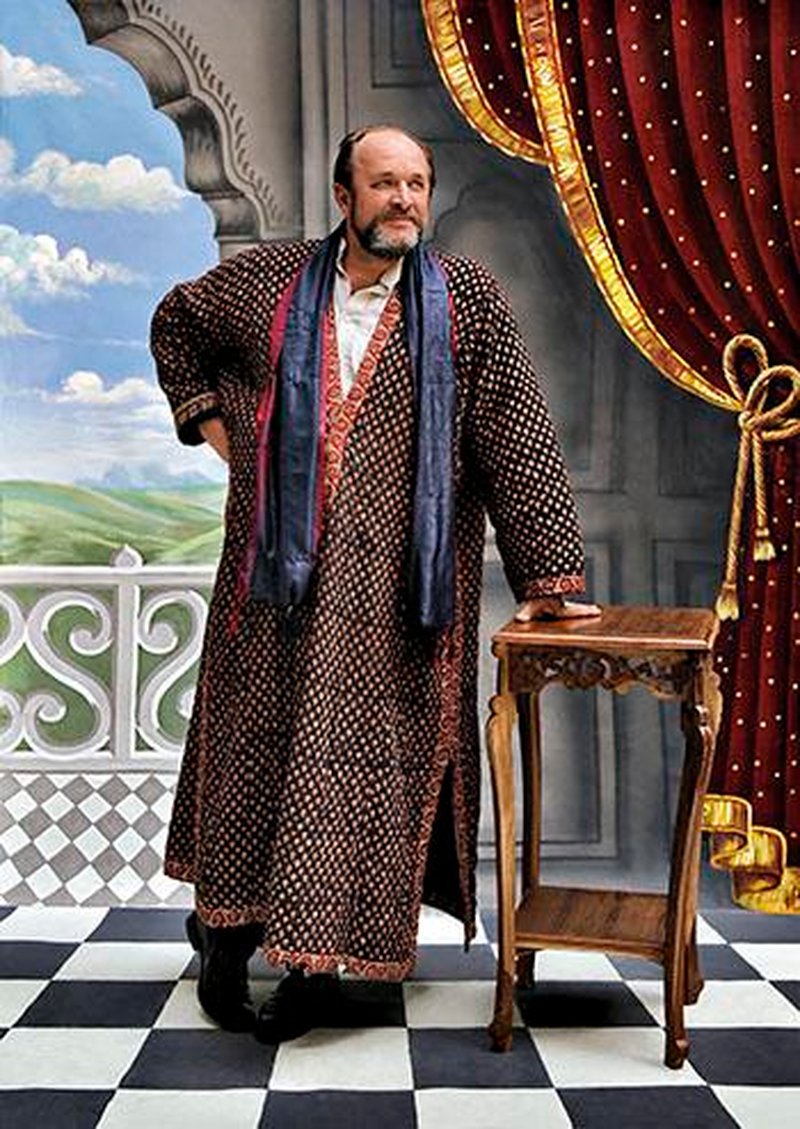
Scottish author William Dalrymple wants to safeguard the physical infrastructure of Indian civilsation but is working hard to tamper with its Hindu soul. – Utpal Kumar
William Dalrymple is suddenly the darling of a section of the Right. One prominent Right-wing think tank has even invited him for a talk on his new book, The Golden Road. The book highlights “how ancient India transformed the world”—a subject close to those whose heart is in the ‘Right’ place.
There’s absolutely nothing wrong in engaging in a dialogue over a book—in fact, this culture of dialogue with contrarian views should be encouraged. The problem, however, could be when this intellectual exercise leads to legitimisation of the other viewpoint without due deliberation and critical enquiry. What one fears is that The Golden Road, which has already become a bestseller soon after hitting the bookstores, might become a cover to push blatant historical lies.
At the very outset, it must be clarified that this is a good book, pushing forward India’s narrative. Dalrymple cannot claim—and he doesn’t either—that what is written in the book hasn’t been told in the past. Where the author scores is the style of his writing: A history book is better written when the author thinks like a historian but writes like a novelist. History, after all, is about stories and the lessons one can learn from them.
Dalrymple is undoubtedly a “gifted historian” who writes engaging prose. His research work for his books is almost impeccable. And one finds affinity and warmth in him for his karmabhoomi, which is India.
But, then, Dalrymple is a double-edged sword, often cutting both ways. This 59-year-old British author, born in Scotland, is an unapologetic admirer of Delhi, but his love gets confined to the era of “Djinns”; the other, non-Islamic characteristics of the city rarely get his attention. The same partisanship is evident in his writings on the Mughals, especially the late Mughals. The decadence of the late Mughals, about which Sir Jadunath Sarkar bemoans in his extensive studies and regards as among the dominant causes of the Mughal decline, is what excites Dalrymple the most.
In The Last Mughal, for instance, Dalrymple writes: “… while Zauq led a quiet and simple life, composing verse from dusk until dawn, rarely straying from the tiny courtyard where he worked, Ghalib was very proud of his reputation as a rake. Only five years before the wedding, Ghalib had been imprisoned for gambling and subsequently wore the affair—deeply embarrassing at the time—as a badge of honour. When someone once praised the poetry of the pious Sheikh Sahbai in his presence, Ghalib shot back, ‘How can Sahbai be a poet? He has never tasted wine, nor has he ever gambled; he has not been beaten with slippers by lovers, nor has he once seen the inside of a jail.’ Elsewhere in his letters he makes great play of his reputation as a ladies’ man.”
Similarly, in The Anarchy, Dalrymple writes about the unabashed loot and plunder by the East India Company. He begins this book by saying how “one of the first Indian words to enter the English language was the Hindustani slang for plunder: loot”. He then takes the readers to Powis Castle, “a craggy fort” built during the 13th century in the Welsh Marches. According to him, Powis “is simply awash with loot from India, room after room of imperial plunder, extracted by the East India Company (EIC) in the 18th century”.
Yet, the same Dalrymple had made a public appeal last year asking Britain not to return the loot to India! According to him, Mughal treasures looted by the British might never be displayed if they are returned to India, which is currently run by “a Hindu nationalist government that does not display Mughal items”. (Dalrymple’s prejudiced mind stopped him from seeing what was obvious: That the wealth stolen was not Mughal’s but India’s.) He said, “You can go to Delhi and not see a display, at the moment, of Mughal art at all. But it’s there, beautifully displayed, in the British Library, the British Museum, the Victoria and Albert Museum.”
Dalrymple’s propensity to run with the hare and hunt with the hounds is evident in the narration of his 2009 book, Nine Lives, too. In one of the stories, he recounts with empathy the story of “The Dancer of Kannur”, in which Hari Das, a Dalit from Kerala, is a “part-time prison warden for 10 months of the year”, but during the Theyyam dancing season between January and March, he is “transformed into an omnipotent deity” to be worshipped even by the high-caste Brahmins. However, in the same book, his reverence for the sacred goes missing as he invokes Romila Thapar’s idea of “syndicated Hinduism” to intellectually discredit Hindu resurgence in India. Dalrymple, quite mischievously, calls it “Rama-fication of Hinduism”.
Coming to The Golden Road, Dalrymple’s new-found love for ancient India may remind one of American Sanskrit scholar Sheldon Pollock, who not very long ago was zeroed upon by a group of wealthy non-resident Indians (NRIs) in New York, along with the top administrative leaders of Sringeri Peetham in India and representatives of Sringeri Peetham in the US, to head a newly found American university chair in the name of Adi Shankara. They had, by 2014, collected $4 million for the chair, which was to be set up at the prestigious Columbia University. There was a lot of enthusiasm and support for Pollock, as he was seen to be an ardent advocate for the revival of Sanskrit. What these people didn’t realise was that Pollock’s idea of revival was, as Rajiv Malhotra writes in The Battle for Sanskrit, “the reinvigorated study of Sanskrit as if it were the embalmed, mummified remnant of a dead culture”.
Pollock sought to revive Sanskrit studies, but wanted no association with Sanskrit language and culture. He loved Sanskrit but without its sacred cultural (Hindu) identity. In the same way, Dalrymple acknowledges India’s contribution but doesn’t seem to be quite enthusiastic about the Hindu roots of the same. He would talk with gusto about Central Asia’s Buddhist connections, but the same enthusiasm is lacking vis-à-vis Hinduism. Dalrymple’s love for India is obvious, but without its cultural/civilisational moorings. He wants to safeguard the physical infrastructure but is working hard to tamper with its soul.
Dalrymple tells the story of the great Buddhist scholar Kumarajiva (344-413 CE). Born to a Kashmiri father, probably a minister in the Takshashila royal court, and a Kuchean mother, Kumarajiva learnt Buddhism in Kashmir, but to study Vedas, he chose to go to Kashgar in the Xinjiang region. It’s pertinent to note that the land where Kumarajiva went to study Vedas was the hub of Buddhism, disputing the predominant Hindu-Buddhist conflict narrative put forward by colonial-Leftist historiography. What further manifests the Hindu-Buddhist cultural continuum in the region is that “not very far” from a monastery in Miran, as Dalrymple himself writes in The Golden Road, “some of the very earliest surviving fragments of the text of the Mahabharata have recently been dug up”.
A couple of quotes from The Golden Road should expose the real intent of the author. Dalrymple writes in the last chapter of the book, “The fate of Nalanda is much disputed: it had been in decline for centuries and archaeology shows that it was burned several times, with some of these conflagrations clearly dating to before the arrival of the Turks. Either way, the Tibetan monk Dharmaswami, who visited Nalanda in 1235, describes the Turushka soldiers prowling the ruins while he and his guru lay hidden in a deserted monastery. There is some evidence that Nalanda continued to function in a much-reduced form until the early fourteenth century, when the last Tibetan monks are described as coming to study philosophy in its ruins.”
Nalanda was “burnt several times” before the fury of Bakhtiyar Khilji in 1193 AD! The ancient Indian university survived the Muslim assault to “function in a much-reduced form until the 14th century”! One, thus, gets two assessments from the above lines: That while Muslims burnt Nalanda once, Hindus had done it “several times” in the past; and also that the Muslim assault wasn’t bad enough as the university could survive for the next two centuries! How is Dalrymple’s assessment different from, say, Romila Thapar and D.N. Jha?
In the same chapter, Dalrymple provides another gem of assessment, exposing his state of mind. He writes, “During the days of Nehruvian rule in the 1950s and early 1960s, Indian school textbooks and most academic histories were written by left-leaning, Congress-supporting figures. These historians tended to underplay the violence and iconoclasm that came with the Turkish invasions, partially in the interests of what they saw as ‘nation building’ following the terrible inter-religious violence that had taken place during partition. Today, under the current right-wing BJP government, the reverse is true, and the destruction of Hindu temples is almost all that many in India seem to know of the complex but fascinating medieval period of Indo-Islamic history.”
Given this line of thinking being promoted in the book, where the Indian physical superstructure is admired but the innate Hindu spirit is denied and damned, it’s astounding to see a section of the Right getting excited with The Golden Road. Maybe the excitement is the result of intellectual haziness and laziness: No one has bothered to read between the lines and instead got excited with the book’s tagline: “How ancient India transformed the world”. Maybe the colonial hangover is still going strong in India. A British historian highlighting the “greatness” of ancient India can still be a heady moment for some of us. Maybe the more things change in Indian history, the more they remain the same.- Firstpost, 23 November 2024
› Utpal Kumar is the Opinion Editer for Firstpost and News18.




 VOICE OF INDIA