
In just five years at Cambridge, Ramanujan earned the reputation of being the greatest mathematician of the twentieth century. He solved numerous complex mathematicam problems that had remained unsolved for centuries. – B. Sathish
Among the world’s legendary mathematicians, such as Leonhard Euler, Carl Gauss, and Carl Jacobi, a common trait is that they were trained by professionals. In stark contrast, Srinivasa Ramanujan (22nd Dec 1887–26th Apr 1920) was a self-taught mathematician. He once said, “An equation for me has no meaning unless it expresses a thought of God.” Ramanujan believed his mathematical insights were divine revelations bestowed by Goddess Namagiri Thayar of the ancient sixth-century temple in Namakkal. Deeply devout, he maintained that his discoveries were not merely the result of study, but were revealed to him in dreams by the Goddess.
Early Days
Ramanujan’s father, Kuppuswamy Srinivasa Iyengar, worked as a clerk in a sari shop, while his mother, Komalathammal, played a significant role in nurturing his early education. They lived in a small, traditional home in Kumbakonam. At the age of 21, Srinivasa Ramanujan married a ten-year-old girl, Janakiammal, on 14 July 1909. Although they had no children, Janakiammal’s life was remarkable in its own right. Ramanujan’s wife and mother lived with him until he left for England on 17 March 1914.
By the age of 15, Ramanujan had mastered trigonometry, algebra, geometry, cubic equations, and more. However, due to his intense obsession with mathematics, he lost his scholarship at Kumbakonam Government College in 1904 and subsequently failed to obtain a degree from Presidency College, Madras, in 1907. Interestingly, at just 18 years old, Ramanujan left home following a misunderstanding—an incident that was reported in The Hindu newspaper under the headline “A Missing Boy”.
Well-Wishers
Thanks to Ramaswamy Aiyer, the founder of the Indian Mathematical Society (IMS), who recognised the potential of this gifted mathematician. Ramanujan first published “Some Properties of Bernoulli’s Numbers” in 1910, and from then on, he published a total of 12 research papers in the Journal of the Indian Mathematical Society.
In 1912, after securing a clerical job at the Madras Port Trust, Ramanujan joined the University of Madras as its first research scholar in May 1913.
Ramaswamy Aiyer introduced him to Sheshu Aiyar, who, in turn, gave Ramanujan a note of recommendation to meet Dewan Bahadur R. Ramachandra Rao, the then District Collector of Nellore and a noted mathematics enthusiast. On the suggestion of Sheshu Aiyar, Ramanujan began writing to well-known mathematicians in Britain, starting with unsuccessful attempts to reach M.J.M. Hill, E.W. Hobson, and H.F. Baker.
It was in January 1913 that Ramanujan wrote one of the most famous letters in the history of mathematics. The recipient was G.H. Hardy, a lecturer at Trinity College, Cambridge, and one of Britain’s foremost pure mathematicians. Without Hardy’s intervention, Ramanujan might never have been recognised as the greatest mathematician of the twentieth century. It was Hardy who truly discovered Ramanujan’s genius. (Explore the Hardy–Ramanujan number 1729!)
Hardy wrote of Ramanujan: “Here was a man who could work out modular equations and theorems … to orders unheard of, whose mastery of continued fractions was … beyond that of any mathematician in the world.”
Ramanujan travelled to England on 17 March 1914, after seeking the permission of Goddess Namagiri Thayar of Namakkal, and stayed for about five years until 1919. In just five years, he earned the reputation of being the greatest mathematician of the twentieth century, even as the world was engulfed in the First World War. He solved numerous complex problems that had remained unsolved for centuries.
How could a non-mathematician even imagine such achievements? For his work, Ramanujan’s name was accepted for the Fellowship of the Royal Society, and he was also elected a Fellow of Trinity College, Cambridge.
In 2012, Ken Ono of Emory University, United States, finally solved a problem that had remained an open challenge to mathematicians for 90 years—a problem originating from Srinivasa Ramanujan’s last mysterious letter. Professor Ono referred to the problem mentioned in Ramanujan’s final letter to Professor G.H. Hardy. In his speech, Professor Ono said, “No one was talking about black holes back in the 1920s when Ramanujan first came up with the mock modular forms, and yet, his work may unlock secrets about them.”
Ramanujan’s most celebrated works include number theory, infinite series, elliptic functions, modular forms, and mock theta functions, among others.
School education departments should make it mandatory for students to visit the little-known Ramanujan Museum (established in 1993 in Parry’s, Chennai), which houses a collection of some of his works—thanks to the efforts of mathematics educator P.K. Srinivasan.
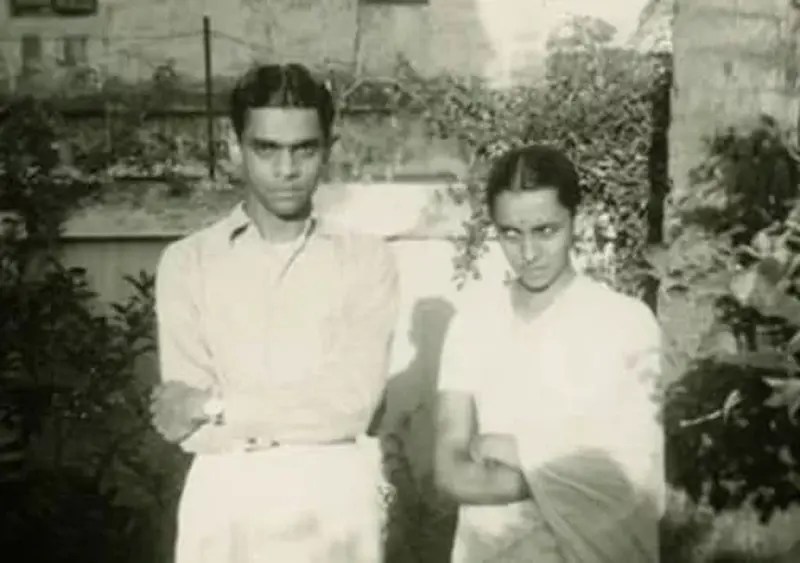
Janaki Ammal
It would be an injustice not to mention Janaki Ammal and how her life unfolded after the sudden demise of Ramanujan at the young age of 32. After Ramanujan’s passing, Janaki Ammal lived in Mumbai for eight years, where she learnt tailoring and English. She returned to Madras in 1932, choosing to live as an independent woman. Hanumantharayan Koil Street in Triplicane became her home for the next 50 years. Tailoring helped her to survive financially.
She later adopted W. Narayanan after her close friend Soundravalli passed away. As a foster mother, Janaki Ammal ensured that Narayanan received a proper education and got him married in 1972. Narayanan and his wife, Vaidehi, took great care of Janaki Ammal until her death on 13 April 1994, at the age of 94.
In her later years, Janaki Ammal fondly recalled: “I considered it my good fortune to give him rice, lemon juice, buttermilk, etc., at regular intervals and to give fomentation to his legs and chest when he reported pain. The two vessels used then for preparing hot water are still with me; these remind me often of those days.”
Thanks are due to the governments of Tamil Nadu, Andhra Pradesh, and West Bengal, Madras University, and various mathematical institutions for their constant financial support to Janaki Ammal. The Hinduja Foundation also donated Rs 20,000 towards her welfare.
Janaki Ammal was a philanthropist as well, providing financial support to many students.
In interviews conducted soon after the discovery of Ramanujan’s “lost” notebook by George Andrews in 1976, Janaki Ammal lamented that a statue of Ramanujan had never been made, despite earlier promises. After the efforts of hundreds of mathematicians, a bronze bust was finally created from the only authentic passport-sized photograph of Ramanujan by American sculptor Paul Granlund. A copy of the bust was presented to Mrs Ramanujan at a formal function at the University of Madras in 1985—after a gap of 60 years.
I leave it to readers: are we truly celebrating him? If not, we must learn about Srinivasa Ramanujan and educate our children about his legacy. It is not only the government’s responsibility; it is ours as well.
One can only hope that, as centuries pass, Srinivasa Ramanujan will be remembered alongside other luminaries such as Aryabhata, Brahmagupta, and Bhaskara. – New18, 26 April 2025
› B. Sathish is an engineer in the automotive industry.
 VOICE OF INDIA