Max Mueller distorted the Vedas to pave way for India’s Christian conversion – Priya Arora

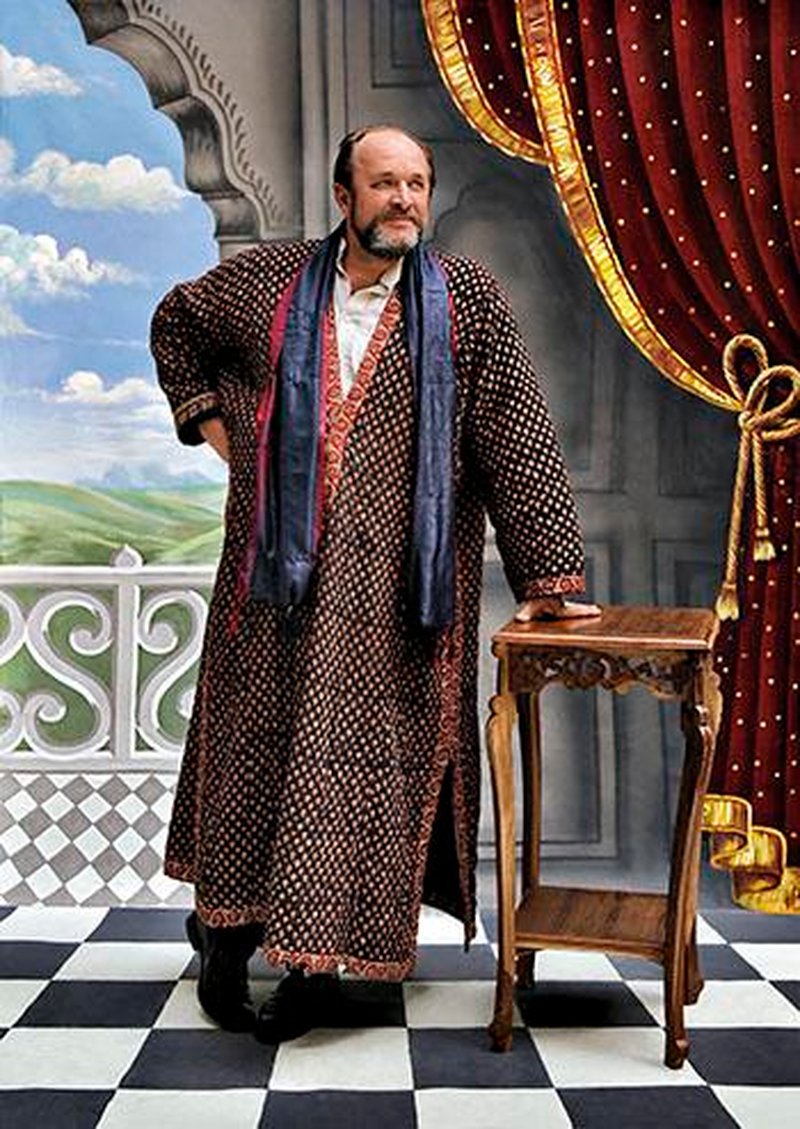
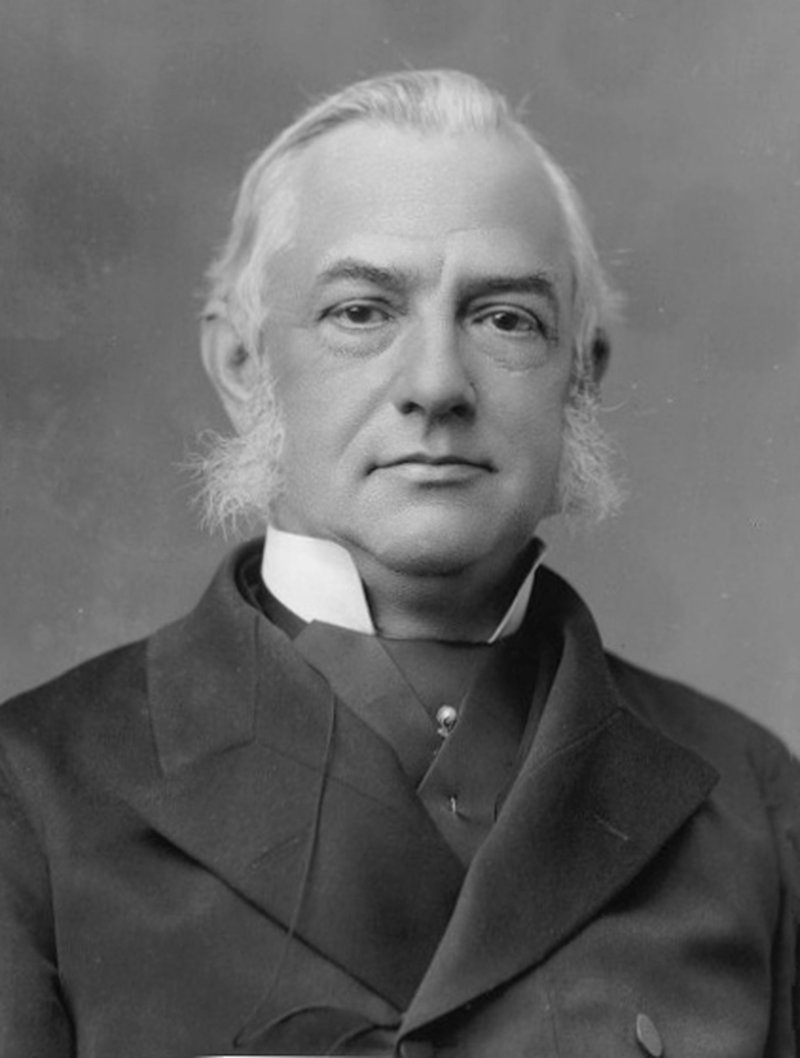
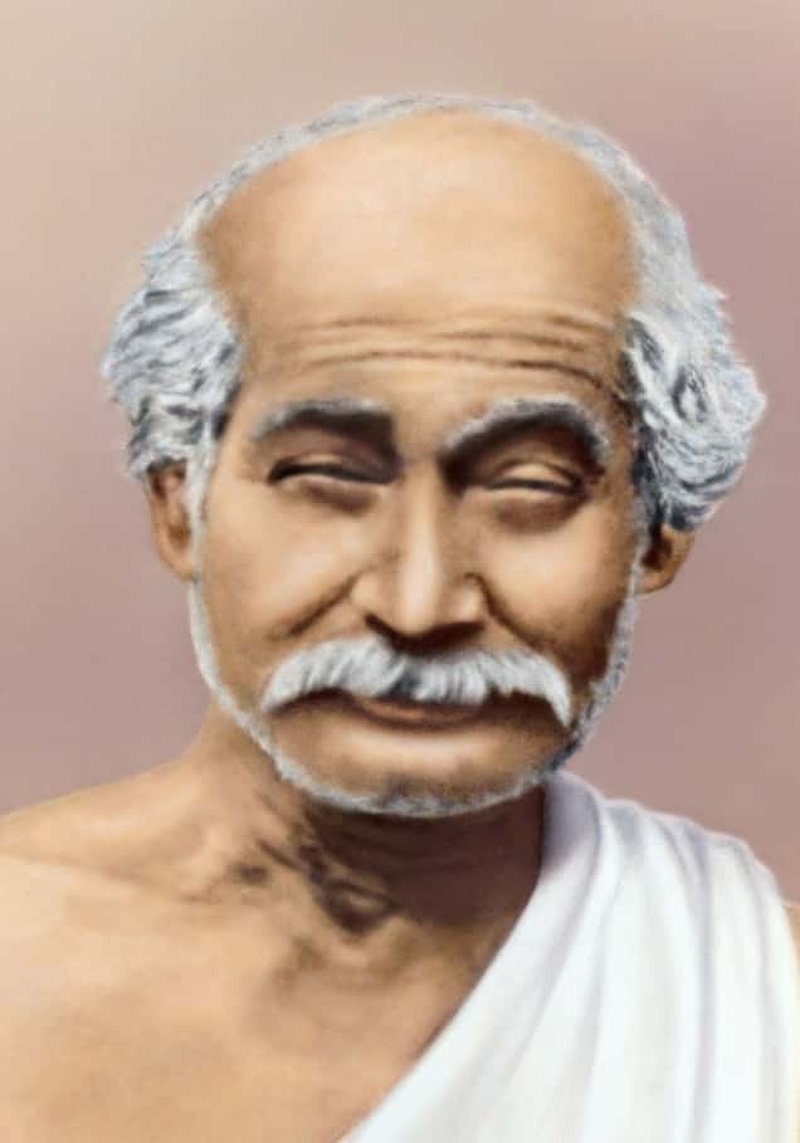
Friedrich Max Müller (1823 – 1900)

The disdain for Vedic philosophy with which German philologist Friedrich Max Müller embarked on his translation of the Vedas is apparent: “The ancient religion of India is doomed, and if Christianity does not step in, whose fault will it be?” – Priya Arora

In 1847, the British East India Company hired a philologist, Max Mueller, to translate the Vedas specifically to make the Hindu intelligentsia dismiss them as barbaric, backward and fanciful. The hope was that the changed attitude of some influential groups will soon spread throughout Indian society, liberating it from its perceived paganism.

Mueller was not a missionary but seemed to have a religious zeal. We realise this intent in his letters. He wrote to his wife: “I feel convinced, though I shall not live to see it, that this edition of mine and the translation of the Veda will hereafter tell to a great extent on the fate of India, and on the growth of millions of souls in that country. It is the root of their religion, and to show them what that root is, I feel sure, the only way of uprooting all that has sprung from it during the last 3,000 years.” (Oxford, December 9, 1867)

Along the same lines, Mueller wrote to the theologian, Chevalier Bunsen: “India is much riper for Christianity than Rome or Greece were at the time of St. Paul. The rotten tree has for some time had artificial supports. … For the good of this struggle, I should like to lay down my life, or at least to lend my hand to bring about this struggle. … I do not at all like to go to India as a missionary; that makes one dependent on the parsons. … I should like to live for ten years quite quietly and learn the language, try to make friends, and see whether I was fit to take part in a work, by means of which the old mischief of Indian priestcraft could be overthrown and the way opened for the entrance of simple Christian teaching.” (August 25, 1856)

The disdain for Vedic philosophy with which Mueller embarked on his translation of the Vedas is apparent: “The ancient religion of India is doomed, and if Christianity does not step in, whose fault will it be?” (Written to the Secretary of State for India, the Duke of Argyll, December 16, 1868)

“The worship of Shiva or Vishnu and the other popular deities, is of the same, nay, in many cases of a more degraded and savage character than the worship, of Jupiter, Apollo and Minerva; it belongs to a stratum of thought which is long buried beneath our feet, it may live on like the lion and the tiger but the mere air of free thought and civilised life will extinguish it.” (Westminster Lectures on Missions, December 1873)

Excerpts from Mueller’s letters express his opinion that the culture of the Aryans brought by earlier European conquest sorely needed replacement. In a communication to the Duke of Argyll, he wrote: “India has been conquered once, but India must be conquered again, and that second conquest should be a conquest by education. Much has been done for education of late, but if the funds were tripled and quadrupled, that would hardly be enough… A new national literature may spring up, impregnated with Western ideas, yet retaining its native spirit and character. … A new national literature will bring with it a new national life, and new moral vigour. As to religion, that will take care of itself. The missionaries have done far more than they themselves seem to be aware of.”

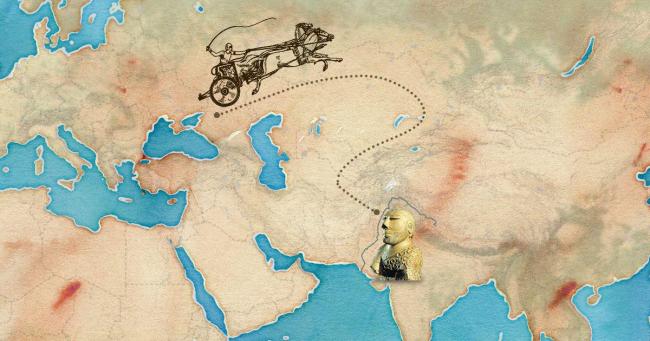
With this mindset, Mueller propounded the famous Aryan Invasion Theory (AIT) in the mid-19th century, based on two main factors: racial eminence and comparative linguistics. Alleging the Vedic people’s European origin, he claimed that a band of tall, fair-skinned nomadic pastoralists from the Russian steppes, called the Aryans, crossed the Himalayas on horse-driven chariots in 1500 BC. Being a superior race, they subjugated the unsophisticated dark-skinned aboriginals, whom they pushed south of the Vindhyas to become the Dravidians.

The colonising Aryan invaders then settled in the north and civilised the land, completely eradicating the local culture. They imposed Sanskrit and the Vedic lifestyle on the natives and were responsible for all ancient Sanskrit literature.

According to Mueller, the conquering Aryan race began composing the Vedas soon after their arrival, starting with the Rig Veda, which he dated at 1200 BC. They also formed the Vedic caste system, declaring themselves the upper-caste Brahmins and the natives the lower-caste Shudras.

This hypothesis implied that Brahmins and Shudras were of different racial ancestry, and since genetic study was unknown at the time, the supposition was accepted as fact. Then, in the 1920s, Mohenjo-Daro and Harappa, dating back to 3000 BC, were excavated.

Although the discovery of these highly advanced urban civilisations demonstrated that the indigenous people were far from unsophisticated aboriginals as previously believed, surprisingly, it did little to cast doubt on the Aryan Invasion Theory.

Instead, the narrative was neatly amended to fit the new information suggesting that the Indus Valley inhabitants, although evolved, were the peaceful dark-skinned pre-Vedic natives. They fled south when the Aryans, who had a technological edge in the form of horse-driven chariots unknown to the locals, attacked and defeated them. As a result, the prevailing culture was entirely replaced by an imported Vedic one indicating the invaders’ superiority.

The concept of Aryan supremacy fuelled white nationalism in Europe. Hitler notably adopted the false narrative of a master race, along with a distortion of the word Arya and the holiest of Vedic symbols, the swastika. Finally, in the latter part of the 20th century, when archaeological evidence proved conclusively that no invasion had occurred, the theory was modified to a peaceful migration and then further amended to a “trickling in”.

Despite the many iterations of how the Vedic culture came to India, whether by violent invasion, peaceful migration or people trickling in, the core assertion has remained that in 1500 BC, foreigners replaced the pre-Vedic local culture and language of North India with their own. The claim that the Vedic culture was imported rather than indigenous is still touted, though it is refuted by literature, archaeology and science.

Motivating factors for AIT at inception

The thought that the language of a subjugated people was the source of most European languages, including English, was abhorrent to imperialists. In his 1650 work, The Annals of the Old Testament, Archbishop James Ussher propounded that the first day of creation was October 23, 4004 BC. Most Christian scholars firmly held this belief during the colonisation of India, and the Vedic civilisation did not fit into this.

According to the biblical timeline, a highly evolved people could not have lived thousands of years before the Earth was supposed to have come into existence. Furthermore, the ecclesiastic chronology insisted that God destroyed the whole world by a flood around 2348 BC, so the Vedic civilisation posed a considerable problem.

To tie in with biblical events, Mueller fixed the anomaly by ascribing 1500 BC for the Aryan invasion when Sanskrit and the Vedic culture ostensibly came to India. The Aryan Invasion Theory was politically convenient.

It served to divide and rule, effectively controlling the natives by justifying British colonisation with an ancient precedent. The concept of invading Aryans was fed to the Indian population through the westernisation of education, beginning with Thomas Babington Macaulay’s Indian Education Act of 1835.

While the theory had apparent advantages for the ruling power, many Indians also embraced it, as it put them on the same racial footing as their rulers. The idea that foreigners displaced native Indians had far-reaching effects.

It effectively divided the nation, with north and south Indians believing they were racially, linguistically and culturally distinct from each other. The ancient varna system’s meritocracy was also replaced with birth-based caste and Brahmin eminence based on their perceived superior Caucasian ancestry. – News18, 27 September 2024

Excerpts from Priya Arora’s book, Rama: A Man of Dharma. 

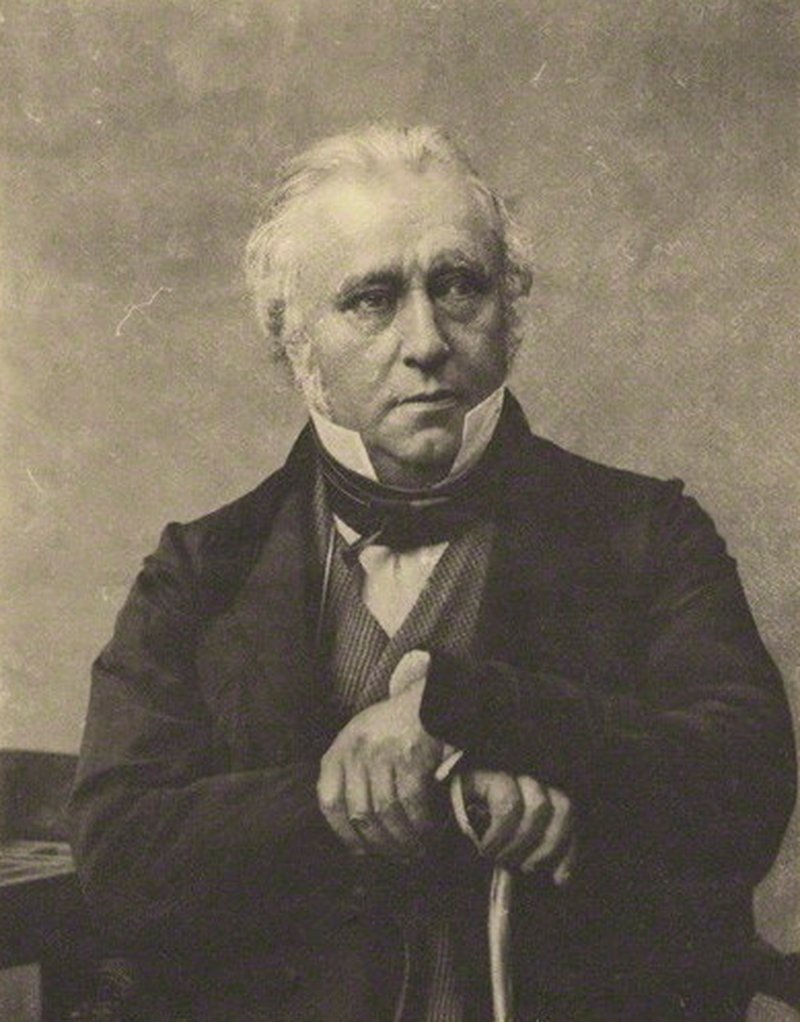
Thomas Babington Macaulay (1800 – 1859)

John Woodroffe: Sanskritist, yoga practitioner and author of books on tantra – Namit Saxena

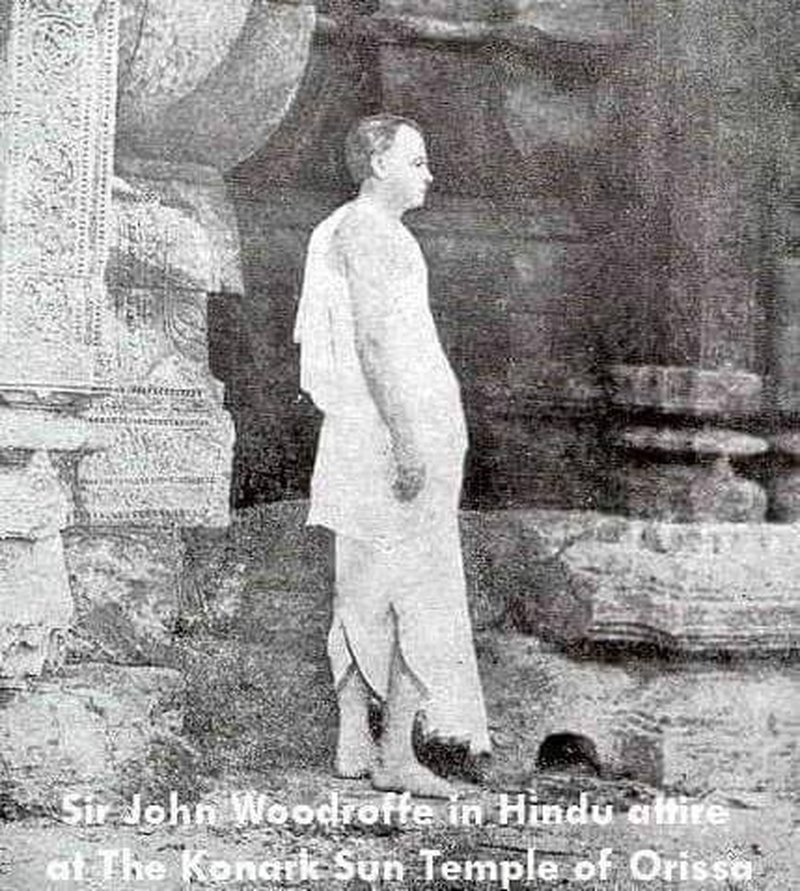
Sir John Woodroffe

Sir John Woodroffe chose the name Arthur Avalon as a pseudonym for his translations of Sanskrit texts and books on tantra. – Namit Saxena

A lot of us seek spiritual transformation, but few take on a journey towards that transformation. Depending upon the journey and the individual, the shastras have given different techniques to march forward on the chosen path. One of the most effective paths for the journey is that of tantra sadhana.

To perfect the techniques of attaining a certain level of spirituality in tantra sadhana, it takes a sadhaka years of practice.

Seldom do we find a foreign national, more so a British sitting judge of a high court, taking on such a journey in India. Sir John George Woodroffe, a former judge of the Calcutta High Court, is one such distinguished sadhaka.

The judge not only learnt Sanskrit, but also practised tantra sadhana, translated Sanskrit texts to English and wrote authoritative voluminous commentaries on various theoretical and practical aspects of kundalini yoga and tantra sadhana.

Born on December 15, 1865, John Woodroffe was educated at Woburn Park School and University College, Oxford, where he graduated in jurisprudence and cleared the Bachelor of Civil Law examinations. In 1890, he moved to India and enrolled as an advocate before the Calcutta High Court. He was soon made a Fellow of the Calcutta University and also appointed a Professor of Law there. He was later appointed Standing Counsel to the Government of India in 1902 and two years later, he was elevated to the High Court Bench at Calcutta.

It is during his stint as a judge of the Calcutta High Court that Woodroffe became interested in tantra sadhana and later delved into translations and writings of multiple texts on the same. How he got initiated into the tantra sadhana is also very interesting. The anecdotal story narrates that one day, Woodroffe was in his court and had to dictate a judgement in a matter which was supposed to be easy to decide with his magisterial calibre. However, when he tried to dictate the judgement, he felt that his mind was very clouded and he was unable to dictate the judgement properly. On enquiry, he found that one of the parties to the litigation had engaged a tantric practitioner who was outside his court, and with his siddhi he had clouded the mind of Woodroffe, making him unable to decide the case. Such a practice falls under the category of abhichaar in the tantra sadhana and is known as stambhan. Woodroffe got the practitioner chased off by his staff, but to no avail. This made Woodroffe curious about abilities of tantra practitioners.

On his engagement with a lot of people into yoga sadhana, Woodroffe got a glimpse of the depth of tantra—more particularly shakta tantra—and kundalini yoga. As he found that most of the texts were written in Sanskrit, he went to great lengths to learn the language so that he himself could read the texts.

Woodroffe chose the name Arthur Avalon as a pseudonym to write books and translations. The book titled Introduction to Tantra Shastra, is to date one of the leading books for beginners on understanding the basics and foundational principles of tantric practice. He further wrote The Serpent Power, The Garland of Letters, Principles of Tantra, Sakti & Sakta, The World as Power and The Great Liberation: Mahanirvana Tantra, amongst other books.

Lahiri Mahasaya

Woodroffe simultaneously also got initiated  into tantric practice and became a notable sadhaka under the aegis of various gurus, including the well known Lahiri Mahashay, who initiated him into the practice of Kriya Yoga.

Tantra sadhana has no discrimination on the basis of sex, gender, caste or creed etc. It rather tells one that male and female is only a matter of percentages, and that anyone can practice tantra sadhana and become a guru. This enabled Woodroffe to enter into the spiritual realm of tantric practise while conducting his duties as a judge of the Calcutta High Court.

Woodroffe’s writings on kundalini yoga and tantra sadhana not only present a simplified version of complex principles, but also introduce an enthusiast to insights on the path she should choose. Till date, the books by Woodroffe under the name Arthur Avalon are the most relied upon texts written in English for tantra sadhana enthusiasts. He remains perhaps the only English judge of a high court to become a leading name in the realm of tantra texts! – Bar and Bench,

› Namit Saxena is an Advocate-on-Record practising at the Supreme Court of India.

Shivacandra Vidyarṇava

See also


Why ‘eminent historians’ still swear by the debunked Aryan theory – Makkhan Lal

Image depicting the imaginary Aryan invasion of India from the Caspian Sea.

“It is difficult to say that all the earliest Aryans belonged to one race, but their culture was more or less the same type. Originally the Aryans seem to have lived somewhere in the steppes stretching from Southern Russia to Central Asia. On their way to India the Aryans first appeared in Central Asia and Iran. A little earlier than 1500 BC the Aryans appeared in India.” – R.S. Sharma

“By 1500 BC when the Aryans began to arrive in India, the Harappan culture had collapsed. We do not know where they came from; perhaps they came from north-eastern Iran or the region near the Caspian Sea or Central Asia.” – Romila Thapar

The two quotations from India’s two “eminent historians” sum up their approach to the Aryan Invasion Theory. Just look at expressions “difficult to say”, “seems to have”, “somewhere in steppes”, “we do not know where they come from”, “perhaps they came from north-eastern Iran or the region near Caspian Sea or Central Asia”. Despite so many probabilities, they are certain that Aryans came from outside. When and from where? No idea!

Despite all evidence to the contrary, why does the Aryan invasion/migration theory (AIT) continue to remain the lifeline of Indian Marxist historians? Let us now look at the AIT in historical perspectives.

Linguistic Evidence

Florentine merchant, Filippo Sassetti, who lived in Goa from AD 1583 to 1588, was struck by similarities between Sanskrit and European languages, especially Latin and Greek. Later, the relationship between Sanskrit and European languages was further elaborated by William Jones and many other scholars in the service of the East India Company. The efforts made towards understanding these linguistic similarities between Sanskrit on the one hand and Greek, Latin and some other modern European languages on the other gave rise to a new discipline called ‘comparative linguistics’. Its birth had questionably motivated considerations and in the last 200 years the discipline (if at all it is a discipline) of ‘Comparative Linguistics’ has shown a far greater variety of gymnastic exercises than the sport of gymnastics itself.

Since the earliest books (i.e. the Vedas) of the Aryans and so also all human beings are written in Sanskrit, it came to be recognised as the language of the Aryans. In the beginning, all European languages, along with Sanskrit, came to be clubbed as Aryan languages, and Sanskrit got identified as not only the oldest of all but also the mother of all European languages. Lord Monboddo was convinced that “Greek was derived from Sanskrit”. Frederick Schlegel, a highly respected German linguist wrote, “The Indian language is older and others [European languages] younger and derived from it.” Thus, Sanskrit came to be recognised as the mother of “all the less ancient Indo-European languages, as well as the modern European tongues and dialects”.

But these opinions did not last very long. Local pride, racial complexes and Evangelical considerations overshadowed everything as a part of a shift from ‘Indo-mania’ to ‘Indo-phobia’.

Though William Jones could not accept the earlier view that Sanskrit is the ‘mother’ of all Aryan languages. He advocated that Sanskrit is just a ‘sister’, i.e. a co-descendant of an earlier ancestor language. Following the lead provided by Jones, F. Bopp wrote: “I do not believe that Greek, Latin and other European languages are to be considered as derived from Sanskrit. I feel rather inclined to consider them together as subsequent variations of one original tongue, which however, the Sanskrit has preserved more perfect than its kindred dialects.”

So, a search for the original homeland of a language, namely ‘Proto-Indo-European’, led different scholars to different places. This search for the imagined original language homeland also meant the search for the ‘Original Homeland of Aryans’. This also gave rise to forging labels such as the ‘Indo-Aryan’, ‘Indo-European’, ‘Aryan languages’, ‘Indo-Aryan languages’, and the ‘Indo-European languages’. Sometime around the 1820s, the word ‘Aryan’ began to be dropped and it simply became ‘Indo-European’. Some German scholars even started using the term ‘Indo-German’ on the presumption that the Sanskrit and German languages, between them, covered the entire Indo-European speaking area—the farthest language to the east being Indic and German to the west.

Sanskrit, even today, may be “the greatest language of the world” or even if it “is of a wonderful structure, more perfect than Greek, more copious than Latin and more exquisitely refined” but so what? How could a language spoken by ‘niggers’ have been once the mother of languages today spoken by Europeans, i.e. white people? This position could not be accepted even by William Jones and Max Mueller, who have been so wholesome in their praise for Sanskrit.

Sanskrit was first demoted from mother to the position of a mere sister of all the ancient and modern European languages, but later on, with further building-up of the language tree, it came to be demoted to the position of grand-daughter, when it got linked to the so-called Indo-Iranian family. Thus, the position is: Proto-Indo-European language gave birth to the Indo-Iranian, which in turn produced Sanskrit. It’s already almost 200 years and the search for the grand-mother of Sanskrit (i.e. the Proto-Indo-European) is still on. We still do not know what she (the Proto-Indo-European Language) may have looked like, of what colour she may have been, or what may have been her physical and metaphysical structure. She still remains formless even in dreams. Quite often, these practitioners of philology were so illogical, so incoherent, so absurd, so adamant and arrogant, but, indeed, their impact has been so devastating that it has aptly been termed as ‘linguistic tyranny’.

Central Place Argument and Aryan Invasion

Once Sanskrit was demoted from the honoured status of being mother to all Indo-European languages and made a mere sister or niece of the European languages, a search started for the ‘original tongue’ i.e. the ‘Proto-Indo-European’. This cleared the deck also for legitimising the Aryan invasion of India; a theory which suggested that Sanskrit was brought here from the place where this imaginary language called ‘Proto-Indo-European’ was spoken. In 1842, A.W. von Schlegel claimed: “It is completely unlikely that the migrations which had peopled such a large part of the globe would have begun at its southern extremity (i.e. India) and would have continually directed themselves from there towards the northwest. On the contrary everything compels us to believe that the colonies set out in diverging directions from a central region.”

And for Schlegel this central region consisted of the areas around the Caspian Sea.

With the increasing hold of the British on India, the colonial and the Evangelical interests soon became a force in shaping Indian history for the rest of the academic world. Following the lead provided by A.W. von Schlegel, Max Mueller reiterated his position on the issue of the Aryan invasion and said in 1887: “If an answer must be given as to the place where our Aryan ancestors dwelt before their separation … I should still say, as I said forty years ago, ‘somewhere in Central Asia’ and no more.”

However, Srinivas Ayengar wrote in 1914: “The Aryans [in their entire literature] do not refer to any foreign country as their original home, do not refer to themselves as coming from beyond India, do not name any place in India after the names of places in their original land as conquerors and colonisers do, but speak of themselves exactly as sons of the soil would do. If they had been foreign invaders, it would have been humanly impossible for all memory of such invasion to have been utterly obliterated from memory in such a short time as represents the differences between the Vedic and Avestan dialects.”

It must be reiterated that it does not refer to a single name of flora and fauna found in Central Asia, Russia and Europe. If Rig Vedic people came from Central Asia how come they have no memory of it. Historically, linguistically and as per the oral traditions it is simply impossible.

The fallacy of this central-place theory as the origin of an imaginary language and then spreading all around can be explained with a contemporary example—English. Consider a situation wherein after a couple of thousand years, people forget that England was the place where the English language developed and spread from, and start looking for the place of its origin. The Central Place Theory will exclude England in the very first instance, as it is located on the outskirts of the world of the English language. The United States of America would be the natural choice from where it spread to Europe and Asia in the east, and Australia, New Zealand, Hawaii, etc, in the west and Canada in the north.

Lexicographic Evidence

Lexicography (the vocabulary of spoken/written words) is another area which was pressed in the service. Besides collecting a large number of the common words in various languages to prove their affinity, a number of words were chosen to prove the location of the language. For example, it has been argued that since there is no common word for the ocean in the Indo-European language, we can safely conclude that the Indo-European people were not aware of the ocean.

Varadpande rightly presses the points: “If we carry this reasoning further we shall have to suppose that ‘Indo-Europeans’ were living in a region where there was no air and no water, since there are no common words for air and water in all the ‘Indo-European’ Languages.”

The whole situation is that first a conjecture is turned into a hypothesis; to be later treated as a fact to be used in support of a new theory. For instance, language like Proto-Indo-European, Proto-Indo-Iranian and Proto-Dravidian are no more than hypothetical constructions, which may or may not have really existed; and yet these modern creations are often imposed on populations that lived thousands of years ago, to prove migrations theories.

Shaffer writes: “The Indo-Aryan invasion(s) as an academic concept in 18th-19th century Europe reflected the cultural milieu of that period. Linguistic data was used to validate the concept, which in turn, was used to interpret archaeological and anthropological data. What was theory, became an unquestioned fact that was used to interpret and organise all subsequent data. It is time to end the ‘linguistic tyranny’ that has prescribed interpretative frameworks of pre-and proto-historic cultural development in South Asia.”

The question of Aryan invasion/Aryan migration vis-a-vis philology has always been questioned. In the beginning of the last century, Aurobindo, while commenting on the philology, wrote: “Comparative philology has hardly moved a step beyond its origins; all the rest has been a mass of conjectural and ingenious learning of which the brilliance is equalled only by the uncertainty and unsoundness. … The very idea of the science of language is chimera.”

It is important to point out that in the last 30 years renowned linguists like Ram Bilash Sharma, S.S. Misra, S.G. Talgeri, N.S. Rajaram and Koenraad Elst have proved, on the basis of linguistic evidence itself, that this whole theory of Aryan invasion/migration is a fallacy.

Aryans, Racialism and Rig Veda

Subjugation of India by the British filled the masters with a desire to prove their all-round superiority. Racialism was one angle of it. Writings of Grant, Mill, Marx, Macaulay and their accomplices denigrated Indian people, culture, civilisation, society, history and religion.

Trautmann has traced the emergence of racialism and the development of physical anthropology as a resolution of the inescapable philological reality with the colonial need for cultural superiority over the natives of India. One of the most striking types of evidence of such an attitude is best seen in the writings of ACL Carlleyle. In 1879 he wrote: “We, British Europeans are Aryans, and far more pure and genuine Aryans than the Hindus, and no talk of the Hindus can alter our race, or make us any less or any different from what we are. It is the Hindus who have altered and deteriorated, and not we. The Hindus have become the coffee dregs, while we have remained the cream of the Aryan race. The Hindus are like the monkey.”

Some scholars think that the linguistic affinities of Indians and Europeans were also responsible for the development of physical anthropology leading the whole debate towards racialism. Most of the European scholars could not accept the view that Indians (‘niggers’, that is how most of the time Indians have been referred to in those writings) could have been once related to them and could have, indeed, been their forefathers, a conclusion which comparative linguistics was suggesting.

Edwin Bryant expresses it in the following words: “Even during the earlier phase of the homeland quest, when India was still a popular candidate, many scholars were uncomfortable about moving the Indo-Europeans too far from their biblical origins somewhere in the Near East. There were those among the British, in particular, whose colonial sensibilities made them reluctant to acknowledge any potential cultural indebtedness to the forefathers of the rickshaw pullers of Calcutta, and who preferred to hang on to the biblical Adam far more than their European contemporaries.”

Max Mueller himself was sad to note the mood of the day: “They would not have it, they would not believe that there could be any community origin between the people of Athens and Rome, and the so-called niggers of India.”

The newly developing science of physical anthropology was pressed into service to project Aryans as tall, white-skinned, blue-eyed, with sharp and high nose, and dolichocephalic. The non-Aryans came to be identified as natives with dark skin, flat nose, short stature, and so on. The dasas mentioned in the Rigveda were made to represent non-Aryans, i.e., the indigenous local population of India. Thus, the frame of the invasion of Aryans and the subjugation of the non-Aryan local population got corroborated with the evidence from Physical Anthropology.

The racial theory had a devastating impact on European polity. Each nation/state started claiming to be the real descendent of the Aryan race and considered others as inferiors. Max Mueller tried to intervene by declaring again and again: “If I say Aryans, I mean neither blood nor bones, nor hair nor skull. … How many misunderstandings and how many controversies are due to what is deduced by arguing from language to blood-relationship or from blood-relationship to language. … An ethnologist who speaks of an Aryan race, Aryan eyes and hair, and Aryan blood is as great a sinner as a linguist who speaks of a dolichocephalic dictionary or brachycephalic grammar.”

Alas! It was too late. The djinn created by Max Mueller had now grown up and was no longer under Mueller’s command. In the twilight years of his life, Max Mueller realised the devastating impact of distortions that he had made in Indian history in order to please his employers and the newly acquired faith. He died a sad man, preaching at the end of his career things like India: What Can It Teach Us.

He described India as: “The country most richly endowed with all the wealth, power and beauty that nature can bestow, … a very paradise on earth, … [a place where] human mind has most fully developed some of its choicest gifts, has most deeply pondered on the greatest problems of life.”

Racialism and DNA Evidence

In this context it will be useful to recall the studies carried out by K.A.R. Kennedy and his colleagues. For almost five decades they carried out a detailed study of a large number of pre- and proto-historic skeletons found in excavations from a large number of archaeological sites from all over the Indian sub-continent.

On the basis of their research, Kennedy and his colleagues concluded: “As for the question of biological continuity within the Indus valley, two discontinuities appear to exist. The first occurs between 6,000 and 4,500 B.C. The second occurs at some point after 800 B.C. but before 200 B.C.”

Both discontinuities exclude any adjustment for Aryan Invasion.

Besides the studies of Kennedy and his colleagues on ancient skeletons, an important study has come out recently on modern humans. Keeping in mind the AIT, Kivishield and his colleagues carried out a detailed study on gene pools of Western Eurasians and people of the Indian subcontinent. They studied the ‘genetic inheritance aspect’ of genes through the Mitochondrial DNA Test. It may be mentioned here that the mitochondrial DNA test can reveal the whole history of genetic changes and mutations that may have taken place even in the remote past i.e. several thousand years ago.

Kivishield and his colleagues have reached the conclusion that the Mitochondrial DNA, typical of Western Eurasians, is present among Europeans up to 70 percent whereas among Indians it is only up to 5.2 percent. The DNA gene pool of Western Europeans is very different from that of Indians. It has been very clearly stated that if there was any Aryan invasion of India a few thousand years ago, it must be visible in the mitochondrial DNA tests in terms of a splash in percentage of Western Eurasian genes. But this is not so. Further, the percentage and types of Western Eurasian genes present among south Indians and north Indians are almost the same. This fact establishes that there is no difference between the south Indian and north Indian gene pools, and the same goes against the Aryan invasion theory.

Conclusions

Now over a period of 200 years, the meaning of ‘Aryans’ has been constructed and reconstructed as being nomadic, pastoralists, sedentary agriculturists, dolichocephalic, brachycephalic, blond and fair, and from brown-haired to dark-haired. The Aryan homeland has been located and relocated everywhere, virtually from the North Pole to the South Pole, and from the shores of the Atlantic to Chinese deserts—South India, North India, Central India, Tibet, Bactria, Iran, the Black Sea, the Caspian Sea, Lithuania, the Caucasus, the Urals, the Volga Mountains, South Russia, the Steppes of Central Asia, Western Asia, Palestine, Anatolia, Scandinavia, Finland, Sweden, the Baltic, western Europe, northern Europe, central Europe, and eastern Europe.

The Aryan homeland, however, still remains elusive. J.P. Mallory has put the whole thing very succinctly: “One does not ask, ‘Where is the Indo-European homeland?’ but rather ‘where they put it now?’”

Anthropologist Edmund Leach of Cambridge University has most aptly summed up the whole question of the Aryan Invasion Theory. In 1990 in his article, Aryan Invasions over Four Millennia, Leach wrote: “Why do serious scholars persist in believing in the Aryan invasion? Why is this sort of thing attractive? Who finds it attractive? Why has the development of Sanskrit come so dogmatically associated with the Aryan invasion? The details of this theory fit in with this racist framework. … The origin myth of British imperialism helped the elite administrators in the Indian Civil Service to see themselves as bringing ‘pure’ civilisation to a country in which civilisation of the most sophisticated kind was already nearly 6,000 years old. Here, I will only remark that the hold of this myth on the British middle-class imagination is so strong that even today, 44 years after the death of Hitler and 43 years after the creation of an independent India and independent Pakistan, the Aryan invasions of the second millennium BC are still treated as if they were an established fact of history. … The Aryan invasion never happened at all.” – Firstpost, 20 July 2022

  Prof. Dr. Makkhan Lal is a well-known historian and the founder director of the Delhi Institute of Heritage Research and Management.

Rig Veda

Ram Swarup and Hinduphobia – Koenraad Elst

hindu-hate

As Socrates taught: evil is, upon closer analysis, a case of ignorance. Never attribute to malice what can be explained by incompetence. – Dr Koenraad Elst   

Let us consider what Ram Swarup said about Hindu-bashing, or what is nowadays called “Hinduphobia”. The word, though in existence since more than a century, was not yet in vogue as Hinduism’s ad hoc counterweight against the omnipresent propaganda term “Islamophobia”. But the phenomenon was already dominant in India and increasingly present abroad.

In fact, it was quite old. Several tribes of Muslims with a doctrinally motivated hatred for the Hindus, followed by the Portuguese Christians with a similar aversion, had actively persecuted Hinduism for centuries. They represent a permanent source of anti-Hindu violence that now takes the form of occupation of parts of the Hindu homeland by the Islamic states of Pakistan and Bangladesh; of Pakistani incursions; of terrorism and of rioting. But while they bludgeoned Hindu society and inflicted huge human and material losses on it, they did not penetrate it or take control of its institutions.

Tribes of haters

The British, by contrast, could rule India with more limited violence largely outsourced to native sepoys, but their influence penetrated far more deeply. Firstly, they managed to pit several Hindu sub-groups against the mainstream: most obviously the Sikhs, for whom the status of separate religion was made of whole cloth, promoted as a social reality and underpinned at the scholarly level. In several booklets, Ram Swarup went against this colonial-engineered separatism by documenting how, as per their own scriptures and history, Sikhism was a self-identified sect of Vedic Hinduism.

The creation of bad blood between Buddhism and mainstream Hinduism only took the institutional form of keeping Sri Lanka and later Burma outside of British India, but was far more influential at the scholarly level. There, the underlying paradigm of all Buddhist studies and of Indian histories as instilled through the schools became: “Hinduism bad, Buddhism good.”  Even before 1947, “Christian missionaries (…) were presenting Buddhism (as they have been doing with Sikhism) as (…) a revolt against ‘Brahmanism’ and the “Hindu” caste system.” (Hinduism and Monotheistic Religions, p.519, originally 1991) They had no use for the Buddha, except for making him into a stick to beat Hindu society with. The Macaulayites and Marxists followed this example: “they tried to use their learning and position to undermine Hinduism (…) and show that there was little difference between Marxism and Buddhism. Now Communist historians are telling us that Hindus demolished Hindu temples.” (p.519) 

Likewise with the Dalits and tribals, who came to benefit from an incipient reservation system, and with the non-Brahmin Tamils. The then-popular Aryan Invasion Theory was used to pit them against the upper castes and the North Indians. The thrust of the exercise was invariably to put Hindus into the dock and make them feel guilty for their very existence. Needless to say, this caste-based discrimination with a good social conscience has only become more encompassing over the years, and the [Aryan Invasion] paradigm still is the official one.

But the second effect was even more detrimental to Hindu assertiveness: “The British took over our education and taught us to look at ourselves through their eyes. They created a class Indian in blood and colour, but anti-Hindu in its intellectual and emotional orientation. This is the biggest problem rising India faces—the problem of self-alienated Hindus, of anti-Hindu Hindu intellectuals.” (p.45) 

Then again, in numerical terms, this impact on Hindu society was still quite small even by 1947. Many millions in the countryside had never seen a Briton, less than 1% of the population spoke good English. If the Indian leadership had wanted, it could have undone this influence in a matter of decades.

Ram-SwarupA crucial factor here was the choice of language. Ram Swarup himself was quite at home with British culture and thought, being most influenced by British liberalism: Bertrand Russell, George Bernard Shaw, Aldous Huxley, George Orwell. In his case, this didn’t stop him from fighting for freedom from British rule, with active participation in the Quit India Movement. But for less independent minds, gulping down English influence would only end up estranging them from their Hindu roots, as it had done in the case of Jawaharlal Nehru. The vote in the Constituent Assembly’s Language Committee should have been crucial: 50% voted for Sanskrit, 50% for Hindi (which was given victory by the deciding vote of the chairman), and 0% for English. For the generation that had achieved independence, it was completely obvious that decolonisation implied abolishing the coloniser’s language. Yet by 1965, when this abolition was due to become effective, the English-speaking elite had gathered enough power to overrule this solemn commitment. Ever since, the influence of English and of the thought systems conveyed by it has only gone on increasing, and at some levels, India is becoming a part of the Anglosphere—hardly what the freedom fighter envisioned. Today, most Anglophone secularists are nearly as knowledgeable about Hindu culture as first-time foreign tourists who have crammed up the Lonely Planet’s few pages summarising India’s religious landscape.

Marx and Mao

Compare with China, not formally colonised but having been repeatedly humiliated by colonial incursion, yet now again proud and assertive. Of course it has retained its language, and adopting a foreign language as medium for education or the judiciary is simply unthinkable. Ram Swarup, who wrote several books criticising the record of Maoism, wouldn’t emphasise this, but it is one thing the Communists undoubtedly achieved: a clean break with the colonial age. Under the nationalist regime (1912-49), China was increasingly under Anglo-American influence, and the Christian missions could operate on a large scale. Nationalist leader Jiang Jieshi (who later was to give an award to Ram Swarup’s and Sita Ram Goel’s anti-Communist think tank Society for the Defence of Freedom in Asia) was a Christian along with much of his family. By contrast, when Mao Zedong came to power, all missionaries were imprisoned, killed, or at best banished.    

On the other hand, by importing Marxism, China was opening itself up to another Western doctrine, and actively imposing it on its population. The same counted for those circles in India that came to espouse Marxism. Under Nehru, it started influencing the power-wielding circles, and from Indira Gandhi onwards, it achieved control over education policy and much of cultural policy. This ideology was “more Eurocentric than regular imperialism. It used radical slogans but its aims were reactionary. … Marx fully shared the contempt of the British imperialists for India. He fully subscribed to the theses of colonial scholarship that India was not a nation, had no history and was meant for subjugation. Marxism was Macaulayism at its most hostile. It blackened Indian history systematically. It gave to [the] Indian social and political system its own format, the one it had learnt from its European teachers. It saw in Hinduism not … a great spiritual civilisation but only communalism.” (p.45-46) 

Newer forms of Marxist or soft-Marxist thought (critics speak of “cultural Marxism”) remain entrenched in the Indian institutions, and are more powerful than ever in the relevant departments of Western universities. Their construction of Indian reality remains dominant and is more than ever spread to the new Hindu generations, leading to more culpabilisation c.q. sense of shame for Hinduism. 

Race to the exit

The trends unambiguously traced to colonial policies have not been reversed by the Nehruvian regime, but have instead been continued and magnified. Thus, the British policy of separating Hindu subsets from general Hinduism has continued with an affirmation at different times of minority status for Buddhism, Sikhism, the Arya Samaj, Jainism, Virashaivism and Sarna “animism”. In every case, the administrative separation was fortified with a change in discourse: the need for a non-Hindu identity was in each case buttressed by an increased blackening of Hinduism. This anti-Hindu attitude has even crept into Hindu organisations without the institutional ambition of minority status, e.g. the ISKCON (Hare Krishna) calls itself non-Hindu, except when it is canvassing for donations from Hindu communities.

When Ram Swarup wrote against separatism among the Sikhs, it was an interesting intellectual entertainment for his readers, but had no impact at all on policy-making. The Narasimha Rao government managed to neutralise armed Sikh separatism, but did nothing to change Sikh separatist thought, so that there remains a constant threat of its political revival. In a healthy society, we might expect power-wielders to listen to sages like Ram Swarup, but this was not the case; just as it is still not the case today.

As described in Ram Swarup’s booklet The Ramakrishna Mission in Search of a New Identity, the Ramakrishna Mission, besieged by the Communist-supported Teachers’ Union in its school network, felt compelled as a matter of survival to relieve this pressure. In India, by virtue of Article 30 of the Constitution, minority schools (and similarly, places of worship) are autonomous and immune from government take-over, whereas classification as Hindu makes them vulnerable to nationalisation. But the RK Mission did not try to have the discrimination against Hindu schools abolished, did not appeal to Hindu society, but did the dishonourable thing of trying to escape by seeking minority status, like a rat leaving a sinking ship. The Bengal High Court gave it the coveted minority status, then finally (or so it seemed) the Supreme Court denied it, entirely in accordance with RK Mission founder Swami Vivekananda’s assertion of Hindu pride. 

Superficial Hindus might jubilate that this was a victory for Hindu unity, but Ram Swarup warned that the Mission would now have to live down the anti-Hindu attitudes which it had come to espouse. Here again, some of its swamis make all the right noises for the respective audiences they address, sometimes calling themselves Hindu, but the “we are not Hindus” animus has not disappeared: when Mamata Banerjee’s Trinamool Congress won the state elections ending decades of Communist rule, the Mission asked her for minority status. And promptly it received her assurance that it would henceforth be treated as a minority, thus de facto overruling the “final” Supreme Court verdict. Ram Swarup always emphasised that institutional arrangements are unimportant in themselves, merely the materialisation of convictions and mentalities. If you want to stop the race to the exit, it is imperative to change people’s unfavourable impression of Hinduism. 

Down with conspiracy thinking

A final point for the attention of the rather hot-headed Hindu activists and polemicists. They always see conspiracies against Hinduism, e.g. the Aryan Invasion Theory was a “British concoction”, the Partition of India was “imposed by machinations by the British” who had “brainwashed” the Muslim League leadership. In this case, “Hinduphobia” is deemed to be an expression of an intractable “hatred” that for some reason (in the case of Westerners, “racism”) animates Hinduism’s numerous enemies. This fuming hot air in Hindu discourse puts off many neutral observers and produces Hinduphobes. But in all of Ram Swarup’s works, there is not a single example of this approach. 

For a single example, he describes a novel about the Buddha’s wife Yashodhara, Lady of the Lotus, by a well-meaning American, William E. Barrett. It has totally fictitious episodes about the couple’s visits to the quarters of the Untouchables: “They were revolted by the sight. They saw that ‘the traffic in the streets was, in the main, animal.’” And about the sight of hungry people: “Next day when they were in bed, light dawned on Siddharta that ‘No one has to be hungry … and no one should live as these people live.’” (p.527) In reality, the Buddha was not particularly interested in the difference between rich and poor, high and low; he taught that suffering was basic to the human condition in general. He did not propagate liberation from poverty, but liberation from the human condition. The socialist reinterpretation of the Buddha as a social rebel conflicts with the Buddha’s teachings. It is typical for the post-religious worldview to reduce religion to socio-economic considerations, i.e. to cultivate ignorance about the existential passions that have generated religions.   

The most interesting part of Ram Swarup’s account is: “The author was not hostile to India but he was doing his best to depict Hindus and their history as he knew it.” (p.528) This is crucial to understanding “Hinduphobia”: while some classes of people, say mullahs and missionaries, have an interest in blackening Hinduism, most people don’t. They just go by the information they have been fed. This American novelist has been fed the fable that the Buddha was a rebel against Hindu societal reality, so that is what he puts into his story: Buddhism social, Hinduism oppressive. As Socrates (translated into Hindi as Satyakām Sokratez by Ram Swarup’s friend Sita Ram Goel) taught: evil is, upon closer analysis, a case of ignorance. Never attribute to malice what can be explained by incompetence.   

Dr Koenraad Elst is an historian. linguist and orientalist from Belgium who visits India to study and lecture.

hindu-phobia