Rushdie’s Duplicity: A victim of Islamist violence makes Hindu nationalism an easy target – Utpal Kumar

Salman Rushdie

To watch Rushdie reprimand “Hindu nationalism” after surviving a near-fatal Islamist attack is therefore to witness a tragic spectacle: a man shaped by fear into criticising the safest opponent available. – Utpal Kumar

Soon after Salman Rushdie was stabbed by an Islamist madman in New York in August 2022, Gopalkrishna Gandhi wrote an article in the Hindustan Times, ‘The scorching truth of Rushdie’s ordeal’. While examining the Rushdie stabbing, Gandhi seemed oblivious to the attacker’s identity—the writer didn’t mention even once why the novelist was attacked, who the attacker was, or why Rushdie was forced to stay under cover for years despite issuing several apologies. Instead, he invoked Mahatma Gandhi’s assassination by a Hindu in 1948. His verdict became intriguingly problematic when he wrote, “The attack on Rushdie comes from the same source?”

Really!

Salman Rushdie’s latest warning about the “rise of Hindu nationalism” in Bharat seems to follow the same Left-‘liberal’ pattern—of, first, denying or at least minimising the scale of Islamist violence; and, second, if the scale of violence is too vast to ignore, creating an equivalence in Hinduism. It reads less like a principled stand and more like a man barking up the only tree that never bit him while fastidiously avoiding the forest of blades that left him with one eye less and a badly damaged liver.

The documented record of violence against Rushdie is neither vague nor debatable. It is exhaustively chronicled by many scholars, including Daniel Pipes, who, in his book The Rushdie Affair (1990), coined the term “Rushdie Rules” to describe how “editors, newspapers, publishers, and academic teachers abide by a new set of rules—new to modern Westerners at least—which limit the freedom to discuss Islam with the same methods, terminology and frank inquisitiveness that are considered normal in discussing Christianity or Hinduism”. Rushdie had himself written extensively about this in his 2012 memoir, Joseph Anton.

It was Ayatollah Khomeini’s fatwa that sent Rushdie into hiding. Then, there was the selective killing of no less than 45 people worldwide associated in one way or the other with The Satanic Versesthis included the murder of its Japanese translator, Hitoshi Igarashi, in 1991. Many were stabbed, including an Italian translator of the book in Milan; a Norwegian publisher was shot in Oslo. And, finally, it was an Islamist radical, Hadi Matar, who in 2022 stormed a stage in New York and plunged a knife repeatedly into Rushdie’s neck and abdomen, leaving him almost dead. All this is a living testament to the fact that Khomeini’s decree, as Daniel Pipes emphasises, “was never simply a religious opinion, but a death sentence with no expiry date”.

In contrast, Rushdie’s affair with Hindu nationalism is not only bloodless, it is anti-climactic in many ways. When he mocked Bal Thackeray and caricatured Hindu figures in The Moor’s Last Sigh (1995), the much-anticipated Hindutva havoc never materialised. Thackeray, far from issuing anything resembling a fatwa, responded with a shrug and the suggestion that his secretary could read the book for him.

This civilisational lopsidedness was noted by Koenraad Elst in his preface to The Rushdie Affair, where he contrasted the Ayatollahs’ unforgiving wrath despite Rushdie’s repeated apology with the quick closure of the Shivaji Maharaj controversy when Khushwant Singh apologised for calling the Maratha hero “a bastard”. In the Hindu case, an apology ended the matter. In the Islamist case, apology merely confirmed guilt. The difference is civilisational, not rhetorical.

Given this stark historical-civilisational difference, Rushdie’s latest denunciation of “Hindu nationalism” appears less like conviction and more like reflex—the reflex of a man who has learnt, through his own bloody experience, which ideologies kill and which merely complain. It is psychologically understandable, even if morally disappointing and intellectually dishonest.

A traumatised man avoids the bully but lectures the weak and gentle. Writers like Ayaan Hirsi Ali have described this phenomenon as the “fear-shaped silence” that hangs over critiques of Islamism. Rushdie may not be totally silent, but he is certainly cautious, careful to look for the safer target while framing his criticisms of Islamism within layers of diplomatic phrasing. He is well aware, better than anyone else, of the one ideology that puts a global contract on life that never gets revoked.

To watch Rushdie reprimand “Hindu nationalism” after surviving a near-fatal Islamist attack is therefore to witness a tragic spectacle: a man shaped by fear into criticising the safest opponent available. It is not courage; it is self-preservation masquerading as principle. And it underscores a deeper truth about our intellectual climate—the willingness of cultural elites to condemn, even cut, the tree that never struck them while tiptoeing around the jungle that nearly swallowed one of their own.

Rushdie’s warning about Hindu nationalism may win him applause in Left-‘liberal’ salons, but it is a misdirection that obscures the true, documented, bloodstained threat that has shadowed him for the past 36 years. If he is barking, he is barking up the wrong tree—and perhaps the only one that never bared its teeth.

Hindu nationalism, after all, did not force Rushdie into hiding. Hindu nationalism did not murder his colleagues. Hindu nationalism did not stab him on an American stage. Hindu nationalism did not declare that repentance is insufficient and that the sentence is eternal. Islamism did all of this, openly and repeatedly—an ideology that celebrates the likes of Hadi Matar.

Perhaps Rushdie the rebel, which he was once in the 1980s, is no more, as he himself had suggested in Joseph Anton. Recalling the moment in 1989 when a fatwa was issued against him by the Ayatollah of Iran, he remembered receiving a call from a woman BBC reporter who asked, “How does it feel to know that you have just been sentenced to death by the Ayatollah Khomeini?” It was a sunny Tuesday in London, but Rushdie had never felt the world so dark. “It doesn’t feel good,” he replied, though inwardly he thought, “I’m a dead man.”

Rushdie, the rebel writer, is long dead. Long live Rushdie! – Firstpost, 9 December 2025

› Utpal Kumar is Opinion Editor at Firstpost and News18 and is the author of the book “Eminent Distorians: Twists and Truths in Bharat’s History”.

The monotheistic interpretation of Hinduism originates in colonial Hindumesia – Yogendra Singh Thakur

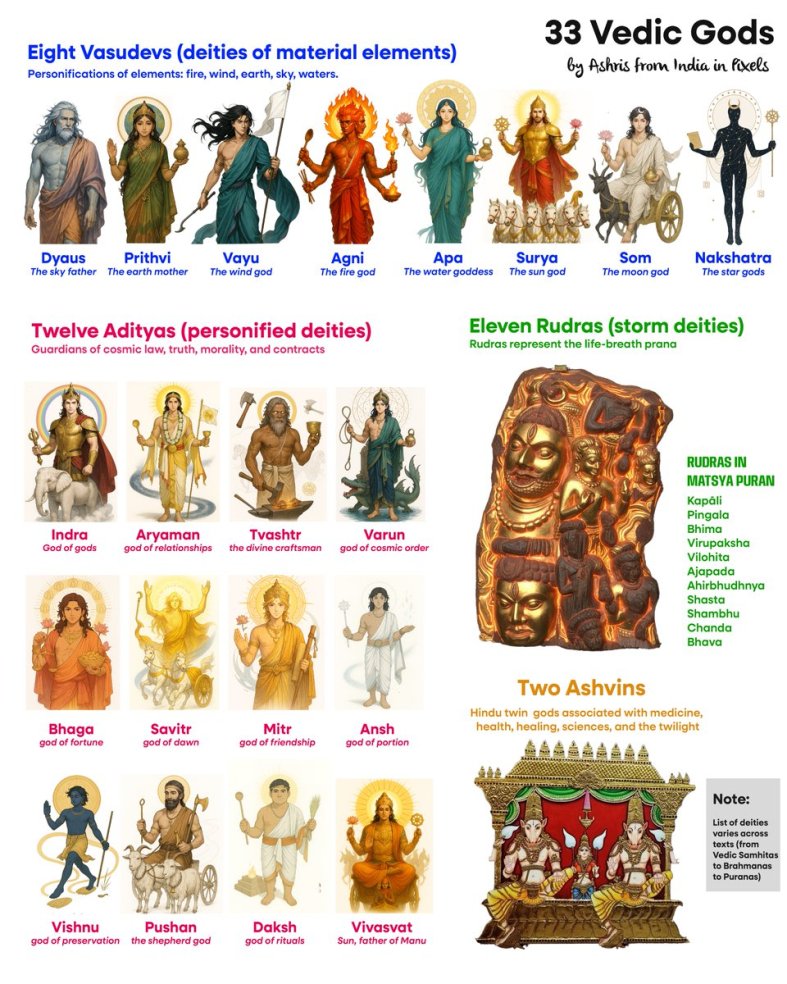
Hindu Gods

The over-arching need to find common ground with Abrahamic faiths … has at the very heart of it the belief that Hinduism is somehow inferior to the supremacist, monopolist and violent monotheistic religions. – Yogendra Singh Thakur

Some time ago, the former Lok Sabha Speaker and Union Minister Shivraj Patil claimed that Hinduism has a concept of “jihad” similar to the one in Islam. Patil, highlighting that there is a lot of discussion on jihad in Islam, said that “the concept comes to the fore when despite having the right intentions and doing the right thing, nobody understands or reciprocates, then it is said one can use force.”

“It is not just in Quran, but in Mahabharata also, the part in Gita, Shri Krishna also talks of jihad to Arjun and this thing is not just in Quran or Gita but also in Christianity,” he said adding further fuel to the fire.

Faced with the natural and correct backlash on the statement, Patil attempted to dress the wound with a clarification. But the dressing was evidently soaked in salt as the clarification only worsened the situation. Patil went on to say that just as Islam and Christianity, Hinduism too does not endorse many gods but only one. Such a god has “no colour, no shape and no form,” he said. Basically, the former Union Minister was pushing the monotheistic belief—the existence of one sole formless god—which is the very foundation of Abrahamic faiths. This is the same belief which has been at odds with polytheistic Hinduism for centuries, leading to the many wars initiated and instigated by Muslims and Christians, the ethnic genocides that these two religions have carried out worldwide and in India, and even caused the Partition of the country.

Some days ago, another political leader from the state of Karnataka, made an ill-intentioned remark on Hinduism, calling the word Hindu, “dirty”. The leader went on to remark that we should rise above the boundaries of religion and that “it is not appropriate to glorify anything related to Hinduism.” One wonders why it is always that Hindus and Hinduism are targeted whenever there is a call to rise above religion and religious identity, and that these calls are usually followed or accompanied by abusing only Hinduism and Hindus.

This idea about rising above religion or a notion that religion, when it comes to Hinduism, is something to be insecure about is not limited to the remarks of ignorant and mischievous political leaders alone. The Supreme Court has very famously stated that Hinduism is not a religion but a way of life. What this statement evidently implies is that Hinduism is a cultural belief system with rituals, festivals, and beliefs about life and death, and it does not contain any larger social regulation system, any system of doctrines or practices related to spirituality or worship, that it does not have anything to do with the sacred, holy, absolute, divine, and of special reverence, or that Hindus do not have ant political aspirations as a community. Hence in a scenario when such a system is built or such aspirations are formed, it becomes, by definition, “un-Hindu”: Hindus are merely amoebic, shape-shifting human beings in this conception of the Supreme Court of India.

This is what senior Congress leader Salman Khurshid asserted, when he claimed that Hindutva, which advocates for certain political interests of Hindu society, is similar to Boko Haram and ISIS terrorist outfits. But despite such cruel, false, and provocative comparisons drawn on the basis of “Hinduism is a way of life” notion, many do like to continue advocating it, including our current Prime Minister himself.

It is this notion alone which is at the heart of an advocacy that Hindus are not a people following one religion but a people identifying with a certain culture, irrespective of religious affiliations—the kind of advocacy which the Rashtriya Swayamsevak Sangh (RSS) chief, Dr Mohan Bhagwat, does quite often. Dr Bhagwat often expresses that they “have been telling since 1925 (when the RSS was founded) that everyone living in India is a Hindu. Those who consider India as their ‘matrubhoomi’ (mother land) and want to live with a culture of unity in diversity and make efforts in this direction, irrespective of whatever religion, culture, language and food habit and ideology they follow, are Hindus.” He adds that everyone living inside the boundaries of his imagined 40,000-year-old Akhand Bharat are Hindus.

The over-arching need to find common ground with Abrahamic faiths—by saying that the concept of jihad and a single formless god is in the core of Hinduism or that all people living in India and amidst Indian culture are Hindu—has this understanding at the very heart of it—that Hinduism is somehow inferior to the supremacist, monopolist, violent, and culturally, civilizationally, spiritually, and experientially different faiths. The unreasonable urge to “rise above religion,” or to not appreciate the aspects of Hinduism, is also driven by the same notion of relative inferiority. People possessed with such a notion do not seek to maintain the differences between a Pagan polytheistic faith like Hinduism and Abrahamic monotheistic faiths like Islam and Christianity; or even between the socio-cultural beliefs of Hinduism and the beliefs of Utilitarian globalists.

And why does this particular notion exist in the modern Hindu with such prominence? The answer to this can be traced back to the social reform movements in early modern British India.

The British Raj in the late eighteenth and early nineteenth century was undergoing a change in attitude towards India. One of the reasons for this change in attitude was the French Revolution, which seemed to inspire revolution around the world, particularly posing a threat to the colonial nations under the British, the long standing enemies of the French. In order to prepare themselves ahead of any French attempts or “inspiration” to destabilise the British Empire, the English from the College of Fort William pressed for a unified Hinduism. Henry Thomas Colebrooke (1765-1837) and Lord Wellesley were central to these efforts [1].

Lord Wellesley was brother of the future Duke of Wellington (who later defeated Napoleon at Waterloo in 1815) and spoke many a time against the French Revolution. As David Kopf notes [2], “a root cause of Wellesley’s actions was, by his own admission, his fear and hatred of France and the very real danger of French expansion into India” [3].

And thus from the College of Fort William commenced reformist interpretations of Hinduism, to turn it into a bulwark against possible “social activism, revolutionary tendencies and challenges to the status quo.”

Colebrooke wrote, under a substantial influence of Jesuit missionaries, that Hinduism was originally—and in its true form—a monotheistic religion with only a formless god at its center. It was thought that the diversity of Hinduism posed a threat to the stability of the British Empire in India in the post French Revolution era.

Hindu reformers such as Ram Mohan Roy followed Colebrooke and aggressively propagated the idea that Hinduism at its core is a monotheistic faith with no room for image worship or idolatry. Roy, walking in the footsteps of Colebrooke’s orientalism, divided the Hindu past into a “monotheistic true era” and the “polytheistic false era”. The latter era, according to him, was destroying “the texture of society” [4].

Later, Ram Mohan Roy founded the Brahmo Samaj with the objective of institutionalising these reformist ideas and interpretations of and about Hinduism. In his attempt, Roy incorporated a large portion of Christian theology into Hinduism [5]. The motives of it, as popularly described by scholars, was to oppose Christian Jesuit activities. But as evidenced from his earlier writings, there was definitely a drive of the orientalist belief behind it which saw Hinduism as originally a monotheistic faith.

The implication of this monist/monotheistic view of Hinduism naturally resulted in attempts to essentially dissolve Hinduism as a separate theology and project it as just another branch of global universal theism. Ram Mohan Roy considered “different religions as national embodiment of universal theism and the Brahmo Samaj as a universalist church” [6].

The social reform movement was carried out against what the reformers deemed to be the backward aspects of Hindu culture, practices, and mores. The goal of the movement was a restructuring of Hindu institutions and beliefs. At the core of these reform movements was dislike or even hatred of polytheism, which is essentially the crux and whole of Hinduism. As a remedy for the ills in Hinduism, Ram Mohan Roy advocated a monotheistic Hinduism in which reason guides the adherent to “the Absolute Originator who is the first principle of all religions” [7]. Roy was essentially incorporating the core beliefs of an Abrahamic faith into a polytheistic religion, labelling it a guiding truth.

What was started by Ram Mohan Roy was taken to even greater lengths and to a much bigger audience by Dayananda Saraswati and his Arya Samaj (founded in 1875). Dayananda studied Vedic literature and aggressively propagated the monotheistic interpretation of Hinduism. Multiple gods, to Dayanand, were a Puranic corruption by the priestly class to control and mislead the masses. And all post-Vedic Hindu literature, including the epics Ramayana and Mahabharata, were deemed inauthentic. “Go back to Vedas,” Dayanand proclaimed.

But amidst all this ground-breaking activism lay a highly prejudiced—and possibly Christian-centric—view of the Hindu past. Vedas speak proudly of many gods/deities with hymns dedicated to all of them. It is hard to imagine how this apparent fact could be interpreted into believing that the Vedas propagate monotheism, unless the interpreter has already concluded otherwise. Sure, the Vedas propound grand, cosmic speculation about the origins and nature of the cosmos, with the universe originating “through the evolution of an impersonal force manifested as male and female principles”. So, we find in the Vedas a “tension between visions of the highest reality as an impersonal force, or as a creator god, or as a group of gods with different jobs to do in the universe” [8].

Later the Ramakrishna Mission furthered similar monistic views of Hinduism, terming Hinduism as a religion of all, irrespective of faith or god. The notion of one religion for all, an umbrella theological belief system that could create a universal brotherhood of faiths, was taken to its extreme by the Theosophical Society founded by the Russian spiritualist Madame H.P. Blavatsky and the American Col. H.S. Olcott in 1875. In just nine years the Society had around a hundred branches along with its global centre in Adyar. The Theosophical Society used unconventional and indirect ways to further its ideas of theological universalism and monism. It managed to influence many important personalities who would later go on to change India’s politics via the Indian National Congress. The Society opened many schools and colleges including the Central Hindu College at Banaras.

The British establishment, no doubt, supported, encouraged and institutionalized these reforms, albeit for its own good. With the advent of the eighteenth century, British attitude towards India—which was purely an evangelic utilitarian one—was to somehow do away with the stagnation in Indian society by the work of law and “education” in Christian principles. The zealous goal of these efforts, as Udayon Mishra notes [9], was the creation of a “Europeanised India” with substantial incorporation of Christian ideas and beliefs into Hinduism. Hindu reformer organizations like the Brahmo Samaj, the Arya Samaj, the Theosophical Society, and others played that role exactly, knowingly or unknowingly, playing into the hands of British evangelicals.

This reformist approach of incorporating Christian core beliefs into Hinduism turned out to be a big help to the Christian missionaries and theologians. “By characterising Hinduism as a monistic religion, Christian theologians and apologists were able to criticise the mystical monism of Hinduism, thereby highlighting the moral superiority of Christianity,” Richard King notes. Christian theologians furthered the view that the enormous diversity of Hinduism—in gods, sects, and beliefs—was a sign of inferiority of the Indian stock, thereby making it a responsibility of the British to “educate, civilise, and save” Hindus and India.

“Educating” the Hindus on their so-called monotheistic core was also seen as a step that could help Britishers to club diverse Hindus into a group of single-minded people, easier to govern and less likely to start insurgencies. On the looming prospects of French expansion, an atmosphere of suspicion and anxiety about the stability of British rule led to the furthering of reformed interpretations of Hinduism.

And thus, the anxiety caused by the French Revolution and the British evangelical utilitarian zeal to Christianise India, guided the reformist view of Hinduism. This over-arching need to find common ground with Abrahamic faiths was born out of decades of colonial Hindumesia. – IndiaFacts, 15 December 2022

Footnotes

  1. Dhar, Niranjan, Vedanta and the Bengal Renaissance, Calcutta, Minerva Associates, 1977.
  2. As quoted by King, Richard A. H, Orientalism and Religion: Post-Colonial Theory, India and “The Mystic East”, 1999, pp. 130.
  3. David Kopf, British Orientalism and the Bengal Renaissance: The Dynamics of Indian Modernisation, 1773–1835, Berkeley and Los Angeles, University of California Press, 1969, pp. 46-47.
  4. Ibid., pp. 199-200.
  5. Charles H. Heimsath, Indian Nationalism and Hindu Social Reform, Oxford University Press, 1964.
  6. Dr. Sanjeev Kumar, Socio-religious reform movements in British colonial India, International Journal of History 2020; 2(2): 38-45.
  7. Heitzman and Worden, eds., “India: A Country Study,” 1995.
  8. Bijoy Prasad Das, Rammohan Roy: Progressive Role as a Social Reforms and Movements for Social Justice, International Journal of Humanities and Social Science Invention, Volume 10, Issue 6, pp. 57-59.
  9. Udayon Misra, “Nineteenth Century British Views of India: Crystallisation of Attitudes”, Economic and Political Weekly, vol. 19, no. 4, 1984, pp. 14–21.

Yogendra Singh Thakur is a freelance columnist from Betul, Madhya Pradesh. He is pursuing his studies, majoring in History, Political Science, and Sociology.

Vedic Gods

From Dharma to Dogma: The genesis of caste – Acharya Prashant

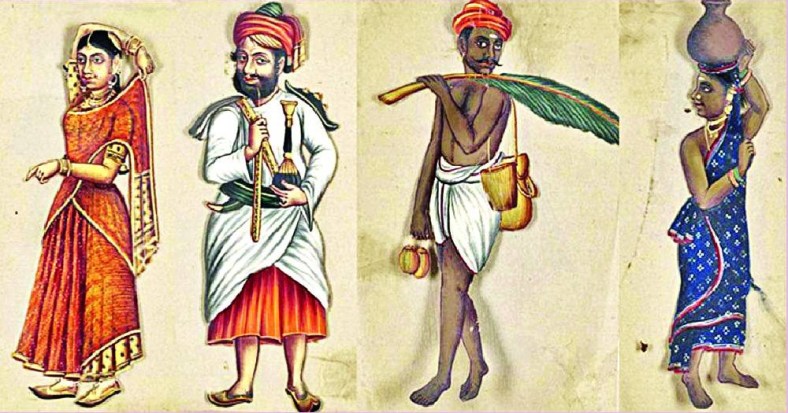
Indians

India’s tragedy is that somewhere in history, caste and dharma were kneaded together like salt in dough. What began as a division of labour merged with notions of virtue and sin. Acting within one’s caste became dharma; going outside it became sin. – Acharya Prashant

Every few years, incidents remind us that caste persists in different avatars. Our Constitution guarantees equality, yet divisions control how we live, marry, vote, and worship. Knowingly or unknowingly, we judge people by birth. Caste survives despite legal systems, educational programs, and metropolitan anonymity.

We wrongly believe social reform alone can fix what is mostly psychological. Caste is not a census number; it is a paradigm of evaluation. People constitute systems; as long as people don’t inwardly change, systemic change won’t help much.

Caste and the Constitution

The Constitution guarantees liberty, equality, and fraternity. Yet caste persists because exclusivity, superiority, and material benefits are irresistible. Caste has become ingrained in habit, rooted in livelihood, kinship, and identity. Our constitutional principles are like rangoli patterns on the ground; they cannot change the soil underneath.

That soil pervades everyday life. Many trades favour one community over another. Marriage remains mostly endogamous, with nine of ten unions within caste. Lineage maps out towns and villages. And when voting time comes, we rarely cast our vote; we vote our caste.

When Caste Masquerades as Dharma

The persistence of caste cannot be explained by sociology alone. Laws may impact behaviour and reforms may change customs, but neither explains nor eradicates how caste has been sanctified in dharma’s name.

For humans, consciousness is paramount. An insult to self-worth hurts far more than bodily injury. More than our flesh, we protect our ‘feeling’ of being right: our dharma. Dharma is the inner compass for right seeing and living, man’s most sacred possession, guiding all people.

India’s tragedy is that somewhere in history, caste and dharma were kneaded together like salt in dough. What began as a division of labour merged with notions of virtue and sin. Acting within one’s caste became dharma; going outside it became sin.

If caste were only a social structure, reformers would have erased it. If merely legal, the Constitution would suffice. But caste is sustained in religious belief. It persists because it hides behind Dharma’s name.

As long as this false dharma based on birth endures, caste will endure. What is worshipped will not be questioned, and what is not questioned will not change.

The History of Caste: The Distortion of Dharma

To understand why caste became inseparable from Indian life, let’s start from the beginning. The Purusha Sukta in the Rigveda speaks of an all-encompassing Being from whom everything comes. The hymn is metaphorical: the Brahmin came from His mouth, the Kshatriya from His arms, the Vaishya from His thighs, the Shudra from His feet. The symbolism points at how every form of work emerges from the same living whole, without any mention of hierarchy.

The Rigveda differentiates between Arya and Dasa, indicating early social stratification. There is still a dispute about whether varna was originally fluid or hierarchical. The goal is not to prove a perfect history, but to understand that any tradition has both liberating and limiting parts. It is our ethics that decide the thread we will follow next.

The Upanishads are the best argument against caste because they don’t just reject birth-based differences; they also reject body identification. The Vajrasuchika Upanishad, for example, directly emphasises that caste is unreal. The Bhagavad Gita said that varna comes from guna (individual physical tendencies) and karma (individual choices), not birth.

Such scriptures were being composed and had sublime philosophy emphasizing egalitarianism. However, there was a critical lapse: the scriptures were limited to a few meditative thinkers who mostly remained aloof and out of touch with mainstream society. The authors of the scriptures presented their insights in books, but did not get into grounded social activism to turn the spiritual insights into social reality. So, concurrently with the heights of meditative revelations, the social order continued to have strong currents of discrimination. By about 400 BC, the Dharmasutras emerged to become practical social guides. ‘Dharma’ began to mean social order. Spiritual symbolism became social distortion, and these new ‘scriptures’ started to show inequality based on caste. Over time, these grew into Dharmashastras, remembered as law codes such as the Manusmriti. Here lay the tipping point. The Purusha Sukta was reread with harmful additions: claims of Brahmin superiority, prohibitions on hearing the Vedas, and punishments for non-compliance. The spiritual metaphor became a manual of social control.

Later, the Puranas reinforced these distortions. With the Puranas’ dualistic approach came theism, and the social order was declared divinely ordained. Now, rebelling against caste meant rebelling against God, who made the caste system. Story after story contained subtle caste validation. Divine avatars were consistently born into upper castes, while those who challenged varna faced curses or calamity. The logic was circular but effective: if the gods themselves observed caste, it must be cosmic law. In dualistic theology, God becomes the author of worldly hierarchy. What Advaitic philosophy had rejected, mythology now sanctified.

Advaita Vedanta maintained a steadfast intellectual stance: since all distinctions are illusory, how can caste be authentic? But as caste became the dominant social system, even Advaita found itself compromised between transcendental truth (paramarthik) and practical social order (vyavaharik). The peak of truth was accepted as the highest, but was made distant from the ground of lived reality.

Caste’s story, however, is not one of unbroken supremacy. The Buddha did not accept the authority of the Brahmins. Bhakti poets Saints Kabir, Ravidas, and Chokhamela ridiculed caste. Basava’s Veerashaivism and Guru Nanak’s teachings went against the idea of a hierarchy. However, even as Bhakti emphasized that all individuals are equal in the eyes of God, it did not quite revolt against the unequal social hierarchy. A strange co-existence of unequal social order with equality before God was not just accepted, but institutionalized in Bhakti mythology, social order and rituals.

The reform movements show that resistance to caste often does arise within the religious system. But the idea of equality is often reabsorbed by the strong current of social inertia. What started as a misinterpretation of scripture became a social law, then a habit, and finally institutionalized heredity. The lesson is serious: to fight caste, you need both spiritual clarity and institutional change.

The Economics of Discrimination

Endogamy, or marrying within one’s own group, is at the heart of caste. It keeps bloodlines and a sense of belonging, while creating psychological walls. When marriage becomes restricted, so does social intimacy—families stop sharing meals, homes, and lives with those outside their group. Communities that marry within closed circles risk losing genetic diversity and cultural exchange. The biological costs are real, but the cultural impoverishment runs deeper: when people cannot marry across lines, they struggle to see each other as equals.

Yet caste continues not just as a belief but also as a source of profit. The priest’s ritual authority gave him power over knowledge, while the landlord’s caste position made his hold on land and labour even stronger. Endogamy preserved not just bloodlines but property. By ensuring daughters married within the caste, families kept wealth and land concentrated, turning social boundaries into economic moats that protected privilege across generations.

The Path Forward: Returning from Smriti to Shruti

The solution cannot principally come from courts; it must arise from understanding dharma itself. Sanatan Dharma was never meant to be a set of strict rules and inherited beliefs. It was the dharma of Shruti, the direct revelation of Truth. The emphasis was on clarity of consciousness, not on divine commandments. Social order was to be a spontaneous and fluid outcome of individual realization. Over time, however, we began living by Smriti, frozen law, and social convention.

As long as Smriti remained faithful to Shruti, it guided society; when it diverged, it enslaved society. Much of what we call “Hindu practice” belongs to this later distortion, drawn more from the Manusmriti and Puranas than the Upanishads. We talk about Vedic heritage, yet we live by hierarchies that came after the Vedic period.

This appeal to return to Shruti has a crucial objection: what if the texts themselves are complicit? What if hierarchy is inherent rather than incidental?

We need to consider this criticism. If the Upanishads were enough, why did Vedantic philosophy persist alongside millennia of discrimination? Sublime texts alone do not ensure accurate interpretation. The conclusion is stark: for each truthful scripture, we also need an equally truthful interpreter. The interpretation, practically, is as important as the scripture itself. And this interpretation must be made socially widespread, though that task will face resistance from those whose power depends on distortion. So, we need culture and powerful institutions to ensure and defend scriptural wisdom’s rigorous interpretation and dissemination.

And a note of caution to the sage-philosopher: your job doesn’t stop at meditation, revelation and publication. You need to get into the society and ensure that the light seen by you becomes the living light of the common man. The philosopher, the meditator, the thinker can’t afford to hide in his cave, he will have to be, firstly a rebellious social activist, and secondly, a meticulous institution-builder. This will mean getting into the din of public life and sacrificing the serenity he so lovingly cherishes, but that’s the sacrifice life and history demand of him. If he refuses, the consequences of his self-absorption will be socially devastating.

Democratization of Interpretation

We must ask who has the authority to interpret Shruti. In the past, only Brahmins, especially priests, had that right. But we cannot have the same gatekeepers who let the truth get distorted in charge of bringing it back.

It is important to make interpretation more democratic. Shruti should be accessible not as a privilege but as a birthright of consciousness. This means having translations of the Upanishads in the vernacular language, open discourse, and the recognition that spiritual realisation, not lineage, is what qualifies someone to understand the Upanishads.

When religion diverges from philosophy, it transforms into a blind and violent force, serving as a tool of fear rather than liberation. The Upanishadic view starts where hierarchy stops. It sees the sacred not in birth but in realisation.

In Vedanta’s light, every division dissolves. The way forward is cleansing religion, valuing truth over tradition, realisation over recollection. No interpretation of any scripture is valid if it violates the principles inherent in the Mahavakyas “Aham Brahmasmi” and “Tat Tvam Asi”.

The Path in Practice

It begins with modern, scientific education of the ego-self in school and college curricula. Students must be exposed to the process of biological and social conditioning, the matter of false identities, and the question “Who am I?”.

Cultural change valuing the Upanishads over the Manusmriti must be promoted, as well as rigorous interpretation of Smriti texts true to the spirit of Vedanta. Religious institutions must open doors regardless of birth, and spiritual leaders should publicly reject caste-based privilege.

Legal and economic measures too remain vital: affirmative action, anti-discrimination enforcement, and equalisation of opportunity. The soil is renewed not by one hand alone but by many: the teacher, the reformer, the legislator, and the rebel. – The Pioneer, 8 November 2025

Acharya Prashant is a spiritual teacher, philosoper, poet and author of wisdom literature.

There are Brahmin, Kshatriya, Patel, Jain, Bania, Parsi, Saiyad, Pathan and Christian sanitation workers in Gujarat.

Max Müller to Doniger to Orsini: The West sends Trojan horses to India – Abhijit Majumder

Trojan Horse

The West repeatedly sends academic Trojan horses who would erase and distort Indian history, attack self-esteem, construct divisive narratives, and collude with India’s own sell-out intelligentsia to project credibility. – Abhijit Majumder

India is the imperialist’s unfinished project. Few lands that have been touched by Christian or Islamic imperialists have managed to remain largely unconverted and geopolitically intact. In a little over 100 years since 1900, the centuries-old fluid indigenous faiths in the entire African continent, for instance, dwindled from 76 per cent of the population to just 8 per cent, having been replaced by the two hardcoded religions.

Bharat, or what remains of it after Pakistan and Bangladesh were created, still has not given in. Sanatan Dharma is still the way of life for more than 75 per cent of Indians, and in spite of the best efforts of invaders and colonialists, its nationalism and civilisational self is rising again, its economy rapidly growing, its military gaining muscle.

The mere presence of Bharat—with its staggering size, diversity, and potential—has unnerved the West enough across ages to repeatedly send academic Trojan horses who would erase and distort history, attack self-esteem, construct divisive narratives, and collude with India’s own sell-out intelligentsia to project credibility.

The controversy around Francesca Orsini, Hindi scholar from London-based SOAS, is a continuation of that. A white woman specialising in an Indian language may fascinate us, but a look into her political activism in academic guise begins to reveal a different story.

She accuses the very language she teaches, Hindi, of political usurpation of other languages. She has a problem with Indian nationalism. In 2020, she introduced a resolution in the Seattle City Council against India’s Citizenship Amendment Act (CAA) and the National Register of Citizens (NRC).

While India is not obligated to host those arriving to spread intellectual poison, Orsini was deported recently after landing in Delhi for gross violation of visa conditions during her previous visits. Orsini is a rather mediocre entrant in the galaxy of Western radicals who have got into the study of Indology, history, Sanskrit and other languages only to undermine Bharat.

German philologist Friedrich Max Müller, hired by the British colonialists in 1847, came with a mission to bury the Vedas, which he described in a letter to his wife as “the root of their religion, and to show them what that root is, I feel sure, the only way of uprooting all that has sprung from it during the last 3,000 years”. He also wrote: “The ancient religion of India is doomed, and if Christianity does not step in, whose fault will it be?”

Then there was James Mill, a Scottish historian and economist whose work, The History of British India (1817), divided Indian history into Hindu, Muslim, and British periods. In his book, Mill extensively describes Hindus as “uncivilised”, “barbaric”, “savage”, and “rude”. This gentleman wrote with astonishing confidence on India without once stepping on this land and no knowledge whatsoever of Indian languages.

The more recent gift horses from the West to India like Wendy Doniger, Sheldon Pollock, and Audrey Truschke employ a more sophisticated packaging but are no less venomous. Doniger uses psychoanalytic quackery to introduce a homosexual angle to the relationship between Ramkrishna Paramhansa and his disciple Swami Vivekananda; Pollock blames the Sanskrit language for the Holocaust; and Truschke swoons over the genocidal Mughal Aurangzeb.

India’s intellectual tradition is among the most welcoming mindscapes in the world. Bharat has continuously assimilated knowledge and made “outsiders” its own. Even in the modern era, it has been enriched by foreigners from Sister Nivedita to David Frawley, Michael Danino to Koenraad Elst, Francois Gautier to Maria Wirth. These scholars have taken a dharmic approach. They did not approach Indic knowledge with the mission to debase it.

But ultimately, Indians will have to take a major part of the blame for not taking up their own knowledge universe seriously, neglecting languages like Sanskrit, writing their own history, and leaving a vast vacuum for the likes of Orsini to fill.

Unless Bharat begins to take its own story seriously, vultures will come to feast. – News18, 25 October 2025

Abhijit Majumder is a senior journalist and editor-in-chief at Earshot Media, New Delhi. He is the author of the book, ‘India’s New Right’. 

George Orwell Quote


How Bombay experienced the Great Uprising of 1857 – Dinyar Patel

British blowing mutinous Indian sepoys from guns.

In 1857, fear and panic in Bombay laid bare the brittle, ultimately ephemeral nature of the British Empire, the most powerful empire in world history. – Dinyar Patel

About a century ago, the historian Georges Lefebvre pored over historical records dating from the late summer of 1789 in France. Here, he traced a seismic wave of panic, the “Great Fear”, when large parts of the country worried that armies of brigands were about to violently derail the French Revolution.

“Fear bred fear,” LeFebvre pronounced, outlining an archival paper trail of rumour and terrifying anxiety.

A similar paper trail exists in India, a shiver of fear detectable in archival holdings from mid-1857 through 1858, the time of the Great Uprising. Much of that archive focuses on the North Indian heartland—epicentres of the rebellion such as Delhi, Kanpur, and Lucknow.

But panic never exists within neat geographical boundaries. In places far removed from sepoy control, fear once more bred fear, with colonial authorities from Aden through Rangoon writing in tones of marked desperation.

What follows is a brief account of the Uprising in one such place rarely mentioned in the history of that momentous year: Bombay. It is an account culled from crumbling folios in the Maharashtra State Archives, which represent a tiny stratum in the overall set of records pertaining to 1857 in India. Though small, this particular paper trail nevertheless demonstrates how, in the span of weeks and months, and in one of the most secure locations in British India, imperial hubris gave way to a state of utter terror. This is a portrait of a city on edge.

Colonel John Finnis was the first European officer to be killed in the uprising in Meerut (The Illustrated Times).

Mutiny in Meerut

On May 10, 1857, sepoys in Meerut mutinied and killed several of their British officers. News of this incident reached Bombay with remarkable speed: the next day, via a telegram from Agra. By the following morning, readers of the Bombay Times digested the contents of this telegram under a headline blaring “Serious Intelligence: MUTINY AT MEERUT.” With rebels having subsequently cut telegraph lines, Bombay citizens awaited confirmation of this report via overland dak and private correspondence.

At the time, Bombay was the administrative headquarters of a vast arc of western India stretching from Karachi in the northwest to Dharwar in the southeast. Now, from across this territory, reports streamed into Bombay Castle, the nerve centre of the colonial bureaucracy, detailing alarming developments.

A deadly riot in Bharuch in May. A plot, discovered in June, to kill Europeans in Satara and Mahabaleshwar and restore the Maratha dynasty. A mutiny of the 27th Infantry in Kolhapur in July, coupled with rumblings about Bhil insurrections in Khandesh. In the eyes of many colonial officers, this smacked of a broad-based, coordinated conspiracy.

Thereafter, small events triggered all sorts of conspiracy theories. In North India, British officials had panicked over the distribution of chapatis from village to village, a supposed harbinger of revolt. Something far more prosaic caused dread and foreboding in western India: twigs. Officials in Bombay Castle lost sleep over reports of villagers near Cambay passing along bundles of the stuff.

Was it a signal for insurrection? While administrators ultimately accepted the explanation of locals—that it was a method to apprehend a common thief, whose foot imprint was the size of the twigs—they implored the Indian legislative council in Calcutta to make all systems of “carrying signs from village to village” a penal offence. Carrying twigs was now a borderline traitorous activity.

Bombay remained quiet, but the governor, Lord Elphinstone, a man once rumoured to be romantically linked to Queen Victoria, nervously apprised the strength of the European forces in the city. He counted only 200 infantrymen, with perhaps 50 or 60 additional artillerymen. Although authorities in London had dispatched thousands of troops, they would take at least two more months to arrive – perhaps longer since they were, confoundingly, being routed via the Cape of Good Hope rather than the quicker route through Egypt.

J.M. Shortt, commander of the garrison in Bombay, bluntly told Elphinstone that they would therefore have to rely on Indian sepoys, regardless of worries about disaffection within the ranks. “There is no choice,” he stated.

Fear bred suspicion, and suspicion hardened into a policy of repression. Soon, the jail at Thana was bursting at its seams, overcrowded with prisoners oftentimes rounded up on the flimsiest of charges. Butcher’s Island, in the harbour, housed elite detainees, such as the family of the deposed raja of Satara, believed to be involved in the conspiracy in that former princely state and in Mahabaleshwar.

The wider dragnet scooped up some curious characters, such as an Irish convert to Islam and a Jewish man from Warsaw who happened to be visiting Ratnagiri. Officials like Charles Forjett, Bombay’s ruthlessly efficient deputy commissioner of police (and a Eurasian, the offspring of an Indian mother), justified the detention of such Europeans.

He alerted his superiors to vague intelligence that parties of Europeans were “on their way to India to afford assistance to the Mutineers.” Consequently, Forjett suggested employing a “trustworthy Foreigner” to spy on and monitor the movements of any Europeans arriving in the harbour. The white man was now suspect, as well.

As paranoia spread, so did intelligence-gathering efforts. Authorities began opening and reading private correspondence, alert for any signs of sympathy for the sepoys. Some letters were flagged for almost comically absurd reasons.

A Muslim man from Aurangabad harangued a Bombay friend for not writing to him or sending him money, but was impolitic enough to include a throwaway line hoping that the forces of the Mughal emperor would soon reach the Deccan.

Other correspondence no doubt raised the hairs on the necks of eavesdropping Britons. A separate missive from Aurangabad moved quickly from commercial matters to discussion of how local Muslims planned to wage jihad and massacre Europeans during Muharram.

Educated Indians, often considered a key constituency of support for the Raj, also came under suspicion. Police infiltrated a library to monitor the conversations of Keru Luxumon Chhatre, an accomplished mathematician who later moved in the same circles as Mahadev Govind Ranade and Dadabhai Naoroji.

They also targeted Jagannath Shankarsheth, the respected Maharashtrian commercial magnate, accusing him of communicating with rebels, including Nana Saheb, one of the Uprising’s leading commanders.

As anxieties rose about a wide cross-section of the Indian population, authorities nervously eyed the religious calendar. Certain festivals had long provoked concerns about safety or communal harmony in the city. Now, they struck a decisively different form of terror in the minds of Europeans, who feared ripe moments for mass rebellion.

During Bakri Eid, in early August 1857, a “state of alarm” seized the European community, causing many families to take refuge in the Fort or on boats docked in the harbour. In Bombay Castle, British administrators recoiled at this very public expression of the vulnerability of the ruling class. “It is an evil the recurrence of which should be cautiously avoided since it serves to create the very danger that is apprehended,” declared one official.

A “large & influential body of English Gentlemen” soon convened to make sure that this did not happen again.

Muharram, however, loomed in the distance, and was a greater cause of concern, since it was, at the time, a very public occasion which brought together Hindus and Muslims. Panic once more spread throughout European quarters, forcing the hands of Elphinstone and his ministers. They devised an elaborate plan, “a chain of posts round the Native Town”—the densely-packed districts sprawling from Girgaum to Dongri—manned by police and troops, which could contain any disturbance.

Constructing this chain compelled officials to see Bombay’s geography in a stark new light, assessing positions of strength and vulnerability. One vital point, Elphinstone believed, was today’s Nana Chowk, then the site of Jagannath Shankarsheth’s house and a Parsi club house.

Elphinstone suggested placing one company of European and Indian troops here, along with a battery and guns soon to arrive from Bushire in Persia. Another strategic location was the Byculla railway station: here, Elphinstone argued, a train “would carry away the ladies & children” (of white complexion; the welfare of Indians was not factored in) while men could remain to defend the bridge over the railway line.

As Europeans counted down the days to Muharram, Bombay must have appeared as a city preparing for a siege. Shortt, the commander of the garrison, moved his troops out of the Colaba cantonment while keeping a small detachment on that island in case Indian troops rebelled.

The island was so narrow—no more than fifty yards in places—that he felt assured that a few men “could defend Colaba against an army”. At the Bori Bunder railway station—where, two decades later, work would begin on the Indo-Gothic Victoria Terminus—a train was kept “always prepared” to allow for the quick movement of soldiers. A picket guarded the foot of Malabar Hill at night.

Forjett, meanwhile, began identifying “rendezvous points,” places where Europeans could gather and seek shelter in case Muharram turned into a mutiny. Long discussions ensued, with various locations considered. Finally, the government produced neatly printed flyers, marked “Private,” which instructed Europeans on the rendezvous points in their vicinity, such as the house of William Yardley, the chief justice of the supreme court, for residents of Mahalaxmi and Breach Candy. Officials determined that Europeans in the Peninsular and Oriental Steam Navigation Company could defend their own establishment in Mazagaon, perhaps with help from the navy, although Shortt worried that sailors were “difficult to manage and to keep away from liquor.”

Muharram seemed to pass without incident. Diwali, however, nearly became explosive. Some days before the festival of lights, Forjett began spying on some sepoys. Dressed in disguise, he monitored nighttime conversations through slits in the wall of a house where they gathered. Here, he heard the sepoys discuss “the Plunder of Bombay” and acknowledge that they had originally planned to “rise and slay and plunder” during Muharram. Police soon swooped down on the sepoys and arrested them.

After a summary trial, they were condemned to be blown from the mouths of cannons.

On the day of their grisly execution, a large throng of curious onlookers gathered at the site, a corner of the Esplanade opposite today’s Metro Cinema. Amongst the crowd was one of the future founders of the Indian National Congress, Dinsha Wacha, then a 13-year-old student at the Elphinstone Institution. Fresh from afternoon classes, he watched as the convicted sepoys were chained to the cannons. Fuses were lit and commanders barked orders to fire. “The burnt flesh sent an unpleasant odour which we all could easily sniff,” Wacha recalled. “All was over.”

By this time, the worst of the panic in Bombay was over, as well. News had reached the city of the British recapture of Delhi, something which greatly soothed frayed nerves in Bombay Castle. While there were still many tense moments—in January 1858, Forjett claimed that members of the 10th and 11th Regiments were holding seditious meetings in the Native Town—the tone of correspondence in archival records began resuming their normal bureaucratic tenor.

Officials made plans to reward allies, punish suspected traitors, and disarm vast swaths of the population. A sense of imperial hubris returned.

The archival record, nevertheless, testifies to the sheer fragility of British rule in western India for a few months in 1857. One official in riot-torn Bharuch, for example, penned an emotional letter to Bombay Castle, telling his colleagues that he did not expect to survive the violence. Reports of the assassination of the magistrate of Satara, later refuted, momentarily threw into question the writ of British rule in the southern Deccan.

While records overwhelmingly provide the perspectives of ruling Britons, the voices of Indians are often audible, like the Parsis of Bharuch, who were so terrified of violence that they deliberately fed wild rumours to increase the British troop presence in the town.

Perhaps the most heartbreaking documents are petitions from Indians caught in the crossfire, claiming wrongful imprisonment and gross miscarriages of justice. Entire villages around Satara wrote to Elphinstone, accusing local British administrators of crimes and corruption.

“You have put to death the Ryots of the Southern Maratha Country without any fault on their part,” they declared. “We are prepared to die. If you wish, kill all of us now.”

Georges LeFebvre published his book, The Great Fear of 1789, in 1932. It helped pioneer a new historical perspective, one which accounted for the role of fear, panic, and rumour in human affairs. As LeFebvre pointed out, while looking at this phase of Revolutionary France, rumour regularly turned into fact, and suspicion into certainty, catalysing a whole host of political processes.

Nor was 1789 an aberration. There were numerous other bouts of mass panic during the Revolution and afterwards, as there were across eighteenth- and nineteenth-century Europe. In India, historians have identified similar episodes: “information panics” before and during the Great Uprising, periodic fears of another mutiny in the decades thereafter, and moments of mass hysteria during the Second World War.

Fear and panic remain major agents of change: simply recall the Covid-19 pandemic or survey social media-fuelled conspiracy theories spread by right-wing authoritarians. In 1857, fear and panic in Bombay laid bare the brittle, ultimately ephemeral nature of the British Empire, the most powerful empire in world history.

Today, these agents have shattered political and social norms, weakened democracies, and helped hurtle us into a “post-truth” era. Old certainties have crumbled with astonishing speed.

We have left a rich archive of fear and panic for future historians to explore. – Scroll, 27 July 2025

Prof. Dinyar Patel is an author and  Associate Professor of History at the SP Jain Institute of Management and Research in Mumbai. 

Sepoy uprising in Meerut (Illustrated Times, July 1857).

Christianity’s fraudulent legacy – M. Paulkovich


Jesus saves ...or else!

The cult of Christianity has an incalculable amount of blood on its hands. And the Jesus tale seems to have been nothing more than oral legend, with plenty of hoax and fraud perpetrated along the ages. – Michael Paulkovich

Most historians hold the position I had once harbored as true, being a Bible skeptic but not a Christ mythicist. I had maintained that the Jesus person probably existed, having fantastic and impossible stories later foisted upon his earthly life, passed by oral tradition then recorded many decades after Jesus lived.

After exhaustive research for my first book, I began to perceive both the brilliance and darkness from history. I discovered that many early Christian fathers believed with all pious sincerity their savior never came to earth—or when he did, it was Star-Trekian style, beamed down pre-haloed and fully-grown, sans transvaginal egress. Moreover I expose many other startling bombshells in my book No Meek Messiah: Christianity’s Lies, Laws, and Legacy.

I embarked upon one exercise to revive research into Jesus-era writers who should have recorded Christ tales, but did not. John Remsburg enumerated forty-one “silent” historians in his book The Christ (1909). I dedicated months of research to augment Remsburg’s list, finally tripling his count. In No Meek Messiah I provide a list of 126 writers who should have recorded something of Jesus, with exhaustive references.

Perhaps the most bewildering “silent one” is the mythical super-savior himself, Jesus the Son of God ostensibly sent on a suicide mission to save us from the childish notion of “Adam’s Transgression” as we learn from Romans 5:14. The Jesus character is a phantom of a wisp of a personage who never wrote anything. So, add one more: 127.

The Jesus character is a phantom 

Jesus is lauded as a wise teacher, savior, and a perfect being. Yet Jesus believed in Noah’s Ark (Mt. 24:37, and Lk. 17:27), Adam and Eve and their son Abel (Lk. 3:38 and Lk. 11:51), Jonah living in a fish or whale (Mt. 12:40), and Lot’s wife turning into salt (Lk. 17:31-32). Jesus believed “devils” caused illness, and even bought into the OT notion (Jn. 3:14) that a magical pole proffered by the OT (Num. 21:9) could cure snake bites merely by gazing upon it.

Was Jesus smarter than a fifth grader?

Apollonius of Tyana

But perhaps no man is more fascinating than Apollonius Tyaneus, saintly first century adventurer and noble paladin. Apollonius was a magic-man of divine birth who cured the sick and blind, cleansed entire cities of plague, foretold the future and fed the masses. He was worshipped as a god, and son of god. Despite such nonsense claims, Apollonius was a real man recorded by reliable sources.

As Jesus ostensibly performed miracles of global expanse (e.g. Mt. 27), his words going “unto the ends of the whole world” (Rom. 10), one would expect virtually every literate person on earth to record those events during his time. A Jesus contemporary such as Apollonius should have done so, as well as those who wrote of Apollonius. Such is not the case. In Philostratus’ third century chronicle, Vita Apollonii, there is no hint of Jesus. Nor in the works of other Apollonius epistolarians and scriveners: Emperor Titus, Cassius Dio, Maximus, Moeragenes, Lucian, Soterichus Oasites, Euphrates, Marcus Aurelius, or Damis of Hierapolis. It seems none of these writers from first to third century ever heard of Jesus, global miracles and alleged worldwide fame be damned.

Another bewildering author is Philo of Alexandria. He spent his first century life in the Levant, even traversing Jesus-land. Philo chronicled Jesus contemporaries—Bassus, Pilate, Tiberius, Sejanus, Caligula—yet knew nothing of the storied prophet and rabble-rouser enveloped in glory and astral marvels. Historian Josephus published Jewish War ca. 95. He had lived in Japhia, one mile from Nazareth—yet Josephus seems to have been unaware of both Nazareth and Jesus. (I devoted a chapter to his interpolated works, pp. 191-198.) You may encounter Christian apologists claiming that Pliny the Younger, Tacitus, Suetonius, Phlegon, Thallus, Mara bar-Serapion, or Lucian wrote of Jesus contemporary to the time. In No Meek Messiah I thoroughly debunk such notions.

The Bible venerates the artist formerly known as Saul of Tarsus, an “apostle” essentially oblivious to his heavenly saviour. Paul is unaware of the virgin mother, and ignorant of Jesus’ nativity, parentage, life events, ministry, miracles, apostles, betrayal, trial and harrowing passion. Paul knows neither where nor when Jesus lived, and considers the crucifixion metaphorical (Gal. 2:19-20). Unlike the absurd Gospels, Paul never indicates Jesus had been to earth. And the “five hundred witnesses” claim (1 Cor. 15) is a well-known forgery.

Qumran, the stony and chalky hiding place for the Dead Sea Scrolls lies twelve miles from Bethlehem. The scroll writers, coeval and abutting the holiest of hamlets one jaunty jog eastward never heard of Jesus. Dr. Jodi Magness wrote, “Contrary to claims made by a few scholars, no copies of the New Testament (or precursors to it) are represented among the Dead Sea Scrolls.

Christianity was still wet behind its primitive and mythical ears in the second century, and Christian father Marcion of Pontus in 144 CE denied any virgin birth or childhood for Christ—Jesus’ infant circumcision (Lk. 2:21) was thus a lie, as well as the crucifixion! Marcion claimed Luke was corrupted, and his saviour self-spawned in omnipresence, a spirit without a body (see Dungan, 43). Reading the works of second century Christian father Athenagoras, one never encounters the word Jesus (or Ἰησοῦς or Ἰησοῦν, as he would have written)—Athenagoras was thus unacquainted with the name of his saviour it would seem. Athenagoras was another pious early Christian, unaware of Jesus (see also Barnard, 56).

The original booklet given the name “Mark” ended at 16:8, later forgers adding the fanciful resurrection tale (see Ehrman, 48). The booklet “John” in chapter 21 also describes post-death Jesus tales, another well-known and well-documented forgery (see Encyclopedia Biblica, vol. 2, 2543). Millions should have heard of the Jesus “crucifixion” with its astral enchantments: zombie armies and meteorological marvels (Mt. 27) recorded not by any historian, but only in the dubitable scriptures scribbled decades later by superstitious yokels. The Jesus saga is further deflated by the reality of Nazareth, having no settlement until after the 70 CE war—suspiciously around the time the Gospels were concocted, as René Salm demonstrates in his book. I also include in my book similarities of Jesus to earlier God-sons, too striking to disregard. The Oxford Classical Dictionary and Catholic Encyclopedia, as well as many others, corroborate. Quite a few son-of-gods myths existed before the Jesus tales, with startling similarities, usually of virgin mothers, magical births and resurrection: Sandan, Mithra, Horus, Attis, Buddha, Dionysus, Krishna, Hercules, Isiris, Orpheus, Adonis, Prometheus, etc.

The one true religion

If you encounter a Christian defending her faith purely based on its popularity, you would do well to inform her that Christianity was a very minor cult in the fourth century, while “pagan” religions, especially Mithraism, were much more popular in the Empire—and the Jesus cult would have faded into oblivion if not for an imperial decree.

From No Meek Messiah: It is 391 CE now as Roman Emperor Theodosius elevates Jesus (posthumously) to divinity, declaring Christianity the only “legitimate” religion of the world, under penalty of death. The ancient myth is rendered law. This decision by Theodosius is possibly the worst ever made in human history: what followed were century after century of torture and murder in the name of this false, faked, folkloric “prophesied saviour” of fictional virgin mother. Within a year after the decree by Theodosius, crazed Christian monks of Nitria destroy the majestic Alexandrian Library largely because philosophy and science are taught there—not the Bible. In Alexandria these are times of the highest of intellectual pursuits, all quashed by superstitious and ignorant Christians of the most godly and murderous variety: they had the “Holy Bible” on their side.

Emperor Theodosius I could have had no idea how much harm this blunder would cause humanity over the centuries that followed. Christianity was made the only legal cult of the empire, and for the next 1500 years, good Christians would murder all non-Christians they could find by the tens of millions.

Frauds and forgeries

Along the centuries the Church has sought to gain power and wealth, and No Meek Messiah exposes their many scams and deceits and obfuscations in detail including:

  • Abgar Forgeries (4th century)
  • Apostolic Canons (400 CE)
  • Hypatia the Witch (415 CE)
  • Symmachian Forgeries (6th century)
  • St. Peter Forgery (ca. 751)
  • False “Donation of Constantine” (8th century)
  • False Decretals (8th century)
  • Extermination of the Cathar “witches” (13th century)
  • Murder of the Stedinger “devils” (1233)
  • The Manifest Destiny decree (1845) and eradication of Native Americans
  • Invention of the “Immaculate Conception” (1854)
  • The Lateran Treaty (1929)

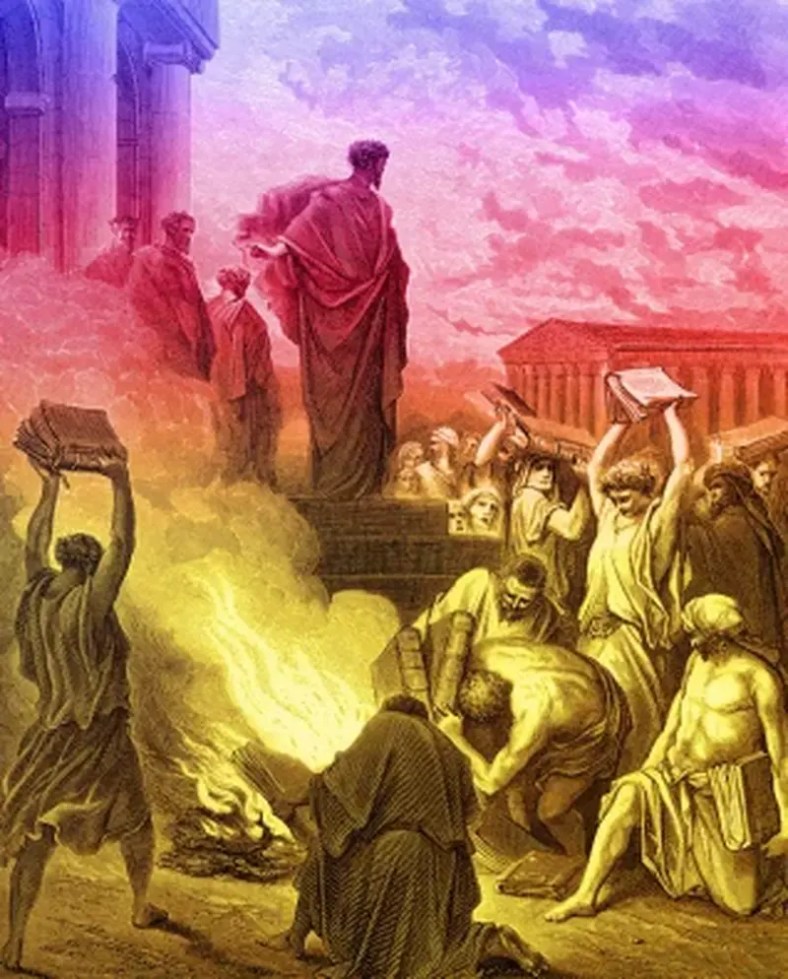
St. Paul overseeing the burning of books at Ephesus.

The good that Jesus brought

Early Christians believed all necessary knowledge was in the Bible and thus closed down schools, burned books, forbade teaching philosophy and destroyed libraries. The Jesus person portrayed in the Bible taught that “devils” and “sin” cause illness, and thus for some 1700 years good Christians ignored science and medicine to perform exorcisms on the ill.

The Bible decrees “Thou shalt not suffer a witch to live” (Ex. 22:18, with support from Dt. 18:10-12, Lev. 20:27, 2 Chr. 33:6, Micah. 5:12, and 1 Sam. 28:3). In the New Testament, Paul in Galatians 5:19-21 joins the anti-witchcraft credo. But let’s face it: Paul claims to be a devoted Hebrew, full of credulity and misogyny. Paul will “suffer not a woman to teach” and thus along the centuries women have been second-class citizens, especially within the Church. These juvenile and immoral Bible edicts are not left in the past.

From No Meek Messiah: Remember the witch hunts? Long ago and far away, past atrocities forgotten? So perhaps we should forgive and forget. Around the world, the Christian Bible is still used to accuse people, usually children, of “witchcraft” and to punish them. Refer to The Guardian, Sunday, 9 December 2007, “Child ‘witches’ in Africa”; Huffington Post, October 18, 2009, “African Children Denounced As ‘Witches’ By Christian Pastors”; and The Guardian, Friday 31 December 2010, “Why are ‘witches’ still being burned alive in Ghana?” The scripture normally cited regarding witches is Exodus 22:18, and there are many more. In Ghana, a study found that “accused witches were physically brutalised, tortured, neglected, and in two cases, murdered.” In Kinshasa, Congo, “80% of the 20,000 street children … are said to have been accused of being witches.” Even to this day the Bible’s proclamations against witches are still considered valid by many Christians. In places like Indonesia, Tanzania, the Congo and Ghana superstitious fundamental Christians actively pursue and execute witches, including murdering child “sorcerers.” In Malawi, accused witches are routinely jailed.

Christians are typically kept ignorant of certain evil and immoral words placed into the mouth of this mythical mystery-man:

“If any man come to me, and HATE NOT his father, and mother, and wife, and children, and brethren, and sisters, yea, and his own life also, he cannot be my disciple.” – Luke 14:26.

Jesus is actually portrayed as a pitiful man in desperate need of praise:

“He that loveth father or mother more than me is not worthy of me: and he that loveth son or daughter more than me is not worthy of me.” – Matt. 10:37.

Not only does Jesus never advise against slavery, but he recommends savage whipping of disobedient slaves:

“And that servant, which knew his lord’s will, and prepared not himself, neither did according to his will, shall be beaten with many stripes.” – Luke 12:47.

Jesus has nothing against stealing, as he instructs his apostles to pinch a horse and a donkey from their rightful owner:

“And when they drew nigh unto Jerusalem, and were come to Bethphage, unto the Mount of Olives, then sent Jesus two disciples, Saying unto them, Go into the village over against you, and straightway ye shall find an ass tied, and a colt with her: loose them, and bring them unto me. And if any man say ought unto you, ye shall say, The Lord hath need of them; and straightway he will send them.” – Matt. 21:1-3.

Gentle and meek and mythical

I personally know several Christians who accept evolution as scientific fact. Okay, they kind of ignore the Old Testament, but I asked one born again Christian about the genealogy of Jesus and she was only aware of another one in Luke.

From No Meek Messiah: Christianity absolutely depends on mythical “Adam.” Without Adam, Eve, and a talking snake, Jesus’ mission is moot and pointless and void. Christians are generally oblivious of this because they have been shown a genealogy in Matthew (which only goes back to “Abraham”), and are rarely if ever exposed to Luke’s disparate and childlike version—which if true would negate all of evolution and in fact most known history and science. According to the anonymous author of Luke, a mere seventy-five generations separate “Adam”—and the beginning of the universe—from the birth of Jesus some 2,000 years ago.

This “meek” messiah boasted he was “greater than Solomon” (Mt. 12:42), saying he “came not to send peace, but a sword” (Mt. 10:34), and  (Lk. 12:49). Jesus desperately needs your praise (Mt. 10:37), and advises you to beat your slaves.

Yahweh / Jehovah

This Jesus character speaks highly of father Yahweh‘s genocidal tantrums in Matthew 11:20-24. Jesus is referring to the book of Joshua where his father declares he will wipe out all people of Sidon: “All the inhabitants of the hill country from Lebanon unto Misrephoth-maim, and all the Sidonians, them will I drive out from before the children of Israel”.

You may have heard Christians claim that the only “god hates fags” verbiage comes from the Old Testament (Lev. 18:22), but both Paul (in Rom. 1:26-27) and Jesus speak out against it, as the J-man praises the ruin of Gaytown, Canaan: “But the same day that Lot went out of Sodom it rained fire and brimstone from heaven and destroyed them all.” – Luke 17:29.

Onward Christian soldiers

Christianity has a violent “holy book” as its authority, granting followers supremacy over the entire earth (e.g. Gen. 1:28) which they used to justify land grabs, genocide and holy conflicts. The following wars were perpetrated by Christians in the name of their saviour:

  1. War against the Donatists, 317 CE
  2. Roman-Persian War of 441 CE
  3. Roman-Persian War of 572-591 CE
  4. Charlemagne’s War against the Saxons, 8th century
  5. Spanish Christian-Muslim War of 912-928
  6. Spanish Christian-Muslim War of 977-997
  7. Spanish Christian-Muslim War of 1001-1031
  8. First Crusade, 1096
  9. Jerusalem Massacre, 1099
  10. Second Crusade, 1145-1149
  11. Spanish Christian-Muslim War, 1172-1212
  12. Third Crusade, 1189 CE
  13. War against the Livonians, 1198-1212
  14. Wars against the Curonians and Semigallians, 1201-90
  15. Fourth Crusade, 1202-04
  16. Wars against Saaremaa, 1206-61
  17. War against the Estonians, 1208-1224
  18. War against the Latgallians and Selonians, 1208-1224
  19. Children’s Crusade, 1212
  20. Fifth Crusade, 1213
  21. Sixth Crusade, 1228 War against the Livonians, 1198-1212
  22. Spanish Christian-Muslim War, 1230-1248
  23. Seventh Crusade, 1248
  24. Eighth Crusade, 1270
  25. Ninth Crusade, 1271-1272
  26. The Inquisitions
  27. War against the Cathars, 1209-1229 and onward
  28. War against the Stedingers of Friesland, 1233
  29. Spanish Christian-Muslim War, 1481-1492
  30. Four Years War of 1521-26
  31. Count’s War of 1534-36
  32. Schmalkaldic War, 1546
  33. Anglo-Scottish War of 1559-1560
  34. First War of Religion,1562
  35. Second War of Religion, 1567-68
  36. Third War of Religion, 1568-70
  37. Fourth War of Religion, 1572-73
  38. Fifth War of Religion, 1574-76
  39. Sixth War of Religion, 1576-77
  40. Seventh War of Religion, 1579-80
  41. Eighth War of Religion, 1585-98
  42. War of the Three Henrys, 1588
  43. Ninth War of Religion, 1589—1598
  44. Ottoman-Habsburg wars, 15th to 16th century
  45. War against the German Farmers (“peasants”), 16th Century
  46. The French Wars of Religion, 16th Century
  47. Shimabara Revolt, 1637
  48. Covenanters’ Rebellion of 1666
  49. Covenanters’ Rebellion of 1679
  50. Covenanters’ Rebellion of 1685
  51. The Thirty Years War, 17th Century
  52. The Irish rebellion of 1641
  53. Spanish Christian extermination of South American natives
  54. Manifest Destiny
  55. War of the Sonderbund, 1847
  56. Crimean War, 1853-1856
  57. Tukulor-French War, 1854-1864
  58. Taiping Rebellion, 1851 and 1864
  59. Serbo-Turkish War, 1876-78
  60. Russo-Turkish War, 1877-1878
  61. Russian Revolution killing of the Jews, late 19th century
  62. First Sudanese Civil War, 1955-1972
  63. Nigerian Civil War, 1967
  64. Lebanese Civil War, 1975
  65. Sabra and Shatila massacre, 1982
  66. Second Sudanese Civil War, 1983
  67. Yelwa Massacre, 2004
  68. Bosnian War

A relatively unknown contrivance occurred in the thirteenth century when Pope Innocent III ordered a genocidal attack against the entire region of Languedoc France. The pope depicted the Cathars as witches; of being cannibals; desecrating the cross; and having “sexual orgies.”

Yet malefic sounds of sibilance emanated only from the Vatican, and not from its contrived enemies living peaceably in France with their pure and righteous ways. The Church murdered over a million innocent Cathars over the period of 35 years—men, women, children. Christian forces wiped them from the face of the planet. At the height of the siege, Christian forces were burning hundreds at the stake at a time. The Christian colossus exterminated them, then annexed much of Languedoc—some for the Church, some from northern French nobles. The extravagant Palais de la Berbie (construction began in 1228) and the Catholic fortress-cathedral Sainte Cécile (began 1282) are just two examples that remain to this day.

The Silent Historians

Conclusion

When I consider those 126 writers, all of whom should have heard of Jesus but did not, and Paul and Marcion and Athenagoras and Matthew with a tetralogy of opposing Christs, the silence from Qumran and Nazareth and Bethlehem, conflicting Bible stories, and so many other mysteries and omissions, I must conclude this “Jesus Christ” is a mythical character. “Jesus of Nazareth” was nothing more than urban (or desert) legend, likely an agglomeration of several evangelic and deluded rabbis who might have existed.

The “Jesus mythicist” position is regarded by Christians as a fringe group. But after my research I tend to side with Remsburg—and Frank Zindler, John M. Allegro, Thomas Paine, Godfrey Higgins, Robert M. Price, Charles Bradlaugh, Gerald Massey, Joseph McCabe, Abner Kneeland, Alvin Boyd Kuhn, Harold Leidner, Peter Jensen, Salomon Reinach, Samuel Lublinski, Charles-François Dupuis, Rudolf Steck, Arthur Drews, Prosper Alfaric, Georges Ory, Tom Harpur, Michael Martin, John Mackinnon Robertson, Alvar Ellegård, David Fitzgerald, Richard Carrier, René Salm, Timothy Freke, Peter Gandy, Barbara Walker, Thomas Brodie, Earl Doherty, Bruno Bauer and others—heretics and iconoclasts and freethinking dunces all, according to “mainstream” Bible scholars.

If all this evidence and non-evidence including 126 silent writers cannot convince, I’ll wager we will uncover much more. Yet this is but a tiny tip of the mythical Jesus iceberg: nothing adds up for the fable of the Christ. In the Conclusion of No Meek Messiah I summarise the madcap cult of Jesus worship that has plagued the world for centuries. It should be clear to even the most devout and inculcated reader that it is all up for Christianity, and in fact has been so for centuries. Its roots and foundation and rituals are borrowed from ancient cults: there is nothing magical or “God-inspired” about them. The “virgin birth prophecy” as well as the immaculate conception claims are fakeries, the former due to an erroneous translation of the Tanakh, the latter a nineteenth century Catholic apologetic contrivance, a desperate retrofitting.

Jesus was no perfect man, no meek or wise messiah: in fact his philosophies were and are largely immoral, often violent, as well as shallow and irrational. There have been many proposed sons of god, and this Jesus person is no more valid or profound than his priestly precursors. In fact, his contemporary Apollonius was unquestionably the superior logician and philosopher.

Christianity was a very minor and inconsequential cult founded late in the first century and then—while still quite minor—forced upon all the people of the Empire, and all rival kingdoms in the fourth century and beyond, as enforceable law with papal sanction. Christianity has caused more terror and torture and murder than any similar phenomenon. With its tyrannical preachments and directives for sightless and mindless obedience, the Bible is a violent and utterly useless volume, full of lies and immoral edicts and invented histories, no matter which of the many “versions” you may choose to read—including Thomas Jefferson’s radical if gallant abridgement.

The time to stop teaching the tall tales and nonsense to children, frightening them with eternal torture administered by God’s minions, has long ago passed. Parents who do so are likely deluded, and most surely are guilty of child abuse of the worst sort….

The cult of Christianity has an incalculable amount of blood on its hands. And the “Jesus” tale seems to have been nothing more than oral legend, with plenty of hoax and fraud perpetrated along the ages. It is my hope that mankind will someday grow up and relegate the Jesus tales to the same stewing pile that contains Zeus and his son Hercules, roiling away in their justifiable status as mere myth. – JNE, 19 July 2014

Thomas Paine Quote

Bibliography

  1. Catholic Encyclopedia, first edition. The Encyclopedia Press, 1907-1913.
  2. Dungan, David L., Constantine’s Bible, Minneapolis: Fortress Press, 2007.
  3. Ehrman, Bart, Jesus, Interrupted, New York: HarperCollins, 2009.
  4. Encyclopedia Biblica: A Critical Dictionary of the Literary, Political and Religious History: The Archeology, Geography and Natural History of the Bible, Edited by Thomas Kelly Cheyne and J. Sutherland Black. 1899.
  5. Magness, Jodi, The Archaeology of Qumran and the Dead Sea Scrolls, Grand Rapids: Eerdmans, 2002.
  6. Oxford Classical Dictionary. New York: Oxford University Press, 1996.
  7. Salm, René, The Myth of Nazareth, Parsippany: American Atheist Press, 2008.

Further Reading

  1. Alfaric, Prosper, Jésus a-t-il existé? 1932.
  2. Allegro, John M., The Dead Sea Scrolls and the Christian Myth, Amherst: Prometheus Books, 1992.
  3. Barnard, Leslie William, Athenagoras: A Study in Second Century Christian Apologetic, Paris: Éditions Beauchesne, 1972.
  4. Bradlaugh, Charles, Who Was Jesus Christ? London: Watts and Co., 1913.
    Brodie, Thomas, Beyond the Quest for the Historical Jesus: Memoir of a Discovery, Sheffield: Sheffield Phoenix, 2012.
  5. Carrier, Richard, Proving History: Bayes’s Theorem and the Quest for the Historical Jesus, Amherst: Prometheus, 2012.
  6. Doherty, Earl, Neither God nor Man, Ottawa: Age of Reason, 2009.
  7. Drews, Arthur, Hat Jesus gelebt? Mainz: 1924.
  8. Dupuis, Charles-François, L’origine de tous les cultes, ou la religion universelle, Paris: 1795.
  9. Ellegård, Alvar, Jesus One Hundred Years Before Christ, New York: Overlook Press, 2002.
  10. Fitzgerald, David, Nailed: Ten Christian Myths That Show Jesus Never Existed at All, Lulu.com, 2010.
  11. Freke, Timothy, and Gandy, Peter, The Jesus Mysteries: Was the “Original Jesus” a Pagan God? New York: Three Rivers Press, 1999.
  12. Harpur, Tom, The Pagan Christ: Recovering the Lost Light, Toronto: Thomas Allen Publishers, 2005.
  13. Higgins, Godfrey, Anacalypsis, A&B Books, 1992.
  14. Jensen, Peter, Moses, Jesus, Paul: Three Variations on the Babylonian Godman Gilgamesh, 1909.
  15. Kneeland, Abner, A Review of the Evidences of Christianity, Boston: Free Enquirer, 1829.
  16. Kuhn, A. B., Who Is This King of Glory? Kessinger Publishing, LLC; Facsimile Ed edition, 1992.
  17. Leidner, Harold, The Fabrication of the Christ Myth, Survey Press, 2000.
  18. Lublinski, Samuel, Die Entstehung des Christentums; Das werdende Dogma vom Leben Jesu, Köln: Eugen Diederichs, 1910.
  19. Martin, Michael, Atheism: A Philosophical Justification, Philadelphia: Temple University Press, 1992.
  20. Massey, Gerald, Ancient Egypt, the Light of the World, Sioux Falls: NuVision, 2009.
  21. McCabe, Joseph, The Myth of the Resurrection and Other Essays, Amherst: Prometheus Books, 1993.
  22. Ory, Georges, Le Christ et Jésus, Paris: Éditions du Pavillon, 1968.
  23. Paine, Thomas, The Age of Reason, Paris: Barrots, 1794.
  24. Price, Robert M., Deconstructing Jesus, Amherst: Prometheus, 2000.
  25. Price, Robert M., The Case Against the Case for Christ, Cranford: American Atheist Press, 2010.
  26. Reinach, Salomon, Orpheus, a History of Religions, New York: Liveright, 1933.
  27. Remsburg, John, The Christ, New York: Truth Seeker, 1909. Reprinted by Prometheus Books, 1994.
  28. Robertson, John M., A Short History of Christianity, London: Watts & Co., 1902.
  29. Steck, Rudolf, Der Galaterbrief nach seiner Echtheit untersucht nebst kritischen Bemerkungen zu den Paulinischen Hauptbriefen, Berlin: Georg Reimer, 1888.
  30. Walker, Barbara, The Women’s Encyclopedia of Myths and Secrets, New York: HarperOne, 1983.
  31. Zindler, Frank, The Jesus the Jews Never Knew, Cranford: American Atheist Press, 2003.

» Michael Paulkovich is an aerospace engineer, historical researcher, freelance writer, and a frequent contributor to Free Inquiry and Humanist Perspectives magazines. His book No Meek Messiah was published in 2013 by Spillix.

No Meek Messiah: Christianity's Lies, Laws and Legacy - Michael Paulkovich

Srinivasa Ramanujan: A genius who transformed mathematics – B. Sathish

Srinivasa Ramanujan

In just five years at Cambridge, Ramanujan earned the reputation of being the greatest mathematician of the twentieth century. He solved numerous complex mathematicam problems that had remained unsolved for centuries. – B. Sathish

Among the world’s legendary mathematicians, such as Leonhard Euler, Carl Gauss, and Carl Jacobi, a common trait is that they were trained by professionals. In stark contrast, Srinivasa Ramanujan (22nd Dec 1887–26th Apr 1920) was a self-taught mathematician. He once said, “An equation for me has no meaning unless it expresses a thought of God.” Ramanujan believed his mathematical insights were divine revelations bestowed by Goddess Namagiri Thayar of the ancient sixth-century temple in Namakkal. Deeply devout, he maintained that his discoveries were not merely the result of study, but were revealed to him in dreams by the Goddess.

Early Days

Ramanujan’s father, Kuppuswamy Srinivasa Iyengar, worked as a clerk in a sari shop, while his mother, Komalathammal, played a significant role in nurturing his early education. They lived in a small, traditional home in Kumbakonam. At the age of 21, Srinivasa Ramanujan married a ten-year-old girl, Janakiammal, on 14 July 1909. Although they had no children, Janakiammal’s life was remarkable in its own right. Ramanujan’s wife and mother lived with him until he left for England on 17 March 1914.

By the age of 15, Ramanujan had mastered trigonometry, algebra, geometry, cubic equations, and more. However, due to his intense obsession with mathematics, he lost his scholarship at Kumbakonam Government College in 1904 and subsequently failed to obtain a degree from Presidency College, Madras, in 1907. Interestingly, at just 18 years old, Ramanujan left home following a misunderstanding—an incident that was reported in The Hindu newspaper under the headline “A Missing Boy”.

Well-Wishers

Thanks to Ramaswamy Aiyer, the founder of the Indian Mathematical Society (IMS), who recognised the potential of this gifted mathematician. Ramanujan first published “Some Properties of Bernoulli’s Numbers” in 1910, and from then on, he published a total of 12 research papers in the Journal of the Indian Mathematical Society.

In 1912, after securing a clerical job at the Madras Port Trust, Ramanujan joined the University of Madras as its first research scholar in May 1913.

Ramaswamy Aiyer introduced him to Sheshu Aiyar, who, in turn, gave Ramanujan a note of recommendation to meet Dewan Bahadur R. Ramachandra Rao, the then District Collector of Nellore and a noted mathematics enthusiast. On the suggestion of Sheshu Aiyar, Ramanujan began writing to well-known mathematicians in Britain, starting with unsuccessful attempts to reach M.J.M. Hill, E.W. Hobson, and H.F. Baker.

It was in January 1913 that Ramanujan wrote one of the most famous letters in the history of mathematics. The recipient was G.H. Hardy, a lecturer at Trinity College, Cambridge, and one of Britain’s foremost pure mathematicians. Without Hardy’s intervention, Ramanujan might never have been recognised as the greatest mathematician of the twentieth century. It was Hardy who truly discovered Ramanujan’s genius. (Explore the Hardy–Ramanujan number 1729!)

Hardy wrote of Ramanujan: “Here was a man who could work out modular equations and theorems … to orders unheard of, whose mastery of continued fractions was … beyond that of any mathematician in the world.”

Ramanujan travelled to England on 17 March 1914, after seeking the permission of Goddess Namagiri Thayar of Namakkal, and stayed for about five years until 1919. In just five years, he earned the reputation of being the greatest mathematician of the twentieth century, even as the world was engulfed in the First World War. He solved numerous complex problems that had remained unsolved for centuries.

How could a non-mathematician even imagine such achievements? For his work, Ramanujan’s name was accepted for the Fellowship of the Royal Society, and he was also elected a Fellow of Trinity College, Cambridge.

In 2012, Ken Ono of Emory University, United States, finally solved a problem that had remained an open challenge to mathematicians for 90 years—a problem originating from Srinivasa Ramanujan’s last mysterious letter. Professor Ono referred to the problem mentioned in Ramanujan’s final letter to Professor G.H. Hardy. In his speech, Professor Ono said, “No one was talking about black holes back in the 1920s when Ramanujan first came up with the mock modular forms, and yet, his work may unlock secrets about them.”

Ramanujan’s most celebrated works include number theory, infinite series, elliptic functions, modular forms, and mock theta functions, among others.

School education departments should make it mandatory for students to visit the little-known Ramanujan Museum (established in 1993 in Parry’s, Chennai), which houses a collection of some of his works—thanks to the efforts of mathematics educator P.K. Srinivasan.

A young Ramanujan with his wife Janaki Ammal.

Janaki Ammal

It would be an injustice not to mention Janaki Ammal and how her life unfolded after the sudden demise of Ramanujan at the young age of 32. After Ramanujan’s passing, Janaki Ammal lived in Mumbai for eight years, where she learnt tailoring and English. She returned to Madras in 1932, choosing to live as an independent woman. Hanumantharayan Koil Street in Triplicane became her home for the next 50 years. Tailoring helped her to survive financially.

She later adopted W. Narayanan after her close friend Soundravalli passed away. As a foster mother, Janaki Ammal ensured that Narayanan received a proper education and got him married in 1972. Narayanan and his wife, Vaidehi, took great care of Janaki Ammal until her death on 13 April 1994, at the age of 94.

In her later years, Janaki Ammal fondly recalled: “I considered it my good fortune to give him rice, lemon juice, buttermilk, etc., at regular intervals and to give fomentation to his legs and chest when he reported pain. The two vessels used then for preparing hot water are still with me; these remind me often of those days.”

Thanks are due to the governments of Tamil Nadu, Andhra Pradesh, and West Bengal, Madras University, and various mathematical institutions for their constant financial support to Janaki Ammal. The Hinduja Foundation also donated Rs 20,000 towards her welfare.

Janaki Ammal was a philanthropist as well, providing financial support to many students.

In interviews conducted soon after the discovery of Ramanujan’s “lost” notebook by George Andrews in 1976, Janaki Ammal lamented that a statue of Ramanujan had never been made, despite earlier promises. After the efforts of hundreds of mathematicians, a bronze bust was finally created from the only authentic passport-sized photograph of Ramanujan by American sculptor Paul Granlund. A copy of the bust was presented to Mrs Ramanujan at a formal function at the University of Madras in 1985—after a gap of 60 years.

I leave it to readers: are we truly celebrating him? If not, we must learn about Srinivasa Ramanujan and educate our children about his legacy. It is not only the government’s responsibility; it is ours as well.

One can only hope that, as centuries pass, Srinivasa Ramanujan will be remembered alongside other luminaries such as Aryabhata, Brahmagupta, and Bhaskara. – New18, 26 April 2025

B. Sathish is an engineer in the automotive industry.

Sri Namagiri Lakshmi Narasimhaswami Temple, Nammakal.

The British Empire didn’t end slavery, it reinvented it – Monidipa Bose Dey

Indian indentured labour in Guyana ca. 1920.

The notion that the British Empire abolished slavery across most of the world is, in reality, a myth. What the Empire simply did was quickly devise an alternative means of reintroducing slavery, by terming it as ‘indentured labour’ across its colonies, and that sounded politically correct and socially more acceptable to the white Western world. – Monidipa Bose Dey

A post on X by Elon Musk, stating that “the British Empire was the driving force behind ending the vast majority of global slavery,” brought forth a great deal of outrage from his Indian readers, and rightfully so. Slavery, which was officially abolished in the British colonies on August 28, 1833, with the passing of the Slavery Abolition Act, created severe labour shortages in British-ruled plantation islands, as newly freed former slaves refused to work for the meagre wages offered at the time.

This shortage compelled the British Empire, under pressure from wealthy white planters, to find a politically acceptable alternative for obtaining “unfree labour” from the native populations in British colonies such as India. Consequently, the indentured labour system was introduced, with clauses such as “restrictions on freedom of movement”, penalties for “negligence”, “absence from work” being made into criminal offences.

Thus, indentured labour was nothing but “slavery with a contract”. The notion that the British Empire abolished slavery across most of the world is, in reality, a myth. What the Empire simply did was quickly devise an alternative means of reintroducing slavery, by terming it as “indentured labour” across its colonies, and that sounded politically correct and socially more acceptable to the white Western world.

Owing to the numerous territorial conquests by Britain during this period, the British Empire liberally utilised its colonies as both sources and destinations for indentured labour. The primary destinations for Indian indentured labour were the British colonies of Trinidad, Mauritius, and British Guyana.

A brief overview of the European slave trade in India before the Slavery Abolition Act of 1833

The arrival of Europeans in India during the 17th century introduced a new dimension to the already thriving slave market under Islamic rulers. European powers entered the slave trade in the early 17th century, sourcing war captives from raids and conquests carried out by Arakanese rulers in the Bay of Bengal region. These raids created a systematic network of kidnappings, with countless Bengalis being captured and sold, turning ports such as Arakan, Chittagong, Hooghly, and Tamluk into infamous slave markets.

By the 1620s, the Arakanese were supplying over 1,000 slaves annually to the Dutch market. Not to be outdone, the Portuguese began conducting their own slave raids, targeting settlements along the Ganga belt. However, these activities soon drew the attention of the Mughals. By the mid-17th century, the Dutch were accused of illegally trafficking around 5,000 Bengalis annually to Batavia. Consequently, by the 1660s, the Arakan-Bengal slave trade was brought to a halt.

However, as the Bengal source of slaves dried up, another alternative supply of labour emerged, which provided irregular yet large numbers of more compliant Indian labour from both north and south India for European factories. Famines and wars led to the self-selling or “voluntary” sale of many adults and children, who were desperate to save themselves from starvation. The purchase of slaves of this kind is historically documented in Odisha, Bengal, Thanjavur, Madurai, and Chingleput, and this continued for the next two centuries.

One documented slave purchase took place in 1622, after a prolonged drought (1618–20), when the Dutch bought 1,000 slaves on the Coromandel Coast and sent them to work in Banda and Batavia.

In cases of local wars, entire families were often sold, and between 1658 and 1662, more than 7,000 slaves were bought and sent to Sri Lanka. In the 1670s, a prolonged period of crop failures led to large-scale slave sales from Tuticorin, with slaves being sent to Sri Lanka and Batavia. Indian slaves were also exported to the Dutch colonies in South-East Asia. In the first half of the 17th century, besides the Dutch, Danish, and Portuguese, English traders were also heavily involved in the slave trade, sending Indian slaves from these regions to work on rice and pepper plantations in various foreign destinations. In the latter half of the 17th century, English slave traders also shipped slaves from the port of Madras.

In the 18th century, India saw a rising number of political instabilities, armed conflicts, general financial mismanagement by the ruling classes, and increasing taxes. All these factors combined to create the horrific Bengal famine of 1770, which wiped out almost one-third of the population of Bengal. As the value of money fell, an overall decline in living standards led to an increasing outward flow of labour.

Additionally, as Indian political control over the ports weakened, slave markets began thriving around European colonial settlements. By the second half of the 18th century, French and Dutch colonies were taking in large numbers of Indian slaves, particularly when a series of famines struck eastern India.

In 1785, after a crop failure, many children were put up for sale, and the Collector of Dhaka reported seeing boats “loaded with children of all ages.” A few years later, Lord Cornwallis wrote, “Hardly a man or woman exists in a corner of this populous town [Calcutta] who hath not at least one slave child … most of them were stolen from their parents or bought for perhaps a measure of rice, in times of scarcity.”

Those exported as slaves often included nomadic farmers, poor labouring classes, or aboriginal people known as “Hill Coolies” or “dhangurs”. These people were chosen based on their being young, active, and able-bodied. Most were unaware of where they were being sent, the nature of the work they would undertake, or the length of their journey.

Bowing to pressure from the abolitionists back home in Britain, by the end of the 18th century, the British were forced to start seizing ships carrying slaves, even though their main focus was on the ships of their trading enemies (Dutch and Portuguese); and the Slavery Abolition Act was passed in 1833. However, soon after the 1833 Act was passed, a solution to the labour crisis in colonial plantations arising from the abolishment of slavery was chalked out. Indians were turned into “indentured labourers” by British policymakers and exported to their sugar colonies under the new indenture system.

Where Indian indentured labour went in the Bristish colonies.

After the abolition of slavery

After the abolition of slavery in 1833, plantation owners explored various options for procuring labour, including sourcing workers from Africa, Canada, Europe, and China, but none of these proved viable. These failures turned the Empire’s attention to India as a long-term and reliable source of labour, and in the 19th century, India became the primary supplier of labour to the sugar colonies across the British Empire. As noted by the Royal Commission of Labour in 1892, the “importation of East Indian coolies did much to rescue the sugar industry from bankruptcy.”

The Indian indenture system was entirely state-controlled and involved a written and so-called “voluntary” contract (an “agreement,” also known as Girmitiyas in Fiji), which emigrants signed or provided a thumbprint for before leaving India. While the contract contained certain protective clauses for the workers, there were significant disparities between the rhetoric given in the contract paper and the ground realities on the plantations. There were innumerable reports of fraud and the use of force during the recruitment and transportation of labourers, as well as the appalling conditions under which Indian workers were forced to labour on the plantations.

A look at the indenturing process of labour from India reveals considerable evidence of the harsh treatment meted out to the indentured workers. In Jamaica, an ordinance fixed the wage rates at one shilling per working day (9 hours) for adult males, and 9 pence for women and children; however, the actual wages paid were much lower (around 10 pence for adult males). New labourers were provided with rations free of charge for the first three months, but the cost of the rations was later deducted from their already meagre wages. Wages were so low that the labourers could hardly make any savings, and furthermore, indentured labourers were not allowed to earn extra income. Absence from work was dealt with harshly by most employers. The harsh working conditions faced by the indentured labourers in Jamaica were evident in the high suicide rates among them. Death rates from tuberculosis and malaria were also high. Similar harsh conditions prevailed in Mauritius and Demerara, while in Trinidad, indentured labourers from India faced additional racial biases, being labelled as barbarians, pagans, and so on.

Conclusion

Thus, similar to slavery, the use of indentured labour in colonial plantations remained a process of extracting maximum profits by reducing transportation costs and keeping wages at a bare minimum. Additionally, wages were deducted for taking leave from work or for other work-related negligence, with imprisonment sometimes awarded for such offences. In this way, indentured labour was nothing but slavery with a written contract that claimed the workers had agreed to all the terms and conditions.

The use of indentured labour from colonies like India to serve the British Empire’s trade and financial interests in the 19th and 20th centuries tells a story of uneven power dynamics between the labourers from the colonies and the profits flowing into the ruling country. Supplying indentured labour from India provided additional benefits, enabling maximum profit extraction by employing workers in plantations under near-slave conditions, with little compensation for their extremely hard work and harsh living conditions. – News18, 23 Novemeber 2024

Monidipa Bose Dey is a well-known travel and heritage writer.

Indian indentured labour build the Uganda railroad in ca. 1890.

Anil Seal: ‘Congress high command demanded Partition, not Jinnah’ – Udit Hinduja

Dr. Anil Seal

“If you did not have Partition, you would have to give the Muslim-majority provinces a degree of provincial autonomy.” – Dr. Anil Seal.

In a tightly packed conference room at the India International Center, the blame for India’s Partition in 1947 was placed firmly in the hands of the Indian National Congress.

“It was Congress who said they wanted Partition,” said Anil Seal, founder of the Cambridge School of Indian History, at a speaker session Between the Crown & Congress: Rethinking the Politics of Late Colonial India on 24 February, co-hosted by Caucus: The Discussion Forum, Hindu College. “Why? If you did not have Partition, you would have to give the Muslim-majority provinces a degree of provincial autonomy.”

The silence in the room was palpable after Seal’s declaration. He was met with stares and frowns from the audience, some of whom asked whether Muhammad Ali Jinnah was at least partly to blame.  

Holding court at the centre of a long table, Seal started off with a solemn, passionate speech on the cruel rise of imperialism in India, before transitioning to the national movements that were inherited from it. 

“Every country has to have an enemy,” said Seal. “Jinnah didn’t even know the Quran. I remember as a child, him coming to our house saying he had a bad day and needed a glass of whiskey.” 

Imperialism and politics

Anil Seal, a Fellow of Trinity College, Cambridge, initially downplayed the impact of imperialism before proceeding to analyse its mechanisms.

He claimed there was one thing in common between the apologists and critics of imperialism—they both exaggerate its omnipotence. 

“Imperialism’s power to do bad, we’ve all heard about. Steal, rob, loot, rape—yes,” said Seal. “But to fundamentally reshape society—no.”  

He went on to explain how the British Empire, formed for “profit, power and prestige”, thrived in India. 

“The rule or dominance of the alien few over the indigenous many depends on the collaboration with people in whose interests it is to work with the British Raj,” said Seal. 

He was referring to princely states, prominent businessmen and landowners of the time, who decided to align with the British for their self-interest. 

Even neutrality, the keeping quiet of the many, helped solidify Britain’s chokehold on the Indian subcontinent.   

“If all of you, during the freedom movement, stood together and I said “spit”, you could have drowned the 3,000 British ruling India in a sea of phlegm,” said Seal, soliciting laughs from the audience. 

“There are more British running Cambridge University’s student body of 12,000 today than those governing colonial India in the 1900s,” he said, underscoring this point. 

Hindu College students, many of whom were Indian Administrative Services (IAS) aspirants, furiously took down notes as Seal expounded on just how the British maintained the neutrality of India’s population. 

First, they kept places localised and unconnected. “They didn’t rock the boat,” said Seal. “They left people sitting on their own thrones, whipping their own dogs.” 

And finally, to extract power and profit, the British could not govern a hundred different localities. Instead, they strengthened the chain of command from the district level, through provinces all the way back to their homeland. 

“That is why the British built all these roads, railways and telegraphs. Not for the benefit of the people, but to strengthen the centralised state,” said Seal,  emphatically slapping the table to drive home his point. 

Partition propaganda 

The British Empire’s decline, spread over nearly half a century, was caused by both international forces and internal pressure. 

During this time, pushback from national movements picked up, and India’s political movement employed a dual strategy, according to Seal.

“Agitation and constitutionalism are often put as choices. But they were two tactical sides to the same coin,” he said, before adding that non-cooperation, civil disobedience and the “Quit India” movement were not opposing forces to constitutional politics.

However, according to Seal, Indian politics until Independence and even after, have not been mass movements.

“The idea that Britain was driven out of India by mass movements is wrong,” he commented. “We are still waiting for a mass movement that energises the base of the pyramid.”

His focus shifted briefly to contemporary India, where he commented that even the National Democratic Alliance (NDA) and INDIA are a khichdi (mixture) of many different elements. To him, the broader an alliance’s base, the weaker its ideology becomes.

But it was the big question of the night—who was responsible for the Partition—that elicited an emotional response from Seal. He questioned whether the horrors, bloodshed, loss of lives and property could have been avoided.

“I am going against all the present things you are fed in films, propaganda,” said Seal. He also joked with the audience that they all may have to accompany him to jail for being “anti-national”.

“It was not what Jinnah had spent his life fighting for,” said Seal, absolving Jinnah of responsibility for the Partition. “It wasn’t even the Brits in the end game.”

According to him, Britain was bankrupt at this time. “Mountbatten was ready to lay anything on the table, including his wife, to get out of India quickly.”

It was the Congress high command who demanded Partition, afraid of the power from Muslim-dominated states that would challenge the central government, he insisted.

“The great prize for which every nationalist movement has been fighting is to inherit the one real legacy of imperial rule—the mechanism of a centralised state,” said Seal, arguing that this is what the Congress wanted, and what the BJP is striving for today.

He said it suits India’s political and national narrative to blame the Partition on Jinnah, which has fueled animosity toward Pakistan to this day.

“Change it. Challenge it. Look at the truth”, said Seal. – The Print, 3 March 2025

› Udit Hinduja is a journalist in New Delhi.

Nehru, Mountbatten, and Jinnah sign deed of Partition of India in 1947.

William Dalrymple: Admiring Indian civilisation, undermining the Hindu spirit behind it – Utpal Kumar

William Dalrymple

Scottish author William Dalrymple wants to safeguard the physical infrastructure of Indian civilsation but is working hard to tamper with its Hindu soul. – Utpal Kumar

William Dalrymple is suddenly the darling of a section of the Right. One prominent Right-wing think tank has even invited him for a talk on his new book, The Golden Road. The book highlights “how ancient India transformed the world”—a subject close to those whose heart is in the ‘Right’ place.

There’s absolutely nothing wrong in engaging in a dialogue over a book—in fact, this culture of dialogue with contrarian views should be encouraged. The problem, however, could be when this intellectual exercise leads to legitimisation of the other viewpoint without due deliberation and critical enquiry. What one fears is that The Golden Road, which has already become a bestseller soon after hitting the bookstores, might become a cover to push blatant historical lies.

At the very outset, it must be clarified that this is a good book, pushing forward India’s narrative. Dalrymple cannot claim—and he doesn’t either—that what is written in the book hasn’t been told in the past. Where the author scores is the style of his writing: A history book is better written when the author thinks like a historian but writes like a novelist. History, after all, is about stories and the lessons one can learn from them.

Dalrymple is undoubtedly a “gifted historian” who writes engaging prose. His research work for his books is almost impeccable. And one finds affinity and warmth in him for his karmabhoomi, which is India.

But, then, Dalrymple is a double-edged sword, often cutting both ways. This 59-year-old British author, born in Scotland, is an unapologetic admirer of Delhi, but his love gets confined to the era of “Djinns”; the other, non-Islamic characteristics of the city rarely get his attention. The same partisanship is evident in his writings on the Mughals, especially the late Mughals. The decadence of the late Mughals, about which Sir Jadunath Sarkar bemoans in his extensive studies and regards as among the dominant causes of the Mughal decline, is what excites Dalrymple the most.

In The Last Mughal, for instance, Dalrymple writes: “… while Zauq led a quiet and simple life, composing verse from dusk until dawn, rarely straying from the tiny courtyard where he worked, Ghalib was very proud of his reputation as a rake. Only five years before the wedding, Ghalib had been imprisoned for gambling and subsequently wore the affair—deeply embarrassing at the time—as a badge of honour. When someone once praised the poetry of the pious Sheikh Sahbai in his presence, Ghalib shot back, ‘How can Sahbai be a poet? He has never tasted wine, nor has he ever gambled; he has not been beaten with slippers by lovers, nor has he once seen the inside of a jail.’ Elsewhere in his letters he makes great play of his reputation as a ladies’ man.”

Similarly, in The Anarchy, Dalrymple writes about the unabashed loot and plunder by the East India Company. He begins this book by saying how “one of the first Indian words to enter the English language was the Hindustani slang for plunder: loot”. He then takes the readers to Powis Castle, “a craggy fort” built during the 13th century in the Welsh Marches. According to him, Powis “is simply awash with loot from India, room after room of imperial plunder, extracted by the East India Company (EIC) in the 18th century”.

Yet, the same Dalrymple had made a public appeal last year asking Britain not to return the loot to India! According to him, Mughal treasures looted by the British might never be displayed if they are returned to India, which is currently run by “a Hindu nationalist government that does not display Mughal items”. (Dalrymple’s prejudiced mind stopped him from seeing what was obvious: That the wealth stolen was not Mughal’s but India’s.) He said, “You can go to Delhi and not see a display, at the moment, of Mughal art at all. But it’s there, beautifully displayed, in the British Library, the British Museum, the Victoria and Albert Museum.”

Dalrymple’s propensity to run with the hare and hunt with the hounds is evident in the narration of his 2009 book, Nine Lives, too. In one of the stories, he recounts with empathy the story of “The Dancer of Kannur”, in which Hari Das, a Dalit from Kerala, is a “part-time prison warden for 10 months of the year”, but during the Theyyam dancing season between January and March, he is “transformed into an omnipotent deity” to be worshipped even by the high-caste Brahmins. However, in the same book, his reverence for the sacred goes missing as he invokes Romila Thapar’s idea of “syndicated Hinduism” to intellectually discredit Hindu resurgence in India. Dalrymple, quite mischievously, calls it “Rama-fication of Hinduism”.

Coming to The Golden Road, Dalrymple’s new-found love for ancient India may remind one of American Sanskrit scholar Sheldon Pollock, who not very long ago was zeroed upon by a group of wealthy non-resident Indians (NRIs) in New York, along with the top administrative leaders of Sringeri Peetham in India and representatives of Sringeri Peetham in the US, to head a newly found American university chair in the name of Adi Shankara. They had, by 2014, collected $4 million for the chair, which was to be set up at the prestigious Columbia University. There was a lot of enthusiasm and support for Pollock, as he was seen to be an ardent advocate for the revival of Sanskrit. What these people didn’t realise was that Pollock’s idea of revival was, as Rajiv Malhotra writes in The Battle for Sanskrit, “the reinvigorated study of Sanskrit as if it were the embalmed, mummified remnant of a dead culture”.

Pollock sought to revive Sanskrit studies, but wanted no association with Sanskrit language and culture. He loved Sanskrit but without its sacred cultural (Hindu) identity. In the same way, Dalrymple acknowledges India’s contribution but doesn’t seem to be quite enthusiastic about the Hindu roots of the same. He would talk with gusto about Central Asia’s Buddhist connections, but the same enthusiasm is lacking vis-à-vis Hinduism. Dalrymple’s love for India is obvious, but without its cultural/civilisational moorings. He wants to safeguard the physical infrastructure but is working hard to tamper with its soul.

Dalrymple tells the story of the great Buddhist scholar Kumarajiva (344-413 CE). Born to a Kashmiri father, probably a minister in the Takshashila royal court, and a Kuchean mother, Kumarajiva learnt Buddhism in Kashmir, but to study Vedas, he chose to go to Kashgar in the Xinjiang region. It’s pertinent to note that the land where Kumarajiva went to study Vedas was the hub of Buddhism, disputing the predominant Hindu-Buddhist conflict narrative put forward by colonial-Leftist historiography. What further manifests the Hindu-Buddhist cultural continuum in the region is that “not very far” from a monastery in Miran, as Dalrymple himself writes in The Golden Road, “some of the very earliest surviving fragments of the text of the Mahabharata have recently been dug up”.

A couple of quotes from The Golden Road should expose the real intent of the author. Dalrymple writes in the last chapter of the book, “The fate of Nalanda is much disputed: it had been in decline for centuries and archaeology shows that it was burned several times, with some of these conflagrations clearly dating to before the arrival of the Turks. Either way, the Tibetan monk Dharmaswami, who visited Nalanda in 1235, describes the Turushka soldiers prowling the ruins while he and his guru lay hidden in a deserted monastery. There is some evidence that Nalanda continued to function in a much-reduced form until the early fourteenth century, when the last Tibetan monks are described as coming to study philosophy in its ruins.”

Nalanda was “burnt several times” before the fury of Bakhtiyar Khilji in 1193 AD! The ancient Indian university survived the Muslim assault to “function in a much-reduced form until the 14th century”! One, thus, gets two assessments from the above lines: That while Muslims burnt Nalanda once, Hindus had done it “several times” in the past; and also that the Muslim assault wasn’t bad enough as the university could survive for the next two centuries! How is Dalrymple’s assessment different from, say, Romila Thapar and D.N. Jha?

In the same chapter, Dalrymple provides another gem of assessment, exposing his state of mind. He writes, “During the days of Nehruvian rule in the 1950s and early 1960s, Indian school textbooks and most academic histories were written by left-leaning, Congress-supporting figures. These historians tended to underplay the violence and iconoclasm that came with the Turkish invasions, partially in the interests of what they saw as ‘nation building’ following the terrible inter-religious violence that had taken place during partition. Today, under the current right-wing BJP government, the reverse is true, and the destruction of Hindu temples is almost all that many in India seem to know of the complex but fascinating medieval period of Indo-Islamic history.”

Given this line of thinking being promoted in the book, where the Indian physical superstructure is admired but the innate Hindu spirit is denied and damned, it’s astounding to see a section of the Right getting excited with The Golden Road. Maybe the excitement is the result of intellectual haziness and laziness: No one has bothered to read between the lines and instead got excited with the book’s tagline: “How ancient India transformed the world”. Maybe the colonial hangover is still going strong in India. A British historian highlighting the “greatness” of ancient India can still be a heady moment for some of us. Maybe the more things change in Indian history, the more they remain the same.- Firstpost, 23 November 2024

Utpal Kumar is the Opinion Editer for Firstpost and News18.

Wm. Dalrymple at St. Mary Magdalen Church, Oxford.

See also