China is batting for a Chinese Dalai Lama, something that the current Dalai Lama has ruled out. – Claude Arpi
Strategic analysts have a hard time for the past few years; most of their views and predictions have gone wrong due to the turmoil which has been occurring all around the world. It is particularly true since the beginning of the Russia-Ukraine war, which was supposed to last only for a few days.
New war tactics and weaponry, for example the use of drones, have appeared in a big way. If it does not want to lose coming battles, India does not have much choice, it needs to take a relook at the battlefields. In these circumstances, information warfare takes an increasingly predominant place.
China has always been far ahead of the rest of the world in the field of propaganda and information warfare, which has sustained the totalitarian regime for decades.
Today, however, one of China’s favourite themes is Buddhism.
Beijing would like the world to believe that Buddhism has for centuries been an important component of Chinese civilisation and that China should take the lead in the propagation of the teachings of the Great Monk, who more than 2,500 years ago wandered in the plains of North India, preaching compassion, mindfulness and interdependent arising.
Paradoxically, Beijing wants to teach Buddhism to Tibet. In September 2025, a meeting was convened in Lhasa by Wang Junzheng, the secretary of the party committee of the Tibet Autonomous Region (TAR), to address Communist officials dealing with “religion”.
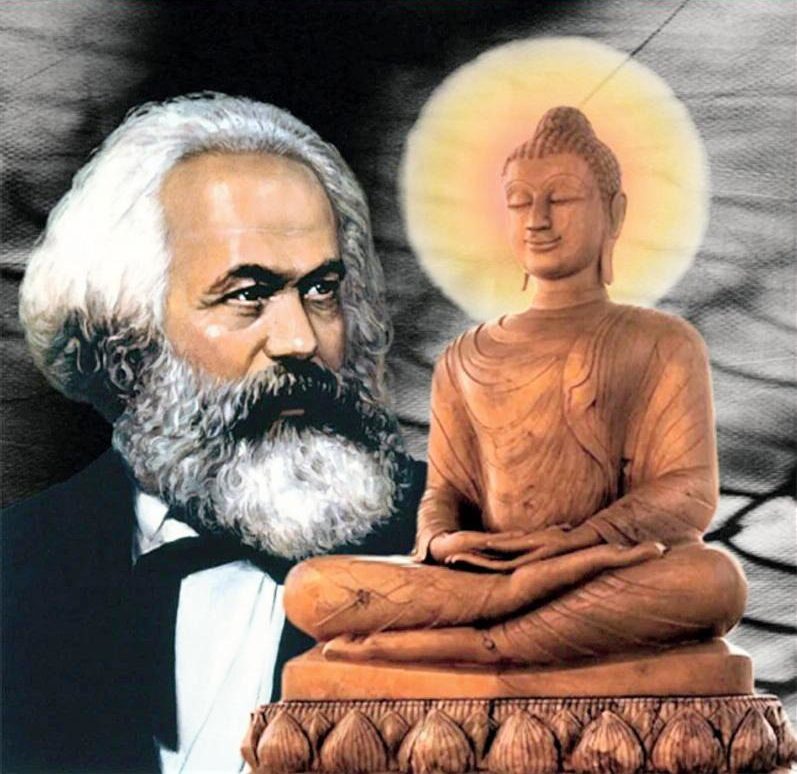
Is it not surprising that a state which follows Karl Marx’s atheist precepts should deal with religion?
Wang insisted on the necessity “to earnestly study and implement General Secretary Xi Jinping’s important instructions on religious work and … systematically promote the Sinicization of Tibetan Buddhism”. The objective was to “lay a solid foundation for long-term peace and stability”. This means that to be stable, Tibet needs to be Buddhist, but with Chinese characteristics.
Wang mentioned Xi Jinping’s visit to Tibet in July 2025, during which the president gave “important instructions … to emphasise Buddhism with the requirements to systematically promote the Sinicization of China’s religion, strengthen the governance of religious affairs and the rule of law and guide Tibetan Buddhism to adapt to the socialist society”.
In other words, first Marx and then the Buddha.
On November 11, Wang Junzheng, again presiding over a symposium on religious legislation in Tibet, asked the participants to “solidly promote the construction of the Chinese national community, actively guide Tibetan Buddhism to adapt to the socialist society”.
On the occasion of the 30th anniversary of his enthronement, Gyaltsen Norbu, called the “fake” Panchen Lama by Tibetans, mentioned the succession of the 14th Dalai Lama. Norbu said: “The reincarnation of the living Buddha is an internal affair of our country. Historically, the reincarnation of living Buddhas in Tibetan Buddhism in China has always adhered to the principles and traditions of domestic search, and there has never been a precedent for visiting abroad”.
He added: “China’s living Buddha reincarnation system belongs to Chinese monasteries, and its reincarnation management is an integral part of China’s religious affairs management.”
China is batting for a Chinese Dalai Lama, something that the latter has ruled out.
In December 2025, India took the initiative of organising a four-day international conference on the “Cultural and Historical Significance of His Holiness the Sixth Dalai Lama, Gyalwa Tsangyang Gyatso” in Tawang.
The sixth Dalai Lama was born in the 17th century in Tawang, Arunachal Pradesh.
In a post on X about the event on the Sixth Dalai Lama, Arunachal Pradesh chief minister Pema Khandu wrote: “Tawang [has] today become the centre of a global academic dialogue on his cultural, historical and spiritual legacy. He continues to inspire humanity through his timeless teachings, poetry and compassion.”
In another post, he remarked: “The world remembers his poetry, but not the fullness of his teachings and wisdom. It is time that changes.”
Beijing was not amused. It believes that Buddhism belongs to China—and that Tawang too is Chinese!
Pasang Norbu, honorary president of the Tsangyang Gyatso Cultural Research Association in Tibet, issued a statement about what he called the so-called “international conference”; he said that “it represents a blatant provocation to China’s territorial sovereignty and the established norms of international relations … Such actions seriously undermine the efforts of both China and India to resolve territorial disputes and enhance bilateral relations. Ultimately, this is a political farce with ulterior motives.”
Today, China seems to believe that it is the only “owner” of Buddhism.
In this connection, it was a positive move that the second Global Buddhist Summit was convened by the International Buddhist Confederation (IBC), in collaboration with the Union ministry of culture. It took place on January 24 and 25 at the Bharat Mandapam in New Delhi. It was a new occasion to reaffirm that Buddha is a Son of India.
The two-day conference brought together more than 200 delegates and around 800 participants from India and abroad, mostly Buddhist leaders, scholars, practitioners and policymakers, to discuss contemporary global challenges viewed through the message of the Buddha. The theme of the summit was “Collective Wisdom, United Voice, and Mutual Coexistence”.
The main objective was to convey that India stands for world peace in the troubled times that the planet is going through and planetary issues must be faced in the spirit of collaboration, respect for others and mindfulness.
It would be good for China to remember history.
During the 7th century AD, after marrying Princesses Bikruti of Nepal and Wencheng of China, King Songtsen Gampo had converted to Buddhism. A hundred years later, King Trisong Detsen requested Shantarakshita, the abbot of Nalanda University, to teach the Buddha Dharma and ordain the first monks. Shantarakshita immediately faced serious difficulties due to the strong opposition from the indigenous faithful. He convinced the king to invite the tantric guru Padmasambhava, who alone could subdue the forces adverse to Buddhism. The Indian Master succeeded in his endeavour and built the first monastery in Samye, south of Lhasa.
Later, Shantarakshita predicted that a dispute would arise between the Indian and Chinese schools of Buddhism. The dispute was sorted out through the famous Samye Debate. After two years of intense discussions (792-794 CE), the Indian path prevailed and a proclamation was issued stating that the Indian path was thereafter the state religion. Since then, the Nalanda tradition of Indian Buddhism has been the state religion of Tibet.
India must be prepared to tackle the propaganda onslaught from China; it will be tomorrow’s battlefield. – Deccan Chronicle, 18 March 2026
› Claude Arpi is Distinguished Fellow at the Centre of Excellence for Himalayan Studies, Shiv Nadar Institution of Eminence (Delhi), and writes on India, China, Tibet and Indo-French relations.
Statement Affirming the Continuation of the Institution of Dalai Lama – Office of the Dalai Lama – Dharamsala – July 2, 2025
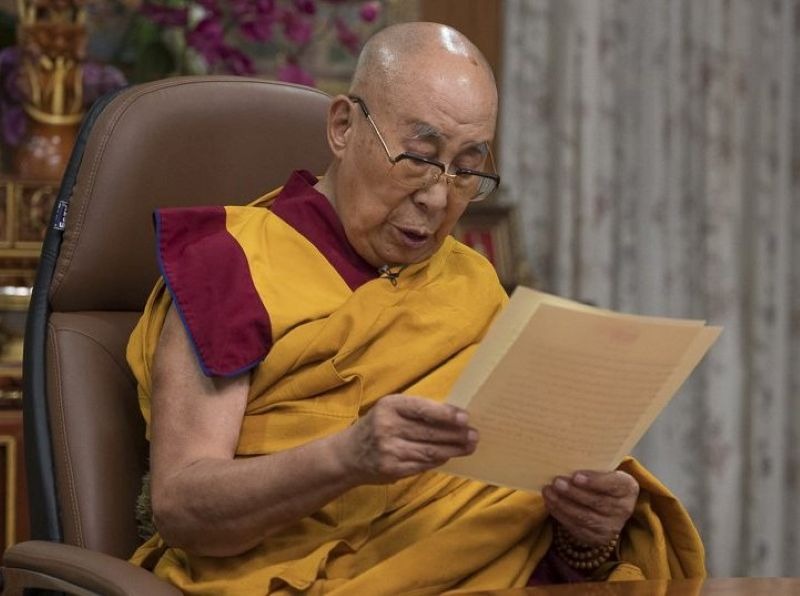
On 24 September 2011, at a meeting of the heads of Tibetan spiritual traditions, I made a statement to fellow Tibetans in and outside Tibet, followers of Tibetan Buddhism, and those who have a connection with Tibet and Tibetans, regarding whether the institution of the Dalai Lama should continue. I stated, “As far back as 1969, I made clear that concerned people should decide whether the Dalai Lama’s reincarnations should continue in the future.”
I also said, “When I am about ninety I will consult the high Lamas of the Tibetan Buddhist traditions, the Tibetan public, and other concerned people who follow Tibetan Buddhism, to re-evaluate whether or not the institution of the Dalai Lama should continue.”
Although I have had no public discussions on this issue, over the last 14 years leaders of Tibet’s spiritual traditions, members of the Tibetan Parliament in Exile, participants in a Special General Body Meeting, members of the Central Tibetan Administration, NGOs, Buddhists from the Himalayan region, Mongolia, Buddhist republics of the Russian Federation and Buddhists in Asia including mainland China, have written to me with reasons, earnestly requesting that the institution of the Dalai Lama continue. In particular, I have received messages through various channels from Tibetans in Tibet making the same appeal. In accordance with all these requests, I am affirming that the institution of the Dalai Lama will continue.
The process by which a future Dalai Lama is to be recognized has been clearly established in the 24 September 2011 statement which states that responsibility for doing so will rest exclusively with members of the Gaden Phodrang Trust, the Office of His Holiness the Dalai Lama. They should consult the various heads of the Tibetan Buddhist traditions and the reliable oath-bound Dharma Protectors who are linked inseparably to the lineage of the Dalai Lamas. They should accordingly carry out the procedures of search and recognition in accordance with past tradition.
I hereby reiterate that the Gaden Phodrang Trust has sole authority to recognize the future reincarnation; no one else has any such authority to interfere in this matter.
Dalai Lama
Dharamshala
21 May 2025(Translated from the original Tibetan)

 VOICE OF INDIA