Hindutva and other peoples’ nationalism – Koenraad Elst

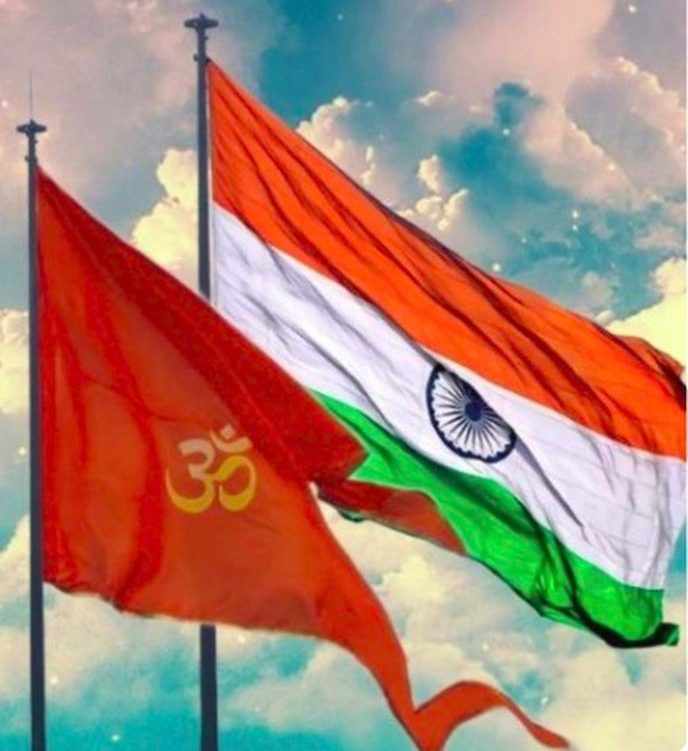
Hindu & India Flags

Along with falling from cultural Hindu nationalism to empty secular-territorial nationalism, the BJP has also fallen from solidarity with other oppressed and colonised nations to a short-sighted ethnocentrism. – Dr. Koenraad Elst

The BJP’s subordination of any and every ideological or religious conflict to questions of “national unity and integrity”, this most mindless form of territorial nationalism, is also a worrying retreat from the historical Hindu conception of Indian nationhood and its implications for the evaluation of foreign problems of national unity. Along with Mahatma Gandhi and other Freedom Fighters, the BJS used to be convinced that India was a self-conscious civilisational unit since several thousands of years, strengthened in its realisation of unity by the Sanskrit language, the Brahmin caste, the pilgrimage cycles which brought pilgrims from every part of India all around the country (“country” rather than the “Subcontinent” or “South Asia”, terms which intrinsically question this unity), and other socio-cultural factors of national integration. The notions that India was an artificial creation of the British and a “nation in the making”, were floated by the British themselves and by Jawaharlal Nehru, respectively, and both are obvious cases of unfounded self-flattery. Gandhi’s and the BJS’s viewpoint that India is an ancient nation conscious of its own unity is historically more accurate.

In foreign policy, one can expect two opposite attitudes to follow from these two conceptions of India, the Gandhian one which derives India’s political unity from a pre-existent cultural unity, and the Nehruvian one which denies this cultural unity and sees political unity as a baseless coincidence, an artificial creation of external historical forces. In its own self-interest, an artificially created state devoid of underlying legitimacy tends to support any and every other state, regardless of whether that state is the political embodiment of a popular will or a cultural coherence. The reason is that any successful separatism at the expense of a fellow artificial state is a threat to the state’s own legitimacy. That is, for instance, why the founding member states of the Organisation of African Unity decided from the outset that the ethnically absurd colonial borders were not to be altered. It is also why countries like Great Britain and France, whose own legitimacy within their present borders is questioned by their Irish, Corsican and other minorities, were reluctant to give diplomatic recognition to Lithuania when it broke away from the Soviet Union.

By contrast, those who believe that states are merely political instruments in the service of existing ethnic or cultural units, accept that state structures and borders are not sacrosanct in themselves and that they may consequently be altered. That is why Aleksandr Solzhenitsyn proposed to allow the non-Slavic republics to leave the Soviet Union, and why as a sterling Russian patriot he pleaded in favour of Chechen independence from the Russian Federation: it is no use trying to keep Turks and Slavs, or Chechens and Russians, under one roof against their will. If Russia is meant to be the political expression of the collective will of the Russian people, it is only harmful to include other nations by force, as the Chechens and Turkic peoples once were.

To be sure, even partisans of this concept of “meaningful” (as opposed to arbitrary) states will concede that there may be limitations to this project of adjusting state structures and state borders to existing ethnic and cultural realities, especially where coherent communities have been ripped apart and relocated, as has happened in Russia. Also, cultural and ethnic identities are not static givens (e.g. the “Muslim” character of India’s principal minority), so we should not oversimplify the question to an idyllic picture of a permanent division of the world in states allotted to God-given national entities. But at least the general principle can be accepted: states should as much as possible be the embodiment of coherent cultural units. That, at any rate, is the Hindu-nationalist understanding of the Indian state: as the political embodiment of Hindu civilisation.

Now, what is the position of the BJS/BJP regarding the right of a state to self-preservation as against the aspirations of ethnic-cultural communities or nations? The BJS originally had no problem supporting separatism in certain specific cases, esp. the liberation of East Turkestan (Sinkiang/Xinjiang), Inner Mongolia and Tibet from Chinese rule. At the time, the BJS still adhered to the Gandhian position: India should be one independent state because it is one culturally, and so should Tibet for the same reason. Meanwhile, however, this plank in its platform has been quietly withdrawn.

As A.B. Vajpayee told the Chinese when he was Janata Party Foreign Minister, and as Brijesh Mishra, head of the BJP’s Foreign Policy Cell, reconfirmed to me (February 1996): India, including the BJP, considers Tibet and other ethnic territories in the People’s Republic as inalienable parts of China.[1] The BJP has decisively shifted towards the Nehruvian position: every state, by virtue of its very existence, must be defended against separatist tendencies, no matter how well-founded the latter may be in cultural, ethnic or historical respects. That is, for example, why the BJP is not supporting Kurdish sovereignty against Iraqi and Turkish imperialism.[2] Along with falling from cultural Hindu nationalism to empty secular-territorial nationalism, the BJP has also fallen from solidarity with other oppressed and colonised nations to a short-sighted ethnocentrism.

When you ask why the BJP has abandoned its support for the Tibetan freedom movement, the standard reply is that this would justify other separatisms, including those in Kashmir and Punjab. Exactly the same position is taken by non-BJP politicians and diplomats. But from a Hindu and from an Indian nationalist viewpoint, this position does injustice to India’s claim on Kashmir and Punjab, which should not be put on a par with all other anti-separatism positions in the world. Firstly, while Tibet was never a part of China, and while Chechnya was only recently (19th century) forcibly annexed to Russia, Kashmir and Punjab have been part of the heartland of Hindu culture since at least 5,000 years. Secondly, in contrast with the annexations of Chechnya and Tibet, the accession of Punjab (including the nominally independent princedoms in it) and the whole of the former princedom of Jammu & Kashmir to the Republic of India were entirely legal, following procedures duly agreed upon by the parties concerned.

Therefore, Indian nationalists are harming their own case by equating Kashmiri separatism with independentism in Tibet, which did not accede to China of its own free will and following due procedure, and which was not historically a part of China. To equate Kashmir with Tibet or Chechnya is to deny the profound historical and cultural Indianness of Kashmir, and to undermine India’s case against Kashmiri separatism. Here again, we see the harmful effect of the BJP’s intellectual sloppiness.

To be fair, we should mention that the party considers its own compromising position on Tibet as very clever and statesmanlike: now that it is preparing itself for Government, it is now already removing any obstacles in the way of its acceptance by China and the USA (who would both be irritated with the “destabilising” impact of a Government in Delhi which is serious about challenging Beijing’s annexation of Tibet). In reality, a clever statesman would reason the other way around: possibly there is no realistic scope for support to Tibetan independence, but then that can be conceded at the negotiation table, in exchange for real Chinese concessions, quid pro quo.[3] If you swallow your own hard positions beforehand, you will have nothing left to bargain with when you want to extract concessions on the other party’s hard positions, i.e., China’s territorial claims on Ladakh, Sikkim and Arunachal Pradesh, and its support to Burmese claims on the Andaman and Nicobar islands. International diplomacy should teach the BJP what it refuses to learn from its Indian experiences, viz. that being eager to please your enemies doesn’t pay. – Pragyata, 13 May 2020 (excerpt taken from BJP vis-a-vis Hindu Resurgence by  Koenraad Elst and published by Aditya Prakashan, New Delhi).

› Belgian scholar Dr Koenraad Elst is an author, linguist, and historian who visits India often to study and lecture. 

References

  1. If earlier BJP manifestos still mentioned Sino-Indian cooperation “with due safeguards for Tibet”, meaningless enough, the 1996 manifesto does not even mention Tibet. Nor does it unambiguously reclaim the China-occupied Indian territories; it vaguely settles for “resolv[ing] the border question in a fair and equitable manner”.(p.32)
  2. In October 1996, a handful of BJP men bravely demonstrated before the American Embassy against the American retaliation to the Iraqi troops’ entry in the Kurdish zone from which it was barred by the UNO. There was every reason to demonstrate: while punishing Iraq, the Americans allow Turkish aggression against Iraqi Kurdistan, the so-called “protected” zone, and fail to support Kurdish independence in deference to Turkey’s objections. But that was not the target of the BJP protest, which merely opposed any and every threat against the “unity and integrity” of Iraq, a totally artificial state with artificial and unjustifiable borders (as Saddam Hussain himself argued during the Gulf War, pointing to the artificial British-imposed border between the Mesopotamian population centre and the Kuwaiti oil fields).
  3. This is not to suggest that demanding freedom for Tibet should only be done to have a bargaining chip, merely to illustrate the principle that concessions, even if unavoidable under the circumstances, should still be made known as such, i.e. in exchange for concessions from the other party, and not made beforehand in exchange for nothing. But Beijing politics may develop in such a way that Tibetan sovereignty becomes a realistic proposition again.

Tibetan Independence

India played a pivotal role in the origins of gunpowder – Gautam R. Desiraju

Fireworks

The fascinating narrative of India’s ancient achievements in chemical warfare remains a compelling testament to the subcontinent’s rich heritage. The evidence strongly suggests that India played a pivotal role in the origins of gunpowder and its applications in early military science. – Gautam R. Desiraju

When and where gunpowder first appeared is not quite known, and its history is a subject of ongoing research and debate. There is evidence to suggest that substances resembling gunpowder were known and used in India by the 4th century BC, while clearer accounts emerge around the 4th century CE, it being important to note that historical records from that period are often limited or not well-preserved.

Legend has it that gunpowder was developed in China around the Tang and Song dynasties (9th to 11th century CE). Again, there is an absence of facts to this end. Gunpowder appeared in European chronicles a few centuries later and again tradition has it that the knowledge for producing this explosive went from China to Europe through the Silk Route.

Gunpowder is a 15:3:2 mixture of three solids, potassium nitrate (or nitre), charcoal and sulfur. Whosoever developed gunpowder must have had access and a working knowledge of their chemistry. China did not have two of the three material prerequisites for this discovery—sulphur and potassium nitrate—whereas India did. Notably, nitre, the major constituent, was available in the river plains of Bengal. Till recently this substance has even been referred to as Bengal nitre. As for sulphur, it should be noted that it is the only element in the Periodic Table whose name is derived from a Sanskrit word sulvere which means enemy of copper. In summary it is clear that there was adequate scientific knowledge in India to develop chemical agents for warfare.

Western scholars have held that a “gunpowder-like substance” was developed in India in the pre-Christian era while gunpowder as a specific explosive and propellant was developed in China a thousand years later. This distinction appears completely specious. What is the difference between a “gunpowder-like substance” and “gunpowder”? We are speaking here of a mixture of three simple solids all of which were freely available in ancient India 2000 years ago. What use could there have been for a “gunpowder-like substance” that was not gunpowder in ancient India if it was not as an explosive and pyrophore?

Our ancient texts paint a vivid picture of India’s chemical prowess. The Dhanurveda contains military knowledge dating back to the Vedic period, providing insights into early warfare tactics. The term mantra, as described in the Dhanurveda, suggested that it signified scientific processes rather than being just a mere incantation. The concept of guarding scientific knowledge with supernatural connotations, has echoes in the Franciscan English monk Roger Bacon, who in the 13th century CE, described gunpowder, its constitution, and its connection with alchemy with overtones more spiritual than scientific.

Kautilya mentions gunpowder in his Arthashastra (2nd century BC). The evidence for early gunpowder use in India is based on historical texts, such as the Rasaratnakara by Bhoja in 9th century CE and other ancient Indian manuscripts, which describe the use of explosive mixtures. Testimonies from eminent scholars such as Thomas Holland and R. Gustav Oppert provide further support of India’s priority in this field. Holland’s research affirmed India’s knowledge of sulfur, while Oppert highlighted India’s role in the development of firearms and gunpowder. As far back as the 13th century CE, a Mongol ambassador to India was greeted with 3,000 celebratory fireworks reminiscent of Indian firework celebrations during Deepavali and Kartika Purnima.

China has no definite evidence of using either fire weapons or chemical warfare weapons earlier than the 4th or 5th century CE. No authentic work of an earlier date claims or even hints at weapons for chemical warfare. Coupled with this fact it should be noted that from around the 2nd century BC up to the 10th century A.D, there was considerable travel exchange between China and India. This hints that whatever knowledge of firearms, pyrotechny, and chemical warfare the Chinese had in the post-Christian period might have been obtained from India.

It is also apparent that the Arabs acquired knowledge of gunpowder by the 10th century CE or so. Western scholars seem to presume that they got this knowledge from China and three explanations are given for this, namely that they got it from merchants who travelled along the Silk Roads, by observing (unspecified) military encounters in the Eurasian landmass or through cultural exchanges.

A simpler explanation as to how Arabs got the knowledge of gunpowder is that they acquired it directly from India. During the Islamic Golden Age, which spanned the 8th to the 13th century CE, there was a flourishing of intellectual and scientific activity in the Islamic world. Many Greek, Persian, and Indian texts—not Chinese texts—were translated into Arabic, and these translations often contained knowledge of various subjects, including alchemical and chemical processes. It’s possible that the concept of gunpowder and its components was introduced to the Arab world through these translated texts. According to a paper written in 1798 by M. Langlès, it is stated that “Even Arabs mention that they got gunpowder from India.” Alchemists like the famous Abu Sina were commissioned by Mohammed Ghori (10th century CE) to translate Indian scientific texts and it is reported that the former complained that the Hindus were notoriously averse to sharing their knowledge with him!

In any event, the widespread prevalence of the use of gunpowder in West Asia and Europe is confirmed by the exertions of Sultan Mehmet II who captured Constantinople in 1453 CE. It is well documented that this successful capture of what was thought to be an impregnable fortress at the crossroads of Asia and Europe, was made possible in large measure by the use of huge cannons made in Hungary. These weapons had a hoary history during the medieval period and were known for their quality and effectiveness in warfare. The famous example used by Mehmet was the Dardanelles Gun, cast in the 15th century, made of bronze and weighing around 16.8 tons, making it one of the largest cannons of its time. Since then gunpowder was an essential explosive used for the firing of guns and cannons in all manner of small and large arms in European warfare right up till World War I which saw the use of huge German guns, the so-called Paris Gun or Big Bertha.

A final example is provided from the US when a resourceful emigre entrepreneur from France named Éleuthère Irénée du Pont started a small company in Wilmington, Delaware and sold gunpowder to both sides in the American Civil War in the mid-19th century. Notably, Wilmington was located at the border of the Unionist States and the Confederacy and the logistics of his clever operation must have been uncomplicated. The Du Pont Company went on to become a major chemical manufacturing company in the world and has given us products such as nylon, neoprene, mylar and teflon right down till the mid 20th century.

The fascinating narrative of India’s ancient achievements in chemical warfare remains a compelling testament to the subcontinent’s rich heritage. The evidence strongly suggests that India played a pivotal role in the origins of gunpowder and its applications in early military science. In doing so, it adds another layer to the grand tapestry of Bharat’s remarkable contributions to the world’s knowledge and civilisation. – Firstpost, 3 December 2024

Gautam R. Desiraju is in the Indian Institute of Science and has authored a book called Bharat: India 2.0.

In the year 1780, during the Second Anglo-Mysore War, the British were defeated at the Battle of Guntur by the forces of Hyder Ali, who effectively used Mysorean rockets and rocket artillery against the closely massed British forces.

Nehru & Patel: Serious differences over China’s invasion of Tibet – Claude Arpi

Sardar Patel

Senior Congress leaders, led by Patel, violently opposed Nehru’s suicidal policy of appeasement with China, which led India to lose a peaceful border. – Claude Arpi

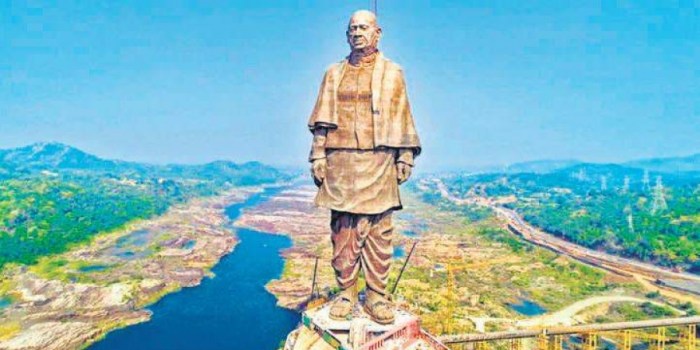
On October 31, the world’s tallest statue, the Statue of Unity dedicated to Sardar Vallabhbhai Patel, was unveiled by Prime Minister Narendra Modi. The work on the 182-metre tall statue has been completed after round the clock work by 3,400 labourers and 250 engineers at Sadhu Bet island on Narmada river in Gujarat. Sadhu Bet, located some 3.5 km away from the Narmada Dam, is linked by a 250-metre-long long bridge.

Unfortunately, for several reasons, scarce scholarly research has been done on the internal history of the Congress; the main cause is probably that a section of the party would prefer to keep history under wraps. Take the acute differences of opinion between Sardar Patel, the deputy prime minister, and “Panditji”, as Nehru was then called by Congressmen. In the last weeks of Patel’s life (he passed away on December 15, 1950), there was a deep split between the two leaders, leading to unilateral decisions for the PM, for which India had to pay the heaviest price.

The most serious cause of discord was the invasion of Tibet by the Chinese “Liberation Army” in October 1950. In the course of recent researches in Indian archives, I discovered several new facts. Not only did several senior Congress leaders, led by Patel, violently oppose Nehru’s suicidal policy, but many senior bureaucrats too did not agree with the Prime Minister’s decisions and objected to his policy of appeasement with China, which led India to lose a peaceful border.

On November 11, 1950, the deputy prime minister of India addressed a meeting organised by the Central Aryan Association to commemorate the 67th death anniversary of Swami Dayanand Saraswati. It was to be his last speech. What did he say? The Sardar spoke of the potential dangers arising from what was happening in Tibet and Nepal, and he exhorted his countrymen: “It was incumbent on the people to rise above party squabbles and unitedly defend their newly won freedom.” He cited the example of Gandhi and Swami Dayanand.

Sardar Patel then criticised the Chinese intervention in Tibet; he asserted that to use the “sword” against the traditionally peace-loving Tibetan people was unjustified: “No other country in the world was as peace-loving as Tibet. India did not believe, therefore, that the Chinese government would actually use force in settling the Tibetan question.” He observed that the Chinese government did not listen to India’s advice to settle the Tibetan issue peacefully: “They marched their armies into Tibet and explained this action by talking of foreign interests intriguing in Tibet against China.” The deputy prime minster added that this fear was unfounded; no outsider was interested in Tibet. The Sardar continued by saying that “nobody could say what the outcome of Chinese action would be. But the use of force ultimately created more fear and tension. It was possible that when a country got drunk with its own military strength and power, it did not think calmly over all issues.” He strongly asserted that the use of arms was wrong: “In the present state of the world, such events might easily touch off a new world war, which would mean disaster for mankind.”

Did he know that it was his last message? “Do not let cowardice cripple you. Do not run away from danger. The three year-old freedom of the country has to be fully protected. India today is surrounded by all sorts of dangers and it is for the people today to remember the teachings of the two great saints and face fearlessly all dangers.”

The deputy prime minister concluded: “In this Kalyug we shall return ahimsa for ahimsa. But if anybody resorted to force against us we shall meet it with force.” He ended his speech citing Swami Dayananda: “People should also remember that Swamiji did not get a foreign education. He was the product of Indian culture. Although it was true that they in India had to borrow whatever was good and useful from other countries, it was right and proper that Indian culture was accorded its due place.” Who is ready to listen to this, even today?

Days earlier, Patel had written a “prophetic” letter to Nehru, detailing the implications for India of Tibet’s invasion. In fact, Patel used a draft done by Sir Girja Shankar Bajpai, the secretary-general of the Ministry of External Affairs and Commonwealth Relations. However, Nehru decided to ignore Patel’s letter.

Witnessing the nefarious influence of K.M. Panikkar, the Indian ambassador to China, who ceaselessly defended China’s interests, Bajpai, the most seasoned Indian diplomat, had lost his cool. On October 31, in an internal note, he detailed the sequence of events which followed Tibet’s invasion and the role of Panikkar, whose attitude was compared to Sir Neville Chamberlain’s towards Hitler.

Bajpai’s anger demonstrates the frustration of many senior officers; the account starts on July 15, when the governor of Assam informed Delhi that, according to the information received by the local intelligence bureau, Chinese troops, “in unknown strength, had been moving towards Tibet from three directions.” Not only was Panikkar unable to get any confirmation, but he virtually justified Beijing’s military action by writing: “In view of frustration in regard to Formosa, the Tibetan move was not unlikely.” During the next three months, the Indian ambassador would systematically take the Chinese side.

After receiving Bajpai’s note, Patel wrote back: “I need hardly say that I have read it with a great deal of interest and profit to myself and it has resulted in a much better understanding of the points at issue and general, though serious, nature of the problem. The Chinese advance into Tibet upsets all our security calculations. … I entirely agree with you that a reconsideration of our military position and a redisposition of our forces are inescapable.”

Some more details of the seriousness of the situation filters through Inside Story of Sardar Patel: The Diary of Maniben Patel, the daughter of the Sardar. In an entry on November 2, 1950, Maniben wrote: “Rajaji and Jawaharlal had a heated altercation about the Tibet policy. Rajaji does not at all appreciate this policy. Rajaji very unhappy—Bapu (Patel) did not speak at all.”

Later in the afternoon, “Munshi complained about Tibet policy. The question concerns the whole nation—said he had written a personal letter to Panditji on Tibet.”

Later, Patel told K.M. Munshi: “Rajaji, you (Munshi), I (Patel), Baldev Singh, (C.D.) Deshmukh, Jagjivan Ram and even Sri Prakash are on one side, while Gopalaswami, Rafi, Maulana (Azad) are on his side.” There was a vertical split in the Cabinet; and it was not only about Tibet. The situation would deteriorate further during the following weeks.

On December 12, Patel was divested on his portfolios. Nehru wrote: “In view of Sardar Vallabhbhai Patel’s ill-health it is absolutely necessary that he should have complete rest and freedom from worry, so as to be able to recuperate as rapidly as possible. … No work should be sent to him and no references made to him in regard to the work of these ministries.”

Gopalaswami Ayyangar, from the “other side”, was allotted the Ministry of States and Nehru kept the Ministry of Home. The Sardar was only informed after the changes were made. He was a dejected man. Three days later he passed away. – Deccan Chronicle, 8 November 2018

» Claude Arpi is a French-born author, journalist, historian and tibetologist. He is the director of the Pavilion of Tibetan Culture at Auroville, Tamil Nadu.

Patel & Nehru